

B12 Iron Supplement Guide to Boost Your Energy
A B12 and iron supplement brings together two powerhouse micronutrients that are absolutely vital for producing energy and feeling your best. Think of Vitamin B12 as the spark plug for your body's engine and iron as the fuel; if you're running low on either, your energy systems can grind to a halt, leaving you feeling wiped out and sluggish.
Why You Might Need More B12 and Iron

If you're constantly battling tiredness, you’re definitely not alone. Widespread fatigue is one of the most common complaints doctors hear, and it often points to a gap in your nutrition rather than just a few bad nights of sleep. Two of the main culprits behind this energy crisis are deficiencies in vitamin B12 and iron.
These two nutrients are the dynamic duo of your metabolism. They work hand-in-hand to produce healthy red blood cells—the body's delivery drivers responsible for carrying oxygen to every single cell, tissue, and organ. When your levels are low, this oxygen delivery system becomes sluggish, leading to those classic symptoms of fatigue, weakness, and brain fog.
The Rising Concern in the UK
This isn't just a small problem; it's a growing public health issue. In recent years, the UK has seen a worrying spike in hospital admissions and treatments related to these deficiencies. An analysis of NHS data revealed there were 38,140 courses of treatment for vitamin B12 deficiency anaemia in a single year. Even more startling, hospital admissions in England for iron deficiency anaemia hit 191,927—an 11% increase from the year before. You can read more about these health trends on womenshealthmag.com.
This rise highlights a crucial reality: for a growing number of people, modern diets and lifestyles simply aren't providing enough of these vital nutrients.
So, what's driving this trend? Several factors are at play, making it more important than ever to understand your personal risk. The key contributors include:
- Dietary Shifts: The rise of plant-based diets, which are naturally free of B12 and contain iron that's harder for the body to absorb.
- Digestive Issues: Conditions like coeliac disease or gastritis can interfere with how well your body absorbs these nutrients from your food.
- Ageing: As we get older, our stomachs produce less acid, which makes it tougher to unlock B12 from the foods we eat.
This guide will walk you through a clear, science-backed roadmap to help you spot the symptoms, understand the causes, and find an effective B12 iron supplement to get your energy back and feel like yourself again.
Decoding the Signs of Low B12 and Iron
That bone-deep exhaustion you can’t seem to shake? It’s easy to write it off as just another symptom of modern life. But sometimes, persistent fatigue is your body’s way of flagging a problem. It might be whispering—or shouting—that it’s running low on two absolute essentials: vitamin B12 and iron. Learning to spot the distinct and overlapping signs is the first step to getting your spark back.
Think of these deficiencies as two very different kinds of power failures in your body. Low iron is like trying to run your car on an empty tank of fuel. Low B12, on the other hand, is more like having faulty wiring in your home’s electrical system. Both will leave you feeling drained, but they show up in quite different ways.
The Telltale Signs of Iron Deficiency
When your iron stores start to dwindle, your body can’t make enough haemoglobin. That’s the crucial protein in your red blood cells responsible for ferrying oxygen everywhere it needs to go. An oxygen shortage like this impacts your entire body, leading to some very physical symptoms.
The classic calling cards of low iron include:
- Persistent Tiredness: A profound, unshakeable fatigue that sleep just doesn’t seem to fix.
- Pale Skin: You might notice your skin looks paler than usual, especially on the inside of your lower eyelids.
- Shortness of Breath: Getting winded from simple tasks, like walking up a flight of stairs.
- Headaches or Dizziness: A common side effect of reduced oxygen reaching the brain. If headaches are a regular occurrence for you, exploring natural headache prevention strategies can be a useful part of your overall wellness plan.
- Cold Hands and Feet: Poor circulation from low iron often leaves your fingers and toes feeling icy.
The Unique Clues of B12 Deficiency
A B12 shortage often messes with your head and nerves first. Because this vitamin is so vital for maintaining a healthy nervous system, the symptoms can be more neurological in nature and are sometimes mistaken for something else entirely.
You could be running low on B12 if you’re experiencing:
- Brain Fog: That frustrating feeling of not being able to concentrate or pull up memories.
- Tingling Sensations: A classic "pins and needles" feeling, which often shows up in the hands or feet.
- Balance Problems: Feeling wobbly on your feet or noticing you’re suddenly clumsier than usual.
- Mood Changes: B12 is linked to brain chemistry, so unexplained irritability, depression, or anxiety can be a sign. Our detailed guide on https://vitzai.com/blogs/learn/vitamin-b-12-deficiency-signs can help you connect these dots.
B12 vs Iron Deficiency Symptoms at a Glance
Trying to figure out what your body is telling you can be tricky, as some symptoms overlap. This table gives you a quick way to compare the most common signs side-by-side.
| Symptom | Common in B12 Deficiency | Common in Iron Deficiency |
|---|---|---|
| Fatigue & Weakness | Yes | Yes |
| Pale or Yellowish Skin | Yes | Yes (more pale) |
| Shortness of Breath | Yes | Yes |
| Headaches & Dizziness | Yes | Yes |
| Pins & Needles (Tingling) | Yes (very common) | No |
| Balance Issues/Clumsiness | Yes (very common) | No |
| Brain Fog/Memory Problems | Yes (very common) | Sometimes |
| Cold Hands & Feet | No | Yes (very common) |
| Brittle Nails or Hair Loss | No | Yes |
| Sore, Red Tongue | Yes | Sometimes |
While this table is a helpful guide, remember that symptoms can vary from person to person. It's always best to chat with a healthcare professional for a proper diagnosis.
Who Is Most at Risk?
Some of us are just more likely to run into these deficiencies. It often comes down to a mix of our biology, diet, and age.
Knowing your personal risk factors is half the battle. When you understand why you might be vulnerable, you can be proactive about your health, starting with a chat with your GP.
A few groups need to be particularly mindful:
- Women of Childbearing Age: Menstrual blood loss is a major cause of iron deficiency. A large UK-based study really brought this home, finding that nearly one in three women aged 18-49 (31.6%) showed signs of being iron deficient, compared to just 2.9% of men.
- Vegans and Vegetarians: B12 is found almost exclusively in animal-based foods, so supplementation is pretty much non-negotiable. Plant-based iron (non-heme) is also a bit trickier for the body to absorb than the heme iron found in meat.
- Older Adults: As we get older, our bodies produce less stomach acid. This can make it much harder to absorb B12 from the food we eat, making deficiencies far more common.
By recognising these specific signs and understanding your personal risk, you can move from just putting up with fatigue to tackling its root cause head-on.
Choosing the Right B12 and Iron Supplement
Walking down the supplement aisle can feel overwhelming. With countless bottles all promising to boost your energy, how do you know which one will actually work? The secret isn’t just about the dose; it’s about bioavailability—how much of the nutrient your body can absorb and use.
It’s a simple but crucial point: not all forms of B12 and iron are created equal. Some are simply harder for your body to process, which means you might be paying for benefits you’ll never see. Choosing a highly bioavailable B12 iron supplement is the first step to giving your body the best possible tools to rebuild its energy stores.
Decoding Vitamin B12 Forms
When you look at a B12 supplement label, you’ll likely see one of two main forms: Methylcobalamin or Cyanocobalamin. They might sound similar, but they behave quite differently once you take them.
-
Cyanocobalamin: This is a synthetic, lab-made form of B12. It’s popular because it's very stable and cheap to produce. The catch? Your body can't use it as-is. It has to go through a conversion process to turn it into the active form, Methylcobalamin. This extra step isn't always efficient, especially for older adults or those with certain genetic variations.
-
Methylcobalamin: This is the natural, active form of B12. Think of it as "body-ready"—no conversion is needed. Your system can put it to work immediately, making it a far better choice for supporting both neurological health and energy production.
While fatigue is the big, overlapping symptom of deficiency, the diagram below shows how other signs can point specifically to low B12 or low iron.

The image highlights that while tiredness is common ground, neurological issues like brain fog are a key B12 indicator, whereas physical signs like pale skin are classic for low iron.
Understanding Iron Bioavailability
Just like with B12, the type of iron in your supplement makes a huge difference. This isn’t just about effectiveness, but also about digestive comfort. So many people give up on taking iron because of side effects like constipation and nausea, but this is often down to the specific form being used.
The key takeaway is simple: a gentler, more absorbable form of iron means better results with fewer side effects.
Let's break down the common options:
-
Ferrous Sulphate: This is the most common form you'll see prescribed by doctors and in basic, off-the-shelf supplements. While it contains a high amount of elemental iron, it’s notoriously hard on the stomach and isn't absorbed very efficiently.
-
Ferrous Bisglycinate: Now this is a much smarter form. It's 'chelated', meaning the iron molecule is attached to an amino acid (glycine). Think of the amino acid as a protective bodyguard that carries the iron safely through your digestive tract. This clever delivery system makes it much gentler on the stomach and significantly more bioavailable than ferrous sulphate.
For anyone who has struggled with the digestive upset from standard iron pills, switching to ferrous bisglycinate can be a total game-changer. By understanding these key differences, you can read labels with confidence and choose a B12 iron supplement that works with your body, not against it.
How to Make Your Supplements Work Harder for You
Taking a supplement is one thing, but making sure your body can actually use it is a whole other ball game. You’ve picked out a quality B12 and iron supplement, but the real magic happens when you get the timing and pairing right. Nailing this can make a massive difference to how effective it is.
Think of your body trying to absorb iron like trying to open a locked door. It might struggle with the key on its own. Vitamin C, however, is like a skilled locksmith, showing up to help pop that door open with ease. When you take your iron supplement with a source of vitamin C—say, a small glass of orange juice or a handful of strawberries—you can seriously boost how much iron your body actually absorbs.
This teamwork is especially vital for non-heme iron, which is the type you find in plant-based foods and most supplements. The ascorbic acid in vitamin C cleverly converts this iron into a form your gut finds much easier to grab onto.
Sidestep Common Absorption Blockers
Just as some things help, others can get in the way. Being mindful of these absorption blockers can make all the difference. Imagine them as unexpected traffic jams on the motorway to your cells; you just need to plan your journey to avoid them.
Some of the most common culprits include:
- Tannins in Tea and Coffee: These compounds, which give your brew its trademark bitter taste, can latch onto iron and stop it from being absorbed. It's a good idea to wait at least an hour after your morning cuppa before taking your supplement.
- Calcium from Dairy: Calcium and iron are a bit competitive—they vie for the same absorption pathways in your gut. Try not to take your supplement with milk, cheese, or yoghurt to give it a clear run.
- Phytates in Grains and Legumes: Found in otherwise healthy foods like wholegrain bread, beans, and nuts, phytates can also put a damper on iron uptake.
The golden rule? It’s all in the timing. Taking your B12 and iron supplement on an empty stomach, about 30–60 minutes before a meal, is often the simplest way to sidestep these blockers and get the most bang for your buck.
Medications and Nutrient Interactions
It’s also smart to think about how other things you take might interact with your new supplement routine. Some common medications can interfere with B12 and iron absorption, so it’s definitely something worth chatting about with your doctor or pharmacist.
For example, medicines that lower stomach acid, like proton pump inhibitors (PPIs) or antacids, can make it tougher for your body to absorb vitamin B12. That’s because stomach acid is what helps release B12 from the food it’s attached to in the first place. Other nutrients can have complex interactions, too. If you’re curious about how iron plays with other key vitamins, you can learn more by exploring whether you can take vitamin D and iron together.
By getting your head around these simple principles—pairing iron with vitamin C, avoiding common blockers, and being aware of potential medication clashes—you can be confident you’re getting the full benefit from every single dose.
Safe Supplement Use and When to See a Doctor
When it comes to supplements, the "more is better" mindset can be a real trap, and a potentially harmful one at that. Using a B12 iron supplement responsibly is all about precision, not power. The goal isn't to flood your system; it's to correct a deficiency and bring your body back into balance.
Before you start any new supplement, especially one as potent as iron, the first conversation should always be with a healthcare professional. Trying to self-diagnose based on symptoms alone is a bit like navigating without a map—you might end up completely off course. The only way to know for sure what's going on is to get tested.
Why You Should Test, Not Guess
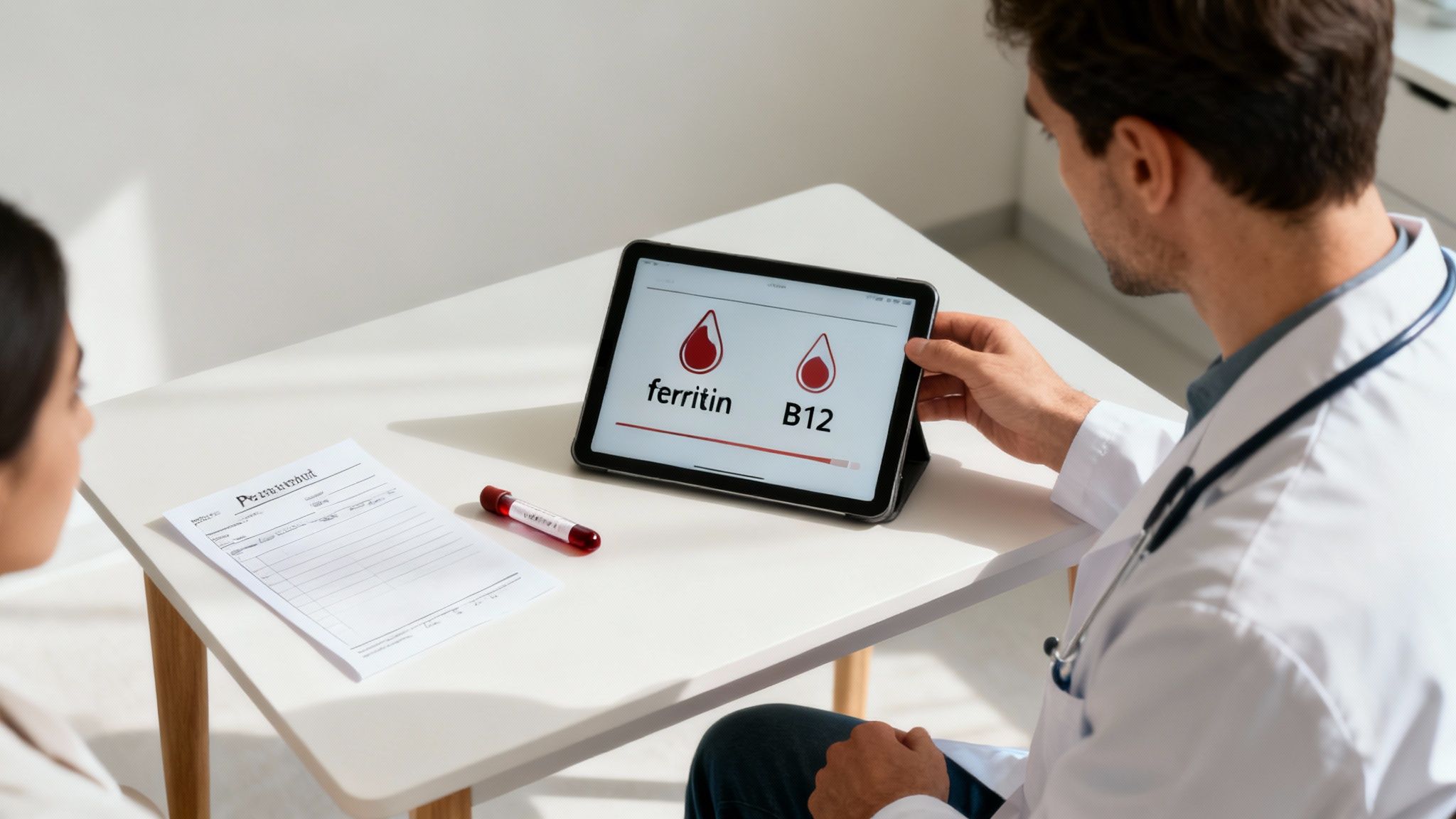
A simple blood test ordered by your GP is the most reliable first step you can take. This isn't just a simple pass-or-fail check; it gives you the specific data points that reveal the bigger picture of your health.
Your doctor will be looking at a few key markers:
- Serum B12: This tells you exactly how much vitamin B12 is circulating in your blood.
- Ferritin: This is the most important marker for your iron status. Think of it as the iron you have in the bank, ready for your body to use when needed. A low ferritin level is often the very first sign of an iron deficiency.
Understanding these numbers is what separates guesswork from a targeted, effective strategy. It’s the difference between just taking something and giving your body exactly what it needs to thrive.
Managing Potential Side Effects
While incredibly important, iron supplements have a reputation for causing a bit of digestive drama—think constipation, nausea, or stomach cramps. This is especially true for older forms like ferrous sulphate. If you start to feel any discomfort, don't just throw in the towel. It's time to strategise.
A common reason people give up on their iron supplement is digestive upset. But simple tweaks, like switching to a gentler form or changing when you take it, can often solve the problem completely.
To keep side effects to a minimum, try having your supplement with a small snack if an empty stomach is too much to handle. Or, even better, switch to a more bioavailable, chelated form like ferrous bisglycinate, which is known for being much kinder on the gut.
When to Consult Your Doctor
The supplement market in the UK is growing fast, fuelled by a real focus on preventative health. Projections show the UK iron supplement market could hit USD 174.74 million soon, which just goes to show how aware people are becoming. You can explore the research on credenceresearch.com for a deeper dive into this trend.
But even with all this accessibility, you have to know when professional advice is non-negotiable. Book an appointment with your GP if:
- Your symptoms are severe or getting worse: Things like extreme fatigue, being very short of breath, or any chest pain need immediate medical attention.
- You're not seeing any improvement: If you've been taking your supplements correctly for a few weeks and still feel drained, it's time for a professional to take another look.
- You have underlying health conditions: If you have a digestive disorder or another chronic illness, your supplement plan needs to be carefully managed by your doctor.
Your GP is your best resource for personalised guidance. They can help adjust your dosage and make sure your journey back to feeling energised is both safe and successful.
Your Path to Restored Energy and Vitality
Getting your energy back is a journey, and it all starts with listening to what your body is telling you. By now, you’ll have a much better idea of the different signs of low B12 and iron—from the brain fog that comes with B12 deficiency to the sheer physical exhaustion of low iron stores. This isn't about guesswork anymore; it’s about having the knowledge to take the first step.
The next move is picking the right support. You’ll want to look for body-ready forms like methylcobalamin for B12 and a gentle, easy-on-the-stomach iron like ferrous bisglycinate. And don't forget the small tweaks that make a huge difference, like pairing your iron with some vitamin C and keeping it away from your morning cuppa. These little strategies are what make your B12 iron supplement truly effective.
The goal isn't self-diagnosis. It's about arming yourself with the right information so you can have a really productive chat with your healthcare provider and come up with a plan that actually works for you.
Ultimately, beating persistent tiredness for good calls for a smart, personalised strategy. For a deeper dive, check out our guide on finding the best vitamin for fatigue. Armed with this information, you’re in a great position to work with your GP, get the right tests, and build a routine that genuinely brings back your vitality.
Got Questions? We've Got Answers
Stepping into the world of supplements always brings up a few practical questions. Let's tackle some of the most common ones you might have about B12 and iron.
How Long Until I Start to Feel a Difference?
This is the big question, isn't it? When it comes to B12, if you're taking a high-quality, bioavailable form, some people feel a real lift in their energy and focus within just a couple of weeks. It can be surprisingly quick.
Iron, on the other hand, plays the long game. Think of it less like a quick boost and more like rebuilding a foundation. It can take several weeks, and sometimes a few months, to fully top up your body's iron stores (your ferritin levels) and notice a significant, lasting change in your energy. The key here is consistency, day in and day out.
Is It Safe to Take B12 and Iron Together?
Absolutely. Taking B12 and iron in a combined supplement is generally very safe, and they don't get in each other's way during absorption. The main thing to focus on is making sure that iron gets the best possible chance to be absorbed.
For best results, try taking your supplement on an empty stomach with something rich in vitamin C, like a small glass of fresh orange juice. It’s also smart to separate it from your morning coffee, tea, or any calcium-heavy foods like milk or yoghurt, as they can interfere.
The most effective strategy is simple: Take your supplement with Vitamin C and away from common blockers like dairy and caffeine. This small habit ensures your body can make the most of every dose.
What Foods Can I Eat to Support My B12 and Iron Levels?
While a supplement is essential for correcting a real deficiency, it should always be a teammate to a nutrient-rich diet. Your food is the foundation; the supplement is the targeted support that gets you over the finish line.
To give your body a natural boost, try to weave these foods into your weekly meals:
- For Iron: Lean red meat, poultry, and fish are fantastic sources of heme iron, which the body absorbs incredibly well. If you're plant-based, load up on lentils, chickpeas, tofu, and dark leafy greens like spinach.
- For B12: This vitamin is found almost exclusively in animal products. Top sources include meat, fish, eggs, and dairy. For anyone on a vegan diet, it’s vital to include fortified foods like plant-based milks and nutritional yeast alongside a reliable supplement.
Ready to build a smarter supplement routine based on your unique needs? At VitzAI, our AI-powered platform creates personalised recommendations to help you close nutritional gaps and feel your best. Find your perfect supplement stack today at VitzAI.com.
This article is for informational purposes only and is not medical advice. Always consult a qualified health professional before starting any new supplement or major lifestyle change.