

Best time of day to take vitamins: Maximize absorption
The best time of day to take your vitamins all comes down to what type you’re taking. But if you’re looking for a simple rule of thumb, here it is: take water-soluble vitamins (like B-complex and C) in the morning, and fat-soluble vitamins (A, D, E, and K) with a meal that contains some fat. This small tweak can make a huge difference in ensuring your body can properly absorb and use each nutrient.
Why Your Vitamin Schedule Matters More Than You Think
Ever wondered if you're actually getting the most out of your daily supplements? The short answer is, timing can be everything. Think of it like a plant – it needs sunlight and water at the right times to thrive. In the same way, your body needs certain nutrients under specific conditions to absorb them properly.
Taking the right supplement at the wrong time can seriously reduce its effectiveness. Some vitamins need food to be absorbed, while others work best on an empty stomach. This guide is here to cut through the confusion and explain the simple science behind vitamin timing, so you can build a routine that truly works for you.
Water-Soluble vs. Fat-Soluble Vitamins
The first step to optimising your schedule is to get your head around the two main groups of vitamins. This simple distinction is the key to unlocking the full potential of your supplements.
- Water-Soluble Vitamins: This group includes Vitamin C and all the B vitamins. As the name suggests, they dissolve in water. They aren't stored in the body for very long, and any excess is usually flushed out. Because they aren't stored, you need a consistent daily top-up.
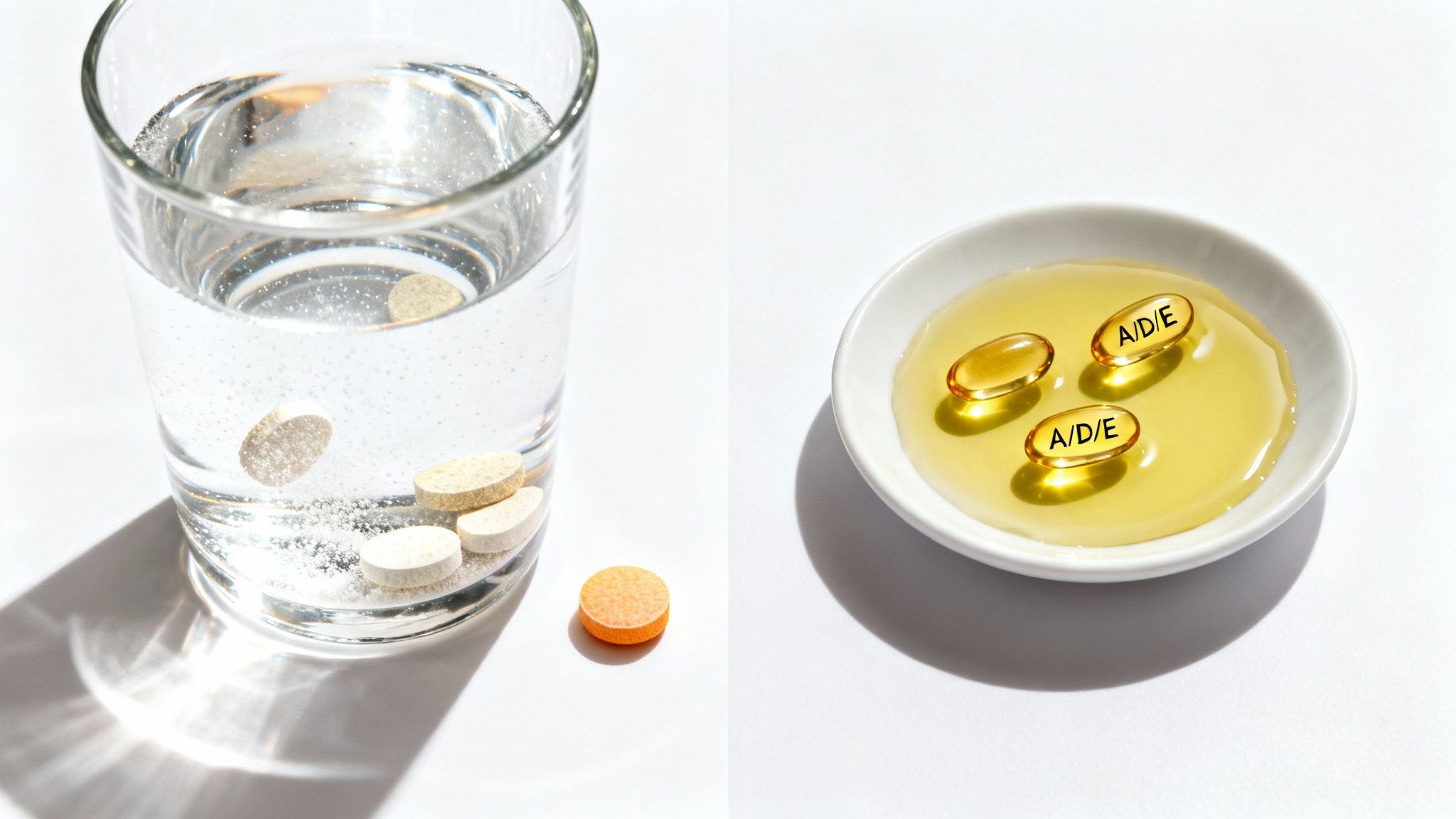
- Fat-Soluble Vitamins: This group covers vitamins A, D, E, and K. These vitamins need dietary fat to be absorbed properly. They are then stored in your body's fatty tissues and liver. Taking them with a meal containing healthy fats, like avocado or a drizzle of olive oil, is crucial for them to do their job.
Understanding this core difference transforms your supplement schedule from a daily guess into a confident, science-backed ritual for better health. It's the foundational principle that dictates when and how you should take almost every vitamin.
This simple idea—water vs. fat—is the foundation of your entire supplement schedule.

The key takeaway is that water-soluble vitamins are easily absorbed with just a glass of water, while fat-soluble vitamins depend on being paired with food. This distinction forms the basis of any effective timing strategy, and we'll dig into exactly how to apply this knowledge next.
Understanding Water-Soluble vs. Fat-Soluble Vitamins
To get the most out of your supplements, you first need a grasp on how your body actually uses them. It’s a bit like making a salad dressing – you know oil and water don’t mix on their own and need a bit of help to combine. Vitamins are surprisingly similar, falling into two main teams based on how they’re absorbed and stored.
This single difference is the most important piece of the puzzle when it comes to timing your vitamins. Nailing this means you’re not just popping pills; you're actively helping your body put them to work.
The Water-Soluble Team: B-Complex and Vitamin C
First up, you have the water-soluble vitamins. This group includes Vitamin C and the entire B-vitamin family (think B12, B6, and folic acid). Just as the name suggests, they dissolve in water.
This means they’re absorbed into your bloodstream pretty quickly and easily, often needing nothing more than a glass of water. Your body grabs what it needs from them almost immediately, and because they aren't stored for long, any excess is usually flushed out within a few hours.
This is a classic "use it or lose it" situation. Your body doesn't keep a big stash of these vitamins, so you need to top up your supply daily to keep things like energy production and immune health ticking over.
It's for this reason that a lot of people find taking B-complex vitamins in the morning helps give their day a bit of a kickstart, as they're directly involved in converting food into energy.
The Fat-Soluble Team: Vitamins A, D, E, and K
On the other side of the fence are the fat-soluble vitamins: A, D, E, and K. Unlike their water-loving counterparts, these guys don't dissolve in water. To get absorbed properly from your small intestine, they need to hitch a ride with some dietary fat.
Taking a fat-soluble vitamin like Vitamin D on an empty stomach is like trying to send a parcel with no address – it just won’t get delivered. To make sure these nutrients reach their destination, you absolutely must take them with a meal or snack containing some healthy fats.
Good options to pair with these vitamins include:
- Avocado on toast
- A handful of nuts or seeds
- Full-fat yoghurt
- A salad drizzled with an olive oil dressing
Once they’re absorbed, these vitamins are stored in your body's fatty tissues and liver. This creates a reserve your body can tap into whenever it needs it.
So, What Does This Mean for Your Daily Routine?
This basic difference directly shapes how you should schedule your supplements. Here in the UK, health experts often suggest timing your vitamins to match your body’s natural rhythm and meal times. Research backs this up, showing that water-soluble vitamins are best taken with breakfast to help with energy throughout the day. In contrast, fat-soluble vitamins are much better absorbed with meals that have some fat, which for most of us means lunch or dinner. This is especially true for Vitamin D, which is widely supplemented between October and March. You can find more insights about optimal vitamin timing from UK health experts to help fine-tune your schedule.
By simply splitting your supplements based on whether they’re water- or fat-soluble, you’re creating a much smarter and more effective routine. It’s a small change that respects your body's biology, making sure every vitamin you take has the right conditions to do its job properly.
Building Your Morning Routine for Energy and Focus
The morning is the perfect time to arm your body with the fuel it needs for the day ahead. Think of your morning supplements as the spark plugs for your body's engine; they get everything firing correctly right from the start.
This isn't about just randomly popping pills. It's a blueprint for your AM routine, zeroing in on the vitamins and minerals that kickstart your metabolism and sharpen your cognitive function.
We'll look at why certain water-soluble vitamins are your best friends first thing, and how pairing specific minerals can seriously amplify their power. This is your guide to starting each day feeling energised, sharp, and ready to take on whatever comes your way.
Kickstart Your Day with B-Complex Vitamins
If one supplement group absolutely belongs in your morning routine, it’s the B-complex vitamins. This family of eight distinct B vitamins—including heavy hitters like B12, B6, and folate—is central to converting the food you eat into usable energy. Taking them with breakfast helps your body get to work metabolising the carbohydrates, fats, and proteins from your meal. Simple as that.
Because they're so directly involved in energy production, taking B vitamins later in the day can sometimes mess with sleep, especially for sensitive people. By making them a core part of your morning schedule, you're syncing their benefits with your body's natural circadian rhythm, boosting alertness when you actually need it.
For anyone looking to really dial in their mental and physical performance, understanding how to stack these nutrients is key. Dive deeper into creating a powerful morning combination in our guide on the best supplements for energy and focus.
The Power Couple: Iron and Vitamin C
Iron is another crucial mineral best taken in a morning slot, ideally on an empty stomach if you can handle it. It's absolutely vital for making haemoglobin, the protein in red blood cells that ferries oxygen from your lungs to the rest of your body—brain and muscles included.
When iron levels are low, it can lead to that all-too-familiar feeling of fatigue, brain fog, and poor concentration. But here's the catch: iron can be notoriously tricky for the body to absorb. This is where its perfect partner, Vitamin C, steps in.
Taking iron alongside Vitamin C can massively increase its bioavailability. The vitamin C creates a more acidic environment in your stomach, which helps convert iron into a form your body can actually grab onto and use. A simple glass of orange juice or a Vitamin C supplement can make all the difference.
This strategic pairing ensures you're getting the full benefit of the iron, helping to keep your oxygen transport and energy levels topped up all day long.
Optimising Absorption for Women's Health
For women, timing can be especially important. Iron supplementation studies, for instance, show that absorption can be up to 37% higher when taken in the morning compared to the afternoon. This is a huge deal, especially when you consider that iron deficiency anaemia affects about 10-20% of women in the UK.
On top of that, folic acid (one of the B vitamins) is essential for women trying to conceive and during early pregnancy, with a recommended daily dose of 400 micrograms. Taking it early in the day makes perfect sense, aligning with the body's peak periods of active cell growth.
What Your Ideal Morning Routine Looks Like
Ready to put this all into practice? Here’s a simple but seriously effective morning supplement schedule:
- Upon Waking (Empty Stomach): Take your iron supplement with a glass of water and a source of Vitamin C. Try to wait about 30-60 minutes before breakfast to maximise absorption and avoid any potential stomach upset.
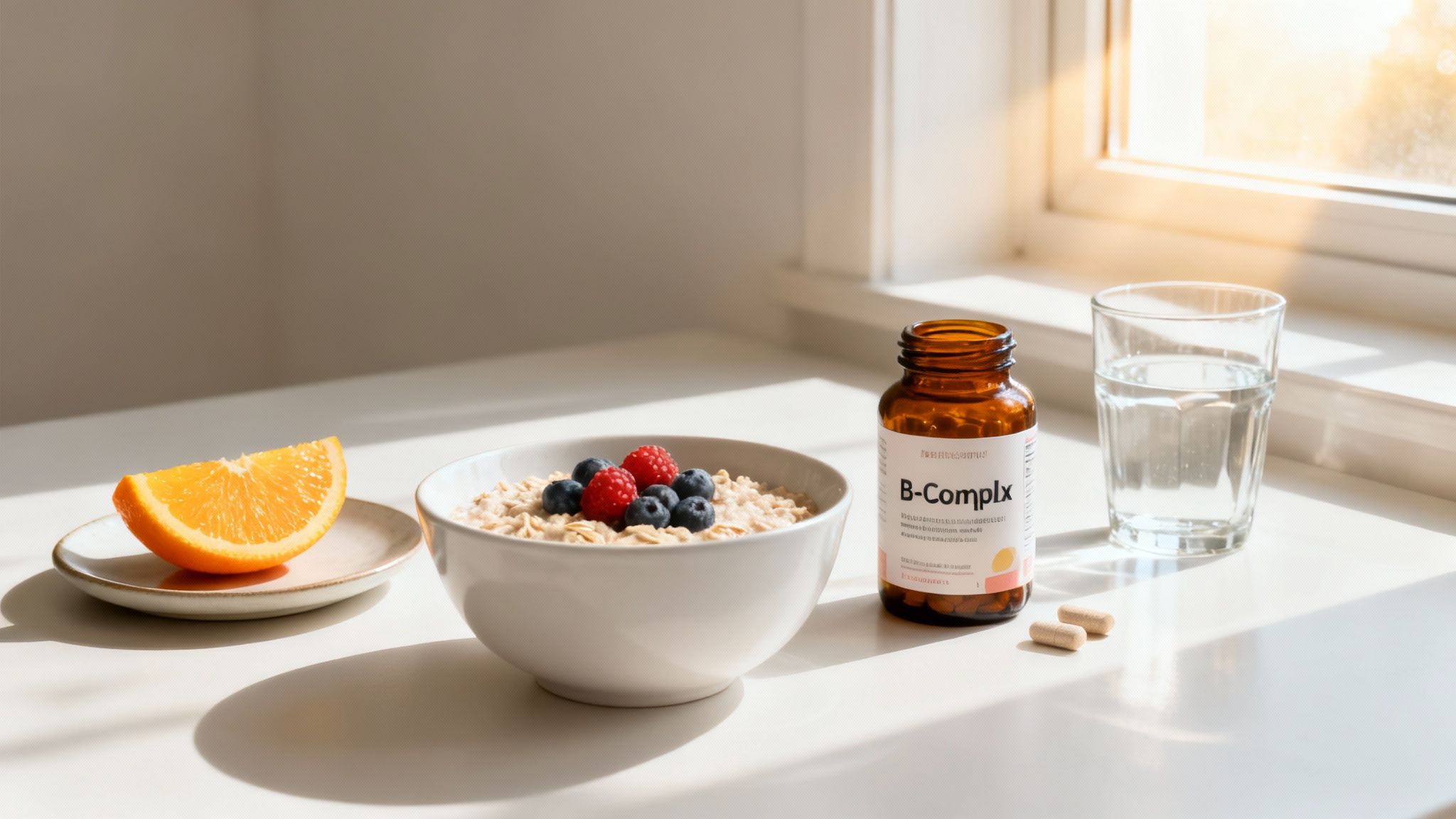
- With Breakfast: Now it’s time for your B-complex vitamins and any other water-soluble supplements, like a general multivitamin. The food helps buffer your stomach and provides the very fuel that the B vitamins will help convert into energy.
This straightforward two-step process ensures you’re not only taking the right supplements for energy but also timing them perfectly to get the biggest bang for your buck. By separating your iron and pairing your B vitamins with your meal, you’re laying a powerful foundation for a productive and focused day.
Scheduling Supplements Around Your Meals
While your morning routine sets the stage for energy and focus, some supplements perform best when they have a co-star—food. These are the nutrients that need a little help to be absorbed properly, making mealtimes the perfect opportunity to take them.
This section focuses on the vitamins and minerals that depend on the food you eat, especially dietary fats, to do their job. We’ll explore why fat-soluble vitamins are best taken with lunch or dinner and how this simple habit can significantly boost their effectiveness.
From multivitamins to omega-3s, understanding which supplements to pair with meals is a key part of building a truly optimised routine.
Maximising Fat-Soluble Vitamins (A, D, E, K)
The fat-soluble vitamins—A, D, E, and K—are essential for everything from immune function and bone health to vision and blood clotting. Unlike their water-soluble cousins, you can't just wash them down with a glass of water and expect them to work.
Instead, they need to hitch a ride with fat in your gut before they can be transported into your bloodstream. Taking these vitamins on an empty stomach drastically reduces how much your body can actually use, meaning you could be missing out on their key benefits.
For this reason, the best time of day to take vitamins like D and K is with a meal containing healthy fats.
Think of it like this: dietary fat acts as a taxi service for these vitamins. Without the taxi, the vitamins are left stranded on the kerb, unable to reach their destination in your body where they're needed most.
The good news is you don't need a heavy, greasy meal. Just a small amount of healthy fat is enough to kickstart the absorption process.
Ideal Meals for Better Absorption
To ensure you're getting the most from your fat-soluble vitamins, try pairing them with meals that include sources of healthy fats such as:
- Avocado: Sliced on toast, tossed in a salad, or as guacamole.
- Nuts and Seeds: A handful of almonds, walnuts, or chia seeds sprinkled over your meal.
- Oily Fish: Salmon, mackerel, or sardines are packed with beneficial fats.
- Olive Oil: A simple drizzle over a salad or cooked vegetables works perfectly.
- Full-Fat Yoghurt: A great option for a nutrient-dense lunch.
Scheduling these supplements with your lunch or dinner is usually the easiest way to ensure you’re consuming them with adequate fat.
Why Multivitamins Belong with Meals
If you take a daily multivitamin, the same rule applies. Most multis contain a mix of both water-soluble and fat-soluble vitamins. To make sure you’re absorbing the full spectrum of nutrients—especially the fat-soluble A, D, E, and K—taking it with a meal is the smartest strategy.
Taking it with food also helps sidestep the nausea or stomach upset some people feel when taking multis on an empty stomach, particularly those containing minerals like iron or zinc. For a deeper dive into potential interactions, it helps to understand the best practices, like those in our guide on whether you can take vitamin D and iron together.
Omega-3s and Digestive Comfort
Omega-3 fish oil supplements are another classic example of a supplement that benefits hugely from being taken with food. As a fat itself, omega-3 is much better absorbed when consumed with other dietary fats.
Even better, one of the most common complaints about fish oil is indigestion or the dreaded "fishy burps." Taking your omega-3 supplement with a meal helps to minimise these unpleasant effects, making it a much more pleasant experience.
As you plan your meals, you might also be looking for other ways to boost your nutrient intake. For those focused on fitness, exploring methods for integrating protein powder into your cooking can offer extra benefits alongside your regular supplement schedule. By strategically pairing supplements with well-rounded meals, you create a powerful system that supports both absorption and digestive comfort.
Crafting Your Evening Routine for Rest and Recovery
As the day winds down, your supplement strategy needs a gear change. It’s time to shift focus from fuelling your day to supporting your body’s natural rest, relaxation, and repair cycles. A smart evening routine isn’t just about popping more pills; it’s about choosing specific nutrients that work with your biology, not against it.
This is your guide to building a powerful evening ritual. We’ll look at why certain minerals are the undisputed stars of the night, how clever herbs can help you switch off, and how to put it all together to wake up feeling genuinely restored.
Magnesium: The Ultimate Relaxation Mineral
When it comes to evening supplements, magnesium is the headline act. This essential mineral is involved in over 300 different processes in the body, but its role in promoting relaxation and deep sleep is what makes it a nighttime hero.
Magnesium helps to calm the entire nervous system by regulating neurotransmitters that tell your brain and body it’s time to quieten down. Specifically, it helps maintain healthy levels of GABA (gamma-aminobutyric acid), a neurotransmitter that gives you that feeling of calm. Think of it as a gentle hand on the dimmer switch for your brain, helping to turn down the mental chatter from a busy day.
By supporting neurotransmitter function and relaxing muscles, magnesium doesn't just help you fall asleep—it improves the quality of your sleep. It encourages the deep, restorative stages of slumber that are crucial for physical repair and mental clarity.
This makes it an absolute must-have for anyone struggling to unwind or looking to get more out of their overnight recovery. To dive deeper into timing and dosage, our detailed guide explains the best time to take magnesium for maximum benefit.
Ashwagandha and Adaptogens for Stress Reduction
Let’s face it, stress is a major barrier to quality rest. When your body is flooded with the stress hormone cortisol, it’s stuck in "fight or flight" mode, which makes relaxing next to impossible. This is where adaptogens like ashwagandha come into play.
Adaptogens are unique herbs that help your body adapt to and manage stress more effectively. Taking ashwagandha in the evening can help lower cortisol levels, signalling to your body that the stressful part of the day is over and it's safe to power down.
Here’s how it helps get you ready for rest:
- Lowers Cortisol: Ashwagandha has been shown to significantly reduce evening cortisol, helping to shift your body from a state of high alert to one of rest.
- Promotes Calm: It works on the central nervous system to ease feelings of anxiety and promote a state of mental tranquillity.
- Balances Hormones: By managing your stress response, ashwagandha supports a healthier hormonal balance, which is vital for restorative sleep and overall well-being.
This calming effect makes it an ideal partner for magnesium in your evening routine. Together, they create a powerful synergy that tackles both physical tension and mental stress.
Enhancing Overnight Repair with Mushroom Blends
While you sleep, your body is hard at work repairing tissues, consolidating memories, and clearing out cellular junk. Certain supplements, particularly functional mushroom blends, can give these natural overnight processes a helping hand.
Mushrooms like Reishi are highly regarded for their calming properties and their ability to support the immune system. Reishi is often called the "mushroom of immortality" for its wide-ranging benefits, but its power as a sleep aid is particularly impressive. It works in harmony with your body’s natural rhythms to encourage deeper, more restful sleep cycles.
By combining these evening-focused supplements, you create a comprehensive support system. Magnesium relaxes the body, ashwagandha calms the mind, and functional mushrooms enhance the deep repair work that happens while you sleep. This strategic evening routine ensures you wake up not just rested, but truly restored and ready for the day ahead.
Timing Your Supplements for Peak Athletic Performance
For anyone serious about fitness, the best time of day to take vitamins and supplements isn't just about general health—it's about performance. Nailing the timing can give you a real edge, helping to fuel your workouts, speed up recovery, and build stronger muscle.
This is where your supplement schedule levels up from a daily habit to a core part of your training plan. We'll look at how to time key performance boosters like creatine and protein to squeeze the most out of every single session.

The Great Creatine Debate: Pre vs. Post-Workout
Creatine is one of the most heavily researched and proven supplements for boosting strength, power, and muscle mass. It works by topping up your body's reserves of phosphocreatine, a molecule that helps produce energy during high-intensity bursts like sprinting or lifting heavy. But when should you take it?
The pre- versus post-workout debate has been raging for years. Taking it beforehand seems logical—you're filling up the tank right before you need the fuel. However, the research actually points to a slight advantage for taking it after your workout.
Post-workout, your muscles are like sponges, primed for nutrient uptake. When you take creatine alongside a protein and carb shake, you get an insulin spike which can help shuttle that creatine into your muscle cells more effectively.
But here’s the most important thing with creatine: it's not about the exact minute you take it, but that you take it every single day. Consistency is what keeps your muscle stores saturated and ready for action. That matters far more than precise pre- or post-workout timing.
Ultimately, just find a time that works for you and stick to it, whether that’s before your workout, after, or even on a rest day.
Maximising Muscle Repair with Protein and Amino Acids
After a tough session, your muscle fibres are broken down and screaming out for repair. This is where protein and amino acids step in, providing the essential building blocks your body needs to rebuild bigger and stronger than before.
There’s a well-known window of opportunity after training, often called the "anabolic window," where your muscles are most receptive to nutrients. Having a fast-digesting protein source, like a whey protein shake, within 30 to 60 minutes of finishing your workout is a great way to kickstart the muscle repair process.
For the best results, aim for a serving that delivers around 20-40 grams of protein. This ensures you get enough leucine, the key amino acid that flicks the switch for muscle repair and growth. Pairing your protein with some simple carbs can also help refill your depleted glycogen stores, speeding up your overall recovery.
By weaving these performance supplements into your daily routine, you're supporting both your immediate training goals and your long-term health. A morning B-complex fuels your energy, post-workout protein repairs your muscles, and an evening dose of magnesium aids recovery—creating a full, 24-hour cycle of nutritional support for peak performance.
Frequently Asked Questions About Vitamin Timing
Navigating the world of supplements can feel like a minefield, but a few key principles will help you build the perfect schedule with confidence. Here are some straightforward answers to the most common questions people ask about timing their vitamins.
This should help you fine-tune your routine and sort out any little hitches along the way.
What if I Miss a Dose of My Vitamins?
It happens to all of us. If you miss a dose, the best thing to do is simply skip it and get back on track with your next scheduled one. You should never double up on your next dose to "catch up."
For water-soluble vitamins like the B-complex and C, your body just gets rid of any excess, so a double dose is pretty much pointless. More importantly, for fat-soluble vitamins (A, D, E, and K), taking too much at once can lead to a harmful build-up, since your body stores them. Consistency over the long haul is what truly counts.
Can I Take All My Supplements at the Same Time?
While it might seem like the easiest option, chucking all your supplements back in one go is rarely the best strategy. Different vitamins and minerals have different needs, and sometimes they can actually get in each other's way.
For instance, high doses of calcium can block your body from absorbing iron properly, while zinc and copper compete for the same entry pass into your system. Following a staggered schedule—energy-boosters in the morning, others with meals, and calming nutrients at night—is the best way to make sure you get the maximum benefit from each one.
Does an Empty Stomach Cause Problems with Vitamins?
For some people, absolutely. Certain supplements, especially minerals like iron and zinc, are notorious for causing nausea or an upset stomach when taken without food. Even a B-complex can cause a bit of discomfort for those with a sensitive gut.
If you find yourself feeling a bit queasy after taking your supplements, the fix is usually quite simple. Try taking them with a small meal or snack to give your stomach a bit of a buffer. The key is to pay attention to how your body responds and adjust your timing to find what works for you.
Always check the product label for specific instructions, but listening to your body is the ultimate guide to creating a routine that feels good and gets results.
At VitzAi.com, we take the guesswork out of building your perfect supplement routine. Our AI-driven platform provides personalised recommendations based on your unique goals and biology, ensuring you get the right nutrients at the right time. Discover your personalised stack today!
This article is for informational purposes only and is not medical advice. Always consult a qualified health professional before starting any new supplement or major lifestyle change.