

A Guide to Brain Health Supplements for Cognitive Performance
Brain health supplements are compounds designed to support your mind's core functions, like memory, focus, and mental clarity. They work by delivering the specific nutrients your brain needs to perform at its best, helping you cut through brain fog and manage stress.
Why Smart Nutrition Is Key to Your Cognitive Edge
In a world that demands non-stop mental sharpness, it’s all too easy to feel like you’re falling a step behind. Between a high-pressure career, personal life, and a constant flood of information, brain fog and distraction can start to feel like the new normal.
Sound familiar? You might find yourself reaching for another coffee, only to get a temporary lift before the inevitable energy crash. This cycle highlights something crucial: your brain, just like a high-performance engine, needs the right fuel to run smoothly.
This is where brain health supplements can make a real difference. Let's be clear—these aren't magic pills that promise instant genius. Think of them as targeted nutritional tools, designed to fill specific gaps and support your cognitive machinery. You wouldn't expect your car to run well on dodgy fuel, and the same logic applies to your brain.
Bridging the Gap Between Diet and Performance
Even with a healthy diet, the demands of modern life can drain the nutrients essential for peak mental performance. Stress, patchy sleep, and environmental factors all put a heavy load on your cognitive resources. For a closer look at how specific dietary habits can support brain function, particularly for conditions like ADHD, this practical ADHD meal plan for better focus is a great resource.
Smart supplementation helps bridge this gap by delivering concentrated doses of key compounds that support:
- Enhanced Focus and Clarity: Certain nutrients are the building blocks for neurotransmitters responsible for attention and concentration, helping you stay locked in on the task at hand.
- Improved Memory and Recall: Key ingredients can support the brain's structure and its ability to form new connections (plasticity), which is vital for learning and remembering things.
- Greater Stress Resilience: Adaptogens and other compounds can help your body better regulate its response to stress, preventing that feeling of mental burnout.
By looking at supplements as one part of a bigger nutritional strategy, you can move past generic advice and start building a solid foundation for sustained cognitive excellence. It’s all about giving your brain precisely what it needs to thrive.
This guide will walk you through the science-backed ingredients that power a sharper mind, helping you figure out how to build a personalised approach and unlock your full potential.
Understanding the Foundations of Brain Nutrition
To really get your head around brain health supplements, it helps to think of your brain as a complex, high-performance engine. It can’t just run on anything; it needs specific types of fuel to handle different jobs, from generating power to keeping all its parts in good working order. Each category of supplements plays a unique part in keeping this engine humming.
It's clear this is an area people are paying more attention to. Here in the UK, the demand for brain health support is surging, with the market hitting USD 381.7 million in 2024. Projections show it climbing to a huge USD 725.8 million by 2030, largely thanks to health-conscious millennials and Gen Z who are putting cognitive boosters at the top of their priority list. You can dig into more insights on this preventive health trend over at Grand View Research.
So, let's break down the core pillars of brain nutrition and the jobs they do.
The Key Players in Brain Health
To simplify things, here's a quick rundown of the main supplement categories and what they bring to the table. Each one targets a different aspect of cognitive health, from building brain structure to managing stress.
| Supplement Category | Primary Role in the Brain | Common Examples |
|---|---|---|
| Omega-3s | Structural integrity and cell communication | DHA, EPA (from fish oil or algae) |
| B-Vitamins | Energy production and neurotransmitter synthesis | B6, B9 (Folate), B12 |
| Adaptogens | Stress resilience and cortisol regulation | Ashwagandha, Rhodiola Rosea |
| Nootropics | Enhanced cognitive function and mental energy | L-Theanine, Creatine, Choline |
Think of these categories as different teams, all working together to support your brain's overall performance. Now, let’s look at what each team does in a bit more detail.
The Structural Support Crew: Omega-3s
Think of Omega-3 fatty acids—especially DHA (docosahexaenoic acid)—as the essential building materials for your brain. Just like a house needs solid bricks and mortar, your brain cells rely on these fats to build and maintain healthy, flexible membranes.
These membranes are absolutely critical for cell-to-cell communication. When they’re fluid and healthy, messages can zip between neurons efficiently. This underpins everything from learning a new skill to recalling a cherished memory. A lack of these fats is like trying to build with crumbling bricks; the whole structure becomes less stable and far less efficient.
The Clean Energy Generators: B-Vitamins
If Omega-3s are the structure, then B-vitamins are the clean-burning fuel and the electricians for your brain. They are absolutely essential for converting the food you eat into cellular energy (ATP), which powers every single thought you have and action you take. Without enough B-vitamins, your brain can feel sluggish and foggy, a bit like a car engine struggling to ignite.
They also play a huge part in creating neurotransmitters—the chemical messengers like serotonin and dopamine that regulate your mood, focus, and motivation. For a more detailed look at what they do, you can check out our guide on what the vitamin B complex is good for.
The diagram below shows how these core nutrients support the key pillars of a healthy mind.
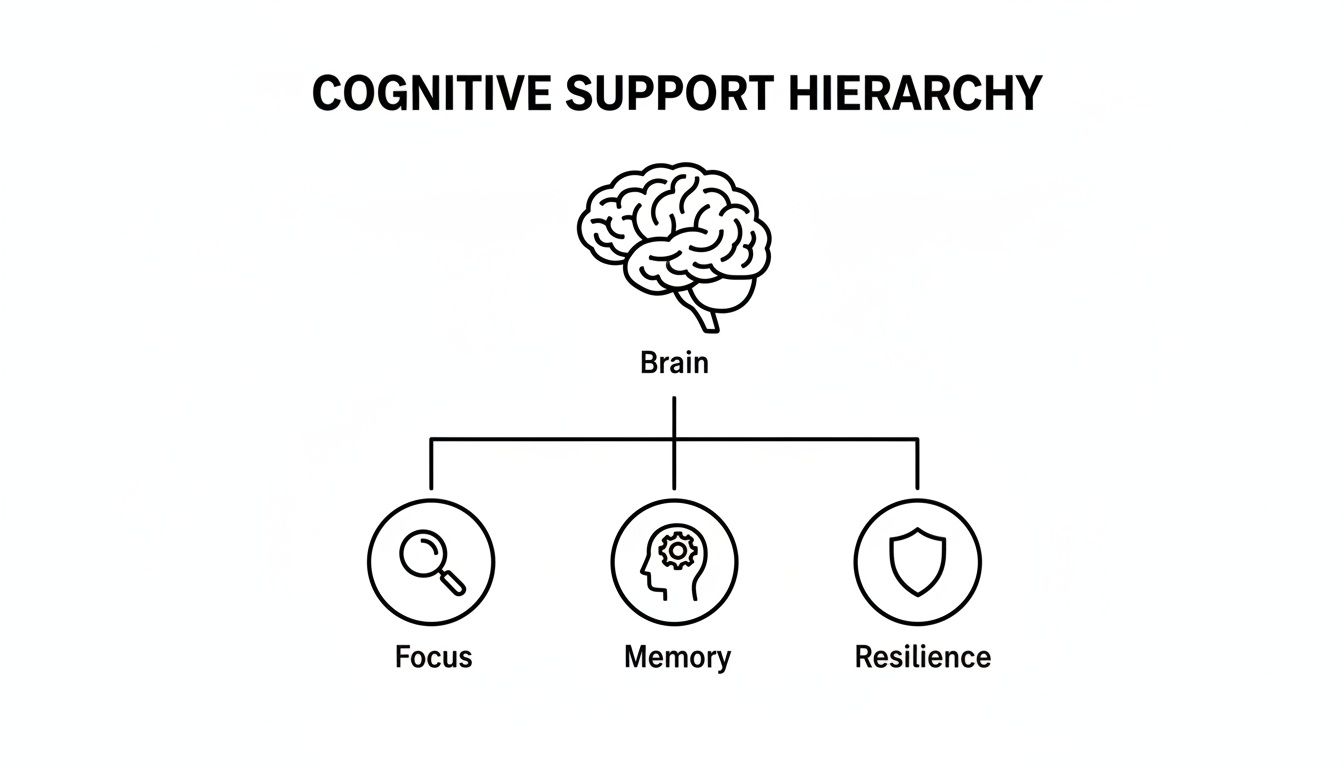
As you can see, foundational nutrition is the bedrock that allows higher-level cognitive functions—like focus, memory, and resilience—to flourish.
The Stress Management System: Adaptogens
Every high-performance engine runs the risk of overheating when it’s pushed too hard. For your brain, this "overheating" comes in the form of chronic stress, which floods your system with the hormone cortisol. Over time, persistently high cortisol levels can damage brain cells and seriously disrupt your cognitive function.
This is where adaptogens like Ashwagandha step in. Think of them as your brain’s cooling system.
Rather than just masking symptoms, adaptogens help your body's stress-response system become more efficient. They help modulate cortisol levels, allowing you to handle pressure without burning out and protecting your long-term cognitive health.
They act a bit like a thermostat for your stress response, helping to keep everything in a balanced, optimal range.
The High-Octane Fuel: Nootropics
Finally, we have nootropics. This is a broad category of substances that directly support cognitive function, and one of the most powerful examples is Creatine. While most people link it to muscle growth, creatine is an absolute powerhouse for mental energy.
Your brain is incredibly energy-hungry, gobbling up about 20% of your body's total energy despite making up only 2% of its weight. Creatine works by rapidly recycling ATP, which is the main energy currency of your cells.
This provides an immediate source of high-octane fuel for demanding mental tasks, like complex problem-solving or intense focus sessions. It’s the turbo-boost for your brain's engine, giving you that extra power right when you need it most. By understanding these foundational categories, you can start to see how different brain health supplements work together to create a powerful, synergistic effect on your overall cognitive performance.
A Deep Dive into Top-Tier Nootropic Ingredients
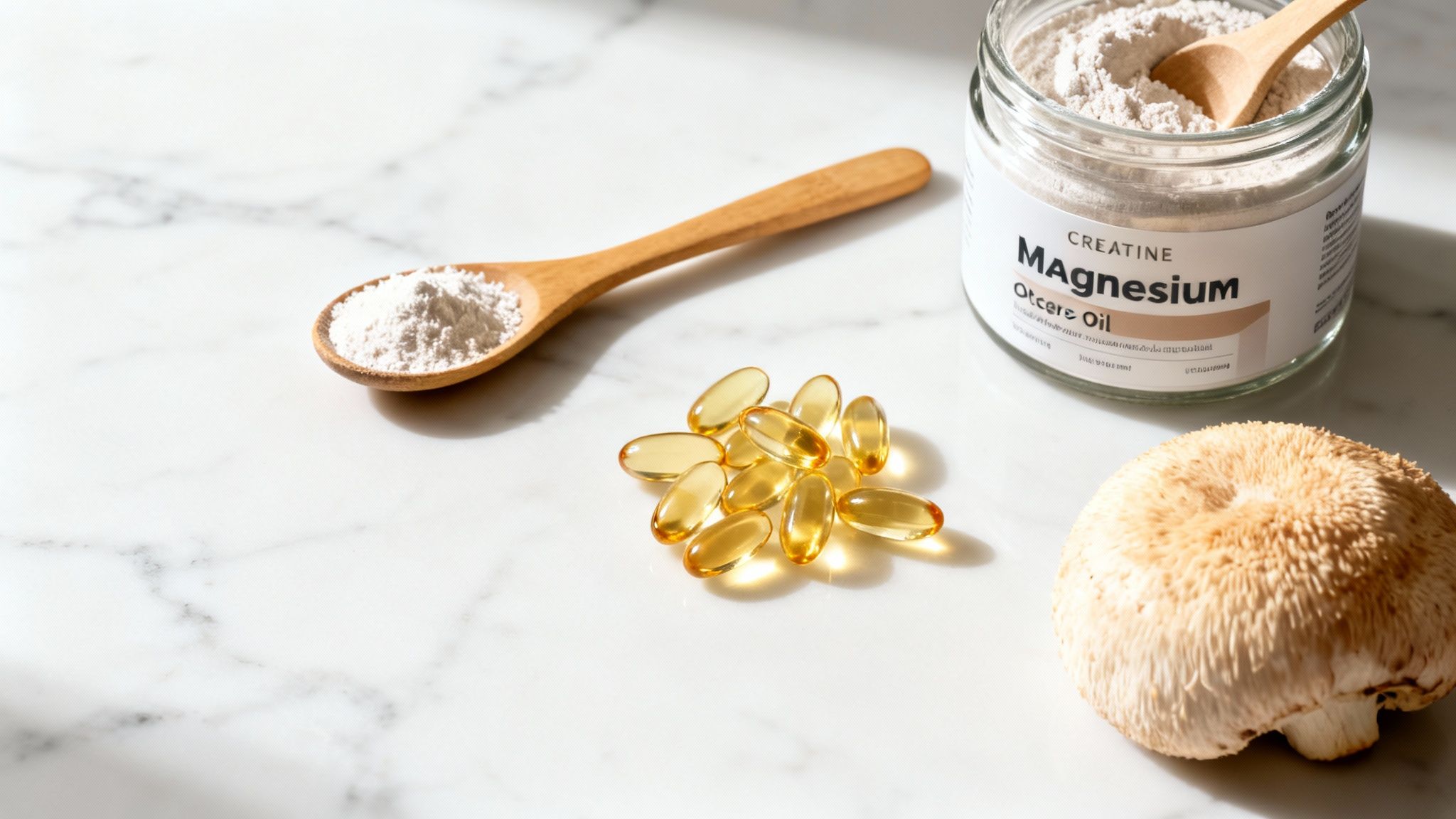
Alright, we've sketched out the major categories of brain health supplements. Now it’s time to get up close and personal with the specific, science-backed ingredients that are actually doing the heavy lifting.
Think of it like this: knowing the categories is like knowing the different sections of an orchestra. Now, we're going to meet the star players in each section—the individual compounds that create the cognitive symphony.
Getting to grips with these key ingredients—what they are, how they feel, and who they’re best for—is the first real step toward building a supplement plan that works for you. Let's pull back the curtain on some of the most effective nootropics out there.
Creatine for Rapid Mental Energy
Most people associate Creatine Monohydrate with the gym, thinking of it as a tool for building muscle. While it’s fantastic for that, it's also one of the most powerful and well-researched nootropics we have. Your brain is a ridiculously energy-hungry organ, and creatine acts as a rapid-recharge system for your brain cells. It helps regenerate ATP, your body's main energy currency, letting your brain fire on all cylinders when the pressure is on.
This isn’t just theoretical; it translates into real-world benefits for anyone doing intense mental work.
- Who benefits most? Students cramming for exams, professionals juggling deadlines, and really anyone looking to sharpen their short-term memory and reasoning. It's especially useful for those on plant-based diets, who naturally have lower creatine levels to begin with.
Magnesium L-Threonate for Brain Plasticity
Not all magnesium is the same, particularly when it comes to your brain. Magnesium L-Threonate is a standout because it's uniquely able to cross the blood-brain barrier effectively. This means it can actually raise magnesium levels inside the brain, where it's vital for supporting the density and flexibility of your synapses.
Think of brain plasticity as your mind's ability to learn new tricks, forge fresh connections, and adapt. By supporting this process, Magnesium L-Threonate is a brilliant long-term play for learning, memory, and cognitive resilience, especially as we get older.
Ashwagandha for Stress Resilience
In our always-on world, chronic stress is one of the biggest thieves of cognitive bandwidth. Ashwagandha, a legend in Ayurvedic medicine, is an adaptogen that helps your body get a better handle on stress. It works by helping to modulate cortisol, the hormone that gets pumped out when you're feeling frazzled.
When cortisol is constantly high, it can lead to that familiar feeling of brain fog, anxiety, and a memory that feels like a sieve. By helping to bring that response back into balance, Ashwagandha creates a calmer, more focused mental environment.
Ashwagandha doesn’t just numb you to stress; it fortifies your resilience. It's like upgrading the shock absorbers on your brain, letting you navigate life's bumps without getting rattled. It’s a foundational supplement for anyone trying to stay sharp amidst the chaos.
Omega-3s: The Brain’s Structural Foundation
We've mentioned Omega-3s already, but it’s worth going a bit deeper on EPA (eicosapentaenoic acid) and DHA (docosahexaenoic acid). These aren't just helpful extras; they are the literal building materials for your brain cell membranes. DHA, in particular, makes up a huge chunk of your brain's grey matter.
Keeping a steady supply of these healthy fats ensures your brain cells stay fluid and flexible, which is essential for neurons to communicate efficiently. This structural integrity is directly linked to better memory, a more stable mood, and a lower risk of cognitive issues down the line. For serious, long-term brain health, this one is non-negotiable.
Methylated B-Vitamins for Neurotransmitter Synthesis
B-vitamins are the quiet, hardworking crew behind the scenes of brain function. They’re essential cofactors in countless metabolic processes, but methylated forms of B-vitamins—like methylfolate (B9) and methylcobalamin (B12)—are the real VIPs. Methylation is a fundamental biochemical process needed for everything from repairing DNA to producing neurotransmitters.
These "active" forms of B-vitamins are body-ready, meaning your system can use them straight away without needing to convert them first. This is a game-changer for the huge number of people who have genetic quirks that make that conversion process sluggish. They directly fuel the creation of mood-shaping neurotransmitters like serotonin and dopamine, making them crucial for mental clarity and emotional equilibrium.
Lion's Mane: The Nerve Growth Promoter
Functional mushrooms are finally getting the recognition they deserve, and Lion's Mane is the rock star when it comes to cognitive health. This fascinating mushroom contains unique compounds called hericenones and erinacines, which have been shown in studies to stimulate the production of Nerve Growth Factor (NGF).
NGF is a protein that’s absolutely critical for the survival, maintenance, and regeneration of your neurons. By boosting NGF, Lion's Mane can help protect the brain from age-related decline and support its ability to form new neural pathways. It’s a truly forward-thinking choice for anyone focused on neuroprotection and cognitive longevity.
Why Your Brain Health Strategy Must Be Personal
Those generic "brain booster" pills you see everywhere often promise the world but rarely deliver. Why? Because our cognitive needs are as unique as our fingerprints. What gives one person laser focus might do next to nothing for someone else. This is exactly why a personalised strategy isn't just a nice-to-have—it's the only way to get real, noticeable results.
Think of it like getting a personal trainer. You wouldn't give a 25-year-old training for a marathon the same plan as a 55-year-old working on mobility and strength. Their goals, biology, and starting points are worlds apart. The same logic applies to supporting your brain.
Your Unique Cognitive Needs
Let's look at two real-world examples to see why this matters so much.
Picture a busy professional woman in her 30s. She’s juggling a demanding career, trying to keep a social life, and dealing with hormonal fluctuations every month. Her biggest battles are likely managing high stress levels and keeping her energy from crashing.
For her, a supplement plan geared towards stress resilience and balance would be a game-changer. This might look like:
- Ashwagandha: To help her body manage its cortisol response, taking the sharp edge off daily pressures.
- Magnesium: To support relaxation, deepen her sleep quality, and ease tension tied to her cycle.
Now, think about a man in his late 40s. He’s shifting his focus to long-term health, wanting to protect his cognitive function as he gets older and maintain his physical stamina. His priorities are all about neuroprotection and sustained energy.
His ideal stack would be completely different:
- Omega-3s (DHA/EPA): To support the physical structure of his brain cells and promote cardiovascular health.
- B-Vitamins: To keep his energy metabolism running efficiently and support the creation of neurotransmitters for mental clarity.
These examples make it clear: an effective brain health strategy has to take your age, sex, lifestyle, and specific goals into account. Grabbing a generic "focus pill" off the shelf ignores all that crucial context, often leading to nothing but wasted money and disappointment.
Moving Beyond Guesswork with Data
This is where a smarter approach comes in. Instead of just guessing or trying what worked for a friend, a data-driven method lets you build a supplement plan based on you.
We're already seeing this shift in people's habits. The latest National Diet and Nutrition Survey shows that over 50% of UK adults now regularly take dietary aids, and there's been a huge jump in supplements for memory, focus, and mood. For the VitzAI community, this is deeply personal: men over 40 are looking for nootropics that also support heart and joint health, while women under 40 want energy stacks that work with their hormonal cycles. You can explore more of these market insights to see just how big personalised nutrition is becoming.
An AI-powered quiz, for example, can analyse the key factors about you in just a couple of minutes.
Here’s what the very first step of a quiz like that looks like.
By starting with foundational questions about your age and sex, the system immediately begins filtering for the biological factors and health priorities most relevant to your demographic.
This isn't about getting a vague suggestion. It's about using intelligent technology to pinpoint your specific needs and match them with the most effective, science-backed ingredients. You get to invest in a strategy built for your biology.
This personalised method ensures you’re not just taking supplements, but taking the right supplements for you. It’s the difference between blindly following a trend and making a smart, strategic decision for your long-term cognitive wellness. By tailoring your approach, you can finally stop hoping for results and actually start feeling them.
Lifestyle Habits That Amplify Your Cognitive Results

While targeted brain health supplements give you the raw materials for better cognitive performance, they don't operate in a bubble. If you really want to unlock your mind's full potential, you need to pair smart supplementation with powerful daily habits.
Think of it this way: supplements are the high-octane fuel for your brain, but your lifestyle is the engine maintenance. Without that maintenance, even the best fuel can't get you very far. This synergy is where the real magic happens, creating an upward spiral where your diet and daily routines build on each other.
It's clear people are catching on to this holistic view. The UK brain supplements market is set to explode, growing from US$0.96 billion in 2024 to an incredible US$2.87 billion by 2032. This isn't just a fleeting trend; it reflects a major shift towards proactive cognitive care, driven by an ageing population and a greater focus on mental wellbeing. People are looking for complete, long-term solutions, not just quick fixes. You can read the full research on this market growth to get the complete picture.
Prioritise Deep, Restorative Sleep
Sleep isn't a luxury; it's absolutely non-negotiable for a sharp mind. It's during those deep sleep cycles that your brain performs its essential nightly MOT, clearing out metabolic junk, locking in memories, and repairing cells.
Skimping on sleep is like trying to run advanced software on a laptop that never shuts down. Sooner or later, things just start to glitch. This is where a supplement like Magnesium can be a real game-changer. It helps quiet the nervous system and promotes relaxation, improving your sleep quality so your brain can get its maintenance work done properly. You'll wake up feeling genuinely refreshed, not just less tired.
Manage Stress with Mindfulness
Constant stress is like poison for your brain. It floods your system with cortisol, a hormone that can mess with your memory and ramp up brain fog over time. Adaptogens like Ashwagandha are fantastic for helping your body build resilience to stress, but they're most effective when you team them up with active stress-management techniques.
Think of it as a powerful one-two punch against stress. You can try:
- Meditation: Just 10 minutes a day can make a huge difference in calming your nervous system and sharpening your focus.
- Deep Breathing: Simple exercises like box breathing can instantly lower cortisol levels when you feel the pressure rising.
- Mindful Movement: Things like yoga or even just a quiet walk can help clear your head and release mental tension.
This way, the Ashwagandha bolsters your internal defences while mindfulness gives you the practical tools to handle whatever life throws at you. If this sounds familiar, our in-depth guide on how to reduce brain fog dives even deeper into these connections.
Fuel Your Brain and Body with Fitness
Getting your body moving is one of the single best things you can do for your head. Exercise boosts blood flow to the brain, delivering a fresh supply of oxygen and nutrients. It also triggers the release of BDNF (brain-derived neurotrophic factor), a protein that basically acts like fertiliser for growing new brain cells.
This is an area where a supplement like Creatine really shines. It helps your body produce energy rapidly – not just for your muscles during a workout, but for your brain, too. Taking creatine can boost your performance in the gym and your mental stamina at your desk. It creates a powerful feedback loop where physical fitness directly sharpens your cognitive edge.
Think of your gut as your second brain. The gut-brain axis is a direct communication line, meaning an unhealthy gut can lead to inflammation, mood swings, and mental fog. A diet rich in fibre, fermented foods, and prebiotics supports a healthy microbiome, which is foundational for a sharp and resilient mind.
By weaving these lifestyle pillars—sleep, stress management, fitness, and gut health—into your daily life, you create the optimal environment for your brain health supplements to deliver maximum results. It's this holistic approach that paves the way for sustained cognitive success.
Building Your Path to a Sharper Mind
Getting a sharper, more resilient mind isn't a quick fix—it's a journey. By pairing the right brain health supplements with supportive lifestyle habits, you create a powerful synergy that builds lasting cognitive performance. The real key is to move beyond guesswork and embrace a strategy that truly understands your unique biology, goals, and daily demands.
True progress is all about personalisation. This means picking the right ingredients—from creatine for energy to ashwagandha for stress—and combining them with restorative sleep, mindful practices, and regular exercise. Each piece of the puzzle works together, amplifying the benefits and paving the way for sustained mental clarity and focus. Beyond what you eat and supplement, other approaches can also be beneficial; for instance, you can learn more about how hyperbaric oxygen therapy can benefit brain health and cognitive function.
Your brain health strategy should be as unique as you are. By understanding your individual needs, you can invest in a plan that delivers real, tangible results and helps you perform at your best, day in and day out. For more tips, check out our guide to supplements for energy and focus.
Your Questions About Brain Supplements, Answered
Dipping your toes into the world of brain health supplements naturally brings up a few questions. Getting straight answers is the first step to starting your journey with confidence and knowing what to expect. Here are some of the most common queries we come across.
How Long Until I Notice Effects?
This is probably the number one question people ask. Unlike the immediate jolt you get from a cup of coffee, most brain health supplements work their magic more subtly over time. Think of it less like a quick fix and more like consistently nourishing your brain to build up its resources.
While some people might feel a difference in their focus or stress levels within a couple of weeks, many of the key players need time to deliver their full benefits. For compounds that support the brain's long-term structure, like Omega-3s, or build up cellular energy with something like Creatine, you're typically looking at 4-6 weeks of daily use to see real, tangible changes. Patience and consistency are your best friends here.
Is It Safe to Take Multiple Brain Supplements Together?
Combining different supplements—often called "stacking"—is a popular strategy, but it needs to be done smartly. The whole point is to create synergy where the ingredients work better together, not to accidentally overload your system with overlapping nutrients. Just grabbing a handful of different bottles off the shelf can easily lead to getting too much of one thing and not enough of another.
This is exactly why professionally formulated stacks or personalised plans are so valuable. They’re designed to ensure the ingredients play well together, without any pointless duplication.
A well-designed stack considers how different compounds interact. For instance, it might pair a stress-busting adaptogen like Ashwagandha with Magnesium to support better sleep. This creates a powerful, complementary effect that tackles both daytime focus and nighttime recovery.
Are Brain Health Supplements Suitable for Everyone?
While many brain supplements are generally safe for healthy adults, they're definitely not a one-size-fits-all solution. Your own health situation is the biggest factor in figuring out what’s right for you. It's also vital to stick with high-quality products that have been put through third-party testing for purity and potency, ensuring they’re free from any nasty contaminants.
Most importantly, you should always have a chat with a qualified health professional before starting any new supplement routine. This is non-negotiable if you have any pre-existing health conditions, are pregnant or breastfeeding, or are on prescription medications, as there could be potential interactions. A healthcare provider can help you make a safe, informed choice that’s tailored to your personal needs.
Ready to move beyond guesswork and find a supplement plan built for your unique biology? Take the free quiz at VitzAi.com to get your personalised report and start your journey towards a sharper, more resilient mind.
https://vitzai.com
This article is for informational purposes only and is not medical advice. Always consult a qualified health professional before starting any new supplement or major lifestyle change.