

Calcium and Magnesium Tablets: An Essential Guide to Mineral Synergy
Ever wondered why calcium and magnesium are so often bundled together in one tablet? It’s because these two essential minerals work as a team, performing a delicate dance inside your body to keep you feeling and performing your best.
Think of it like this: calcium is the "on" switch for muscle contraction, while magnesium is the "off" switch that allows for relaxation. This dynamic partnership is crucial for everything from a steady heartbeat and strong bones to calm nerves and restful sleep.
The Power of Calcium and Magnesium Working Together
Calcium is famous for building strong bones and teeth, but its job description is much broader than just skeletal health. It acts as a primary messenger, sending signals that trigger muscle contractions. Every single time your heart beats or you flex a bicep, calcium is the one giving the order.
But what would happen without a counterbalance? This constant "on" signal would lead to non-stop tension, cramps, and spasms. That’s where magnesium comes in to save the day.
The Balancing Act for Optimal Health
Magnesium acts as a natural calcium blocker, stepping in to ensure that muscles can relax after they contract. It helps regulate the flow of calcium into and out of your cells, preventing them from getting over-excited. This finely tuned balance is fundamental for:
- Muscle Function: Preventing cramps and spasms by letting muscles properly relax after you’ve used them.
- Nerve Signalling: Maintaining a calm, stable nervous system by moderating nerve impulses.
- Heart Health: Supporting a regular heartbeat by balancing the contraction and relaxation of the heart muscle.
- Bone Density: While calcium is the main building block of bone, magnesium is absolutely essential for your body to absorb and use it correctly.
This powerful duo has become a staple in the UK's supplement market, especially among adults focusing on healthy ageing. For instance, adult calcium supplements made up over 72.4% of the total market value in a recent year, often boosted by NHS recommendations for at-risk groups like post-menopausal women.
The synergy between calcium and magnesium is a perfect example of nutritional teamwork. Calcium excites, and magnesium calms. Getting the balance right is key to supporting everything from your muscles to your mood.
Understanding how each mineral brings something unique to the table is the first step in appreciating why so many people rely on this combined supplement. For a deeper look at one half of this team, check out this comprehensive ultimate guide to magnesium forms, benefits, and dosage. This essential balance is what makes calcium and magnesium tablets such a foundational tool for proactive health management.
How to Decode Supplement Labels
Walking into a health shop or browsing online for calcium and magnesium tablets can feel like a bit of a minefield. The labels are a jumble of scientific-sounding terms like 'citrate', 'glycinate', or 'carbonate', leaving you wondering what on earth it all means. But getting to grips with these labels is the secret to finding a supplement that actually works for your body.
Think of it this way: the mineral itself (calcium or magnesium) is the important passenger, but the form it comes in (like citrate or oxide) is the vehicle carrying it. Some vehicles are sleek, efficient sports cars that deliver their passenger quickly and gently. Others are more like heavy-duty lorries—they carry a big load, but they can be slow and tough for some systems to handle.
This section will give you the practical knowledge to look beyond the big numbers on the front of the bottle and pick the form that’s truly right for your health goals.
Understanding Bioavailability: The Key to Absorption
The most important idea to get your head around is bioavailability. It's a fancy word, but it simply means how much of a nutrient your body can actually absorb and put to good use from a supplement. A tablet might boast a huge dose of a mineral, but if its bioavailability is low, most of it could pass straight through your system without doing any good at all.
This is where the different forms come in. They are created by binding the raw mineral to another molecule, and this pairing dramatically changes how well your body can absorb it. For instance, chelated minerals (like glycinate or citrate) are minerals that have been chemically attached to amino acids. This process essentially 'pre-digests' the mineral, making it much easier for your body to recognise and absorb.
The teamwork between calcium and magnesium is also crucial for their role in muscle health, bone density, and nerve signalling, as this diagram shows.
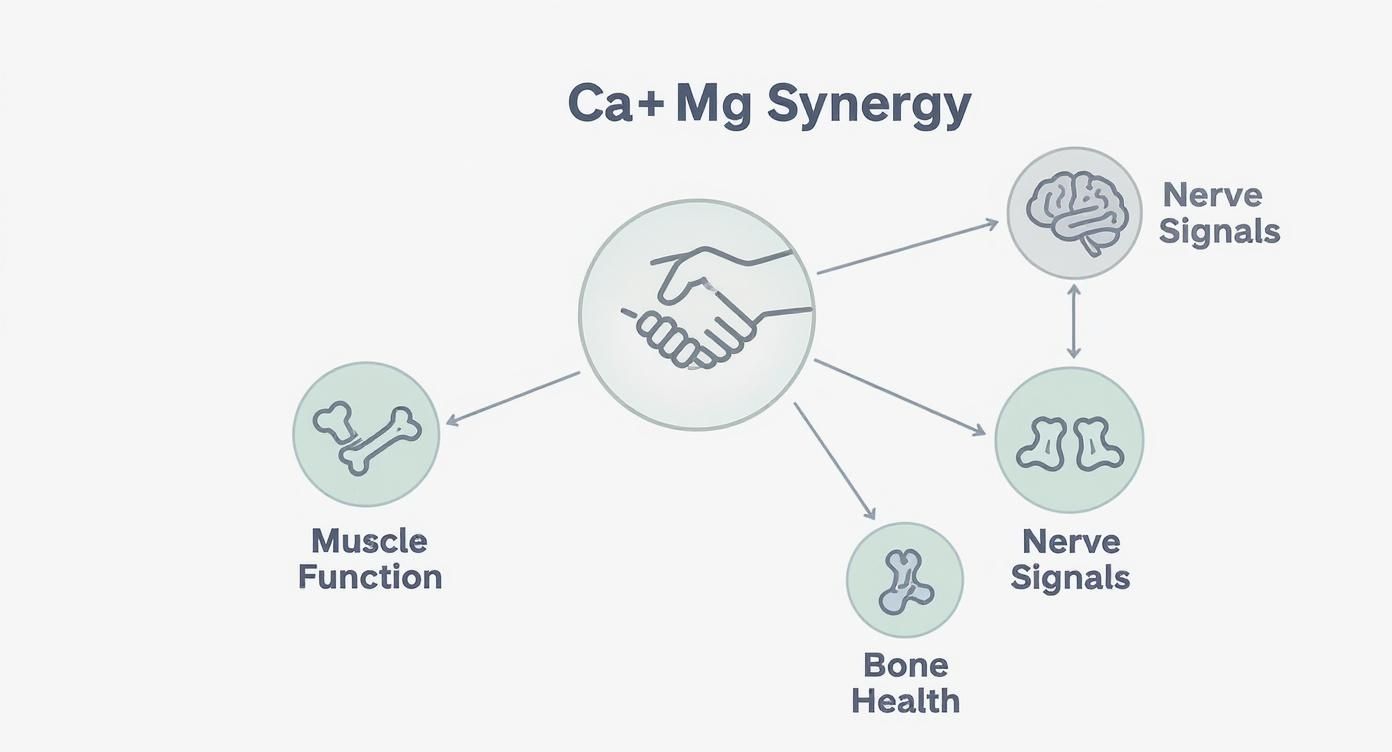
As you can see, their partnership directly supports some of the body's most fundamental systems, which makes choosing the right supplement even more important.
Common Forms of Calcium and Magnesium Explained
So, let's break down the most common forms you'll find on the labels of calcium and magnesium tablets. Understanding these differences will empower you to make a much smarter choice. We've put together a handy table to compare them at a glance.
| Mineral Form | Best For | Key Characteristic | Consideration |
|---|---|---|---|
| Magnesium Glycinate | Stress relief, sleep support, correcting deficiencies | Highly absorbable and very gentle on the stomach. | A top-tier choice for those with sensitive digestive systems. |
| Calcium Citrate | Older adults or those with low stomach acid | Well-absorbed, doesn't need to be taken with food. | An excellent all-rounder, particularly for post-menopausal women. |
| Magnesium Citrate | General use and mild constipation relief | Good bioavailability and has a gentle laxative effect. | Great for daily support, but mind the dose if you have a sensitive gut. |
| Magnesium Malate | Fatigue and muscle soreness (e.g., fibromyalgia) | Involved in the body's energy production cycle. | Often recommended for those dealing with chronic fatigue. |
| Calcium Carbonate | Budget-conscious individuals without digestive issues | High in elemental calcium, widely available and inexpensive. | Must be taken with food for absorption; can cause bloating or gas. |
| Magnesium Oxide | Primarily for short-term laxative use | Very high magnesium content, but very poorly absorbed. | Not effective for raising your body's magnesium levels. |
To dig a little deeper, these forms generally fall into two categories: the high-performance options and the more basic, heavy-duty ones.
Chelated and Organic Acid Forms (The High-Performance Vehicles)
These are widely considered the superior options thanks to their high bioavailability and how gentle they are on the stomach.
- Magnesium Glycinate & Bisglycinate: Bound to the amino acid glycine, this form is known for being incredibly gentle and highly absorbable. It's a brilliant choice for fixing a deficiency without causing digestive upset and is often picked for its calming properties, making it ideal for stress and sleep.
- Calcium & Magnesium Citrate: Paired with citric acid, these forms are well-absorbed and don't rely on stomach acid to be broken down. This makes them a fantastic option for older adults or anyone with lower stomach acid levels.
- Magnesium Malate: This form is bound to malic acid and is well-known for its part in energy production. It's easily absorbed and often recommended for people struggling with fatigue or muscle soreness.
Inorganic Salt Forms (The Heavy-Duty Lorries)
These forms pack a higher percentage of the actual mineral, but they are generally less bioavailable and can be tougher on the digestive system.
- Calcium Carbonate: This is the most common and cheapest form of calcium you'll find. It contains a lot of elemental calcium but needs strong stomach acid to be absorbed, which means you have to take it with food. For some people, it can also cause gas and constipation.
- Magnesium Oxide: A bit like carbonate, this form has a high concentration of magnesium but is poorly absorbed by the body. Its main effect is often as a laxative, making it pretty useless for actually raising your overall magnesium levels.
When choosing a supplement, remember that the form of the mineral is often more important than the dose listed on the bottle. A smaller dose of a highly bioavailable form like glycinate or citrate will deliver more usable minerals to your cells than a larger dose of oxide or carbonate.
Understanding the numbers on the label is also key. For a clear explanation of what terms like RDA and NRV mean, you can learn more about the nutrient reference value in our detailed guide. Knowing these definitions helps you compare products properly.
Finding the Right Mineral Ratio for You
When it comes to calcium and magnesium tablets, balance is everything. For decades, the gold standard ratio plastered across countless supplement bottles has been 2:1—two parts calcium to one part magnesium. This guideline was born from a focus on bone health, which made sense given calcium is the primary mineral in our skeleton.
But here’s the thing: that one-size-fits-all approach doesn't quite fit anymore. Our modern diets have shifted dramatically. Many of us get plenty of calcium from fortified foods like cereals and plant-based milks, but we're consistently falling short on magnesium. This creates an imbalance before you even think about supplements.
This dietary reality check means the old 2:1 ratio might not be the best bet for a lot of people. In fact, for some, it could even make things worse by widening that existing magnesium gap.
Why a 1:1 Ratio Is Gaining Favour
With magnesium deficiency being so common in the modern British diet, many health experts are now championing a 1:1 ratio. Think of it as hitting the reset button on your mineral balance. When magnesium is in short supply, your body can't regulate calcium properly, which can show up as muscle tension, restless nights, and even a heightened stress response.
A 1:1 ratio helps these two minerals get back to their natural partnership, ensuring there’s enough magnesium to do its crucial jobs:
- Relaxing Muscles: It acts as the "off switch" to calcium's "on switch," preventing cramps and tightness.
- Calming the Nervous System: It's essential for managing stress and promoting truly restful sleep.
- Supporting Heart Health: It helps maintain a steady heartbeat and healthy blood pressure.
- Activating Vitamin D: This is a big one. Magnesium is needed to convert vitamin D into its active form, which is what your body uses to absorb calcium in the first place.
For the average person juggling daily stress or just wanting to sleep a bit better, aiming for this more balanced 1:1 intake is often a much smarter move. It tackles the more common deficiency while still giving your bones the support they need.
The ideal mineral ratio isn't a fixed rule; it's a dynamic target that should adapt to your personal diet, lifestyle, and health goals. Moving from a 2:1 mindset to a more personalised approach is key.
How to Find Your Personal Mineral Balance
So, how do you figure out which ratio is right for you? It really just starts with taking a moment to consider your own needs and lifestyle. There's no single right answer, but by thinking about your specific goals, you can make a much more informed choice when picking out calcium and magnesium tablets.
Here are a few common scenarios to get you started:
For the Athlete or Highly Active Person
- Primary Goal: Muscle recovery, preventing cramps, and energy production.
- Likely Best Ratio: 1:1 or even 1:2 (Calcium:Magnesium). Intense exercise burns through magnesium stores fast, mostly through sweat. A higher dose of magnesium helps muscles relax, reduces soreness, and fuels the cellular energy process that’s vital for both performance and recovery.
For the Busy Professional Managing Stress
- Primary Goal: Stress reduction, better sleep, and a calmer nervous system.
- Likely Best Ratio: 1:1. Chronic stress is a notorious magnesium drainer. A balanced ratio helps top up this essential calming mineral, supporting a more resilient response to daily pressures and promoting deeper, more restorative sleep.
For the Post-Menopausal Woman Focused on Bone Density
- Primary Goal: Preventing osteoporosis and maintaining skeletal strength.
- Likely Best Ratio: 2:1 (Calcium:Magnesium). In this case, the traditional ratio still has a lot of merit. The main focus is giving the body plenty of calcium to build and preserve bone mass. But getting enough magnesium is still absolutely critical, as it’s what directs that calcium into your bones and keeps it out of your soft tissues.
Ultimately, choosing the right supplement isn't just about the numbers on the label; it’s about understanding what your body is actually asking for. By matching the mineral ratio to your unique situation, you can unlock the full potential of this powerful mineral duo and take a smarter, more personalised approach to your health.
Who Might Benefit from a Combined Supplement?
Let's be honest, while the teamwork between calcium and magnesium is impressive, a combined supplement isn't a must-have for everyone. The real question is whether your body has a higher demand for these minerals. Certain lifestyles, life stages, and diets definitely ramp up your needs, making calcium and magnesium tablets a smart move for specific groups.
Figuring out if you fall into one of these categories is the first step. It’s about moving past generic wellness chatter and looking at what your body is actually dealing with day-to-day. There's a good reason these supplements are becoming more and more popular.
Across the UK, people are wising up to the role of magnesium in muscle and nerve health, often taking it alongside calcium. It's no surprise the UK dietary supplements market, which includes calcium and magnesium tablets, was valued at a hefty USD 4.79 billion and is expected to hit USD 9.65 billion by 2033. With over 82.8% of sales happening in pharmacies and health shops, it’s clear people trust professional guidance on this.
Post-Menopausal Women
For women navigating perimenopause and beyond, bone density suddenly becomes a top priority. As oestrogen levels drop, bone loss speeds up, and the risk of osteoporosis shoots up. It's a physiological reality that needs a proactive approach.
Think of calcium as the essential building block for keeping your skeleton strong. But it can't do the job alone. Magnesium is its crucial partner, making sure that calcium gets absorbed properly and funnelled directly into your bones where it's needed most. For a closer look at this, check out our guide on finding the best supplement for bones and joints.
Athletes and Very Active People
If you’re regularly pushing your body through intense workouts, your mineral needs are simply higher than most. You lose both calcium and magnesium through sweat, and these two are non-negotiable for performance and recovery.
- Calcium is what fires up the powerful muscle contractions you need for strength and endurance.
- Magnesium is the key to letting those muscles relax afterwards, helping you sidestep those painful cramps and spasms that can ruin a good session. It’s also central to producing energy inside your cells.
For athletes, a balanced supplement is all about replenishing what’s lost, easing post-exercise soreness, and keeping performance consistent.
Think of it this way: for an athlete's body, calcium is the spark that ignites the engine, while magnesium is the coolant that stops it from overheating. You absolutely need both to keep the system running smoothly under pressure.
Anyone with a High-Stress Lifestyle
Modern life can be relentless, and chronic stress quietly drains your body's resources—especially its magnesium stores. The stress hormone cortisol actively depletes magnesium, which then makes you more susceptible to stress. It's a vicious cycle.
Magnesium has earned its nickname as the "calming mineral" for a reason. It helps regulate the neurotransmitters that promote feelings of relaxation and calm. By supporting your nervous system, it can help smooth out the sharp edges of a stressful day and even improve your sleep. This guide to identifying specific nutrient needs offers great insights into how to figure out what your body is asking for.
People on Plant-Based or Dairy-Free Diets
A well-planned vegan or dairy-free diet can be incredibly healthy, but getting enough calcium can sometimes be a challenge. Dairy is the go-to calcium source for many people, so without it, you have to be diligent about getting enough from plant sources like leafy greens, fortified foods, and tofu.
If you follow one of these diets, a calcium and magnesium tablet can be a great insurance policy. It helps fill in any potential gaps, ensuring both your bones and muscles have everything they need to stay strong and healthy.
How to Get the Most Out of Your Supplements
Taking a supplement is one thing, but making sure your body can actually absorb and use what’s inside? That’s what really counts. Getting the best results from your calcium and magnesium tablets comes down to smart timing, knowing which nutrients work together, and understanding what might get in the way. It's less about just swallowing a pill and more about creating the perfect conditions for it to do its job.
This guide will walk you through the when, how, and with what, helping you turn your daily supplement routine into a genuinely effective health strategy.

Strategic Timing for Optimal Results
When you take your supplement can make a huge difference. Calcium and magnesium actually have different ideal schedules because they support different rhythms in your body throughout the day and night.
For calcium, it’s always best to split your dose. Your body can only really handle about 500-600mg of calcium at once. If you take more than that in one go, a lot of it just goes to waste. A much better approach is to take a smaller dose in the morning and another in the afternoon. This improves absorption and gives your body a steady supply to work with.
Magnesium, on the other hand, is your evening companion. It’s well-known for its calming effect on the nervous system, which can help your mind and body wind down for sleep. Taking it an hour or two before bed can often lead to deeper, more restorative rest. If you want to dive deeper into this, we have a whole article on the best time to take magnesium.
The Essential Supporting Cast of Nutrients
Calcium and magnesium don't work in a vacuum. They rely on a whole team of other vitamins and minerals to do their jobs properly. Without these key partners, even the highest quality supplement can fall flat.
Think of Vitamin D and K2 as the traffic controllers for calcium. They don't just help you absorb it; they make sure it gets delivered to the right address—your bones—and stays out of places it shouldn't be, like your arteries.
Let’s break down the most important players:
- Vitamin D: This one is non-negotiable. Vitamin D is essential for getting calcium out of your gut and into your bloodstream. Without enough of it, the calcium you take in simply won’t be available for your body to use.
- Vitamin K2: This vitamin handles the crucial next step. It activates proteins that direct the calcium from your blood into your bones and teeth. This not only strengthens your skeleton but also helps prevent calcium from building up in arteries and soft tissues, which is a massive plus for heart health.
- Magnesium: As we’ve covered, magnesium is a foundational partner in this whole process. It helps convert Vitamin D into its active form, making it a key player from the very start.
Navigating Potential Interactions and Conflicts
Just as important as knowing what to take with your supplement is knowing what to avoid. Certain foods, minerals, and medications can interfere with absorption, essentially competing with calcium and magnesium for a spot in your body.
Being mindful of these common roadblocks ensures you're not accidentally cancelling out the benefits of your calcium and magnesium tablets.
Key Interactions to Avoid:
- High-Oxalate Foods: Foods like spinach, rhubarb, and beet greens contain compounds called oxalates, which can bind to calcium and block its absorption. It’s best to avoid taking your calcium supplement with a meal that’s heavy in these foods.
- Zinc and Iron: These minerals compete with calcium for the same absorption pathways in your gut. If you’re also taking a zinc or iron supplement, try to space them out by at least two hours from your calcium dose.
- Certain Medications: Calcium can interfere with how well your body absorbs some prescription drugs, including certain antibiotics and thyroid medications. Always have a chat with your doctor or pharmacist about the best timing if you’re on any regular medication.
By putting these simple strategies into practice—splitting your dose, timing it right, and being mindful of nutrient partners and potential conflicts—you can dramatically increase how much your body gets out of every single tablet.
Choosing a Safe and High-Quality Supplement

Walking down the supplement aisle can feel a bit overwhelming. With so many brands making big promises, how do you actually tell the good stuff from the duds? Getting this right is key to making sure your calcium and magnesium tablets actually deliver the benefits you’re after, without any unwanted extras.
This final section is all about turning you into a savvy supplement shopper. We’ll break down what to look for on the label, how to understand potential side effects, and why purity and potency are completely non-negotiable for your health.
Understanding Potential Side Effects
While generally safe for most people, some can experience mild side effects from these supplements. More often than not, it comes down to the specific mineral form or the dosage.
The most common complaint? Digestive discomfort. Less absorbable forms like magnesium oxide or calcium carbonate are sometimes the culprit, causing bloating, gas, or a bit of a laxative effect.
If this happens to you, the fix is usually pretty simple: just switch to a gentler, more bioavailable form like magnesium glycinate or calcium citrate. It's also a reminder to be mindful of your total calcium intake. Consistently taking really high doses can carry risks, which is exactly why sticking to the recommended amounts and getting that balance with magnesium right is so important.
Your Quality Checklist
Think of a supplement label as the product's CV – it should be clear, transparent, and have the credentials to back it up. Here’s a quick rundown of what to look for to make sure you're choosing a product you can trust.
A Checklist for Choosing Quality:
- Third-Party Testing: Keep an eye out for certifications from independent bodies like NSF International or Informed-Sport. These seals mean the product has been properly checked to verify that what’s on the label is actually in the bottle, and that it's free from any nasty contaminants.
- Clean Ingredients List: The best supplements keep it simple. They should contain the active ingredients and not much else. Try to avoid products with a long list of unnecessary fillers, artificial colours, or binders like magnesium stearate or titanium dioxide.
- Bioavailable Forms: Check that the supplement uses mineral forms your body can actually absorb well. As we've covered, seeing names like citrate, glycinate, or malate is a great sign the brand has put effectiveness first.
- Clear Dosages: The label must clearly state the amount of elemental calcium and magnesium in each serving. This number tells you the actual amount of the mineral your body gets to use.
A high-quality supplement is all about transparency. Brands that invest in third-party testing and use clean, effective ingredients are showing a real commitment to your health, not just their profit margins.
The Growing Demand for Quality in the UK
As people become more clued-up on what makes a good supplement, the market is changing. The UK vitamins and minerals supplement market was valued at USD 2.9 billion and is expected to rocket to USD 5.8 billion by 2035.
This boom is being driven by a clear shift towards natural, plant-based, and transparently sourced products, cementing calcium and magnesium tablets as a staple in the UK’s health landscape. You can learn more about these UK market trends to see just how consumer demand is pushing for better quality.
By using this checklist, you can confidently pick a safe and effective supplement that truly fits your health goals, empowering you to make a smart investment in your long-term wellbeing.
Got Questions? We've Got Answers
Stepping into the world of supplements can feel a bit like navigating a maze. It’s natural to have questions, so let’s clear up a few of the most common ones about calcium and magnesium tablets.
Can't I Just Get Enough From My Diet?
It’s a great question, and for some people, the answer is yes. A diet packed with leafy greens, nuts, seeds, and dairy can absolutely provide solid levels of these minerals. But life often gets in the way. Factors like dietary choices (if you’re vegan or dairy-free, for instance), your age, or even a really intense workout schedule can push your needs beyond what your plate alone can deliver.
Think of a supplement as your nutritional safety net. It’s there to top up your levels and fill in any gaps, making sure your body consistently has what it needs for strong bones and smooth muscle function.
How Long Will It Take to Feel a Difference?
This really hinges on why you're taking them in the first place. Some effects show up surprisingly quickly. If you’re turning to magnesium for its calming properties, you might notice better sleep or less muscle twitching within just a few days to a couple of weeks.
But when it comes to long-term goals like boosting bone density, you’re playing the long game. Those benefits are built quietly in the background over months and even years of consistent use. It’s all about patiently strengthening your skeletal framework from the inside out.
Is There Anyone Who Should Avoid These Supplements?
While generally very safe, calcium and magnesium tablets aren't for everyone. It’s really important to be cautious if you have certain health conditions.
You should always have a chat with your doctor before starting if you have:
- Kidney problems: Your kidneys are in charge of filtering minerals. If they aren't working at 100%, minerals could build up to unsafe levels.
- Certain heart conditions: Mineral balance is absolutely critical for a steady heartbeat, so any supplementation needs to be medically supervised.
- Parathyroid gland issues: This tiny gland is the master regulator of calcium in your body, so you don't want to interfere without a doctor's guidance.
Your first port of call should always be a qualified health professional. They can help you figure out if a new supplement is a safe and smart move for your unique health situation.
This article is for informational purposes only and is not medical advice. Always consult a qualified health professional before starting any new supplement or major lifestyle change.