

Can I Take Iron and Vitamin B12 Together Safely
Yes, iron and vitamin B12 can be taken together because they have no major interaction, and iron timing is usually the limiting factor. Combined deficiency is common enough to matter, with one study finding that 18.88% of anaemic subjects had both low iron and vitamin B12 deficiency (urban India study).
You may be looking at two supplement bottles over breakfast, wondering whether taking them at the same time makes one less effective. Perhaps fatigue led you to buy iron, while a vegetarian diet, digestive symptoms, or an earlier blood test prompted you to consider B12 too. The answer is reassuring, but the useful question isn't only “can I take iron and vitamin B12 together?” It's also which nutrient do you need, how should you time iron around coffee and calcium, and when should you test instead of guessing?
This guide explains the different jobs iron and B12 perform, a practical morning routine, the medications and minerals that can interfere with iron, and the dosing and monitoring issues people often miss. If you're considering injectable B12, a clinician or qualified service can also explain options such as medical spa vitamin therapy in the context of your health history.
Introduction Can You Take Iron and Vitamin B12 Together
You may be standing over breakfast with two supplement bottles, wondering whether taking iron and vitamin B12 together will make either one less effective. Fatigue may have led you to iron, while a vegetarian diet, digestive symptoms, or an earlier blood test raised questions about B12. In general, the two nutrients can be taken together because they work through different biological pathways and do not have a major interaction with each other.
Their roles are different. Iron helps make haemoglobin, the protein that carries oxygen, while vitamin B12 supports DNA synthesis and red-blood-cell maturation. That means taking both is reasonable when testing confirms both deficiencies or when a clinician has identified clear reasons to suspect them.
The scheduling challenge comes mainly from iron. Calcium, magnesium, zinc, antacids, acid-reducing medicines, certain antibiotics, thyroid medication, and some osteoporosis medicines can reduce or complicate iron absorption. B12 is usually more flexible. You can generally take it with food or without food, alongside iron or at another convenient time.
Practical rule: Build your schedule around iron. B12 can usually fit around it.
A breakfast routine shows why timing matters. You might take both supplements with water, then drink coffee and eat yoghurt, fortified cereal, or another calcium-containing food. The combination is not unsafe, but coffee and calcium around the dose can make iron absorption less efficient. If your stomach tolerates it, take iron with water and a vitamin C source on an empty stomach. If nausea or discomfort follows, a small amount of food may make the routine easier to maintain.
Safety is different from usefulness
A supplement combination cannot identify the cause of tiredness. Fatigue may reflect low iron, low B12, poor sleep, stress, another health issue, or several factors at once.
Testing helps separate those possibilities. Clinicians may consider a blood count, ferritin, iron indices, vitamin B12, and related markers when symptoms or risk factors suggest anaemia. Testing is especially useful before treating unexplained fatigue with a combined product, because it shows which nutrient needs attention and whether another explanation deserves review.
If injections are being considered, a clinician or qualified service can discuss options such as medical spa vitamin therapy in light of your health history.
Why Iron and Vitamin B12 Are Often Needed Together
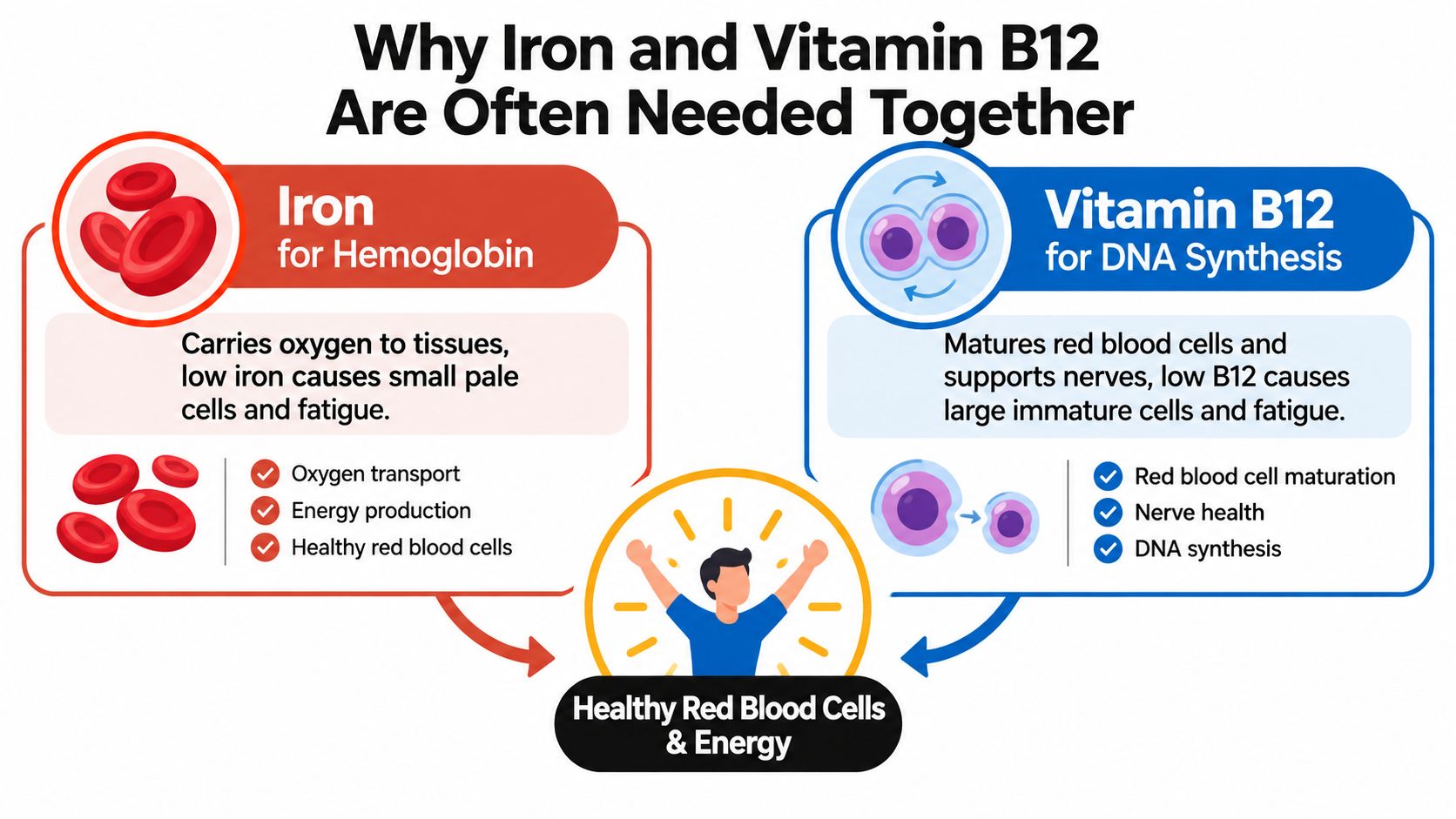
A person may feel persistently tired while having low iron, low B12, both deficiencies, or neither. These nutrients support different parts of red-blood-cell production. Iron is required for haemoglobin production, which allows blood to carry oxygen. Vitamin B12 supports DNA synthesis and red-cell maturation, and it also contributes to normal nerve function.
Iron and B12 are therefore not interchangeable. Replacing one cannot correct a confirmed deficiency of the other, although fatigue alone cannot show which nutrient is responsible.
Blood-test results can also be misleading when deficiencies overlap. Iron deficiency tends to produce smaller, paler red blood cells, while B12 deficiency can produce larger, immature cells. If both occur, one pattern may partly hide the other. That is one reason clinicians may assess both nutrients instead of relying on a single blood index.
What the prevalence data means
The overlap has been documented in clinical research. In an urban India study of anaemic subjects, 66.73% had low serum iron, 36.53% had vitamin B12 deficiency, and 18.88% had combined iron and B12 deficiency. Across the full sample, iron deficiency was 56.86% and vitamin B12 deficiency was 37.04% (study data).
These findings do not mean that every person with fatigue should take both supplements. They show why a clinician may investigate more than one nutrient when diet, symptoms, or laboratory findings suggest anaemia risk. Testing is especially useful when fatigue has no clear explanation, since the same symptom can arise from several causes.
Separate bottlenecks, coordinated treatment
The treatment logic is straightforward. Iron addresses the haemoglobin bottleneck, while B12 supports DNA synthesis and red-cell maturation. When both are deficient, replacing only one may leave part of the problem untreated.
A published case report described parenteral vitamin B12 plus intravenous iron for combined deficiency anaemia (published case report and clinical discussion). That example does not make injections appropriate for everyone. People considering them can review B12 shot safety and efficacy and discuss the choice with a healthcare professional.
Multiple deficiencies may occur together in older adults, people with malabsorption, those eating vegetarian or low-animal-food diets, and during pregnancy. The practical distinction is clear: taking iron and B12 together is not doubling up on the same treatment. It addresses two separate nutritional requirements when testing confirms that both need attention.
How to Time Iron and Vitamin B12 for Best Absorption
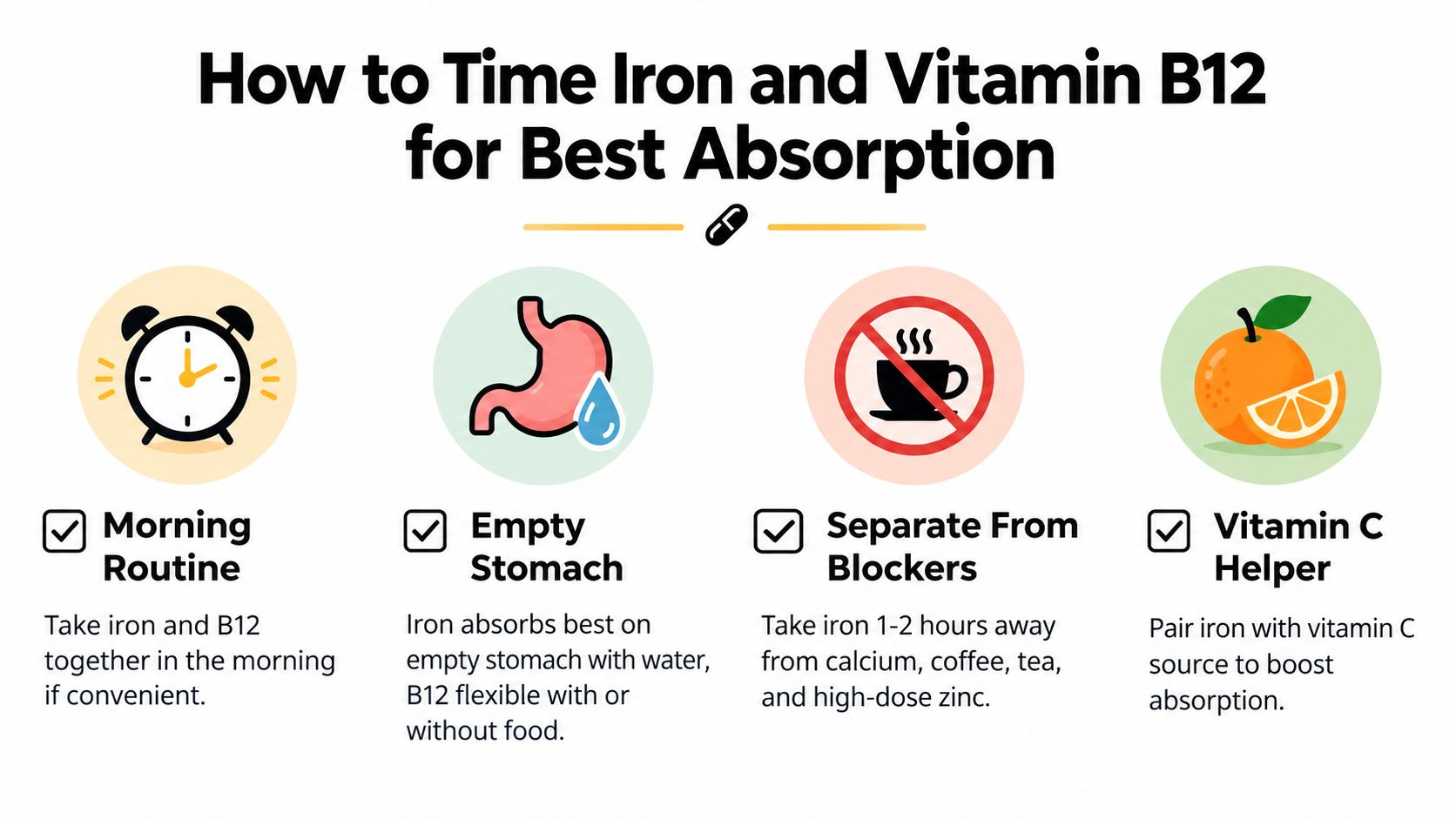
A simple routine usually works best: take iron with water on an empty stomach if you tolerate it, and take B12 at the same time or whenever it fits your day. B12 can be taken with or without food, so it doesn't need to dictate the schedule.
Iron is more particular. Calcium, magnesium, and zinc can interfere with its absorption, as can antacids and some medicines. Coffee and tea are also common practical obstacles because people often take supplements alongside breakfast beverages. The solution isn't to eliminate these foods and drinks. It's to give iron its own window.
A workable morning routine
Try this sequence if it matches your prescribed medicines and your stomach tolerates iron:
- Take iron with water. An empty stomach is generally preferred for absorption.
- Take B12 at the same time if convenient. There's no major need to separate it from iron.
- Use vitamin C with iron. Food or a supplement containing vitamin C may support iron uptake. This guide to iron supplements with vitamin C offers a practical explanation of that pairing.
- Move coffee and tea away from the iron dose. If your morning coffee is essential, take iron at another time that keeps it away from the drink.
- Keep calcium-containing foods and supplements separate. This includes calcium tablets, dairy-rich breakfasts, and multivitamins containing calcium.
If empty-stomach iron causes nausea, a small meal may improve tolerability. Don't respond by taking extra capsules to compensate. A consistent routine that you can tolerate is more useful than an ideal schedule you abandon after a few days.
What to separate from iron
| What You Take | Best Timing Relative to Iron | Why It Matters |
|---|---|---|
| Vitamin B12 | Together or at another convenient time | B12 doesn't create a major interaction with iron and is flexible with food. |
| Calcium or calcium-rich foods | Take at a separate time | Calcium can reduce iron absorption. |
| Magnesium or zinc | Take separately from iron | Minerals may compete with iron absorption, particularly in supplemental amounts. |
| Coffee or tea | Keep away from the iron dose | These drinks can make an iron-focused routine less effective when taken at the same time. |
| Antacids and PPIs | Ask a clinician or pharmacist about timing | Changes in stomach conditions and medication effects can affect iron use. |
| Levothyroxine | Follow the prescribing instructions and separate from iron | Iron can reduce absorption of thyroid medication. |
| Tetracyclines or bisphosphonates | Confirm the required interval with a pharmacist | Iron can interfere with absorption of some medicines. |
Two everyday examples
Someone who takes levothyroxine on waking may need to reserve the early morning for that medicine and place iron later, according to the prescriber's instructions. Someone who takes a multivitamin with breakfast should check its label, because calcium, zinc, or iron may already be included.
Another person may find lunch easier: iron with water and a vitamin C-containing food, B12 with breakfast, and calcium or magnesium later in the day. There isn't one universal clock time. The goal is to protect iron from its main blockers while keeping the routine realistic.
Dosing Basics and What to Monitor When Taking Both
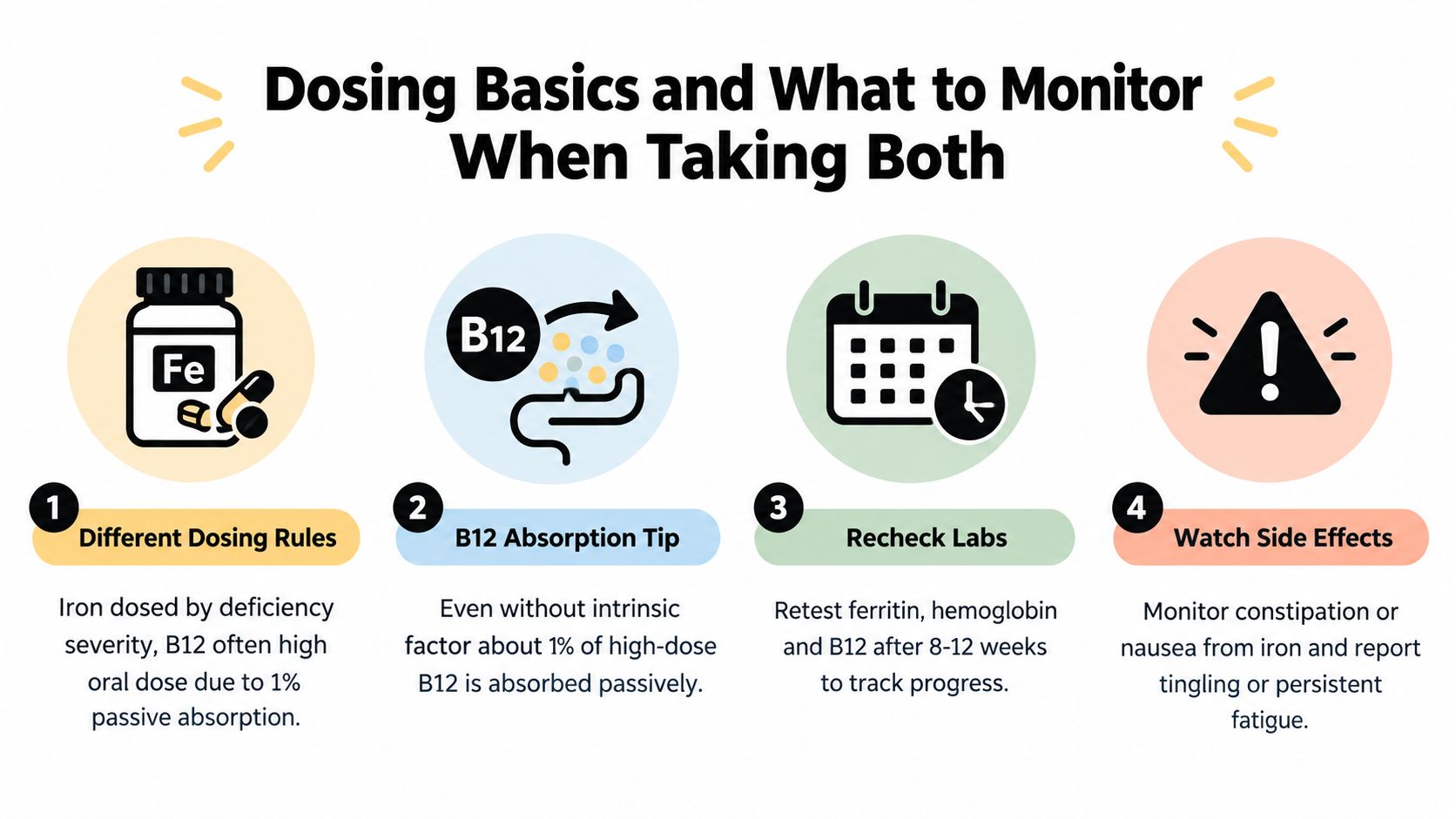
If fatigue leads you to start iron and B12 on the same day, treat them as separate treatments with separate decisions. B12 dosing often uses a high oral dose because a small amount can enter the body passively. Iron dosing depends on the degree of deficiency, the product's elemental iron content, tolerance, and the clinician's plan. A supplement label can show the compound's total weight, not the actual iron amount your body receives.
A commonly used oral B12 option is 1,000 to 2,000 micrograms daily. Even without intrinsic factor, about 1% of a high-dose oral B12 amount can be absorbed passively, according to this clinical dosing reference. Injections may suit people whose cause, symptoms, severity, or absorption problem calls for a more direct route. For background on high-dose oral B12 options, check how different forms and dosing approaches are used.
Standard oral protocols for iron-deficiency anaemia often use 40 to 80 mg of elemental iron daily. The appropriate amount still depends on individual circumstances, so choose it with clinical guidance rather than from the front of a label. The word elemental identifies the iron itself, while the compound listed on the package may weigh more.
Why follow-up matters
Iron treatment may continue until ferritin returns to a suitable range, sometimes around 50 to 100 micrograms per litre in standard approaches. That range is not a universal instruction. Inflammation and other conditions can raise ferritin, so a clinician should interpret it with haemoglobin and the rest of the blood results.
B12 replacement can restart red-cell production. As that response develops, the body may use more iron. Someone with both deficiencies can therefore need follow-up even after beginning B12. Rechecking ferritin and other iron indices helps show whether iron stores are supporting the response.
Monitoring point: A rising haemoglobin does not prove that every deficiency has been corrected. Ferritin, iron indices, B12, and the wider blood picture provide a fuller view.
Oral and injectable B12
High-dose oral B12 can work despite limited absorption because passive absorption does not depend entirely on intrinsic factor. Injections may be preferred when absorption is impaired, symptoms are significant, or a clinician needs a more direct replacement route.
A hospital presentation describes an oral maintenance pattern of 1,000 micrograms daily for one week, then weekly for four weeks, then monthly, while also listing 1,000 to 2,000 micrograms daily as a common high-dose oral option (B12 and iron clinical presentation). Regimens vary with the cause and local practice. Do not switch between oral and injectable treatment without professional advice.
When both deficiencies are confirmed, treating them concurrently can address both problems. Iron alone may improve some blood-count features while B12-related problems continue, which can make the response harder to interpret.
Who Benefits Most and When to Test Before Supplementing
Fatigue alone cannot identify its cause. Iron and vitamin B12 deficiency can both lower energy, and either may develop with few noticeable symptoms at first. Testing becomes especially useful when tiredness persists, returns after supplementation, or appears alongside other risk factors.
Heavy menstrual bleeding can increase the likelihood of depleted iron stores. People who eat little or no animal food may need closer attention to B12 intake, depending on their diet and use of fortified foods or supplements. Older adults and people with gastrointestinal conditions or malabsorption may need evaluation of the underlying problem, rather than relying only on another supplement.
Pregnancy requires careful assessment because nutritional demands are higher. A 2025 global review reported pooled prevalence of double folate-or-B12 deficiency at 11.8% and iron-or-folate deficiency at 53.1% in pregnant populations (micronutrient review). These findings support clinical evaluation instead of self-prescribing.

A useful testing conversation
Ask a clinician whether your symptoms and history support checking:
- Haemoglobin and a complete blood count, to review the overall blood picture.
- Ferritin and iron indices, to assess iron stores and iron availability.
- Vitamin B12, with related tests if the result or symptoms make them appropriate.
- Other causes of fatigue, when nutrient results do not explain how you feel.
The appropriate test panel depends on your age, sex, diet, medical history, medicines, and symptoms. A man with unexplained fatigue and no clear dietary risk may need different investigation from a woman with heavy menstrual bleeding. Digestive symptoms may point toward an absorption problem, where addressing the cause matters more than repeating supplement cycles.
When a supplement may not be the answer
A multivitamin may fill broad dietary gaps, but it cannot investigate persistent fatigue or confirmed anaemia. Read labels before adding separate iron or B12, especially when another product may already contain either nutrient.
For help organising questions about symptoms, diet, and supplement choices, VitzAI's vitamin deficiency testing guide offers a starting point for discussion with a qualified professional. Use it to prepare for that conversation, not to diagnose a deficiency from symptoms alone.
Practical Takeaways and Next Steps for Your Routine
Yes, you can take iron and vitamin B12 together. B12 is usually flexible, while iron deserves more careful timing around calcium, magnesium, zinc, coffee, tea, antacids, PPIs, levothyroxine, tetracyclines, and bisphosphonates.
Use this routine checklist:
- Check the need: Test or speak with a clinician if fatigue persists, risk factors are present, or anaemia is suspected.
- Protect iron: Take it with water on an empty stomach if tolerated, and consider vitamin C.
- Keep B12 simple: Take it alongside iron or at another convenient time.
- Review your labels: Avoid accidentally doubling up through a multivitamin and separate iron-containing products.
- Monitor progress: Follow up with the blood tests your clinician recommends, especially ferritin, iron indices, haemoglobin, and B12.
A Complete Multivitamin may be relevant for someone looking for a broader B-vitamin and mineral formula, but it isn't automatically the right choice when a specific deficiency needs targeted treatment. Personalised guidance can help you compare your diet, goals, existing supplements, and tolerance before building a larger routine.
This article is for informational purposes only and is not medical advice. Always consult a qualified health professional before starting any new supplement or major lifestyle change
VitzAi.com helps adults use a short personalised supplement quiz to match their goals, diet, lifestyle, sleep, stress, exercise, and digestion with a curated supplement plan. Visit VitzAi.com to review which options may fit your routine and to make a more informed decision before adding iron, B12, or a broader multivitamin.