

Can You Take Magnesium and Zinc Together? A Guide to Smart Supplement Timing
Yes, you can absolutely take magnesium and zinc together. It's a hugely popular combination, and for good reason—it’s generally safe and can be brilliant for your overall health. The trick, however, is knowing how to pair them correctly. It all comes down to smart timing and the right dosage to get the full benefits of both.
Why People Pair Magnesium and Zinc
Magnesium and zinc are two genuine powerhouses for our health, involved in hundreds of vital processes in the body. From supporting deep, restorative sleep and muscle recovery to strengthening the immune system and balancing hormones, their combined impact is pretty significant.
In the United Kingdom, taking these two together has become more and more common as people look to fill potential gaps in their diet. And it makes sense. National surveys have shown that a surprising number of adults aren't hitting their recommended daily intake for magnesium and zinc from food alone. You can read more about these nutritional findings and what they mean for our health.
The Absorption Challenge
So, if they're both so good for us, what's the catch? The main thing to be aware of is something called competitive absorption.
Think of your digestive system as having a limited number of "taxis" (these are actually transporter proteins) ready to carry minerals into your bloodstream. When you take very high doses of both magnesium and zinc at the exact same time, they essentially have to compete for the same taxis. This can mean one mineral gets absorbed more easily, leaving less room for the other.
But here's the good news: this is really only a concern with very high, unbalanced doses. For most of us taking standard supplement amounts, this competition is minimal and can be easily managed.
The key takeaway is that for typical supplement doses, the benefits of taking magnesium and zinc often far outweigh the minor risk of reduced absorption, especially if you have a smart timing strategy.
To make things simple, here's a quick guide summarising the main points for taking these two powerhouse minerals together safely and effectively.
Magnesium and Zinc Pairing Quick Guide
| Aspect | Key Recommendation |
|---|---|
| Timing | Take them a few hours apart or find a well-balanced formula. A common strategy is magnesium at night for sleep and zinc earlier in the day for immune support. |
| Dosage | Avoid taking very high doses of both at the same time. Stick to the recommended daily amounts unless advised by a healthcare professional. |
| Benefits | Supports sleep quality, immune function, muscle recovery, hormone balance, and cognitive performance. |
So, What Do Magnesium and Zinc Actually Do?
Before we get into the nitty-gritty of combining them, it’s worth taking a step back to understand why magnesium and zinc are such a dream team in the first place. Each one has its own distinct, yet complementary, job to do behind the scenes, keeping your body ticking over nicely. When you get a clear picture of their individual roles, it’s easy to see why you’d want both in your wellness toolkit.
Think of magnesium as your body's master relaxation mineral. It’s a key player in over 300 different biochemical reactions that control everything from your mood to your muscles. Its calming effect on the nervous system is exactly why it's so popular for helping people manage stress and get deep, restorative sleep. If you find it hard to properly switch off at night, magnesium might be the missing piece of the puzzle.
Magnesium: The Calming Force
Magnesium is all about helping your body and mind unwind. Its main gigs include:
- Nerve and Muscle Function: It helps your muscles relax after they contract, which can be a game-changer for preventing cramps and tension after a workout.
- Energy Production: It’s vital for turning the food you eat into energy your body can actually use, helping you fight off that feeling of fatigue.
- Sleep Quality: It helps regulate the neurotransmitters that promote a sense of calm and encourage sleep. For a closer look, check out our guide on supplements for better sleep.
Zinc: The Immune Gatekeeper
If magnesium is the relaxation expert, then zinc is your body’s diligent immune system gatekeeper and all-round repair crew. It’s a trace mineral, which just means you only need a little bit, but its impact on men's and women's health is huge. Zinc is absolutely fundamental for building a resilient defence system against whatever illnesses are doing the rounds.
It also plays a massive part in cell repair, healing wounds, and keeping your hormones in balance – especially testosterone. With such a wide-ranging job description, it's pretty much a non-negotiable for daily health and longevity.
Think of zinc as a vital guard for your immune system, helping to spot and deal with threats before they can take hold. It also supports the growth and repair of tissues, making it essential for recovery after a tough workout or an injury.
The idea of taking magnesium and zinc together has really taken off in the UK recently, which shows a growing awareness of just how beneficial they can be. This isn't just a feeling; market data shows the UK's vitamins and minerals supplement market is booming, with these two often sitting at the top of the sales charts. You can explore the latest market insights on Statista.com to see the full picture. This growth really highlights how many of us are turning to supplements to fill nutritional gaps and take a more proactive approach to our health. Once you understand their individual strengths, you can really appreciate why combining them is such a smart move for your overall well-being.
Understanding the Mineral Absorption Competition
To get to the bottom of whether you can take magnesium and zinc together, we first need a quick look at how your body actually absorbs minerals. It's a lot less complicated than it sounds, and it’s the key reason why smart supplement strategies even exist.
Think of your gut as having a limited number of taxis—these are specialised channels called transporter proteins—ready to shuttle minerals from your digestive system into your bloodstream. If you suddenly send a massive crowd of zinc "passengers" all at once, they can easily hog all the available taxis. This leaves fewer rides for magnesium, meaning less of it gets absorbed. This process is known as competitive absorption.
This infographic breaks down the distinct, crucial roles that both magnesium and zinc play in keeping your body running smoothly.
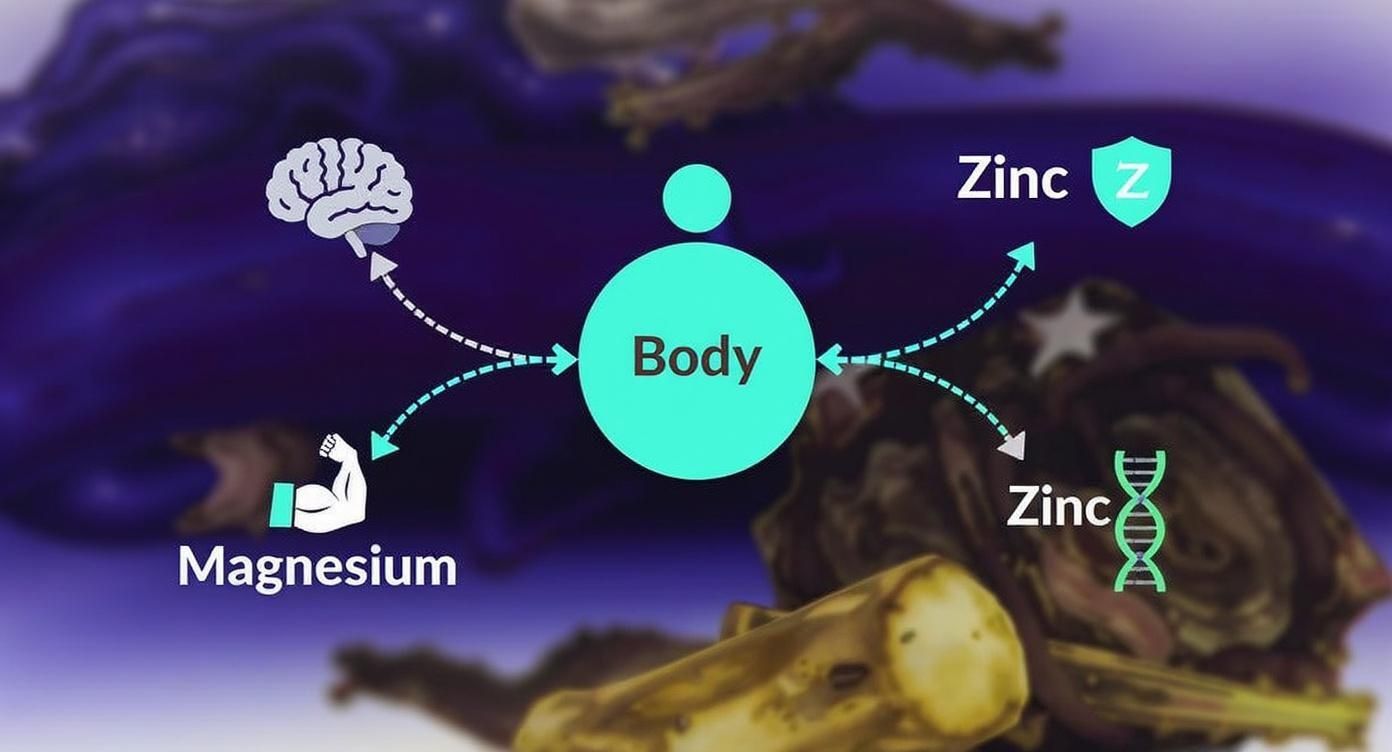
As you can see, these minerals are fundamental to everything from brain function to immunity, which is why making sure both are properly absorbed is so important for your overall health.
When Does Competition Become a Problem?
This mineral rivalry isn't something everyone needs to worry about. The competition really only becomes an issue when you're taking very high, unbalanced doses of one mineral over the other. The main culprit is usually high-dose zinc, typically anything over 50mg taken at once.
Research has explored this interaction quite a bit. Studies have shown that extremely high doses of zinc can indeed interfere with magnesium levels. For instance, one study found that supplementing with 142 mg of zinc per day—a dose way beyond any standard recommendation—significantly reduced magnesium absorption and disrupted its balance in the body. You can learn more about safe upper limits from the NHS guidance on their website.
For most people taking standard, recommended supplement doses, this competition is minimal. The body is generally efficient enough to handle both minerals without a significant drop in absorption, especially if the supplement is well-formulated.
It's Not Just Zinc and Magnesium
This whole idea of competition isn't unique to zinc and magnesium. Other minerals, like calcium and iron, also use similar transport pathways, which is why you often hear advice to space out different mineral supplements. For a deeper dive into how other minerals interact, you might find our guide on taking calcium and magnesium supplements together interesting.
Ultimately, the goal isn't to create a complex, rigid schedule. It's simply about being mindful of dosages. By avoiding megadoses and choosing balanced formulas, you can easily sidestep any significant absorption issues and get the full benefits from both of these powerhouse minerals.
Smart Strategies for Timing Your Supplements
Alright, now that we've dug into the science behind mineral absorption, let's bring it back to the real world. Knowing when to take your supplements is just as important as knowing what to take. Get the timing right, and you can really maximise the benefits while dodging potential issues like an upset stomach.
When it comes to magnesium and zinc, there are really two main schools of thought. Each approach has its perks, and the best fit for you will come down to your lifestyle, health goals, and how your body reacts. Let's break down both methods to help you figure out your game plan.
Strategy 1: The Separate for Success Method
This is the most straightforward and often recommended strategy, particularly if you're taking higher doses or know you have a sensitive stomach. The logic is simple: you split up your supplements to give each one its own clear runway for absorption, avoiding any competition.
A popular and effective way to do this is by taking zinc earlier in the day and saving magnesium for the evening.
- Zinc in the Morning: Taking zinc with a meal, like your breakfast or lunch, is a great way to sidestep the nausea it can sometimes cause on an empty stomach. This timing also lines up nicely with its role in supporting daytime energy and immune function.
- Magnesium at Night: Magnesium is famous for its calming effect on the nervous system, making it the perfect supplement to take before you hit the hay. It can help pave the way for a deeper, more restorative sleep. If you want to dive deeper, check out our guide on the best time to take magnesium.
Separating them like this ensures each mineral gets an exclusive window to be absorbed without any interference.
Strategy 2: The Combine with Care Approach
Let's be realistic—sometimes, remembering to take supplements at different times of the day just isn't going to happen. If you've got a busy lifestyle, you can absolutely take magnesium and zinc together, as long as you're smart about it. This approach works best with lower, more balanced doses.
Many pre-formulated supplements, like the popular ZMA (Zinc Magnesium Aspartate), are specifically designed to be taken together. These products typically use chelated forms of the minerals which are more easily absorbed and are balanced in a ratio that minimises competition.
If you go down this route, look for products with sensible doses—generally under 40mg of elemental zinc and around 400mg of magnesium. Taking them with your evening meal can be a great compromise; you'll get the benefits of zinc while still tapping into some of magnesium's relaxing properties before bed.
To make the choice a bit easier, here’s a quick side-by-side look at the two strategies.
Timing Strategies for Magnesium and Zinc
| Strategy | How It Works | Best For | Potential Drawbacks |
|---|---|---|---|
| Separate for Success | Take zinc in the morning with food and magnesium in the evening before bed. | Individuals on higher doses, those with sensitive stomachs, or anyone looking to absolutely maximise absorption. | It requires remembering to take supplements at two different points in the day, which can be tricky. |
| Combine with Care | Take a balanced, well-formulated magnesium and zinc supplement together, usually with a meal. | People who value convenience, are taking lower doses, or use a combination product like ZMA. | There's a very slight potential for reduced absorption, particularly if using higher, unbalanced doses. |
Choosing the Best Forms of Magnesium and Zinc
When you're figuring out if magnesium and zinc can be taken together, the conversation doesn't stop at just timing. Not all supplements are created equal, and the specific form you choose plays a massive role in how much your body can actually absorb and use. It's the difference between getting the full benefits and simply flushing your money down the toilet.
This all comes down to a concept called bioavailability. Think of it like a key for a lock. A well-cut key (a highly bioavailable form) will slide in and open the door effortlessly. A poorly cut one (a less bioavailable form) might just jiggle around without ever working. Understanding this helps you read supplement labels like a pro and pick a product that truly delivers.
Finding the Right Magnesium for You
Magnesium supplements come in heaps of different forms, each attached to another molecule to keep it stable. This partner molecule affects not only how well the magnesium is absorbed but can also bring its own unique benefits to the table.
Here’s a quick breakdown of the most common types:
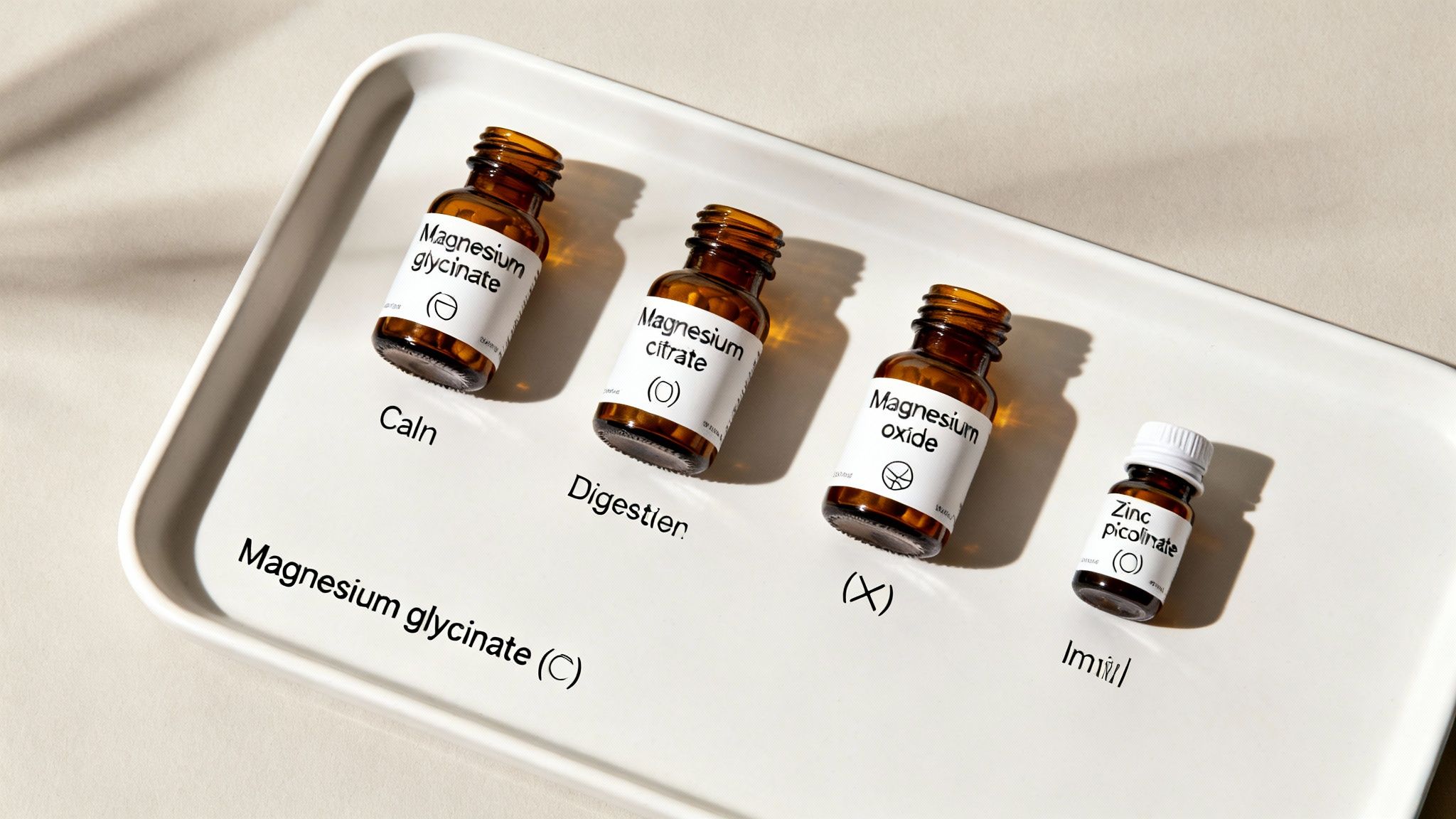
- Magnesium Glycinate: This form is bound to glycine, an amino acid known for its calming properties. It’s incredibly gentle on the stomach and highly absorbable, making it a fantastic choice for supporting relaxation, easing stress, and improving sleep quality.
- Magnesium Citrate: Paired with citric acid, this form is also well-absorbed but comes with a mild laxative effect. It’s often recommended for people looking to support gut health and regular bowel movements.
- Magnesium Oxide: This is one of the most common and cheapest forms you'll see on the shelves, but it has very low bioavailability. Your body really struggles to absorb it, and it's far more likely to cause digestive upset than provide any significant benefits.
By choosing a chelated form like glycinate or citrate, you are essentially giving the magnesium a VIP pass into your bloodstream, ensuring you get more bang for your buck.
Picking the Best Zinc Supplement
The exact same principle applies to zinc. The form you choose can dramatically alter how effective it is, especially when you're taking it alongside magnesium. A highly bioavailable form is much less likely to get caught up in absorption squabbles.
Here are the key players in the world of zinc supplements:
- Zinc Picolinate: This is often considered a top-tier choice because picolinic acid is brilliant at helping the body absorb the mineral. It’s a great all-rounder for immune support and general health.
- Zinc Gluconate: Another popular and well-absorbed option, you'll often find zinc gluconate in cold and flu lozenges. It's a reliable choice for daily supplementation.
- Zinc Oxide: Just like magnesium oxide, this form is poorly absorbed by the body. While it’s great in topical creams like sun cream, it’s not the best choice for an oral supplement you actually want your body to use.
Ultimately, opting for more bioavailable forms like magnesium glycinate and zinc picolinate ensures you’re getting the most out of your supplements. This smart choice supports better absorption and helps you nail your health goals, whether that’s deeper sleep, a stronger immune system, or faster muscle recovery.
Got Questions About Magnesium and Zinc? We’ve Got Answers.
Stepping into the world of supplements can feel a bit like navigating a maze. To make things clearer, we've pulled together the most common questions people ask about taking magnesium and zinc together, with straightforward answers to help you feel confident in your choices.
How Much Magnesium and Zinc Should I Take Every Day?
Everyone’s needs are a bit different, but the UK’s Reference Nutrient Intake (RNI) gives us a great starting point. For adults, the goal is roughly 300mg of magnesium for men and 270mg for women. For zinc, it’s about 9.5mg for men and 7mg for women. This includes everything you get from your diet.
If you're supplementing, it's smart to stay under the NHS safe upper limits from supplements alone, which is around 400mg for magnesium and 25mg for zinc, unless your doctor has told you otherwise. Your ideal dose really hinges on your diet, lifestyle, and what you’re trying to achieve, so having a chat with a healthcare professional is always the best move for tailored advice.
Can't I Just Get Enough From My Food?
You certainly can, but for many of us, it’s a real challenge. Modern farming methods have unfortunately left our soil a bit depleted of minerals, and some diets can make it tricky to consistently hit those daily targets.
You'll find these two minerals in plenty of delicious foods:
- Magnesium-rich foods: Think leafy greens like spinach, nuts (almonds are brilliant), seeds, and whole grains.
- Zinc-rich foods: Shellfish are fantastic (oysters are the undisputed champion), along with red meat, poultry, and legumes like beans and lentils.
Even if your diet is packed with goodness, supplementing can be a simple and reliable way to bridge any nutritional gaps. It’s a bit of an insurance policy to make sure your body has everything it needs to thrive.
What Are the Telltale Signs of a Deficiency?
Spotting the signs of low mineral levels is the first step, though it's important to remember these symptoms can point to other things too.
With low magnesium, you might experience annoying muscle cramps or twitches, feel tired all the time, have a sense of anxiety, or struggle with poor sleep. For zinc, you might notice you’re catching every cold that goes around, cuts and scrapes seem to take forever to heal, or you're dealing with skin problems like acne.
Remember, these symptoms are not a definitive diagnosis. If you suspect you might be deficient in either mineral, it is crucial to consult a healthcare professional for an accurate assessment and proper guidance.
Are There Any Side Effects If I Take Them Together?
When you stick to sensible, recommended doses, side effects are very rare. The most common complaints are usually digestive niggles, and they often pop up if you’ve taken too much or on an empty stomach.
High doses of certain forms of magnesium (like oxide) can sometimes lead to diarrhoea, while taking zinc without any food can occasionally cause a bit of nausea. The best way to sidestep any discomfort is to follow the timing strategies we talked about earlier in this guide—like taking zinc with a meal and starting with a lower dose of both supplements.
Ready to stop guessing and start optimising your health with a plan that's actually made for you? The VitzAI questionnaire analyses your unique lifestyle and goals to provide personalised supplement recommendations. It's time to give your body exactly what it needs. Take the free VitzAI quiz today and discover your perfect supplement stack.
This article is for informational purposes only and is not medical advice. Always consult a qualified health professional before starting any new supplement or major lifestyle change.