

Chaga Mushroom Supplement Guide Benefits Risks
You're standing in the supplement aisle, or scrolling late at night, and chaga keeps showing up with big promises. One product calls it an antioxidant powerhouse. Another frames it as an immune mushroom. A third talks about longevity, focus, gut health, and “full spectrum” extraction as if all chaga products are basically the same.
That's where the process stalls.
A chaga mushroom supplement sounds simple, but the decisions aren't simple at all. First, you need to know what form you're buying, because chaga's chemistry changes a lot depending on whether it's raw powder, a hot-water extract, or something more carefully processed. Second, you need to understand that chaga has a safety issue that many glossy product pages barely mention. Its naturally high oxalate content matters, especially for kidney health.
If you're comparing chaga to other wellness options, this is also where context helps. Some people do better with a broader routine, like a beverage blend they enjoy consistently, rather than a single high-strength capsule. For example, a small batch mushroom hot chocolate can make more sense for someone focused on habit-building and moderate intake than chasing the strongest possible extract.
Introduction to Chaga Mushroom Supplements
Chaga deserves a careful look, not because it should be feared, and not because it should be hyped. It deserves a careful look because it sits in that tricky category of supplements that sound familiar but aren't easy to evaluate. “Mushroom” makes many shoppers think of a straightforward food ingredient. Chaga usually isn't that straightforward.
Why shoppers get confused
Part of the confusion comes from mixed language on labels. Some brands talk about polysaccharides. Others highlight beta-glucans. Others focus on antioxidants, dark color, or traditional use. Those aren't interchangeable ideas.
Then there's the form problem. Two bottles can both say “chaga,” yet one may be a simple powder and another may be an extract designed to pull out specific compounds more effectively. If you don't know what extraction does, you can't really tell what you're paying for.
Chaga is one of those supplements where the label headline often matters less than the fine print.
What makes chaga worth understanding
Chaga isn't a brand-new discovery. A major institutional review notes that chaga was used in Russia as early as the 16th century, and that Cancer Ward helped spread awareness of chaga tea beyond its traditional region of use. The same review also points to European regulatory history showing chaga had been used in food supplements before 15 May 1997, meaning it wasn't treated as a novel supplement ingredient in that context (institutional review and regulatory background).
That history matters because it tells you two things. Chaga has deep ethnobotanical roots, and modern supplement positioning didn't appear out of nowhere. But history doesn't answer the questions busy adults usually care about most. What does it do, how do extraction methods change it, and who shouldn't take it?
Those are the decisions that shape whether chaga belongs in your routine at all.
What Chaga Is and How It Becomes a Supplement
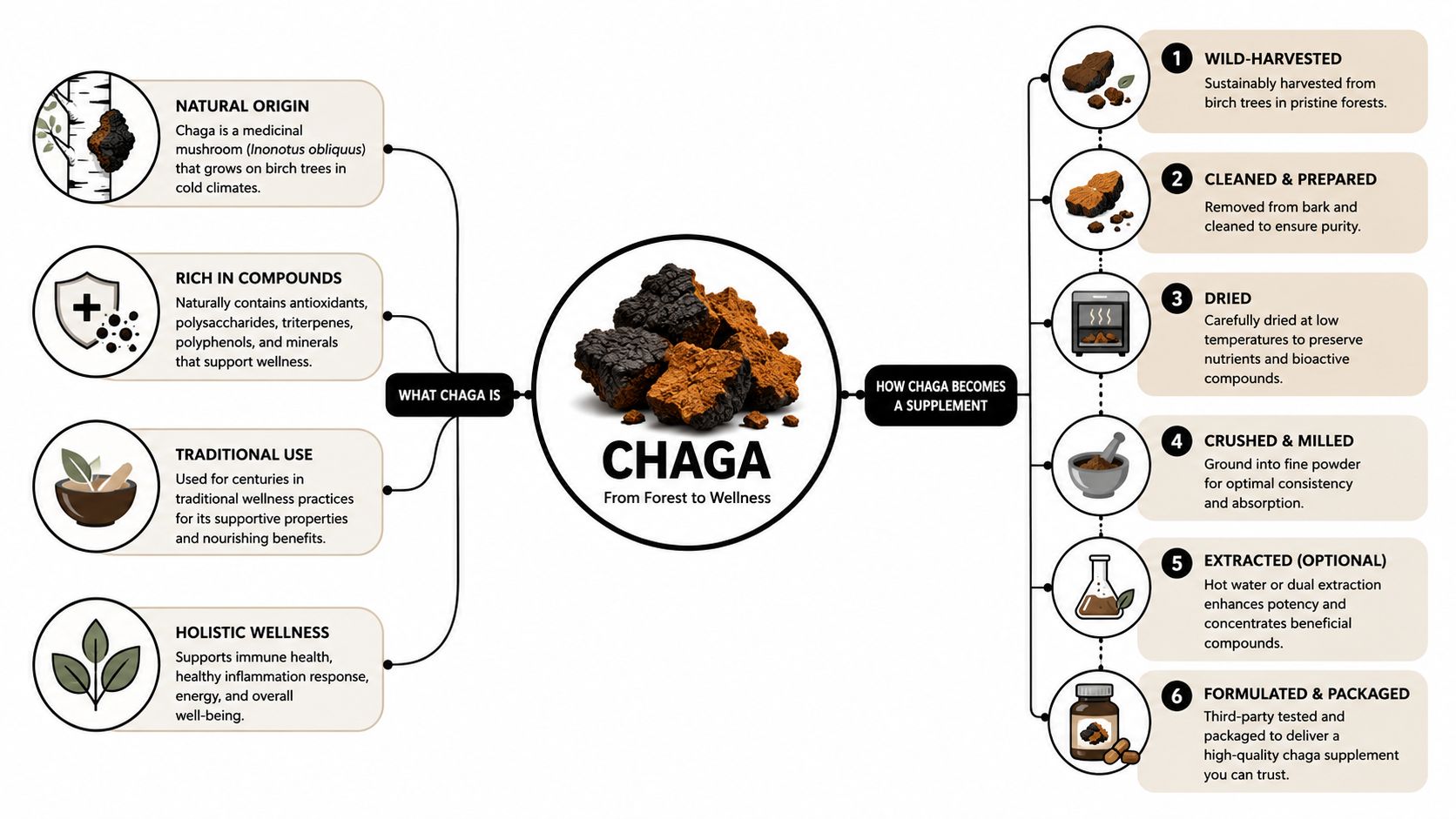
Chaga is unusual from the start. It's not the classic umbrella-shaped mushroom many picture. It's a dense, dark mass associated with Inonotus obliquus, often found on birch, and that odd form is one reason its supplement story gets technical fast.
If you're newer to functional mushrooms, this overview of what functional mushrooms are helps place chaga in the wider category.
What's inside chaga
A simple way to think about chaga is this. It contains a mix of compounds that behave differently in water, alcohol, and the digestive tract.
- Beta-glucans are structural mushroom polysaccharides often discussed in relation to immune signaling.
- Alpha-glucans are more starch-like carbohydrates and don't tell you the same thing about mushroom potency.
- Polyphenols and melanin-related compounds help explain why chaga is often discussed for antioxidant activity.
- Tough fungal structure affects how easy it is to access those compounds.
That last point is easy to miss. Chaga isn't just about what it contains. It's also about how much of that content becomes available after processing.
From forest material to supplement jar
Here's the practical path most shoppers are dealing with:
- Raw material is collected or cultivated. This may involve wild-harvested chaga material or cultivated mycelium-based production.
- The material is dried and milled. At this stage, you might get a basic powder.
- Some products are extracted. Water extraction is often used to access water-soluble compounds more effectively.
- The result becomes a capsule, powder, tincture, or food-format product.
That means the word “chaga” on the front label doesn't tell you enough. You need to know the part used and how it was processed.
A supplement name tells you the species. The extraction method tells you much more about the finished product.
Proposed Benefits and What the Evidence Actually Shows
The appeal of chaga usually comes down to three big ideas. Antioxidant support, immune modulation, and broader wellness effects that people loosely connect to healthy ageing. Those ideas aren't random, but they're often presented with more certainty than the evidence supports.
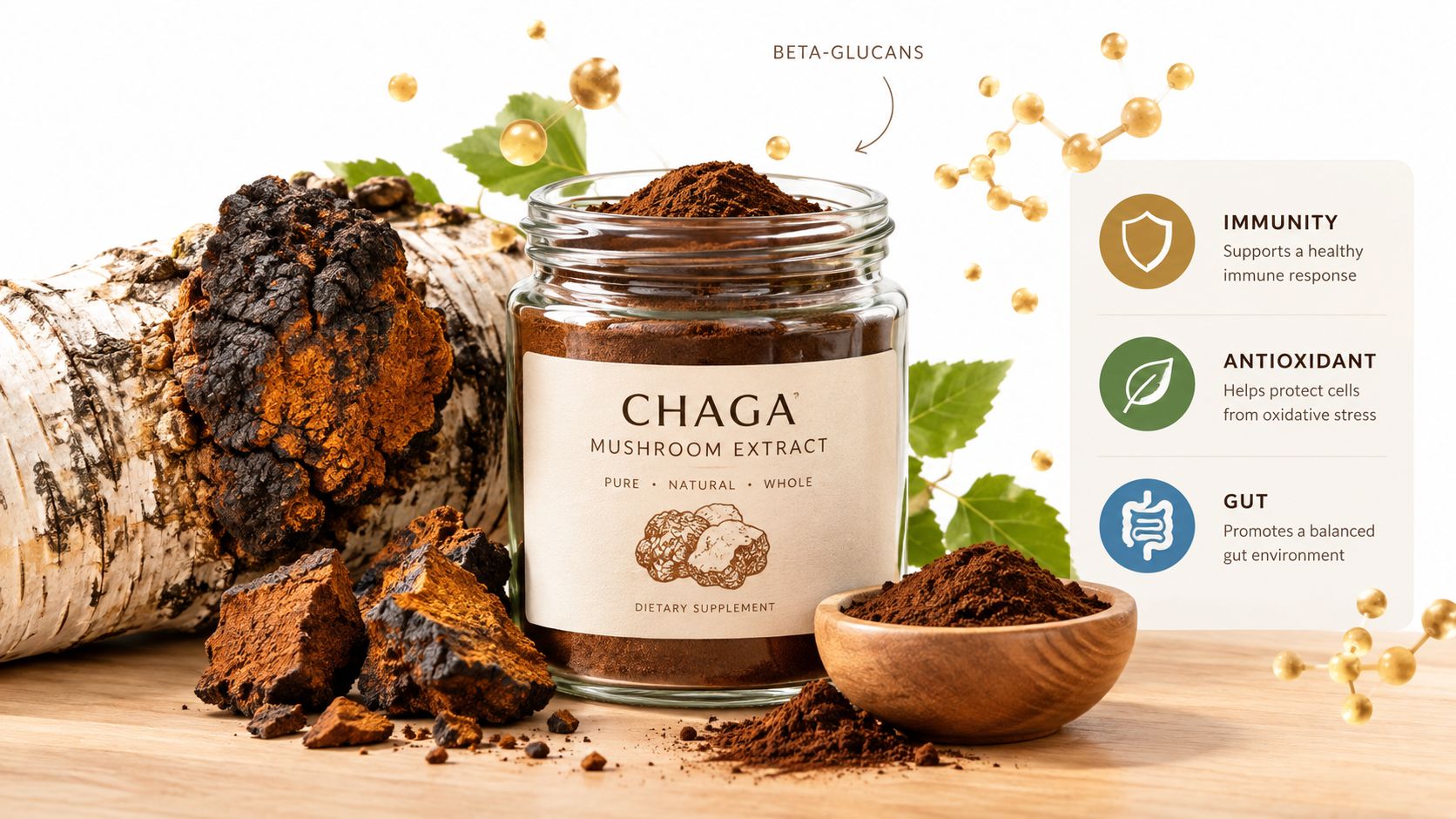
A broader overview of functional mushroom supplements can be useful if you're comparing chaga with reishi, lion's mane, or blends rather than looking at it in isolation.
Antioxidant activity
Chaga is often marketed around its dark color and antioxidant profile. That framing makes sense at a high level. The problem is that shoppers often leap from “contains antioxidant compounds” to “will create noticeable health outcomes in humans.”
That leap is bigger than many labels admit.
Reality check: antioxidant activity measured in a lab doesn't automatically translate into a meaningful day-to-day benefit in people.
Immune-related interest
Beta-glucans are one reason chaga gets grouped with immune-support mushrooms. Independent review literature on Inonotus obliquus notes about 8.57% beta-glucan, while also stressing that the evidence base remains largely preclinical, not proof of human clinical benefit (review on Inonotus obliquus beta-glucans and evidence limits).
That's an important distinction. Preclinical evidence can explain why scientists are interested. It doesn't confirm that most healthy adults will feel a clear, reliable effect.
Why the evidence gap matters
For a busy adult, this changes the decision. If your main goal is something concrete, like better sleep, stress support, exercise recovery, or filling common nutrient gaps, supplements such as magnesium, omega-3, creatine, or a well-chosen multivitamin may fit more directly because their intended uses are easier to define in everyday life.
That doesn't make chaga useless. It means it belongs in the “interesting but less settled” category.
Here's a short explainer if you want a visual walk-through before going deeper into extraction.
What to take from the benefit claims
A balanced way to think about chaga is:
- Promising chemistry: there are compounds worth studying.
- Reasonable interest: antioxidant and immune-related claims aren't baseless.
- Limited certainty: human evidence remains thin.
- Poor fit for miracle language: it shouldn't be sold like a catch-all answer for energy, longevity, cognition, and immunity at once.
If a product page makes chaga sound like it does everything, that's your cue to slow down.
Extraction Types and Why Bioavailability Differs
Extraction is where chaga stops being a simple mushroom topic and becomes a supplement quality topic. The main issue is bioavailability, which means how effectively useful compounds are released and made available from the finished product.
If you want a broader primer on the concept itself, this guide on how to increase bioavailability gives useful background.
Why raw powder and extract aren't the same
Chaga has a tough fungal structure. Some compounds are more water-friendly. Others are better accessed with alcohol. A raw powder may still contain those compounds, but “contains” isn't the same as “delivers well.”
A lot of labels blur important differences.
| Chaga Extraction Methods Compared | What It Extracts Best | Bioavailability Note |
|---|---|---|
| Raw powder | Whole material in unextracted form | Broadest on paper, but harder to access fully because the material remains less processed |
| Hot water extract | Water-soluble compounds such as beta-glucans | Usually better for releasing chitin-bound mushroom polysaccharides |
| Alcohol extract | Alcohol-soluble compounds such as certain triterpene-related fractions | May broaden compound access beyond what water alone pulls out |
| Dual extract | Combines water and alcohol extraction goals | Often the most conceptually complete approach when a product aims for broader-spectrum delivery |
The label terms that matter most
One of the clearest quality lessons in chaga is that “polysaccharides” is too vague.
A 2025 analytical comparison of commercial chaga dietary supplements found beta-glucans ranging from 5.7% to 11.9% and alpha-glucans from 0.8% to 1.1%, which is useful because authentic chaga products tend to be relatively low in starch-like alpha-glucans while still providing measurable beta-glucans when properly characterized (analytical comparison of commercial chaga supplements).
That means two things for shoppers:
- A high “mushroom polysaccharide” claim may not tell you whether you're getting meaningful fungal beta-glucans.
- Standardized beta-glucan testing is a stronger comparison point than generic carbohydrate language.
If a brand highlights polysaccharides but never tells you the beta-glucan content, you still don't know much.
Mycelium, extracts, and consistency
Research also shows chaga's measured beta-glucan content varies by product type and extraction method. One comparative study reported roughly 5.7% to 11.9% beta-glucans in several commercial water extracts and 14.4% in a pure mycelium sample, reinforcing that the “chaga” label alone doesn't guarantee a consistent active-compound profile (comparative beta-glucan findings across product types).
So when people ask, “Which form is best?” the better question is, “Best for what, and based on which test result?” That's the level where smart shopping starts.
How to Choose a High Quality Chaga Product
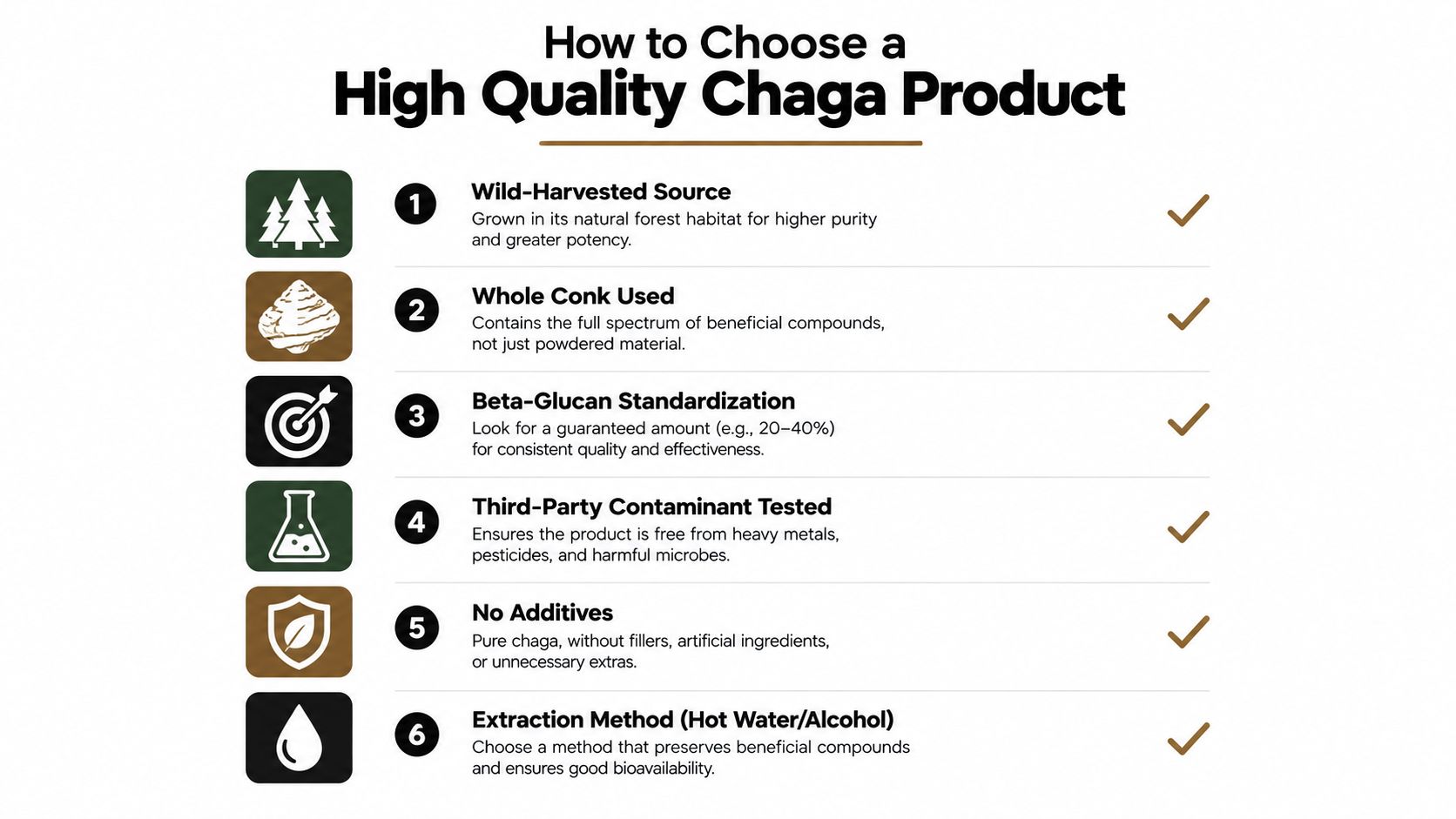
Quality matters more with chaga than many shoppers realize. A front label can look clean and still leave out the details that determine whether a product is well characterized, sensibly sourced, and properly tested.
The biggest quality questions to ask
Start with the basics. What exactly is in the product, and what proof does the label give you?
- Part used matters: ask whether the product is based on sclerotium-style chaga material, mycelium, or a blend. These aren't automatically equivalent.
- Testing matters more than storytelling: a romantic harvest story doesn't replace a certificate of analysis.
- Extraction method matters: “extract” is useful only if the brand explains what kind.
Why contamination belongs on your checklist
One of the more overlooked concerns is contamination. Independent coverage notes that wild-harvested chaga from polluted regions can concentrate cadmium, lead, and arsenic above food-safety thresholds, and broader mushroom supplement testing in European markets has found a meaningful share of products exceeding maximum limits for lead or cadmium (quality and contamination discussion).
That means third-party contaminant testing shouldn't be treated as a bonus. It should be part of the minimum screen.
A practical label-reading filter
When you compare products, use this checklist:
- Look for beta-glucans: a stated beta-glucan figure is more useful than a vague polysaccharide claim.
- Question alpha-heavy formulas: authentic chaga tends to be relatively low in alpha-glucans, so very starch-forward labeling deserves scrutiny.
- Check for contaminant testing: lead, cadmium, and arsenic testing matter.
- Ask what “extract” means: hot water, alcohol, or dual extraction should be disclosed.
- Keep sourcing in context: wild-harvested doesn't automatically mean better.
- Read the suggested use: food-format products and capsules create very different intake patterns.
A food-format example is Birch Chaga Truffles. The product snapshot lists dates, flaxseed flour, pine bark, birch chaga extract, and cacao, with a suggested use of 1 truffle a day. It also states that it shouldn't replace a complete and balanced diet and that the product is made in Latvia. That kind of format may appeal to people who prefer a daily food-style routine over capsules, but the same label-reading principles still apply.
Dosing Safety Interactions and Who Should Avoid Chaga
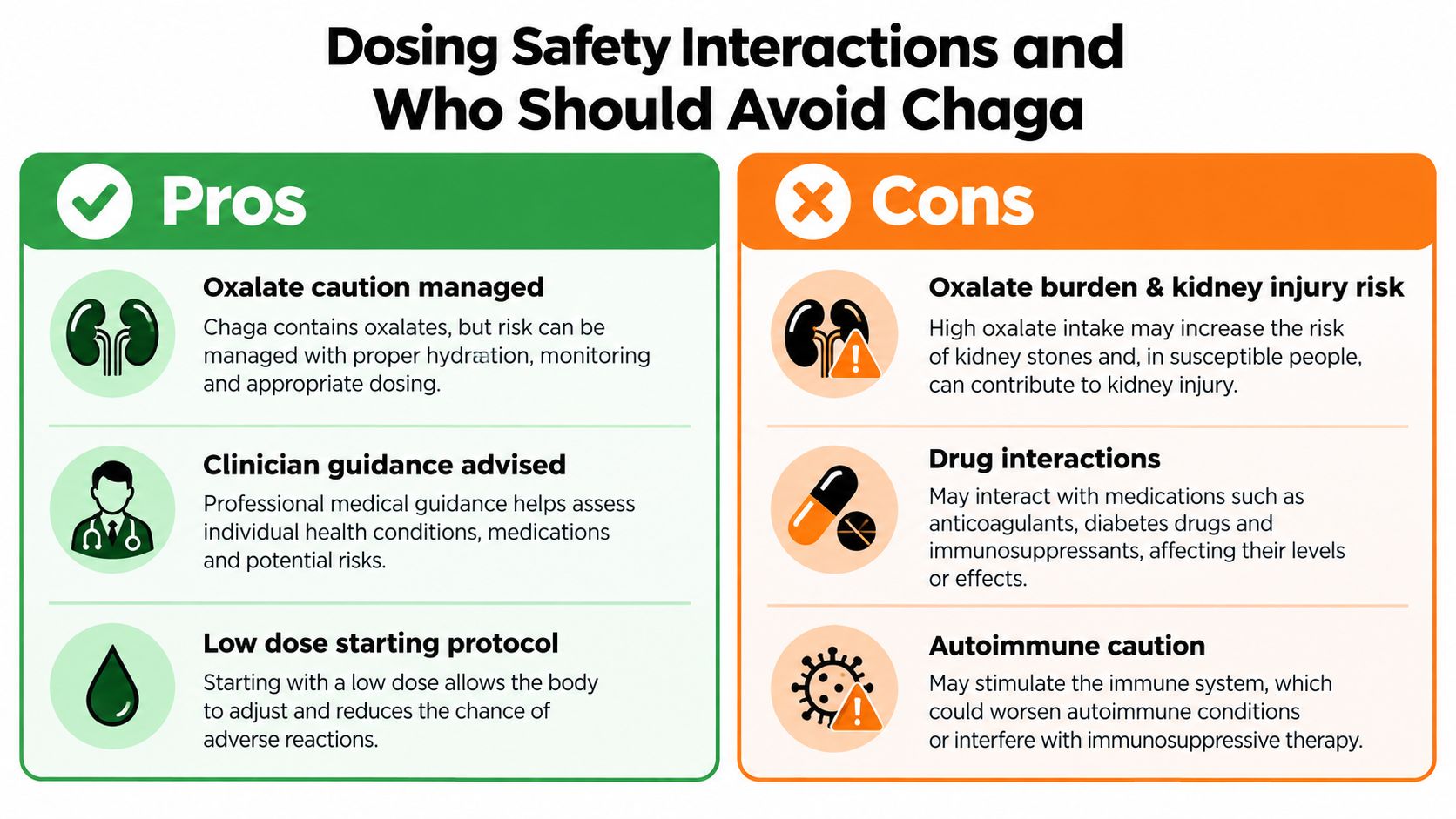
This is the part many chaga articles soften too much. Natural origin doesn't make a supplement low-risk. With chaga, the clearest safety signal is kidney risk tied to oxalate burden.
The kidney concern is the main concern
Independent medical and review sources describe repeated cases of oxalate nephropathy linked to heavy chaga intake. One published case involved roughly 4 to 5 teaspoons daily for 6 months before kidney injury developed. Another review summarizes three published case reports of serious kidney damage associated with heavy use, including one case progressing to end-stage renal disease and another involving hemodialysis after 10 to 15 g/day for 3 months. The same safety summary notes that no reliable human clinical trials have established a safe dose for long-term use (medical safety overview of chaga and oxalate kidney risk).
A peer-reviewed case report also warns that chaga powder formulations carry a potential risk of oxalate nephropathy because chaga contains high oxalate concentrations, with calcium oxalate crystal deposition in renal tubules explaining the mechanism (peer-reviewed case report on oxalate nephropathy risk).
Who should avoid it or get medical input first
For some people, caution isn't enough. They should treat chaga as something to avoid unless a clinician specifically advises otherwise.
- Kidney stone history or chronic kidney disease: this is the clearest avoid-or-ask-first group.
- People taking blood thinners or antiplatelet drugs: independent medical guidance notes possible increased bleeding risk, including caution with warfarin (Memorial Sloan Kettering monograph on chaga interactions).
- People using diabetes medicines or immunosuppressants: the same source advises additional caution, though human evidence remains limited.
- Anyone heading into surgery: possible bleeding-related concerns mean this should be reviewed ahead of time.
Practical rule: if your kidneys, blood clotting, or prescription medication list are already a concern, don't self-experiment with high-dose chaga.
A consumer-facing medication and safety summary also reports at least two cases of kidney failure and one case of acute kidney inflammation linked to excessive chaga consumption, with added caution for people with kidney issues or those taking blood-thinning drugs (consumer safety summary for chaga interactions).
Why dose is still an open question
There isn't a reliable long-term safe dose established in human trials. That's the key takeaway. Product labels may give a suggested serving, but a serving suggestion is not the same as a well-established long-term safety threshold.
If you're comparing supplement decisions across countries and want a broader consumer health context, you can also visit Telomyx, which covers related wellness topics for UK readers.
One more point matters here. The U.S. FDA has taken enforcement action against chaga products marketed with disease claims, including a warning letter stating such products were considered unapproved new drugs for the referenced uses (FDA warning letter involving chaga disease claims). So if a brand sounds like it's promising treatment-level outcomes, that's another red flag.
Making Chaga Work for Your Personal Wellness Plan
Chaga fits best when you treat it as a selective option, not a default wellness add-on. If your main priorities are broad stress support, sleep, exercise recovery, or filling likely dietary gaps, other supplements may be more direct. Magnesium may make more sense for someone focused on sleep or muscle relaxation. Omega-3 may be more relevant for someone who rarely eats fish. Creatine may be a better fit for strength, training output, and healthy ageing support around muscle.
If chaga still interests you, keep your decision framework simple.
A sensible decision filter
- Start with fit: are you looking for a mushroom product specifically, or are you really trying to solve a sleep, stress, gut health, or energy problem that another supplement may match more clearly?
- Start low and stay observant: because long-term safe dosing isn't well established, conservative use makes more sense than escalating quickly.
- Track your response: note digestive changes, tolerance, and any signs that suggest the product doesn't agree with you.
- Keep lifestyle first: no chaga product replaces the basics of diet quality, protein intake, sleep, hydration, and movement.
For people who don't want to sort through every category alone, VitzAi offers a personalised supplement quiz that matches adults with a curated plan based on factors like age, diet, exercise, sleep, stress, fish intake, and digestion. That can be useful when you're deciding whether a chaga mushroom supplement belongs in your stack, or whether a multivitamin, magnesium, omega-3, or another option fits your goals more directly.
If you want help narrowing down which supplements match your needs, VitzAi.com offers a personalised quiz and curated supplement guidance built around goals like energy, sleep, stress, fitness, gut health, and healthy ageing. It's a practical way to put chaga into context and decide whether it belongs in your routine or whether another supplement category is the better first move.
This article is for informational purposes only and is not medical advice. Always consult a qualified health professional before starting any new supplement or major lifestyle change