

The Ultimate Guide to High Strength Magnesium Supplements
When you see a bottle labelled “high strength magnesium,” what does that number on the front actually mean? It’s a common pitfall. True strength isn't just about a big milligram count; it’s about getting a meaningful dose of elemental magnesium in a form your body can actually absorb and use. This guide is designed to help you see past the marketing fluff and focus on what genuinely delivers results for your health goals, whether that's better sleep, sharper cognitive performance, or enhanced fitness.
Decoding High Strength Magnesium Labels
Wandering down the supplement aisle can feel overwhelming, especially with bold claims like "high strength" and "maximum potency" shouting from every shelf. Here’s the secret: the large number on the front often represents the total weight of the magnesium compound, not the amount of pure magnesium your body gets.
Think of it like a delivery truck. The whole truck is the magnesium compound (like magnesium glycinate or citrate), but the valuable cargo inside is the elemental magnesium. Your body only benefits from the cargo, not the truck carrying it.
Elemental Magnesium vs. Total Compound: Always flip the bottle over and check the supplement facts for the "elemental magnesium" content. A 500mg tablet of Magnesium Citrate might only provide 80mg of actual, usable elemental magnesium. This distinction is the single most important factor in understanding a product’s true potency.
Why This Matters for Your Health Goals
The gap between the compound weight and the elemental dose is huge. If you're not getting enough elemental magnesium, you simply won't see the benefits you’re after, whether that’s deeper sleep, less muscle soreness, or sharper focus.
This is especially true here in the UK, where magnesium has become a go-to nutrient for busy, performance-focused adults. The demand for effective supplements is soaring, with the UK dietary supplements market valued at around USD 4.79 billion in 2024. As more of us move away from generic multivitamins towards targeted solutions, understanding what "high strength" really means is crucial. You can dive deeper into these UK supplement market trends on Grandviewresearch.com.
At the end of the day, effective supplementation boils down to two things working together:
- Sufficient Elemental Dose: You need enough raw magnesium to actually make a difference in your body.
- High Bioavailability: You need a form of magnesium that your body can easily absorb and shuttle to where it’s needed most.
A supplement that nails both of these is a genuinely high-strength product. It delivers not just a high number on the label, but a high level of impact on your health, giving you a solid foundation to build on. In the next sections, we’ll explore which forms offer the best absorption and how to match them to your personal goals.
A Practical Guide to Magnesium Forms
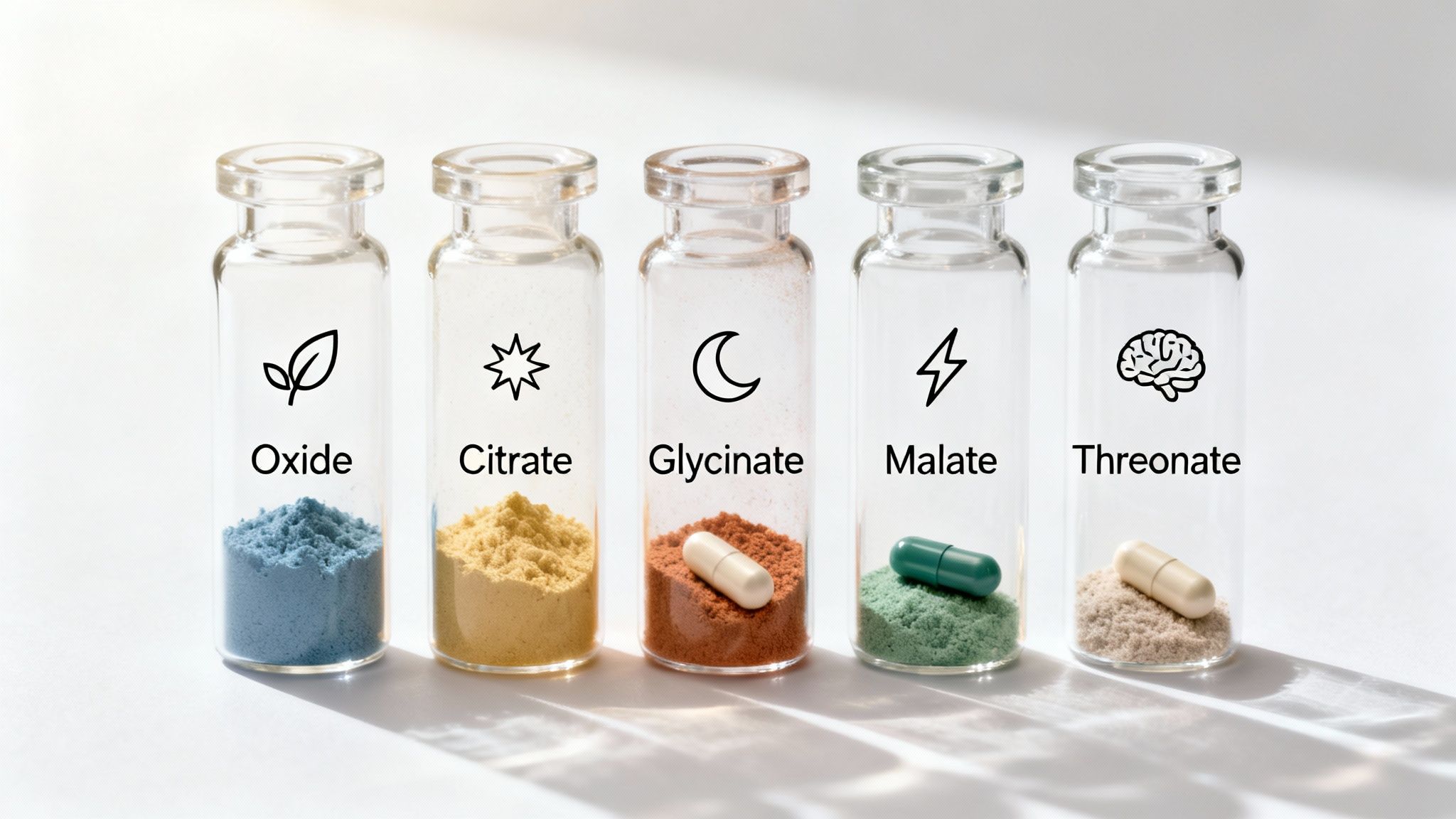
Stepping into the world of magnesium supplements can feel a bit tricky, mostly because not all magnesium is created equal. The real magic lies in the molecule magnesium is attached to—what we call its carrier or chelate. Think of these carriers as different delivery specialists, each with a unique talent for getting magnesium where it needs to go in your body.
Choosing the right form is the secret to unlocking the specific benefits you’re after. A high-strength magnesium supplement only really works if its form lines up with your personal health goals, whether that’s deeper sleep, better energy, or sharper focus. Let’s break down the most common players to see how they stack up.
Magnesium Oxide: The Common Starting Point
Magnesium Oxide is one of the most common forms you'll find on the shelf, often tucked away in basic multivitamins and budget-friendly supplements. On paper, it looks impressive because it contains a high concentration of elemental magnesium by weight.
But here’s the catch: it has poor bioavailability. Your body really struggles to absorb it, with some studies suggesting as little as 4% actually gets taken up. Most of what you take simply passes right through your system, which often leads to its most famous side effect: a laxative effect.
This form is a perfect example of why a high dose doesn't always equal high strength. While the UK magnesium supplement market is valued at around USD 161.24 million in 2024, a big chunk of that is still Oxide due to its low cost. Thankfully, people are getting wise to it and are now looking for more effective forms that deliver better results with fewer trips to the loo.
Magnesium Citrate: For Digestion and Regularity
Magnesium Citrate is simply magnesium bound with citric acid. This combination creates a form with good bioavailability—miles better than oxide—and a gentle osmotic laxative effect.
It's a fantastic choice if you’re looking to support both your magnesium levels and your digestive regularity. By drawing water into the intestines, it can help with occasional constipation without being nearly as harsh as its oxide cousin. It’s a reliable, well-absorbed, and cost-effective option for general magnesium support.
Magnesium Glycinate: The Calming Champion
Magnesium Glycinate (sometimes listed as Bisglycinate) is a top-tier choice for anyone targeting stress, anxiety, and sleep. In this form, magnesium is attached to glycine, an amino acid that has its own calming effect on the nervous system.
This combination is a real powerhouse for a few key reasons:
- Exceptional Bioavailability: The glycine chelate is a VIP pass for absorption, meaning more magnesium actually gets into your system.
- Gentle on the Stomach: It’s famous for being one of the gentlest forms out there, perfect for those with sensitive digestive systems.
- Targeted Calming Action: The glycine actively helps promote relaxation, lower core body temperature, and quiet a racing mind, making it ideal for improving sleep quality.
Because of its unique benefits for the nervous system, Magnesium Glycinate is often the star player in high-strength magnesium formulas designed for evening use. It helps top up your magnesium levels while actively helping you wind down.
For a deeper dive, you can read our comprehensive guide on the benefits of magnesium glycinate and see why it's a favourite for stress management.
Magnesium Malate: The Energy Booster
If fatigue or muscle soreness is your main battle, Magnesium Malate is the form you need to know about. Here, magnesium is bound to malic acid, a natural compound that plays a vital role in the Krebs cycle—the process your cells use to create energy (ATP).
This makes it particularly brilliant for:
- Fighting Fatigue: It directly supports your cellular energy production, helping to reduce feelings of tiredness and lethargy.
- Soothing Muscle Aches: Both magnesium and malic acid can help with muscle tenderness, making it a popular choice for athletes and those with conditions like fibromyalgia.
Unlike the calming glycinate, this form is often recommended for daytime use to help keep your energy levels humming throughout the day.
Magnesium L-Threonate: The Brain Health Specialist
Last but not least, we have Magnesium L-Threonate, a newer and highly specialised form. Its superpower is its unique ability to effectively cross the blood-brain barrier, delivering magnesium directly to your brain cells.
This targeted delivery makes it the undisputed champion for cognitive support. Studies suggest it can help with learning, memory, and overall brain health. While other forms of magnesium provide benefits throughout the body, Threonate is specifically engineered for those looking to sharpen their mental performance and support long-term brain function.
Choosing Your Ideal Form
To help you decide, here’s a quick-reference table comparing these common types of high-strength magnesium, looking at their bioavailability, main benefits, and potential side effects.
Comparing Common Forms of High Strength Magnesium
| Magnesium Form | Bioavailability | Best For | Potential Side Effects |
|---|---|---|---|
| Magnesium Oxide | Low | Cost-effective, laxative use | High chance of digestive upset |
| Magnesium Citrate | Good | General health, digestive regularity | Mild laxative effect at high doses |
| Magnesium Glycinate | Very High | Sleep, stress, anxiety, relaxation | Very rare; extremely gentle |
| Magnesium Malate | High | Energy production, muscle soreness, fatigue | Rare |
| Magnesium Threonate | High | Cognitive function, memory, brain health | Rare |
Understanding these key differences empowers you to pick a high-strength magnesium supplement that isn't just potent, but perfectly matched to what your body really needs.
Finding Your Optimal Magnesium Dose
Figuring out the right magnesium dose isn’t about chasing the highest number you can find on a label. It's much more personal than that. The goal is to find the sweet spot that clicks with your body, your diet, and whatever you’re hoping to achieve. A truly high strength magnesium strategy is all about precision, not just raw power.
When we start talking about dosage, it’s easy to get tangled up in the official guidelines. Here in the UK, the Recommended Daily Allowance (RDA) sits at around 300mg for men and 270mg for women. But it’s really important to grasp what that number actually means.
Think of the RDA as the bare minimum – the amount needed to stop the average, healthy person from becoming deficient. It's not the optimal dose for someone looking to speed up their recovery after a tough workout, get a more restorative night's sleep, or navigate the extra demands of a stressful period in their life.
Dosing for Specific Health Goals
The right amount of elemental magnesium often comes down to what you want it to do. A one-size-fits-all approach just doesn’t make sense when you're targeting specific outcomes. While everyone’s needs are slightly different, some clear patterns have emerged from both research and real-world experience.
Here are a few common starting points for different goals:
- For Better Sleep and Relaxation: Many people find their sweet spot with 200-400mg of elemental magnesium. A calming form like glycinate, taken about an hour before bed, can help quieten the nervous system and get your body ready for rest.
- For Athletic Recovery and Muscle Function: If you’re an athlete or just train hard, you might benefit from a bit more, often in the 300-500mg daily range. Forms like malate or glycinate are great choices here, helping to ease muscle soreness and support energy production.
- For General Health and Wellbeing: Simply looking to top up your levels and support your overall health? A dose of 200-350mg per day is a solid foundation for most adults.
It's crucial to remember these are just starting points. Your ideal dose isn't static; it can change depending on your diet, stress levels, and how much you're exercising. A week full of intense gym sessions and poor sleep might call for more support than a relaxing week on holiday.
The Golden Rule: Start Low and Go Slow
Whatever your goal, the smartest way to begin is always with a lower dose, increasing it gradually. This lets your body adjust and helps you sidestep any potential digestive issues, which can sometimes pop up if you go too high, too fast.
Try starting with around 150-200mg of elemental magnesium each day for the first week. Pay attention to how your body responds. If you feel good and aren't experiencing any unwanted side effects like loose stools, you can slowly nudge the amount up until you find the dose that delivers the benefits you’re after.
Understanding the Tolerable Upper Limit
Safety should always be the priority when taking any supplement. For magnesium, health authorities have set a Tolerable Upper Intake Level (UL). This is the maximum daily amount from supplements that's unlikely to cause any problems.
For adults, the UL for supplemental magnesium is 350mg of elemental magnesium per day. It's important to know that this limit doesn't include the magnesium you get naturally from food, as your body handles that differently. Sticking within this guideline helps you get all the benefits without any of the risks.
This is where a modern, personalised approach can make a real difference. Instead of taking a guess, an intelligent system can analyse your unique lifestyle, diet, and health goals. It can then recommend a precise, effective dose of high strength magnesium that's truly tailored to you, taking you beyond generic advice and towards a genuinely optimised health routine.
How to Maximise Magnesium Absorption
Taking a high-strength magnesium supplement is a brilliant first step, but it’s only half the story. The real prize is absorption—making sure that precious elemental magnesium actually gets into your cells where it can work its magic. Just swallowing a capsule doesn’t guarantee results; you need to create the right internal environment for it to be truly effective.
Thankfully, a few simple tweaks to your routine can dramatically improve how much magnesium your body takes up. By understanding what helps and what hinders this process, you can turn a good supplement into a great one and get the most out of your investment in your health.
Timing Is Everything
One of the easiest ways to boost absorption is to get your timing right. Different forms of magnesium have different effects on the body, so syncing your supplement schedule with your daily rhythm can make a huge difference. It’s all about working with your body, not against it.
- For Relaxation and Sleep: If you're using a calming form like Magnesium Glycinate, taking it about an hour before bed is perfect. This gives the magnesium and its glycine partner time to quiet your nervous system, preparing you for a night of deep, restorative rest.
- For Energy and Performance: If you’ve opted for an energising form like Magnesium Malate, taking it in the morning or early afternoon makes the most sense. This timing supports your cellular energy production throughout the day, helping to fend off fatigue when you need it most.
For a more detailed breakdown, you can learn more about the best time to take magnesium based on your goals in our dedicated guide.
Create Powerful Nutrient Partnerships
Magnesium doesn't work in a vacuum. It has a few key allies that act as co-factors, essentially rolling out the red carpet to ensure it gets absorbed and put to work properly. Think of these nutrients as your magnesium’s support team.
The two most important partners are:
- Vitamin D: This essential vitamin helps regulate magnesium levels in the body and is critical for its absorption in the gut. Making sure your Vitamin D levels are sufficient is non-negotiable for getting the most from your magnesium.
- Vitamin B6: Specifically, Vitamin B6 acts like a shuttle service, helping to transport magnesium into your cells. Without enough B6, magnesium can struggle to get past the cell membrane and do its job.
By pairing your high-strength magnesium with these co-factors, you’re creating a synergistic effect where each nutrient enhances the function of the others. This is a core principle behind smart, personalised supplement stacks.
Avoid Common Absorption Blockers
Just as some nutrients help, others can unfortunately get in the way. Being mindful of these "absorption blockers" is crucial, especially when you’re taking your supplement. It’s best to separate your magnesium dose from these compounds by at least a couple of hours.
Keep an eye out for these common culprits:
- High-Dose Zinc or Calcium Supplements: These minerals compete with magnesium for the same absorption pathways in your gut. Taking them all at once is like trying to cram three people through a single doorway—someone is getting left behind.
- Phytic Acid: Found in unsoaked nuts, seeds, grains, and legumes, phytic acid can bind to minerals like magnesium and stop them from being absorbed. Soaking or sprouting these foods can help reduce their phytic acid content.
- Tannins: These compounds, found in tea and coffee, can also slightly interfere with mineral absorption. It’s a good idea to avoid washing down your magnesium supplement with your morning cuppa.
By strategically timing your supplement, pairing it with the right nutrients, and sidestepping common blockers, you can ensure your body reaps the full benefits of every milligram. This smart approach transforms supplementation from a simple daily habit into a precise and effective health strategy.
How to Choose a High Quality Magnesium Supplement
Right, you’ve got the theory down. Now it’s time to put that knowledge into action and find a genuinely high-strength magnesium supplement. Stepping into the supplement aisle (or browsing online) can feel a bit overwhelming, but a few key details on the label will tell you everything you need to know.
Once you learn how to spot these markers of quality, you can make a choice that actually delivers results. Whether you're a professional aiming for better focus or an active adult looking to support your bones and muscles, this checklist will help you cut through the marketing fluff.
Read the Label Like an Expert
Forget the flashy claims on the front of the bottle; the real story is always on the back. When you pick up a potential supplement, ignore the big numbers on the front and flip it over to the supplement facts panel.
Here's what you need to zero in on:
- Elemental Magnesium Content: This is the most crucial detail. The label must clearly state the amount of elemental magnesium per serving. If it only lists the total compound weight (e.g., "Magnesium Bisglycinate 500mg"), you have no real idea how much actual magnesium you’re getting.
- Specific Magnesium Form: A quality product will proudly state the exact form used, like Magnesium Bisglycinate, Magnesium Malate, or Magnesium L-Threonate. Vague terms like "magnesium blend" are a red flag, as they can be used to hide cheaper, less effective forms like oxide.
- Minimal Fillers and Binders: Check the "other ingredients" list. While some binders are necessary to create a capsule, the list should be short and sweet. Steer clear of products with artificial colours, unnecessary sugars, or a long list of chemical-sounding names.
A great supplement is defined as much by what it leaves out as by what it puts in. Clean, simple formulas are always the goal.
Prioritise Purity and Potency
Once you've confirmed the elemental dose and form, the next step is to verify the product's quality. Without some kind of independent check, you're just taking the company's word that what's on the label is what's in the bottle.
This is where third-party testing comes in. Look for certifications from independent organisations on the label or the company's website. These seals of approval confirm that the product has been tested for:
- Purity: It is free from nasty contaminants like heavy metals, pesticides, or microbes.
- Potency: It contains the exact amount of elemental magnesium and other ingredients stated on the label.
A brand that invests in third-party testing is showing a real commitment to transparency and quality. It gives you the confidence that your high-strength magnesium supplement is both safe and effective.
This visual guide shows some simple ways to enhance magnesium's effectiveness through smart timing and avoiding nutritional conflicts.
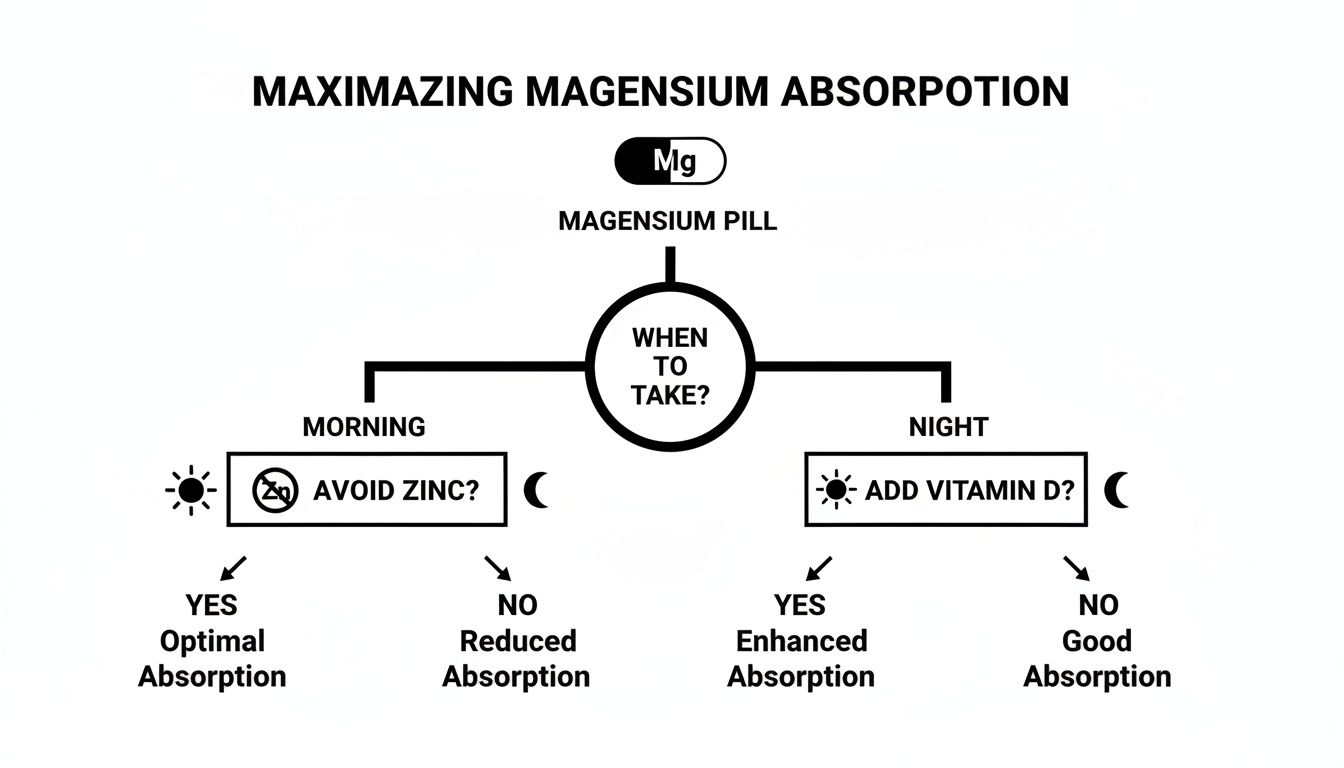
The key takeaway is that simple, strategic choices—like taking calming forms at night and avoiding competing minerals—can significantly boost how much magnesium your body actually uses.
The Modern Way to Find Your Perfect Match
A telling trend in the UK is the rapid rise of magnesium threonate, a form specifically positioned for cognitive health and stress resilience. Market analysis shows that the UK magnesium threonate supplement market is projected to grow at a CAGR of 6.77% from 2025 to 2035. For UK consumers, this signals that high-strength, brain-targeted magnesium is becoming a normal part of a long-term mental performance strategy, often delivered through the online, AI-guided systems that busy adults already prefer. You can explore more about the growth of this specialised magnesium form at futuremarketinsights.com.
This move towards more precise supplementation is where things are heading. While the checklist above is a powerful tool, it still requires a fair bit of time and research on your part. This is where personalised platforms can simplify the whole process.
By using an intelligent system to analyse your unique goals, diet, and lifestyle, you can bypass the guesswork entirely. A platform like VitzAI assesses your individual needs and recommends a pre-vetted, high-quality supplement tailored specifically for you. It's the smartest way to ensure you're getting the right form, the right dose, and the highest quality product to meet your personal health objectives.
This approach combines the best of both worlds: expert-level quality control and a recommendation that feels like it was made just for you, making your wellness journey both effective and effortless.
Common Questions About High Strength Magnesium
Even when you've done your research, it’s completely normal to have a few last-minute questions before trying a new supplement. Getting clear, straightforward answers can make all the difference, helping you feel confident as you get started with high-strength magnesium. Let's tackle some of the most common queries.
Will High Strength Magnesium Upset My Stomach?
This is a really fair question, as some forms of magnesium are notorious for causing a bit of digestive chaos. Whether you'll experience any side effects often comes down to the form of magnesium you’re taking. Cheaper, less absorbable forms like Magnesium Oxide are the usual culprits here, as whatever your body can't absorb can have a laxative effect.
To sidestep this, you can:
- Pick a highly bioavailable form: Magnesium Glycinate is exceptionally gentle on the stomach and is a top choice for this very reason.
- Start low and go slow: Ease into it. Begin with a smaller dose (around 150mg) and gradually work your way up over a week or two.
- Split your dose: Instead of taking the full amount at once, try splitting it between the morning and evening.
Can I Get Enough Magnesium From Food Alone?
In an ideal world, you could. Foods like spinach, almonds, and pumpkin seeds are naturally packed with magnesium. The reality, however, is that modern farming practices have led to soil depletion, meaning many of our foods contain lower mineral levels than they did for our grandparents.
For many of us, especially those with active lifestyles or high stress levels, relying solely on diet makes it tough to reach an optimal magnesium intake. A high-quality supplement acts as a reliable insurance policy, ensuring your levels are consistently topped up.
How Long Until I Feel the Benefits?
Patience is key here. The timeline really depends on your starting magnesium levels and what you’re hoping to achieve. Some effects, like better sleep or that lovely feeling of relaxed muscles, can often be felt within the first week of consistent use.
For longer-term goals, such as supporting bone density or nerve function, it might take several weeks or even a few months to notice a significant shift. Consistency is what truly matters. For those who are physically active, high strength magnesium is often a go-to for recovery; you can explore the best foods for muscle recovery, where getting enough minerals plays a vital role. It’s also helpful to understand how different minerals work together; you can learn more about combining zinc and magnesium supplements in our guide.
Ready to find the perfect high-strength magnesium for your unique health goals? The VitzAI platform uses an intelligent system to analyse your lifestyle and recommend a pre-vetted, high-quality supplement stack designed just for you. Take the guesswork out of wellness and discover your personalised solution at https://vitzai.com.
This article is for informational purposes only and is not medical advice. Always consult a qualified health professional before starting any new supplement or major lifestyle change.