

Magnesium and Calcium Tablets: Your Guide to Dosage, Benefits, and Balance
Think of magnesium and calcium as the ultimate tag team for your body. Calcium is the one that gets things going—tensing muscles, firing up nerves. Then, magnesium steps in as the calming influence, helping everything relax and reset. Taking one without the other is like having a car with only an accelerator pedal; you can go, but you can't slow down. That’s why a combined tablet can be such a game-changer for your overall health.
The Power Duo of Minerals

Magnesium and calcium are two of the most vital minerals your body needs, but their relationship is all about balance. They’re in a constant dance, working together to manage hundreds of essential functions. When their levels are in sync, everything just runs more smoothly.
To really get it, picture a light switch. Calcium is the mineral that flips the switch "on." It's what makes your muscles contract, helps your blood clot, and allows nerve signals to fire. Without it, your body would grind to a halt.
But a switch that's always on isn't useful—it just burns out. That's where magnesium comes in. It’s the "off" switch. It allows your muscles to relax, your blood vessels to open up, and your nervous system to chill out. It perfectly counterbalances calcium's go-go-go effects, making sure everything can return to a state of rest.
Why Their Balance is Critical
This teamwork is absolutely fundamental for a few key areas of your health:
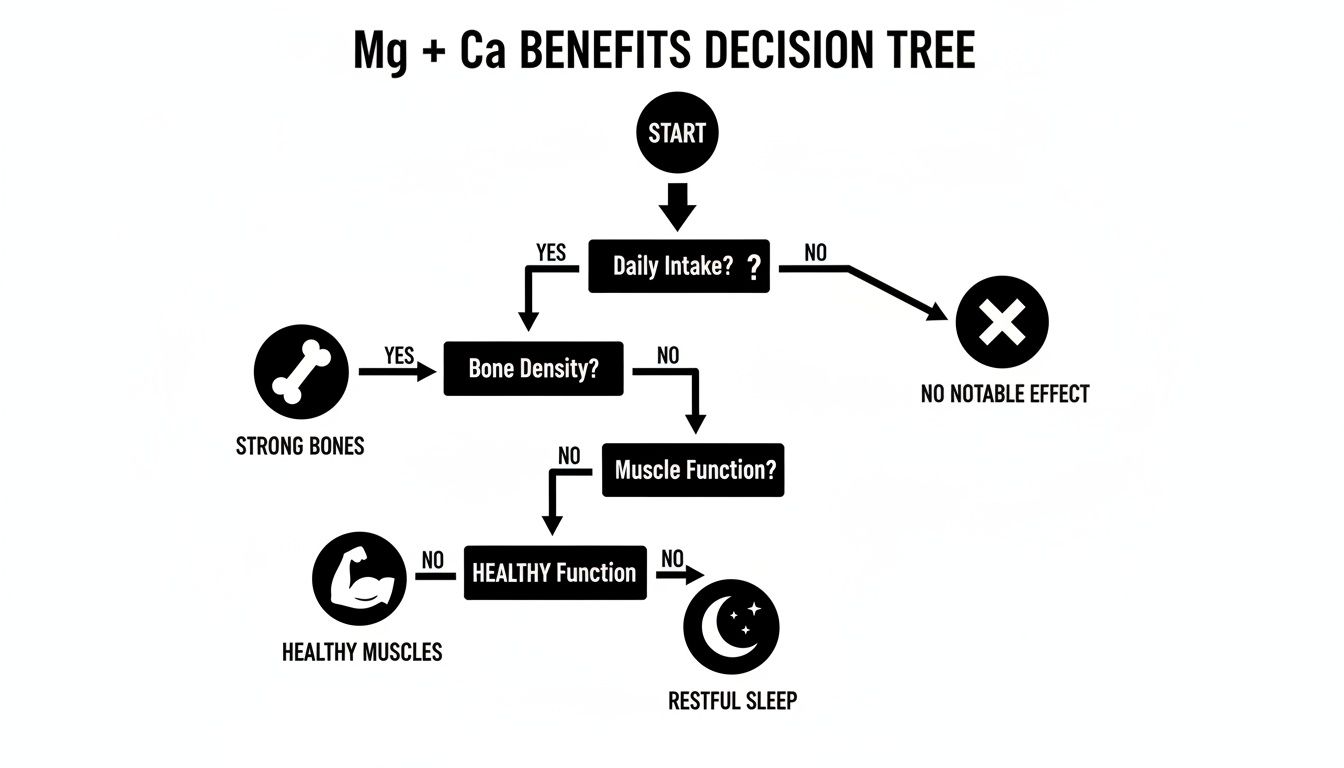
- Bone Density: Everyone knows calcium is for strong bones, but it can't do the job alone. Magnesium is the trusty sidekick that helps your body actually absorb and use that calcium. It also plays a part in activating Vitamin D, another crucial player for bone health. If you're curious about these kinds of partnerships, you might be interested in our guide on the synergy between Vitamin D3 and K2.
- Muscle Function: From the steady beat of your heart to lifting weights at the gym, you need proper muscle contraction (thanks, calcium) and relaxation (cheers, magnesium). When this balance is off, you can end up with annoying cramps, spasms, and muscle weakness.
- Nerve Signalling: Your nervous system depends on this pair to send messages efficiently. Magnesium helps keep things calm and steady, acting as a natural counterbalance to the more excitatory role of calcium.
For a clearer picture, let's break down their distinct but complementary roles.
Magnesium vs Calcium At a Glance
The table below gives a quick summary of what each mineral does and why they work so much better together.
| Mineral | Primary Role | Why It Needs Its Partner |
|---|---|---|
| Calcium | The "On Switch" | Without magnesium to counterbalance it, calcium can cause muscles and nerves to become over-excited, leading to tension and cramps. |
| Magnesium | The "Off Switch" | Without calcium to initiate action, magnesium's relaxing properties would have nothing to regulate. It keeps the "on" switch from getting stuck. |
Essentially, one initiates action while the other ensures there’s a necessary return to rest. This elegant push-and-pull is what keeps our bodies running smoothly.
The constant interplay between these two minerals is a foundational principle of human physiology. One simply cannot function optimally without the other, making a balanced intake essential for everything from energy production to restful sleep.
It's clear people are catching on to just how important this mineral synergy is. In the UK, the vitamins and minerals supplement market has seen serious growth, driven by a bigger focus on preventative health. The market was valued at £2.3 billion in 2024 and is projected to hit £4.6 billion by 2035. This trend shows that busy professionals and health-conscious individuals are increasingly turning to supplements like magnesium and calcium tablets to support their active lifestyles.
This foundational partnership is exactly why magnesium and calcium tablets are often a smart move for filling any nutritional gaps and promoting long-term wellbeing.
The Real-World Benefits of Taking Magnesium and Calcium Together
It's one thing to know that magnesium and calcium are partners, but it’s another to see how that teamwork actually improves your health. Taking a combined magnesium and calcium tablet isn't just about ticking a box; it's about unlocking some serious, tangible benefits that can make a difference in how you feel and perform every day. From stronger bones to better sleep, this duo works quietly behind the scenes to keep your body running like a well-oiled machine.
Here in the UK, this is a particularly hot topic. Calcium tablets are a huge part of the wellness scene, and they're projected to make up the largest slice of the mineral supplements market—a massive 32.25%—by 2026. This isn't just a fleeting trend; it’s driven by serious health concerns like the rising risk of osteoporosis, a condition that already affects 3 million people and costs the NHS an eye-watering £4.4 billion each year.
So, let's break down what this power couple can actually do for you.
Fortifying Your Skeletal Foundation
Everyone knows calcium is the star player when it comes to strong bones, but it can’t do its job without a good manager. That's where magnesium comes in. Think of magnesium as the gatekeeper for your bone health; it's essential for converting vitamin D into its active form. Without that step, your body simply can't absorb the calcium you're taking in.
If you're low on magnesium, that calcium supplement you’re taking might not be doing much good, leaving your bones at risk. This partnership becomes even more critical as we get older, helping to maintain bone density and ward off fractures.
A combined supplement ensures that the calcium you take is actually put to work where it's needed most—in your bones and teeth—rather than ending up in soft tissues where it doesn't belong.
This isn't just about the structure of your bones, either. This mineral teamwork also supports the systems that keep them healthy, like your cardiovascular system.
Enhancing Muscle Performance and Recovery
If you've ever been stopped in your tracks by a sudden, agonising muscle cramp during a workout, you'll know how frustrating it is. Often, these cramps are a tell-tale sign that your mineral balance is off. It's a simple push-and-pull relationship: calcium tells your muscles to contract, and magnesium tells them to relax.
When you're pushing yourself physically, you need both minerals in the right amounts to prevent cramps and maintain your endurance. Taking magnesium and calcium tablets helps ensure your muscles have what they need to both fire up and wind down properly.
- During Exercise: The right mineral levels can help sustain muscle function and keep fatigue at bay.
- Post-Workout: Magnesium is brilliant for helping tired muscles relax, which can ease soreness and get you back on your feet faster.
This makes a combined supplement an incredibly useful tool, whether you're a seasoned athlete, a weekend gym-goer, or just someone who enjoys an active life.
Improving Sleep and Managing Stress
Struggle to switch off at the end of a long day? This mineral duo might be just what you need. Magnesium is often called "nature's relaxant," and for good reason. It helps to calm the nervous system by regulating the neurotransmitters that quieten a racing mind and promote a feeling of peace.
Calcium, meanwhile, has a role in producing melatonin, the hormone that dictates your sleep-wake cycle. When you put them together, you get a powerful combination for better rest. Magnesium helps you drift off by easing anxiety and relaxing your body, while calcium helps you stay asleep and get that deeper, more restorative rest we all crave. This synergy makes magnesium and calcium tablets a go-to for anyone looking to improve their sleep and handle daily stress a little better.
Finding Your Ideal Dosage and Ratio
Getting the right amount of magnesium and calcium is a delicate dance. It’s not just about taking enough of each mineral; it's about making sure they're in the right proportion to one another. Nailing this dosage and ratio is the key to unlocking the full benefits of magnesium and calcium tablets while avoiding the potential pitfalls of an imbalance.
For years, the supplement world stuck to a classic 2:1 ratio of calcium to magnesium. This was based on the simple idea that our bodies store roughly twice as much calcium as magnesium. But this traditional approach doesn't really hold up against our modern lifestyles and dietary habits, which have completely changed our mineral intake.
Rethinking The Classic 2-to-1 Ratio
Today, many experts are making the case that a 1:1 ratio might be much more effective for most people. So, what’s behind the shift? Our typical Western diet tends to be loaded with calcium (thanks to dairy and fortified foods) but is often surprisingly low in magnesium, which you’d find in things like leafy greens, nuts, and seeds. This imbalance means many of us already have a high calcium intake relative to magnesium, making the old 2:1 supplement ratio less than ideal.
Taking too much calcium without enough magnesium to help manage it can be a problem. Think of it like having too many cars trying to merge onto a motorway with no traffic controllers to guide them. The excess calcium can end up deposited in places it shouldn't be, like in our arteries and soft tissues, which is a risk worth avoiding.
The growing awareness of magnesium deficiency is a huge factor here. It's estimated that 10-15% of adults in the UK experience symptoms like muscle cramps, fatigue, or sleep issues that can often be traced back to low magnesium. This mineral duo working in harmony is fundamental to our daily health, from physical strength to mental calm.
Why A Personalised Approach Is Better
While general guidelines can be a decent starting point, a one-size-fits-all dosage simply doesn't cut it. Your perfect intake of magnesium and calcium depends on a whole host of personal factors.
Your age, sex, diet, activity level, and specific health goals all influence your unique mineral needs. What works for a 25-year-old male athlete will be very different from what a 45-year-old woman needs for bone support.
Here are some general UK guidelines, often called Nutrient Reference Values, just to give you a basic idea. You can learn more about what a Nutrient Reference Value means in our detailed guide.
- Adult Men (19-64 years): Around 700mg of calcium and 300mg of magnesium per day.
- Adult Women (19-64 years): Around 700mg of calcium and 270mg of magnesium per day.
These figures represent the total amount you should aim for from both food and supplements. The tricky part is figuring out your personal shortfall.
This is where a personalised approach really shines. Instead of just guessing, services like VitzAI can analyse your specific data to pinpoint your precise needs. By looking at your diet and lifestyle, we can recommend the optimal dosage and ratio for your magnesium and calcium tablets, making sure you get exactly what your body needs to thrive. For instance, understanding the best type and timing for a magnesium supplement for sleep can make all the difference if that's your goal. Taking the guesswork out of supplementation means better results and greater peace of mind.
Who Really Needs a Combined Magnesium & Calcium Supplement?
While pretty much everyone benefits from getting enough magnesium and calcium, certain people might find that a combined supplement is a particularly smart move. Our mineral needs aren't set in stone; they shift with age, lifestyle, and especially hormonal changes. Figuring out if you fall into one of these groups can help you decide if magnesium and calcium tablets are right for your wellness routine.
This isn’t about guesswork. At different stages of life, our bodies have specific demands that can ramp up our need for these two key minerals. Let's break down who stands to gain the most.
Women Navigating Hormonal Changes
From premenstrual syndrome (PMS) to the menopause transition, hormonal fluctuations can really throw your body's mineral balance out of whack. Many women find a well-formulated magnesium and calcium supplement offers some much-needed stability during these times.
- For PMS Support: Studies suggest both magnesium and calcium can help take the edge off common PMS symptoms like mood swings, bloating, and cramps. Magnesium has a wonderful calming effect on the nervous system, which can help soothe irritability, while getting enough calcium has been linked to a more stable mood all month long.
- During Menopause: As oestrogen levels drop during menopause, bone density becomes a huge concern. Think of calcium as the bricks for your bones, but magnesium is the foreman telling those bricks where to go. A combined supplement is crucial for supporting skeletal strength and lowering the risk of osteoporosis, a condition that hits post-menopausal women especially hard.
Men Focused on Fitness and Performance
For guys who are active and chasing athletic goals, the demands on their muscles and bones are relentless. Intense exercise depletes mineral stores, especially magnesium, which is lost through sweat. Topping those levels back up is absolutely essential for both performance and recovery.
A balanced intake of magnesium and calcium is a direct boost to muscle function—calcium helps power strong contractions, while magnesium is vital for allowing them to relax. This partnership helps prevent those painful muscle cramps that can completely derail a workout and even helps reduce soreness afterwards. Plus, these minerals are involved in energy metabolism, helping you power through those tough gym sessions.
For anyone pushing their physical limits, keeping your mineral levels topped up isn't just a nice-to-have—it's fundamental. A shortfall can lead to fatigue, poor recovery, and a higher risk of injury, making a targeted supplement a seriously valuable tool in any athlete's kit.
Individuals Over 40 Focused on Longevity
Once we hit our 40s, our bodies just aren't as good at absorbing nutrients from food, and the risk for certain health issues starts to creep up. For this group, magnesium and calcium tablets can be a key part of a proactive, long-term health strategy.
Bone density naturally starts to decline with age for both men and women, making supplementation a critical defence against age-related bone loss. But beyond the skeleton, this mineral duo is a huge player in cardiovascular health. Magnesium, in particular, is a heart superstar, helping to regulate blood pressure, maintain a steady heartbeat, and support overall heart muscle function. Since around half of all adults might not be getting enough magnesium from their diet, a supplement can be a simple but powerful way to protect this vital organ.
A Word of Caution: Who Should Be Careful
Despite all the benefits, these supplements aren't a good fit for everyone. It's so important to approach supplementation with a bit of awareness and, ideally, some professional guidance, especially if you have existing health conditions.
- Kidney Issues: If your kidneys aren't working properly, they can struggle to filter out excess minerals, leading to a dangerous build-up in the body.
- Certain Medications: Some drugs, like certain antibiotics, diuretics, and heart medications, can interact with magnesium and calcium.
- Specific Medical Conditions: People with parathyroid gland disorders or other conditions that affect how their body handles minerals should steer clear of supplementing without a doctor's say-so.
This all points to the golden rule of supplementation: always have a chat with a qualified health professional before starting anything new. They can look at your individual health picture, check your current medications, and help you figure out if magnesium and calcium tablets are a safe and smart choice for you.
How to Choose the Best Supplement for You
Stepping into the supplement aisle can feel a bit like a pop quiz you didn't study for. With countless bottles of magnesium and calcium tablets all claiming to be the best, how do you actually choose one that will work for your body? Making the right choice goes way beyond just grabbing the first one you see; it's about understanding what makes a supplement effective in the first place.

The trick is to look past the marketing noise and focus on three crucial things: bioavailability, purity, and formulation. Get these right, and you can be confident the minerals you're taking are actually being absorbed and used by your body, giving you real value for your money.
Prioritise Bioavailability Above All
If there’s one word to remember, it's bioavailability. It sounds technical, but it simply means how well your body can absorb and actually use a nutrient. Trust us, not all forms of magnesium and calcium are created equal here.
Think of it like trying to unlock a door. A highly bioavailable mineral is like a perfectly cut key that slides in and opens the lock effortlessly. A poorly absorbed form is like a rough, badly-shaped key that barely fits and struggles to turn. You might be swallowing the tablet, but your body isn't getting much out of it.
When it comes to magnesium and calcium tablets, you want to look for forms your body can easily recognise and put to work.
- Excellent Choices: Look for chelated forms where the mineral is bound to an amino acid. For magnesium, this includes glycinate and malate. For calcium, citrate is a fantastic, well-absorbed option. They tend to be much gentler on the stomach, too.
- Forms to Be Wary Of: Magnesium oxide and calcium carbonate are everywhere because they're cheap to produce, but they are notoriously difficult for the body to absorb. Magnesium oxide, for example, often ends up acting more like a laxative than a source of usable magnesium for your cells.
Choosing a supplement with high bioavailability is non-negotiable. It's the difference between actually nourishing your body and just passing minerals through your system with little to no effect.
Look for Proof of Purity
Once you’ve found a supplement with bioavailable ingredients, the next job is to check its quality. The supplement industry isn't as tightly regulated as pharmaceuticals, which means the purity and potency of products can vary wildly from brand to brand. This is where third-party testing comes in.
Reputable brands voluntarily send their products to independent labs to confirm that what's on the label is actually inside the bottle. These certifications are your guarantee that the supplement is free from harmful contaminants like heavy metals and that it contains the exact dosage advertised. Keep an eye out for seals from organisations like NSF International or USP on the packaging.
Avoid Unnecessary Fillers and Additives
Finally, take a moment to scan the "other ingredients" list on the label. High-quality magnesium and calcium tablets should contain very few extras. You want to see the active minerals and maybe a capsule, not a long list of artificial colours, flavours, or unnecessary fillers.
Common additives to watch out for include:
- Titanium dioxide (an artificial colourant)
- Magnesium stearate (a flow agent that some people are sensitive to)
- Artificial sweeteners and flavours
A clean, simple ingredient list is usually a sign of a well-made product that puts your health first, rather than focusing on manufacturing shortcuts.
Let Personalisation Guide Your Choice
Navigating all these factors—bioavailability, testing, and clean ingredients—can be time-consuming and frankly, a bit confusing. This is precisely the problem a personalised service like VitzAI is designed to solve. Instead of you spending hours deciphering labels in the supplement aisle, our platform does the heavy lifting.
By analysing your unique health data, diet, and lifestyle goals, VitzAI cuts through the noise. It recommends a high-quality, bioavailable product tailored specifically to your body's needs, making sure you get a supplement that truly works for you, without any of the guesswork.
Your Path to Personalised Mineral Balance
We’ve covered a lot of ground in this guide, exploring the powerful partnership between magnesium and calcium. By now, you know why their balance is far more important than sheer quantity and how this mineral duo supports everything from bone density and muscle function to a good night's sleep.
If there's one thing to take away from all of this, it's that a one-size-fits-all approach to supplements is simply outdated. Your body is unique, with specific requirements shaped by your diet, age, how active you are, and your personal health goals. Getting it right isn't about guesswork; it's about understanding what your body truly needs.
Generic advice will only take you so far. It's time to move beyond that.
A Smarter Way to Supplement
The next step is to stop wondering and start knowing. Grabbing a generic magnesium and calcium tablet off the shelf might feel like a good start, but a personalised recommendation can be a real game-changer for hitting your wellness goals. It's all about precision.
True health optimisation isn't about taking more supplements; it's about taking the right supplements for your unique biology. This shift from guesswork to data-driven choices is the future of personal wellness.
Instead of trying to navigate the complex world of supplement ratios, forms, and dosages on your own, you can get clear, actionable advice tailored specifically to you. This is where a service like VitzAI offers a smarter path forward, analysing your lifestyle to guide you toward the ideal mineral balance for your body.
Ready to find out exactly what your body needs to feel its best?
Take the next step and see how a personalised approach to supplements can help you unlock your full potential. Discover your unique needs with VitzAI’s personalised assessment today and move from uncertainty to confident, effective supplementation. Your journey to optimal mineral balance starts right now.
Got Questions? We've Got Answers
Stepping into the world of supplements can bring up a lot of practical questions. That's totally normal. Getting clear, straightforward answers is the best way to feel confident about your routine and get the most out of your magnesium and calcium tablets. Here are some of the most common queries we hear.
What Is the Best Time to Take Magnesium and Calcium?
You've got the right supplement, but when you take it can make a big difference. To really nail the timing and boost absorption, it's often a smart move to split your dose. Try taking one tablet in the morning and the other in the evening. This simple trick stops the two minerals from having to compete with each other and gives your body a more consistent supply throughout the day.
Lots of people find an evening dose works wonders for them, particularly because of the magnesium. It has this lovely, natural calming effect on the nervous system, helping to ease muscle tension and quieten a busy mind. It can be a fantastic way to pave the way for a more restful night's sleep. If you want to get into the nitty-gritty, you can learn more about the best time to take magnesium in our detailed guide.
Can I Get Enough From My Diet Alone?
In a perfect world, we'd all get everything we need from a beautifully balanced diet. And yes, foods like leafy greens, nuts, seeds, and dairy are brilliant sources of magnesium and calcium. But let's be realistic—modern life can make that ideal scenario pretty tricky to achieve.
Here's something to think about: modern farming practices have left our soil less nutrient-rich than it was generations ago. This means many of our fruits and vegetables simply don't pack the same mineral punch they used to. Add diets high in processed foods to the mix, and you've got a nutritional gap that even the healthiest eaters can struggle to bridge.
While focusing on whole foods should always be your number one strategy, a high-quality supplement can act as a reliable insurance policy. It just ensures your body gets the steady, consistent mineral levels it needs to feel and function at its best.
Are There Any Side Effects I Should Know About?
For the vast majority of people, magnesium and calcium tablets are perfectly safe when you stick to the recommended dose. That said, some people might notice a bit of mild digestive upset when they first start out. This can show up as bloating or loose stools, and it's more common with the less absorbable forms of these minerals.
To keep any potential tummy troubles at bay, it's always a good idea to:
- Start low and go slow: Begin with a lower dose and gradually work your way up to the recommended amount.
- Take it with food: Having a meal or snack with your tablet can help buffer any potential irritation.
- Choose wisely: Opt for highly bioavailable forms like citrate or glycinate. They're known for being much gentler on the digestive system.
Ultimately, the key is to listen to your body. If something doesn't feel right, chat with a healthcare professional to make sure you're on the right track for your unique needs.
Ready to move beyond generic advice? VitzAI uses a smart, data-driven approach to analyse your unique lifestyle and health goals, recommending the precise supplement stack your body needs. Discover your personalised plan and take the guesswork out of your wellness routine. Find your personalised recommendation at VitzAI.com
This article is for informational purposes only and is not medical advice. Always consult a qualified health professional before starting any new supplement or major lifestyle change.