

Using Magnesium for Fatigue to Reclaim Your Energy
Feeling like you’re constantly running on empty, even after a decent night’s sleep? If that sounds familiar, using magnesium for fatigue could be the missing piece of your energy puzzle. This vital mineral is involved in over 300 essential bodily functions, yet a surprising number of us just aren't getting enough.
Tired of Being Tired? Magnesium Might Be Your Missing Link

Magnesium is directly involved in producing Adenosine Triphosphate (ATP), the primary energy currency of every cell in your body. Without sufficient magnesium, your ability to generate energy at a cellular level is fundamentally compromised.
This guide will break down exactly how magnesium impacts your energy levels. You will learn:
- The science behind how magnesium tackles fatigue.
- The key signs that you might be running low.
- How to pick the most effective form of magnesium for energy.
- Practical tips for dosage, timing, and pairing it with other key nutrients.
How Magnesium Fuels Your Body's Energy Engine
To get your head around why a lack of magnesium can leave you feeling utterly drained, let’s picture your body as a high-powered factory. The main product rolling off the assembly line is energy, and all the machinery runs on a special currency called Adenosine Triphosphate (ATP). From your brain firing signals to your muscles contracting, every single cell relies on ATP to get the job done.
In this whole operation, magnesium is the indispensable factory manager. Without it, the entire production line grinds to a halt.

The Spark Plug for Cellular Energy
ATP is created inside tiny powerhouses in our cells known as mitochondria. It's a complicated process, but magnesium's part in it is surprisingly simple and direct. For ATP to actually be usable by your cells, it needs to be bound to a magnesium ion.
Think of it like a car engine. ATP is the petrol, but magnesium is the spark plug that ignites it. You can have a full tank, but without that critical spark, the car isn't going anywhere. This is exactly why even a mild deficiency can hit your energy levels so hard and lead to that feeling of persistent fatigue.
When you feel that deep, bone-weary exhaustion, it's often a sign that your cellular factories are struggling. They have all the raw materials but lack the key manager—magnesium—to convert them into usable power, leading to a system-wide energy crisis.
But magnesium’s job doesn’t stop there. It’s involved in over 300 different enzymatic reactions in the body, and many of those are essential for turning the food you eat into cellular fuel. It helps unlock the energy from carbs, fats, and proteins, making sure your mitochondria have a steady supply of raw materials to work with.
Beyond ATP Production
Magnesium’s influence on your energy levels goes well beyond just making ATP. It plays several other critical roles that help you fight off fatigue and feel revitalised.
- Supports Muscle Function: Magnesium is key for regulating muscle contraction and relaxation. When levels are low, you can end up with cramps and tension, which constantly drain your energy reserves.
- Regulates Blood Sugar: It’s also vital for insulin to work properly, helping to keep your blood sugar levels stable. This prevents those awful energy crashes that often follow a sugar spike.
- Calms the Nervous System: Magnesium has a naturally calming effect on the nervous system, which helps your body manage its stress response. Since chronic stress is a massive contributor to fatigue, magnesium helps build your resilience.
Ultimately, by making sure your cells can produce, stabilise, and use energy efficiently, magnesium gets to the very root of fatigue. Topping up your levels is like hiring the best factory manager you can find, ensuring every part of your body has the power it needs to perform at its peak.
So, Could You Be at Risk for Magnesium Deficiency?
While that deep, bone-weary fatigue is the classic sign of low magnesium, it rarely shows up alone. Think of it as the headline act—it gets all the attention, but there are usually a few support acts warming up the crowd. Many of those little complaints you might just brush off as "part of a busy life" are actually subtle signals from your body that its magnesium reserves are running dry.
Connecting these dots is the first step. If you're constantly tired and dealing with a handful of other nagging issues, it’s a pretty strong hint that this essential mineral deserves a closer look.
The Vicious Cycle of Stress and Fatigue
One of the biggest culprits draining our magnesium is chronic stress. When you're constantly under pressure, your body pumps out stress hormones like cortisol and adrenaline. This isn't just a mental state; it has a physical consequence. These hormones make your body flush out magnesium through your urine at a much faster rate.
This kicks off a dangerous feedback loop. Low magnesium levels make your nervous system more jumpy and reactive, meaning you're less resilient to whatever life throws at you. This heightened stress response then burns through even more magnesium, which only cranks up your anxiety and fatigue. It's a frustrating downward spiral where stress zaps your energy mineral, and the lack of that mineral leaves you feeling more stressed and exhausted than ever.
This isn't just a hunch; it's a huge issue. That feeling of exhaustion is a major red flag for the over 70% of UK adults who aren't getting enough magnesium. This shortfall directly fuels a cascade of problems, from muscles that won't relax to sleep that just won't come. You can find out more about how this nutritional gap is impacting UK health on WeCovr.com.
Who Is Most Likely to Be Running Low?
While anyone can find their magnesium levels dipping, certain lifestyles and groups are definitely at a higher risk. Modern life, with its reliance on processed foods and high-stress environments, basically rolls out the red carpet for deficiency.
Here’s a quick checklist to see if you might be at risk:
- Busy Professionals: High-pressure jobs and long hours are a perfect storm for depleting magnesium, often leading to chronic stress and a diet of convenience.
- Athletes and Active People: If you exercise intensely, your body demands more magnesium for energy and muscle repair. You also lose more of it through sweat.
- Those with a High Caffeine or Alcohol Intake: Both act as diuretics, meaning they make you pee more, flushing out essential minerals like magnesium right along with it.
- Individuals with Digestive Issues: Conditions like IBS or Crohn's can mess with your body's ability to actually absorb the magnesium from the food you eat.
- People with Poor Sleep: Not getting enough sleep is a physical stressor that depletes magnesium. To make matters worse, low magnesium itself can disrupt sleep quality, creating yet another exhausting cycle.
If you ticked one or more of these boxes and you're wrestling with fatigue, muscle cramps, brain fog, or anxiety, it's a clear sign. Looking into your magnesium status could be the most important step you take toward getting your energy back.
Choosing the Right Magnesium for Maximum Energy
Stepping into the supplement aisle can feel overwhelming, with countless bottles all promising results. When it comes to using magnesium for fatigue, the first thing to realise is that not all forms are created equal. The type of molecule magnesium is attached to dramatically affects how well your body absorbs it and where it gets to work.
Think of it like choosing the right key for a specific lock. While any key might look similar, only the correct one will open the door to better energy. Some forms are brilliant for gut health but pass through your system too quickly to replenish cellular energy. Others, however, are designed for optimal absorption to tackle fatigue right at its source.
This concept map shows some of the most common signs of magnesium deficiency, helping you connect the dots between your symptoms and the underlying issue.
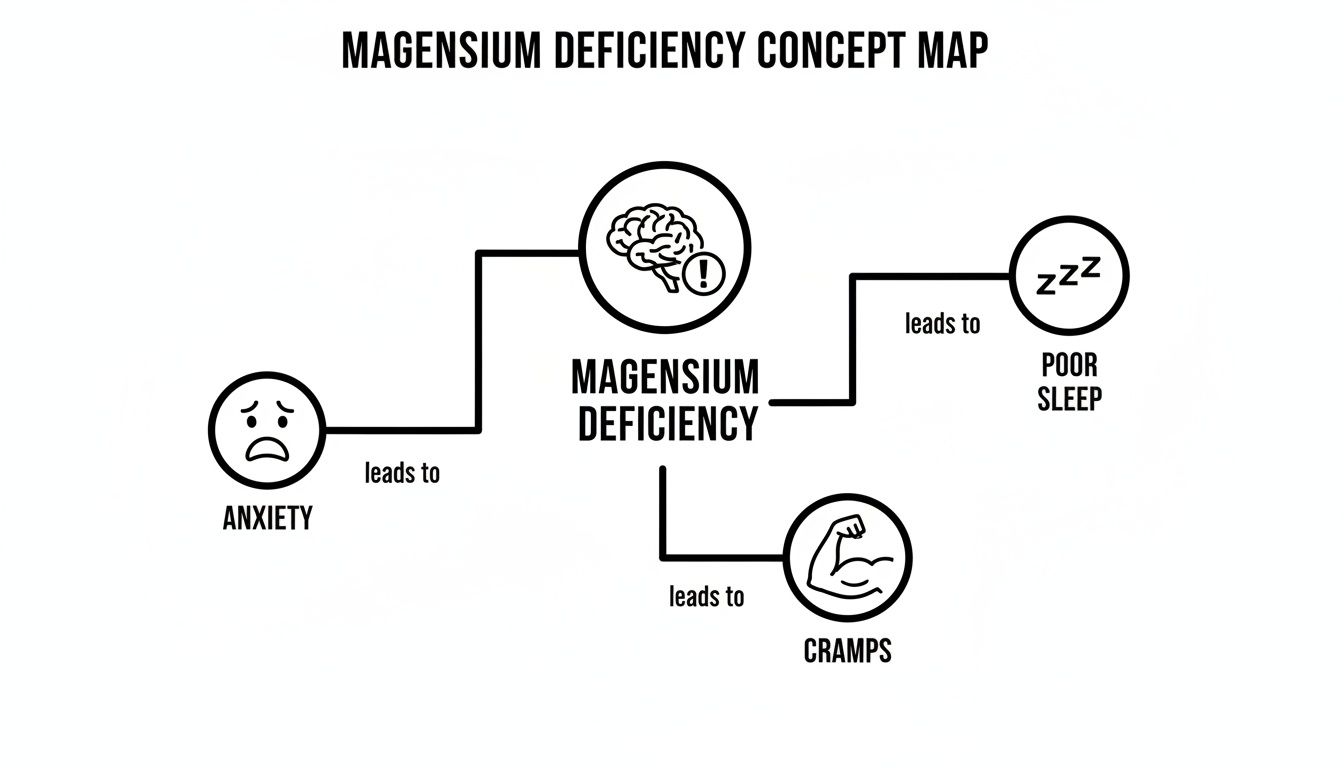
As you can see, issues like poor sleep, anxiety, and muscle cramps are all classic red flags for low magnesium levels, and they all contribute directly to that feeling of being chronically tired.
The Best Forms for Fighting Fatigue
For boosting energy, a couple of forms really stand out from the crowd thanks to their high bioavailability and targeted benefits. Understanding their unique strengths will help you make a much smarter choice for your specific needs.
-
Magnesium Glycinate: This form is bound to glycine, an amino acid known for its calming effects on the nervous system. It’s exceptionally gentle on the stomach and is a fantastic choice if your fatigue is linked to poor sleep, stress, or anxiety. By promoting deeper, more restorative rest, it helps you wake up feeling genuinely refreshed.
-
Magnesium Malate: Here, magnesium is paired with malic acid, a natural compound that plays a key role in the Krebs cycle—your body’s primary energy-producing process. This makes it a great option for tackling daytime fatigue, muscle soreness, and sluggishness, as it directly supports your cellular powerhouses.
Choosing between these isn't about one being "better" but about matching the form to your symptoms. If sleepless nights are your main problem, Glycinate is your ally. If you’re battling daytime energy slumps, Malate might be more effective.
Comparing Common Forms of Magnesium for Fatigue
While Glycinate and Malate are top contenders for tackling tiredness, it's useful to see how they stack up against other common forms you'll find on the shelf.
| Magnesium Form | Primary Benefit | Best For | Bioavailability |
|---|---|---|---|
| Magnesium Glycinate | Calming, Sleep Support | Stress, anxiety, and sleep-related fatigue. | Very High |
| Magnesium Malate | Cellular Energy Production | Daytime fatigue, muscle soreness (fibromyalgia). | High |
| Magnesium Citrate | Gut Motility, General Use | Constipation, general magnesium top-up. | Moderate-High |
| Magnesium Oxide | Antacid, Laxative | Heartburn, indigestion (not ideal for deficiency). | Low |
| Magnesium L-Threonate | Cognitive Function | Brain fog, memory support. | Very High |
| Magnesium Chloride | Topical Use, General Use | Muscle recovery via skin absorption, baths. | High (topical) |
This table makes it clear that for energy specifically, Glycinate and Malate offer the most targeted support due to how well the body can absorb and use them.
Other Forms to Know
While glycinate and malate are top-tier for energy, you’ll definitely see other forms on the shelves. Magnesium Citrate is well-absorbed but is best known for its laxative effect, making it less ideal for daily energy support unless you also need digestive help. Magnesium Oxide is common and affordable, but its poor bioavailability means very little of it actually gets used by your body.
When exploring the various forms of magnesium available, a topical option like a Magnesium Oil Spray can be an excellent choice for direct muscle relief and convenient absorption. For a deeper dive into how minerals work together, you might be interested in our guide on combining zinc and magnesium supplements.
Your Practical Guide to Using Magnesium Effectively
Knowing which type of magnesium to pick is the first step, but figuring out how to use it properly is what really makes the difference. If you want to move past that persistent, dragging tiredness, building a consistent routine is everything. This isn't just about what you take, but also how much, when, and what you pair it with.
For most adults looking to fight off fatigue, a daily dose of 200-400 mg of elemental magnesium is a safe and effective starting point. It's always a good idea to start on the lower end of that scale and see how your body feels, gradually increasing the dose if needed. This also helps you sidestep any potential tummy troubles.
Remember, consistency beats perfection every time. Taking your supplement around the same time each day helps keep the levels in your body stable, allowing its energy-producing magic to work around the clock.
Timing and Stacking for Better Results
When you take your magnesium can seriously influence how well it works, especially when you’re targeting fatigue. The best time to take it often comes down to the form you've chosen.
- For Morning Energy: If you're using a form like Magnesium Malate, which is a key player in your cells' energy-making cycles, taking it with breakfast can help power your day and head off that dreaded mid-afternoon crash.
- For Restful Sleep: Is your fatigue really just a symptom of poor sleep? Taking Magnesium Glycinate about 30-60 minutes before you turn in for the night could be a game-changer. Its calming effect helps soothe your nervous system, paving the way for deeper, more restorative rest.
Want to dive deeper into getting your schedule just right? Check out our detailed guide on the best time to take magnesium.
To really get the most out of your magnesium for fatigue, think about its partners in crime. Nutrients rarely work alone; they often rely on each other to get their jobs done right.
In the UK, what feels like constant tiredness can sometimes be a subtle sign of a magnesium shortfall. This is where supplementation really shines. For many, a daily dose of 100-250 mg combined with cofactors like B vitamins can safely fill those nutritional gaps, giving both mood and energy a welcome lift.
The most powerful partners for magnesium include:
- B Vitamins: The whole B-complex family, especially B6, is absolutely vital. They help get magnesium into your cells where it's needed and are also essential for turning the food you eat into usable energy.
- Vitamin D: This vitamin acts like a traffic controller for magnesium in the body, helping to regulate levels and make sure it’s available for all its important jobs.
By building a smart and consistent routine, you're not just taking a supplement anymore—you're creating a strategic plan for long-lasting energy.
Creating Your Personalised Plan for Lasting Energy
Getting a handle on magnesium for fatigue is a huge first step, but if you want that energy to last, you need a strategy that's built just for you. A generic approach might give you a temporary lift, but a personalised plan builds a proper foundation for sustainable energy. It’s about moving beyond quick fixes.
Real progress means looking at the complete picture. You’ve got to pinpoint your specific symptoms, understand the demands of your lifestyle, and then match the right form of magnesium to your needs. It's about building a smart supplement stack that works together, not just throwing things at the problem and hoping for the best.
Building Your Smart Supplement Stack
A well-designed stack is all about teamwork—making sure your key nutrients are working together to amplify their effects. For example, pairing magnesium with B vitamins can seriously ramp up your cells' energy production. Or, you could add an adaptogen like ashwagandha to help your body manage the stress that was draining your magnesium stores in the first place.
This is where it gets personal. Your ideal mix of supplements will hinge on things like your stress levels, sleep quality, and how active you are each day. By taking all of this into account, you can create a targeted approach that gets straight to the root causes of your fatigue. For a deeper dive into these powerful combinations, you can learn more about the best supplements for fatigue in our full guide.
A truly effective energy plan is more than just a single supplement; it's an intelligent system designed around you. By combining the right form of magnesium with complementary nutrients, you create a holistic strategy that supports your body’s entire energy-producing machinery.
Think of this as your next step toward getting your spark back. It bridges the gap between general advice and real results, giving you the tools to build a routine that delivers consistent, long-term energy and supports your overall health goals.
Your Magnesium Questions, Answered
Starting a new supplement can feel a bit like navigating a new city – a lot of questions pop up along the way. Let's clear up some of the most common ones about using magnesium for fatigue, so you can feel confident and get the best results.
How Long Until I Feel a Difference?
Patience is your best friend here. While some people notice better sleep or less muscle tension within the first week, the real energy-boosting magic takes a little longer to unfold.
Think of it like watering a thirsty plant. For your cells to become fully topped up with magnesium and for your energy-production engines to start firing on all cylinders, you'll want to give it 4-6 weeks of consistent, daily use. This gives your body enough time to correct any shortfalls and get back into a healthy rhythm.
Can't I Just Get Enough Magnesium From Food?
In an ideal world, yes. But in reality, it's getting tougher. Foods like spinach, almonds, and avocados are fantastic sources of magnesium, but modern farming has left our soil a bit depleted, meaning our food isn't as mineral-rich as it used to be.
If you're already feeling drained and fatigued, relying on diet alone might be a slow climb to feeling better. A good supplement can act as a reliable shortcut, ensuring you get a consistent, effective dose to really tackle that tiredness head-on.
A food-first approach is always the gold standard for your overall health. Think of a supplement as the perfect partner to your diet, bridging the gap between what you eat and what your body truly needs to feel energised and thrive.
Are There Any Side Effects to Worry About?
Magnesium is incredibly safe for most people, but like anything, side effects can happen, especially with higher doses. The most common hiccup is a bit of digestive upset – think loose stools or an unhappy tummy – which is more likely with certain forms of magnesium.
To keep things running smoothly:
- Start low and go slow. Begin with a smaller dose and gently increase it as your body gets used to it.
- Pick a well-absorbed form. Magnesium glycinate is a fantastic choice because it’s known for being much gentler on the digestive system.
- Steer clear of magnesium oxide. It isn't absorbed well and is more likely to have you running for the loo.
- Stick to the recommended dose on the label, unless your doctor has told you otherwise.
By choosing the right form and dose, most people can enjoy all the energy-boosting benefits of magnesium without any unwanted drama.
Ready to stop guessing and start building a plan that’s made just for you? Take the VitzAI quiz today to get your personalised supplement recommendations and finally unlock your full potential. Begin your journey at https://vitzai.com.
This article is for informational purposes only and is not medical advice. Always consult a qualified health professional before starting any new supplement or major lifestyle change.