

Why Your Multivitamin with Magnesium Is Vital for Health
A multivitamin with magnesium is a supplement that pulls double duty. It bundles together all the essential vitamins and minerals you’d expect, but with an extra, deliberate dose of magnesium – a powerhouse mineral involved in over 300 different jobs inside your body. The whole idea is to plug common nutritional gaps and bolster your overall health with one simple product.
The Power Duo Your Multivitamin Is Missing

Picture a standard multivitamin as a well-stocked toolbox. You've got all the essentials in there: Vitamin D for immunity, B vitamins for energy, Vitamin C for antioxidant support. But what if there was a master tool that helped all the others work more efficiently? Without it, the full potential of your entire kit just isn't being reached.
That's magnesium. Think of it as the "master mineral"—it's a vital cofactor that helps switch on and manage hundreds of enzymes and processes all over your body. The surprising truth is, without enough magnesium, many of the vitamins in your daily multi can't even be used properly.
Why This Combination Is Essential
Putting these two together isn't just for convenience; it's about creating a real synergy in your body. A high-quality multivitamin with magnesium gives you both the foundational nutrients and the critical mineral needed to unlock their best work. This one-two punch helps support several key areas of your health:
- Energy Production: Magnesium is absolutely essential for turning the food you eat into cellular energy.
- Nerve and Muscle Function: It helps keep muscle contractions and nerve signals running smoothly.
- Bone Health: Magnesium is a team player, working alongside calcium and Vitamin D to build strong bones.
- DNA Repair: It has a fundamental role in building and repairing your DNA and RNA.
A common mistake is to get fixated on individual vitamins without thinking about the minerals that help them do their jobs. Magnesium is arguably one of the most important minerals for making sure your body gets the absolute most out of your daily supplement routine.
It’s no surprise that more and more people are looking for these combination supplements. In fact, the UK vitamins and minerals market is now valued at around £2.3 billion, with multivitamins leading the charge. This really shows how much people want comprehensive, easy-to-use nutritional support. You can discover more about the growing UK supplement market on MarketResearchFuture.com.
Figuring out what vitamins you should take daily is the perfect first step. Adding magnesium to the mix just ensures that your routine can work as hard as you do.
How Magnesium Actually Works in Your Body

While the science behind magnesium is impressive, its real power is in the tangible improvements you feel every day. A multivitamin with magnesium isn't just about plugging nutritional gaps; it’s about actively helping you feel and perform at your best. From the gym to your bedroom, this mineral is a key player in your physical and mental well-being.
Think of it as the ultimate support system for your body’s most demanding jobs. It works quietly behind the scenes to keep everything running smoothly, so you can recover faster, sleep deeper, and handle stress with a bit more grace.
Let's break down four key areas where magnesium can make a noticeable difference.
Enhances Muscle Recovery and Reduces Cramps
After an intense workout, your muscles need to repair and, crucially, relax. Magnesium is essential for this, acting as a natural calcium blocker. It helps your muscle fibres release and recover after contracting.
Without enough magnesium, calcium can hang around in the muscle cells for too long. This leads to that prolonged tightness and soreness we all know and hate. For runners, cyclists, and anyone who regularly pushes their limits, getting enough magnesium can be a game-changer for preventing those painful late-night leg cramps and easing post-exercise aches.
Promotes Deeper, More Restorative Sleep
Struggling to switch off at night? A racing mind and restless body are classic signs that your nervous system is stuck in "on" mode. Magnesium helps calm things down by supporting the production of GABA (gamma-aminobutyric acid), a neurotransmitter that tells your brain it's time to relax.
It helps quiet the mental chatter that can keep you tossing and turning, making it easier to drift off and stay asleep. Many people find that consistent magnesium intake leads to more profound, restorative sleep, helping them wake up feeling genuinely refreshed. For more tips, our article on the best time to take magnesium can help you fine-tune your routine for better sleep.
By regulating key neurotransmitters and calming the central nervous system, magnesium essentially sets the stage for a peaceful night's rest, transforming your sleep quality from restless to truly recuperative.
Helps Manage Daily Stress Levels
In our non-stop world, managing stress is more important than ever. When you're stressed, your body pumps out cortisol, the main stress hormone. Magnesium plays a vital role in regulating your body's stress-response system, helping to keep those cortisol levels in check.
By maintaining healthy magnesium levels, you improve your body's ability to cope with daily pressures. This translates to feeling less on-edge and more centred, even when life gets a bit chaotic. It’s a foundational nutrient for building mental and emotional resilience.
Supports Stable Hormonal Balance
Hormonal health is a delicate balancing act, and magnesium is a key player for both men and women. It’s involved in the production and regulation of hormones like progesterone, oestrogen, and testosterone.
For women, it can help ease symptoms associated with the menstrual cycle. For men, it plays a part in maintaining healthy testosterone levels. Making sure you have enough magnesium supports overall hormonal harmony, which is fundamental to your energy, mood, and long-term vitality.
Choosing the Right Type of Magnesium
When you glance at the label of a multivitamin with magnesium, you'll probably spot names like oxide, citrate, or glycinate. It’s easy to assume they’re all the same, but that couldn't be further from the truth. Not all forms of magnesium are created equal.
Think of it like using different keys for different locks; some are simply a much better fit. The type of magnesium in your supplement is the key that unlocks its benefits, determining how well your body can actually absorb and use it.
Understanding these differences is crucial. It’s the gap between choosing a product that delivers real, tangible benefits and one that offers little more than empty promises. A poorly absorbed form might just pass straight through your system, offering none of the support you were hoping for.
This all comes down to bioavailability—a term that simply means the amount of a substance that actually gets into your bloodstream to do its job. A supplement isn't effective just because of what's on the label; it’s effective because of what your body can genuinely put to work.
The Most Common Forms Explained
To help you become a more confident label-reader, let’s break down the three most common types of magnesium you'll find on the shelf. Each one has its own unique profile, making it better suited for different health goals.
For instance, one form might be fantastic for encouraging relaxation and sleep, while another is better known for its digestive benefits. Recognising the name on the ingredient list is the first step towards picking a multivitamin with magnesium that truly aligns with what your body needs.
Comparing Common Forms of Magnesium in Supplements
As people have become more aware of just how important this mineral is, its popularity has soared. The UK magnesium supplement market alone was valued at USD 161.24 million, with the oxide form being a major player despite its known limitations. Thankfully, more and more of us are now looking for smarter, more effective options in our daily multivitamins. You can dig deeper into UK magnesium market trends on DeepMarketInsights.com.
To make it simple, here’s a quick comparison of the most popular forms you're likely to encounter.
| Magnesium Form | Bioavailability (Absorption) | Best For | Potential Side Effects |
|---|---|---|---|
| Magnesium Oxide | Low | Constipation relief (due to its laxative effect). | Can cause digestive upset, diarrhoea, and cramping. |
| Magnesium Citrate | Moderate | Supporting digestive regularity and general magnesium intake. | High doses can have a laxative effect. |
| Magnesium Glycinate | High | Promoting relaxation, improving sleep quality, and calming the nervous system. | Very gentle on the stomach; side effects are rare. |
As you can see from the table, there's a clear winner if your goal is to boost your body’s overall magnesium levels for things like better sleep, less stress, or calmer muscles.
Magnesium Glycinate is often the superior choice. Its high bioavailability means you absorb more of it, and its gentle nature makes it an ideal partner in a daily multivitamin. For those looking for this premium form, you can explore the benefits of our high-quality Magnesium Glycinate supplement.
By choosing a multivitamin with a highly bioavailable form of magnesium, you ensure your body gets the maximum benefit from every dose, making your investment in your health truly count.
Who Really Needs This Combination?
A multivitamin with magnesium isn't just a general health top-up. Its benefits really come to life for certain groups whose lifestyles and health goals are a perfect match for what this combination offers. While almost anyone can gain from fine-tuning their nutrient intake, some people will find this specific pairing particularly effective.
Think of it as a targeted upgrade for your daily routine. If your body is constantly under physical or mental strain, this duo can provide the precise support you need to recover, adapt, and feel your best. When you connect the supplement's benefits to real-world demands, it becomes obvious who stands to gain the most.
Let's break down four key groups who often see the most significant improvements.
Active and Athletic Individuals
For anyone who regularly hits the gym, pounds the pavement on long runs, or otherwise pushes their physical limits, a multivitamin with magnesium is a powerful ally. Intense exercise burns through your magnesium stores via sweat, and this mineral is absolutely critical for both energy production and muscle function.
Topping up your magnesium helps manage muscle contractions, reducing the chance of those painful cramps and spasms mid-workout. It also plays a key part in muscle repair and recovery, which means less downtime between sessions and more consistent progress towards your fitness goals.
Busy Professionals Facing Chronic Stress
The relentless demands of a high-pressure career can really take a toll on your nervous system. Chronic stress often causes the body to burn through magnesium much more quickly, creating a vicious cycle where low magnesium levels make it even harder to cope with stress.
This supplement combination helps by supporting the regulation of cortisol, the body's main stress hormone. A well-formulated multivitamin with magnesium helps put back what stress takes away, promoting a calmer, more resilient state of mind and helping you stay focused and clear-headed on demanding days.
By directly supporting your body's stress-response system, this combination acts as a nutritional buffer against the constant pressures of modern work life, helping to maintain mental equilibrium.
The infographic below shows the different forms of magnesium and what they're best used for, helping you understand what to look for based on your goals.
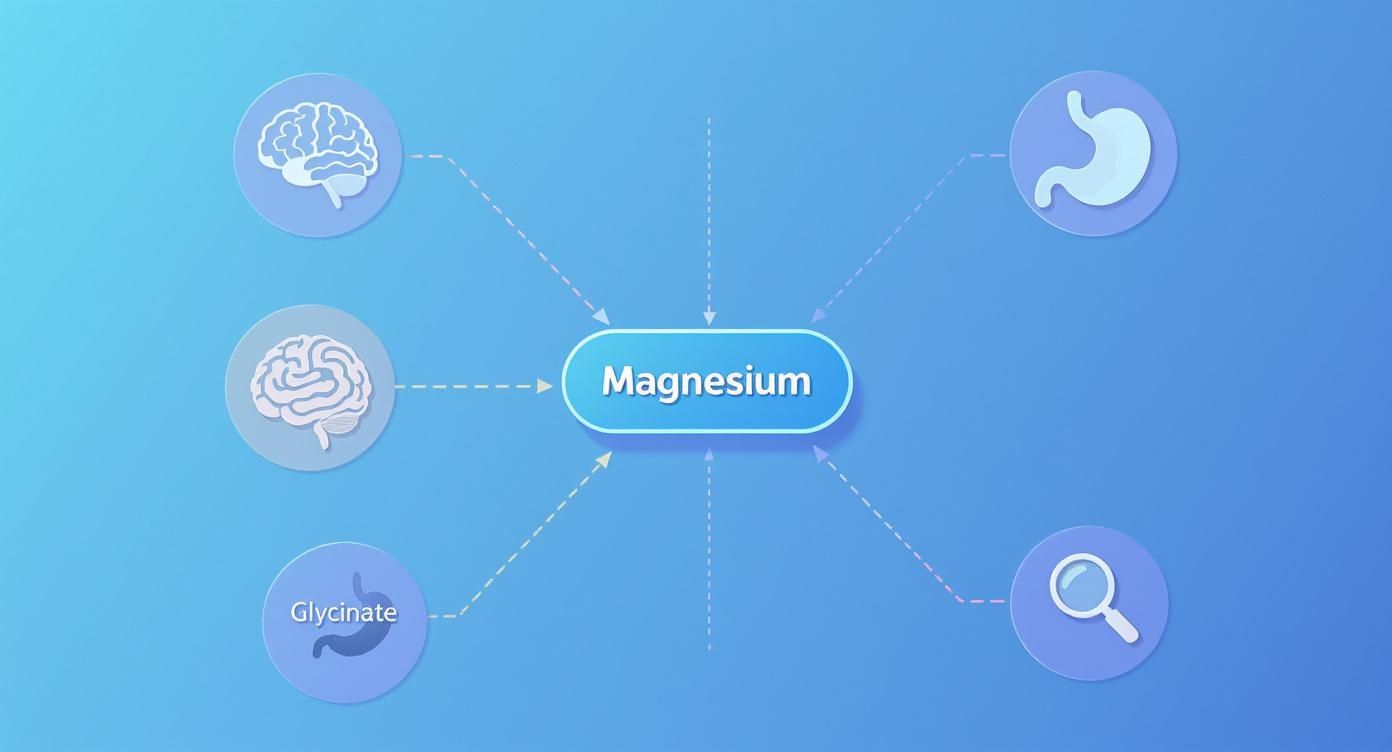
As you can see, forms like Magnesium Glycinate are excellent for calming the mind, while others like Citrate target digestive health. This really highlights how important it is to choose the right type for your needs.
Anyone Struggling with Sleep Quality
If you find it difficult to switch off at night or often wake up feeling like you haven't slept at all, magnesium could be the missing piece of your sleep puzzle. It supports the production of GABA, a neurotransmitter that promotes relaxation and helps to quieten down the nervous system.
A multivitamin containing a highly absorbable form of magnesium, such as glycinate, can help calm a racing mind. This makes it easier to drift off and achieve deeper, more restorative rest, so you wake up feeling refreshed and ready to take on the day.
Older Adults and Those at Risk of Deficiency
As we get older, our ability to absorb nutrients can decline, and certain medications may deplete magnesium levels even further. In fact, studies suggest that magnesium deficiency is more common among adults over 70.
For this group, a multivitamin with magnesium is an excellent way to ensure they receive foundational nutrients for bone health, cardiovascular function, and nerve signalling. It provides a reliable safety net to help maintain vitality and support overall well-being as the body's needs change over time.
How to Select a High-Quality Supplement
https://www.youtube.com/embed/1z0IMS35gxQ
Walking down the supplement aisle can feel like a guessing game. With so many bottles making big promises, how can you tell which multivitamin with magnesium will actually work for you? The trick is to look past the shiny labels and learn what really matters.
Choosing a good product isn't as complicated as it seems. It really boils down to three things: the form of magnesium used, the dose in each serving, and whether the product has been checked for quality by an independent party. Get these right, and you’re not just buying a supplement – you’re making a smart investment in your health.
Decode the Ingredient Label
Your first port of call should always be the ingredient list. A quality brand will be totally transparent about what’s inside the bottle, so you know exactly what you’re putting into your body.
-
Magnesium Form: We've already touched on this, but it’s worth repeating – not all magnesium is created equal. Your body can actually absorb and use forms like Magnesium Glycinate or Magnesium Citrate far more effectively. If you see a product that only lists Magnesium Oxide, it's best to leave it on the shelf.
-
Dosage Levels: Take a look at how much magnesium is in each serving. To make a real difference, you'll want a meaningful amount, usually somewhere between 100 mg and 300 mg. This is enough to help top up your levels without sending you running for the loo.
-
Third-Party Testing: The best brands don’t just say their products are good; they prove it. Look for seals like GMP (Good Manufacturing Practices) on the label. This tells you the supplement was made in a quality-controlled facility and that what's on the label is what's in the bottle.
Spot the Red Flags to Avoid
Knowing what to look for is only half the battle; knowing what to avoid is just as crucial. Cheaper supplements often cut corners, using ingredients that offer no health benefits whatsoever. If you're curious about how different supplements are assessed, you might find a review of Neuriva Brain Health Supplement an interesting read.
A truly effective supplement is defined by what it contains and, just as importantly, what it leaves out. Clean, simple formulations are almost always a sign of a brand that prioritises health over profits.
Keep an eye out for these common warning signs:
-
Proprietary Blends: These are a classic trick. Brands lump ingredients together under a vague name, hiding the exact amount of each one. You have no way of knowing if you're getting an effective dose of magnesium or just a tiny sprinkle.
-
Unnecessary Fillers and Binders: Watch out for things like magnesium stearate, titanium dioxide, and artificial colours. These are just used to bulk out the product or make it look pretty. They do nothing for your health and can sometimes even cause an upset stomach.
-
Artificial Colours and Sweeteners: There’s simply no need for your multivitamin to be brightly coloured or taste sweet. These additives are purely cosmetic and suggest the brand cares more about appearance than effectiveness.
Common Questions About Magnesium Supplements
So, you've picked out a quality multivitamin with magnesium. Now for the practical bit – how do you actually fit it into your daily life? Getting the details right can make all the difference, so let's walk through some of the questions that pop up most often.
Think of it like this: you've bought a great piece of kit, and now you're just learning how to tune it for the best possible performance. A few simple tweaks to timing and what you take it with can really help you get the most out of it.
When Is the Best Time of Day to Take It?
Honestly, there's no single "best" time that works for everyone. The ideal time really comes down to your personal goals and how your body feels. But, we can work with some solid guidelines.
-
For Better Sleep: This is a big one for many people. If you're hoping magnesium will help you unwind and get better quality sleep, try taking it about 30-60 minutes before you head to bed. This gives it a chance to get to work supporting calming neurotransmitters, like GABA, helping your mind and body relax.
-
For General Health: If you're simply looking to top up your overall nutrient levels, taking it in the morning with breakfast is a great habit to get into. The fat in your meal can help your body absorb some of the other vitamins in the multi, like vitamins D and K, more effectively.
Above all, consistency is king. Pick a time that you know you can stick to every single day. That's what really helps maintain steady, reliable nutrient levels in your body.
Can I Take It with Other Supplements Like Omega-3?
Yes, absolutely. For the most part, a multivitamin with magnesium plays very nicely with other popular supplements like Omega-3, creatine, or ashwagandha. In many cases, they actually work better together.
Take Omega-3, for example. Both it and magnesium are brilliant for supporting heart and brain health, so taking them together can offer some lovely complementary benefits. Just be mindful if you're taking very high doses of certain minerals.
One thing to keep an eye on is calcium. If you're taking a separate, high-dose calcium supplement, it's a smart move to take it at a different time of day to your magnesium. They essentially compete for the same parking spots in your gut, so taking them separately helps ensure both get absorbed properly.
Are There Any Side Effects I Should Watch For?
For the vast majority of people, a well-formulated multivitamin with magnesium is perfectly safe. This is especially true when it uses a gentle, bioavailable form like magnesium glycinate.
That said, some people, particularly if they're new to magnesium, might notice mild side effects. The most common one is a bit of digestive upset – think loose stools or an unhappy tummy. This is much more of a risk with cheaper, less absorbable forms like magnesium oxide.
If you do feel any discomfort, the first thing to try is taking your supplement with a meal. You could also split your dose, taking half in the morning and half at night. If any issues hang around, it's always best to have a chat with a healthcare professional.
How Long Until I Might Notice a Difference?
This is where a little patience really pays off. How quickly you'll feel a change depends on so many things – your health, how low your magnesium levels were to start with, and what you're hoping to achieve.
Some people report feeling a difference in their sleep or muscle relaxation within just a few days or a week. For other benefits, like feeling more resilient to stress or having more consistent energy, you might be looking at several weeks of consistent use before the changes become obvious.
The best way to think about it is that you're slowly and steadily refilling your body's reserves. The effects often start subtly and build up over time, contributing to your long-term health and wellbeing.
This article is for informational purposes only and is not medical advice. Always consult a qualified health professional before starting any new supplement or major lifestyle change.