

Nootropic Supplements UK Guide for Enhanced Cognitive Performance
Exploring Nootropic Supplements UK
Nootropic supplements in the UK blend nutrients, botanicals and smart compounds to sharpen our thinking. Think of them as premium engine oil—smoothing out how memory, focus and mental stamina perform under pressure.
These targeted formulas work on several fronts, from fine-tuning neurotransmitter activity and improving cerebral blood flow to neutralising free radicals that slow neurons down.
Over the past few years, nootropics have moved from niche health shops to mainstream UK pharmacies and online retailers. They offer a compelling alternative to an afternoon espresso or energy drink when you need a clean cognitive boost. By understanding when and why to integrate a nootropic, you’ll make informed choices rather than chasing the latest buzz.
- The Science behind each ingredient and its impact on brain chemistry
- Regulatory Safeguards in the UK that ensure safety and transparent labelling
- A Decision Framework to align supplement choices with your personal goals
- Usage Plans covering dose ranges, cycling strategies and timing
- Buying Advice on trusted UK sources and red-flag warnings
| Benefit | Typical Dose | Best Use Case |
|---|---|---|
| Focus Support | 3–5 g creatine daily | Study sessions |
| Stress Relief | 300 mg ashwagandha daily | Deadline periods |
| Memory Care | 1–2 g omega-3 daily | Long-term cognitive health |
| Sleep Quality | 200 mg magnesium nightly | Evening relaxation |
| Daily Nutrition | One multivitamin tablet | Overall daily support |
That table gives a quick snapshot of core benefits, usual doses and ideal scenarios—before we unpack each topic in depth.
By the end of this guide, you’ll know exactly how nootropics can slot into your lifestyle, whether you’re revising for exams or pushing a busy workweek. We’ll walk through the hard science, detail UK safety standards and help you build the perfect stack for your needs.
Key Benefits Overview
Nootropics can tip the balance in your favour—boosting clarity, sharpening reaction times or buffering stress.
- Energy Enhancers like creatine act as an ATP top-up, keeping you mentally alert
- Adaptogens such as ashwagandha help regulate cortisol when deadlines loom
- Essential Fats like omega-3 preserve cell membranes and support stable moods
- Minerals such as magnesium promote neurotransmitter balance and calm
- Broad-Spectrum Multivitamins fill nutritional gaps for overall brain health
Interest in the UK market has soared, driven by students burning the midnight oil and professionals hunting a performance edge. In the sections ahead, we’ll dive into precise dosing guidelines, legal considerations and where to shop with confidence.
“Nootropics offer a toolkit for targeted cognitive support when used responsibly,” says a UK neuroscientist.
Ready to explore the evidence and uncover the must-know ingredients? Let’s move on to the next section.
Holistic Health Benefits Beyond Cognition
Nootropic supplements support more than just focus and memory. They also play a role in:
- Sleep quality: Magnesium and adaptogens like ashwagandha help calm the nervous system for deeper rest.
- Stress management: Adaptogens regulate cortisol, easing daily tension.
- Hormonal balance: Omega-3 and multivitamins contribute to healthy hormone production in men and women.
- Fitness recovery: Creatine enhances muscle energy and supports workout performance.
- Gut health: Mushroom blends and multivitamins nurture a healthy microbiome.
- Longevity: Antioxidant-rich extracts like maritime pine bark may protect against age-related decline.
- Men’s & Women’s Health: Tailored multivitamin formulas address sex-specific nutrient needs.
Understanding Key Concepts
Nootropics aren’t another quick jolt like coffee. Think of them as an engine tune-up for your brain—fuel that keeps you focused without the crash.
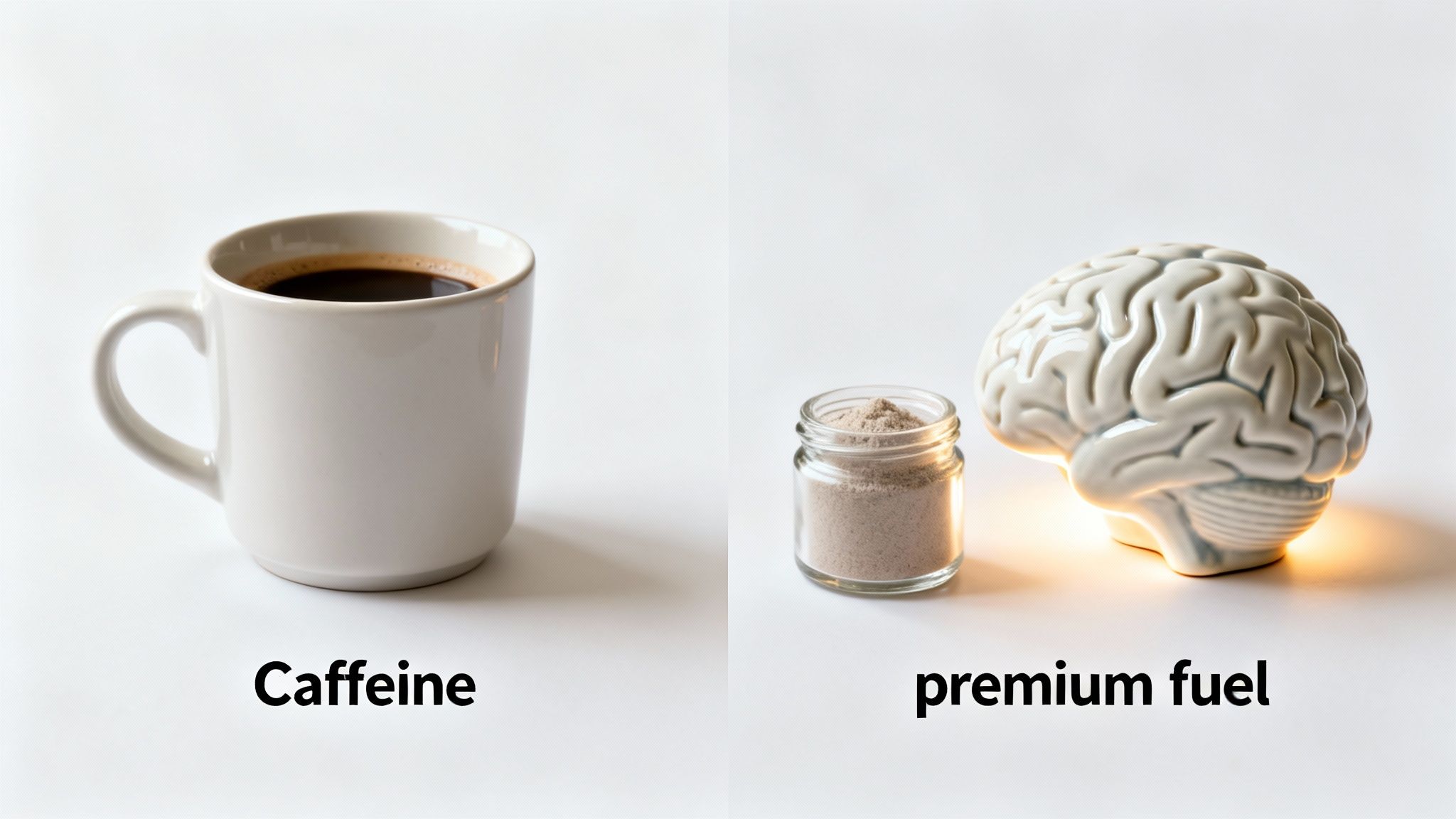
Core Mechanisms
- Neurotransmitter Modulation: Optimises signalling pathways to lift alertness and motivation.
- Blood–Brain Barrier Support: Ensures vital nutrients pass through while keeping toxins out.
- Neurogenesis Promotion: Sparks the growth of new neural connections for resilience.
- Antioxidant Protection: Neutralises free radicals, slowing cognitive ageing.
Together, these layers foster steadier mental energy and sharper concentration.
That’s why a student hitting an afternoon study session stays locked in, and why a seasoned executive can navigate a high-pressure meeting without feeling overwhelmed. Seeing nootropics as ongoing nourishment—rather than a fleeting buzz—guides you to formulas built for lasting benefit.
From Study Sessions To Long-Term Health
Picture your brain shifting into sports-car mode when you take a nootropic before revising. Clarity rolls in smoothly, minus the edge-of-your-seat jitters.
Meanwhile, combining adaptogens with omega-3 oils can soothe stress and protect against daily wear and tear. Unlike caffeine or sugary energy drinks, nootropics rarely produce tolerance build-up—so you enjoy consistent gains.
- Quick highs come with sharp declines and restlessness.
- Premium blends deliver even-paced support and minimal side effects.
The UK market for nootropics was valued at USD 3.2 billion in 2025 and is projected to reach USD 7.9 billion by 2031, growing at a 16.1% CAGR. For a deeper dive into market trends, see insights from Mobility Foresights.
Check out our guide on supplements for energy and focus to see how nootropics fit into a broader daily performance stack.
Applying This Model
When you choose a nootropic, start by nailing down your primary aim—be it focus, memory recall or stress relief.
- Define Your Target: e.g. sustained attention in meetings.
- Match the Mechanism: e.g. pick neurotransmitter modulators for alertness.
- Factor in Synergy: e.g. combine magnesium with creatine for complementary support.
- Begin Low and Observe: track how you feel before adjusting.
Key Insight: Begin with a modest dose and build your stack gradually to minimise unwanted effects and maximise cognitive gains.
This approach turns abstract science into a clear roadmap for custom supplementation.
Premium fuel thinking helps you fine-tune your mental performance engine.
Whether you’re a student facing exams, a shift worker on rotating hours or someone protecting long-term brain health, this framework keeps guesswork at bay.
Embrace this blueprint to steer through the nootropic world with confidence.
Evidence And Common Ingredients
Across offices, libraries and home workstations in the UK, a handful of nootropics keep popping up for sharper focus, calmer stress levels and better memory. Real-world feedback—from student forums to professional groups—paints a clear picture of which supplements truly deliver.
To help you weigh up your options, here’s a side-by-side look at the most popular nootropic ingredients, their benefits and the strength of the science behind them.
Comparison Of Common Nootropic Ingredients
Below is a comparison table summarising each ingredient’s primary benefit, typical dose range and evidence level to guide your choice.
| Ingredient | Primary Benefit | Typical Dose | Evidence Level |
|---|---|---|---|
| Creatine | Mental energy and ATP support | 3–5 g daily | High |
| Magnesium | Neuron function and relaxation | 200–400 mg daily | Moderate |
| Ashwagandha | Cortisol regulation and stress relief | 300–600 mg daily | High |
| Omega-3 | Structural support for membranes | 1–2 g EPA + DHA daily | High |
| Multivitamins | Broad-spectrum micronutrient coverage | 1 tablet daily | Moderate |
| Mushroom Blends | Neuroprotection and mood balance | 1–2 g daily | Emerging |
| Energy Powders | Instant mental energy and focus | Varies by formula | Low–Moderate |
Use this snapshot to zero in on supplements that match your personal goals—whether that’s powering through an exam or winding down after a busy day.
Key Clinical Findings
Creatine sits at the top for neuronal ATP production. Students who take 5 g before exams often report quicker recall and less mental fatigue.
Meanwhile, 200–400 mg of magnesium each day helps balance neurotransmitters and improve sleep quality. In one survey, 73% of users noted a calmer focus with no drowsiness.
- A student loading creatine for steady exam-day energy.
- A project manager turning to ashwagandha to smooth out deadline stress.
- An older adult adding omega-3 to meals for sustained memory support.
Interestingly, trials show 400 mg of ashwagandha extract can slash cortisol levels by 25%, with only mild digestive tweaks in a small number of participants.
On the long-term side, 1–2 g EPA + DHA daily supports membrane health. One six-month study found an 18% slower rate of cognitive decline in older adults.
Other Essentials
Broad-spectrum multivitamins fill critical micronutrient gaps with 24 essential nutrients. Standard UK formulas stay well within safe limits, making them a reliable foundation.
Functional mushroom blends often feature Lion’s Mane, Cordyceps and Reishi for nerve growth and mental clarity. Check out Lion’s Mane Mushroom benefits at VitzAI to explore targeted fungi support.
Energy powders mix caffeine, L-theanine and adaptogens like Rhodiola for rapid alertness. It’s wise to start with half a scoop and assess tolerance before a full dose.
Always look for methylated B-vitamins and chelated minerals to boost absorption and reduce stomach upset. Steer clear of formulas overloaded with vitamin A or E, which can accumulate and pose risks over time.
UK data highlight the rise of nootropic functional beverages, valued at USD 126.9 million in 2019 and projected to hit USD 474.38 million by 2032 (an 11.24% CAGR). Learn more about these market projections in this report.
Key Takeaway
Ingredient choice should match your lifestyle goals, whether powering exam focus or long-term health.
This evidence sets the stage for crafting personalised stacks that align with your age, sex and performance targets.
How to Choose the Right Nootropic Supplements
Finding the right nootropics for you boils down to two things: knowing what you want to improve and making choices you can trust. Are you chasing razor-sharp concentration, faster recall, better stress control or brain protection down the line? Once that’s clear, you can look at ingredient pairings, safety checks, price tags and daily routines.
This simple approach keeps you from getting lost in the sea of formula names and bold claims.
Define Your Primary Goal
- Focus Enhancement: When you need to knuckle down for long study sessions or concentrated work sprints.
- Memory Recall: To help your brain encode and retrieve information more smoothly.
- Stress Relief: Blends that calm cortisol and ease tension under pressure.
- Longevity Support: Ingredients aimed at defending against age-related cognitive decline.
These four buckets make it easier to zero in on the supplements that truly match your needs.
Ingredient Synergy And Safety
Think about how one compound might reinforce another. A good stack is more than the sum of its parts.
Always look for:
- Ingredient Purity: ISO or GMP certifications prove you’re getting what’s on the label.
- Label Transparency: Exact dosages and forms are non-negotiable.
- Proven Sourcing: Brands that publish their supply chains leave no room for hidden additives.
Third-party testing reports are your best friend here.
Budget And Lifestyle Considerations
Your wallet and daily habits matter just as much as ingredient lists. Powders often cost less per serving than capsules, but that convenience factor can swing your decision.
- Powder Bulk Buys: Great if you’re happy measuring scoops at home.
- Capsule Convenience: Perfect for packing into gym bags or office drawers, albeit at a slightly higher unit cost.
Pick the format you’ll actually use.
Infographic Decision Tree
The infographic below maps common goals to top nootropic picks:
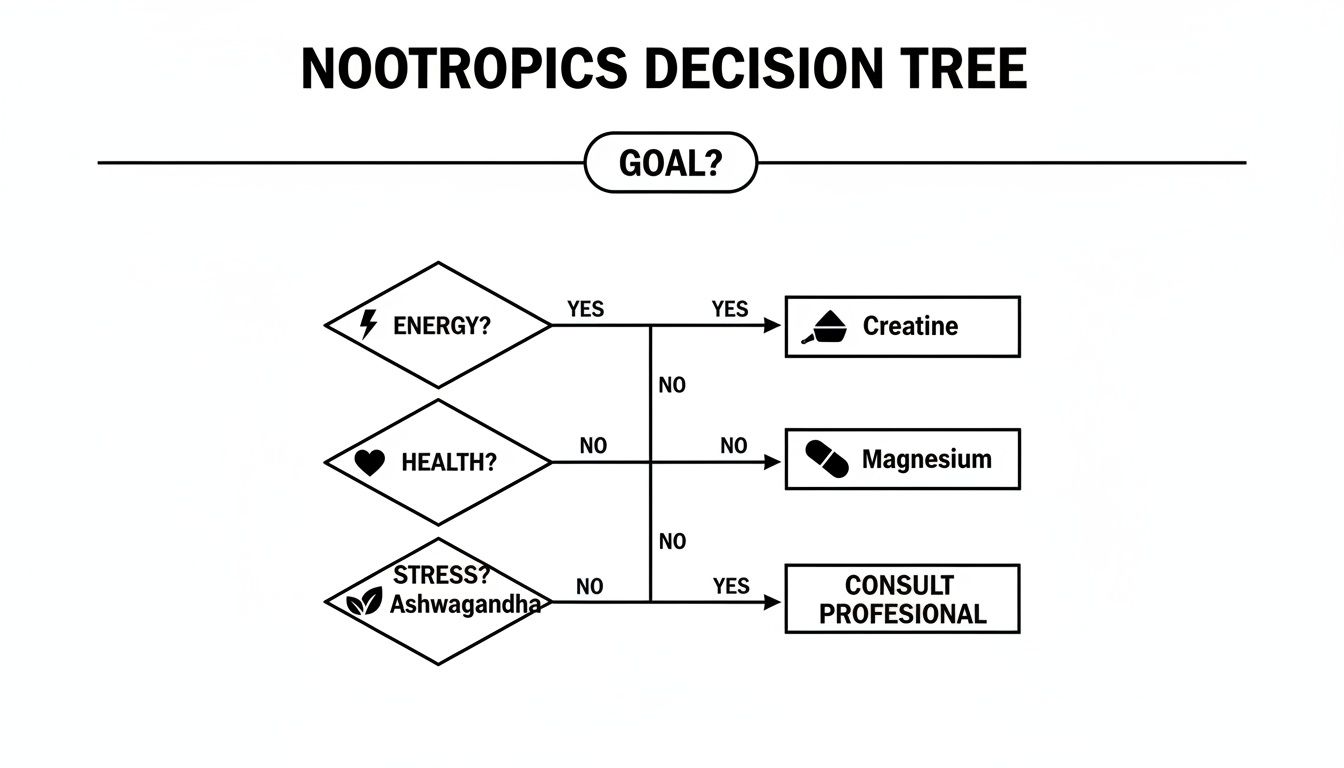
From the chart, you’ll spot that Creatine is often top for extra energy, Magnesium covers general brain support and Ashwagandha appears in stress-relief circles.
Still, no two routines are identical. Some people dread mixing powders at breakfast; others swear by capsule ease when they’re on the move.
Real World Examples
- A university student starts their day with a low-dose creatine powder, then adds magnesium in the evening to balance study sessions with better sleep.
- An NHS shift worker takes creatine before a long night, topping up with Ashwagandha mid-shift to keep nerves steady.
- A retiree opts for an omega-3 rich multivitamin plus chelated magnesium to support ongoing memory and vitality.
These scenarios demonstrate how matching life rhythms to supplement timing smooths out the process.
Putting It All Together
Once you’ve pinned down your goal and vetted ingredient synergy, filter your shortlist by:
- Batch Certification: Proof of purity and potency.
- Detailed Dosage: Exact milligram counts so you can dose confidently.
- Recognised Seals: ISO, GMP or UK MAP logos that add credibility.
Consider cycling your nootropics every 4 to 6 weeks to sustain effects and avoid tolerance.
Track Your Progress
Keep a concise journal where you note mood swings, focus spurts and any side effects. Only real-world data over a few weeks will show if a stack is genuinely working.
In the UK nootropics market, being informed protects both your mind and your money. Use VitzAI’s personalised quiz for tailored recommendations based on your unique profile.
With a clear framework, choosing nootropic supplements UK-wide feels much less daunting. Start small, measure your results, then refine your perfect blend.
Recommended Stacks And Dosing Principles
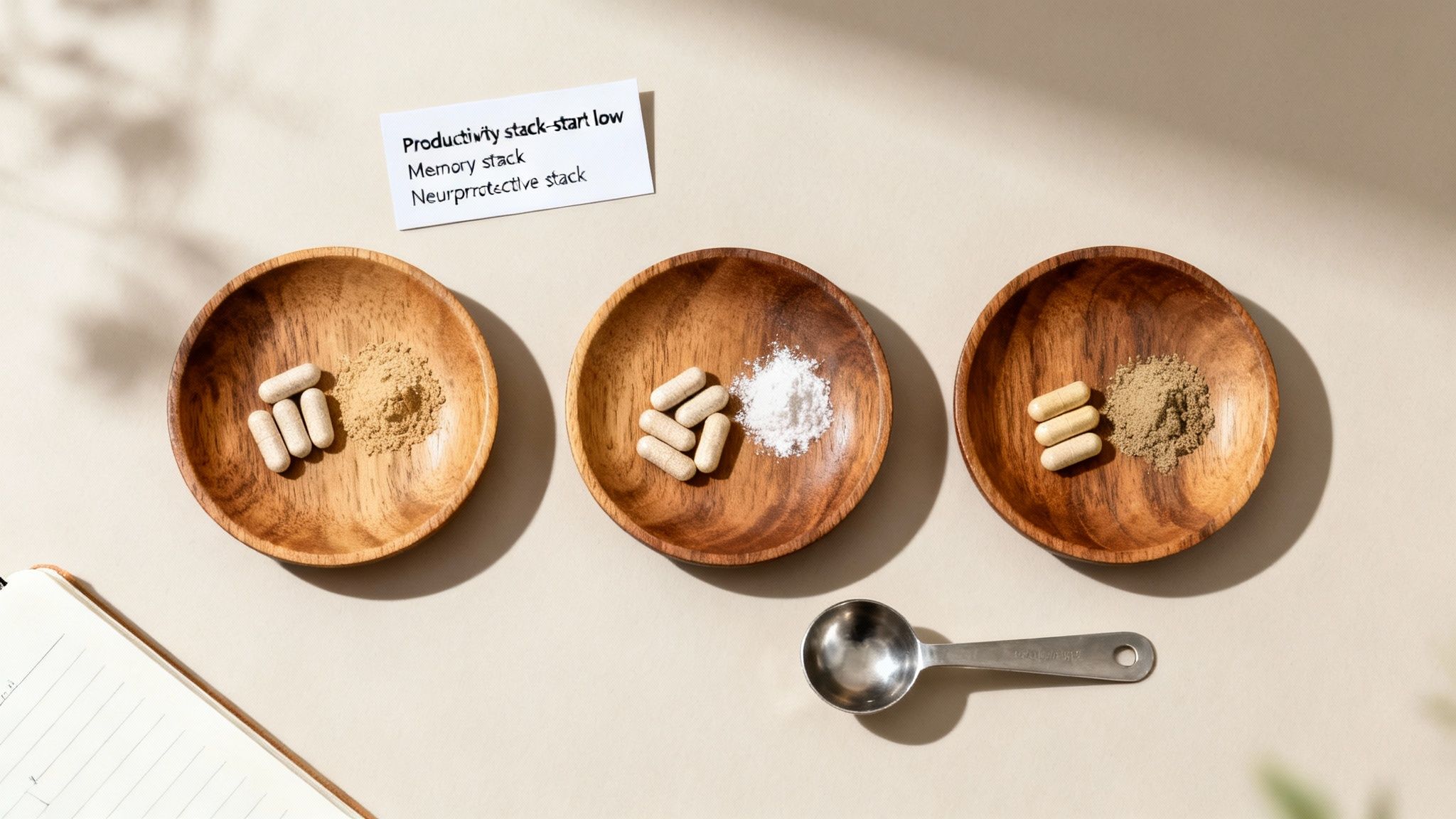
Building your nootropic routine around clear goals not only boosts effectiveness but also keeps unwanted effects at bay. By introducing each ingredient in stages, you’ll spot what works—and what doesn’t—without overwhelming your system.
A personalised approach also helps you save money. Once subtle improvements become obvious, you’ll know exactly which compounds deserve a permanent spot in your stack.
The rules are simple: start low, go slow, cycle intelligently and log everything. As you add—or pause—ingredients, you’ll refine a plan that’s uniquely yours.
Productivity Stack For Professionals
This routine is designed to carry you through back-to-back meetings and deadline-heavy days without the afternoon slump.
First, for one week, take 3 g creatine and 200 mg magnesium every morning. These staples ramp up your cellular energy (ATP) and keep neurotransmitters balanced.
In week two, introduce 1 g omega-3. Its healthy fats protect brain cells and help maintain an even mood.
Benefits at a glance:
- Boosts ATP energy for complex problem-solving
- Eases mental fatigue through magnesium support
- Stabilises focus and mood with omega-3
Pro Tip: Cycle adaptogens every 4 weeks to preserve their stress-modulating effects.
Keep a simple log of your focus sessions and note any uptick in stamina.
Memory Boost For Students
This phased plan sharpens recall and keeps exam nerves in check.
Weeks 1–2: Take 2 g creatine before study blocks to fuel rapid bursts of brain activity.
Weeks 3–4: Add 300 mg ashwagandha at dinnertime to steady stress levels.
Week 5 onward: Introduce 500 mg Lion’s Mane extract each morning to support nerve growth.
“A measured, step-by-step approach reveals your sweet spot without jitters,” says a UK neuroscientist.
This timeline helps you correlate each compound with changes in memory retention and sleep quality.
Neuroprotective Plan For Older Adults
Maintaining cognitive health as we age demands both antioxidant and structural support.
Weeks 1–2: Take 1 g omega-3 daily for membrane integrity, plus 200 mg magnesium each evening to promote restful sleep.
Weeks 3–4: Add 50 mg maritime pine bark extract in the morning for extra antioxidant defence.
Weeks 5–6: Review your log—assess memory tests and mood ratings—then decide on the next phase.
Use a simple weekly journal to track your progress over time.
Cycling And Monitoring Guidelines
Preventing tolerance is crucial if you want long-term benefits. A common rhythm is 4–6 weeks on, followed by 1–2 weeks off.
Key steps to personalise your cycle:
- Record the start date, daily dosage and mood scores
- Note any digestive issues or sleep disturbances
- Adjust dosages by 10–20% if progress stalls or side effects pop up
| Cycle Phase | Duration | Action |
|---|---|---|
| Loading Phase | 1–2 weeks | Start low; monitor initial reactions |
| Maintenance Phase | 4 weeks | Run full stack; track cognition and mood |
| Break Phase | 1–2 weeks | Pause certain compounds or take a full break |
Tracking And Adjusting
A straightforward journal is your best friend. Each day, jot down:
- Morning energy levels
- Midday focus and stress fluctuations
- Sleep quality and mood shifts
From there, you might tweak your regime—perhaps reducing creatine or moving omega-3 to breakfast for smoother absorption.
Timing And Best Practices
Pairing nootropics with meals not only eases digestion but also improves uptake. For instance, taking creatine with a light carbohydrate snack enhances its transport into cells.
Magnesium in the evening calms nerves and primes you for sleep. Meanwhile, omega-3 benefits most when taken with a meal rich in healthy fats.
Example schedule:
- 08:00 am: 3 g creatine with wholegrain toast
- 12:00 pm: 200 mg magnesium alongside a salad
- 6:00 pm: 1 g omega-3 with dinner
Spacing your doses like this limits interactions and keeps each compound working at its best.
Now that you’ve seen how to assemble nootropic stacks step by step, you might want to explore our Brain Focus Formula for more detailed dosing advice and ready-made stacks:
https://vitzai.com/products/brain-focus-formula
By following these examples and guiding principles, you can tailor nootropic supplements in the UK to your professional, academic or long-term cognitive needs. A measured, personalised strategy reduces risk and maximises benefit.
UK Regulations and Safe Buying Practices
Navigating nootropic supplements in the UK can feel like decoding a maze of rules. Yet with a clear grasp of MHRA guidelines and labelling laws, you’ll sidestep common mistakes, protect your health and avoid wasted spend.
Understanding Labelling Requirements
Every nootropic product must show:
- A full ingredient list with exact amounts of each active compound
- Clear serving sizes, dosage instructions and recommended frequency
- Prominent allergen warnings and safe-handling advice
Importing From Outside The UK
Ordering nootropics from overseas often means extra paperwork—sometimes an import licence, sometimes a certificate of free sale.
Steps to follow:
- Check if your ingredient appears on the MHRA’s novel food list
- Apply for an import licence or request a free-sale certificate if needed
- Factor in customs duties and VAT to avoid added costs
- Use a reputable courier with tracking and insurance for peace of mind
If you’re sourcing from the EU, remember to:
- Reprint labels in UK English with UK nutritional units
- Ensure the product aligns with UK novel food approvals
Recognising Novel Food Approvals
MHRA authorisations are your green light. They prove new ingredients—say, adaptogen powders or mushroom extracts—have passed safety and research checks.
Key points:
- A safety dossier with toxicology data is mandatory
- Dossier requirements differ for powders, beverages and capsules
- Approval timelines range from six months up to over a year
A straightforward dossier can sail through in six months; complex botanical blends often take longer.
Checking Official MHRA Listings
Always cross-check the MHRA website for the latest approvals and labelling guidance. Here’s a snapshot of where to find novel food notices:
Signing up for the MHRA newsletter is a low-effort way to catch new updates as they drop.
Spotting Red Flags
Be wary of bold claims like “clinically proven cure” or “zero side effects.” To stay safe:
- Verify all active ingredients are listed with precise quantities
- Ensure batch codes match third-party test certificates
- Check the Advertising Standards Authority (ASA) registry for formal complaints
Comparing Offline And Online Channels
In 2025, offline outlets captured 65.9% of UK nootropic sales. Capsules and tablets accounted for 40.8% of the market. Read the full research about these retail patterns here.
Offline options include health food stores, high-street pharmacies and supermarkets. Online platforms range from brand sites to specialist e-retailers complete with customer reviews. Decide whether you value instant access, expert advice or subscription savings.
Comparison of Purchase Channels
Before you decide where to shop, consider the pros and cons of in-store versus online buying.
| Channel | Advantages | Considerations |
|---|---|---|
| High-Street Stores | Immediate purchase, face-to-face advice, trusted labels | Limited range, typically higher prices |
| Pharmacies | Expert guidance, strictly regulated products | Fewer specialised nootropic blends |
| Supermarkets | One-stop shop, occasional promotions | Quality control can vary |
| Online Retailers | Vast selection, user reviews, subscription options | Beware of counterfeits, potential shipping delays |
Weigh these options against your priorities—speed, expertise or variety.
Verifying Third-Party Testing
Genuine lab reports will detail purity, potency and absence of contaminants. Always:
- Check expiry dates on certificates
- Match the product’s batch code against the lab report
Spotting Counterfeit Products
Fake supplements often have spelling mistakes, blurry print or missing lot numbers. If a bulk-buy deal looks too good to be true, that’s usually a red flag.
Comparing Supplement Formats
Different formats suit different lifestyles:
- Capsules: precise dosing and sealed for freshness
- Powders: cost-effective per dose but need accurate measuring
- Beverages: easy to drink but sometimes loaded with sugars or additives
Pick the format that fits your routine—whether you’re at home, in the office or on the go.
Using VitzAI’s Personalised Quiz
VitzAI’s online quiz asks about age, diet and cognitive goals to recommend compliant formulations. Answer a few questions and receive curated stacks that meet MHRA standards and batch-testing criteria. This takes the guesswork out of selecting nootropics you can trust.
Label Verification Tips
Look for the UKCA mark or MHRA badge to confirm legal compliance. You can also:
- Scan QR codes to access lab certificates and batch data
- Ensure any health claims reference valid studies or official approvals
Case Study on Safe Buying
A London student compared two powders before buying:
- Brand A: Full MHRA approval plus a detailed toxicity report
- Brand B: No visible approvals and sketchy customer feedback
They chose Brand A, ticking both safety and compliance boxes.
Best Practices You Need To Know
Rotate your purchase sources to spread risk and avoid over-reliance on one supplier. Keep digital copies of all receipts, lab reports and product images in one folder for easy reference.
Summary of Safe Buying Advice
UK regulations for nootropic supplements balance innovation with consumer protection. By following labelling standards, verifying approvals and choosing reputable sellers, you safeguard both your mind and your money.
Frequently Asked Questions
What Are Nootropic Supplements UK And How Do They Work?
Nootropic supplements in the UK blend vitamins, minerals and plant extracts to sharpen memory, lift focus and steady mood. They work by supporting neurotransmitter balance, enhancing cerebral blood flow and fuelling cellular energy.
In practice, this often translates into smoother mental performance and quicker recovery from stressful days. Many users say they experience steadier focus without the familiar caffeine crash.
Common Questions
- Are nootropic supplements safe for daily use?
- How do I choose quality nootropics in the UK?
- Can I stack multiple supplements safely?
“A clear Q&A can guide sensible choices and boost your confidence,” advises a UK nutritionist.
Detailed FAQ Responses
Are nootropic supplements safe for daily use?
Most well-formulated options—think magnesium or omega-3—have excellent safety records when you follow the dosage guidelines. Overdoing stimulant-heavy blends can lead to jitters or tummy upsets, so it pays to note how your body reacts and tweak accordingly.
How do I choose quality nootropics in the UK?
Aim for brands with MHRA novel food approvals and visible third-party lab testing. Before you buy, check for:
- Transparent labels and clear batch codes
- Certificates of analysis from independent labs
- Candid user reviews from reliable forums
Can I stack multiple supplements safely?
Yes—provided you introduce one ingredient at a time and keep individual doses modest. For example, pairing an adaptogen like Rhodiola with creatine and magnesium is common practice. Just steer clear of doubling up on stimulants and stick to 4–6 Week Cycles for best results.
Ready to find your perfect nootropic stack? Get personalised recommendations today at VitzAi.com
This article is for informational purposes only and is not medical advice. Always consult a qualified health professional before starting any new supplement or major lifestyle change