

8 Nootropics for Energy: Evidence-Based Picks
Could your “low energy” be a need for alertness, recovery, stress support, or a nutrient check? A morning stimulant can help you stay awake, while a longer-term cellular-energy supplement addresses a different part of performance. Neither automatically solves fatigue caused by poor sleep, under-fuelling, dehydration, stress, or an underlying health issue.
That distinction matters because nootropics for energy aren't interchangeable. Some act within the day, while others need consistent use before you can judge whether they suit you. The right choice also depends on your routine, whether you eat fish, how much caffeine you already use, your training demands, medication, and tolerance for stimulation.
This roundup compares eight practical options by the energy problem they may fit best. It covers mechanisms in plain English, realistic timing, supplied dosage ranges, cautions, and simple combinations for professionals, students, athletes, shift workers, older adults, and people with dietary gaps. The evidence varies, and some supplied product guidance is broader than the strongest independent research.
Supplements should complement sleep, food, hydration, and medical evaluation, not mask persistent unexplained fatigue. For wider context, see this guide to natural nootropics.
1. Caffeine and L-Theanine for Balanced Alertness
Caffeine is the most direct choice when the problem is sleepiness or a short period of demanding concentration. It blocks adenosine receptors, reducing the brain's signal that pressure for sleep is building. L-theanine, an amino acid found in green tea, is used alongside it to make alertness feel calmer rather than just more intense.
This combination suits a student preparing for an exam, a software professional facing a dense work block, or an athlete who needs alertness before competition. It won't create energy from nowhere, and regular caffeine users may mainly feel relief from withdrawal rather than a large improvement above their usual baseline. That makes dose control and timing more important than chasing a stronger sensation.
A cautious starting point is 100 mg caffeine with 100 mg L-theanine, particularly if you're sensitive. Product guidance commonly places intake before a mental or physical demand, but caffeine late in the day can interfere with sleep even when you don't feel especially stimulated.
Practical rule: Use the smallest dose that improves alertness, then protect the sleep that determines tomorrow's energy.
Take it with water and, if an empty stomach causes discomfort, a light breakfast. Combining it with protein may make a work session feel steadier than relying on stimulation alone. People who use caffeine every day should also watch for tolerance, jitters, anxiety, headaches, and poorer sleep rather than assuming every afternoon slump needs another dose.
For a deeper look at how attention support differs from general stimulation, explore this nootropics for focus guide.

2. Creatine Monohydrate for Cellular Energy
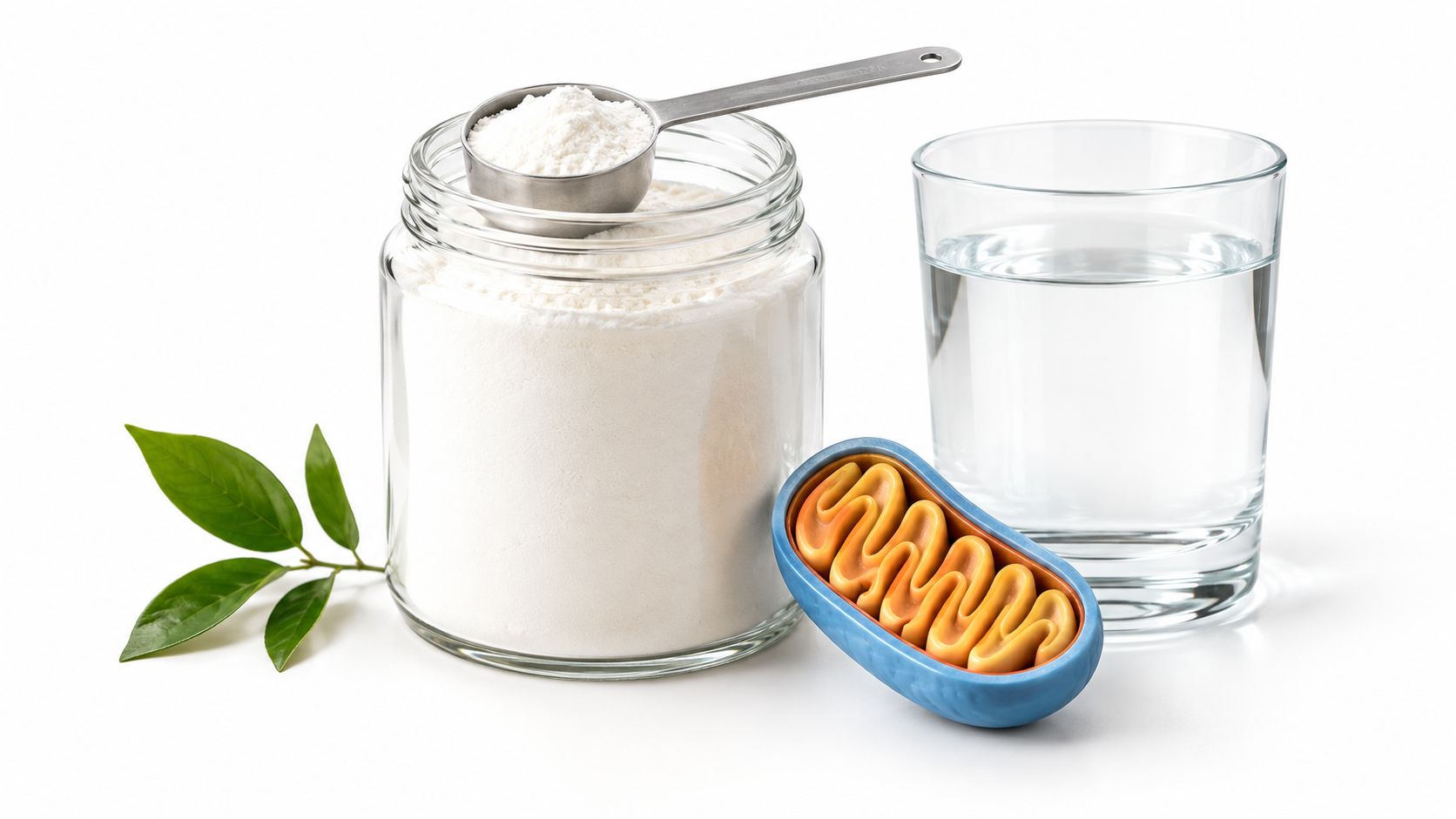
Creatine is better understood as an energy buffer than as a conventional stimulant. Muscle and brain cells store creatine as phosphocreatine, which helps regenerate ATP during demanding work. That mechanism makes it relevant to athletes, people training hard, and anyone whose mental performance suffers when energy demand rises.
The evidence calls for a narrower claim than “creatine boosts cognition.” A 2024 meta-analysis of six studies involving 280 participants found no significant improvement in overall cognitive function, with an effect size of SMD 0.34, a 95% confidence interval from -0.20 to 0.88, and p = 0.22. It also found no meaningful difference between shorter interventions under four weeks and longer interventions of four weeks or more. The full analysis is available in this systematic review.
That doesn't make creatine irrelevant to energy. It suggests the most defensible use is support during physical or mental stress, not a guaranteed improvement in everyday thinking. A vegetarian or vegan may reasonably consider it because dietary creatine intake is typically lower without meat and fish, but individual response still varies.
How to use it without overcomplicating the trial
The supplied product guidance suggests 3 to 5 g daily, taken consistently. Timing matters less than regular use, and you can take it with a meal containing carbohydrate and protein if that fits your routine. Don't use an aggressive loading approach unless you've checked that it makes sense for you, particularly if you have a medical condition or take medication.
A research period, heavy training block, or rotating shift schedule gives you a useful real-world test. Track mental fatigue during a demanding task, workout quality, hydration, and sleep instead of judging success by an immediate buzz.
For background on the compound's broader role, read this creatine benefits guide.
3. Magnesium Glycinate for a Relevant Nutrient Gap
Magnesium supports many processes involved in muscle function, nerve signalling, and energy metabolism. That makes magnesium glycinate appealing when low intake, demanding exercise, or a high-stress routine overlaps with poor sleep or muscle tension. It isn't a stimulant, so someone looking for an immediate morning lift shouldn't expect the same experience as caffeine.
The useful question is whether magnesium is relevant to your diet and symptoms. NIH-listed daily needs are 400 to 420 mg for adult men, 310 to 320 mg for adult women, and 350 to 360 mg during pregnancy. The figures describe total daily intake from food and supplements, not an automatic supplement dose. These intake details and supplement guidance are summarised in this clinical resource.
Timing, form, and tolerance
Consumer and clinician guidance commonly discusses 200 to 300 mg of elemental magnesium glycinate for sleep support, with 100 to 150 mg as a possible starting amount and 350 mg per day often cited as the upper limit for supplemental magnesium. Read the label carefully because the weight of the magnesium compound isn't always the same as the amount of elemental magnesium.
Take it with food if your stomach is sensitive. Some people prefer an evening dose because glycinate is often chosen for its calming profile, while others split it between morning and afternoon. Separate magnesium from medicines or minerals when a pharmacist advises it, especially if you're also using calcium or iron.
Magnesium may fit a busy professional whose tiredness is closely tied to poor recovery, or an active adult dealing with muscle demands. It makes less sense as a blanket answer to persistent fatigue without considering sleep, diet, and medical causes.
4. Rhodiola Rosea for Stress-Related Fatigue
Rhodiola rosea fits a different pattern: you can function, but pressure makes mental and physical effort feel unusually draining. It's commonly described as an adaptogenic herb, meaning it is used to support the body's response to stress rather than provide the immediate jolt associated with a stimulant.
That distinction may appeal to a medical professional working irregular shifts, a student during an exam period, or an executive moving through an intense project. The expected benefit is subtle and individual. Rhodiola won't correct sleep debt, replace food, or make an unhealthy workload harmless.
The supplied guidance suggests 200 to 600 mg daily of a standardised extract, divided between morning and midday if needed. It also recommends looking for products standardised to 3% rosavins and 1% salidroside, although product quality and extract specifications should be checked directly on the label. Take it earlier in the day if it feels activating.
A better way to judge an adaptogen
Give it a defined trial rather than adding it to an already crowded stack. Record perceived energy, stress, mood, sleep onset, and training tolerance. If you feel wired, irritable, nauseated, or sleep becomes worse, stop and reassess.
Rhodiola makes more sense when stress is part of the fatigue pattern. It makes less sense when the main problem is simply not getting enough sleep.
Combining it with magnesium glycinate may appeal to someone who wants daytime resilience without relying entirely on caffeine, but that combination also makes attribution harder. Introduce one product first. For a focused discussion of its proposed use and cautions, read this stress management guide to Rhodiola rosea.
5. CoQ10 and Ubiquinol for Mitochondrial Support
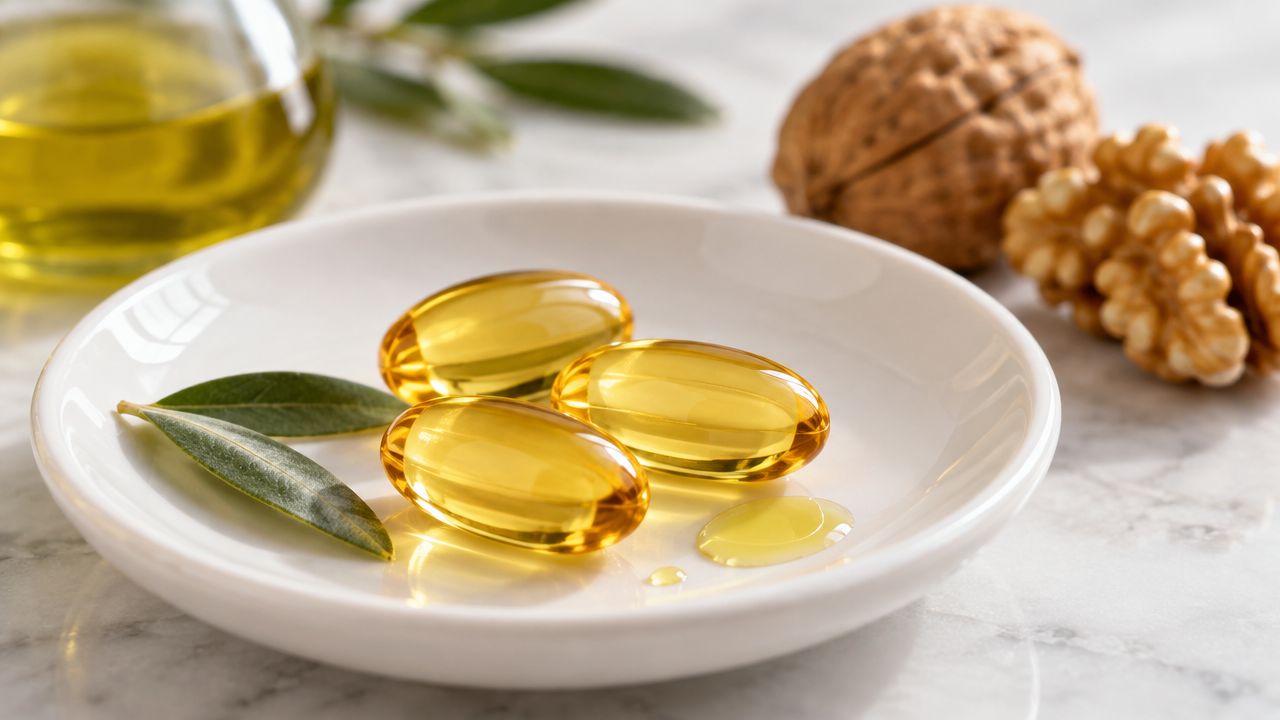
CoQ10 participates in mitochondrial electron transport, the process cells use to make ATP. Ubiquinol is the reduced form commonly marketed for improved absorption, and because it dissolves in fat, it belongs with a meal containing olive oil, nuts, fish, or another fat source.
The practical distinction is between mechanistic plausibility and proven energy improvement. CoQ10's role in cellular energy is clear, but that doesn't mean every healthy adult will notice more stamina from taking it. It may be more relevant when a clinician has identified a specific reason to consider it, or when an older adult is evaluating several contributors to reduced vitality.
Supplied guidance suggests 100 to 200 mg daily of ubiquinol, with higher amounts sometimes proposed for older adults or athletes. Those higher ranges shouldn't be treated as a default, especially if you're taking prescription medication or managing a cardiovascular condition. CoQ10 isn't a substitute for medical care or a treatment for cardiovascular disease.
Who should pause before adding it?
Someone taking statins may ask a clinician or pharmacist about CoQ10 because statin use is often discussed in relation to CoQ10 levels and muscle symptoms. That still doesn't prove supplementation will resolve fatigue or muscle discomfort. A professional can review the medication, symptom pattern, and whether testing is useful.
Take it consistently and allow time before judging it. The supplied product guidance suggests assessing over four to eight weeks, but a subjective change should still be interpreted cautiously. Athletes over 40, professionals under sustained cognitive demand, and people building a broader cellular-energy plan may consider it, while everyone else should avoid stacking it because the mechanism sounds compelling.
6. B-Complex Vitamins When Diet or Absorption Is the Issue
B vitamins help enzymes process carbohydrate, fat, and protein into usable energy. They don't work like caffeine. If you aren't deficient, taking more doesn't automatically produce a stronger supply of cellular energy. Their most sensible role is correcting or preventing a relevant dietary or absorption gap.
This is especially important for vegans and vegetarians considering B12, older adults, and people with digestive conditions that may affect nutrient absorption. Medication history can matter too. Metformin and proton pump inhibitors are among the medicines often discussed in relation to B12 status, so persistent fatigue deserves a proper conversation with a health professional rather than a blind supplement purchase.
A B-complex can be convenient, but “methylated” isn't a guarantee that a product is better for everyone. Look at the actual amounts, avoid duplicating high-dose ingredients across several products, and take it with breakfast if it feels stimulating or affects sleep.
Match the product to the question
Ask whether you're trying to fill a known gap, follow a restricted diet, or respond to symptoms that need investigation. Testing B12 and folate may be more useful than guessing, particularly when fatigue persists or appears alongside neurological, digestive, or mood changes.
A shift worker may find a morning B-complex easier to remember, while a vegan may focus specifically on reliable B12 intake rather than assuming every B vitamin is needed in equal amounts. The option becomes less compelling when your diet is varied, your levels are adequate, and your goal is a rapid energy sensation.
B vitamins can sit alongside creatine or magnesium, but check labels first. An energy powder, multivitamin, and B-complex may all contain overlapping nutrients, turning a simple routine into an unnecessarily high combined intake.
7. Mushroom Blends for Endurance and Cognitive Support
Cordyceps, lion's mane, and reishi are often grouped together, but they shouldn't be treated as one ingredient. Cordyceps is usually positioned around physical endurance and energy metabolism. Lion's mane is associated with cognitive support, while reishi is more commonly chosen for a calmer, stress-oriented routine.
That makes a mushroom blend attractive to a knowledge worker who wants a caffeine-free afternoon option, an endurance athlete experimenting with cordyceps, or a high-stress professional who doesn't want another stimulant. The evidence is uneven, and the proposed mechanisms don't prove a noticeable outcome in every user. Mushroom products also vary widely in species, extraction, and whether they use fruiting bodies or mycelium.
Supplied guidance suggests checking for verified cordyceps species such as Cordyceps militaris or Cordyceps sinensis, using fruiting-body products where available, and looking for hot-water or dual extraction. Suggested ranges include 500 to 2,000 mg for cordyceps, 500 to 3,000 mg for lion's mane, and 1,000 to 2,000 mg for reishi. Those ranges shouldn't be combined automatically because extracts aren't equivalent.
Keep the blend testable
Take the product consistently for several weeks before deciding whether it suits you, unless you notice an adverse reaction sooner. Track afternoon concentration, exercise tolerance, sleep, digestion, and any changes in mood. If you're already using creatine, caffeine, rhodiola, or an energy powder, adding a mushroom blend at the same time makes the result difficult to interpret.
People with allergies, autoimmune conditions, pregnancy, or medication use should seek professional advice before using concentrated mushroom extracts. A caffeine-free vegan powder can be convenient, but “natural” doesn't remove the need to inspect the label. This vegan mushroom powder option from Supplemynts Inc illustrates the type of format some users choose.
8. Energy Powder Formulations for Convenience
An energy powder can combine caffeine, L-theanine, B vitamins, amino acids, adaptogens, and sometimes mushroom extracts in one scoop. Its advantage is convenience. Its weakness is that you may not know which ingredient helps, which causes side effects, or how much stimulation you're getting if the label uses a proprietary blend.
This format suits a busy executive, student, shift worker, or athlete who wants a repeatable routine before a defined demand. It doesn't suit someone who already takes several overlapping supplements and hasn't calculated the combined caffeine or vitamin intake. A pre-mixed formula is only as transparent as its label.
Read the label before judging the effect
Look for recognisable ingredients and clearly disclosed amounts. Product guidance suggests checking the caffeine content and the relationship between caffeine and L-theanine, with 100 to 200 mg caffeine and an equal amount of L-theanine presented as a reference range. Start with half a scoop, especially if you don't know your tolerance, and mix it with 200 to 300 ml of water about half an hour before the task or workout.
Prefer products with independent testing, such as NSF, Informed Sport, or Informed Choice, particularly if you're an athlete subject to sport regulations. Avoid vague “metabolism boosting” language and inspect whether the powder duplicates a multivitamin, B-complex, creatine, or separate stimulant.
Convenience is valuable, but it shouldn't come at the cost of knowing what you're taking.
Use an energy powder strategically rather than treating it as a daily requirement. A caffeine-free or stimulant-light product may be a better fit for someone whose afternoon caffeine is disturbing sleep. For a related format comparison, see this best energy drink powder guide.
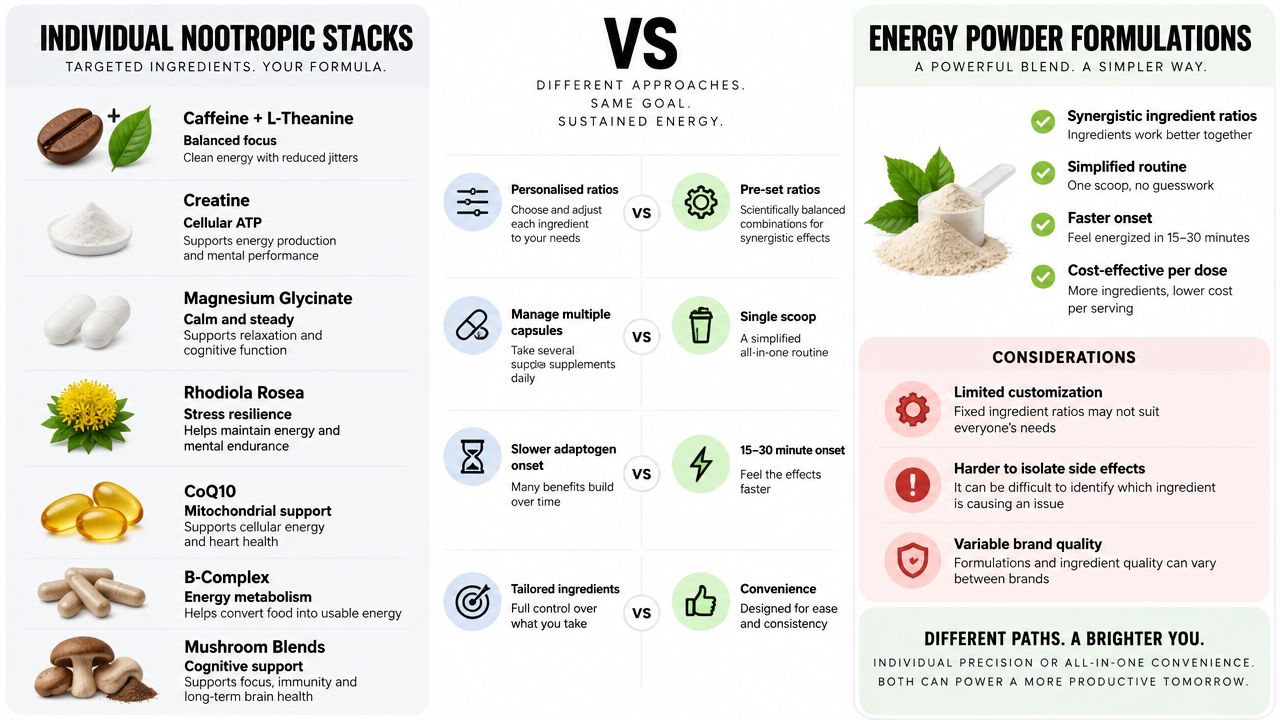
8-Item Nootropic Energy Comparison
| Item | Implementation Complexity 🔄 | Resource Requirements ⚡ | Expected Outcomes ⭐ / Impact 📊 | Ideal Use Cases 💡 | Key Advantages ⭐ |
|---|---|---|---|---|---|
| Caffeine + L-Theanine: The Balanced Energy Stack | Low, single-dose stack; timing critical 🔄 | Low cost; widely available OTC ⚡ | Rapid alertness + calm focus; onset 20–30 min; duration 4–6 h ⭐⭐⭐⭐ 📊 | Focused work sessions, pre-competition, studying 💡 | Reduces caffeine jitters; clinically supported; cost-effective ⭐ |
| Creatine Monohydrate: Cellular Energy at the Mitochondrial Level | Low, daily dosing; loading optional 🔄 | Low cost; widely available; requires adequate hydration ⚡ | Enhances ATP resynthesis; cognitive & physical gains over 4–8 weeks ⭐⭐⭐⭐ 📊 | Athletes, heavy cognitive load, shift workers 💡 | Strong evidence base; boosts both physical and mental energy ⭐ |
| Magnesium Glycinate: The Cellular Energy Cofactor | Low, daily split dosing; take with food 🔄 | Moderate cost; high bioavailability; OTC ⚡ | Supports ATP production & muscle function; benefits in 2–4 weeks ⭐⭐⭐ 📊 | Afternoon energy, recovery, stress-prone or older adults 💡 | Highly absorbable with minimal GI effects; reduces cramps ⭐ |
| Rhodiola Rosea: The Adaptogenic Energy Enhancer | Moderate, standardised extract and sourcing matter 🔄 | Moderate–high cost; quality/standardisation critical ⚡ | Reduces fatigue and improves stress resilience; effects in 2–4 weeks ⭐⭐⭐ 📊 | High-stress periods, shift work, exam season 💡 | Adaptogenic stress resilience; improves endurance without jitters ⭐ |
| CoQ10 (Ubiquinol): Mitochondrial Energy Production Optimiser | Moderate, best taken with dietary fat; storage-sensitive 🔄 | High cost; ubiquinol preferred; fat-dependent absorption ⚡ | Direct mitochondrial ATP support; benefits over 4–8 weeks; cardio support ⭐⭐⭐⭐ 📊 | Older adults, athletes, statin users, longevity focus 💡 | Direct ETC support and antioxidant protection for mitochondria ⭐ |
| B-Complex Vitamins: Metabolic Energy Pathway Enablers | Low, daily morning dosing; prefer methylated forms 🔄 | Low cost; widely available; methylated forms slightly pricier ⚡ | Rapid reversal of deficiency-related fatigue (days–weeks); metabolic support ⭐⭐⭐ 📊 | Vegans, older adults, malabsorption, shift workers 💡 | Essential cofactors for metabolism; fast effect if deficient; low risk ⭐ |
| Mushroom Blends (Cordyceps, Lion's Mane, Reishi) | Moderate, consistent use; verify fruiting body & extraction 🔄 | Moderate–high cost; quality and species sourcing vary ⚡ | Layered adaptogenic + cognitive support; effects 2–4 weeks; sustained benefits ⭐⭐⭐ 📊 | Endurance athletes, knowledge workers, stress-prone professionals 💡 | Multi-targeted effects (ATP, neuroplasticity, stress regulation) and immune support ⭐ |
| Energy Powder Formulations: Integrated Multi-Nutrient Synergy | Moderate, single-scoop convenience; limited customization 🔄 | Variable cost; brand quality critical; third‑party testing advised ⚡ | Fast onset (15–30 min); combines immediate + sustained effects; 4–6 h typical ⭐⭐⭐⭐ 📊 | Busy professionals, athletes, students, shift workers seeking convenience 💡 | All-in-one convenience with optimized ratios; cost-effective per dose ⭐ |
Build the Smallest Stack That Fits Your Goal
The best stack is usually the smallest one that answers a clear question. If you need immediate focused alertness, caffeine plus L-theanine is the most direct match. If you want a consistent daily foundation for physical performance and possible support during cognitive stress, creatine is a more appropriate category. It isn't a replacement for sleep, and the available cognitive evidence doesn't support treating it as a universal focus enhancer.
Magnesium makes sense when intake, recovery, muscle demands, or sleep context point in that direction. B vitamins are most useful when diet, absorption, medication history, or testing suggests relevance. Rhodiola is a better conceptual fit for stress-related fatigue, while a mushroom blend may appeal to someone prioritising caffeine-free endurance or cognitive support, provided they accept the more variable evidence and product quality.
Omega-3 belongs in the dietary context rather than the quick-energy category. Guidance from the American Heart Association and American Psychiatric Association supports at least two servings of fish per week, corresponding to about 450 to 500 mg per day of combined EPA and DHA. The same source notes that the US FDA considers up to 3 g per day of EPA and DHA from fish-oil supplements generally recognised as safe, and up to 5 g per day of omega-3 from dietary supplements safe, while cognition results remain mixed. Review the omega-3 intake and safety guidance here.
Start with one change. Keep caffeine, sleep timing, meals, hydration, training, and the rest of your supplement routine stable while you assess it. Track bedtime, sleep quality, perceived energy, mood, digestion, and performance during a task that matters to you. If you change three products at once, you won't know whether the outcome came from the ingredients, expectation, improved routine, or simple day-to-day variation.
Check combination products for repeated caffeine, magnesium, B vitamins, creatine, adaptogens, and mushroom extracts. Ask a qualified health professional before starting supplements if you're pregnant, trying to conceive, breastfeeding, managing a medical condition, or taking prescription medication. That caution is particularly important with stimulating products, herbs that may affect blood pressure or blood sugar, and anything that changes how you sleep.
VitzAI can help readers turn this broad list into a more personal starting point. Its supplement quiz considers goals, diet, fish intake, sleep, stress, exercise, energy, digestion, age, and sex, then presents a curated plan that explains why products such as creatine, magnesium glycinate, omega-3, CoQ10, multivitamins, or energy support may be relevant. You can review the recommendations, remove products you already use or don't want, and choose whether to purchase through the platform.
This article is for informational purposes only and is not medical advice. Always consult a qualified health professional before starting any new supplement or major lifestyle change
VitzAI.com offers a short personalised supplement quiz that connects your energy goals with diet, sleep, stress, exercise, fish intake, and digestion. Visit VitzAi.com to explore a curated supplement plan and see which options may fit your routine.