

Protein Powder for Weight Loss A Practical Guide
Right, let's get straight to it. Can protein powder really help you lose weight? The short answer is yes, absolutely—when you use it correctly. It's not a magic potion, but think of it as a smart addition to your toolkit. It helps you feel fuller for longer, gives your metabolism a little nudge, and, most importantly, protects your muscle while you're focused on losing fat.
This guide will break down the science in a way that actually makes sense and give you practical advice to make protein powder work for you.
Your Strategic Tool for Weight Management
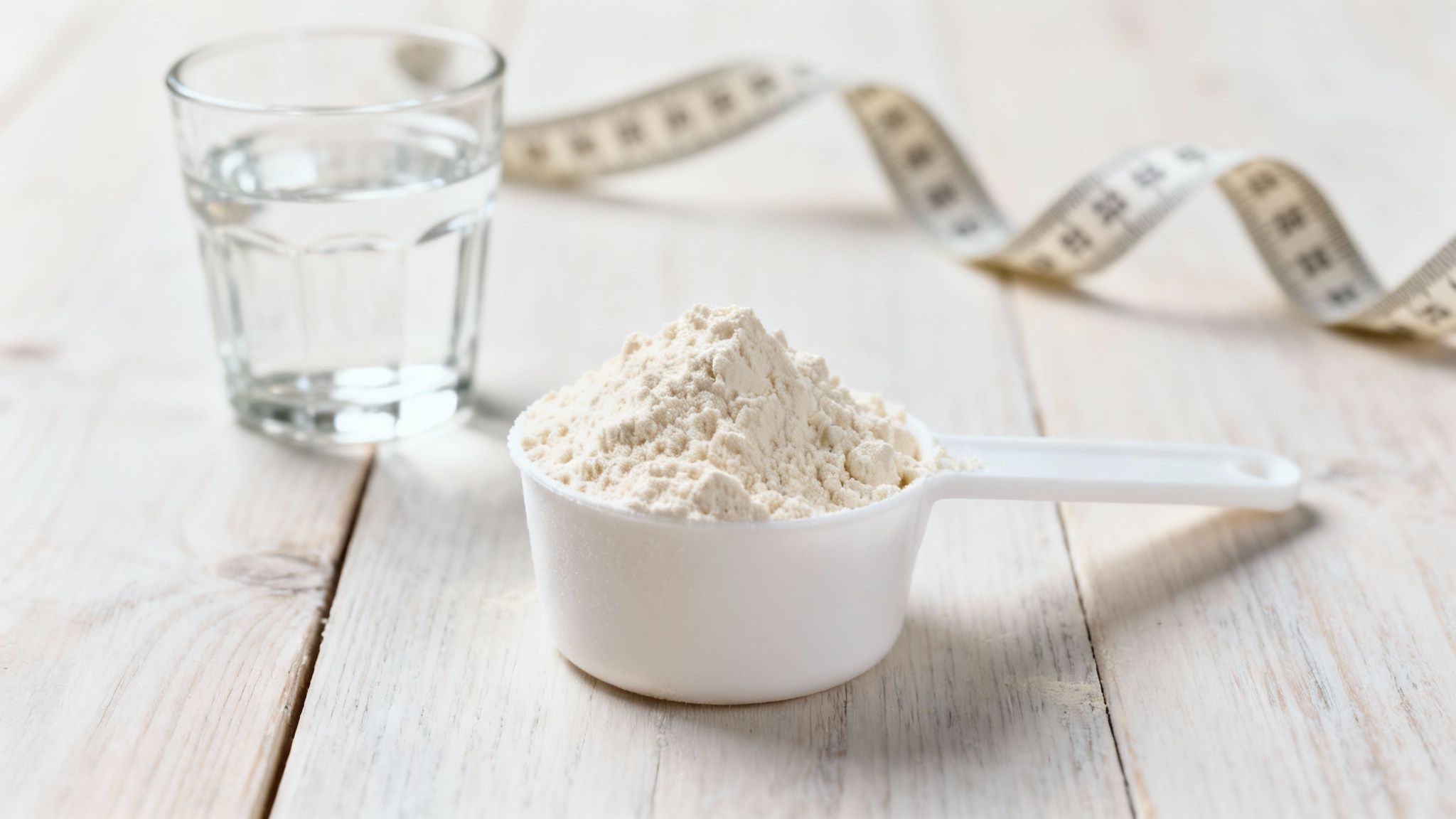
Protein powder has well and truly moved out of bodybuilder locker rooms and into the kitchen cupboards of everyday people trying to live a bit healthier. And for good reason. The interest is booming, especially here in the UK, where the protein supplements market was recently valued at USD 230.34 million and is expected to almost double by 2035.
This isn't just another passing trend. It's backed by a solid understanding of how protein supports our health goals. For weight loss, a good protein powder offers a seriously convenient way to up your intake, helping you stick to your plan without feeling like you're constantly fighting off hunger. It’s a simple change that can make a huge difference.
The Core Principles of Protein for Weight Loss
So, how does it actually work? It’s not just one thing, but a combination of a few key factors that all pull in the same direction to support your weight loss efforts.
- Keeps You Feeling Full: Protein is hands down the most satisfying macronutrient. It helps you feel properly full after a meal, which means you're far less likely to find yourself raiding the biscuit tin an hour later.
- Gives Your Metabolism a Boost: Your body has to work harder—and burn more calories—to digest protein compared to fats or carbs. This is called the Thermic Effect of Food (TEF), and it gives your daily calorie burn a small but significant lift.
- Protects Your Muscle: This one is crucial. When you lose weight, you don't just lose fat; you risk losing precious muscle mass too. Getting enough protein helps protect that muscle, which is vital for keeping your metabolism firing on all cylinders. Strong muscles are also key for bouncing back after a workout, a topic we dive into in our guide on the best supplements for muscle recovery.
Of course, at the heart of any successful weight loss plan is understanding a calorie deficit. Protein powder simply makes achieving and maintaining that deficit easier by tackling hunger and preserving your body's best calorie-burning asset: your muscles.
By adding a high-quality protein powder to your routine, you're not just taking a supplement. You're putting a strategy in place that helps with appetite control, metabolic rate, and body composition. It's about working smarter, not just harder, on your weight loss journey.
We’ll get into all the details next, from picking the right type of protein to figuring out how to fit it into your day for the best results.
How Protein Actually Works for Weight Management
Ever notice how a protein-rich meal keeps you feeling full for hours, while a carb-heavy snack has you rummaging through the cupboards again in no time? That’s not just in your head; it’s your biology at work. Protein powder plugs directly into this system, helping you manage your weight through solid science, not smoke and mirrors.
Let's pull back the curtain on the three key ways protein becomes your best ally for weight loss: how it dials down hunger signals to your brain, how it costs your body more calories just to process, and why it’s critical for protecting your body’s main calorie-burning furnace—your muscles.
Taming Hunger by Hacking Your Hormones
The first thing you’ll probably notice when you up your protein is how satisfying it is. This isn't simply about filling your stomach; it's about kicking off a hormonal chain reaction that tells your brain, "Alright, we're full, you can stop eating now."
When you consume protein, your gut releases hormones like Peptide YY (PYY) and Glucagon-like peptide-1 (GLP-1). Think of these as your body’s built-in appetite suppressants. They travel to your brain and hit the brakes on hunger and cravings.
At the same time, protein helps lower levels of ghrelin, which you might have heard called the 'hunger hormone'. When ghrelin is running high, it's constantly prodding your brain to seek out food. By keeping ghrelin in check, protein quiets that nagging urge to snack, making it far easier to stick to your calorie goals without feeling like you’re constantly fighting temptation.
A protein shake isn’t just a quick meal; it's a strategic tool for appetite control. By getting your key hormones on side, it helps you feel fuller for longer and cuts down the odds of mindless snacking later in the day.
Firing Up Your Metabolism with the 'Protein Tax'
Your metabolism isn't a simple on/off switch. It's a dynamic furnace that responds to the fuel you give it. One of the most interesting parts of this is something called the Thermic Effect of Food (TEF).
Picture every food you eat as having a small "metabolic tax"—this is the energy your body has to spend to digest, absorb, and use the nutrients. The tax rate varies quite a bit:
- Fats: Have a tiny tax, needing only 0-3% of their calories for digestion.
- Carbohydrates: Come with a moderate tax, around 5-10%.
- Protein: Has the highest tax by a long shot, demanding a hefty 20-30% of its own calories just to be processed.
So, if you eat 100 calories from protein, your body might only end up with 70-80 of those calories after paying the 'tax'. While it might not seem like a huge amount on its own, this effect adds up day after day, giving your daily calorie burn a nice, consistent boost. Adding a protein powder to your routine is an easy way to crank up this thermic effect.
Protecting Your Muscle: The Engine of Your Metabolism
This might be the most overlooked, yet most important, job protein has in any weight loss plan. When you cut calories, your body needs to find energy from somewhere. The trouble is, it doesn't just burn fat—it’s also happy to break down muscle tissue for fuel.
Losing muscle is a double whammy. First off, muscle is metabolically active, which means it burns calories even when you’re sitting on the sofa. The more muscle you have, the higher your resting metabolic rate. Lose muscle, and your metabolism slows down, making it harder to lose weight and much easier to put it back on later.
Secondly, holding onto your muscle ensures the weight you're losing is actually fat. This is what leads to a more toned, defined look. A good protein intake acts like an insurance policy for your muscles. It gives your body the amino acids it needs for repair, signalling it to leave your muscle alone and go after your fat stores for energy instead.
How Protein Protects Your Muscle
- Provides Building Blocks: It supplies the essential amino acids needed to repair muscle fibres that break down from exercise and just daily life.
- Sparks Muscle Growth: It actively triggers muscle protein synthesis, the process of building new muscle, especially when you have it after a workout.
- Saves Muscle in a Deficit: It encourages your body to tap into stored fat for fuel, rather than sacrificing your hard-earned muscle.
By keeping your muscle mass intact, you make sure your metabolism stays fired up. This makes your weight loss journey more effective and, crucially, much more sustainable for the long haul.
Choosing The Right Protein Powder For Your Goals
Stepping into the supplement aisle can feel like a pop quiz you didn't study for. Whey, casein, plant-based, collagen—the sheer number of tubs is enough to make anyone’s head spin. But honestly, choosing the right protein powder for weight loss doesn't have to be complicated. It’s just about matching the right tool to your specific needs, lifestyle, and taste.
Think of different proteins like different types of fuel. Some burn fast, giving you a quick burst of energy, while others are slow-release, providing sustained power over time. Let's break down the most common options to help you find your perfect fit.
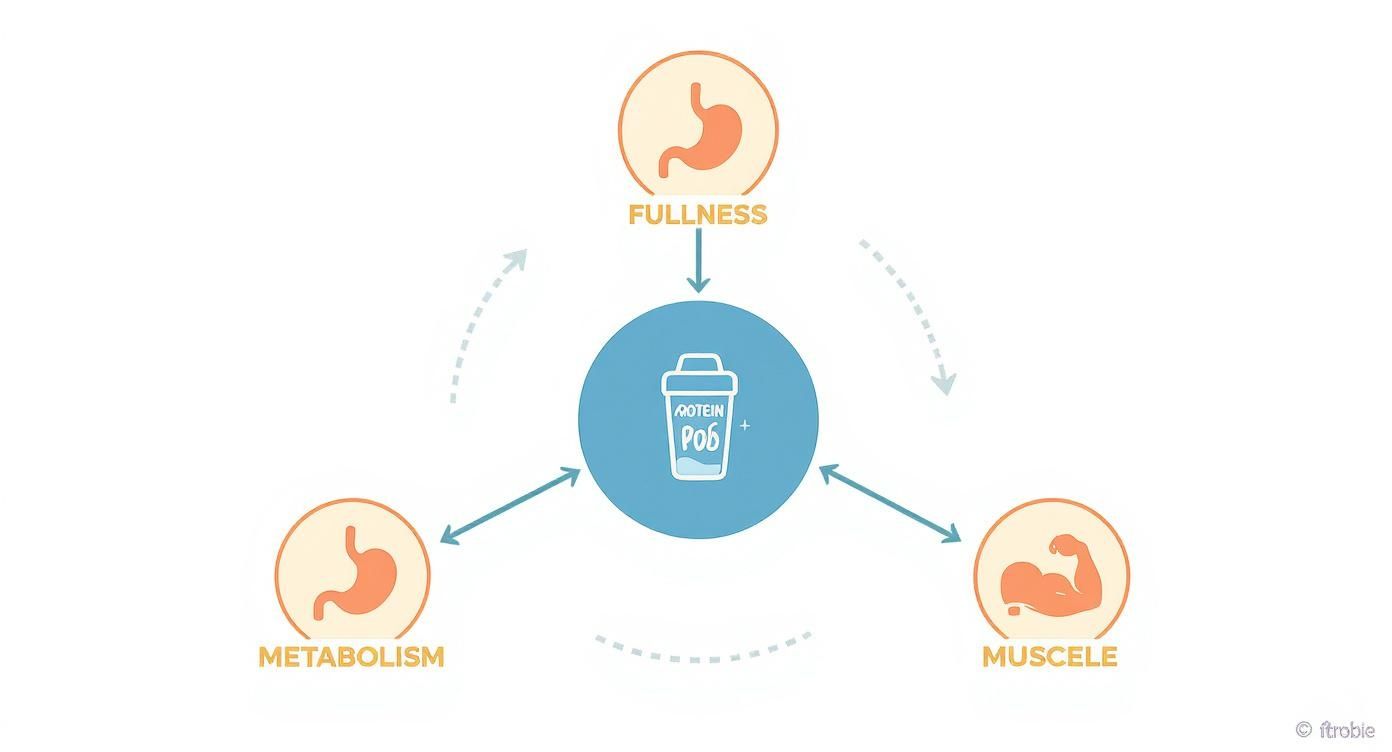
As you can see, protein powder isn't just about building muscle; it's a powerful ally for managing hunger and firing up your metabolism on a weight loss journey.
Whey Protein: The Fast-Acting Favourite
Whey protein is the most popular player on the field, and for good reason. It’s derived from milk during the cheesemaking process and is a complete protein, meaning it contains all nine essential amino acids your body needs for muscle repair and growth.
Its standout feature is its rapid absorption rate. Your body digests it quickly, making it the ideal choice for a post-workout shake to kick-start muscle recovery. For weight loss, this speedy action can also help crush immediate post-exercise hunger.
- Whey Concentrate: This is the most common and budget-friendly form. It contains a good amount of protein alongside some fats and carbohydrates.
- Whey Isolate: This version is more filtered to remove most of the lactose, fat, and carbs, resulting in a higher protein concentration. It's a great option if you're sensitive to lactose or meticulously counting calories.
Casein Protein: The Slow-Release Champion
If whey is the sprinter, casein is the marathon runner. Also derived from milk, casein forms a gel-like substance in your stomach, leading to much slower digestion and a gradual release of amino acids into your bloodstream.
This slow-and-steady nature makes casein a fantastic tool for appetite control. It’s particularly effective when taken before bed or between meals to keep those hunger pangs at bay for hours on end.
Having a casein shake in the evening can be a simple strategy to prevent late-night snacking and wake up feeling less ravenous. It’s an easy way to maintain satiety and stay on track with your calorie goals overnight.
Plant-Based Proteins: The Versatile Alternative
The world of plant-based protein powders has absolutely exploded, offering excellent options for vegans, vegetarians, or anyone with dairy sensitivities. Common sources include pea, soy, hemp, and brown rice protein. Many mushroom blends are also gaining popularity for their added health benefits.
The key to choosing a good plant-based option is ensuring it's a complete protein. While soy is complete on its own, many plant proteins (like pea) aren't. To solve this, most brands create clever blends—like pea and rice protein—to provide a full amino acid profile, making them just as effective as whey. For a deeper dive, check out a detailed comparison of pea protein vs. whey protein to see which best fits your goals.
These powders are often easier on the digestive system and are a more sustainable choice. Our vanilla-flavoured plant protein is a brilliant, great-tasting place to start.
Collagen Peptides: The Specialised Supporter
Collagen has gained huge popularity, and you’ve likely heard about its benefits for skin, hair, nails, and joint health. It's the most abundant protein in your body, acting as the "glue" that holds everything together.
However, it's crucial to understand its role in a weight loss context. While collagen is a protein, its amino acid profile is very different from whey or casein. It's particularly low in leucine, the key amino acid that triggers muscle protein synthesis.
This means that while collagen is brilliant for supporting your connective tissues, it is not an effective choice for preserving or building muscle mass. Think of it as a complementary supplement, not a replacement for your main muscle-supporting protein powder.
To help you visualise the differences, here’s a quick comparison of the most popular protein types.
Comparing Common Protein Powders
| Protein Type | Best For | Digestion Speed | Key Feature |
|---|---|---|---|
| Whey | Post-workout recovery, quick protein boost | Fast (30-60 mins) | Complete amino acid profile, high in leucine |
| Casein | Before bed, between meals for satiety | Slow (4-7 hours) | Sustained amino acid release, reduces muscle breakdown |
| Plant Blends | Vegans, dairy-free diets, sensitive digestion | Varies (Medium) | Hypoallergenic, provides a complete plant-based protein |
| Collagen | Joint, skin, and hair health | Fast | Supports connective tissues, not for muscle building |
Ultimately, the "best" protein is the one that aligns with your dietary needs, fits into your daily routine, and helps you consistently hit your protein targets for weight loss.
How to Actually Use Protein Powder in Your Daily Life
Knowing protein is good for you is the easy part. Figuring out how to make it a regular, enjoyable part of your routine? That's where most people get stuck. The real key to making protein powder work for your weight loss goals isn't just using it now and then; it's making it a habit so simple you don't even have to think about it.
This is the practical bit. We're going beyond the standard post-workout shake to find genuinely tasty and simple ways to get more protein into your meals and snacks. The aim is to make it a convenient, sustainable part of your diet—not another chore on your to-do list.
Timing Your Intake for Maximum Impact
While there isn't one "magic" time to take protein, you can definitely be strategic about it to support your weight loss efforts. The trick is to use it when it's going to help you the most with feeling full and protecting your muscle.
For most people, a good starting point is one scoop (which is usually around 20-30 grams of protein), once or twice a day. Think of these as tools to plug nutritional gaps or head off hunger at critical moments.
Here are a few of the most effective times to consider:
- As a Meal Replacement: A well-blended protein smoothie can certainly stand in for a meal, especially a rushed breakfast. It kicks off your day with a solid protein hit that helps keep hunger pangs at bay until lunch.
- Post-Workout: Having a protein shake within an hour or two of your workout gives your muscles the amino acids they need to repair and rebuild. This is absolutely crucial for holding onto muscle while you're in a calorie deficit.
- As a Mid-Afternoon Snack: We all know that 3 p.m. slump when cravings for biscuits and crisps hit hard. A protein shake can crush those cravings and keep you satisfied until dinner, preventing you from reaching for high-calorie snacks.
Simple Recipes That Aren't Just a Boring Shake
Let's be honest, just mixing powder with water gets old, fast. The secret to making protein powder a lasting habit is weaving it into foods you already eat and enjoy. It’s surprisingly versatile.
The most sustainable approach is to enhance the meals you already love. Instead of forcing down a plain shake, think about how a scoop of protein can upgrade your breakfast, snacks, or even your evening meal.
1. Power-Up Your Breakfast
Your morning meal really sets the tone for the rest of the day. Adding a scoop of protein can dramatically increase its staying power.
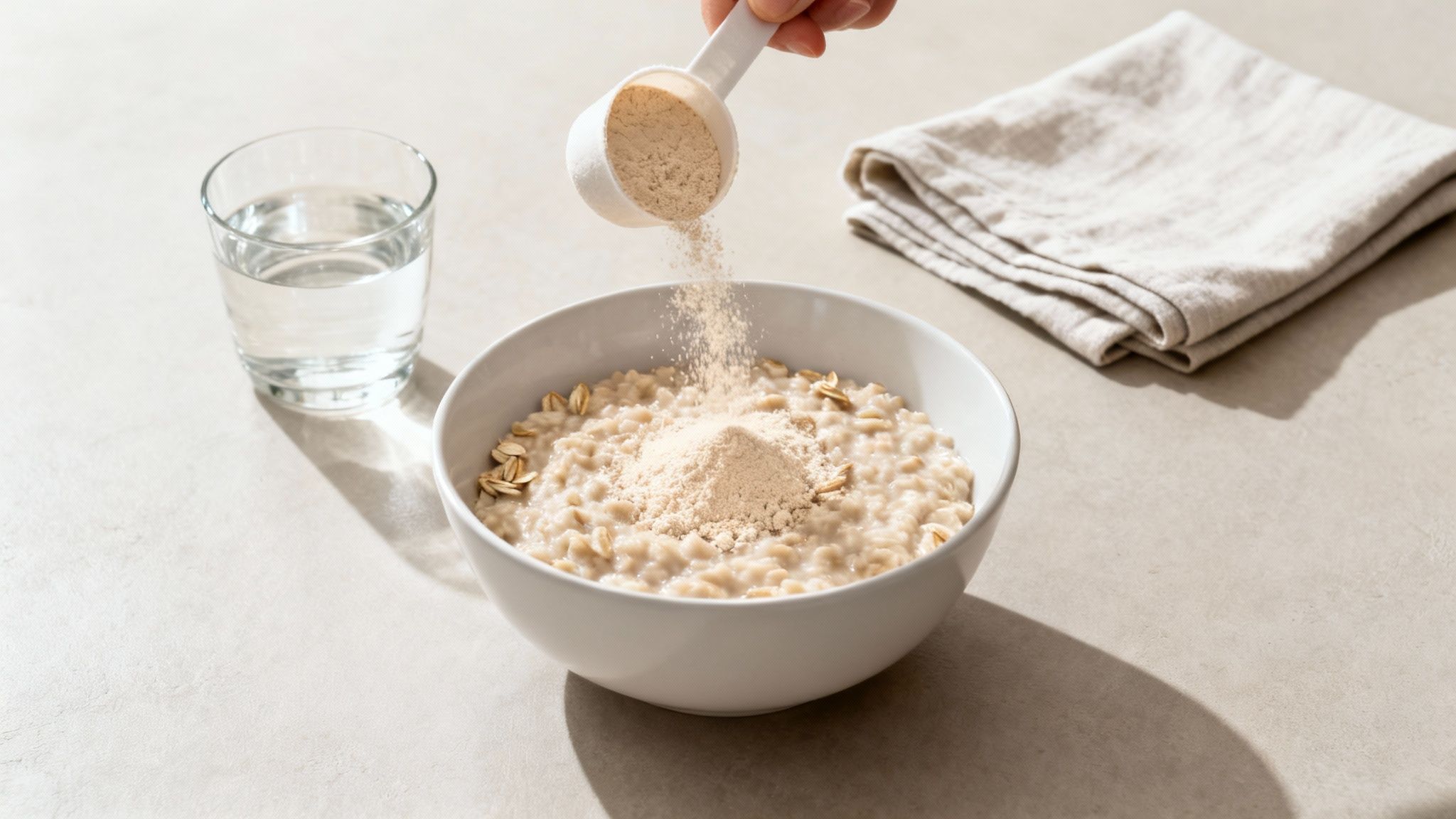
- Protein Porridge: This is a game-changer. Just stir a scoop of vanilla or unflavoured protein powder into your porridge after it's cooked. It makes it incredibly creamy and will keep you feeling full for hours.
- Yoghurt Bowls: Mix half a scoop of your favourite protein powder into a bowl of Greek yoghurt. Top it with some berries and a sprinkle of seeds for a perfectly balanced, high-protein start.
2. Delicious and Filling Smoothies
Smoothies are a classic for a reason—they're quick, easy, and you can customise them endlessly. They are a brilliant way to pack in protein alongside other vital nutrients.
-
The Green Machine Smoothie:
- 1 scoop vanilla or unflavoured protein powder
- 1 large handful of spinach (you won't taste it!)
- ½ a frozen banana
- 1 tablespoon of almond butter
- 200ml unsweetened almond milk
-
Berry Blast Smoothie:
- 1 scoop strawberry or vanilla protein powder
- 1 cup of mixed frozen berries
- 1 tablespoon of chia seeds
- 200ml of water or milk
Creative Ways to Use Unflavoured Protein
Unflavoured protein powder is a fantastic kitchen staple because you can add it to almost anything without messing with the taste. This opens up a whole world of possibilities beyond sweet shakes.
Enrich Your Everyday Cooking:
- Soups and Sauces: Whisk a scoop of unflavoured whey or collagen into things like tomato soup, stews, or pasta sauces right at the end of cooking. It adds a protein boost and can even help thicken them up.
- Baked Goods: You can substitute a small portion (about a quarter) of the flour in recipes for pancakes, muffins, or brownies with protein powder. It turns a treat into something a bit more balanced.
- Mashed Potatoes: Seriously, try this. Mix in a little unflavoured protein powder along with your milk and butter for a surprisingly satisfying and protein-packed side dish.
By finding just a few methods that fit your routine and taste buds, you can easily make protein powder a consistent and effective part of your weight loss strategy.
What to Look for on the Label
With the protein powder market booming, supermarket shelves are packed with options. It can be genuinely tough to separate the good from the not-so-good. Learning to decode the nutrition label is your most powerful tool for picking a powder that actually helps, rather than hinders, your weight loss progress.
A quick glance can tell you everything you need to know. Don't be swayed by flashy packaging; just turn the tub around and focus on the facts.
Check the Protein Content and Source
First things first: look at the protein per serving. You'll want a powder that provides at least 20-30 grams of protein in every scoop. This is the sweet spot for feeling full and protecting your muscle mass while you're in a calorie deficit.
Just as important is where that protein comes from. As we've covered, whey, casein, or a complete plant-based blend are all excellent choices. Make sure one of these high-quality sources is listed as the primary ingredient, not a cheap filler.
Scan for Added Sugars and Sweeteners
This is a complete non-negotiable for weight loss. So many protein powders are loaded with added sugars, which can quickly turn a healthy supplement into a high-calorie dessert. These hidden sugars can sabotage your efforts by piling on empty calories and causing blood sugar spikes that just lead to more cravings.
Aim for a product with less than 5 grams of sugar per serving—and ideally, as close to zero as you can get. Be mindful of artificial sweeteners like sucralose or aspartame, too. While they don't add calories, some people find they can cause digestive upset. Natural, zero-calorie alternatives like stevia or monk fruit are often much better tolerated.
Avoid Unnecessary Fillers and Additives
A high-quality protein powder should have a short, simple ingredients list. Be wary of tubs with a long list of unpronounceable chemicals, thickeners, and bulking agents. These are often thrown in to improve texture or cut manufacturing costs, but they offer zero nutritional benefit.
A clean label is a sign of a quality product. Your protein powder should really just contain protein, maybe a natural flavouring and sweetener, and very little else. If the ingredients list reads like a chemistry experiment, it’s probably best to put it back on the shelf.
These unnecessary extras can sometimes cause bloating or digestive discomfort. To learn more about what to watch out for, check out our simple guide on what are bulking agents and why they might be in your supplements.
The global protein powder market has become enormous, valued at USD 24.6 billion and expected to nearly double by 2034. With this growth, these products are now mainstream in UK supermarkets, making label-reading skills more important than ever. You can discover more insights about the protein powder market on gminsights.com to understand just how widespread these supplements have become.
Finally, keep an eye out for third-party certifications from organisations like Informed-Sport. These seals of approval verify that the product has been tested for banned substances and confirm that what’s on the label is actually what’s in the tub. This gives you an extra layer of confidence that you’re investing in a safe and effective product.
Myths, Misconceptions, and Potential Side Effects
Let's clear the air. When it comes to protein powder, there’s a lot of chatter out there—some of it true, some of it... not so much. While it’s a brilliant tool for most people on a weight loss journey, it’s worth separating the facts from the fiction so you can use it smartly and with total confidence.
One of the most common grumbles we hear is about digestive trouble, like bloating or gas. This is a classic sign you might be using a whey concentrate, which contains lactose. The fix is usually simple: switch to a whey isolate, which has virtually all the lactose filtered out, or give a gentle plant-based protein blend a try. Many people find that improving their gut health can also help with digestion.
And then there's the big one: the fear of getting "bulky." Let's be crystal clear—this is just not how it works. Piling on significant muscle mass takes a very specific recipe of intense, heavy resistance training paired with a consistent calorie surplus (eating more calories than you burn). A protein shake designed to support a calorie deficit for weight loss simply won't make you bulky.
A Few More Myths We Need to Bust
It’s amazing how certain myths stick around, causing unnecessary confusion. Let’s tackle them head-on so you know you’re using protein powder as the helpful tool it’s meant to be.
-
Myth 1: Protein powder is a meal replacement.
Not quite. While a shake is a super convenient option, it should never completely take the place of a balanced diet built on whole foods. Real food gives you fibre, vitamins, minerals, and other micronutrients that a shake just can't replicate on its own. A good multivitamin can help fill gaps, but whole foods should always be the priority. -
Myth 2: It’s bad for your kidneys.
This is a stubborn old myth that’s been widely debunked. For healthy individuals, extensive research shows that a high-protein diet does not harm kidney function. That said, if you have a pre-existing kidney condition, it’s absolutely essential to chat with your doctor first.
Think of protein powder as a supplement, not a magic potion. It's a convenient, effective way to help you hit your daily protein targets and keep hunger at bay. It supports a healthy diet, it doesn’t replace it.
When used correctly, protein powder is a perfectly safe tool for most people. By choosing a quality product that works for your body, you can make it a seamless part of your weight loss plan.
Answering Your Top Questions About Protein and Weight Loss
Let's clear up some of the most common questions that pop up when using protein powder for weight loss. Here are the straightforward answers to help you get the best results.
Can I Replace a Meal with a Protein Shake?
Yes, you absolutely can, especially when you're in a rush and need a quick breakfast or lunch. Think of it as a strategic tool for those hectic days, not a permanent fixture in your diet.
A protein shake is a fantastic stand-in, but it's not a long-term substitute for a balanced meal. Whole foods give you a wider spectrum of fibre, vitamins, and other essential micronutrients that a simple shake just can't match.
Will I Gain Weight If I Stop Using It?
Not at all. Stopping your protein supplement won't automatically lead to weight gain. At the end of the day, managing your weight is all about your overall diet and staying in a healthy calorie balance.
Protein powder is simply a convenient way to hit your protein targets and feel fuller while sticking to your calorie budget. As long as you continue to eat a nutritious, balanced diet after you stop using it, you'll hold onto your progress.
Think of protein powder as a supportive part of your strategy, not the entire strategy itself. Your long-term success is built on sustainable eating habits, whether a supplement is involved or not.
Should I Mix It with Water or Milk?
This one comes down to your personal goals and what your daily calorie budget looks like. There's no single right answer.
- Water: If you're keeping a close eye on calories, water is your best bet. It's the leanest option and won't add any extra energy to your shake, making it perfect for a strict weight-loss phase.
- Milk (Dairy or Plant-Based): Mixing with milk gives you a creamier, richer shake. It also adds a bit more protein, calcium, and other nutrients. Just be sure to factor those extra calories into your daily total.
How Quickly Will I See Results?
This is the big question, isn't it? The truth is, results depend on your entire lifestyle—your diet, your exercise routine, and how consistent you are with both. Protein powder isn't a magic wand for fat loss.
What you will notice pretty quickly, though, are the immediate benefits. Within the first couple of weeks, you'll likely feel fuller for longer between meals, find that nagging cravings are easier to manage, and recover a bit better after your workouts. These early wins make it so much easier to stick with your plan for the long haul.
Ready to find the perfect protein powder tailored to your unique health goals? Take the VitzAI quiz to get your personalised supplement recommendations in minutes. Start your journey at https://vitzai.com.
This article is for informational purposes only and is not medical advice. Always consult a qualified health professional before starting any new supplement or major lifestyle change.