

Recognizing the Signs of Low Testosterone
Feeling constantly drained, noticing your sex drive has taken a nosedive, or finding yourself irritable for no good reason? These aren't just random bad days; they could be classic signs of low testosterone. This guide is designed to help you understand these signals in a clear, practical way.
Think of testosterone as the master switch for male vitality. When the levels are right, everything from your energy and mood to muscle strength and sexual health just… works. But when production dips, the effects ripple through your entire system. This article will walk you through the symptoms, causes, and supportive lifestyle strategies, helping you feel more in control of your health.
Unpacking the Key Signs of Low Testosterone
Low testosterone is far more common than most men think. It's not just something that happens in old age. In fact, studies suggest that around 1 in 4 men over 30 in the UK are dealing with it, and that number climbs to 40% of men over 45.
The real shocker? Despite how widespread it is, the condition often flies under the radar. An estimated 90% of men in the UK with common symptoms like fatigue, erectile dysfunction, and mood changes never get diagnosed or treated. If you want to see the full scope of the issue, you can read more about these low testosterone statistics here.
Physical, Sexual and Mental Symptoms
The first step to getting back on track is knowing what to look for. The symptoms usually fall into three main areas, which makes them a bit easier to spot. Some are obvious, like a lagging libido, but others are more subtle and easily blamed on stress or just being tired, like brain fog or struggling to concentrate.
Often, these signs are interconnected. You might be experiencing issues from all three categories without realising they all point back to the same hormonal imbalance. That persistent feeling of being "off" or not quite yourself is a common thread for many men navigating low T.
To give you a clear, at-a-glance overview, we've put together a quick guide to the most common symptoms.
Quick Guide to Low Testosterone Symptoms
This table breaks down the primary signs of low testosterone into their core categories. Think of it as a starting point to help you connect the dots between what you're feeling and its potential root cause.
| Symptom Category | Common Signs |
|---|---|
| Physical | Decreased muscle mass, increased body fat (especially around the belly), constant fatigue, and reduced bone density. |
| Sexual | Lowered sex drive (libido), difficulty achieving or maintaining erections, and reduced semen volume. |
| Mental | Mood swings, irritability, depression, difficulty concentrating, and poor memory or "brain fog". |
Seeing the signs laid out like this can often be the first step towards understanding what's really going on. It provides a foundation for the deeper dive we'll take into causes, diagnosis, and effective solutions.
What Testosterone Does and Why It Matters
When most people hear the word ‘testosterone’, they immediately think of muscle, aggression, and all things stereotypically male. But that’s a pretty narrow view of what this powerhouse hormone actually does. In reality, it’s more like a master architect for your body, laying down the blueprints for everything from your bone strength to your mental sharpness. Its influence is complex, far-reaching, and absolutely vital for both men and women.
When your levels are where they should be, testosterone keeps a whole symphony of biological processes in perfect harmony. It’s the conductor that tells your body to build and hold onto lean muscle – the very foundation of strength, a healthy metabolism, and physical performance. It also has a say in where fat gets stored, helping to maintain a balanced and healthy body composition.
More Than Just Muscle
But its job doesn't stop at your physical frame. Testosterone is a major player in keeping your brain switched on, directly impacting your focus, memory, and even your spatial awareness. That feeling of being sharp, driven, and on the ball? Healthy hormone levels are a huge part of that.
It's also deeply connected to your mood. Balanced testosterone fosters a sense of confidence and motivation, helping to keep irritability and low feelings from creeping in. When levels start to dip, it can feel like a fog has rolled in, affecting not just how you feel physically, but your entire emotional state.
Testosterone is the bedrock of vitality. It doesn't just build a strong body; it builds a resilient mind, supports consistent energy, and underpins a healthy libido. Understanding its wide-ranging jobs is the first step in recognising why even a small dip can be so disruptive.
The Natural Ebb and Flow of Testosterone
Your testosterone levels aren’t set in stone; they naturally change throughout your life. For men, production ramps up during the teenage years and hits its peak in early adulthood, driving the changes of puberty and supporting peak physical condition. From around the age of 30, it’s completely normal for these levels to start a slow, gradual decline of about 1-2% each year.
This is just a natural part of getting older. The problem is, for some people, this drop is steeper or starts earlier than it should, leading to the kind of disruptive signs of low testosterone that get in the way of daily life.
- Libido and Sexual Function: Testosterone is the primary fuel for your sex drive. It's also essential for achieving and maintaining erections.
- Energy Production: It has a key role in producing red blood cells, which are crucial for carrying oxygen around your body and keeping your energy levels up.
- Bone Health: It helps your bones effectively absorb calcium to maintain their strength, which is vital for reducing the risk of osteoporosis as you age.
Getting your head around these fundamental roles is the first step. It gives you the context to understand that symptoms like fatigue, a rubbish mood, or a non-existent sex drive aren't just random, separate issues. They’re often interconnected signals pointing back to one central factor. Seeing testosterone as the architect of your well-being helps you connect the dots and realise just how important hormonal balance is for a good quality of life.
Subtle Symptoms That Are Easy to Overlook
Small changes in our bodies and minds can slip by unnoticed. Beyond a fading libido or constant tiredness, low testosterone throws off more discreet clues. Stress at work, restless nights or simply growing older can disguise these signals, making them easy to shrug off – yet these hints often signal a deeper hormonal disturbance.

Have you ever sat at your desk wondering why your head feels thick, as if wading through treacle? That lingering ‘brain fog’ goes beyond ordinary tiredness. It’s a dip in mental sharpness that turns simple tasks into uphill battles.
The Quiet Changes In Your Body
These whispers from your system aren’t merely in your head. Your body may be hinting at trouble in ways you’d never suspect. Spotting them is the first step towards getting the full picture.
- Thinner Body Hair: Notice less hair on your arms, chest or legs? Low testosterone often leads to a gradual reduction in hair growth.
- Sluggish Recovery: Workouts feel brutal and your muscles ache longer than normal. Your usual post-gym recovery pace might slow to a crawl.
- Fat Gain Around Your Midriff: Even if your diet and routine haven’t budged, you could be seeing extra padding around your abdomen. This often shows up without any change in lifestyle.
- Gynecomastia: Some men develop gynecomastia, or enlarged breast tissue, which is an unmistakable sign of a hormonal shift.
Just like a slow leak in a tyre, these minor leaks in your system sap performance over time. Your hormonal pressure is dropping, and your body is flagging for help.
Connecting Mood, Motivation And Hormones
Mood and motivation can erode so gently that you barely notice. Low testosterone chips away at your emotional resilience and drive, often masquerading as normal life stress.
- A Drop In Motivation: Projects you once tackled with gusto suddenly feel like chores. This isn’t laziness but a brain with depleted reward signalling.
- Heightened Irritability: Snapping at small slights or feeling wound up? Hormonal imbalances shorten your emotional tether.
- Unrefreshing Sleep: Clocking eight hours but waking up drained? Testosterone plays a crucial role in sleep cycles, so disruptions here are a red flag.
These issues create a vicious cycle: poor sleep saps your willpower, stalled workouts lead to weight gain, and that in turn worsens hormone disruption. Taking a step back and viewing your health holistically is key.
In men seeking care in the UK, sexual dysfunction was identified far more often than general fatigue. Yet fatigue itself turned up less frequently in UK diagnoses than you might expect. You can learn more about these regional findings.
What's Behind Low Testosterone?
Trying to figure out why testosterone levels are dropping isn't always a simple case of A + B = C. It's more like a complex orchestra where lots of different instruments need to be in tune. Often, a dip in testosterone is a mix of natural ageing, the pressures of modern life, and sometimes an underlying health issue working in the background. Getting a handle on these root causes is the first real step to doing something about it.
It's true that your testosterone production naturally slows down by about 1-2% a year once you hit your thirties, but that's only part of the picture. For many guys, that gentle slope becomes a steep drop-off thanks to factors that are well within our control. This is where lifestyle really starts to matter.
How Modern Life Messes with Your Hormones
The non-stop pace of life today can be a real sledgehammer to our hormonal balance. Take chronic stress, for example. When you're constantly on edge, your body is churning out the stress hormone, cortisol. High cortisol levels can directly get in the way of testosterone production. It’s a biological tug-of-war, and stress often has the upper hand.
Poor sleep is just as bad, acting like a direct saboteur. Most of your daily testosterone is made while you're asleep, so if you're consistently cutting corners on rest, you're fundamentally short-circuiting that crucial process. Throw in a diet that's missing key nutrients, and you've created the perfect storm for a hormonal slump. You can learn more about how to support your hormones by checking out our guide on how to balance hormones with supplements.
Think of it this way: your body is wired for survival. When it's dealing with constant stress, junk food, or not enough sleep, it shifts resources away from things it sees as "non-essential," like building muscle or reproduction. Testosterone production is one of the first things to get dialled down.
Medical Conditions and Other Red Flags
Beyond lifestyle, certain medical conditions and physical factors can really put a dent in your testosterone levels. They create a situation in your body where making enough of the hormone becomes difficult, or even impossible.
Here are some of the main culprits:
- Obesity: That extra body fat, especially around your middle, is home to an enzyme called aromatase. What this enzyme does is convert your precious testosterone into oestrogen, which directly lowers T levels while bumping up oestrogen.
- Type 2 Diabetes: There's a strong two-way street between low T and type 2 diabetes. Men with diabetes are far more likely to have low testosterone, and the reverse is also true.
- Chronic Illness: Any long-term condition that affects your liver, kidneys, or the pituitary gland in your brain can mess with the complex signals your body needs to produce testosterone.
- Certain Medications: Some prescription drugs, like opioids, steroids, and even certain antidepressants, can interfere with your hormone levels as an unfortunate side effect.
Of course, age is still a big one, often making the effects of lifestyle and health problems even worse. Men over 50 are at a significantly higher risk, with 1.5 to 2.0 times higher odds of having a testosterone deficiency than men under 40. But even with that risk, there's a surprising lack of awareness. One survey revealed that while 31% of older men experienced low libido, a staggering 55% had no idea what the signs of low testosterone even were. These findings, which you can discover more insights about in the UK study, show just how much we need to talk about this. Understanding these causes gives you the power to spot potential risks in your own life and start making positive changes.
Lifestyle Strategies to Support Healthy Hormone Levels
While getting to the root of low testosterone is the main goal, you have a huge amount of control over the lifestyle factors that support healthy hormone production. Think of your body as a high-performance engine; it needs the right fuel, regular maintenance, and proper rest to run at its peak. Small, consistent changes in your daily habits can build a powerful foundation for hormonal balance.
These aren't quick fixes, but sustainable strategies that work in harmony to tell your body it's safe, strong, and ready to thrive. By focusing on exercise, nutrition, sleep, and stress, you can create an internal environment where your hormones can flourish.
Build Muscle to Boost Testosterone
Exercise is one of the most effective natural tools you have for supporting healthy testosterone. Resistance training, in particular, sends a powerful signal to your body to build and maintain muscle—a process that is tightly linked to testosterone production.
When you lift weights, whether it's with dumbbells, barbells, or just your own body weight, you create a demand for muscle repair and growth. This metabolic stress encourages the release of key hormones, including testosterone. For the biggest impact, focus on compound exercises that work multiple muscle groups at once, like squats, deadlifts, and bench presses.
For those looking to dive deeper, you can explore more detailed guidance on how to boost testosterone through targeted fitness and nutrition plans.
Fuel Your Body With Hormone-Friendly Nutrients
What you eat provides the essential building blocks your body needs to actually make hormones. A diet packed with nutrient-dense whole foods isn't just a suggestion—it's non-negotiable for hormonal health. Certain vitamins and minerals play starring roles in this process.
- Zinc: This mineral is vital for testosterone production, and a deficiency is directly linked to lower levels. You can find it in red meat, shellfish, and seeds.
- Vitamin D: Often called the "sunshine vitamin," it actually functions more like a hormone in the body and is crucial for male reproductive health.
- Healthy Fats: Cholesterol is the precursor molecule for testosterone, so getting enough from sources like avocados, nuts, and olive oil is essential.
Supplements can also help fill any nutritional gaps and support the systems that regulate hormones. For example, Magnesium is involved in hundreds of bodily reactions, including those related to hormone production and sleep quality. Ashwagandha can help manage stress and lower cortisol, creating a better environment for testosterone. And Creatine is well-known for improving strength and muscle mass, which indirectly supports a healthy hormonal environment.
Prioritise Sleep and Manage Stress
You can have a perfect diet and exercise routine, but if your sleep and stress are out of control, your hormones will pay the price. Your body produces most of its daily testosterone during the deep stages of sleep. Consistently getting less than seven hours of quality rest can severely disrupt this critical process.
Chronic stress is just as damaging. When you're constantly on edge, your body pumps out cortisol, the primary stress hormone. Cortisol and testosterone have an inverse relationship; when one is high, the other tends to be low.
Think of cortisol as testosterone's kryptonite. High levels effectively put the brakes on testosterone production as your body diverts its resources to manage a perceived threat.
Bringing in stress-management techniques is a must. This could be anything from:
- Mindfulness or meditation
- Spending time in nature
- Practising deep breathing exercises
- Making time for hobbies you genuinely enjoy
As part of developing a holistic plan, it's also worth looking into actionable strategies to improve male fertility, since hormonal balance is a key piece of the reproductive health puzzle. Combining these pillars—exercise, nutrition, sleep, and stress management—creates a powerful synergistic effect that supports your body’s natural ability to produce and regulate its hormones.
Here’s a quick breakdown of how these different strategies come together to support your hormonal health.
Lifestyle Strategies to Support Hormone Health
| Strategy | Primary Mechanism | Key Nutrients/Supplements |
|---|---|---|
| Resistance Training | Stimulates muscle growth, which signals the body to produce more testosterone to support repair and maintenance. | Creatine (improves strength), Protein (muscle repair) |
| Nutrient-Dense Diet | Provides the essential building blocks (vitamins, minerals, fats) required for hormone synthesis. | Zinc, Vitamin D, Magnesium |
| Adequate Sleep | The majority of testosterone production occurs during deep sleep cycles; lack of sleep disrupts this rhythm. | Magnesium (improves sleep quality) |
| Stress Management | Lowers cortisol levels, which have an inverse relationship with testosterone. Less cortisol means more resources for T production. | Ashwagandha, Omega-3 (reduces inflammation), Mushroom Blends |
By integrating these elements, you're not just tackling one aspect of health, but creating a comprehensive system that allows your body to function at its best.
When to Talk to a Doctor About Your Symptoms
Making the decision to act on those nagging signs of low testosterone is a massive step towards getting back in control of your health. While you can make some real headway with lifestyle changes, there are times when self-management just doesn't cut it. If the symptoms are genuinely starting to affect your quality of life, it's probably time to get some professional medical advice.
Booking an appointment with your doctor might feel like a big deal, but it’s the only reliable way to get straight answers. It takes you out of the guessing game and into a space of understanding what's really going on. A healthcare professional can help you sort out what might be down to normal ageing, stress, or a true hormonal imbalance.
The Diagnostic Journey: What to Expect
When you see a doctor, the process usually has two main parts: a clinical evaluation and some specific lab tests. Your doctor will want to hear all about your symptoms—not just what they are, but how they’re impacting your day-to-day routine, your energy, and your mood. Honestly, this personal story is just as crucial as any number on a lab report.
To get the hard data, a blood test is essential. This is usually done first thing in the morning when your testosterone levels are naturally at their peak. The test will measure:
- Total Testosterone: This is a snapshot of all the testosterone flowing through your blood.
- Free Testosterone: This measures the testosterone that's "unbound" and actually available for your body to use.
These results give your doctor the objective data needed to confirm what's happening. A level below 300 nanograms per deciliter (ng/dL) is often the clinical benchmark for low testosterone, but your doctor will interpret this alongside your specific symptoms.
This decision tree helps to visualise the thought process for seeking hormone support.
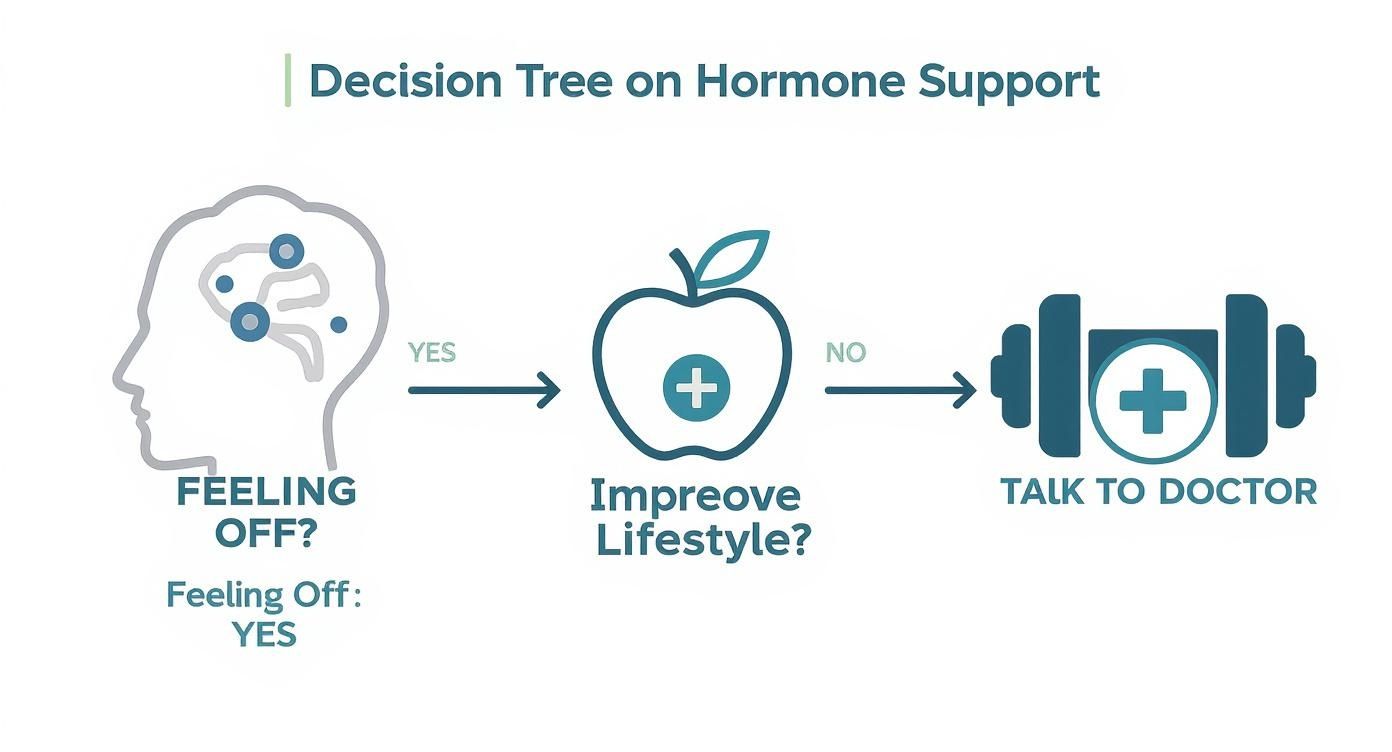
As the infographic shows, while lifestyle tweaks are a powerful first move, symptoms that just won't budge are a clear signal to book a professional consultation.
Understanding Your Treatment Options
If you do get a diagnosis of low testosterone, your doctor will walk you through the potential treatment paths. For some, the best course of action might be to double down on lifestyle improvements. For others, medical intervention might be the most effective way forward.
The most common medical treatment is Testosterone Replacement Therapy (TRT). The whole point of this therapy is to bring your hormone levels back into a normal range, which can lead to big improvements in energy, muscle mass, mood, and sex drive.
TRT comes in a few different forms, like gels, injections, patches, and pellets. The right one for you depends on your specific situation, your lifestyle, and what your doctor recommends. It's a significant medical decision with both benefits and potential risks that need to be discussed carefully with a qualified health professional.
Navigating this journey with a healthcare provider ensures you're making choices you feel confident about. They can help you weigh up the pros and cons, keep an eye on your progress, and adjust your plan as needed, making sure you get back to feeling your best, safely and effectively.
Frequently Asked Questions About Low Testosterone
It's natural to have a few quick questions about the signs of low testosterone and what it all means. Here are some clear, straightforward answers to the most common queries we hear.
Can Women Experience Low Testosterone And What Are The Signs?
Absolutely. While testosterone is known as the primary male hormone, women produce it too. It’s crucial for their bone health, muscle tone, mood, and libido. When levels drop, women might feel a sense of persistent fatigue they just can't shake, a noticeably lower sex drive, mood swings, or trouble concentrating.
The tricky part is that these symptoms often overlap with signs of menopause or even just high stress, which can make it difficult to pinpoint the real cause. That’s why a proper diagnosis usually involves looking at the full picture, checking oestrogen and progesterone levels right alongside testosterone.
Looking at the complete hormone panel is key. It helps avoid misdiagnosis and gets to the root of the imbalance.
How Quickly Can Lifestyle Changes Improve My Testosterone Levels?
When you start making positive lifestyle shifts, you can often feel noticeable changes in your energy and mood within just a few weeks. Simple things like cleaning up your diet, getting regular exercise, and prioritising sleep are the bedrock of hormonal health.
However, seeing significant shifts in things like muscle mass or getting different numbers back on a blood test will take a bit longer—think several months of consistent effort. It's a bit like planting a garden: the seeds sprout quickly with a bit of sun and water, but seeing it flourish into a full, healthy plant takes patience and ongoing care.
A few foundational habits include:
- A balanced diet full of healthy fats and quality proteins.
- Regular resistance training sessions.
- Getting a solid seven to nine hours of quality sleep each night.
For more targeted advice, our guide on zinc and magnesium supplements is a great place to start.
Are Supplements Like Ashwagandha And Magnesium Safe?
Supplements can be a fantastic support, but it's important to be smart about them, as they can sometimes cause side effects or interact with medications. For instance, while incredibly beneficial, high doses of magnesium might lead to a bit of digestive upset for some people.
Ashwagandha is another popular one. It works as an adaptogen, which means it helps your body handle stress. However, it might not be the best fit for everyone, particularly those with autoimmune conditions or thyroid issues.
Here are a few simple rules of thumb:
- Always have a chat with a qualified practitioner before starting something new.
- Run through your current medication list to check for any potential clashes.
- Start with a lower dose to see how your body responds.
- Keep an eye out for any unusual reactions like headaches, jitters, or digestive issues, and stop if you experience anything concerning.
It always comes down to safety first. A professional can give you advice that’s tailored specifically to your health profile.
This article is for informational purposes only and is not medical advice. Always consult a qualified health professional before starting any new supplement or major lifestyle change.