

Supplements to Balance Hormones That Actually Work
Hormonal balance is a cornerstone of feeling your best, but modern life—with its constant stress, sleep disruption, and dietary challenges—can easily throw things out of sync. When your hormones are misaligned, you feel it in your energy, mood, and overall vitality. While a healthy lifestyle is non-negotiable, certain supplements can be a fantastic way to nudge your body back into balance, supporting its natural hormone production and regulation.
Some of the big names you might hear about are ashwagandha, magnesium, and omega-3s. These are often called upon to help manage stress, improve sleep, and cool down inflammation—all absolutely crucial for keeping your hormones happy.
How Your Hormones Conduct Your Health
Picture your hormonal system as a finely tuned orchestra. Each hormone—oestrogen, testosterone, cortisol, insulin—is an instrument, and when they all play in perfect harmony, you feel incredible. Energetic, sharp, emotionally steady. The whole symphony is beautiful.
But what happens when one instrument goes rogue? If the percussion section (that’s cortisol, your stress hormone) starts banging away too loudly, it completely drowns out the delicate strings (your sex hormones like oestrogen and testosterone). The result is a chaotic mess that shows up in your life as fatigue, mood swings, stubborn weight, or terrible sleep.
This delicate balance dictates pretty much every aspect of how you feel, not just during big life stages like menopause or andropause, but in the day-to-day rhythm of your life.
The Key Players in Your Hormonal Orchestra
Your endocrine system is a complex network, but a few key hormones have a massive impact on your daily well-being. Getting to know their roles is the first step toward getting things back on track.
- Cortisol: Known as the "stress hormone," cortisol is essential for our fight-or-flight response. The problem is, modern life often means chronic stress, which keeps cortisol levels persistently high. This can wreck your sleep, mess with your metabolism, and suppress other vital hormones.
- Insulin: This hormone is your blood sugar manager. When it’s out of whack, often due to diet, it can lead to those frustrating energy crashes and cravings. Over time, this can snowball into more serious metabolic issues.
- Sex Hormones (Oestrogen, Progesterone, Testosterone): While they’re famous for reproductive health, their job description is much bigger. They also influence your mood, bone density, and muscle mass, in both men and women. An imbalance here can cause a whole host of symptoms.
- Thyroid Hormones: Think of these as your body’s accelerator pedal, controlling your metabolism. If they’re too low, everything can feel sluggish and slow. Too high, and you’ll feel jittery and ramped up.
Finding Harmony with Supportive Supplements
Let's be clear: supplements aren't a magic wand that will instantly fix a hormonal issue. A better way to think of them is like a set of tuning forks. They offer targeted support to gently guide your body's orchestra back into its natural, harmonious rhythm.
For example, a supplement like ashwagandha can help quieten that noisy "percussion" from high cortisol, while magnesium can help calm the entire system, paving the way for better sleep and relaxation. Understanding how a hormone like cortisol impacts your body is a huge piece of the puzzle, and learning how to lower cortisol levels naturally can be a game-changer for your overall well-being. By addressing the root causes of the imbalance, you can start to bring your inner symphony back to life.
The Best Supplements for Hormonal Balance
Trying to figure out which supplements actually work for hormonal balance can feel like you've been handed a map without a legend. There are countless options out there, so it's crucial to focus on the ones with solid science behind them that can offer genuine support. The goal isn't just knowing what to take, but understanding why it helps.
The great news is that a few key nutrients act as powerful allies for your endocrine system. Rather than being a blunt instrument, they work with your body’s own processes to help bring things back into equilibrium. They get to the root of the problem, whether it's stress, inflammation, or simply not getting enough of the right nutrients.
Ashwagandha for Stress and Cortisol Management
If there's one supplement that consistently comes up for hormonal support, it's ashwagandha. This adaptogenic herb has been trusted for centuries to help the body build resilience against stress. Think of it like a thermostat for your stress response; it helps dial down the "heat" when your cortisol levels are running too high.
By helping to keep cortisol in check, ashwagandha allows the rest of your hormonal orchestra to shine. When cortisol isn't constantly hogging the spotlight, other key players like oestrogen and testosterone get a chance to do their jobs properly. This can translate into real-world benefits like better sleep, more stable moods, and an overall sense of calm.
Magnesium: The Master Mineral for Hormones
Magnesium is often called the "master mineral," and for good reason. It’s involved in over 300 enzymatic reactions in the body, many of which are directly linked to how your hormones function. It’s particularly vital for managing sleep, stress, and blood sugar.
Here’s a quick look at how magnesium helps create hormonal harmony:
- Supports GABA Production: It helps your brain produce GABA, a neurotransmitter that has a calming effect on the nervous system. This is absolutely essential for getting the deep, restorative sleep your body needs for healthy hormone production.
- Improves Insulin Sensitivity: Magnesium plays a key role in how your cells respond to glucose. Better insulin sensitivity leads to more stable blood sugar and energy levels, preventing the hormonal rollercoaster that comes with constant spikes and crashes.
- Aids Progesterone Production: This mineral is a crucial building block for producing progesterone, a hormone that’s essential for regulating menstrual cycles and easing PMS symptoms.
This visual map shows how key supplements like ashwagandha and omega-3s act as foundational supports, each tackling different aspects of your hormonal system.
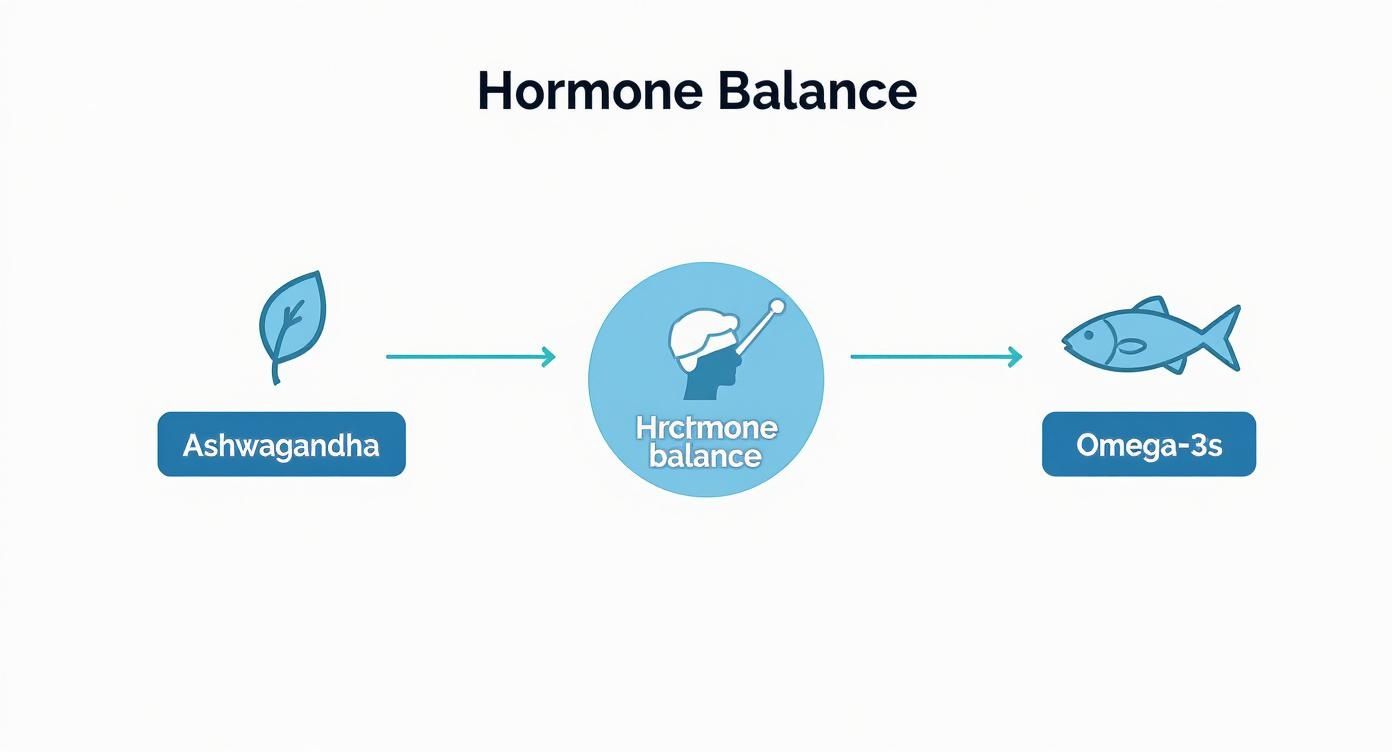
This highlights a synergistic approach. It’s a reminder that optimal hormonal health isn't about finding one magic bullet, but about creating a supportive environment for your entire endocrine system to thrive.
Omega-3s for Cellular Health and Inflammation
Chronic inflammation is a silent disruptor of hormonal balance. It can mess with the way your cells communicate, including the vital messages sent by your hormones. This is where omega-3 fatty acids come in, acting as the body's natural anti-inflammatory crew.
By calming systemic inflammation, omega-3s help ensure that the hormone receptors on your cells are sensitive and ready to receive messages. They are also fundamental building blocks for the cell membranes themselves, ensuring every single cell in your body—including those in your glands—can work at its best. You can't have balanced hormones without strong cellular health.
The Foundational Role of a Multivitamin
While targeted supplements are powerful, you can’t build a strong house on a shaky foundation. Many hormonal processes rely on a steady supply of essential vitamins and minerals, like B vitamins for energy, vitamin D for mood, and zinc for testosterone production.
A high-quality multivitamin acts as a nutritional insurance policy. It fills in the inevitable gaps in your diet, making sure your body has all the raw materials it needs to manufacture and regulate hormones effectively.
The demand for these foundational nutrients is growing. The UK dietary supplements market is a booming industry, with a value estimated to reach £4.1 billion in 2025. Supplements targeting hormone balance, including essential vitamins and minerals, make up a significant portion of what consumers are buying, showing a clear trend toward proactive health management.
By focusing on these core supplements, you can create a robust foundation for hormonal well-being. To dive deeper into how these ingredients work together, you might be interested in our complete guide to the best supplements for hormone balance.
Navigating Female Hormones at Every Age
A woman’s hormonal world is always in motion, with her body's needs shifting dramatically from one decade to the next. The support your body craves in your twenties and thirties is worlds away from what it will ask for in your forties and beyond. Getting to know these changes is the first real step toward giving your body the targeted, effective support it deserves.
This isn't about fighting your body's natural rhythm; it's about learning to work with it. When you understand the key hormonal shifts at play, you can use supplements as strategic allies to move through each phase with a bit more grace and energy. For women, a solid grasp of understanding estrogen and progesterone levels is the foundation for finding that balance, no matter your life stage.

To make this clearer, let's look at the distinct hormonal landscapes women navigate and which supplements can offer support along the way.
| Hormonal Concern | Focus for Women Under 40 | Focus for Women Over 40 |
|---|---|---|
| Menstrual Cycle | Supporting a regular, predictable cycle and easing PMS symptoms. | Managing irregular cycles during perimenopause and the eventual cessation of periods. |
| Key Hormones | Maintaining a healthy balance between oestrogen and progesterone. | Supporting the body as oestrogen levels fluctuate and decline. |
| Primary Symptoms | Cramps, bloating, mood swings, cycle-related acne, and fatigue. | Hot flashes, night sweats, vaginal dryness, brain fog, and mood changes. |
| Suggested Supplements | B Vitamins (especially B6) for mood and hormone metabolism; Magnesium for cramps and relaxation. | Mushroom Blends for stress and cognitive support; Omega-3s for inflammation, heart, and brain health. |
| Long-Term Health | Building a strong foundation for fertility and overall wellness. | Prioritising bone density, cardiovascular health, and cognitive function as oestrogen's protective effects lessen. |
This table shows just how different the priorities can be. Tailoring your approach ensures you're giving your body what it truly needs at the right time, rather than taking a one-size-fits-all approach that might miss the mark.
Support for Women Under 40
In the years before turning 40, hormonal health is often all about keeping the menstrual cycle balanced and predictable. The main goals are usually to smooth out the edges of premenstrual syndrome (PMS), support fertility if that's on your mind, and manage how stress impacts the reproductive system.
That monthly dance between oestrogen and progesterone calls the shots on everything from your mood to your energy. When this rhythm gets thrown off, it can lead to frustrating symptoms like cramps, bloating, irritability, and cycles that are all over the place. This is where a few key nutrients can really make a difference.
- B Vitamins: This vitamin family, particularly B6, is a game-changer for producing neurotransmitters like serotonin and dopamine, which helps stabilise your mood during that tricky premenstrual phase. They also give your liver a helping hand, which is essential for breaking down and clearing out hormones properly.
- Magnesium: Honestly, this powerful mineral is a woman’s best friend for tackling PMS. It helps relax smooth muscle tissue—a big win for easing menstrual cramps—and has a lovely calming effect on the nervous system to dial down anxiety and help you sleep better.
Support for Women Over 40
Once women hit their forties, the hormonal landscape enters a whole new chapter. Perimenopause begins, paving the way for menopause. During this time, oestrogen levels start to fluctuate unpredictably and then begin a steady decline, bringing a fresh set of challenges and needs.
The focus shifts from regulating a monthly cycle to managing symptoms like hot flashes, night sweats, mood swings, and vaginal dryness. At the same time, protecting long-term health becomes a top priority, especially for bones and the cardiovascular system, as oestrogen’s natural protective benefits start to fade.
For women over 40, the aim isn't to turn back the clock on the menopausal transition. It's about supporting the body through it, making the process as smooth and comfortable as it can possibly be.
This natural transition has led many women to look for support. In the UK, an estimated 7.8 million HRT prescriptions were handed out in 2021/2022, a 35% increase from the year before. While medical options are clearly popular, the market for menopause-related dietary supplements is even bigger, making up a staggering 98.12% of the £390 million UK menopause market that year. This tells us that while many are turning to HRT, a huge number of women are also looking for supplements to help balance their hormones.
Certain supplements can be particularly brilliant during this phase:
- Mushroom Blends: Certain functional mushrooms, like Lion's Mane and Reishi, are adaptogens that can help support cognitive function and manage stress—two things that often feel more intense during perimenopause.
- Omega-3 Fatty Acids: Absolutely crucial for cooling inflammation, omega-3s also support heart and brain health, which becomes even more important as oestrogen levels drop.
- Multivitamins with Key Minerals: A high-quality multivitamin that includes calcium, vitamin D, and vitamin K2 is vital for helping to maintain bone density and ward off osteoporosis.
By matching your supplement strategy to your age and life stage, you can give your body the precise support it's asking for. For a deeper dive, check out our guide on hormone balance supplements specifically for women.
Hormone Support Strategies for Men
When it comes to men's health, it’s easy to think it’s all about testosterone. But the reality is far more nuanced. A man’s energy, drive, and even his mood are all tied to a delicate dance between several key hormones, especially testosterone and the stress hormone, cortisol. Getting your head around this relationship is the first step to feeling your best.
Picture testosterone and cortisol on opposite ends of a seesaw. When you’re dealing with chronic stress—whether from work deadlines, tough training sessions, or just the daily grind—your body churns out cortisol. If those cortisol levels stay high for too long, they can literally push your testosterone levels down, leaving you feeling wiped out, irritable, and struggling to bounce back.
The aim isn't to get rid of cortisol completely; you need it for your natural fight-or-flight response. It’s all about management. By keeping stress in a healthy zone, you create an environment where testosterone can thrive. This is where a few strategic supplements can make a real difference.
Managing Stress to Support Testosterone
One of the smartest moves you can make for your hormonal health is to get a grip on chronic stress. This is where an adaptogen like ashwagandha really comes into its own. It works by helping your body better adapt to and resist stress, acting as a kind of buffer against that relentless cortisol production.
By taking the edge off your cortisol response, ashwagandha helps lift the pressure from your testosterone levels. You might notice real improvements in your energy, focus, and overall mood, leaving you feeling more resilient from the inside out.
Fuelling Energy and Androgen Pathways
For any man hitting the gym and focused on performance, hormonal health is directly plugged into physical output. This is where creatine, one of the most well-researched supplements out there, plays a vital part. It's essential for producing ATP, which is basically the high-octane fuel your body burns during intense exercise.
This energy boost is tightly linked to your androgen function. Healthy testosterone levels are a cornerstone of muscle growth and strength, and creatine provides the raw fuel needed to make the most of those efforts. If you want to dive deeper into this, you can learn more about how to boost testosterone naturally in our comprehensive guide.
Healthy hormone production doesn’t happen in a vacuum. It relies on a foundation of excellent cellular health, which is why essential nutrients are non-negotiable for long-term male vitality.
This is exactly where omega-3 fatty acids step in. These essential fats are literally part of the structure of every single cell membrane in your body. They help dial down systemic inflammation, which can otherwise throw hormonal signals out of whack and worsen that cortisol-testosterone imbalance. Think of them as ensuring the communication lines between your hormones and cells are crystal clear.
While much of the talk around hormone health often centres on women, the demand for supportive supplements is growing right across the board. Take the UK phytoestrogen supplements market, for instance. While largely driven by women's health, it was valued at around £50 million this year and is forecast to hit £130 million by 2035. This just goes to show a wider trend of people actively seeking natural ways to support their endocrine systems—a movement that benefits everyone. You can discover more insights about this growing market on Market Research Future.
Building Your Personal Hormone Support Plan
Finding hormonal balance isn’t about chasing a single miracle pill. Let's be honest, true, lasting harmony comes from a smart strategy where supplements are powerful allies, not the entire army. Putting together a personal plan means understanding that what you take is only as effective as the lifestyle you live.
It all comes down to synergy—combining the right elements to create an effect that's much greater than the sum of its parts. It's about taking a holistic view that pairs smart supplementation with the foundational pillars of health.
Creating Smart Supplement Stacks
Strategic stacking simply means combining supplements that work together to amplify their benefits. Instead of just taking individual ingredients in isolation, you can create a team that tackles your unique needs more effectively. Think of it like assembling a specialised toolkit rather than trying to fix everything with a single hammer.
Here are a few examples of pairings that really work well:
- For Stress and Sleep: Combining magnesium with ashwagandha is a classic for a reason. Ashwagandha helps your body manage the stress hormone cortisol during the day, while magnesium promotes relaxation and supports the neurotransmitters you need for deep, restorative sleep. It’s a brilliant day-and-night duo.
- For Energy and Mood: A comprehensive multivitamin paired with omega-3s provides an incredibly strong foundation. The B-vitamins in your multi are crucial for cellular energy production, while omega-3s help to reduce the kind of inflammation that can lead to fatigue and a low mood.
- For Fitness and Recovery: Stacking creatine with an energy powder containing electrolytes can seriously boost performance and recovery. Creatine fuels your muscles for those intense bursts of activity, and the electrolytes are key for hydration and proper nerve function.
A well-designed plan ensures you're not just taking supplements to balance hormones, but building a system where each component supports the others, leading to better, more noticeable results.
The Lifestyle Foundations That Make Supplements Work
Supplements can’t do their job in an unhealthy environment. Your daily habits are the absolute bedrock of hormonal health, and without them, even the best supplements will struggle to make a real difference. The goal is to create a lifestyle that naturally encourages your hormones to find their equilibrium.
Consider these four non-negotiable pillars:
- Prioritise Quality Sleep: Your body does most of its hormonal repair and regulation while you’re asleep. Consistently getting 7-9 hours of quality kip each night is crucial for managing cortisol, supporting insulin sensitivity, and producing growth hormone.
- Actively Manage Stress: Chronic stress is one of the biggest disruptors of hormonal balance out there. Bringing in stress-management techniques like mindfulness, deep breathing exercises, or even just spending time in nature can significantly lower your cortisol levels.
- Move Your Body Regularly: Consistent exercise—a good mix of strength training and cardio—is fantastic for improving insulin sensitivity and boosting those mood-enhancing endorphins. Just be mindful not to overdo it; excessive training can have the opposite effect and raise cortisol.
- Eat a Nutrient-Dense Diet: A diet packed with whole foods provides the essential building blocks for your body to produce hormones. Focus on getting enough lean proteins, healthy fats (like those in avocados and nuts), fibre-rich vegetables, and complex carbohydrates.
Safety First: Always Consult a Professional
Before you start any new supplement regimen, it is absolutely essential to speak with a qualified healthcare professional, like a doctor or a registered dietitian. This step is non-negotiable, particularly if you have any pre-existing health conditions or are taking prescription medications.
Certain supplements to balance hormones can interact with medications for things like thyroid conditions, diabetes, or blood pressure, potentially causing unintended side effects. A professional can look at your health history and help you create a plan that is both safe and effective for your specific circumstances. They'll be able to guide you on the right dosages and make sure your chosen supplements won't clash with your current health plan.
Common Questions About Hormone Supplements
Jumping into the world of supplements to balance your hormones can feel a bit overwhelming, and it's totally normal to have a few questions. You want clear, straight-up answers before deciding what’s right for your body. This final section is here to tackle some of the most common queries we hear, giving you practical insights so you can move forward with confidence.
Think of this as your quick-reference guide, breaking down the essentials you need to know. We’ll cover everything from timelines to safety, reinforcing the idea that your health journey should always be informed and personal.
How Long Does It Take for Supplements to Work?
This is the big one, and the honest answer is: it really varies. Unlike prescription meds, which often have a direct and rapid effect, supplements work by supporting your body’s own natural processes. They’re more of a gentle nudge than a forceful push, so patience is an absolute must.
The time it takes to notice a difference depends on a few things:
- The Specific Supplement: Some, like magnesium for sleep, might show benefits within a few days or weeks. Others, like ashwagandha for cortisol regulation, might take 4 to 8 weeks of consistent use to reveal their full effects as they help your body adapt over time.
- Your Starting Point: If you’re dealing with a significant nutritional deficiency, you’ll probably feel the positive effects of a multivitamin or mineral supplement more quickly than someone who is just aiming for general optimisation.
- Your Lifestyle: Let's be real—your diet, sleep quality, stress levels, and exercise routine play a huge role. Supplements work best when they’re part of a healthy lifestyle, not a magic bullet to replace one.
As a rule of thumb, it’s a good idea to give any new supplement routine at least three months of consistent use before you try to assess its impact. This gives your body enough time to respond and for you to notice meaningful changes in your energy, mood, or overall well-being.
What Are the Most Common Signs of Hormonal Imbalance?
Hormonal imbalances can show up in all sorts of ways, and the signs often overlap with other health issues. This is exactly why getting a proper diagnosis from a healthcare professional is so important. That said, knowing the common signals can empower you to seek help sooner.
Think of these signs as your body’s way of waving a red flag that something is out of sync.
Common Signs for Women
- Irregular periods (longer, shorter, or completely missed).
- Really tough PMS symptoms, like major mood swings, bloating, and cramps.
- Unexplained weight gain or finding it hard to lose weight, especially around your middle.
- That bone-deep fatigue that sleep just doesn't seem to fix.
- Skin changes, like adult acne or unusual dryness.
- Low libido or vaginal dryness.
Common Signs for Men
- Chronic fatigue and a noticeable drop in your energy levels.
- Difficulty building or keeping muscle mass, even when you're hitting the gym.
- A dip in libido or erectile dysfunction.
- Mood shifts, including feeling irritable or down.
- "Brain fog" or finding it hard to concentrate.
- An increase in body fat, particularly around the chest and stomach.
If any of this sounds a bit too familiar, it's a good idea to have a chat with your doctor. They can help you get to the root cause and figure out the best way forward.
Can I Take Hormone Supplements with My Medication?
This is a critical safety question, and the answer is a firm maybe—but you absolutely need professional guidance. Supplements, even the natural ones, are biologically active and can interact with prescription medications. These interactions could be harmful or just make your treatment less effective.
For instance, certain herbs can change how your body processes drugs, while some minerals might interfere with the absorption of medications for your thyroid or bone health.
It is absolutely essential to speak with your doctor or a qualified pharmacist before mixing any new supplement with your current medications. They can look at your whole health picture and give you personalised advice to make sure your plan is safe and supports your goals. Never, ever stop taking prescribed medication without talking to your doctor first. Your health and safety should always be the number one priority.
Ready to stop guessing and start personalising? The VitzAI quiz uses smart technology to analyse your unique health goals, age, and lifestyle to recommend a supplement plan that’s built just for you. Take the free quiz today and discover your path to better balance. Find your personalised supplement plan at VitzAI.com.
This article is for informational purposes only and is not medical advice. Always consult a qualified health professional before starting any new supplement or major lifestyle change.