

Your Ultimate Guide to Vegan Omega 3
If you’re following a plant-based diet, a vegan omega 3 supplement is one of the best moves you can make for your brain, heart, and joint health. Why? Because the most powerful forms of omega-3—EPA and DHA—are usually found in fish, which can leave a bit of a nutritional gap for vegans.
Why Vegan Omega 3 Is So Important for Your Health
Think of omega-3 fatty acids as the essential maintenance crew for your body. They're busy behind the scenes, overseeing everything from how sharp your memory is and how balanced your mood feels to the smooth running of your cardiovascular system. They're the oil that keeps your biological engine humming along nicely.
The main hurdle for anyone on a plant-based diet is getting enough of the two most important types of omega-3: eicosapentaenoic acid (EPA) and docosahexaenoic acid (DHA). While plant foods like flaxseeds and walnuts are packed with another type of omega-3 called ALA, our bodies aren't very good at converting it into the EPA and DHA we really need. This inefficient process creates a real challenge that can affect your well-being in the long run.
Bridging the Nutritional Gap
This is where a high-quality vegan omega 3 supplement, usually made from algae oil, becomes a total game-changer. It delivers a direct, potent source of the EPA and DHA your body is crying out for, with no animal products in sight.
Getting your nutrition right on a vegan diet just means you need to be a bit more mindful, much like making sure you get enough B12. If that’s on your mind, you can read our detailed guide covering the signs of vitamin B12 deficiency.
Beyond just day-to-day wellness, exciting research is starting to show just how protective omega-3s can be. For example, some studies suggest that Omega-3s may also play a role in preventing conditions like schizophrenia.
It's not just vegans who are missing out. In the UK, only about 16–17% of people eat enough oily fish to meet the recommended intake. Because of this, even the NHS now points to algae oil as a fantastic supplement for those on plant-based diets.
This guide will break down exactly why these fatty acids are so vital and how modern, plant-based solutions have made it easier than ever to thrive on a vegan diet without making any compromises.
The Three Types of Omega-3 Explained
Not all omega-3s are created equal. When we talk about these essential fats, it's crucial to understand the three key players, as each one has a distinct job in keeping your body running smoothly. Getting to know them is the first step in truly optimising your health on a plant-based diet.
Think of the omega-3 family like a refining process. You start with a raw material, which has to be converted into a high-performance fuel your body can actually use. This is the core challenge for anyone trying to get all their omega-3s from whole plant foods alone.
ALA: The Plant-Based Foundation
Alpha-linolenic acid, or ALA, is the most common omega-3 you’ll find in the plant kingdom. It’s abundant in foods like flaxseeds, chia seeds, hemp seeds, and walnuts.
ALA is a short-chain fatty acid that acts as a precursor. In our analogy, ALA is the crude oil—valuable, for sure, but not in its most useful form. Your body has to convert it into the long-chain omega-3s it truly needs to function at its best.
This visual shows the challenge of relying only on plant sources for omega-3 and how algae provides a direct solution.
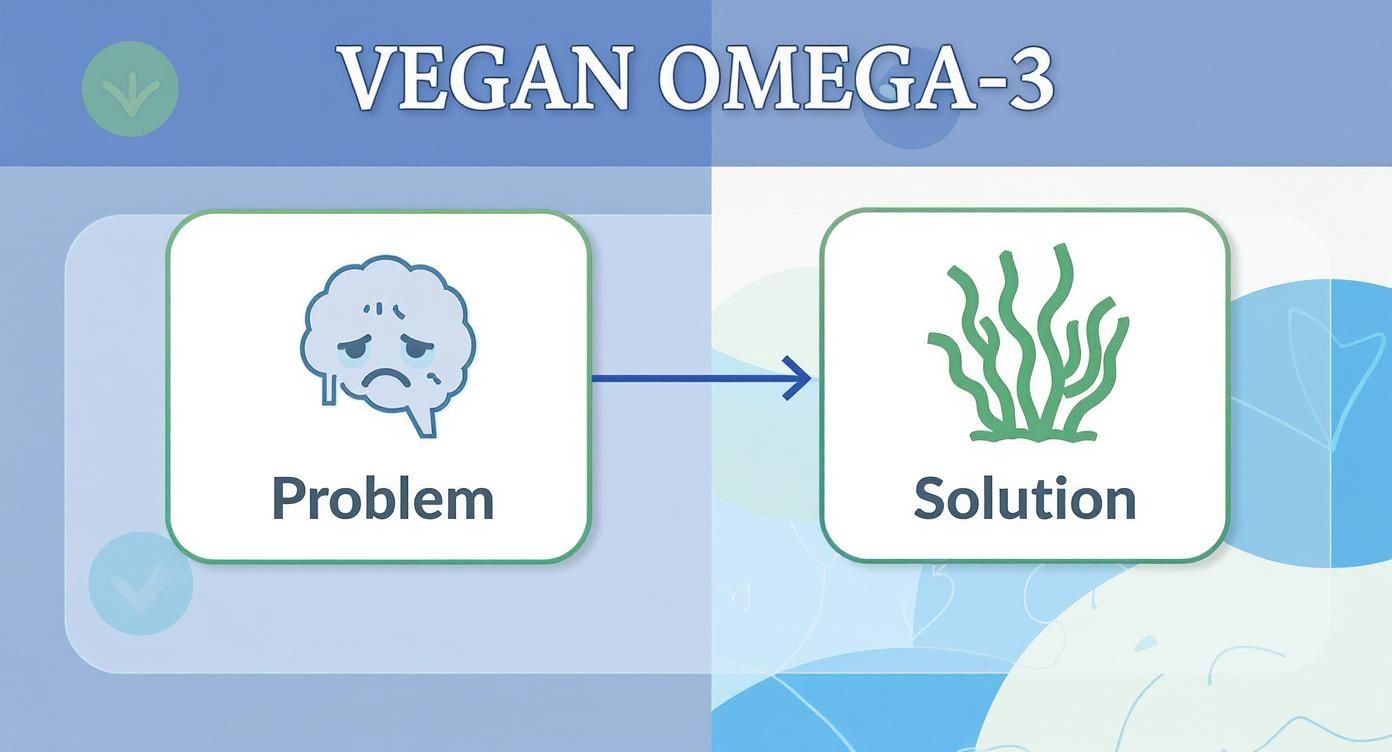 The key insight here is that while our bodies need EPA and DHA for optimal brain health, the conversion process from ALA is extremely limited, making a direct source like algae essential.
To put it all into perspective, let's break down the main players in a simple table.
A Quick Look at the Main Omega-3s
| Omega-3 Type | Common Vegan Sources | Primary Role in the Body |
|---|---|---|
| ALA | Flaxseeds, chia seeds, hemp seeds, walnuts | The "parent" fatty acid. It's an energy source but mainly serves as a building block for EPA & DHA. |
| EPA | Marine algae (found in algae oil supplements) | The "anti-inflammatory" specialist. Helps manage inflammation, supports heart health, and mood. |
| DHA | Marine algae (found in algae oil supplements) | The "structural" omega-3. Crucial for building and maintaining the brain, eyes, and nervous system. |
As you can see, each has a unique role, but getting enough of the right kind is what really matters.
EPA: The Anti-Inflammatory Specialist
Eicosapentaenoic acid, or EPA, is one of the "active" long-chain forms of omega-3. Its main job is to help manage and regulate inflammation all through your body.
Think of EPA as your body's internal firefighter. It produces compounds called eicosanoids that help calm inflammatory responses, which is absolutely vital for maintaining joint health, cardiovascular function, and a balanced mood. This makes it a critical piece of the puzzle for long-term well-being.
DHA: The Brain and Eye Builder
Docosahexaenoic acid, or DHA, is the other powerhouse long-chain omega-3. It's less about fighting fires and more about building and maintaining structures, particularly in your brain and eyes.
DHA is a primary structural component of the human brain and the retina. In fact, it makes up a massive percentage of the fatty acids found in your brain cells. Getting enough DHA is essential for sharp cognitive performance, memory, and clear vision.
But here's the big catch: the conversion from ALA to EPA and DHA is notoriously inefficient. Some studies show that as little as 1-5% of the ALA you consume actually gets converted into the EPA and DHA your body craves.
This conversion gap is precisely why just loading up on flax or chia seeds can leave you falling short. For a reliable intake, a direct source of these "refined fuels" is by far the most effective strategy for those on a plant-based diet.
Why Algae Oil Is the Best Vegan Omega 3 Source
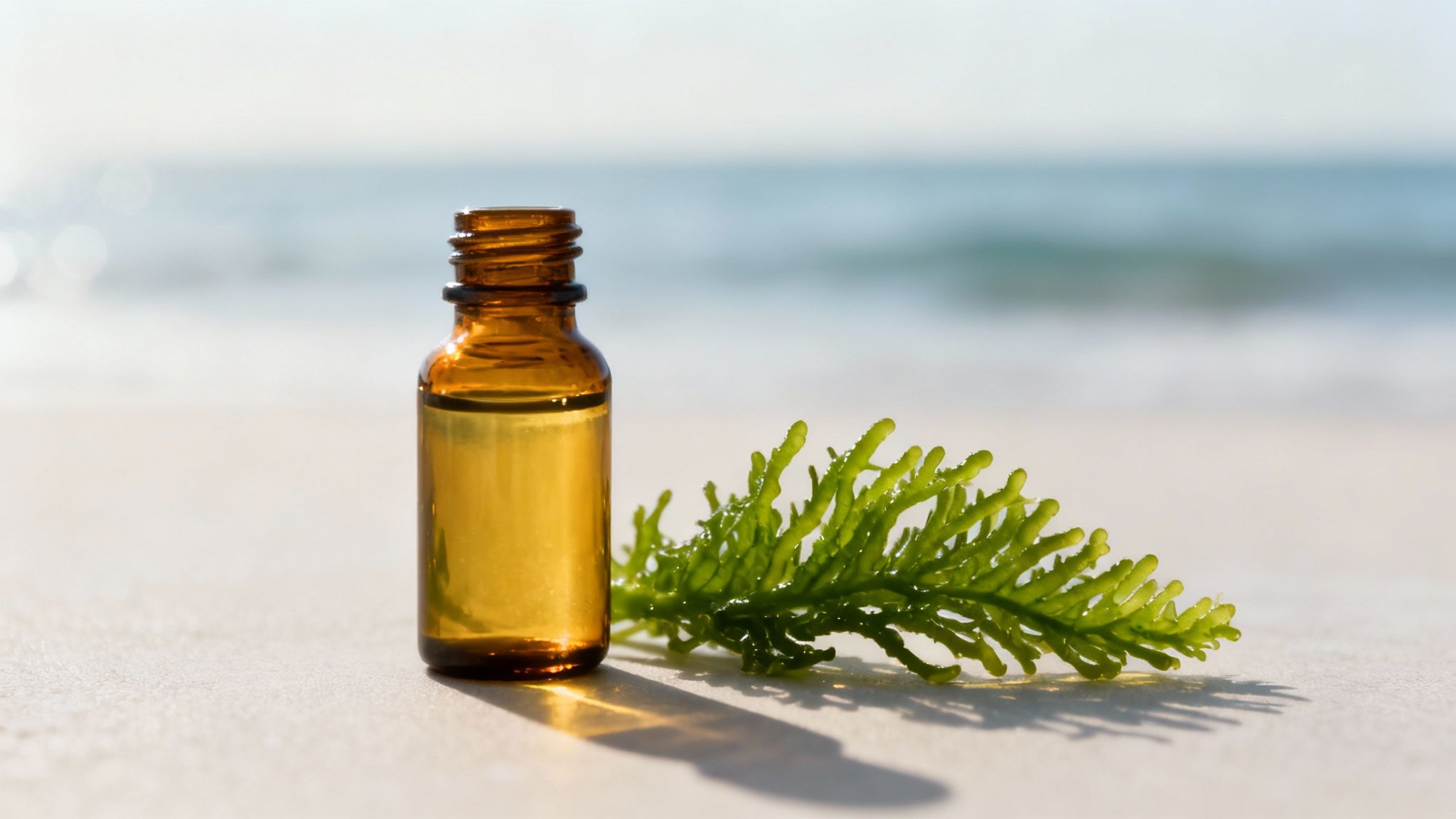
Ever wondered where fish get their omega-3s from? It’s a great question, and the answer might surprise you. They don’t actually produce it themselves. Instead, they get it from their diet, specifically by eating microalgae. These tiny aquatic plants are the original, foundational source of both EPA and DHA.
So, when you choose algae oil, you’re essentially ‘cutting out the middle-fish’. It’s a simple switch that takes you straight to the planet’s cleanest and most potent source of these essential fatty acids. It’s not just an alternative to fish oil; it's the original source.
Unmatched Purity and Safety
One of the most compelling arguments for algae oil is its incredible purity. It’s a sad reality that our oceans are increasingly polluted with industrial contaminants like mercury, PCBs, and dioxins. These harmful substances build up in the fatty tissues of marine animals, travelling up the food chain and becoming more concentrated in the very fish used for traditional omega-3 supplements.
Because the algae used for supplements is grown in controlled, purified water environments, it's naturally free from these ocean-borne contaminants. This process guarantees you get a pure, clean source of EPA and DHA without the worrying risk of heavy metal toxicity.
This makes algae oil one of the safest and cleanest options out there for anyone looking to boost their omega-3 intake, whether you follow a vegan diet or not.
Superior Sustainability
Beyond your own health, opting for a vegan omega-3 from algae has a hugely positive impact on the planet. The commercial fishing industry, which is the main source of fish oil, puts enormous pressure on global fish populations and marine ecosystems. Overfishing throws the delicate balance of ocean life out of whack and threatens the survival of countless species.
Choosing algae oil is a vote for protecting our oceans. Cultivating microalgae is a far more sustainable practice. It doesn't drain our marine resources or lead to bycatch—the unintended capture of other sea creatures.
This shift in awareness is starting to show in market trends. In fact, the UK market for algae-based omega-3 supplements is projected to hit USD 115.9 million by 2035, a boom driven largely by people seeking more ethical and eco-friendly choices. You can discover more insights about the UK algae omega market on futuremarketinsights.com.
The Most Effective Vegan Source
As we’ve touched on, your body’s ability to convert plant-based ALA into the crucial EPA and DHA it needs is pretty limited. If you’re only relying on foods like flaxseeds and walnuts, you could easily end up with a significant nutritional gap, especially when it comes to DHA, which is so vital for brain health.
Algae oil completely solves this problem. It gives you a direct, pre-formed source of both EPA and DHA, bypassing that inefficient conversion process altogether. It delivers the exact nutrients your body can use immediately. This makes it the most reliable and effective way to make sure you're meeting your daily omega-3 needs.
For anyone looking to truly optimise their plant-based nutrition, algae oil is a non-negotiable cornerstone. You can explore a handpicked selection of supplements designed to support this lifestyle by checking out our complete range of vegan and plant-based supplements. When you look at it from every angle—health, purity, and sustainability—algae oil is simply the smartest choice.
Building Your Diet with Plant-Based ALA Sources
While a high-quality algae oil supplement is your direct line to the essential EPA and DHA, a truly robust diet is built on a foundation of whole foods. This is where plant-based sources of ALA (alpha-linolenic acid) come in. Think of them as nutritional powerhouses that offer benefits far beyond just omega-3s.
The best approach is a two-part strategy: get your foundational ALA from daily meals and then top up with targeted EPA/DHA from a reliable vegan omega 3 supplement. Weaving these foods into your routine doesn't need to be a huge mission. Small, consistent additions are what make the real difference, boosting your intake of fibre, protein, and other vital micronutrients along the way.
Your Go-To ALA Powerhouses
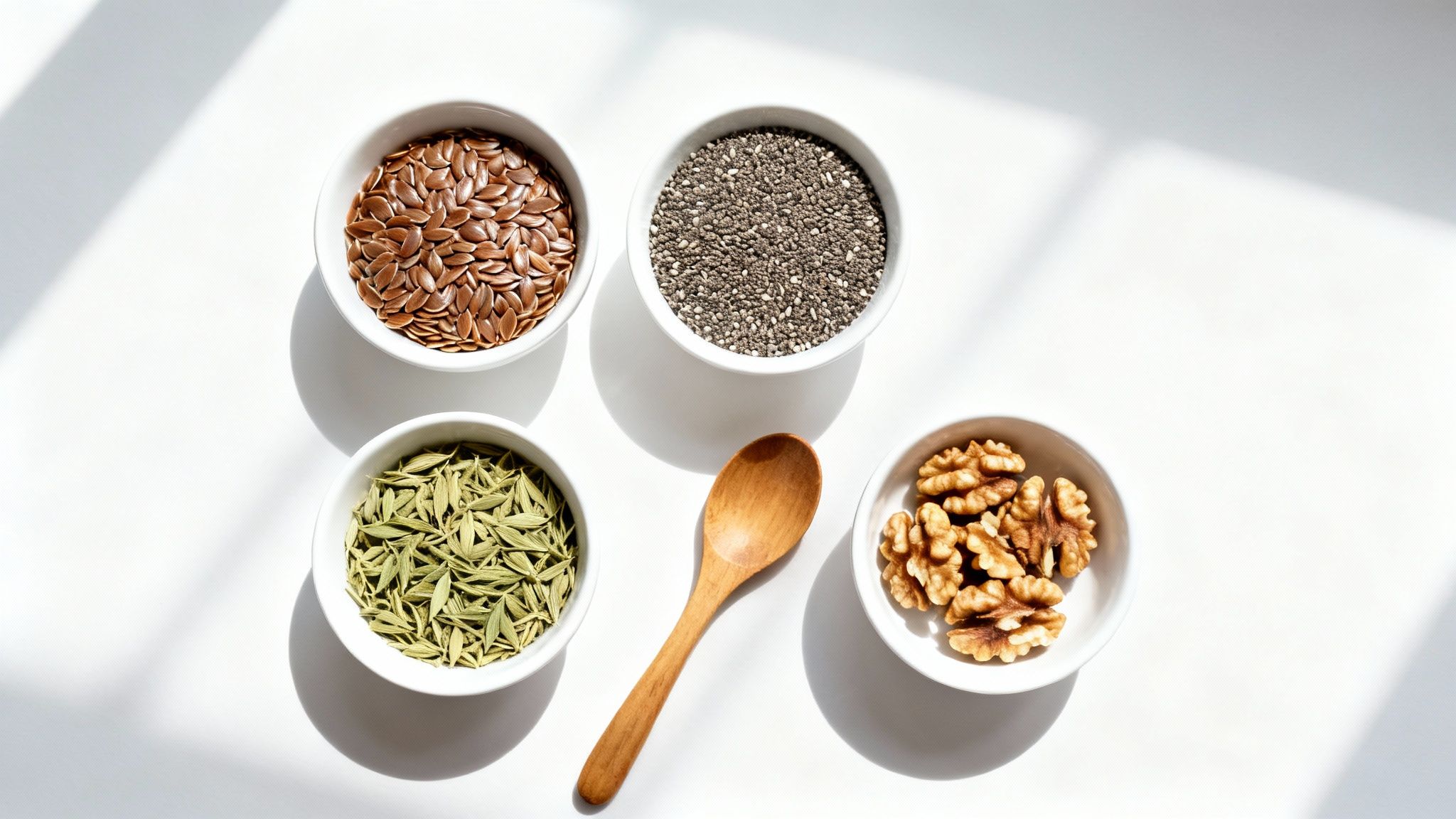
Getting started is as simple as stocking your pantry with a few key players. These four plant-based foods are some of the richest sources of ALA you can find, and they're incredibly versatile in the kitchen.
- Flaxseeds: Just a tablespoon or two packs a serious ALA punch. The golden rule? Always use ground flaxseed. Your body can't break down the tough outer shell of whole seeds to get to the good stuff inside.
- Chia Seeds: These tiny seeds are not only loaded with ALA but are also brimming with fibre and protein. They magically absorb liquid to form a gel, which makes them a perfect thickener for smoothies or the base for a fantastic breakfast pudding.
- Hemp Seeds: With their lovely nutty flavour, hemp seeds (or hemp hearts) are another brilliant ALA source. They also boast a complete protein profile, making them a fantastic addition to salads, yoghurts, or sprinkled over porridge.
- Walnuts: As the only nut that is an excellent source of ALA, a small handful of walnuts makes for a seriously satisfying and heart-healthy afternoon snack. You can also chop them up and toss them into meals for extra crunch and flavour.
While these whole foods are absolutely fundamental to a healthy vegan diet, it’s crucial to remember that the body’s conversion of ALA into the more critical EPA and DHA is pretty inefficient. Relying on these foods alone isn’t a reliable strategy for optimal brain and heart health.
Simple Ways to Boost Your Intake
Integrating these ALA sources into your diet is refreshingly simple. Try sprinkling ground flax or hemp seeds over your morning porridge, blending chia seeds into a smoothie, or topping your salad with a handful of walnuts. Consistency is the goal here, not perfection.
If you're looking to build a comprehensive plant-based diet that's both delicious and healthy, exploring a low carb vegetarian diet meal plan can offer some fantastic inspiration and recipes, many of which are easily adapted to be fully vegan. This kind of planning helps ensure you’re getting a wide array of nutrients to support your health goals.
By combining these foundational ALA-rich foods with a targeted algae oil supplement, you're creating a powerful nutritional safety net that covers all your omega-3 bases.
How to Choose a High Quality Vegan Omega 3 Supplement
Venturing into the world of supplements can feel a bit overwhelming, but picking a great vegan omega 3 is actually pretty straightforward once you know what to look for. It’s all about becoming a savvy shopper by learning to read the label and spotting the signs of a genuinely effective product.
Your goal is to find a supplement that delivers what you need, fits your values, and isn’t packed with unnecessary extras. If you focus on just a few key details, you can be confident you’re investing in something that will truly support your health.
Check the EPA and DHA Content
First things first, always check the specific amount of EPA (eicosapentaenoic acid) and DHA (docosahexaenoic acid) per serving. These are the active, ready-to-use forms of omega 3 that your body needs for brain, heart, and joint health.
Don't be fooled by a big number for the total "algae oil" content. The number that really matters is the combined EPA and DHA dosage, which you'll find on the back of the bottle. For most healthy adults, a good starting point is a supplement that provides a combined 250–500 mg of EPA and DHA each day.
A common mistake is choosing a supplement based on the total oil content rather than the specific EPA and DHA values. Always look for the detailed breakdown to ensure you're getting a potent and effective dose.
Understanding these values is crucial for gauging a supplement's real worth. To get more familiar with nutritional labelling, our article explaining what Nutrient Reference Value means provides a great overview.
Look for Third-Party Testing Seals
Trustworthy brands don't just make claims; they prove them. They voluntarily send their products to independent, third-party labs for testing, a process that verifies two critical things: purity and potency.
- Purity: This is your confirmation that the supplement is free from contaminants like heavy metals, PCBs, and other toxins. Even algae-derived products need this check.
- Potency: This guarantees that the amount of EPA and DHA printed on the label is exactly what’s inside each capsule. No guesswork involved.
Keep an eye out for seals from organisations like NSF International, USP, or the Clean Label Project. These certifications are your assurance that you’re getting a safe, honest product.
This kind of transparency is more important than ever, especially as more people make the switch to plant-based options. In fact, the overall UK omega-3 market is projected to grow to USD 678.6 million by 2035, a shift largely driven by the rising preference for vegan sources. You can read more about the future of the omega-3 market on futuremarketinsights.com.
This growth means more choice for us, but it also makes it even more vital to pick brands that put quality first. That's how you know you’re getting the best vegan omega 3 supplement for your money.
Your Top Vegan Omega-3 Questions Answered
Let's dive into some of the most common questions that pop up when people start looking into vegan omega-3 supplements. Getting clear, straightforward answers can make all the difference in feeling confident about your choices and clearing up any lingering doubts.
How Much Vegan Omega-3 Should I Take Each Day?
This is probably the number one question, and thankfully, the answer is quite consistent. For most healthy adults, aiming for a combined 250–500 mg of EPA and DHA each day is a solid target. This is the amount widely recommended to support general heart and brain health.
So how do you find this on the bottle? You'll need to play detective and look at the "Supplement Facts" panel on the back. Ignore the total "algae oil" amount and find the specific numbers for EPA (eicosapentaenoic acid) and DHA (docosahexaenoic acid). Just add those two together to get the total dose per serving.
Of course, everyone is different. Your personal needs might change based on your age, diet, or specific health goals. It's always a good idea to have a chat with a qualified health professional or a registered dietitian who can help you figure out the perfect dose for you.
Can I Just Eat More Flaxseeds to Get My EPA and DHA?
While flaxseeds, chia seeds, and walnuts are fantastic for your health and packed with the foundational omega-3, ALA (alpha-linolenic acid), they just aren't a reliable way to get your EPA and DHA. The reason comes down to a bit of a bottleneck in our bodies.
You see, our bodies have to convert that ALA into the long-chain EPA and DHA, and this process is notoriously inefficient. In fact, some research suggests that as little as 1-5% of the ALA we eat actually gets turned into these more complex, usable forms. The conversion to DHA is even tougher, with some studies showing it's practically zero.
Relying solely on plant-based ALA sources like flaxseed creates a significant risk of falling short on the critical EPA and DHA your brain and heart need to thrive. Think of it as trying to build a house with only the raw materials but no specialised tools—it’s possible, but incredibly difficult and inefficient.
This is exactly why a direct source like algae oil is a much smarter strategy. It completely bypasses that tricky conversion process, delivering the exact nutrients your body can put to work straight away.
Are There Any Side Effects of Taking Vegan Omega-3 Supplements?
Good news here! Vegan omega-3 supplements from algae oil are generally considered very safe and are well-tolerated by most people. Because the algae are grown in clean, controlled environments, they're free from the heavy metals and pollutants like mercury that can sometimes be a worry with fish oil.
When you stick to the recommended dosages, side effects are pretty rare. If you go overboard and take a really high dose, you might experience some mild digestive grumbles, like bloating or an upset stomach. To avoid this, simply follow the dosage suggested on the product label or by your healthcare provider.
As with any new supplement, it's always a good move to have a quick chat with your doctor first, especially if you have any pre-existing health conditions or are taking other medications.
How Long Will It Take to See the Benefits of Omega-3?
Patience is the name of the game when it comes to omega-3s. These essential fats work their magic at a deep, cellular level, supporting your long-term health rather than giving you an instant buzz like a cup of coffee. The benefits are cumulative, building up over time with consistent daily use.
Some people might start to notice improvements in things like skin hydration or joint comfort within a few weeks to a couple of months. However, the more profound benefits for your brain, mood, and heart are all part of a longer-term wellness strategy. The real key is consistency—give your body's cells the time they need to gradually incorporate these healthy fats.
Ready to give your body the direct source of EPA and DHA it needs to thrive? The AI-powered tools at VitzAi.com can help you discover a personalised supplement plan designed for your unique health goals. Take the first step towards optimised wellness today. Find your personalised supplement plan at VitzAi.com
This article is for informational purposes only and is not medical advice. Always consult a qualified health professional before starting any new supplement or major lifestyle change.