

Unlocking the Vitamin D3 K2 Benefits for Your Health
When you see certain vitamins paired together in a supplement, it’s usually for a good reason. The combination of vitamin D3 and K2 is a classic example of this nutritional teamwork.
Think of them as a highly efficient logistics team for calcium, one of the most vital minerals in your body.
Vitamin D3 is the gatekeeper. It’s what unlocks your body's ability to absorb calcium from your food. Without enough D3, most of the calcium you consume passes right through your system, unused. But getting calcium into your bloodstream is only half the battle.
This is where vitamin K2 steps in as the essential traffic controller. Once calcium is in your bloodstream, K2 activates specific proteins that tell it exactly where to go. Its main job is to shuttle calcium directly into your bones and teeth, making them stronger and denser. At the same time, it actively prevents calcium from building up in places it shouldn't, like your arteries and kidneys, where it can cause hardening and other serious health problems.
This synergy is what makes the combination so powerful. Without K2, high levels of D3 could inadvertently lead to calcium accumulating in the wrong places. Together, they ensure calcium strengthens your skeleton while protecting your cardiovascular system.
Why This Is a Big Deal for the UK Population
This dynamic duo is especially important for those of us living in the UK. Vitamin D deficiency is a major public health issue here, with an estimated 40% of the population having low levels during the darker winter months.
While official advice often recommends supplementing with vitamin D, the crucial role of K2 is frequently left out of the conversation. Simply boosting your vitamin D intake increases how much calcium you absorb, but without enough K2 to manage it, that extra calcium might not end up where you need it most. K2 activates the proteins that bind calcium to your bone matrix and keep it out of your arteries, helping to tackle the risks of both osteoporosis and cardiovascular disease. To really get a grip on this, it's helpful to understand more about Vitamin D and its essential functions on its own first.
Before we dive deeper, let's have a quick look at how these two nutrients work together to deliver benefits that neither could achieve alone.
How D3 and K2 Work Better Together
| Nutrient Focus | Role When Taken Alone | Synergistic Benefit When Combined |
|---|---|---|
| Vitamin D3 | Increases the absorption of calcium from your diet into the bloodstream. | Ensures the body has a sufficient supply of calcium available for use. |
| Vitamin K2 | Activates proteins that direct calcium and helps with blood clotting. | Guides the absorbed calcium into bones and teeth while preventing it from depositing in arteries. |
| D3 + K2 | N/A | Maximises bone mineralisation and supports cardiovascular health by ensuring calcium is used correctly. |
As you can see, their combined effect is much greater than the sum of their parts. This teamwork translates into some significant, far-reaching health benefits.
The key takeaways are:
- Enhanced Bone Health: By making sure calcium gets deposited right into the bone matrix, this pair helps to build a stronger, more resilient skeleton.
- Cardiovascular Support: K2’s ability to keep calcium out of your arteries supports vascular flexibility and overall heart health.
- Improved Immune Function: Vitamin D is famous for its role in immunity, and proper calcium regulation is a key part of supporting this complex system. You can explore our guide on other key vitamins for immune support to learn more.
In this guide, we'll unpack these vitamin D3 and K2 benefits in more detail, showing you exactly how this powerful combination works to support your long-term health and wellbeing.
Building a Stronger Foundation for Your Bones
One of the most celebrated benefits of combining vitamin D3 and K2 is their profound impact on bone health. For years, we’ve been told that calcium is the key to a strong skeleton, but that’s only part of the story. Simply consuming calcium isn’t enough; your body needs a sophisticated system to absorb it and, crucially, put it in the right place. This is where the powerful partnership of D3 and K2 truly shines.
Imagine your bones are like a brick wall under construction. Calcium is the pile of bricks—essential, but useless until it's actually laid. Vitamin D3 acts like the worker who brings those bricks from the supply pile (your gut) to the construction site (your bloodstream). Its main job is to dramatically increase calcium absorption, ensuring you have enough raw material on hand to build and maintain strong bones.
But just having a pile of bricks on-site doesn't automatically build a wall. This is where things can go wrong if D3 is working solo.
K2: The Master Mason for Your Skeleton
If Vitamin D3 is the busy worker, Vitamin K2 is the master mason. Its job is to take the calcium that D3 has made available and skilfully place each "brick" right into the structure of your bone matrix. It does this by activating a special protein called osteocalcin.
Think of osteocalcin as a type of biological 'bone cement.' When dormant, it can't do anything. But once Vitamin K2 flicks the switch, osteocalcin becomes sticky, allowing it to bind to calcium and lock it directly onto your bones. This process, known as bone mineralisation, is what gives your skeleton its density, strength, and resilience against fractures.
Without enough K2, osteocalcin remains inactive. The calcium that D3 worked so hard to absorb is left floating around in your bloodstream with nowhere to go, meaning it can't contribute to strengthening your bones. This is precisely why D3 needs K2 to finish the job.
The chart below perfectly illustrates this essential journey of calcium from your diet to your bones, guided every step of the way by D3 and K2.
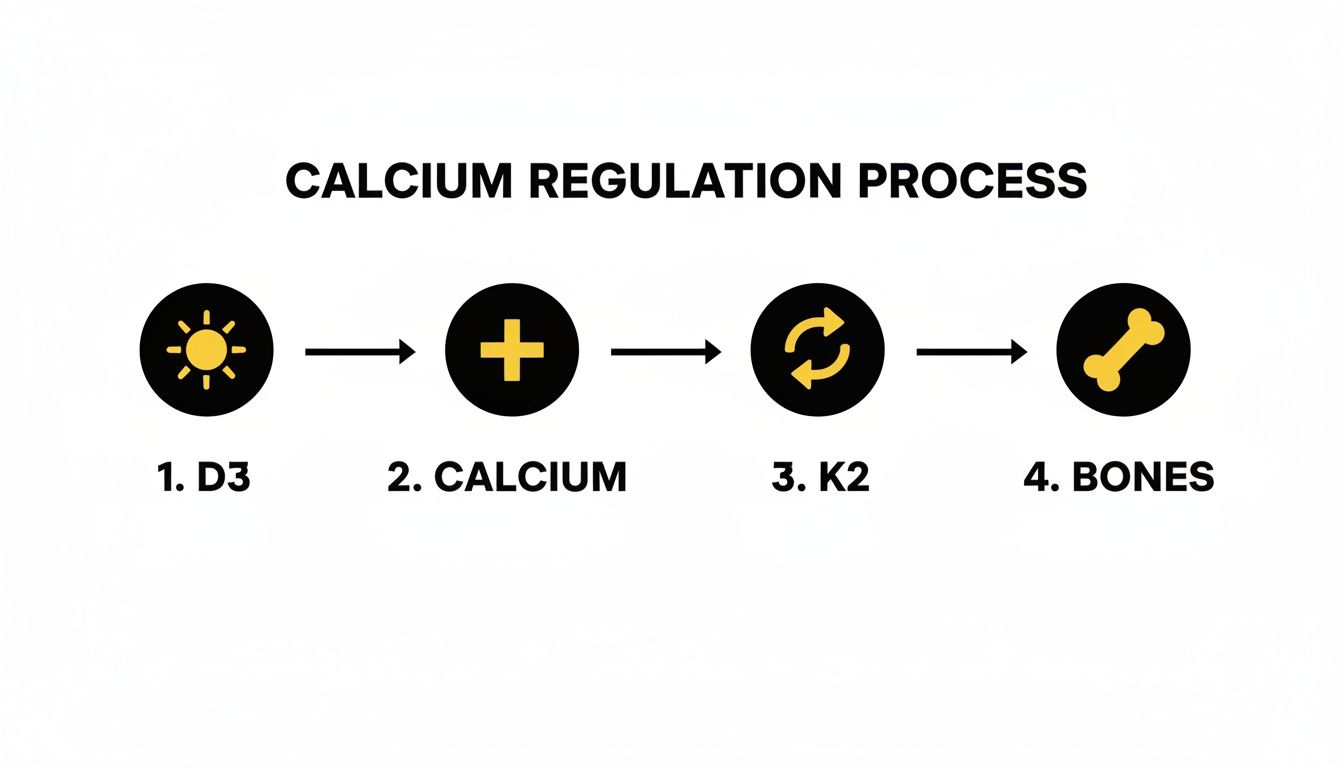
As you can see, D3 kicks things off by enabling calcium absorption, but it's K2 that performs the crucial final step: directing that calcium into your bone structure where it belongs.
The Science Behind Stronger Bones
This synergistic relationship isn't just a neat theory; it's backed by solid scientific evidence. Study after study has shown how vital this partnership is for maintaining bone mineral density (BMD), a key indicator of bone health and your risk of fractures.
A landmark three-year study involving postmenopausal women—a group particularly at risk for bone density loss—found that daily supplementation with 180 mcg of Vitamin K2 (as MK-7) significantly slowed age-related declines in bone density in the spine and femoral neck compared to a placebo.
This shows that K2 isn't just a helper; it’s a critical player for long-term skeletal maintenance. It actively supports the body's natural bone-building process, making it a cornerstone of any strategy aimed at preventing conditions like osteoporosis.
Here’s how the benefits break down for different people:
- For Younger Adults: It helps you achieve peak bone mass, essentially building a stronger "bone bank" for the future.
- For Athletes: It supports the constant process of bone remodelling required to handle the stress of intense physical activity.
- For Older Adults: It helps slow the natural rate of bone loss that comes with ageing, reducing the risk of debilitating fractures.
It's also worth remembering that other minerals play a supportive role. While calcium is the main building block, magnesium is also essential for bone health. To get a better handle on this relationship, you can explore our guide on the benefits of combining calcium and magnesium.
Ultimately, D3 and K2 offer a complete solution for skeletal health. D3 ensures the building materials are available, and K2 makes sure they are used to construct a strong, durable foundation for your body. This dynamic duo ensures the calcium you consume ends up strengthening your bones, not wandering aimlessly where it could cause potential harm.
Guarding Your Heart and Arteries from Calcification
While building strong bones is a huge win for long-term health, the D3 and K2 partnership has an equally important job to do: protecting your heart and blood vessels. We’ve already seen how vitamin K2 acts as a ‘traffic controller’ for calcium, and nowhere is this role more critical than inside your arteries.
Think of it as a proactive strategy for keeping your cardiovascular system in top shape, tackling a silent risk that many people aren't even aware of. That risk is arterial calcification.
Imagine your blood vessels as flexible, rubbery hoses that expand and contract with every single heartbeat. Over time, if calcium isn’t managed properly, it can start to build up on the walls of these hoses. This build-up acts like limescale in a pipe, making the arteries stiff, narrow, and far less flexible. This, in turn, forces your heart to work much harder to pump blood around your body.
It’s a major contributor to cardiovascular issues, yet it often develops without any obvious symptoms until it's become quite advanced. This is where vitamin K2 steps in as the vigilant guardian of your vascular system.
The Guardian Protein: MGP
Just as vitamin K2 activates osteocalcin to bind calcium to bone, it also flicks the switch on another vital protein called Matrix Gla Protein (MGP). You can think of MGP as a team of tiny security guards patrolling your blood vessels. Their one and only mission is to find stray calcium particles and stop them from sticking to the arterial walls.
When activated by vitamin K2, MGP becomes a powerful inhibitor of calcification. It actively seeks out and sweeps calcium away from soft tissues like your arteries and veins, ensuring they stay clear and pliable. But, just like osteocalcin, MGP is completely useless without enough vitamin K2 to switch it on.
If your K2 levels are low, these MGP "guards" are effectively asleep on the job. Calcium that Vitamin D3 has brought into your bloodstream can then accumulate unchecked in your arteries, contributing to stiffness and compromising cardiovascular function.
This really shines a light on the indispensable synergy between D3 and K2. Vitamin D3 is absolutely essential for getting enough calcium into your system, but vitamin K2 is what makes sure this powerful mineral doesn't end up causing trouble for your heart and blood vessels.
What Does the Science Say?
This link between K2 and heart health isn’t just a neat biological theory; it’s backed by compelling research with real-world results. In the UK, where cardiovascular disease remains a leading health concern, this dynamic duo is especially relevant.
Research confirms that D3 and K2 support heart health by managing calcium and preventing arterial calcification. In fact, studies show that supplementing with both can reduce arterial stiffness and vascular calcification in at-risk groups, such as individuals with type 2 diabetes.
One study found that chronic kidney disease patients who received both vitamins over a nine-month period showed a significantly slower progression of atherosclerosis markers compared to those taking vitamin D alone. Given how widespread vitamin D deficiency is in the UK, a balanced approach that includes K2 is vital for cardiovascular protection. You can read more about the research on how vitamins K2 and D3 support wellbeing on Nutraceutical Business Review.
This evidence strongly suggests that keeping your levels of both vitamins topped up is a smart, proactive way to support your vascular health for the long haul.
Here’s a quick breakdown of the key cardiovascular advantages:
- Improved Arterial Flexibility: By stopping calcium from building up, K2 helps your arteries keep their natural elasticity, which is essential for healthy blood pressure and circulation.
- Reduced Calcification Risk: Activating MGP provides a direct line of defence against the hardening of arteries, a key factor in long-term cardiovascular wellness.
- Synergistic Heart Support: The D3 and K2 team makes sure that the calcium vital for heart muscle contraction is properly regulated and doesn't contribute to arterial plaque.
Ultimately, the benefits of vitamin D3 and K2 go far beyond your skeleton. By actively managing where calcium ends up, this power duo works tirelessly to keep your arteries clear and flexible, offering a powerful defence for one of your body's most important systems.
How to Choose the Right D3 and K2 Supplement
Alright, so you're sold on the benefits of pairing vitamin D3 with K2 for your bones and heart. But now comes the tricky part: how do you actually pick a good supplement from the sea of options out there? Moving from the ‘why’ to the ‘how’ can feel a bit overwhelming, but it doesn't have to be. Let's break down what to look for, from dosages to the different forms of these vitamins, so you can read a label like a pro.
The first thing you’ll probably notice on any bottle is the dosage. Vitamin D3 is measured in International Units (IU), while Vitamin K2 is in micrograms (mcg). There’s no single "perfect" ratio set in stone, but a really effective and common balance you'll see in quality supplements is around 1,000–2,000 IU of D3 for every 100 mcg of K2.
This ratio hits a sweet spot. It provides a solid dose of D3—especially for those of us in the UK who don't see much sun—while giving you enough K2 to manage all the extra calcium that D3 helps you absorb. Think of it as a team effort; you need enough K2 to act as the traffic controller for all the calcium D3 is bringing into your system.
Understanding the Different Forms of Vitamin K2
Dig a little deeper into the label, and you’ll find that Vitamin K2 isn't just one thing. It usually comes in two main forms: MK-4 and MK-7. This is a crucial detail because they work very differently inside your body, and getting it right is key to unlocking the benefits you're after.
MK-4 has a really short half-life. That means it’s in and out of your bloodstream in just a few hours. To keep levels high enough to be effective, you'd need to take large doses multiple times a day, which just isn't practical for most people.
MK-7, on the other hand, is the real star of the show. It boasts a much longer half-life, staying active in your body for over 72 hours. Because it sticks around for so long and is absorbed so well, a single daily dose is usually enough to keep your K2-dependent proteins switched on and doing their job.
This is precisely why the best D3 and K2 supplements almost always use the MK-7 form. It's more efficient, far more convenient, and it's the form used in the major long-term studies that have demonstrated significant benefits for bone health.
To make it even clearer, let's compare the two side-by-side.
Choosing Your Vitamin K2 Form: MK-4 vs MK-7
When you're scanning a supplement label, knowing the difference between MK-4 and MK-7 can help you make a much smarter choice. Here’s a quick breakdown of what sets them apart.
| Feature | Vitamin K2 (as MK-4) | Vitamin K2 (as MK-7) |
|---|---|---|
| Source | Found in some animal products and can be synthesised from K1. | Primarily found in fermented foods like natto. |
| Half-Life | Very short (a few hours), requiring multiple daily doses. | Very long (over 72 hours), ideal for once-daily dosing. |
| Bioavailability | Lower absorption and is cleared from the body quickly. | Higher absorption and stays in the blood much longer. |
| Clinical Evidence | Used in some high-dose studies, but less practical for daily use. | The form used in key long-term bone health studies (e.g., at 180 mcg/day). |
Ultimately, for daily supplementation, MK-7 is the more logical and evidence-backed choice for convenience and sustained effectiveness.
Reading the Label and Ensuring Quality
A quality supplement is about more than just having the right ingredients. A trustworthy brand will be transparent and give you all the information you need right on the label.
Here are a few signs you've found a good one:
- Specific Forms Listed: The label should be crystal clear, stating "Vitamin K2 (as MK-7)" and "Vitamin D3 (as cholecalciferol)". Vague descriptions like "Vitamin K complex" are a bit of a red flag.
- Third-Party Testing: Look for seals or mentions of independent testing. This is your assurance that what’s on the label is actually in the bottle and that it's free from any nasty contaminants.
- Minimal Fillers: Take a quick glance at the "other ingredients" list. The best formulas keep it clean and simple, avoiding unnecessary binders, artificial colours, and common allergens.
Important Safety Considerations
While the D3 and K2 partnership is safe for most of us, it’s really important to be aware of a few things. The biggest one involves blood-thinning medications like warfarin. Because Vitamin K is involved in blood clotting, suddenly adding more K2 to your routine could interfere with how these drugs work. If you are on any anticoagulants, it is absolutely essential to speak with your doctor before you start taking K2.
It's also worth remembering that all your nutrients work together. For instance, you might be curious about how other minerals fit in. If you're also taking iron, you can learn more about how it plays with other vitamins in our guide that answers the question, can you take vitamin d and iron together. Building a complete picture of your supplement routine is always a smart move.
At the end of the day, supplementation should always be personal. A quick chat with a healthcare professional can help you figure out the best approach for your own health status, diet, and goals.
Who Really Needs the D3 and K2 Power Couple?
While pretty much everyone can benefit from the smart partnership of vitamins D3 and K2, some of us stand to gain a whole lot more. Depending on your age, where you live, or even how you move your body, you might have a much greater need for top-tier bone and heart support.
Think of it less as a one-size-fits-all fix and more as targeted nutritional backup, stepping in right where your body needs it most.
Post-Menopausal Women
For women, the years after menopause bring a major shift in bone health. It’s no secret that the natural drop in oestrogen speeds up bone density loss, sending the risk of osteoporosis and fractures way up. Suddenly, keeping your skeleton strong becomes a top priority.
Vitamin D3 is great for boosting calcium absorption, but as we’ve covered, K2 is the traffic cop that tells that calcium exactly where to go—into your bone matrix. This duo acts as a vital support system for post-menopausal women, helping to hang on to precious bone mineral density when the body is most vulnerable. In fact, a three-year trial showed that a daily dose of 180 mcg of K2 (as MK-7) significantly slowed down age-related bone loss in this group.
Older Adults (Men and Women!)
Getting older is a fact of life, and with it comes a natural decline in our ability to maintain bone mass and keep our cardiovascular system in prime condition. Our skin gets less efficient at making vitamin D from the sun, and our diets might not always be hitting the nutritional marks we need. This double whammy puts older adults at a higher risk for both brittle bones and stiffening arteries.
The D3 and K2 combo offers a two-pronged defence:
- For Stronger Bones: It helps the body mineralise bone, which can make a real difference in reducing the risk of a debilitating fracture from a simple fall.
- For Flexible Arteries: It works to prevent calcium from setting up camp in your blood vessels, helping to keep them supple and supporting overall heart function.
For this group, supplementation isn’t just about topping up nutrients; it’s a proactive strategy for staying independent and enjoying a better quality of life for years to come.
UK Residents and Anyone in a Northern Climate
If you call the UK or other northern parts of the world home, you’re up against a geographical challenge. From about October to March, the sun simply isn't strong enough for our skin to produce the vitamin D we need. This widespread lack of the "sunshine vitamin" is a well-known public health issue.
Many of us in the UK know we should probably take vitamin D in the winter, but the crucial role of K2 is often missed. Adding K2 to the mix ensures that all the extra calcium you're absorbing from the D3 is actually put to good use in your bones, not your arteries.
This makes the combination especially important for anyone living with long, dark winters. It’s a simple way to bridge a critical nutritional gap created by your postcode.
Athletes and Very Active People
Regular, high-impact exercise is brilliant for building strong bones, but it also puts a huge amount of stress on your skeleton. If you’re an athlete or just train hard, your body is in a constant state of bone remodelling—breaking down old bone and building new, stronger bone in its place. To keep up with this demanding cycle, you need a steady and well-managed supply of calcium.
Here's how D3 and K2 help:
- They make sure there’s enough calcium available for all that repair and strengthening work.
- They efficiently guide that calcium to the parts of your skeleton that are under the most pressure.
This helps optimise the body's natural bone-building response to exercise, which can support recovery and lower the risk of stress fractures down the line.
People with Dietary Restrictions
Finally, if your diet limits certain food groups, you could be missing out. Vitamin D3 is naturally found in very few foods, mainly things like fatty fish and egg yolks. Vitamin K2 is even harder to come by, found mostly in specific fermented foods like natto (a Japanese breakfast staple) and some grass-fed animal products—not exactly everyday items in a typical Western diet.
For anyone following a vegan, vegetarian, or other restrictive diet, getting enough of these fat-soluble vitamins from food alone can be a real challenge. In these situations, a D3 and K2 supplement is a reliable and straightforward way to hit optimal levels, supporting your bone and heart health without having to compromise your dietary choices.
Your Questions About Vitamin D3 and K2 Answered
Even when you get the incredible synergy between vitamins D3 and K2, you probably still have some practical questions about how to best use them. And that’s a good thing. Getting the details right can make a huge difference in the results you see and feel.
This final section clears up any lingering doubts, with straightforward, no-nonsense answers to the most common questions we hear. Let’s get into it, so you can start supplementing with total confidence.
When Is the Best Time of Day to Take Vitamin D3 and K2?
There’s one golden rule here: always take D3 and K2 with a meal that contains some fat. Both vitamins are fat-soluble, meaning your body needs dietary fat to actually absorb them properly. Skip the fat, and you'll miss out on the very benefits you’re after.
Pairing your supplement with foods like avocado, eggs, nuts, olive oil, or fatty fish will dramatically boost absorption. Lots of people find it easiest to take them with their first meal of the day to build a solid habit, but honestly, any meal with healthy fats will do the job—breakfast, lunch, or dinner.
The real key is consistency and pairing it with fat. Pick a meal you never skip, and make your D3 and K2 supplement a regular part of that routine.
Can I Get Enough Vitamin D3 and K2 from My Diet Alone?
To be blunt, it’s extremely difficult for most people, especially here in the UK. Your body’s main source of vitamin D is direct sunlight, which is in short supply for about six months of the year. While some foods like salmon and mackerel contain D3, you’d have to eat them almost daily to hit optimal levels.
Vitamin K2 is even tougher to find in a typical Western diet. It’s abundant in natto (a fermented soybean dish popular in Japan) and found in smaller amounts in certain grass-fed animal products like aged cheese and liver. Since these aren't staples for most of us, supplementation is the most reliable and practical way to make sure you’re getting enough of both.
How Long Does It Take to See the Benefits?
Think of supplementing with D3 and K2 as a long-term investment rather than a quick fix. If you're seriously deficient in vitamin D, you might notice a lift in your mood or energy levels within a few weeks. However, the core benefits—building bone density and supporting arterial health—are foundational and build up quietly over months and years.
It’s like building a pension for your bones and heart. The positive effects accumulate in the background, strengthening your body’s internal framework. Don't expect to feel a dramatic shift overnight; instead, trust that you're proactively supporting your long-term health and resilience.
Are There Any Side Effects or Risks I Should Know About?
When taken at the recommended doses, the combination of D3 and K2 is very safe for the vast majority of people. In fact, one of vitamin K2’s brilliant roles is to reduce the main risk associated with high doses of vitamin D alone, which is the potential for high blood calcium levels (hypercalcaemia).
That said, there is one crucial interaction to be aware of.
- Blood-Thinning Medications: Vitamin K plays a role in blood clotting, so it can interfere with anticoagulant medications like warfarin. If you are taking any blood thinners, you must speak with your doctor before adding a vitamin K2 supplement to your routine.
It’s always a smart move to have a chat with a healthcare professional before starting any new supplement. This just ensures it’s the right choice for your individual health needs and circumstances.
Ready to experience the powerful benefits of vitamin D3 and K2 for yourself? The VitzAI platform can help you figure out exactly what your body needs. Take our free, AI-powered quiz to get a personalised report and discover a supplement routine designed just for you.
Start Your Personalised Health Journey with VitzAI
This article is for informational purposes only and is not medical advice. Always consult a qualified health professional before starting any new supplement or major lifestyle change.