

Vitamin D3 K2 Benefits for Women Explained Simply
You're balancing a full schedule, trying to protect your bones, wondering whether your energy changes are hormonal, and hearing vitamin D3 and K2 mentioned in every other supplement conversation. The combination sounds simple, but the important question isn't whether it's popular. It's whether it makes sense for your age, bone health, diet, medications, and vitamin D status.
Vitamin D3 and K2 have complementary roles in calcium metabolism. That makes the combination especially interesting for women as bone priorities shift across adulthood, pregnancy, perimenopause, and menopause. It doesn't make D3 and K2 a universal answer for every woman, though.
This guide explains the biology in everyday language, separates stronger evidence from promising but mixed claims, and shows how to discuss supplementation more intelligently with a qualified health professional. For a broader introduction to vitamin D, you can also read this practical guide to vitamin D benefits.
Introduction to Vitamin D3 K2 Benefits for Women Today
Consider a woman in her forties who's noticed several changes at once. Her periods are becoming less predictable, her exercise routine feels harder to maintain, and a routine conversation about family history raises concerns about osteoporosis. She searches for answers and quickly finds vitamin D3 K2 supplements marketed for bones, hormones, immunity, and heart health.
Her confusion is reasonable. Vitamin D3 and K2 are often presented as a perfect pair, yet the evidence doesn't support treating them as a universal fix. The more accurate view is that they're nutrients involved in calcium handling and bone metabolism, with the clearest research concentrated in postmenopausal women who already have osteopenia or osteoporosis.
Vitamin D deficiency also isn't a niche concern. A CDC report based on NHANES 2001–2006 data found that 8% of the population was at risk of vitamin D deficiency, while the season-adjusted prevalence among females ranged from 1% to 12%, with women aged 20–29 and non-Hispanic Black women identified as higher-risk groups. A separate peer-reviewed analysis found that among women, 12.8% had serum 25(OH)D below 10 ng/mL and 27.5% were below 30 ng/mL (CDC vitamin D data).
That context explains why women keep hearing about vitamin D3. It also explains why a thoughtful approach matters. A nutrient gap may justify targeted support, while a woman with adequate levels, a balanced diet, and no bone-related risk may not receive the same benefit from adding several supplements.
The key is to ask better questions:
- Is vitamin D status low or unknown?
- Is bone density already reduced?
- Has menopause changed bone-loss risk?
- Does the diet provide vitamin K through leafy greens or fermented foods?
- Could a medication interact with vitamin K?
The answers create a life-stage picture rather than a blanket recommendation.
How Vitamin D3 and K2 Work Together in the Body
Think of calcium as traffic moving through a city.
Vitamin D3 helps open the entrance. It supports calcium absorption from the digestive tract into the bloodstream. Without sufficient vitamin D, the body has a harder time taking in the calcium available in food.
Calcium then enters circulation. That mineral has useful destinations, especially bones and teeth, but it needs the body's regulatory systems to handle it appropriately.
Vitamin K-dependent processes help activate proteins. One important protein is osteocalcin, which supports bone mineralisation after activation. This is why vitamin K2 is often described as helping calcium move toward skeletal tissue rather than increasing calcium in circulation. The National Institutes of Health explains that vitamin D is directly involved in calcium absorption and bone mineralisation, and that vitamin D with calcium may increase bone mineral density in some postmenopausal women and older men (NIH vitamin D fact sheet).
The simple partnership: D3 helps make calcium available. K-dependent proteins help the body use calcium in bone metabolism.
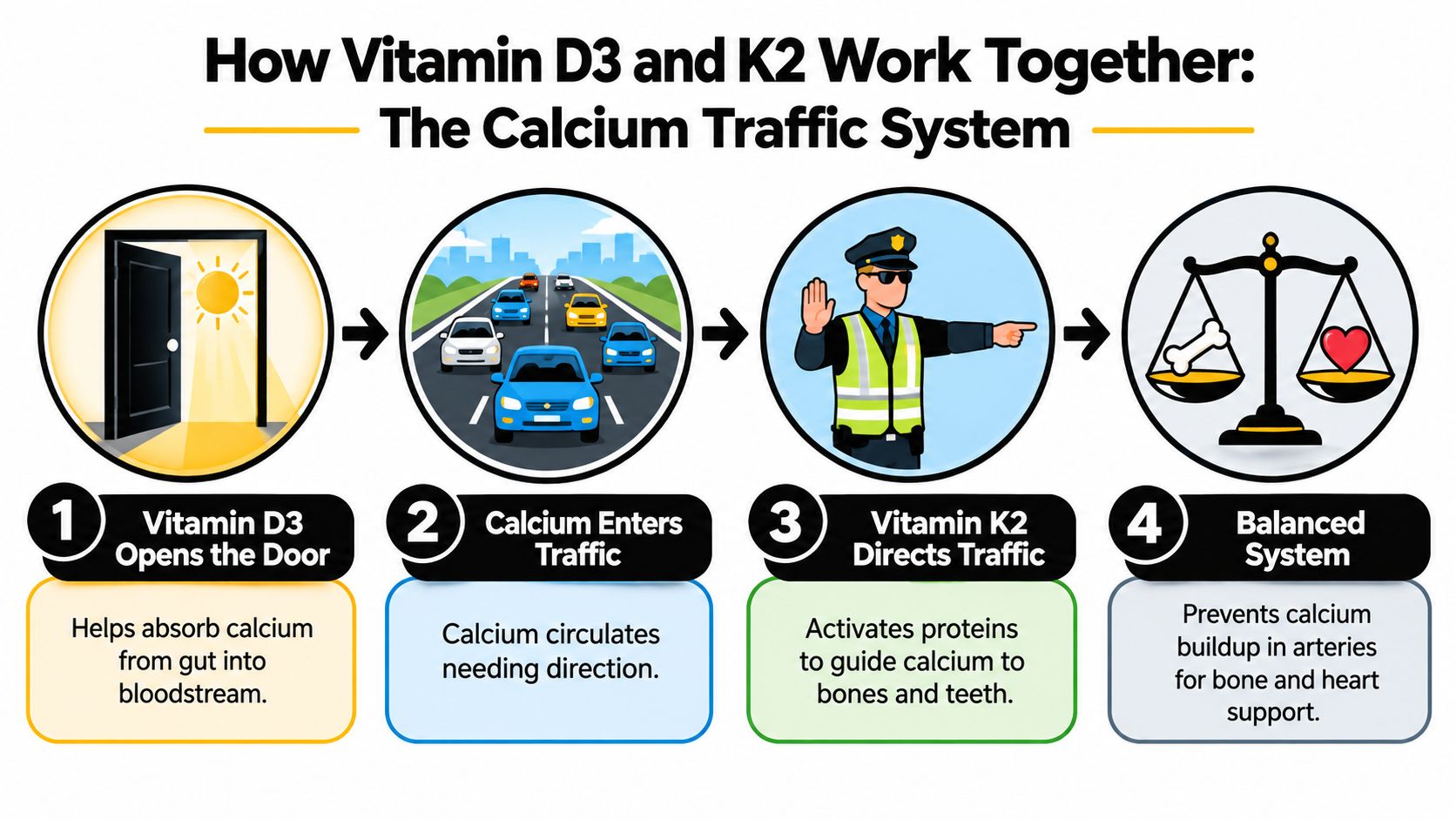
This analogy helps, but it shouldn't be taken too seriously. Vitamin K2 doesn't act like a traffic officer physically steering every calcium molecule, and taking K2 doesn't guarantee that calcium will be deposited in bone or kept out of arteries. The body's calcium balance also depends on diet, hormones, kidney function, bone status, medications, and overall health.
Vitamin D3 is cholecalciferol, the form commonly produced in skin after sunlight exposure and widely used in supplements. Vitamin K2 belongs to the vitamin K family, which includes several forms. K1 is common in leafy green vegetables, while K2 appears in certain fermented foods and animal products.
The proposed reason for combining them is therefore logical but incomplete. D3 supports calcium absorption, while vitamin K-dependent activation supports proteins involved in bone metabolism. The clinical question is whether that biological partnership produces meaningful outcomes for a particular group of women.
Key Benefits for Bone and Heart Health in Women
A woman in her late 50s with osteopenia is in a different situation from a healthy woman in her 30s. For the first woman, bone preservation may be a central health goal. For the second, routine D3 and K2 supplementation has less specific evidence. This life-stage distinction keeps the discussion practical: the clearest potential value appears in postmenopausal women with bone loss or related risk factors.
A summary of a clinical study reported that 346 postmenopausal women taking vitamin K2 at 180 micrograms with vitamin D3 at 2,000 IU maintained bone density at the spine and hip, while the vitamin-only and placebo groups experienced significant bone loss (clinical study summary). A separate one-year, double-blind, placebo-controlled trial in postmenopausal women with osteopenia found that a D3 and K2 regimen was associated with a 4.3% increase in lumbar spine bone mineral density and a 2.2% increase in left femoral neck bone mineral density (PubMed study).
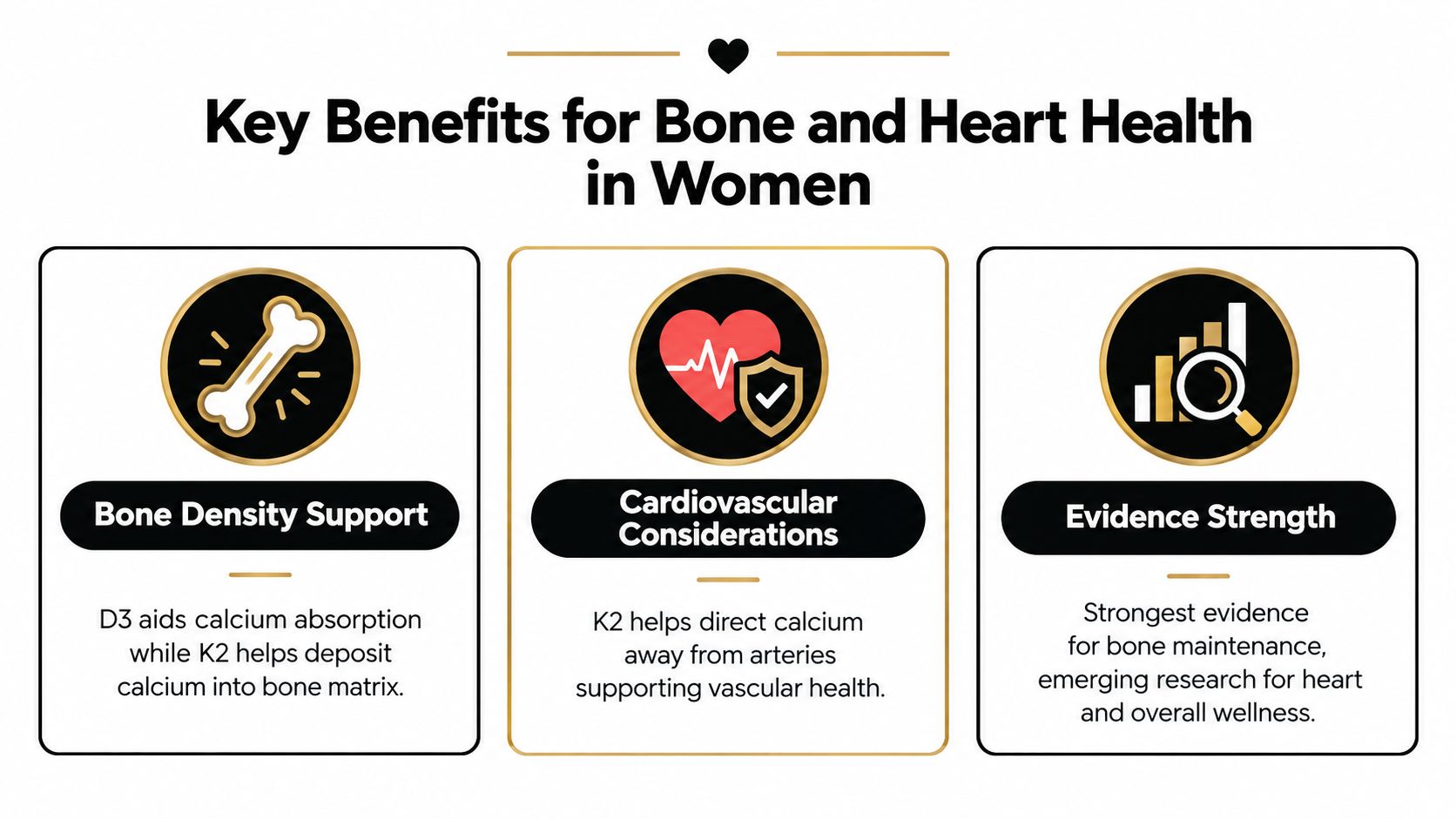
Other evidence points in the same direction for women with osteoporosis. In a randomized study of postmenopausal women, combined D3 and K2 was associated with a greater increase in lumbar spine bone mineral density than calcium alone, D3 alone, or K2 alone. The biology is understandable: D3 supports calcium absorption, while vitamin K-dependent carboxylation helps activate osteocalcin, a protein involved in bone mineralisation.
A review also reported that adding vitamin K1 to a mineral and vitamin D regimen reduced femoral neck bone loss over 3 years in a randomized placebo-controlled trial of 155 postmenopausal women aged 50 to 60. Broader trial reviews found that vitamin D plus vitamin K supplementation can improve total bone mineral density (review of vitamin K and bone health).
Bone density and fracture protection are related, but they are not interchangeable outcomes. A systematic review found that combined calcium and vitamin D can improve bone density and correct low 25-hydroxyvitamin D levels, while the effect on clinical fracture risk in women with densitometric osteoporosis remained unclear (systematic review). A better scan result is encouraging, yet it does not by itself prove fewer fractures.
Heart-health claims require the same careful reading. K2 has a proposed role in calcium handling in arteries, but cardiovascular outcome evidence remains mixed. D3 and K2 should support, not replace, blood pressure care, physical activity, dietary improvements, prescribed treatment, or regular medical assessment.
For women comparing supplements for bones and joints, the wider plan still matters. Strength training, adequate protein, calcium-rich foods, fall prevention, and appropriate bone-density monitoring can all support skeletal health. Women seeking advice on preventing osteoporosis in Idaho can also review risk-reduction and physical therapy guidance from Lake City Physical Therapy.
Hormones Pregnancy and Menopause Considerations
A woman's reason for considering D3 and K2 can change as her life stage changes. A younger woman may be focused on general nutrition, exercise, pregnancy, or a confirmed vitamin D deficiency. A woman approaching menopause may be more concerned with bone density, family history, and the effects of changing hormones.
Before menopause, bone maintenance still matters, but the evidence for routine D3 and K2 supplementation in healthy younger women is less specific. Vitamin D status can be affected by limited sun exposure, skin pigmentation, diet, geographic location, age, and certain medical conditions. If deficiency is suspected, a clinician can decide whether testing is appropriate and interpret the result alongside personal risk factors.
Pregnancy requires extra care. Nutrient needs change during pregnancy and breastfeeding, but that doesn't mean a combined D3 and K2 product should automatically be added to a prenatal routine. The safety and usefulness of a specific product depend on its ingredients, dose, the prenatal vitamin already being used, diet, medical history, and advice from an obstetric or primary-care professional.
Why menopause changes the conversation
After menopause, bone turnover can accelerate as oestrogen declines. That makes bone mineral density a central health priority, particularly for women with osteopenia, osteoporosis, previous fractures, low calcium intake, or other clinical risk factors.
Evidence summaries report that vitamin D3 in the range of 500 to 800 IU daily can increase bone mineral density in postmenopausal women. Women over 65 may see more benefit at 800 to 900 IU daily when combined with 1,200 to 1,300 milligrams of calcium per day, including increased bone density, lower bone turnover, and fewer nonvertebral fractures (evidence summary). These figures describe research contexts, not personal prescriptions.
K2 has more specific evidence in women who already have osteoporosis than in women without it. A meta-analysis involving 6,759 participants found that K2 improved vertebral bone mineral density and helped prevent fractures in postmenopausal women with osteoporosis, but showed no effect in postmenopausal women without osteoporosis (meta-analysis).
That difference is important. Current review literature says the evidence isn't strong enough to recommend routine combined vitamin D and K supplementation for osteoporosis prevention across general populations. The more useful question is not “Should every woman take K2?” but “What does my bone status, diet, age, vitamin D level, and medical history suggest?”
Dosing Food Sources and Choosing a Supplement Wisely
Supplement decisions should start with the basics, not the label on a trendy bottle. Vitamin D and calcium work together in bone biology, but diet, sun exposure, age, medical history, medications, and baseline vitamin D status all influence what an individual may need.
Evidence summaries for postmenopausal women discuss vitamin D3 ranges from 500 to 800 IU daily, with higher ranges discussed for women over 65 in combination with calcium. Those figures shouldn't be treated as instructions for everyone. A clinician may recommend a different approach when a blood test shows deficiency or when kidney, parathyroid, bone, or medication concerns are present.
Food first, then fill the gap
Vitamin D can come from fatty fish, egg yolks, fortified milk, and fortified plant milks. Vitamin K1 is abundant in leafy greens such as kale, spinach, and collards. Vitamin K2 is found in foods including natto, some aged cheeses, egg yolks, liver, and certain fermented dairy products.
Calcium also matters. Food sources can include dairy products, fortified plant milks, calcium-set tofu, and some fish with edible bones. The right choices depend on dietary pattern, allergies, tolerance, and cultural preferences.
Practical rule: A supplement should fill a clearly identified gap, not distract from the meals, movement, sleep, and clinical care that support bone health.
Compare your situation before choosing
| Life Stage | Primary Focus | Key Discussion Point With Clinician |
|---|---|---|
| Younger adulthood | Adequate nutrition and healthy bone development | Whether diet, sun exposure, symptoms, or risk factors suggest vitamin D assessment |
| Pregnancy and breastfeeding | Maternal and infant nutritional needs | Whether the prenatal plan already covers vitamin D and whether K2 is appropriate |
| Perimenopause | Changing hormones and bone-risk planning | Family history, calcium intake, exercise, vitamin D status, and medication use |
| Postmenopause | Maintaining bone mineral density | Whether bone-density testing, targeted D3, K2, calcium, or other treatment is appropriate |
| Later adulthood | Bone strength, falls, and overall nutrient adequacy | Vitamin D status, calcium intake, kidney health, medications, and fracture risk |
When evaluating a product, check the Supplement Facts panel rather than relying on front-label language. Confirm the form of vitamin D, the amount of K2, serving instructions, allergen information, expiry date, and evidence of quality testing. A combined capsule may simplify routines, but separate products can make dose adjustments easier.
For readers comparing labels, this practical Vitamin Planet D3 2000 IU guide offers useful context about what a D3 product label means. You can also review this guide to a vitamin D and K2 supplement before discussing options with a clinician.
Safety Interactions and Common Misconceptions to Avoid
The biggest misconception is that every woman taking vitamin D3 should automatically add K2. Current reviews describe the combined evidence as mixed and not strong enough to support routine D and K supplementation for osteoporosis prevention in the general population (recent review literature).
K2 may be more relevant for women with specific bone concerns, but even then, supplementation belongs within a broader plan. A product can't diagnose osteoporosis, replace prescribed treatment, or guarantee that calcium will avoid soft tissues.
Keep these checks in mind:
- Blood thinners: Vitamin K can interact with anticoagulants such as warfarin. Don't start, stop, or sharply change a K2 supplement without speaking with the prescriber.
- Pregnancy and nursing: Ask a qualified clinician before adding a combined product, especially if you already use a prenatal or postnatal supplement.
- Medical conditions: Kidney disease, parathyroid disorders, osteoporosis, cardiovascular disease, and calcium-balance problems warrant individual guidance.
- More isn't better: High vitamin D intake can create safety concerns, particularly when combined with calcium or certain medications. Don't exceed a recommended amount unless a clinician is monitoring your care.
- Food still matters: Supplements complement a balanced diet. They don't replace leafy greens, calcium-containing foods, protein, resistance exercise, or fall-prevention habits.
Vitamin K isn't a reason to avoid vegetables or fermented foods. The concern is consistency and medication coordination for people taking drugs affected by vitamin K. Vitamin D testing also shouldn't become an automatic self-diagnosis tool. A clinician can decide whether a 25-hydroxyvitamin D test is useful based on risk factors and symptoms.
Your Next Steps for Strong Bones and Balanced Wellness
The most useful way to think about vitamin D3 K2 benefits for women is through context.
D3 helps the body absorb calcium. Vitamin K-dependent processes help activate proteins involved in bone mineralisation. Together, they form a biologically sensible partnership, but the strongest clinical discussion focuses on postmenopausal women with osteopenia or osteoporosis. Evidence for healthy younger women and general osteoporosis prevention is less conclusive.
Use this short framework before buying a supplement:
- Identify your life stage. Your needs and priorities may differ during pregnancy, perimenopause, or after menopause.
- Review your diet. Look at vitamin D foods, leafy greens, fermented foods, calcium sources, and overall protein intake.
- Check your risk profile. Family history, low bone density, previous fractures, limited sun exposure, and medical conditions can change the conversation.
- List your medications. This is particularly important if you take warfarin or another medicine affected by vitamin K.
- Ask focused questions. Discuss whether testing, dietary changes, a D3-only product, K2, or a broader bone-health plan makes sense.
Personalised guidance is more useful than copying a supplement routine from social media. The right choice may be food first, targeted D3, a clinician-managed combination, or no additional supplement at all.
This article is for informational purposes only and is not medical advice. Always consult a qualified health professional before starting any new supplement or major lifestyle change
VitzAi.com offers a personalised supplement quiz that considers your goals, diet, exercise, sleep, stress, and other lifestyle factors to help narrow down relevant supplement options. Visit VitzAi.com to explore guidance that can support a more informed conversation about your vitamin D3 and K2 needs.