

Discover Vitamins to Balance Female Hormones: A Practical Guide
While there isn't a single magic pill for perfect hormonal health, the journey to finding balance often begins with a core group of nutrients. Think of B vitamins, vitamin D, and essential minerals like magnesium as the foundational building blocks. They all work together to regulate everything from your mood to your menstrual cycle—it's a real team effort, and no single nutrient can do the job on its own.
Your Quick Guide to Hormonal Harmony
Feeling out of sorts is incredibly common, but it doesn't have to be your normal. Your body’s hormonal system is like a finely tuned orchestra, with chemical messengers like oestrogen and progesterone playing the lead instruments. When everything is in sync, you feel energised, clear-headed, and simply good. But things like stress, poor sleep, diet, and different life stages can easily throw this orchestra out of tune.
This is where targeted nutrition becomes such a powerful tool. Giving your body the right raw materials—the specific vitamins and minerals it craves—can help restore that beautiful harmony and support your overall wellbeing. Instead of playing a guessing game with supplements like multivitamins or magnesium, understanding what each nutrient actually does is the first real step towards feeling your best again.
The Foundational Nutrients
Before we get into the nitty-gritty, let's start with a quick look at the most critical players on the field. These five nutrients are consistently praised for their significant impact on female hormonal health, from supporting a regular menstrual cycle to easing the transition through menopause. For a deeper understanding of therapeutic approaches, you might also consider exploring options like Biote Hormone Therapy to help reclaim your energy and vitality.
Think of these nutrients as the "sheet music" for your hormonal orchestra. They provide the precise instructions your body needs to produce, use, and clear hormones effectively, ensuring every part of the system plays its role perfectly.
To give you a clear, actionable starting point, here's a simple breakdown of the top five nutrients for balancing female hormones, what they do, and where you can find them.
Top 5 Nutrients for Female Hormone Balance
Here's a quick overview of the most impactful vitamins and minerals for regulating female hormones, their primary function, and some common food sources to get you started.
| Nutrient | Key Role in Hormone Health | Common Food Sources |
|---|---|---|
| B Vitamins (B6, B9, B12) | Supports liver detoxification to clear excess hormones and helps produce mood-regulating neurotransmitters. | Leafy greens, eggs, legumes, salmon, beef. |
| Vitamin D | Acts like a hormone itself, influencing ovarian function and helping to regulate the menstrual cycle. | Fatty fish (salmon, mackerel), fortified milk, egg yolks, sun exposure. |
| Magnesium | Calms the nervous system, helps manage the stress hormone cortisol, and supports healthy progesterone levels. | Dark chocolate, avocados, nuts, seeds, spinach. |
| Omega-3 Fatty Acids | Provides the building blocks for hormone production and helps reduce inflammation linked to hormonal issues. | Salmon, mackerel, chia seeds, flaxseeds, walnuts. |
| Zinc | Crucial for ovulation, thyroid function, and the production of progesterone and oestrogen. | Oysters, red meat, pumpkin seeds, lentils, chickpeas. |
Remember, this is just a starting point. While these nutrients are powerhouses, everyone's body is different.
Understanding Your Body's Hormone Symphony
Think of your body’s hormones as a finely tuned orchestra. When every instrument is playing in perfect harmony, you feel fantastic – energetic, balanced, and ready for anything. This delicate performance is led by key players like oestrogen, progesterone, and testosterone, and their interplay directs everything from your monthly cycle to your mood and cognitive performance.
But modern life often throws a spanner in the works. Things like chronic stress, a diet heavy on processed foods, or not getting enough sleep can disrupt this beautiful music. Suddenly, that harmonious melody turns into a jarring, out-of-tune noise, leaving you with PMS, nagging fatigue, or feeling irritable for no good reason.
Getting to grips with this dynamic is the first step to feeling like yourself again. Once you understand how your internal orchestra is supposed to work, you can see why finding the right vitamin to balance female hormones isn't just wishful thinking—it's based on real biology. These nutrients are like giving your musicians the support they need to play their parts perfectly.
The Key Players in Your Hormonal Orchestra
To really appreciate the symphony, you need to get to know the lead musicians. Each one has a specific job, and their coordination creates the rhythm of your monthly cycle and your overall sense of wellbeing.
-
Oestrogen: This is your vibrant, energetic first violin. It’s responsible for building the uterine lining, giving your mood a lift by boosting serotonin, and supporting healthy bones and glowing skin. When oestrogen is in the sweet spot, you feel confident and full of life.
-
Progesterone: Meet the calming, grounding cello of the orchestra. Progesterone takes the stage in the second half of your cycle to maintain the uterine lining, help you sleep soundly, and promote a feeling of peace. Balanced progesterone is your best friend for keeping anxiety and irritability in check.
-
Testosterone: While many think of it as a male hormone, testosterone is a vital part of the female symphony, acting like the steady percussion that keeps the beat. It plays a role in your libido, muscle tone, energy, and general get-up-and-go.
This concept map shows how the brain acts as the conductor for hormonal harmony, relying on nutrients to maintain balance and promote overall wellbeing.
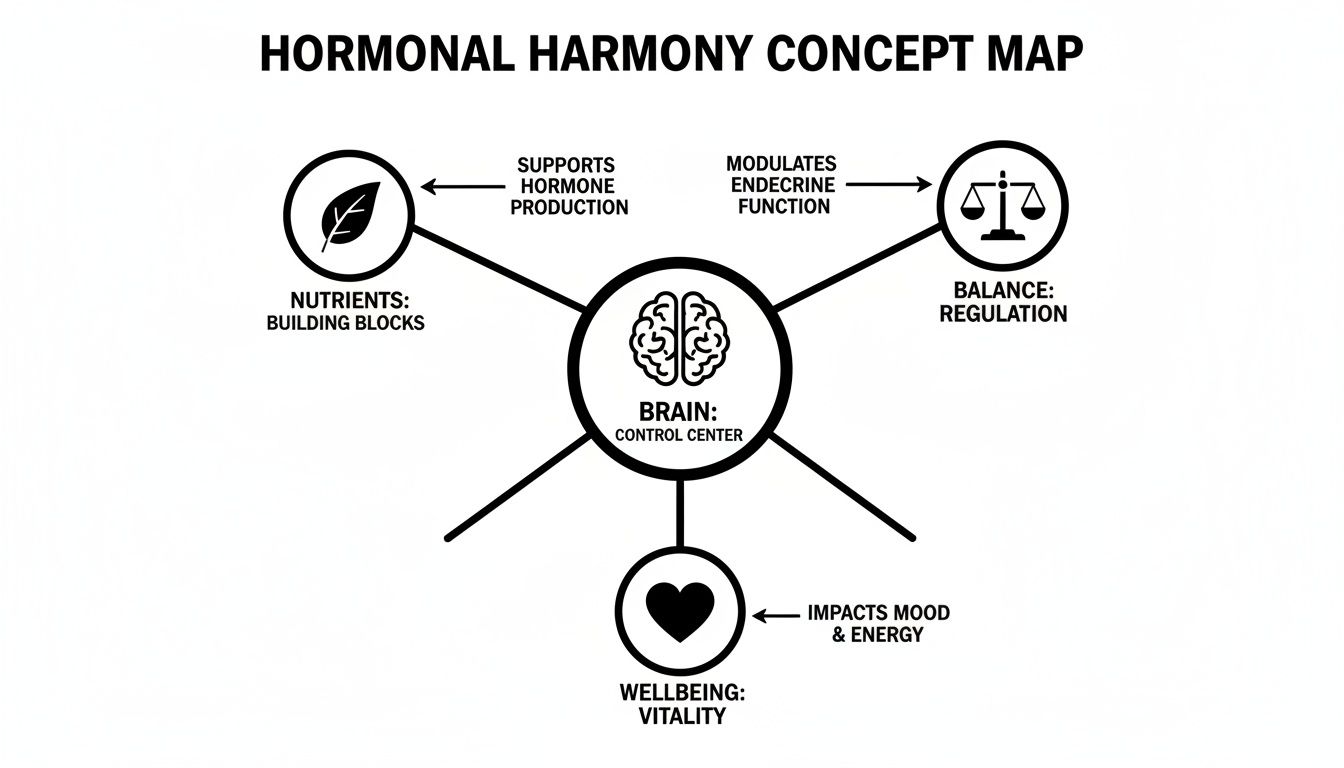 The image highlights a crucial connection: what you put into your body directly fuels your brain's ability to conduct your hormonal orchestra.
When the Music Goes Out of Tune
It doesn’t take much to disturb the delicate balance between these hormones. Stress is a major culprit, as it cranks up cortisol—the "stress hormone." Persistently high cortisol can suppress progesterone production, leading to a state often called "oestrogen dominance." This is where oestrogen's energetic vibe isn't properly counteracted by progesterone's calming influence.
This kind of imbalance can show up in all sorts of ways:
- Irregular or heavy periods
- Intense mood swings and anxiety
- Trouble sleeping
- Weight gain that you can't explain
- Low energy and brain fog
This is where strategic nutrition becomes your secret weapon. Giving your body the right vitamins and minerals is like handing your orchestra a perfectly tuned set of instruments and the correct sheet music, allowing them to restore harmony naturally.
This is why just grabbing any old vitamin to balance female hormones might not cut it. Understanding the why behind your symptoms gives you the power to make smarter choices, supplying your body with exactly what it needs to get the orchestra playing in beautiful unison again. Now, let’s get into which specific vitamins are most effective at bringing back that delicate balance.
The Most Effective Vitamins for Hormonal Harmony
Now we know what makes our hormones tick, let's look at the specific nutrients that act like the master conductors of the whole orchestra. Certain vitamins aren't just a nice-to-have; they’re absolutely essential for producing, using, and clearing out hormones properly. They are the fundamental tools your body needs to keep the entire system running smoothly.
Think of it like this: if your hormones are the musicians, then these core vitamins are their perfectly tuned instruments. Without them, even the most talented player can't create a beautiful melody. Making sure you have enough of these key nutrients is one of the most direct ways to support your body's natural rhythm.
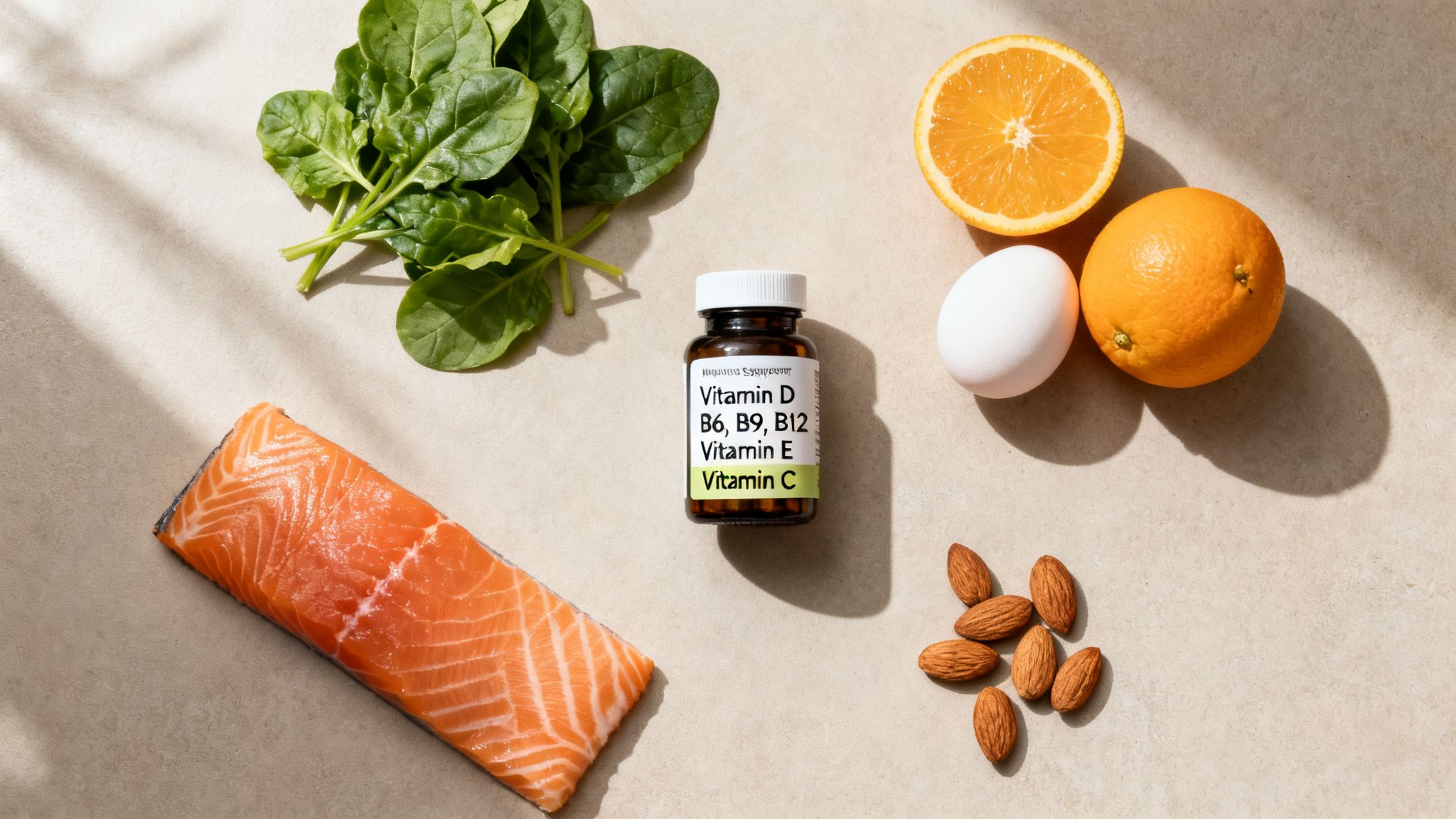
Vitamin D: The Sunshine Hormone
Often called the "sunshine vitamin," Vitamin D is a bit of a celebrity in the nutrient world because it acts more like a hormone itself. It has a huge impact on female reproductive health, directly influencing how our ovaries work and helping to keep the menstrual cycle regular. A growing body of research shows a clear link between healthy Vitamin D levels and better hormonal balance.
The reason it's so influential is that your ovaries are dotted with Vitamin D receptors, a clear sign of its hands-on role in producing hormones. Having enough Vitamin D is linked to healthier ovulation and can even help in managing conditions like Polycystic Ovary Syndrome (PCOS).
Given the UK's famously grey skies, it's no surprise that many of us are running low. While you can get some Vitamin D from fatty fish and fortified foods, our main source is the sun. This means that during autumn and winter, a good quality supplement is often essential to keep your levels topped up for optimal hormone health.
The B-Vitamin Complex: Your Hormonal Detox Crew
The B-vitamin family—especially B6, B9 (Folate), and B12—are the unsung heroes of hormonal balance. They are absolutely crucial for the body's detoxification processes, particularly in the liver, which plays a huge role in gut health and overall wellness.
Picture your liver as a highly efficient recycling centre for your hormones. Once hormones like oestrogen have done their job, they need to be broken down and shown the door. If this process is slow, oestrogen can hang around, get recirculated, and build up, leading to symptoms of oestrogen dominance.
B vitamins are the diligent workers in this recycling plant. They power the specific pathways needed to process and clear out excess hormones, ensuring your levels stay in a healthy, balanced range.
This is where bioavailability becomes so important. For many people, standard B vitamins are hard for the body to convert into their usable forms. This is why methylated B vitamins, like methylfolate (B9) and methylcobalamin (B12), are fantastic. They're already in their body-ready state, meaning your system can put them to work immediately. You can dive deeper into this amazing group of nutrients in our guide to the Vitamin B-Complex.
Vitamin E: The Protective Antioxidant
Vitamin E is a powerful antioxidant that acts like a bodyguard for your cells, including those in your endocrine glands where hormones are made. It protects them from something called oxidative stress—damage caused by unstable molecules called free radicals, which can mess with hormone production and signalling.
Its benefits are particularly noticeable when it comes to easing the common symptoms that come with hormonal shifts:
- PMS Relief: Studies have shown it can help dial down the severity of both physical and emotional PMS symptoms, like sore breasts and anxiety.
- Menopausal Support: For women navigating perimenopause and menopause, Vitamin E has been found to help with symptoms like hot flushes and vaginal dryness.
You can find Vitamin E in nuts, seeds, spinach, and avocados. While getting it from food is brilliant, a supplement can offer a more concentrated dose for targeted support when your hormones are giving you a tough time.
Vitamin C: The Stress and Progesterone Supporter
While it gets all the credit for boosting our immune system, Vitamin C is also a key vitamin to balance female hormones. Your adrenal glands, which produce the stress hormone cortisol, are packed with it. When you’re under chronic stress, your body burns through its Vitamin C stores at a rapid rate, leaving less available for other important jobs.
One of those jobs is supporting progesterone production. Progesterone is our calming, feel-good hormone, and we need plenty of Vitamin C to help maintain its levels during the second half of our cycle (the luteal phase). In short, it helps protect your hormonal balance from the negative fallout of stress.
And it's not just the classic vitamins. Specific vitamin-like compounds are also game-changers for hormonal health. For example, getting the right ratio of myo-inositol and D-chiro inositol for hormonal balance can be incredibly helpful for conditions like PCOS.
From the sunshine hormone to the detox crew, each vitamin plays a unique and vital role. Getting enough of these core nutrients—through a mix of whole foods and smart, bioavailable supplements—lays a powerful foundation for achieving lasting hormonal harmony.
Essential Minerals and Fats for Hormone Support
While vitamins are absolutely vital, they don't work in a vacuum. To truly balance your hormones, they need a strong supporting cast of minerals and healthy fats. Think of it like a world-class orchestra: vitamins are the star musicians, but minerals and fats are the conductors and the very instruments they play. Without them, there's no symphony.
Even the most well-thought-out vitamin strategy can fall flat without these key partners. That's why a genuinely holistic approach to hormonal health always looks at the bigger picture. By bringing these unsung heroes into the mix, you’re giving your body the complete toolkit it needs to create and maintain hormonal harmony.
Magnesium: The Calming Mineral
Magnesium is a true powerhouse, involved in over 300 different processes in the body, and its effect on female hormones is nothing short of profound. It's often called the 'calming mineral' for good reason—it has an incredible ability to soothe the nervous system and help your body cope with stress.
When you're feeling stressed, your body releases the hormone cortisol. Chronically high cortisol can throw your entire hormonal system out of whack, particularly by suppressing progesterone. Magnesium steps in as a buffer against this stress response, helping to keep cortisol in check and allowing your calming hormone, progesterone, to flourish. This makes it an invaluable ally for anyone dealing with PMS, anxiety, or sleep troubles linked to their cycle. It helps relax tense muscles, ease cramps, and promote a sense of calm right when you need it most.
Zinc: The Ovulation and Thyroid Champion
Zinc is another mineral that plays a direct and critical role in your endocrine system, especially when it comes to reproductive health. It's absolutely essential for the processes that lead up to ovulation, as it helps the pituitary gland release the hormones that signal your ovaries to release an egg.
But its influence doesn't stop there. Zinc is also a key player in thyroid health. Your thyroid gland sets the metabolic pace for your entire body, and its hormones are intimately connected with your reproductive ones. Zinc helps convert the inactive thyroid hormone into its active form, ensuring your metabolism and energy levels are firing on all cylinders.
Think of Zinc as the meticulous stage manager for your hormonal production. It ensures crucial signals are sent on time and that other key players, like the thyroid, are performing at their best to support the main show.
A shortfall in this mineral can contribute to irregular cycles, PMS, and even fertility challenges. For a deeper dive into how these two minerals work in tandem, check out our detailed guide on Zinc and Magnesium supplements.
Omega-3 Fatty Acids: The Hormone Building Blocks
Don't fear healthy fats; they are the fundamental building blocks your body needs to produce steroid hormones, including oestrogen and progesterone. In this category, omega-3 fatty acids are the undisputed superstars. Your body can't make these essential fats on its own, so you have to get them from your diet or supplements.
Omega-3s perform two critical jobs for hormonal harmony:
- Provide Raw Materials: They form the very structure of your cell membranes, making sure that hormonal messages can be sent and received clearly. Without enough healthy fats, your body simply lacks the materials it needs to build hormones in the first place.
- Reduce Inflammation: Chronic inflammation is a major disruptor of hormonal balance and a common root cause of painful periods and other cyclical issues. Omega-3s are powerfully anti-inflammatory, helping to calm this underlying fire.
Foods rich in omega-3s, like salmon, mackerel, chia seeds, and walnuts, are fantastic additions to any diet focused on hormonal health. A high-quality supplement can also provide a reliable, concentrated dose to ensure you’re meeting your body’s needs and giving it the foundational support required for lasting balance.
Navigating Hormonal Needs Through Life Stages
A woman’s hormonal landscape isn't a fixed destination; it’s a journey that influences everything from fitness to longevity. The nutritional support a 25-year-old needs is worlds away from what a 45-year-old requires, which means a single, magic vitamin to balance female hormones for all time simply doesn't exist. Your body's demands shift dramatically as you move through the different chapters of your life.
Getting to grips with these changes is the secret to providing targeted support exactly when your body is calling out for it. What keeps you feeling great during your peak reproductive years will need a rethink during postpartum recovery or the slide into menopause. It’s all about tailoring your strategy to your specific life stage to maintain that feeling of balance and vitality.

The Reproductive Years: Your 20s and 30s
In your 20s and 30s, your hormonal symphony is usually focused on regulating your menstrual cycle and preparing for a potential pregnancy. For many, the main challenges are navigating the monthly rollercoaster of premenstrual syndrome (PMS) and keeping energy levels steady.
During this phase, a few key nutrients are non-negotiable for keeping the orchestra playing in tune.
- B-Vitamins (especially B6 and Folate): Think of Vitamin B6 as a star player in taking the edge off PMS symptoms like mood swings and irritability. It does this by supporting the production of feel-good neurotransmitters. Folate (Vitamin B9) is absolutely critical for any woman of childbearing age, as it’s essential for healthy cell growth.
- Magnesium: This calming mineral can be a game-changer for easing period cramps and that all-too-familiar pre-menstrual anxiety. It works its magic by relaxing smooth muscle tissue (like the uterus) and soothing the nervous system.
- Iron: Monthly periods can chip away at your iron stores, leaving you feeling wiped out and fatigued. Making sure you have enough iron is key to feeling vibrant all month long.
Postpartum Recovery and Support
The weeks and months after childbirth bring one of the most sudden hormonal shifts a woman will ever go through. Oestrogen and progesterone levels take a nosedive, which can play a big part in the fatigue, mood swings, and "baby blues" so many new mums experience. On top of that, the body's nutritional demands are sky-high, thanks to recovery and, for many, breastfeeding.
Think of it like refuelling a car after a long and gruelling road trip; topping up your nutrient stores is absolutely vital.
- Omega-3 Fatty Acids (DHA): This is crucial for both mum's brain health and, if you're breastfeeding, for the baby's developing nervous system.
- Vitamin D: Often depleted during pregnancy, Vitamin D is essential for regulating your mood and keeping your immune system strong.
- B12: A true powerhouse for energy production, helping to fight back against the profound fatigue that is part and parcel of new motherhood.
Postpartum recovery is a marathon, not a sprint. Focusing on nutrient-dense foods and targeted supplements provides the essential building blocks your body needs to heal, restore hormonal balance, and cope with the demands of motherhood.
Perimenopause and Menopause: The Transition Years
The transition into menopause, which can kick off in a woman's late 30s or 40s, is marked by fluctuating—and eventually declining—hormone levels, especially oestrogen. This can unleash a whole new set of challenges, from hot flushes and night sweats to shifts in mood and bone density. Finding the right vitamin to balance female hormones becomes even more important during this time.
Despite the challenges, many women go through this period without medical support. In the UK, almost 50% of women aged 45-65—that's roughly 6 million people—manage their menopause symptoms without ever seeing a doctor. This often means they're left dealing with untreated hormonal dips that can trigger depression in 34% of cases and negatively impact the sex lives of 50%.
Strategic nutritional support can be a powerful ally. Adaptogens like ashwagandha can help manage stress, while omega-3s and vitamin E may reduce hot flushes. You can learn more about these UK menopause statistics and their impact on women's health.
Key nutrients to focus on include:
- Vitamin D and Calcium: As oestrogen declines, so can your bone density. This dynamic duo is essential for keeping bones strong and healthy, reducing the risk of osteoporosis later on.
- Magnesium: This wonder mineral helps tackle two of the most common complaints of menopause: sleep problems and anxiety. It encourages relaxation and can help take the edge off night sweats.
- Omega-3s: These healthy fats remain just as important for supporting brain function, mood, and joint health as your body navigates this new phase.
By adapting your nutritional approach to each unique stage of life, you can proactively support your body, smooth out the bumps of transitions, and maintain your hormonal harmony for years to come.
Creating Your Personalised Hormone Balance Plan
Knowing which vitamins and minerals can help is one thing, but turning that knowledge into real, meaningful action is where the magic happens. Getting your hormones back in harmony isn’t about chasing a quick fix or just grabbing a generic multivitamin off the shelf. It’s about creating a plan that’s built specifically for your body, your lifestyle, and your unique stage of life.
A tailored approach is just so much more effective because your hormonal needs aren't the same as anyone else's. Your symptoms, health goals, and even your daily routine all give us clues as to what your body is crying out for. When you listen to these signals, you can move past a one-size-fits-all strategy and give your body the targeted, effective support it deserves.
Identifying Your Specific Needs
The most powerful plan always starts with a bit of self-assessment. Take a moment to think about your main challenges right now. Are you struggling with PMS every month, navigating the ups and downs of postpartum recovery, or dealing with the hot flushes of perimenopause? Pinpointing your core symptoms is the key to choosing the right vitamin to balance female hormones.
To get started, consider these key areas:
- Your Life Stage: Are you in your main reproductive years, recently had a baby, or getting closer to menopause? As we've seen, each phase comes with its own distinct nutritional demands.
- Your Symptoms: Is it fatigue, mood swings, sleep issues, or irregular cycles that are getting you down? These symptoms often point directly towards specific nutrient shortfalls.
- Your Lifestyle: Do you have high stress levels, a demanding fitness routine, or specific dietary restrictions? These factors have a huge impact on what your body needs.
By connecting your personal experience with the nutritional science, you transform generic advice into a personal action plan. This is the difference between simply taking supplements and strategically nourishing your body back to balance.
For more guidance on how to build out this strategy, you can explore the benefits of creating a personalized nutrition plan designed around your individual biology.
Taking the time to understand what makes you, you, empowers you to cut through the confusion and make choices you can feel confident about. Instead of guessing, you can build a routine that offers a clear, effective path to getting your hormonal harmony back on track.
Got Questions About Hormones & Supplements?
Navigating the world of supplements for your hormonal health can throw up a lot of practical questions. You've learned the why behind using specific nutrients to find your balance, and now it's time to tackle the how. This section is all about giving you clear, straightforward answers to the most common queries, so you can feel confident moving forward.
Our goal here is to anticipate your concerns and give you reliable info that empowers you on your journey. From realistic timelines to knowing when food just isn't enough, these answers should help you start with clarity and purpose.
How Long Does It Take to Notice a Difference?
This is the big one, and the honest answer is: it really varies. Getting your hormones back in sync is a marathon, not a sprint. While some women might feel subtle shifts in their energy or mood within a few weeks, it typically takes at least three months of consistent use to notice significant, lasting changes.
Think of it like watering a plant. You don't see growth overnight, but with consistent care, you build a strong, healthy foundation. Your body needs time to replenish its nutrient stores and for all your hormonal systems to recalibrate. Patience and consistency are your greatest allies here.
Can I Get Everything I Need from Food Alone?
A whole-foods diet packed with leafy greens, healthy fats, and quality protein is absolutely the cornerstone of hormonal health. But let's be realistic—modern life can make it incredibly difficult to get optimal levels of every key nutrient from diet alone. Soil depletion, chronic stress, and specific health conditions can all increase your body’s demand for certain vitamins and minerals.
While food should always be your foundation, high-quality supplements act as a powerful insurance policy. They provide a targeted, therapeutic dose of specific nutrients that might be hard to get consistently through your diet, ensuring your body has everything it needs to thrive.
What About Conditions Like PCOS?
Hormonal imbalances can be particularly challenging for women with conditions like Polycystic Ovary Syndrome (PCOS). This condition, which affects around 1 in 10 women in the UK, is a major disruptor, often causing irregular periods and insulin resistance. Frustratingly, diagnosis can be delayed by several years, leaving many without the support they need.
In these cases, specific nutrients become even more critical. Research shows that targeted supplementation with nutrients like inositol and vitamin D can be a game-changer, helping to restore ovulation rates by up to 70% in some trials. You can discover more insights about PCOS awareness from MEL Research and its impact on women’s health.
Should I Talk to My Doctor First?
Absolutely. This is a non-negotiable step. Before starting any new supplement—especially if you're taking prescription medications (like birth control or thyroid medication) or have an existing health condition—it's essential to consult your doctor or another qualified health professional.
They can help you understand any potential interactions and make sure your chosen supplements are safe and appropriate for your unique health profile. This collaborative approach ensures you’re making the most informed and responsible decisions for your wellbeing.
Ready to stop guessing and start building a supplement plan that’s as unique as you are? The VitzAI questionnaire analyses your age, lifestyle, and health goals to provide a personalised report, helping you find the right nutrients to support your hormonal harmony. Take the free VitzAI quiz today!
This article is for informational purposes only and is not medical advice. Always consult a qualified health professional before starting any new supplement or major lifestyle change.