

What Do Electrolytes Do? Your Essential Guide
Ever wondered what keeps your muscles firing during a workout or your brain sending signals at lightning speed? The answer isn't some abstract biological magic—it's down to a group of tiny, electrically charged minerals called electrolytes.
Essentially, electrolytes are minerals that carry an electric charge when dissolved in fluids like your blood. Think of them less as simple nutrients and more as the body’s internal electrical wiring, powering everything from your heartbeat to your cognitive performance.
Your Body's Electrical System: The Role of Electrolytes
So, how do they actually work? When these minerals dissolve in water, they separate into positive and negative ions. This process creates a medium that can conduct electricity, allowing your cells to communicate and your body's systems to run like a well-oiled machine.
This isn't just about rehydrating after a run; it's about the very foundation of how your body functions moment to moment. Without this electrical potential, your most basic physiological processes—from muscle movement to gut health—would simply shut down.
The Three Core Jobs of Electrolytes
Keeping these charged minerals in balance is non-negotiable for daily wellness, sharp thinking, and physical performance. They have three main jobs on their to-do list:
- Fluid Balance: They are the gatekeepers of hydration, directing water in and out of your cells to ensure everything stays in equilibrium, a process vital for everything from skin health to hormone regulation.
- Nerve Signals: Every single nerve impulse, from a quick reflex to a complex thought, relies on electrolytes to carry the message from your brain to the rest of your body, directly impacting cognitive performance.
- Muscle Contractions: From flexing your bicep to the constant, life-sustaining beat of your heart, electrolytes are what make every single muscle contraction possible.
This intricate system is incredibly sensitive to your hydration levels. A recent fitness report revealed that a staggering 78% of Brits drink less than the NHS-recommended daily water intake, a habit that can easily throw this crucial balance out of whack. You can learn more about the UK's hydration habits and their health impact.
Getting a handle on what electrolytes do is the first step towards taking control of your health. Whether you're an athlete chasing a new personal best or just want to feel more energised every day, this guide will show you how to manage them effectively.
Meet Your Body's Electrical Crew
Think of your body's inner workings as a finely tuned orchestra. For the music to be perfect, every musician must play their part flawlessly. Electrolytes are these specialist musicians, and understanding their individual roles is the first step to appreciating just how crucial they are for your health.
Let's meet the key players. While many minerals are involved, six major electrolytes do most of the heavy lifting to keep your internal systems humming along.
The Major Players: Sodium, Potassium, and Chloride
These three are the headline acts, working in a tight-knit partnership to manage some of your body’s most fundamental processes.
-
Sodium: This is the master fluid regulator. Sodium is the primary electrolyte responsible for controlling the amount of water inside and outside your cells. Getting this right is non-negotiable for healthy blood pressure and nutrient absorption.
-
Potassium: Working in a delicate dance with sodium, potassium is essential for conducting nerve signals. These signals are what tell your muscles to contract—most importantly, the rhythmic, life-sustaining contractions of your heart.
-
Chloride: You’ll almost always find chloride working alongside sodium. It’s a key partner in maintaining proper fluid balance and is also a crucial component of stomach acid, which you need for effective digestion and gut health.
This infographic gives you a great visual breakdown of the core jobs this team handles.
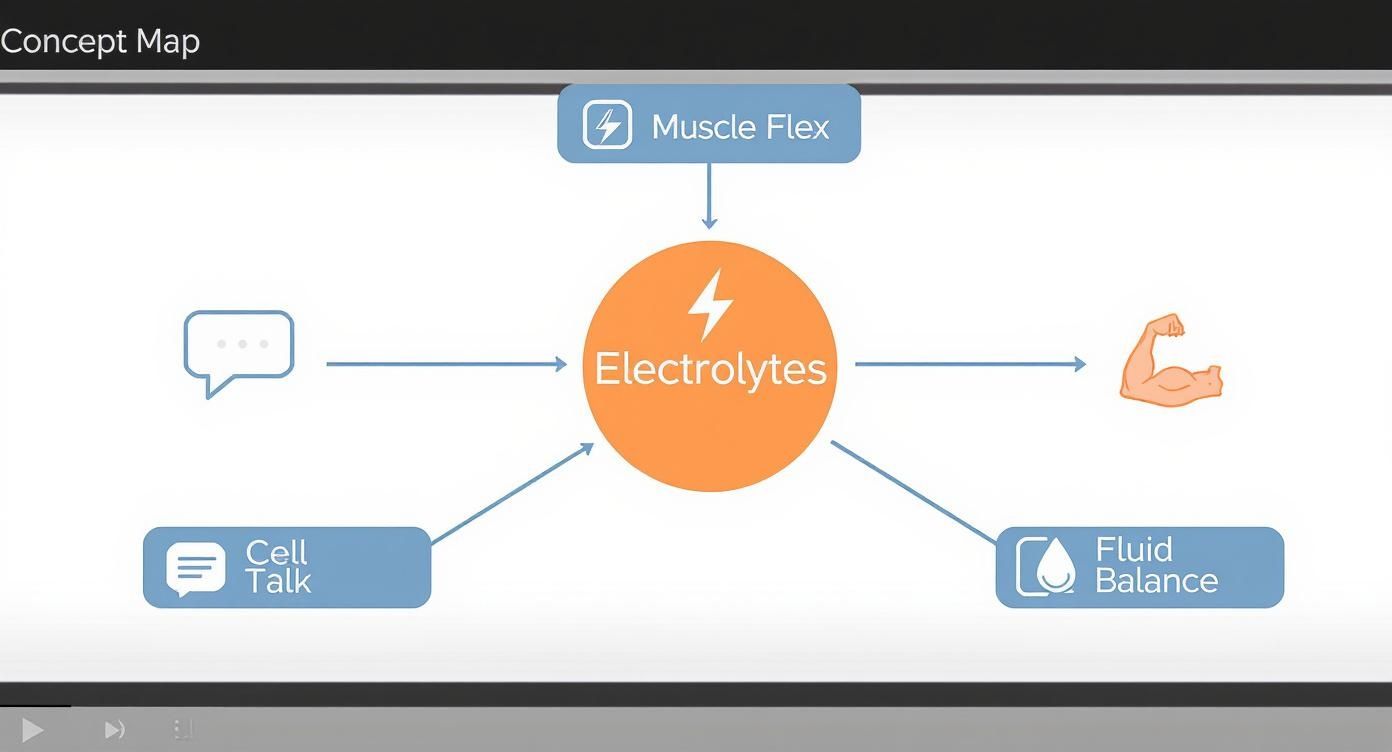
As you can see, keeping these electrolytes in balance is fundamental for everything from cellular communication and muscle movement to basic hydration.
The Vital Supporting Cast
Beyond the big three, a few other electrolytes play equally important, specialised roles.
-
Calcium: It’s famous for building strong bones, but calcium’s electrical role is just as critical. It’s a key trigger for muscle contraction and is absolutely vital for nerve signalling. When a nerve impulse tells a muscle to move, it's calcium ions that flood in to get the job done.
-
Magnesium: Think of magnesium as the body's great relaxer and energy guru. It acts as a natural counterbalance to calcium, helping muscles relax after they contract, which is crucial for sleep and stress management. It’s also a helper in over 300 different enzyme reactions, including the ones that turn your food into energy.
-
Phosphate: Working quietly in the background, phosphate is a true unsung hero. It’s fundamental for building and repairing bones and teeth, but it's also essential for nerve function and muscle contraction. Critically, it’s a core component of ATP, your body's main energy currency.
These six minerals form a dynamic, interconnected system. Their combined effort ensures your body’s internal electrical grid is always on, powering everything from a single thought to a powerful sprint.
This electrical network is incredibly complex, relying on a whole host of minerals working together. To get a fuller picture of all the components involved, it's worth exploring the vital role of trace minerals in supporting these core functions. Each one contributes to the symphony of biochemical signals that keeps you running.
Recognising the Signs of an Imbalance
Your body is a master of maintaining internal balance, a state known as homeostasis. But even the most finely-tuned system can get knocked off course. When your electrolyte levels stray too high or too low, it’s like static interfering with your body’s electrical communication network. This is what we call an electrolyte imbalance.
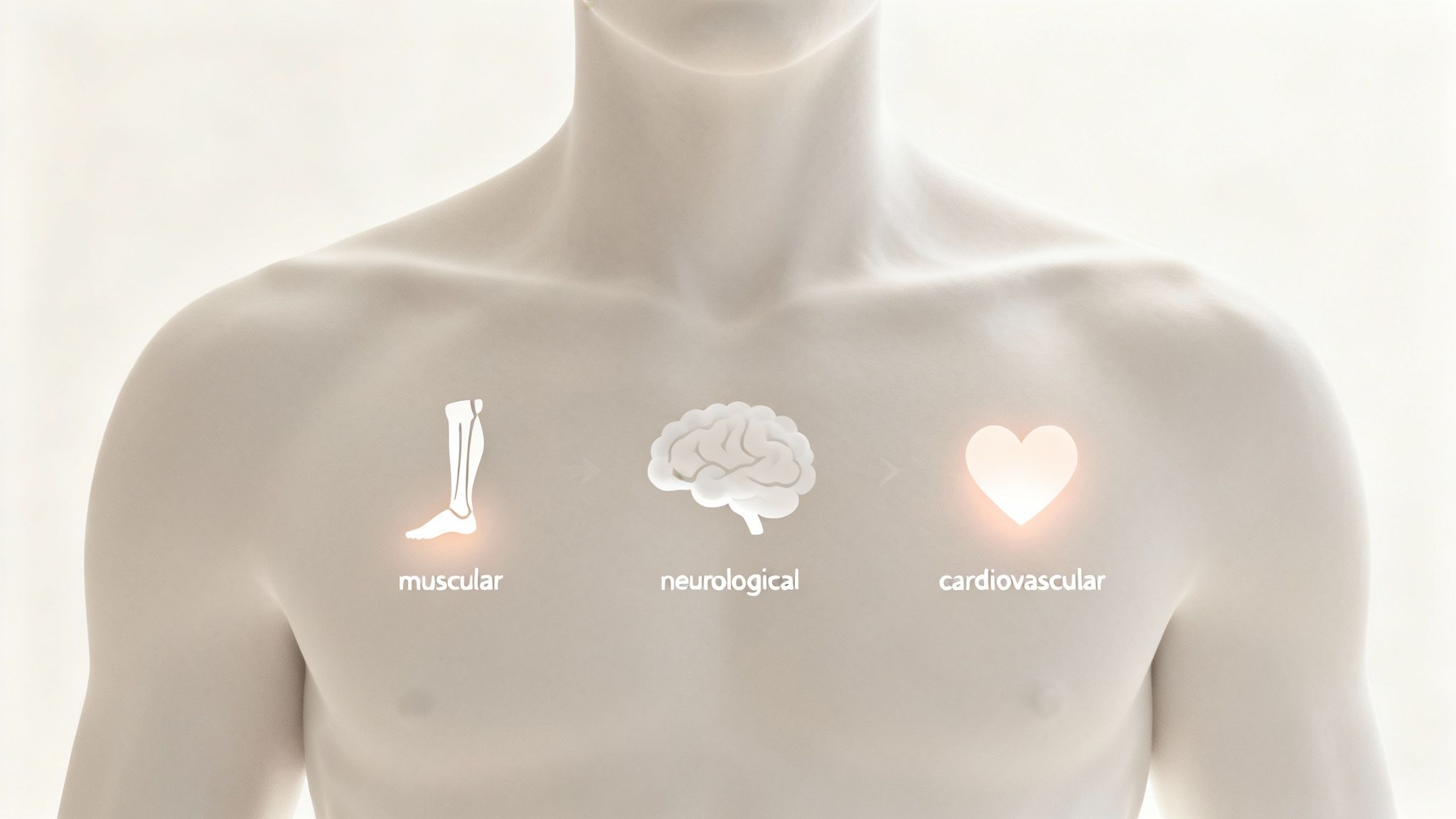
And this isn't just a concern for marathon runners. Many everyday situations, like chronic stress or poor sleep, can disrupt this delicate equilibrium, triggering a cascade of symptoms. These are signals that your body needs a hand to get back into its natural rhythm. Once you understand what electrolytes do, it becomes clear why even a minor shift can have a major impact.
Common Causes of Electrolyte Imbalance
A few common culprits are often responsible for either depleting your mineral stores or causing them to build up, throwing everything out of sync. Knowing what these triggers are is the first step toward preventing an imbalance before it even starts.
Watch out for these key causes:
- Intense Exercise: When you sweat heavily during a tough workout, you’re not just losing water; you're also losing significant amounts of sodium, potassium, and chloride.
- Illness: A nasty bout of vomiting or diarrhoea can rapidly flush fluids and essential electrolytes out of your system, affecting gut health.
- Inadequate Diet: If your diet is low on mineral-rich whole foods, you can end up with chronically low levels of key players like magnesium or potassium.
- Certain Medications: Some drugs, particularly diuretics ("water pills") and laxatives, can directly interfere with your body's fluid and mineral balance.
- Dehydration: Sometimes it's as simple as not drinking enough water. This can concentrate the electrolytes in your body, disrupting their normal function.
Think of it like a finely tuned car engine. If the oil or coolant levels are off—too high or too low—the engine simply won’t run smoothly. The same principle applies to your body's intricate cellular machinery.
Symptoms to Watch For
The signs of an imbalance can creep up on you, ranging from subtle annoyances to more serious red flags. They often show up first in the systems that rely most heavily on those electrical signals—your nerves and muscles.
Muscular and Neurological Signs
Because electrolytes are the bedrock of nerve-to-muscle communication, this is often where you'll first notice something is amiss.
That sudden, sharp leg cramp a runner gets mid-stride? That could be a cry for help from potassium-depleted muscles. Likewise, the brain fog and crushing fatigue that linger after a stomach bug can often be traced back to low sodium levels, impacting cognitive performance.
Keep an eye out for these symptoms:
- Muscle cramps, spasms, or general weakness
- Fatigue and lethargy
- Headaches or dizziness
- Confusion or difficulty concentrating (that classic "brain fog")
- Irritability or noticeable mood swings, which can be linked to stress and hormone balance
Cardiovascular and Other Physical Signs
Your heart is essentially one big, rhythmically contracting muscle, which makes it particularly sensitive to even small shifts in electrolyte levels.
Key signs in this category include:
- Irregular heartbeat or palpitations (a "fluttering" feeling)
- Changes in blood pressure
- Numbness or tingling sensations, especially in your hands or feet
- Nausea or vomiting
Learning to spot these early warning signs is empowering. It allows you to connect the dots between how you're feeling and a potential cause—like that gruelling workout or a recent illness—so you can take the right steps to rebalance your system.
How to Replenish Electrolytes Naturally
Restoring your body’s electrical balance doesn’t always mean reaching for a special potion or pill. For most of us, most of the time, a food-first approach is the best and most sustainable strategy. Once you understand what electrolytes actually do, you can start choosing foods that naturally top up your mineral stores, keeping your internal systems humming along nicely.
Think of it as building a strong foundation. When you maintain your electrolyte balance through your daily diet, you’re supporting everything from your energy levels and cognitive performance to your hormone health.

Fuelling Up with Whole Foods
Your dinner plate can be your primary rehydration station. So many common, nutrient-rich foods are already packed with the essential electrolytes your body craves.
Here are some of the best whole-food sources to add to your shopping list:
- Potassium: Look no further than fruits and vegetables. Bananas, avocados, sweet potatoes, and spinach are all brilliant choices.
- Magnesium: Leafy greens like kale and chard, alongside nuts, seeds, and even dark chocolate, are fantastic sources. Magnesium is a star player for managing stress and promoting quality sleep. To get more specific on timing, check out our guide on the best time to take magnesium.
- Calcium: Milk and yoghurt are the classic go-tos, but you can also find plenty in fortified plant milks and leafy greens.
- Sodium: Sodium often gets a bad rap, but it's absolutely vital. You'll find it in healthy amounts in things like salted nuts, seeds, and many other minimally processed foods.
By consciously building meals around these kinds of ingredients, you create a far more resilient system—one that’s less likely to be thrown off balance by everyday stressors.
When Are Supplements the Right Choice?
While a well-rounded diet is always your first line of defence, there are definitely times when your body’s demands simply outpace what food alone can realistically provide. This is where a targeted supplement like an energy powder can be a genuinely smart move.
Consider reaching for an electrolyte supplement in these scenarios:
- Endurance Sports: If you're exercising for over an hour, especially in the heat, you're losing a significant amount of electrolytes through sweat.
- Recovery from Illness: After a bout of vomiting or diarrhoea, your body is seriously depleted and needs a quick way to get back on its feet.
- Hot Climates: Simply living or working in a hot, humid environment means you’re losing more minerals through sweat every single day.
This focus on replenishment is part of a bigger picture. Here in the UK, the market for sports and electrolyte drinks is booming, with projections showing it could hit USD 276.20 million by 2032. It's all driven by a public that's more tuned in to health and fitness than ever before. For athletes, exploring effective nutrition supplements for runners can reveal just how targeted support can elevate performance.
Food Sources vs. Supplement Forms
Deciding between whole foods and supplements isn't always an either/or situation. Both have their place, and understanding the pros and cons of each can help you make the best choice for your specific circumstances.
| Source | Pros | Cons | Best For |
|---|---|---|---|
| Whole Foods | Provides a wide range of nutrients, fibre, and phytonutrients. Sustainable and cost-effective. | Slower absorption. May not be sufficient for rapid or high-volume replenishment needs. | Daily maintenance, general health, and preventing minor imbalances. |
| Energy Powders | Highly customisable dosage. Fast absorption when mixed with water. Often cost-effective and may include other performance enhancers like creatine or mushroom blends. | Requires mixing. Some may contain artificial sweeteners or flavours. | During or after intense exercise, customising intake for specific needs. |
| Tablets/Capsules | Extremely convenient and portable. No mixing required. Precise, pre-measured dose. | Slower absorption than liquids. May cause stomach upset in some people. | Travel, on-the-go convenience, and those who dislike flavoured drinks. |
| Ready-to-Drink | Ultimate convenience, no prep needed. Good for immediate rehydration. | Can be expensive. Often contain high amounts of sugar or artificial ingredients. | Post-workout recovery when convenience is key; emergencies. |
Ultimately, a balanced approach is usually the most effective. Rely on a nutrient-dense diet for your daily foundation and turn to high-quality supplements when your body needs that extra, targeted boost.
Tailoring Your Electrolyte Intake to Your Lifestyle
Knowing what electrolytes do is the first step, but putting that knowledge into practice is a whole different ball game. There’s simply no one-size-fits-all answer for replenishment, because your personal needs can swing dramatically depending on your activity level, age, and what you’re trying to achieve with your health.
Rather than grabbing a generic sports drink and hoping for the best, a smarter strategy is to adjust your intake to fit your life. The needs of someone who hits the gym a few times a week are worlds away from those of a marathon runner. Likewise, what works for a 25-year-old won't be optimal for someone over 50.
Thinking this way means you’re giving your body exactly what it needs, when it needs it, which is the key to feeling and performing your best.
For the Fitness Enthusiast
If you’re active on a regular basis, your electrolyte strategy should be built around your workouts. It’s all about maximising performance and, just as importantly, speeding up your recovery. Think of it as a simple three-stage process to keep your body’s electrical system firing perfectly.
Here’s what your game plan should look like:
- Pre-Workout: The focus here is simple hydration with water. Unless you’re about to tackle an exceptionally long or intense session, you probably don’t need a special drink beforehand. A good, balanced diet should have you topped up and ready to go.
- Intra-Workout: For any exercise pushing past the 60-minute mark, sipping on an electrolyte drink becomes crucial. This is where you actively replace the sodium and potassium you’re losing through sweat, which helps to stave off muscle cramps and keep your energy levels stable.
- Post-Workout: Now it’s all about recovery. Replenishing lost fluids and minerals helps your body repair muscle tissue and cuts down on that post-exercise fatigue. You’ll be ready for your next session much faster.
This kind of focused strategy is catching on, especially with younger, active people. A recent YouGov survey revealed that 22% of Britons regularly use electrolyte drinks. The most frequent users? Those aged 18-24, which shows a growing awareness of just how important these minerals are for fitness. You can find out more about UK consumer trends in health beverages.
For Long-Term Wellness and Healthy Ageing
As we move through different stages of life, our bodies change, and our electrolyte focus needs to shift right along with them. Keeping this delicate balance in check is a massive part of any long-term wellness plan, especially when it comes to longevity, heart health, and bone density.
For anyone focused on longevity, certain minerals become even more vital. Magnesium, for example, plays a huge role in regulating your heart rhythm and blood pressure. At the same time, potassium helps to counteract the effects of too much sodium, giving your cardiovascular system extra support.
A proactive approach is essential as we get older. Our sense of thirst can start to fade and kidney function may become less efficient, making it even more important to be mindful of hydration and mineral intake.
This is where a bit of customisation really makes a difference. When you understand your specific needs, you can build a nutritional plan that properly supports you at every age. If you’re looking for a bit more guidance, getting a personalised nutrition plan can give you the clarity you need to optimise your health for the long run.
Common Questions About Electrolytes
Even when you've got the basics down, a few practical questions about electrolytes always seem to pop up. Let's tackle some of the most common ones to clear up any lingering confusion and help you feel more confident about managing your body's delicate balance.
Do I Need an Electrolyte Drink for Light Exercise?
Probably not. For lighter activities like a casual walk, a gentle yoga session, or a short cycle, plain water is almost always perfectly fine. Your body just doesn't lose enough electrolytes through sweat during low-intensity exercise to need immediate, special replacement.
A balanced daily diet should easily cover the minerals you use during these light efforts. The main exception? If you're exercising in very hot and humid weather, you might sweat more than usual. In that case, it's all about listening to your body. If you feel unusually tired or start to get a cramp, a low-sugar electrolyte drink might give you a helpful boost.
Can You Have Too Many Electrolytes?
Yes, you absolutely can, though it's quite rare. Conditions like hypernatremia (too much sodium) or hyperkalemia (too much potassium) are a real thing. It’s incredibly difficult to get to this point from food alone because healthy kidneys are brilliant at filtering out any excess and simply flushing it out in your urine.
The real risk comes from overdoing it with highly concentrated electrolyte supplements, especially if you’re not drinking enough fluid along with them. People with kidney problems or certain other health conditions are also at a higher risk. Signs you’ve gone overboard can include nausea, muscle weakness, or in serious cases, an irregular heartbeat. The golden rule is to always stick to the recommended dose on the label.
Are All Electrolyte Supplements the Same?
Not even close. The supplement aisle can be confusing because there are so many different formulas designed for very different jobs. It’s crucial to read the label to know what you’re actually getting.
Here’s a quick look at the main types:
- Performance Formulas: These are typically loaded with sodium and often sugar (carbohydrates). They're built to quickly replace what you lose during intense, sweaty exercise and give you a fast energy hit.
- Daily Wellness Formulas: These usually have less sodium but more of other minerals like magnesium and potassium. They're designed to support your everyday hydration and general health, not fuel a triathlon.
- Hydration Multipliers: These products often use a very specific ratio of sodium, potassium, and glucose. This combination is engineered to speed up how fast your gut absorbs water, making them great for rapid rehydration when you're ill or have been sweating heavily.
The right supplement is all about your goal. A marathon runner needs something completely different from someone just looking for a daily mineral top-up. Always match the product to your lifestyle and activity level.
Does My Coffee or Tea Mess with My Electrolytes?
This is a really common question. Both coffee and tea contain caffeine, which has a reputation as a mild diuretic (meaning it makes you pee more). But for most people who drink a moderate amount regularly, the effect is pretty minimal. The liquid in your cup of coffee or tea more or less balances out the tiny bit of extra fluid you might lose.
Where you might run into trouble is with very high caffeine consumption, especially if you aren’t drinking enough water throughout the day. That could potentially lead to some fluid loss and a slight dip in your mineral levels. The key, as with most things, is moderation. Just balance your caffeine intake with plenty of plain water, and you'll stay properly hydrated. You can learn more about how to interpret daily nutrient recommendations by reading our guide on what Nutrient Reference Value means.
At VitzAI, we use smart technology to help you cut through the noise and find the right supplements for your unique biology and goals. Take our free quiz to get a personalised plan that supports your energy, performance, and long-term health. Discover your personalised recommendations at VitzAI.com.
This article is for informational purposes only and is not medical advice. Always consult a qualified health professional before starting any new supplement or major lifestyle change.