

What Helps with Mental Clarity a Practical Guide
You've been staring at the same paragraph for ten minutes. The coffee beside your keyboard is already cold, your inbox keeps interrupting, and every task feels harder than it should. You search for what helps with mental clarity and find a long list of capsules, powders and “brain-boosting” ingredients.
That search often starts in the wrong place. Clear thinking is an output of several systems working together, including sleep, movement, hydration, stress regulation and nutrition. A supplement may help in a specific situation, but it rarely overrides exhaustion, persistent stress or an unbalanced routine.
Why Mental Clarity Feels Harder Than It Should
You arrive at your desk after a short night, reach for magnesium, and still struggle to follow a meeting. The supplement may not be the first issue to investigate. Mental clarity depends on working memory, attention, task-switching and decision-making, plus the conditions that support those abilities.
A busy professional might blame a difficult morning on low magnesium when the nearer causes are poor sleep, hours of sitting, a missed meal, inadequate fluids or a tense conversation. Someone else may sleep adequately yet feel foggy when stress keeps redirecting attention. The same symptom can therefore reflect different priorities.
A useful reframe: ask what your routine is asking your brain to cope with before asking which supplement might improve it.
Sleep has a particularly direct connection with attention and working memory. A 2023 systematic review covering 22 reviews and 623 primary studies found moderate-to-high-quality evidence that approximately 7 to 8 hours of sleep is the optimal range for adult cognitive performance. Sleep outside that range was associated with poorer executive function and working memory in the systematic review on sleep duration and cognition. That range is a guide, not a universal prescription. Sleep quality, age, insomnia, stress and medical conditions also affect how restorative sleep feels.
Movement can support clarity through several routes. The World Health Organization recommends 150 to 300 minutes of moderate-intensity aerobic activity per week, or 75 to 150 minutes of vigorous activity, with an equivalent combination also acceptable in its physical activity guidance. Activity can support cognition, mental health and sleep, giving the brain a better environment for sustained attention.
Headaches, jaw tension and disrupted sleep may add another barrier to concentration. If those symptoms occur together, the Pain and Sleep Therapy Center on TMJ provides context on possible connections between TMJ-related tension, headaches and sleep concerns.
The practical takeaway is straightforward. Mental clarity is not one switch controlled by one nutrient. Find the weakest foundation first, then ask whether a supplement addresses a genuine gap instead of adding another task to an overloaded routine.
Lifestyle Foundations That Move the Needle Most
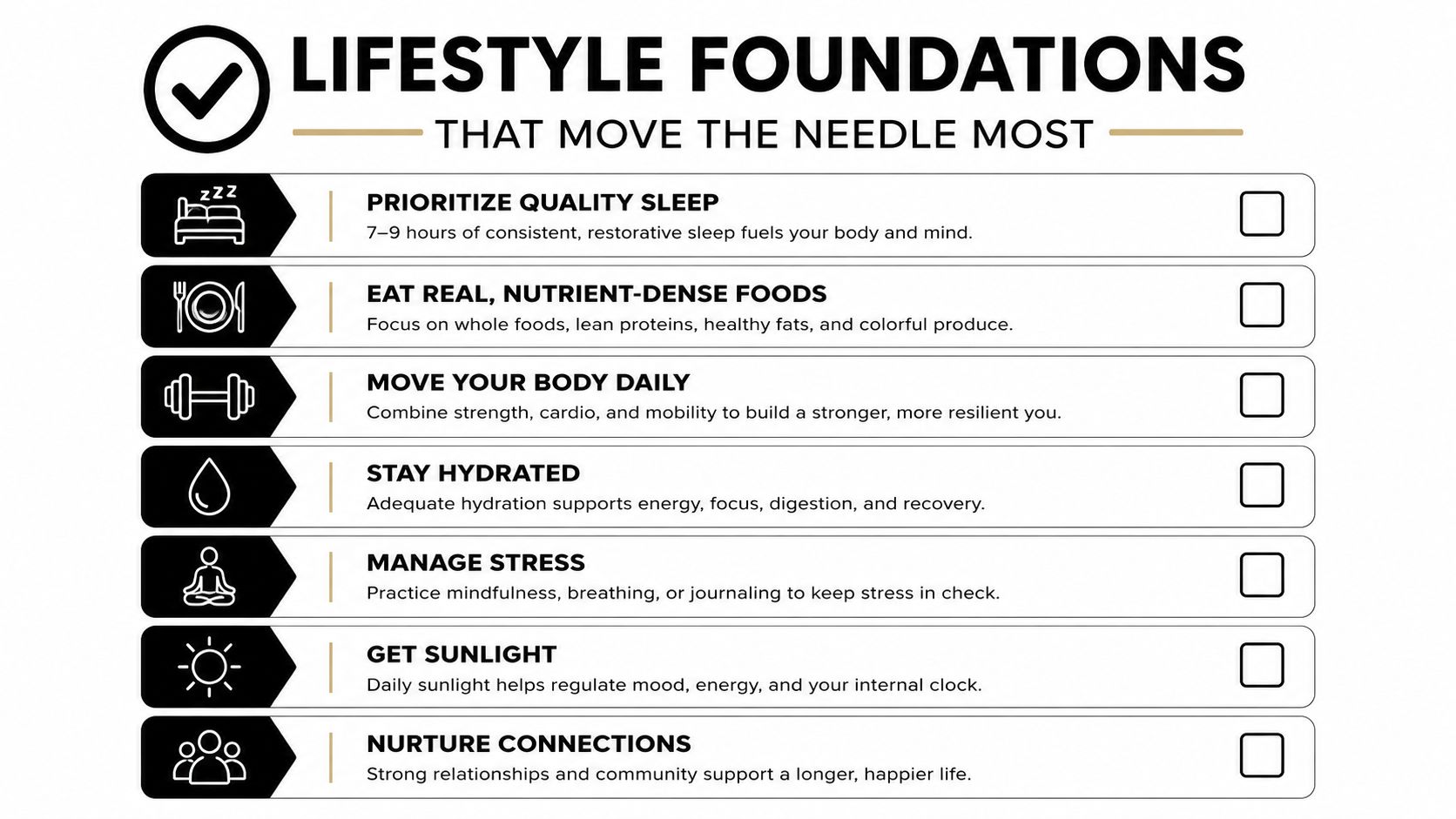
A busy day can make mental fog feel like a supplement problem. Start with a short self-audit instead: rate your sleep, movement, hydration and stress, then identify the foundation creating the largest obstacle. Improving one weak link often makes the rest of the routine easier to manage.
Sleep comes before stimulation
Sleep supports attention, memory and executive function. Waking unrefreshed is a reason to examine sleep adequacy and regularity before reaching for another stimulant. Keep wake times reasonably consistent, reduce late-evening interruptions and address persistent insomnia rather than treating it as normal.
Sleep is the overnight maintenance period for attention. If that maintenance is poor, adding a product may be like turning up the brightness on a phone with a low battery. The immediate change can feel noticeable, but it does not repair the underlying problem.
Movement gives the brain a better working environment
Brisk walking, cycling, swimming and resistance training can all support a clearer working day. Greater amounts of moderate-to-vigorous activity are associated with better processing speed, memory and executive function, along with better sleep and fewer symptoms of anxiety and depression.
Regular movement matters even when formal workouts are difficult. A practical week can include brisk walks, short activity breaks during sedentary work and separate resistance sessions. You can also learn how to improve focus through techniques that protect concentration during the workday.
Hydration and stress need attention too
Mild dehydration can make demanding tasks feel harder, especially when thirst is mistaken for tiredness. Keep water accessible, drink regularly and notice situations that raise fluid needs, including exercise, heat and long periods of talking.
Stress regulation means giving your nervous system repeated chances to settle. A phone-free walk, slow breathing before a demanding task, a realistic task list and protected breaks can reduce the mental switching that fragments working memory.
If focus problems persist or interfere with daily life, build practical skills with Uptown Psychology through structured adult ADHD coaching resources. A persistent pattern deserves assessment rather than automatic reliance on supplements.
For this week's self-audit, choose the weakest foundation and attach one small action to it, such as a consistent wake time, a short walk, a water bottle at your desk or a protected pause between tasks.
The Key Supplements People Talk About and What the Evidence Says
Supplements become easier to judge when you stop asking which one is “best” and instead ask what role it could reasonably play. A product may support general nutrition, address a shortfall or fit a particular demand, but those are different goals from producing an immediate focus effect.
| Supplement | Main role | Best fit for | Evidence strength |
|---|---|---|---|
| B vitamins | Energy metabolism and nutrient support | People with a dietary gap or confirmed need | Stronger for correcting deficiency than for boosting clarity in well-nourished adults |
| Omega-3 | General nutritional and structural support | People assessing low fish intake or individual nutritional status | Mixed for cognitive enhancement |
| Magnesium | Dietary support and normal physiological function | People with low dietary intake or a confirmed need | Insufficient evidence for a general cognition boost |
| Creatine | Muscle and energy-system support | Active adults, and possibly periods of sleep deprivation or physiological stress | Promising but limited and inconsistent for cognition |
| L-theanine | Calm-alert focus, often paired with caffeine | People who want a smoother stimulant routine | Situation-dependent, not a universal clarity solution |
B vitamins are often grouped with energy products because they participate in energy metabolism. That doesn't mean taking extra B vitamins automatically creates more energy or sharper thinking when intake is already adequate. A multivitamin may be reasonable when diet is inconsistent, but it shouldn't replace a review of food quality or a conversation with a professional about symptoms.
Omega-3 deserves careful wording. A six-month double-blind trial of 193 healthy adults aged 20 to 80 compared 2.5 grams per day of omega-3 with placebo and found no significant difference in its main cognitive outcomes, although a subgroup with lower starting episodic-memory performance improved in the published trial report. A separate NIH-supported trial followed about 4,000 older adults for five years and found similar cognitive decline across omega-3 and placebo groups. Fish intake and overall diet may therefore matter more than assuming a high-dose capsule guarantees clearer thinking.
Magnesium is useful to discuss without overselling it. A systematic review found only three randomised trials and concluded that evidence was insufficient to determine whether magnesium supplementation improves cognition in the review of magnesium and cognitive health. It may suit someone with a dietary shortfall or another established reason to use it, not everyone experiencing brain fog.
Creatine has a more nuanced signal. Some research suggests modest possible improvements in short-term memory and reasoning, while other trials in healthy young adults found no cognitive benefit. It may be more relevant during sleep deprivation or physiological stress than as a universal focus enhancer.
For a more detailed discussion of supplements for brain fog, look for guidance that separates menopause, diet, sleep and medical factors from broad product claims. You can also compare practical use cases in this guide to supplements for focus.
Caffeine Timing and How to Use It Without the Crash
Caffeine can improve alertness, but reactive use creates a familiar cycle. You feel tired, take a large dose, work intensely for a while, then struggle with sleep and wake foggier the next day.

Try a deliberate morning-to-midday routine instead. Have caffeine after you've started your morning, use the smallest amount that works and avoid automatically adding more when concentration dips. Large doses later in the afternoon can undermine evening sleep, even if you fall asleep without noticing a major problem.
L-theanine is often paired with caffeine because some people find the combination feels calmer and less jagged than caffeine alone. Treat that as an individual response, not a guarantee. A Focus Powder containing natural caffeine and L-theanine may be relevant for someone who wants a convenient pre-work routine, but the product doesn't remove the need to protect sleep.
Sugary energy drinks can create a different problem. They may deliver stimulation alongside a sharp taste-driven reward, while the overall routine encourages repeated use instead of addressing fatigue. Choose water alongside coffee or tea, and don't interpret thirst, hunger or poor sleep as a permanent need for more caffeine.
For a practical approach to energy without caffeine, build movement, food and recovery into the day rather than treating caffeine as your only energy strategy.
A simple protocol looks like this:
- Use it intentionally: Decide in advance when caffeine supports a task.
- Keep it earlier: Protect the evening by avoiding routine late-day use.
- Pair it wisely: Consider food, water and, if appropriate, L-theanine rather than escalating the stimulant dose.
- Review the result: If sleep worsens, your caffeine routine isn't improving clarity overall.
When a Supplement Actually Makes Sense
A supplement makes the most sense when it answers a specific question. Are you correcting a confirmed deficiency, filling a likely dietary gap or supporting a defined demand? If the answer is none of these, the expected benefit is usually less certain.
Start with the situation, not the product
A person who eats little or no fish may reasonably review omega-3 intake with a professional. Someone whose diet lacks variety may consider whether a multivitamin is appropriate. An active adult may explore creatine for training support, while someone under unusual sleep or physiological stress may have a different reason to discuss it.
That reasoning differs from buying a broad “brain stack” because concentration feels poor. A stack can make it difficult to identify what helps, what causes side effects or what duplicates another ingredient. More isn't automatically better, and a focus product can't reliably compensate for chronic sleep loss.
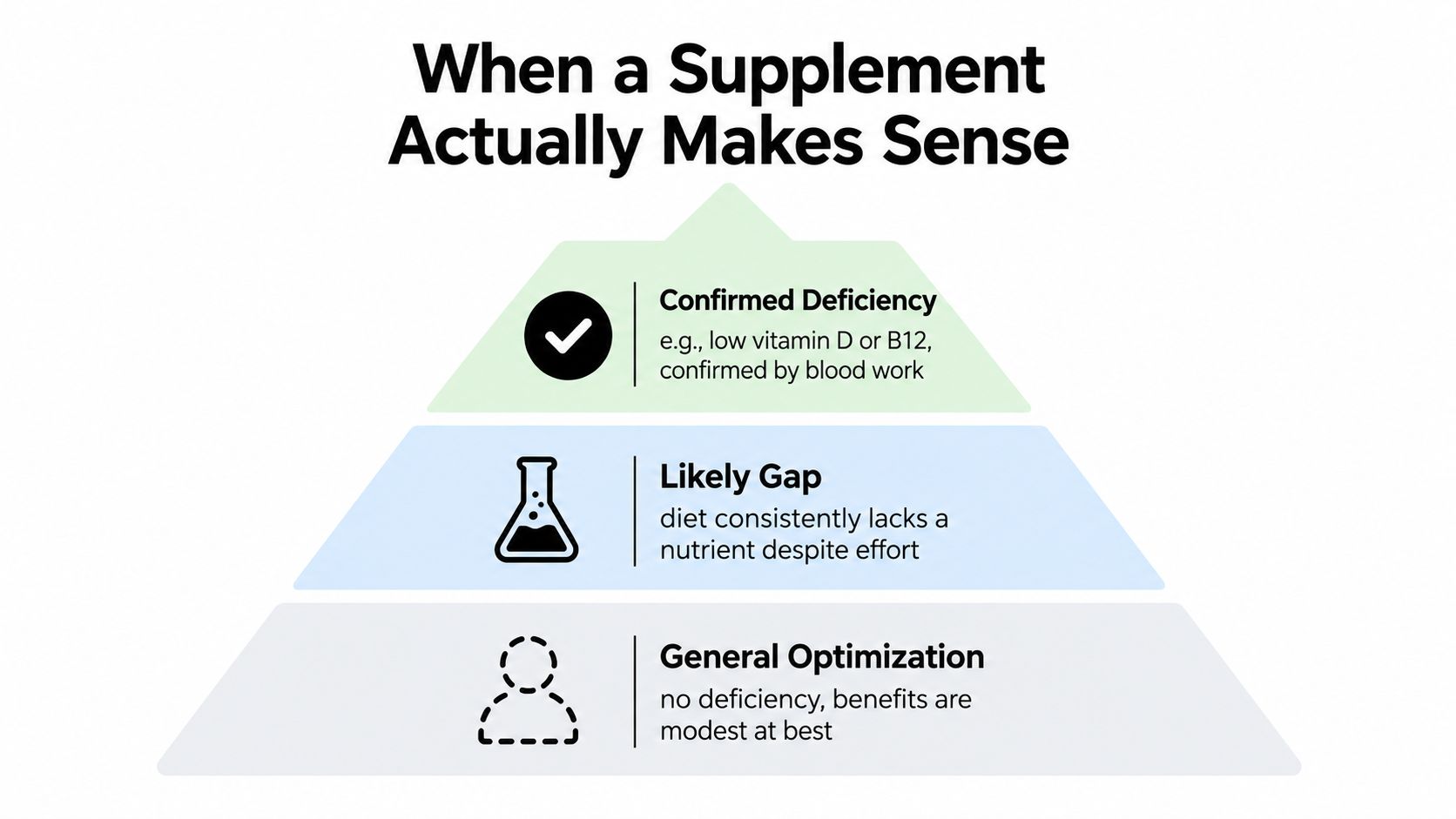
The strongest decision rule is to move through the hierarchy:
- Confirmed need: A blood test or professional assessment identifies a deficiency or relevant health factor.
- Likely gap: Your diet consistently lacks a nutrient despite reasonable efforts to improve it.
- General optimisation: You have no clear gap and want a possible extra. Keep expectations modest.
The same framework applies to magnesium, omega-3, creatine, ashwagandha, mushroom blends and energy powders. Ashwagandha may be discussed in relation to stress, mushroom blends may appeal to people seeking a broad wellness formula, and energy powders may combine caffeine with ingredients such as L-theanine. None should be presented as a diagnosis or a guaranteed fix for foggy thinking.
A 2025 analysis covering 133 systematic reviews, more than 2,700 randomised controlled trials and 258,000 participants found that regular physical activity improved general cognition, memory and executive function, with low-to-moderate intensity activity potentially useful for brain health as reported in the BMJ Sports & Exercise Medicine analysis. That evidence supports checking sleep, movement, diet and stress before adding a capsule.
Safety Interactions and Sensible Dosing
A supplement label tells you what a product contains, not whether it suits your medications, health history or current diet. Dose matters because concentrated ingredients can behave differently from foods, and combining several products can multiply exposure without making the outcome clearer.
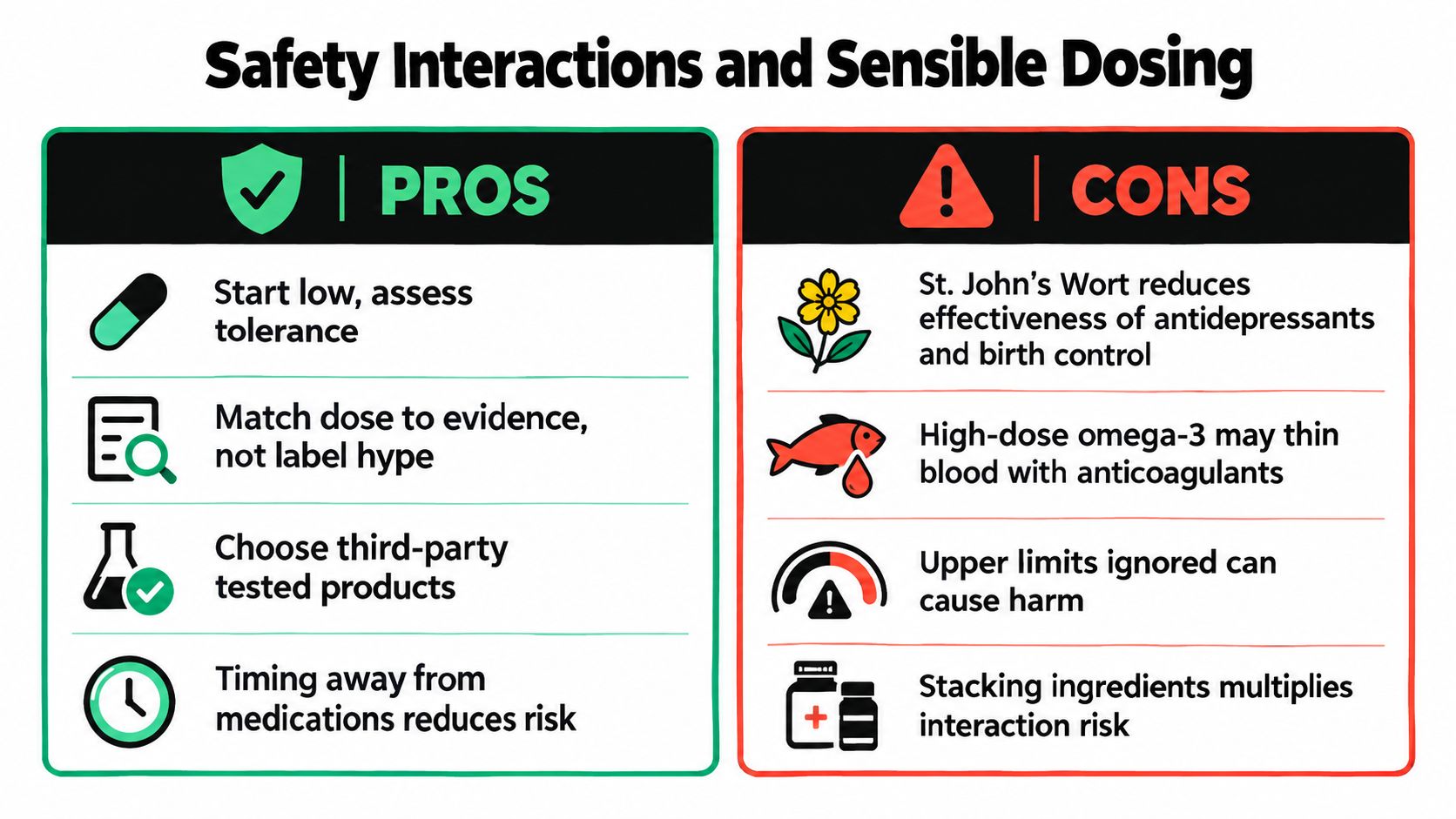
Use a short safety checklist:
- Check medication interactions: Omega-3 may require caution with anticoagulants, and magnesium can interfere with some antibiotics. Ask a pharmacist or qualified health professional about timing and suitability.
- Respect upper limits: High-dose vitamin B6 can be associated with nerve symptoms, and exceeding recommended boundaries can create harm.
- Read the label fully: Look for clearly disclosed ingredient amounts, serving information and warnings.
- Prefer quality controls: Third-party testing can provide additional reassurance about identity and purity, although it doesn't make every product appropriate for every person.
- Avoid casual stacking: A multivitamin, energy powder and separate mineral formula may overlap.
St. John's Wort also deserves explicit caution because it can reduce the effectiveness of antidepressants and birth control. Pregnancy, breastfeeding, chronic illness, planned surgery, prescription medication and unexplained cognitive symptoms all justify professional advice before starting something new.
Safety rule: choose one clearly defined product at a time when possible, record how you respond and stop if you develop concerning symptoms.
Finding Your Own Clarity Plan With a Short Personalised Quiz
A generic list of the best brain supplements can't account for your sleep, diet, fish intake, stress, exercise, digestion or existing products. Those details change whether magnesium, creatine, omega-3, a multivitamin or an energy formula is even relevant.
A short personalised assessment can turn broad education into a more practical starting point. VitzAi.com asks about goals, age, sex, energy, sleep, stress, exercise, diet, fish intake and digestion, then matches answers with a curated supplement plan. You can review why products appear, remove products you already use or don't want, and keep the final choice manageable.
That approach works best when you use it alongside the hierarchy in this guide. Fix the weakest foundation first, then use personalisation to investigate a genuine nutritional gap or a defined goal. Clear thinking usually comes from a small routine you can repeat, not a complicated stack you can't evaluate.
VitzAI offers a short personalised supplement quiz and a curated range covering areas such as focus, energy, sleep, stress, general nutrition and exercise recovery. Visit VitzAi.com to explore a plan based on your goals, diet and lifestyle rather than choosing products at random. This article is for informational purposes only and is not medical advice. Always consult a qualified health professional before starting any new supplement or major lifestyle change.