

What Type of Magnesium Is Best for Sleep?
If you've ever spent a night staring at the ceiling, you know the feeling. Your mind won't switch off, replaying the day's events or worrying about tomorrow. It’s like your nervous system is stuck in the ‘on’ position, and a good night's sleep feels impossible.
This is where magnesium comes in. Think of it as a natural dimmer switch for your brain. This essential mineral is a key player in prepping your body and mind for rest, primarily by activating the parasympathetic nervous system—the one responsible for helping you feel calm and relaxed. Without enough magnesium, winding down can be a struggle, leaving you feeling wired when you should be drifting off.
The Science of Calm and Relaxation
Magnesium’s sleep-promoting power isn't just an old wives' tale; it’s grounded in its biochemical role in your brain. It works in a few clever ways to quiet the mental chatter that keeps so many of us awake.
Its main job is to regulate neurotransmitters, the chemical messengers that send signals throughout your nervous system.
Magnesium’s biggest contribution to sleep is its ability to bind to and stimulate gamma-aminobutyric acid (GABA) receptors. GABA is your brain's primary calming neurotransmitter—it tells your nerve cells it's time to power down.
By boosting GABA’s natural calming effects, magnesium helps slow down racing thoughts and ease you into a more relaxed state. It also helps regulate two other crucial hormones involved in your sleep-wake cycle:
- Melatonin: Magnesium helps control the production of melatonin, the hormone that governs your internal body clock and signals that it's time for sleep.
- Cortisol: It also helps keep cortisol, the body's main stress hormone, in check. High cortisol levels at night are a common reason for broken sleep and waking up too early.
A Common Gap in Modern Diets
Unfortunately, many of us don't get enough magnesium from food alone. This shortfall can be the hidden piece of the puzzle contributing to restlessness and poor-quality sleep. The link is well-established, too. For instance, UK-based nutritional research found that adults with the highest magnesium intake were 22% more likely to report better sleep quality compared to those with the lowest intake.
For those looking for a quick takeaway, here’s a simple breakdown of the most popular magnesium forms.
Quick Answer: Which Magnesium Is Best for Sleep?
If you're looking for a straight answer, Magnesium Glycinate is widely considered the best form for sleep. It’s gentle on the stomach and highly absorbable, offering calming effects without the digestive issues that can come with other types of magnesium.
| Magnesium Type | Primary Use | Key Benefit |
|---|---|---|
| Magnesium Glycinate | Sleep & Relaxation | High bioavailability, calming, gentle on the stomach. |
| Magnesium Citrate | Constipation & Sleep | Good absorption, but can have a laxative effect. |
| Magnesium Taurate | Heart Health & Calm | Supports cardiovascular health and relaxation. |
| Magnesium L-Threonate | Cognitive Function | Crosses the blood-brain barrier, supports brain health. |
| Magnesium Malate | Energy & Muscle Pain | May help with energy production and muscle soreness. |
| Magnesium Oxide | Heartburn & Constipation | Low absorption, primarily used for digestive relief. |
While each form has its place, Glycinate consistently comes out on top specifically for improving sleep quality.
Of course, magnesium is just one piece of the sleep puzzle. While it helps manage your internal chemistry, your nightly routines are just as important. Getting to grips with the principles of good sleep hygiene creates the ideal external environment for rest. If you're curious about other nutrients that can help, our guide to the most effective vitamins for good sleep is a great place to start.
This article is for informational purposes only and is not medical advice. Always consult a qualified health professional before starting any new supplement or major lifestyle change.
Comparing the Best Magnesium Types for Sleep
Not all magnesium supplements are created equal, especially when your goal is a night of deep, restorative sleep. Each form is bound to a different molecule, and that partner molecule changes how it's absorbed and where it goes in your body. Think of it like choosing the right key for a specific lock; some are a perfect fit for calming your mind, while others are better suited for different jobs.
To figure out what type of magnesium is best for sleep, we need to look beyond the label and understand what makes each one unique. Let's dive into the top contenders to help you find your perfect match.
This diagram breaks down how magnesium works on a few key pathways in the brain to get you ready for rest.
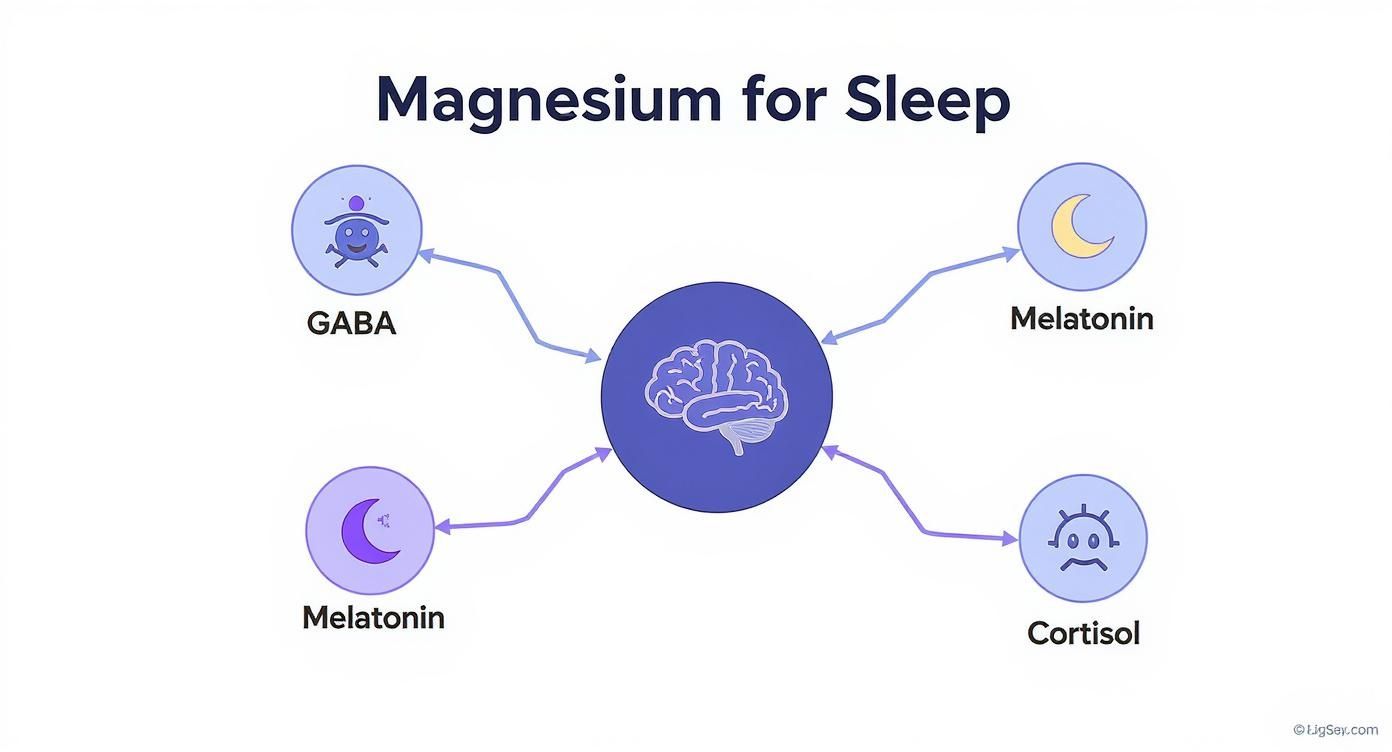
As you can see, magnesium's real power comes from its ability to dial up calming GABA signals while helping to keep melatonin and cortisol in check. It's all about creating the ideal internal state for sleep.
Detailed Guide to Magnesium Forms for Sleep
Here’s a comparative overview of the most effective magnesium types for improving sleep quality, highlighting their primary benefits, bioavailability, and best use cases.
| Magnesium Type | Primary Benefit for Sleep | Bioavailability | Best For |
|---|---|---|---|
| Magnesium Glycinate | Deep relaxation and calming the mind | High | General sleep improvement, anxiety, and muscle tension without digestive upset. |
| Magnesium L-Threonate | Brain-specific calming and cognitive support | High (crosses blood-brain barrier) | People with racing thoughts, brain fog, or those wanting cognitive benefits. |
| Magnesium Citrate | Gentle physical relaxation and regularity | Moderate-High | Individuals whose sleep is impacted by digestive discomfort or constipation. |
This table gives you a quick snapshot, but the real magic is in understanding why each one works the way it does.
Magnesium Glycinate: The Relaxer
When it comes to sleep, Magnesium Glycinate is the undisputed champion. This form is chelated, meaning the magnesium is bound to glycine, an amino acid that has its own impressive calming properties. This powerful combination makes it incredibly effective for promoting a sense of deep relaxation.
The glycine partnership does two really important things. First, it massively improves bioavailability, letting your body absorb more of the magnesium without causing the digestive drama some other forms are known for. Second, glycine itself acts as a calming neurotransmitter in the brain—much like GABA—helping to quiet an overactive mind.
This makes it an excellent choice for anyone who’s sensitive to other supplements or is mainly looking to shut down the mental chatter that keeps them up at night.
A huge body of research from UK and international studies points to magnesium glycinate as the go-to form for improving sleep. In one study with older adults suffering from insomnia, taking 500 mg of magnesium daily for eight weeks led to significant improvements in the time it took to fall asleep, total sleep time, and overall sleep quality.
Magnesium L-Threonate: The Brain Calmer
If your sleepless nights are paired with brain fog, or you're keen to support your cognitive health while you rest, Magnesium L-Threonate is a standout choice. This is a newer form of magnesium that has generated a lot of excitement for one unique reason: it can cross the blood-brain barrier.
Imagine the blood-brain barrier as a highly selective bouncer for your brain. Most forms of magnesium can't get past it in large amounts, but L-Threonate has the VIP pass.
This means it can directly increase magnesium levels inside your brain cells, offering targeted support for cognitive functions. While its main claim to fame is enhancing memory and learning, this brain-centric action also helps create a state of calm that’s perfect for sleep. It’s less about making you drowsy and more about fostering a healthy, balanced brain environment.
Magnesium Citrate: The Gentle Regulator
Magnesium Citrate is one of the most common and affordable forms you'll find on store shelves. It’s made by binding magnesium with citric acid, a compound found naturally in citrus fruits. This pairing results in a form with good bioavailability, meaning your body can absorb and use it pretty well.
While it’s often used to support healthy digestion and relieve occasional constipation (thanks to its mild laxative effect), it also offers benefits for sleep. By gently drawing water into the intestines, it can help relax the bowels, which contributes to a feeling of overall physical relaxation.
Magnesium Citrate is a solid, all-around option if your sleep troubles are sometimes linked to digestive issues or if you want a form that supports both relaxation and regularity. Just be sure to start with a low dose to see how your system reacts, as higher amounts can cause loose stools.
Pairing magnesium with other supportive minerals can also be a game-changer. Zinc, for instance, plays a crucial role in sleep regulation, and many people find success by combining the two. To understand how they work together, check out our guide on taking zinc and magnesium supplements for optimal health.
This article is for informational purposes only and is not medical advice. Always consult a qualified health professional before starting any new supplement or major lifestyle change.
Other Common Types of Magnesium You’ll See
Walk down any supplement aisle and you’ll find a dizzying array of magnesium types that aren't specifically geared for sleep. It’s easy to get confused, but knowing what these other popular forms do is crucial. Honestly, knowing which ones to avoid for sleep is just as important as knowing which to choose.
This quick rundown will help you slice through the marketing hype and focus on the magnesium that will actually improve your rest. Let's clear up the roles of a few common forms you're bound to come across.
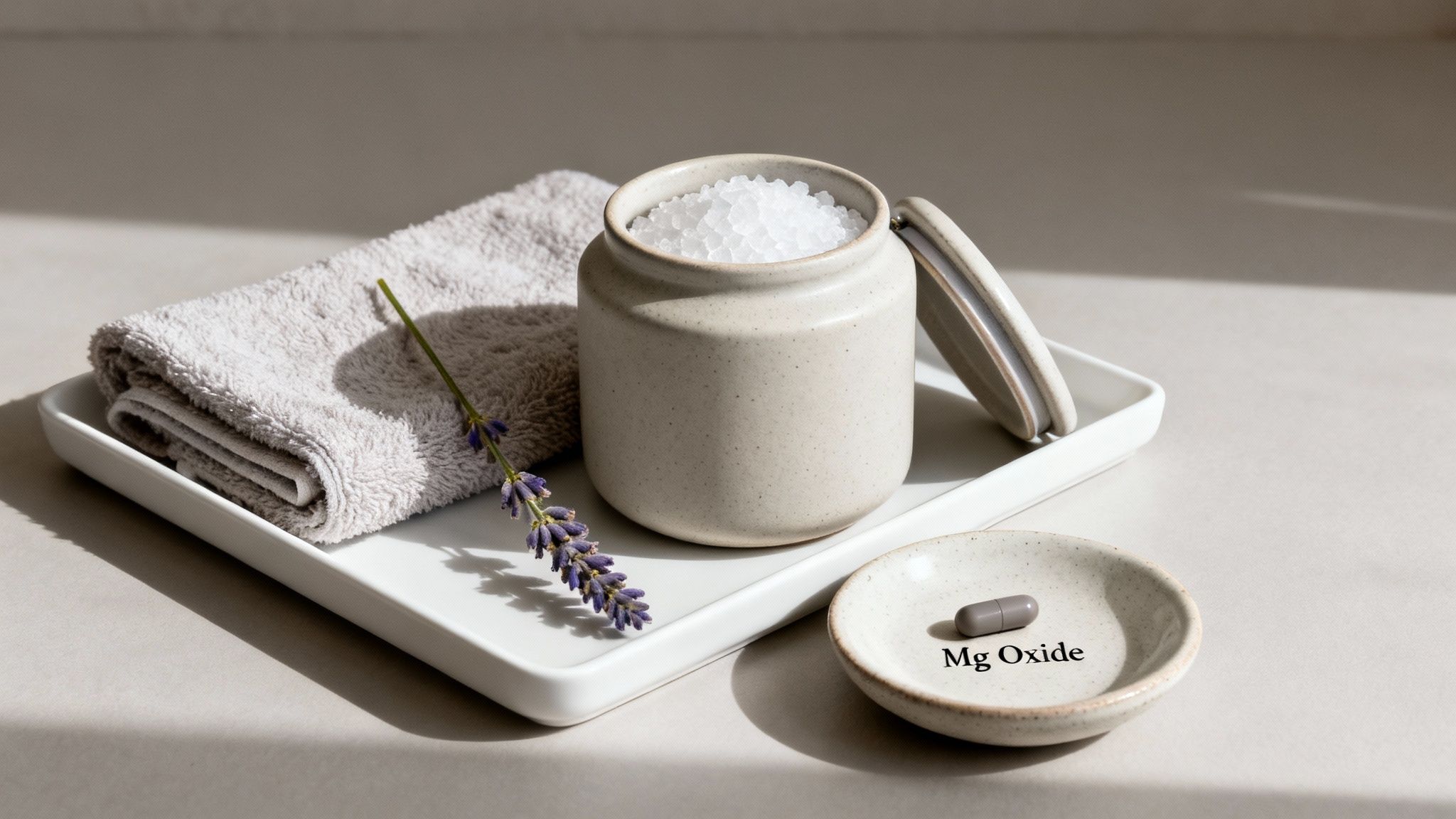
Magnesium Oxide: The One to Skip for Sleep
Magnesium Oxide is everywhere. It’s one of the most common and cheapest forms available, often found in general multivitamins and budget supplements. But when your goal is better sleep, this is the one to leave on the shelf. The reason boils down to a single, critical factor: bioavailability.
Bioavailability is just a scientific way of asking, "How much of this can my body actually absorb and use?" For Magnesium Oxide, the answer is… not much. Its bioavailability is notoriously poor—studies suggest as little as 4% gets absorbed. The rest just sits in your intestines, pulling water in.
This explains its primary use: a potent laxative for constipation relief. While helpful in certain situations, it’s the last thing you want when you’re trying to drift off for a peaceful night.
When it comes to sleep support, absorption is everything. Because Magnesium Oxide is so poorly absorbed, it can’t effectively raise magnesium levels in your cells to deliver the calming neurological benefits you need for rest. You’re far more likely to get an upset stomach than a good night's sleep.
Put simply, it's the wrong tool for the job. You need a form your body can easily absorb to soothe your nervous system, not one that’s going to send you running to the bathroom.
What About Topical Magnesium and Epsom Salts?
Another popular option is topical magnesium, most famously found in Epsom salts (Magnesium Sulphate) for a relaxing bath. The idea is undeniably appealing: soak in a warm tub, soothe your muscles, and absorb magnesium through your skin. There’s no doubt that a warm bath is a fantastic part of good sleep hygiene—the drop in your body temperature afterward is a powerful signal to your brain that it’s time to rest.
Epsom salts can certainly help with muscle relaxation, which is a big part of unwinding. The catch? The science on how much magnesium actually gets absorbed through the skin (transdermal absorption) is still a bit murky.
So while many people swear by their Epsom salt baths for feeling calmer, it's tough to separate the effects of the magnesium itself from the simple, therapeutic bliss of the warm water.
- Best Use: Think of an Epsom salt bath as a brilliant part of a relaxing bedtime ritual. It’s fantastic for soothing tired muscles and telling your body it’s time to wind down.
- The Limitation: Don't rely on it as your main strategy for correcting a magnesium deficiency or for getting significant neurological benefits.
- A Smarter Strategy: Use it as a complementary practice. Pair a calming bath with an effective oral supplement like Magnesium Glycinate for a powerful one-two punch against sleeplessness.
While these other forms have their place, they just don't deliver the targeted, absorbable dose you need to directly influence the brain chemistry of sleep. For that, you need a highly bioavailable oral supplement.
This article is for informational purposes only and is not medical advice. Always consult a qualified health professional before starting any new supplement or major lifestyle change.
How to Choose the Right Magnesium for You
With so many types of magnesium out there, picking the right one for sleep can feel like guesswork. But here’s the secret: there isn't one single "best" form for everyone. It's all about matching the right magnesium to your body's specific signals.
Think of it less like a one-size-fits-all pill and more like finding the right key for a specific lock. The first step is to listen to what your body is telling you. Are racing thoughts keeping you awake? Or is it more of a physical issue, like twitchy muscles and tension?
Once you pinpoint your main sleep hurdle, you can choose a form of magnesium that gets straight to the root of the problem. This turns a confusing decision into a simple, effective strategy for unlocking a better night's rest. Let's walk through a few common scenarios to help you find your perfect match.
For Anxiety and a Racing Mind
If your brain won't switch off when your head hits the pillow – replaying the day's events or endlessly building tomorrow's to-do list – your nervous system is likely stuck in overdrive. This is where Magnesium Glycinate really shines.
It’s often hailed as the gold standard for sleep, and for good reason. It pairs magnesium with glycine, an amino acid that has its own calming properties. This powerful combination works directly on your brain's relaxation pathways, helping to quiet that relentless mental chatter.
- If you experience: Anxious thoughts, feeling "wired but tired," or simply can't fall asleep because your mind is too busy.
- Consider: Magnesium Glycinate. It has fantastic bioavailability (meaning your body absorbs it well) and is gentle on the stomach, making it a top choice for targeted, calming support.
For Brain Fog and Cognitive Support
Ever feel like you struggle to wind down at night but also feel mentally sluggish during the day? If you’re looking to sharpen your mind while improving your sleep quality, Magnesium L-Threonate is an incredible option.
This is the only form of magnesium that has been shown to effectively cross the blood-brain barrier. That means it can directly increase magnesium levels inside your brain cells, helping to promote mental clarity and a deeper sense of calm.
Magnesium L-Threonate isn't about making you feel drowsy. It’s more about creating a balanced, healthy brain environment that supports not just better sleep, but sharper thinking when you're awake.
For Muscle Cramps and Restless Legs
Sometimes, physical discomfort is just as disruptive as a racing mind. If you’re kept awake by leg cramps, muscle twitches, or that fidgety, restless feeling in your limbs, your muscles might be crying out for more magnesium. Low intake is a real issue in the UK, especially for older adults. In fact, nocturnal leg cramps affect up to 60% of elderly British adults, often wrecking their sleep.
For this kind of physical tension, you have a couple of excellent choices:
- Magnesium Glycinate: Because it's so well-absorbed, it gets to work efficiently in your muscle tissue, offering relief from tightness and cramping.
- Magnesium Malate: This form is bound to malic acid, which plays a part in energy production within muscle cells. It's particularly useful if you experience muscle fatigue and soreness alongside your sleep problems.
Making Your Personalised Choice
Ultimately, picking the right magnesium is an exercise in self-awareness. When you align a supplement’s strengths with your personal sleep challenges, you move past generic advice and find a solution that actually works for you.
The framework is pretty straightforward:
- Identify Your Main Sleep Obstacle: Is it mental (anxiety, a busy mind) or physical (muscle tension, cramps)?
- Match the Form to the Function: Go for Glycinate to calm the mind, L-Threonate for cognitive backup, or Malate for muscle-related issues.
- Start Low and Go Slow: Always begin with a smaller dose to see how your body reacts before finding the amount that works best for you.
While magnesium can be a game-changer, remember that great sleep is about the bigger picture. For a more holistic look at your nighttime habits, you can consult comprehensive sleep guides that cover all the other important pieces of the puzzle.
This article is for informational purposes only and is not medical advice. Always consult a qualified health professional before starting any new supplement or major lifestyle change.
Getting the Most from Your Magnesium Supplement
Picking the right type of magnesium is a massive step, but how you take it is what really unlocks a better night’s sleep. Nailing the dose, timing, and routine is what turns your supplement from just another pill into a powerful ally for proper rest. Let’s walk through how to make magnesium a seamless part of your evening.

Finding Your Ideal Dosage
When it comes to magnesium for sleep, more isn't automatically better. The real goal is to find the lowest effective dose.
For most people, a good starting point for sleep support is somewhere in the 200-400mg of elemental magnesium range. But it's always smart to start low, especially if you're new to it. Kicking off with a smaller dose, say 150-200mg, gives your body a chance to adjust and helps you sidestep potential side effects.
Think of it like tuning a radio. You don’t just crank the volume to full. You turn the dial slowly until the signal comes in perfectly clear. Starting low lets you find that sweet spot without overdoing it.
If you need to, you can gradually increase the dose every few days until you notice a real difference in how easily you drift off and stay asleep.
Perfecting Your Timing
Timing is everything. You want to sync your supplement with your body’s natural sleep-wake cycle so the calming effects are kicking in just as you're winding down.
The magic window is usually 30 to 60 minutes before you plan to go to bed. This gives the magnesium enough time to be absorbed and start working its magic on your nervous system, helping you feel relaxed and ready for rest. For a deeper dive, our guide on the best time to take magnesium has even more detail.
Try to make it a non-negotiable part of your bedtime ritual, maybe when you brush your teeth or read a chapter of a book. That consistency is key—it helps train your body to recognise the signal that it's time to switch off.
Navigating Potential Side Effects
While magnesium is incredibly safe for most people, some forms can be a bit rough on the digestive system, particularly if you take too much. This is most common with less bioavailable types like Magnesium Oxide and, sometimes, Magnesium Citrate.
To keep any tummy troubles at bay, just follow these simple tips:
- Choose a Gentle Form: Go for highly absorbable, chelated forms like Magnesium Glycinate. It’s well-known for being exceptionally gentle on the stomach.
- Take it with a Snack: A small, light snack—like a handful of almonds or half a banana—can help buffer your supplement.
- Stay Hydrated: Always drink a full glass of water with your magnesium. It helps with absorption and keeps your digestive system happy.
- Listen to Your Body: If you feel any discomfort, don't push through it. Simply lower your dose until your system gets used to it.
By following these pointers, you can bring magnesium into your routine safely and effectively, turning it into a reliable partner in your quest for deeper, more restorative sleep.
This article is for informational purposes only and is not medical advice. Always consult a qualified health professional before starting any new supplement or major lifestyle change.
Common Questions About Magnesium and Sleep
Deciding to try magnesium for sleep is a great first step, but it’s normal to have a few questions before you start. Figuring out the practical side of things—like how long it takes to work and whether you can just eat more spinach—helps you set the right expectations and feel confident you’re on the right track. Let's clear up some of the most common queries.
How Long Until I Notice a Difference?
This is probably the number one question, and the honest answer is: it depends. Some people are lucky and report feeling a subtle sense of calm the very first night they take a high-quality magnesium supplement. For most of us, though, the benefits tend to build up more gradually.
Think of it like watering a thirsty houseplant. The first splash of water helps, but it’s the consistent watering over several days that really brings it back to life. It’s a similar story here. If your body's magnesium levels are low, it can take a little while to top them back up.
While an immediate calming effect is possible, the real magic—falling asleep faster and waking up less—is typically seen after two to four weeks of daily use. Patience and consistency are your best friends here.
Can I Get Enough Magnesium From Food?
In a perfect world, we’d all get every nutrient we need from a well-balanced diet. And you should absolutely aim to eat magnesium-rich foods! They’re fantastic for your overall health.
Some of the best dietary sources of magnesium include:
- Nuts and Seeds: Pumpkin seeds, almonds, and cashews are nutritional powerhouses.
- Leafy Greens: You can’t go wrong with spinach and Swiss chard.
- Legumes: Black beans and edamame are great options.
- Whole Grains: Things like quinoa and wholegrain bread all contribute.
However, trying to get a therapeutic amount of magnesium just from food to improve your sleep can be a real challenge. Modern farming has depleted the soil of minerals, meaning today’s crops often have less magnesium than they did a few generations ago. On top of that, our busy lives don’t always make it easy to consistently prioritize these specific foods.
That's why a supplement is often the most practical and reliable way to ensure you're getting a consistent, effective dose needed to actively support your sleep.
Is It Possible to Take Too Much Magnesium?
This is a sensible question to ask about any supplement. The good news is that magnesium is generally very safe for most people. Your body has a pretty clever built-in system to handle it; as long as your kidneys are healthy, any excess magnesium you don’t need is simply filtered out in your urine.
That said, if you take a very high dose—especially of a less absorbable form like magnesium oxide—you might experience some predictable side effects. The most common signs are digestive.
Look out for:
- Diarrhoea
- Nausea
- Stomach cramping
These symptoms are just your body’s way of saying, "Okay, that's a bit too much." They’re rarely serious and usually disappear as soon as you lower the dose. If you stick to the recommended amounts (typically under 400mg of elemental magnesium from supplements) and choose a well-absorbed form like magnesium glycinate, the risk is extremely low.
By keeping these practical points in mind, you can start using magnesium for sleep with confidence, knowing exactly what to expect on your journey to more restful nights.
Ready to find a smarter, personalised approach to your health? VitzAi.com uses AI-driven insights to help you identify nutritional gaps and build a supplement routine that’s perfectly matched to your goals. Take our free quiz today and discover the right support for your body.
This article is for informational purposes only and is not medical advice. Always consult a qualified health professional before starting any new supplement or major lifestyle change.