

200 Mg Ubiquinol: Benefits, Safety, and Daily Use Guide
200 mg of ubiquinol is a standard adult dose of the reduced form of CoQ10, commonly used for cardiovascular support, healthy ageing, and restoring circulating CoQ10 in some statin users. It's usually taken as one softgel daily with food, although the best timing depends on your tolerance and treatment plan.
But does a larger number on the label automatically mean more energy, sharper thinking, or relief from statin-related muscle pain? Not necessarily. The useful question is what 200 mg ubiquinol changes in the body, which outcomes have been tested, and where the evidence remains mixed.
What 200 mg Ubiquinol Actually Is
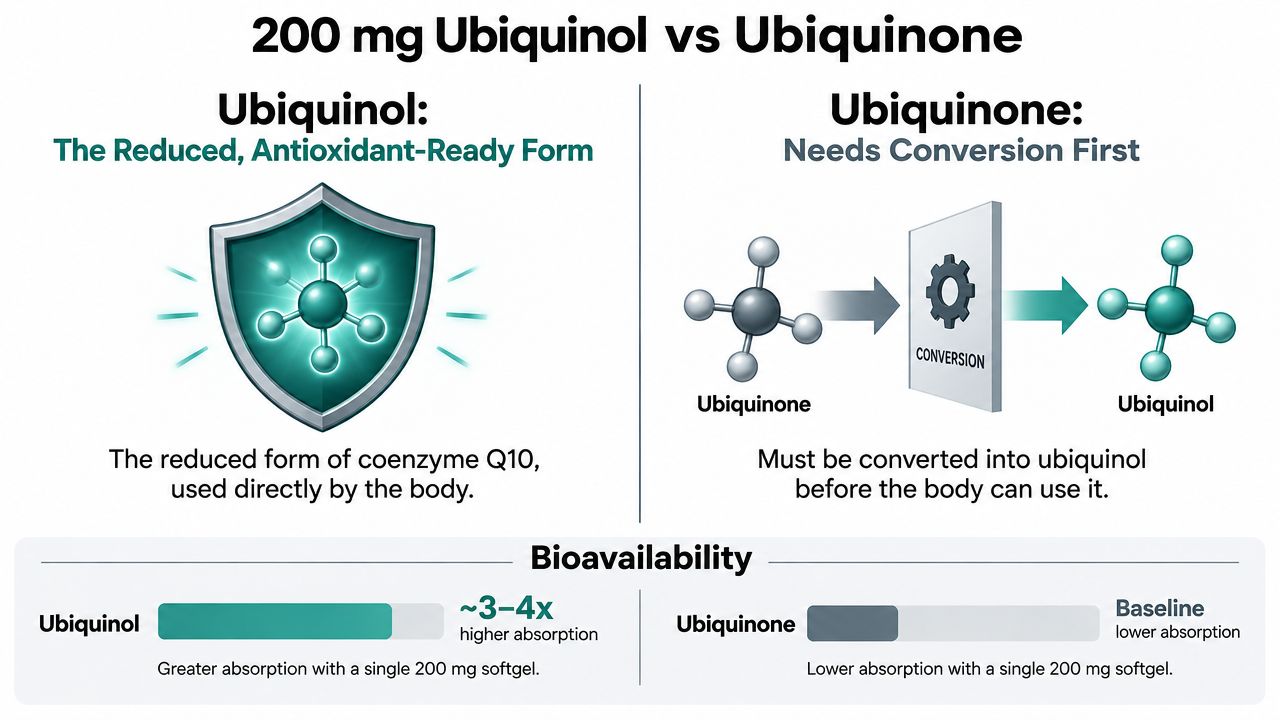
Ubiquinol is the reduced form of coenzyme Q10, also called CoQ10. In simple terms, it's the form already prepared to participate in antioxidant activity and cellular energy processes. Ubiquinone is the oxidised form, and the body can convert it into ubiquinol before use. The two forms belong to the same CoQ10 system, but they aren't identical on the supplement label.
That distinction matters because CoQ10 is fat-soluble and absorption varies with formulation, food, age, and individual digestion. Ubiquinol is often chosen by adults over 40 because it provides the reduced form directly, although a product's oil-based delivery system can matter as much as the chemical form. A practical comparison is available in this guide to ubiquinone versus ubiquinol.
Why the 200 mg benchmark matters
200 mg refers to the amount of active ubiquinol, not the total weight of the softgel, carrier oil, capsule shell, or other ingredients. It's a standardised adult serving strength found across major-market products. For example, Solgar's 200 mg ubiquinol product lists 200 mg per softgel and recommends taking it at mealtime.
The dose also sits within recognised adult ranges. Health Canada's monograph permits 15 to 300 mg daily for cardiovascular health and 75 to 300 mg daily for migraine prevention, with a maximum of 300 mg daily according to its ubiquinol monograph. That makes 200 mg an evidence-aligned benchmark rather than an arbitrary marketing number.
Most products use an oil-filled softgel because the carrier helps keep a fat-soluble ingredient dispersed. The label's 200 mg is the important figure for dose comparison, so don't compare products by capsule weight alone.
How 200 mg Ubiquinol Works in the Body
After you swallow a softgel, ubiquinol mixes with dietary fat in the digestive tract. It's absorbed mainly through the small intestine, packaged into transport particles called chylomicrons, and carried first toward the liver. The liver then helps redistribute CoQ10 through the bloodstream and into tissues.
This process explains why a fat-containing meal is more useful than taking the softgel with water on an empty stomach. Absorption isn't an instant switch, either. CoQ10 levels build with repeated daily use rather than producing a reliable same-day sensation.
The mitochondrial role
Inside mitochondria, CoQ10 acts as an electron carrier in the chain of reactions that produces ATP, the cell's usable energy currency. Ubiquinol can also act as a lipid-soluble antioxidant, helping protect cell membranes and lipoproteins from oxidative damage.
A controlled trial in adults with mild-to-moderate dyslipidemia tested 200 mg of ubiquinol daily for 8 weeks. Among the 48 participants who completed the trial, flow-mediated dilation improved by +1.28% ± 0.90% compared with placebo, plasma CoQ10 increased significantly, serum NOx rose in a dose-dependent pattern, and LDL oxidation lag time improved significantly in the 200 mg group, with p = 0.017 as reported by the Ubiquinol Clinical Studies resource.
These findings connect the biology to vascular function. The trial measured endothelial performance, nitric oxide-related markers, and resistance to LDL oxidation, not a promise that every user will feel more energetic.
What happens in older adults
A 2026 randomised clinical trial of 111 adults aged 60 and older used 200 mg daily, split into 100 mg twice-daily doses, for 90 days. Plasma CoQ10 at the end of the study was four times higher than placebo, with p < 0.001 in the published trial report.
The study confirmed a strong pharmacokinetic effect, meaning the dose substantially raised circulating CoQ10. It didn't show clear cognitive advantages, so a higher blood level shouldn't be confused with proven improvements in memory or thinking.
Evidence-Backed Uses at This Dose
What can 200 mg of ubiquinol reasonably do, and where does the evidence remain uncertain? The answer depends on the outcome being measured. Raising blood CoQ10 is easier to demonstrate than improving symptoms, cognition, or long-term health.
| Use case | Evidence strength | Key findings |
|---|---|---|
| Vascular and endothelial support | Moderate | An 8-week controlled trial found improved flow-mediated dilation, higher plasma CoQ10, increased serum NOx, and a longer LDL oxidation lag time at 200 mg in the clinical study summary. |
| Circulating CoQ10 in older adults | Strong for the biomarker effect | A 90-day trial in adults aged 60 and older found plasma CoQ10 was four times higher than placebo after supplementation in the published trial. |
| Migraine prevention | Permitted range, clinical benefit not established | Health Canada's permitted range is 75 to 300 mg daily, so 200 mg falls within it. Clinical trials of CoQ10 in migraine prevention have produced evidence for possible benefit, but this dose should not be treated as a guaranteed preventive treatment. |
| Statin-related muscle symptoms | Mixed and unresolved | CoQ10 can raise circulating levels, while a large review found no consistent improvement in muscle symptoms or performance in its analysis of statin-associated muscle symptoms. |
| Cognition | Weak or unconfirmed | The older-adult trial found no clear cognitive advantage despite a substantial rise in plasma CoQ10 in the clinical report. |
How to interpret the categories
Vascular health has the clearest direct signal at this dose. The trial measured endothelial function and biochemical markers rather than relying only on how participants felt. That makes the finding useful, but it does not establish a universal cardiovascular benefit for every person taking 200 mg.
Older adults have stronger evidence for a blood-level response than for better daily vitality. A rise in plasma CoQ10 shows that the supplement reached the circulation. It does not by itself prove improvements in memory, energy, or healthy ageing. Baseline CoQ10 status, medical conditions, medications, and the outcome being measured all affect how meaningful that change may be.
Migraine prevention remains a cautious, dose-aligned option rather than a settled use. A persistent, changing, or neurologically unusual headache needs medical assessment. Exercise performance, sleep, and cognition also require modest expectations, because evidence at 200 mg is limited or mixed rather than conclusive.
200 mg Ubiquinol for Statin Users
Statin users often ask about ubiquinol because statins affect the same broad biochemical pathway involved in the body's production of CoQ10. That creates a plausible reason to test supplementation, especially when someone notices muscle aching, weakness, cramps, or reduced exercise tolerance after starting or changing a statin.
The central distinction is between restoring a circulating nutrient marker and relieving statin-associated muscle symptoms. The first has a clear biological rationale. The second remains poorly answered.
A large clinical review found that the commonly suggested 200 mg daily dose was selected largely because it was standard in clinical practice. Its conclusion was that CoQ10 didn't improve muscle symptoms or performance in statin-associated muscle symptoms, although some people still report subjective benefit in the review of CoQ10 and statin-related symptoms.
Practical rule: Treat 200 mg as a monitored trial, not as a guaranteed antidote to statin side effects.
A cautious decision path
- Confirm the timing. Note when symptoms began and whether they followed a statin start, dose change, or another medication change.
- Contact the prescriber. Muscle symptoms can have several causes, and your clinician may need to review the statin, other medicines, thyroid status, or relevant blood tests.
- Discuss a defined trial. If appropriate, a clinician may support trying 200 mg daily for several weeks while you track pain, strength, walking, stairs, and training tolerance.
- Judge function, not hope. A change in plasma CoQ10 alone doesn't prove the muscles will feel better.
- Never stop the statin independently. Cardiovascular risk management needs to remain part of the decision.
If symptoms are severe, rapidly worsening, associated with marked weakness, or accompanied by dark urine, seek prompt medical care rather than experimenting with supplements.
Energy, Exercise and Cognitive Performance
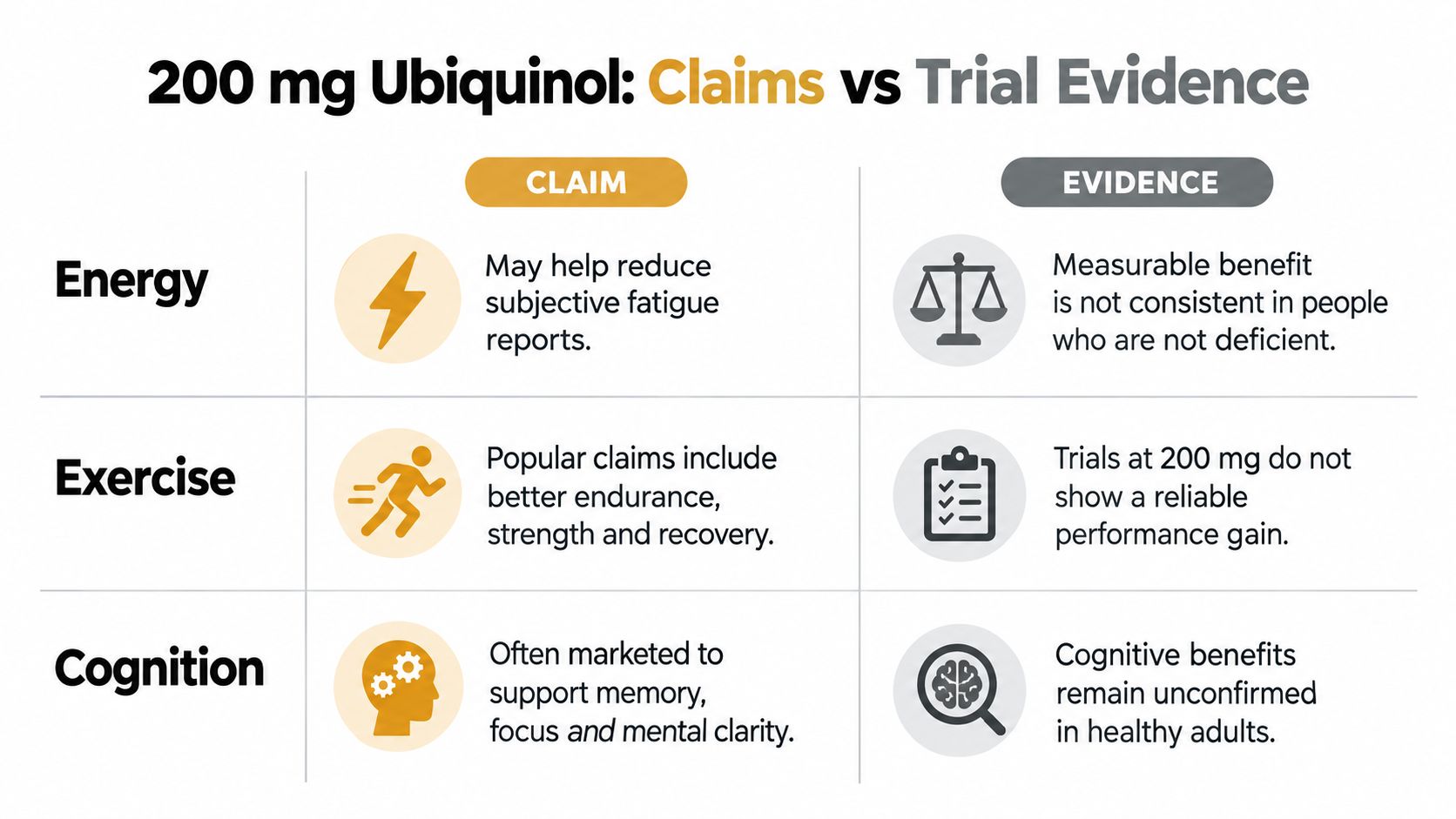
Marketing often puts energy, exercise, and cognition beside one another, but these outcomes behave differently in research. 200 mg ubiquinol can clearly raise circulating CoQ10 in some adults, yet that doesn't establish a reliable performance or mental sharpness effect.
For energy, some users describe less fatigue, particularly when they're older, taking statins, or have a reason to suspect low CoQ10 status. The verified evidence supports a measurable biomarker response, not a universal improvement in non-deficient adults.
Exercise findings are also mixed. A 2024 study in trained men reported improved VO2max and blood pressure after 200 mg daily, while an earlier athlete trial found better antioxidant markers without a performance gain, as summarised in the neutral dosing guidance from Healthline's CoQ10 dosage overview. These results point to an outcome-dependent answer, not a dependable pre-workout effect.
Cognition needs especially careful wording
The 2026 randomised study in older adults didn't find clear cognitive advantages, despite the strong increase in plasma CoQ10 in the published trial. That result doesn't prove ubiquinol can never support brain health, but it does mean readers shouldn't buy 200 mg expecting a guaranteed memory boost.
A useful expectation is supportive rather than life-changing. The dose may make more sense for an older adult or someone with a medication-related reason to consider CoQ10 than for a fit younger person seeking an immediate lift in training output.
For a broader explanation of proposed CoQ10 uses, see VitzAI's guide to CoQ10 benefits, while keeping the stronger and weaker evidence categories separate.
How to Take 200 mg Ubiquinol Each Day
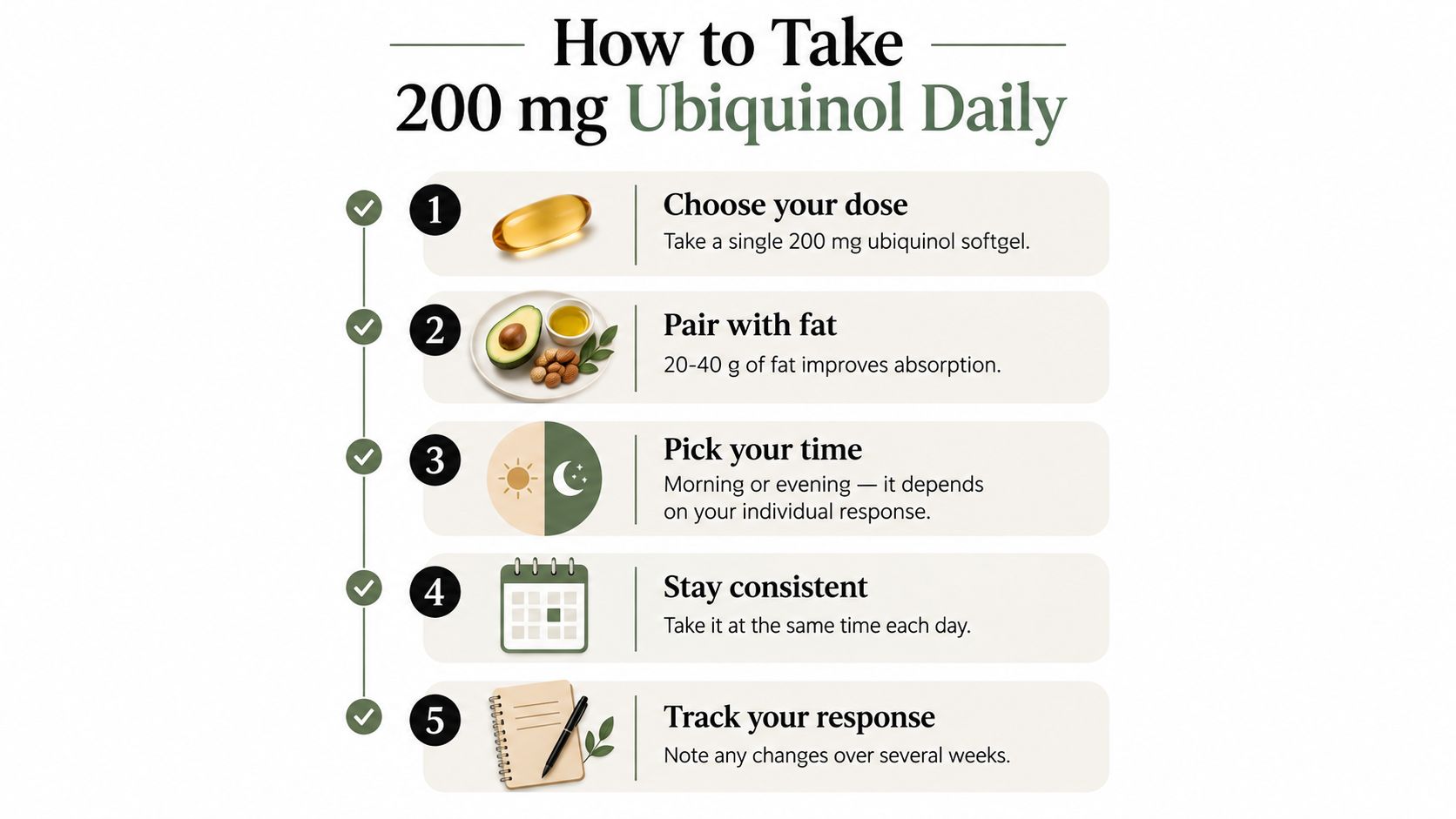
The simplest routine is one 200 mg softgel with a meal that contains fat. CoQ10 is fat-soluble, so food helps the digestive system handle it. Product directions reflect this approach: NOW Foods' 200 mg product recommends one softgel daily with a fat-containing meal, while Solgar recommends one to two softgels daily at mealtime in its product directions.
A practical daily routine
- Choose one anchor meal. Breakfast, lunch, or dinner can work. Consistency usually matters more than chasing a perfect clock time.
- Take it with dietary fat. A meal containing foods such as eggs, yoghurt, nuts, seeds, olive oil, or oily fish is a practical fit. Don't treat a fixed gram target as mandatory, because the verified guidance supports fat-containing food without establishing a universal amount.
- Use morning or afternoon if sleep changes. Some independent guidance notes that bedtime use may contribute to insomnia for some people, so earlier dosing is sensible if evening use affects sleep in Healthline's dosage guidance.
- Consider splitting only for tolerance or a clinician's plan. The older-adult trial used 100 mg twice daily, but many products are designed around one daily softgel. If digestion is uncomfortable, ask a professional whether divided dosing is appropriate.
- Store it sensibly. Keep the container sealed and away from heat, strong light, and humidity.
You don't need to cycle ubiquinol because you're taking it regularly. Keep it as a complement to prescribed cardiovascular treatment, not a substitute for it.
Safety, Side Effects and Interactions
For most healthy adults, 200 mg is within commonly cited CoQ10 supplementation ranges. The National Center for Biotechnology Information describes typical human CoQ10 supplementation as 100 to 300 mg daily and notes that toxicity is considered unlikely up to 1,200 mg daily in its clinical reference. That upper figure isn't a suggested dose. It's a safety context, not a reason to take more.
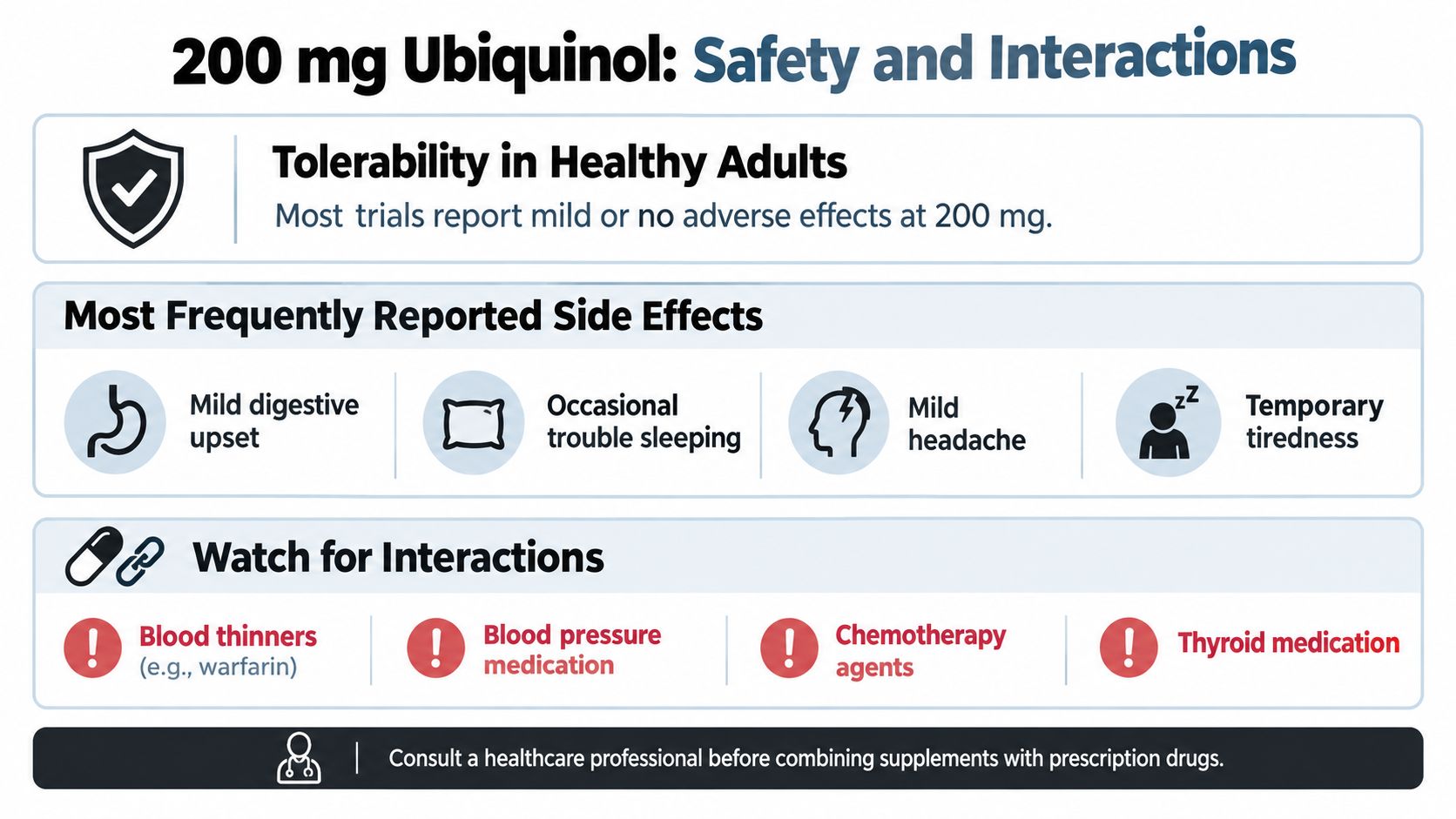
The German Federal Institute for Risk Assessment reports occasional adverse effects with additional CoQ10 intakes up to 300 mg daily, mainly digestive symptoms such as nausea, heartburn, gastric distress, upper abdominal discomfort, or diarrhoea in its risk overview.
What to watch for
Possible problems include:
- Digestive upset, including nausea, heartburn, stomach discomfort, or loose stools.
- Sleep disruption, particularly if you take it close to bedtime and find it stimulating.
- Changes in blood pressure, especially when combined with antihypertensive medication.
- Unexpected medication effects, which deserve a pharmacist or prescriber review.
Health Canada specifically advises consulting a health professional before use if you take blood pressure medication or blood thinners, and before use during pregnancy or breastfeeding in its ubiquinol monograph. That advice is especially important with warfarin or another medicine requiring careful clotting control.
People receiving chemotherapy, taking thyroid medication, managing liver or kidney disease, or using several prescription medicines should also seek individual guidance before starting. Supplements can complicate treatment decisions even when the ingredient itself appears well tolerated.
Stop and seek medical advice if you develop a concerning reaction, persistent gastrointestinal symptoms, new muscle weakness, unusual bruising, or a significant change in blood pressure or sleep.
How to Choose a Quality 200 mg Ubiquinol
Start with the active ingredient, not the front-of-pack promise. The label should clearly state 200 mg of ubiquinol per softgel, rather than hiding the amount inside a proprietary CoQ10 blend or listing only the total capsule weight.
Kaneka QH ubiquinol is a widely studied commercial source, and the Kaneka fact sheet reports that 200 mg daily increased ubiquinol levels by about eight times versus baseline in healthy adults after at least 30 days in the manufacturer's clinical fact sheet. That supports checking the source and human bioavailability information, while remembering that a branded raw material doesn't replace finished-product quality control.
Label checks that matter
| Criterion | What to look for |
|---|---|
| Active form | “Ubiquinol” clearly named, not just unspecified CoQ10 |
| Dose | 200 mg per softgel |
| Delivery | Oil-based softgel suitable for a fat-soluble ingredient |
| Testing | USP, NSF, or Informed Sport verification where relevant |
| Traceability | Expiration date, manufacturer details, and country of manufacture |
| Formula clarity | Fully disclosed ingredients and allergen information |
| Extras | Avoid unnecessary high-dose vitamins or unproven additives |
Third-party marks can help verify label accuracy, manufacturing controls, or sports-related contamination standards, depending on the programme. They don't prove that 200 mg will solve a particular symptom.
For a broader purchasing framework, consult this guide to choosing a CoQ10 supplement. Keep price comparisons grounded in cost per daily 200 mg serving, not just the number of capsules in the bottle.
The unrelated Peppermint Coffee Scrub is a separate body-care product, formulated with coffee, sugar, salts, coconut oil, castor oil, peppermint essential oil, and vitamin E, so it shouldn't be confused with an oral ubiquinol supplement.
Quick Reference Guide
Who may reasonably consider 200 mg ubiquinol
- Adults over 40 exploring healthy-ageing support.
- People whose clinicians are monitoring cardiovascular risk.
- Statin users with new muscle symptoms who want to discuss a monitored trial.
- Adults seeking a sustained CoQ10 intervention rather than an acute stimulant effect.
Evidence at a glance
- Vascular function: promising, supported by a controlled trial.
- Circulating CoQ10 in older adults: strong biomarker response.
- Migraine prevention: dose falls within Health Canada's permitted range.
- Statin muscle symptoms: mixed and not reliably improved in larger evidence reviews.
- Energy, exercise, and cognition: mixed, outcome-dependent, or unconfirmed.
Daily essentials
Take one 200 mg softgel with a fat-containing meal. Choose morning, afternoon, or evening based on convenience and sleep response, then keep the routine consistent.
Ask before starting if you use warfarin or another blood thinner, blood-pressure medication, chemotherapy, or thyroid medication, or if you're pregnant, breastfeeding, preparing for surgery, or managing a chronic condition. New statin-related muscle pain and unexplained fatigue also warrant medical review.
A sensible product choice is a clearly labelled, oil-based softgel with a traceable source and appropriate third-party testing.
Frequently Asked Questions
Is ubiquinol better than plain CoQ10 after 50?
Ubiquinol is the reduced form, while plain CoQ10 usually refers to ubiquinone. Ubiquinol is a reasonable option when absorption or conversion is a concern, but the clinical outcome depends on the person, formulation, and goal.
Is 200 mg suitable for vegan and vegetarian diets?
The ingredient itself isn't automatically vegan or vegetarian. Check the softgel shell and excipients, because some products use gelatin. A plant-based capsule or clearly labelled vegan product is necessary if that distinction matters to you.
Can I combine it with omega-3, magnesium, vitamin K2, or a B-complex?
These supplements don't create a proven ubiquinol “synergy.” Taking them together may be convenient, but review the complete list with a pharmacist if you use prescription medication, particularly blood thinners.
Should I take it for cognition?
Don't use 200 mg as a guaranteed memory supplement. The older-adult trial produced a strong plasma CoQ10 rise but no clear cognitive advantage in the published research.
VitzAi.com helps adults compare supplement options through personalised guidance based on goals, diet, lifestyle, sleep, exercise, and digestion. Visit VitzAi.com to explore a more focused supplement plan instead of choosing products by dose alone.
This article is for informational purposes only and is not medical advice. Always consult a qualified health professional before starting any new supplement or major lifestyle change