

When Is the Best Time to Take Vitamin B Complex?
For most people, the best time to take vitamin B complex is first thing in the morning, right alongside your breakfast. Think of it as a simple habit that kickstarts your day, working with your body's natural rhythm to support energy, focus, and productivity. Taking it with food also gives absorption a helpful boost and keeps any potential stomach upset at bay.
Why Morning Is the Best Time for Vitamin B Complex
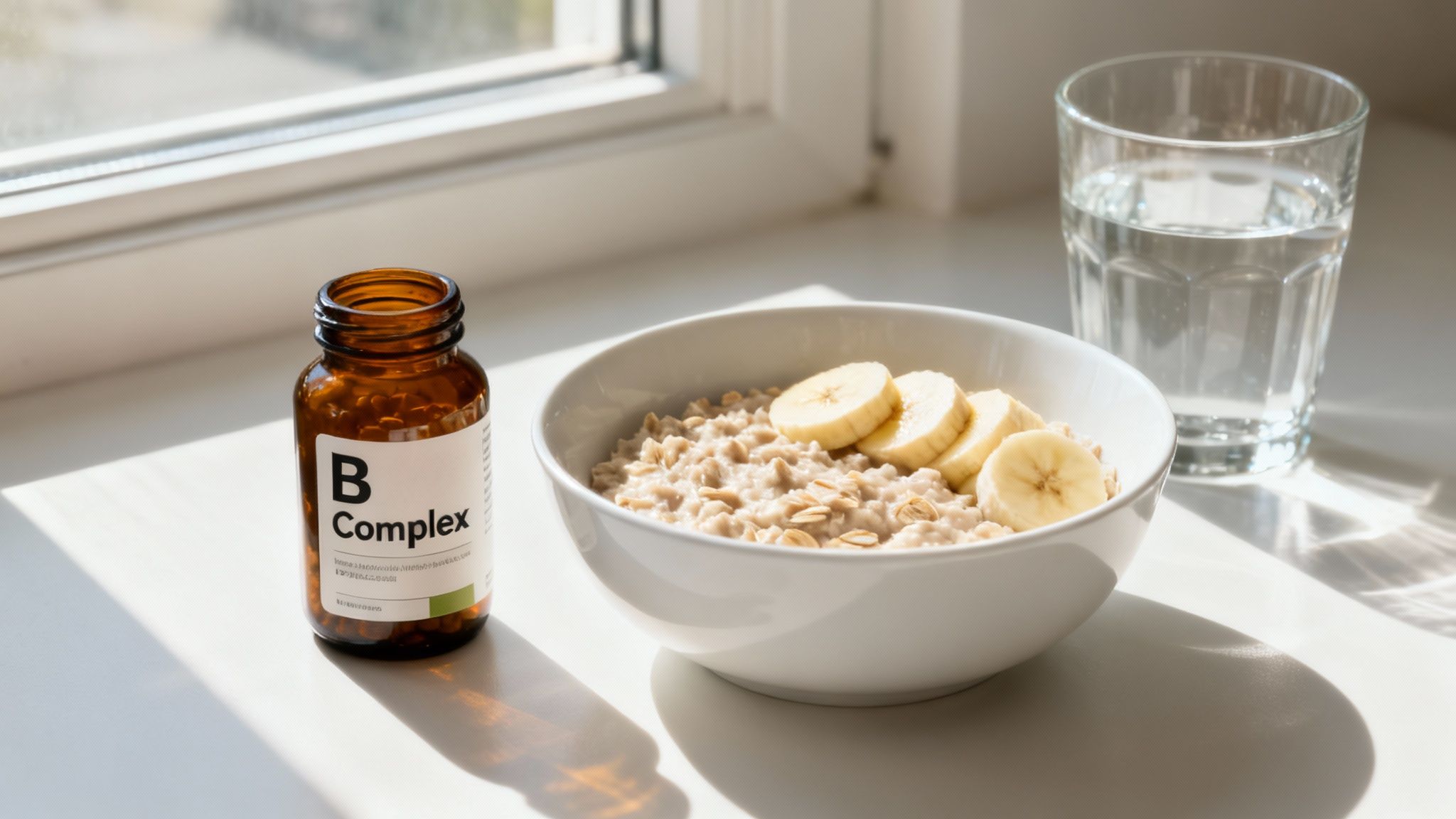
Timing your supplements might seem like a tiny detail, but it can make a real difference in how well they work. B vitamins are like the spark plugs for your body's engine; they're essential for converting the food you eat into usable fuel. Taking them in the morning ensures your engine has what it needs to run smoothly all day long.
This is especially true because B vitamins are water-soluble. Your body doesn't store them for long, so a daily top-up is key. UK health guidance backs this up, confirming that pairing them with a meal enhances absorption and minimises the chance of an upset stomach. For instance, the daily recommended amounts for adults—around 1.4 mg of B6 for men and 1.5 micrograms of B12—are put to much better use when they're part of your breakfast routine, aligning perfectly with your natural energy cycles. You can discover more about these vitamin recommendations from the NHS.
For optimal results, consistency is everything. Making your B complex supplement a non-negotiable part of your morning routine helps build a powerful habit, ensuring you get the benefits day in and day out.
Why Morning Is Best for Vitamin B Complex
To break it down, here’s a quick summary of why morning is the golden hour for your B vitamins.
| Reason | Explanation |
|---|---|
| Energy Production | B vitamins are central to converting food into energy. A morning dose provides your body with these nutrients right when you need them most. |
| Enhanced Absorption | Taking your B vitamins with a meal helps your body absorb them more effectively, meaning you get more out of every dose. |
| Digestive Comfort | B complex on an empty stomach can sometimes cause a bit of nausea. Food acts as a welcome buffer, preventing any digestive issues. |
This simple timing trick helps you get the most from your supplement. This principle of timing actually applies to many nutrients, and you can explore it further in our guide on the best time of day to take vitamins.
How B Vitamins Fuel Your Body's Energy Factory
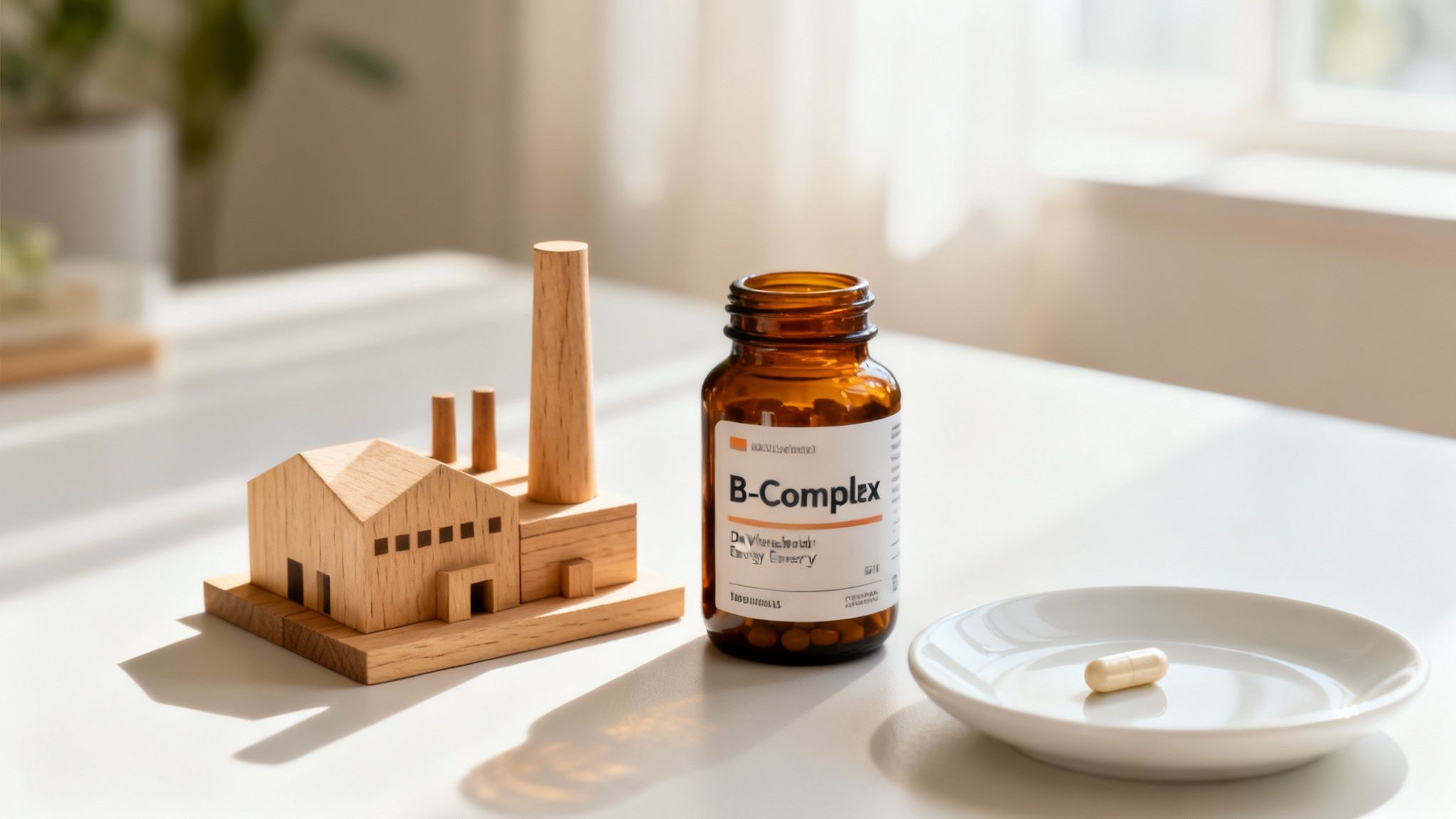
Think of your body as a busy factory, humming along 24/7. To keep that production line moving smoothly, it needs a constant stream of energy. This is exactly where the vitamin B complex steps in. The B vitamins are like the essential workers on the factory floor, tasked with converting the raw materials—the food you eat—into usable energy, known as ATP.
Each of the B vitamins has its own specialised role, but they all work together as a tight-knit team. For example, Vitamin B1 (Thiamine) is a master at turning carbohydrates into fuel. Meanwhile, Vitamin B12 (Cobalamin) is crucial for making red blood cells, the delivery drivers that transport oxygen to power every single part of your factory. If these key workers are missing, the whole system grinds to a halt, leaving you feeling tired and sluggish.
The Role in Energy and Brain Function
But B vitamins do more than just manage physical energy; they're also vital for keeping the factory's control room—your brain—running at its best. They play a fundamental part in creating neurotransmitters, which are the chemical messengers that handle your mood, focus, and cognitive performance. It's this double-duty action on both physical get-up-and-go and mental sharpness that makes timing your intake so important. To get a better sense of how certain nutrients can sharpen your mind, it's worth exploring the role of specific energy and focus vitamins.
Think of taking your B complex in the morning as ensuring your factory's day shift is fully staffed and ready to go. You're giving it all the resources it needs right when production demands are at their peak, setting yourself up for a productive day.
By understanding what the vitamin B complex is good for, you start to see just how wide-ranging its impact is. These vitamins are essentially the managers, engineers, and power-plant operators for your body. They don't just hand you raw energy; they build and maintain the very systems that allow your body to function properly. This is precisely why the best time to take vitamin B complex is when your factory is just starting its day.
Why Morning is Prime Time for B Vitamins
Taking your B complex in the morning isn’t just a random tip—it’s about working with your body, not against it. Think of it like this: your body has an internal clock, its circadian rhythm, that dictates when it’s time to power up and when it’s time to wind down. Kicking off your day with B vitamins gives your system the right tools just as the workday begins.
When you take them first thing, you’re supplying the crucial ingredients needed to turn your breakfast into actual, usable energy. This helps you get a steady stream of fuel when you need it most, sidestepping that dreaded mid-afternoon slump before it even has a chance to hit.
Fuelling Your Brain and Body from the Get-Go
Certain B vitamins really shine when you give them a morning slot. Vitamin B12, for instance, is a big player in keeping your nerve cells healthy and making the red blood cells that shuttle oxygen around your body. A morning dose gives your brain and body a head start on stamina for the day.
Then there’s Vitamin B6, which is essential for creating neurotransmitters—the chemical messengers that run your brain. This includes serotonin, the famous 'feel-good' chemical that helps keep your mood stable and your mind calm. By taking B6 in the morning, you’re basically front-loading your brain with the building blocks for a more focused and positive day. It’s a simple but effective way to understand the best time to take vitamin B complex.
A word of caution: taking B vitamins at night can backfire for some. Their energising effects might get in the way of winding down, leading to a feeling of being 'wired' or even causing vivid dreams that mess with a good night's rest.
By timing your B complex with your morning routine, you’re setting a powerful foundation for the entire day. You’re making sure the nutrients are ready and waiting right when your metabolism and brain are kicking into high gear. It’s a small tweak that can make a big difference in feeling alert, balanced, and ready for whatever comes your way.
Maximising Absorption: What to Take with Your B Complex
Nailing the timing of your B complex is only half the battle. The other, equally important half? Making sure your body can actually absorb it.
Because B vitamins are water-soluble, the best strategy is a simple one: take them with a meal and a glass of water. This combo not only helps your body soak up the nutrients but also acts as a nice buffer, preventing that mild nausea some people feel when taking vitamins on an empty stomach.
A balanced breakfast with healthy fats, protein, and fibre creates the perfect environment for your body to get to work. Think of it like preparing good soil before planting seeds – you’re setting the stage for the best possible outcome. Food slows everything down, giving your digestive system more time to break down and absorb each individual B vitamin.
This is why a morning dose is so often linked to a tangible boost in energy and mood.
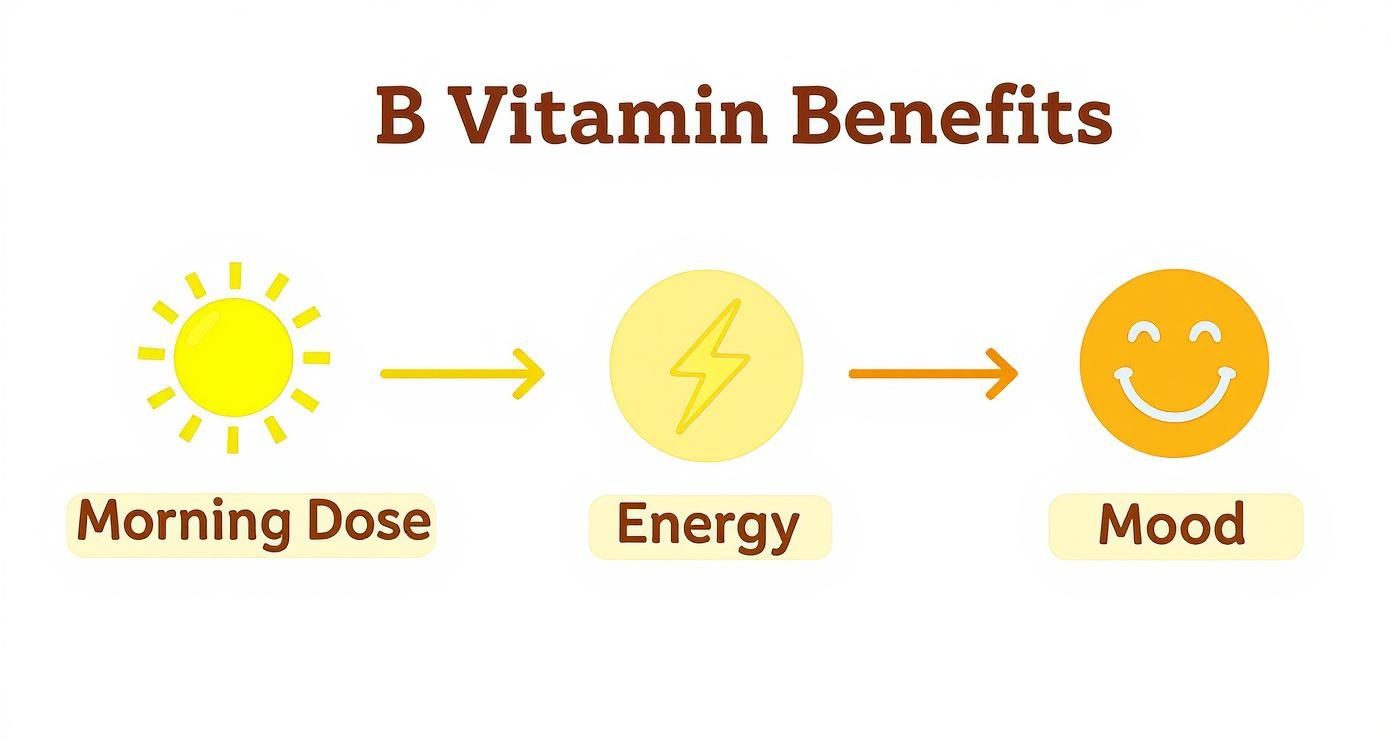
As the infographic shows, a simple morning habit can directly fuel key benefits that you'll feel throughout the day.
Friends and Foes of B Vitamin Absorption
While food is your supplement's best friend, a few other things can get in the way of proper absorption. It helps to know what they are so you can get the full benefit from your daily dose.
So, what helps and what hinders? A few common factors can either boost or block your body's ability to absorb these crucial nutrients.
| Factors Influencing B Vitamin Absorption | ||
|---|---|---|
| Factor | Impact on Absorption | Recommendation |
| Food | Helps. Slows digestion, giving your body more time to absorb water-soluble vitamins. | Take your B complex with a balanced meal, preferably breakfast. |
| Water | Helps. As B vitamins are water-soluble, they need water to dissolve properly. | Always take your supplement with a full glass of water. |
| Certain Medications | Hinders. Some antacids or diabetes drugs like metformin can interfere with B12 absorption. | Speak to your GP or pharmacist about timing your supplements around your medication. |
| Excessive Alcohol | Hinders. Heavy consumption can block the absorption of thiamine (B1) and folate (B9). | Limit alcohol intake, especially around the time you take your supplement. |
| High-Dose Vitamin C | Can Hinder. Very high doses of Vitamin C taken at the same time may affect B12 absorption. | If you take high-dose C, space it out from your B complex by a couple of hours. |
Ultimately, paying attention to what you consume alongside your B complex empowers your body to make the most of every dose. It’s a small adjustment that can lead to significantly better results.
Of course, while we're focused on B vitamins here, getting a broader view by understanding different types of supplements can help you build a smarter, more effective health routine. And as always, if you're on any medication, it's a good idea to chat with your healthcare professional about potential interactions before starting something new.
Tailoring Your B Vitamin Intake for Different Life Stages
Our nutritional needs are never set in stone; they shift and evolve with every chapter of life. This is especially true for B vitamins, where certain lifestyles and life stages call for a more thoughtful approach to decide the best time to take vitamin B complex and the right dosage.
Getting to grips with these unique requirements means you can give your body the support it needs, right when it needs it. It makes sense, after all—a young athlete’s needs are worlds away from those of an older adult or an expectant mother.
Special Considerations for Pregnancy and Older Adults
During pregnancy, the body’s demand for folate (B9) skyrockets. It’s absolutely essential for the healthy development of a baby's neural tube, and getting enough can drastically cut the risk of certain birth defects. For this reason, it’s a non-negotiable part of prenatal care, and many health professionals suggest starting supplementation even before conception. You can dive deeper in our comprehensive guide to women's health vitamins.
On the other end of the spectrum, older adults often run into trouble absorbing vitamin B12. As we age, our stomachs produce less of the acid needed to release B12 from the protein in our food. This can lead to a deficiency even if your diet is spot on, making a high-quality, easily absorbed B complex supplement a particularly smart move.
B Vitamin Demands for Athletes and Plant-Based Diets
Athletes push their bodies to the limit, and B vitamins are the unsung heroes of energy metabolism and muscle repair. Think of them as the factory workers that convert your food into fuel and help build new red blood cells to ferry oxygen to your hardworking muscles. A consistent morning dose can help sustain energy for both training and recovery.
For anyone following a plant-based diet, vitamin B12 should be front and centre. Since B12 is found almost exclusively in animal products, supplementation isn't just a good idea—it's essential to avoid deficiency. While the UK’s recommended nutrient intake for B12 is 1.5 micrograms per day, newer evidence suggests that a daily intake closer to 6 micrograms might be more effective at preventing shortfalls, especially for at-risk groups.
Key Takeaway: Your stage of life directly shapes your B vitamin needs. Whether it's pregnancy, ageing, athletic pursuits, or dietary choices, adjusting your intake is key to meeting your body's specific demands for peak health and energy.
Common Questions About Taking Vitamin B Complex
Even with the best advice, it’s completely normal to have a few questions when you’re trying to get a supplement routine spot on. Let's tackle some of the most common ones so you can feel confident you’re getting the most out of your vitamin B complex.
Can I Take B Vitamins on an Empty Stomach?
While you technically can, it’s not always the best idea. B vitamins are water-soluble, and for some people, taking them without any food can lead to a bit of nausea or an upset stomach.
Pairing your B complex with breakfast is a much gentler approach. The food acts as a buffer for your digestive system and can even help your body absorb the vitamins more effectively.
What Happens If I Take My B Complex at Night?
Taking your B vitamins in the evening might just backfire. Since they play such a central role in converting food into energy, a nighttime dose could leave you feeling wired when you’re trying to wind down.
To be on the safe side and avoid any unwanted late-night alertness, sticking to a morning routine is your best bet.
The best time to take vitamin B complex is almost always in the morning. This timing aligns with your body's natural energy production cycle and prevents potential interference with your sleep.
How Long Does It Take for B Vitamins to Work?
Unlike your morning coffee, B vitamins don’t give you an instant jolt. The benefits tend to build up more gradually as you consistently top up your body’s levels.
Some people report feeling a subtle lift in their energy within a few days or weeks. However, noticing bigger changes in things like mood or mental sharpness can take a bit longer, especially if you were quite low to begin with.
Do I Need to Take a B Complex Every Day?
Yes, consistency really is key here. Because B vitamins are water-soluble, your body doesn't hang onto them for long. It takes what it needs for the day and gets rid of the rest.
Taking a daily supplement ensures your cells have a steady, reliable supply of these essential nutrients to do their jobs properly.
This daily habit is even more important when you look at modern dietary trends. In the UK, our intake of key micronutrients, including B vitamins like folate, has actually dropped over the last couple of decades. For instance, the number of children aged 4 to 10 not getting enough folate has tripled from 4% to 12%, showing a growing risk of deficiency. You can read the full report on UK dietary trends from HSIS to learn more.
So, What's the Bottom Line?
When it comes down to it, getting the most from your vitamin B complex isn't about some complicated secret. It’s all about consistency and smart timing. The evidence points overwhelmingly to one clear, simple strategy: take your supplement every single morning with a good breakfast.
Think of it like this: you're giving your body the tools it needs for the day right as it's clocking in for work. A morning dose works in harmony with your natural energy cycle, fuelling your metabolism when it's at its most active. This simple habit can lead to sharper focus, more sustained energy, and a general feeling of being "on" that can see you right through the day. It's the best way to make sure you're not just swallowing vitamins, but actually putting them to good use.
By following this approach and keeping those absorption tips we talked about in mind, you’re setting yourself up for success. Remember, it's the small, consistent habits that really deliver the biggest results over time. The best time to take vitamin B complex is simply the one that becomes an effortless part of your daily rhythm, fuelling your health for the long haul.
Your Key Action: Make your vitamin B complex a non-negotiable part of your breakfast routine. This simple act aligns your supplement with your body's natural rhythm, unlocking its full potential for energy and focus.
Ready to build a smarter supplement routine? Explore personalised vitamin stacks and expert-backed health solutions with VitzAi.com. Find your perfect fit today.
This article is for informational purposes only and is not medical advice. Always consult a qualified health professional before starting any new supplement or major lifestyle change.