

The Best Vitamins For Over 40 Men: A UK Guide
For many of us, the best vitamins and minerals after 40 are the ones that tackle the big three: energy, hormone balance, and heart health. Think Vitamin D for hormonal support, B12 for putting a spring in your step, and Magnesium for everything from muscle function to a decent night's sleep. As our nutritional needs change, a more focused approach isn't just a good idea—it's essential for staying on top of your game.
Understanding What Your Body Needs After 40
Hitting your 40s is a major milestone. But let's be honest, it also brings a fundamental shift in what your body asks of you. The diet and routine that got you through your 20s and 30s probably won't cut it anymore if you want to maintain peak performance. This isn't a step back; it's a chance to get smart and proactively fine-tune your health for the years ahead.
Think of it like this: your body’s hardware is still top-notch, but the internal software needs an update. As we age, a few key physiological changes kick in, making a strategic supplement plan more important than ever.
The Key Changes Men Face
After 40, your body just works differently. Getting to grips with these shifts is the first step toward giving it the right nutritional tools for the job.
- Slower Metabolism: You might notice it's a bit easier to put on weight and a lot harder to shift it. That’s partly down to a natural dip in your metabolic rate, meaning your body simply burns fewer calories when you're resting.
- Hormonal Shifts: Testosterone—key to your energy, muscle mass, and libido—naturally starts to decline by about 1-2% each year after you hit 30. By the time you're in your 40s, that gradual drop can become much more noticeable.
- Increased Health Risks: The risk factors for things like cardiovascular issues start to creep up. This makes supporting your heart with nutrients like Omega-3 a much bigger priority.
- Reduced Nutrient Absorption: Your gut can become less efficient at pulling certain key nutrients out of your food, like Vitamin B12. This makes it tougher to get everything you need from your diet alone.
Tackling these changes isn’t about trying to turn back the clock. It's about working with your body to keep your strength, energy, and vitality right where you want them. A well-thought-out supplement plan is like a nutritional insurance policy, filling in any gaps your diet might be leaving.
By focusing on the best vitamins for men over 40, you build a solid foundation for your long-term health. To really get into the specifics, check out our comprehensive guide on essential supplements for men over 40. It’s the perfect roadmap for figuring out your core nutritional priorities and why a tailored stack is a game-changer for peak performance.
Quick Guide To Key Nutrients For Men Over 40
The best vitamins for men over 40 target energy, hormone balance, and heart health. Key nutrients include Vitamin D, B12, Magnesium, and Zinc. Here's a quick summary of the most critical vitamins and minerals.
| Nutrient | Key Benefit For Men 40+ | Why It Matters Now | Common Deficiency Signs |
|---|---|---|---|
| Vitamin D | Hormone & Immune Support | Crucial for testosterone production and bone density, which decline with age. | Fatigue, getting sick often, bone/back pain, low mood. |
| Magnesium | Muscle, Nerve & Sleep | Supports over 300 bodily processes, including muscle recovery and stress reduction. | Muscle cramps, poor sleep, fatigue, irritability. |
| Vitamin B12 | Energy & Brain Function | Absorption can decrease with age, leading to energy slumps and brain fog. | Tiredness, weakness, pale skin, memory issues. |
| Zinc | Testosterone & Prostate Health | Essential for testosterone production, immune function, and prostate health. | Low libido, frequent colds, slow wound healing, hair loss. |
| Omega-3s | Heart & Joint Health | Fights inflammation, supports cardiovascular function, and lubricates joints. | Joint pain, dry skin, poor concentration, mood swings. |
This table gives you a starting point, highlighting the nutrients that often become top priorities for men as they enter their 40s and beyond.
The Foundational Four Vitamins For Men Over 40
Think of building a solid nutritional plan like laying the foundations for a house. If that base isn't solid, anything you try to build on top will be shaky. For men hitting their 40s and beyond, a few key vitamins form this essential bedrock, directly addressing the core physiological shifts that come with age. These aren't just 'nice-to-haves'; they're the non-negotiables for keeping your energy up, hormones balanced, and staying healthy for the long haul.
By zeroing in on these foundational nutrients, you're making sure your most critical bases are covered first. Consider them the main dials you can turn to keep your body's engine humming along nicely. Let's get into the four core vitamins that ought to be at the very top of your list.
Vitamin D: The Sunshine Vitamin
Often dubbed the "sunshine vitamin," Vitamin D really acts more like a hormone in the body. It has a say in just about everything, from your mood and immune system to bone density and even testosterone levels. For men over 40, its role in supporting hormonal health is a big one, as healthy Vitamin D levels are directly linked to maintaining healthy testosterone.
The trouble is, getting enough Vitamin D is a real challenge here in the UK. Our famous lack of sunshine, especially outside the summer months, makes it tough. This is where the health priorities for men over 40 really come into focus, highlighting just how crucial vitamins like D are.
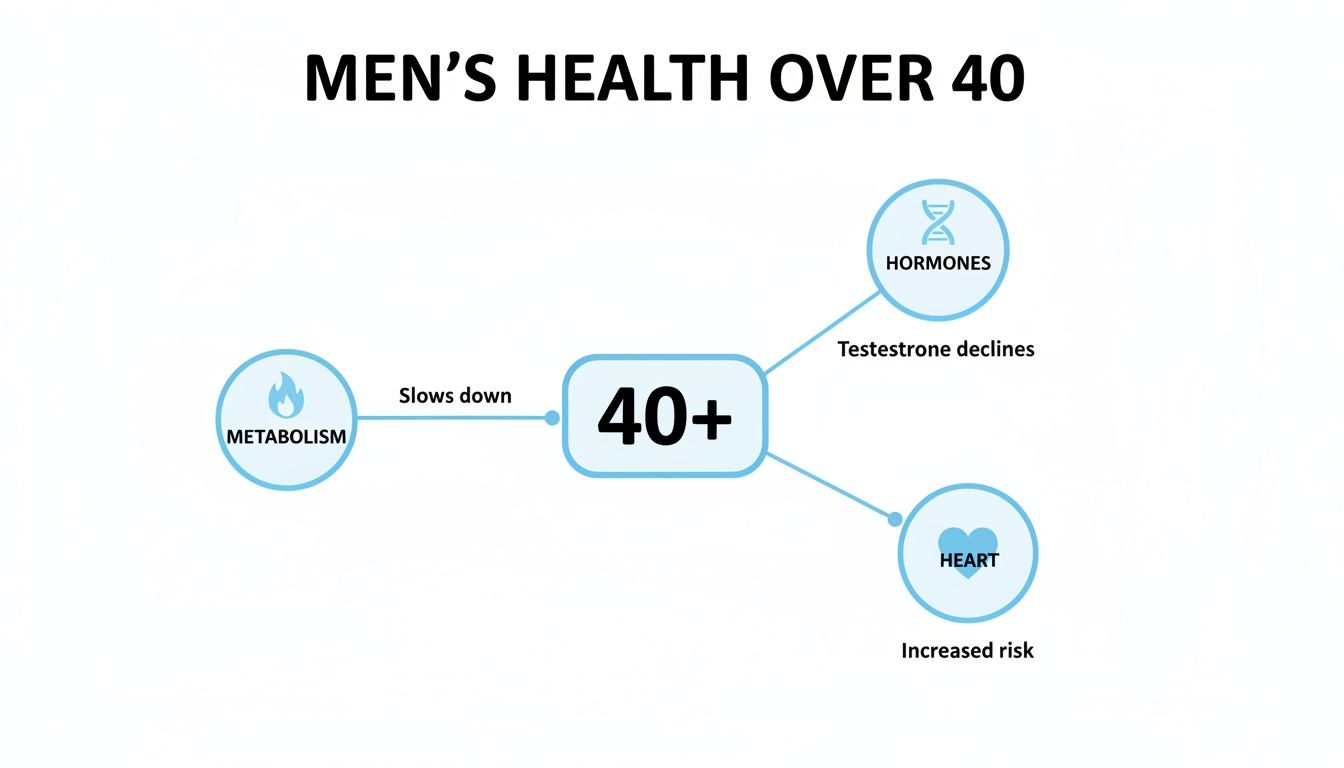
As you can see, hormones, metabolism, and heart health are all priorities that are deeply interconnected. A shortfall in a key player like Vitamin D can have a negative knock-on effect across all three systems.
In the UK, Vitamin D is one of the most vital nutrients to get right, mainly because deficiency becomes more and more common as we age. Government figures from the National Diet and Nutrition Survey show that low Vitamin D is a significant problem among adults. That's why Public Health England advises most adults to consider taking a daily 10 µg supplement, particularly during autumn and winter.
- Top Food Sources: Fatty fish (salmon, mackerel), red meat, liver, and fortified foods like some cereals.
- Recommended Dose: A daily supplement of 10-25 mcg (400-1000 IU) is a smart move for most, especially from October to March.
Vitamin B12: The Energy Spark Plug
Ever feel like you're running on fumes, or battling a persistent brain fog? Low Vitamin B12 could well be the culprit. Think of this vitamin as the spark plug for your metabolism; it's absolutely essential for converting the food you eat into energy you can actually use. It also plays a massive part in keeping your nerves healthy and producing red blood cells.
As men get older, the stomach tends to produce less of the acid needed to absorb B12 from food. This natural, age-related change makes deficiency much more common after 40, even if you're eating a perfectly healthy diet.
Supplementing can be a really effective workaround for these absorption issues, making sure your cells are getting the fuel they need to keep you feeling sharp and energised. Vitamin B12 is like the crucial messenger service that keeps your brain and nervous system communicating properly. A shortfall can lead to slower reaction times, memory lapses, and just that general feeling of being mentally drained.
Vitamin K2: The Nutrient Director
Vitamin K2 is one of those less talked about, yet incredibly important vitamins for men over 40. It essentially acts as a "traffic cop" for calcium in your body. While Vitamin D helps you absorb calcium from your food, it's K2 that makes sure that calcium goes to the right places—your bones and teeth—and, crucially, stays out of the wrong ones, like your arteries.
This is a perfect example of nutrient synergy. Taking Vitamin D without enough K2 is like giving a delivery driver a package with no address on it. K2 provides the directions, making sure calcium strengthens your skeleton rather than contributing to arterial calcification, which is a major risk factor for heart disease.
- Top Food Sources: Fermented foods like natto, hard cheeses (think Gouda or Brie), egg yolks, and grass-fed butter.
- Recommended Dose: A typical dose in supplements ranges from 90-120 mcg daily, and you'll often find it paired with Vitamin D.
This partnership really underlines why smart supplementation isn't just about popping individual pills; it's about understanding how nutrients work together as a team to support your health.
Vitamin A: The Cellular Defender
Vitamin A is a powerhouse antioxidant that supports your vision, immune function, and cell growth. It's especially important for keeping the lining of your skin, gut, and respiratory tract healthy—these are your body's first lines of defence against any nasty pathogens.
While a serious deficiency is pretty rare in the UK, even slightly suboptimal levels can weaken your immune response, leaving you more open to picking up infections. Making sure you've got enough Vitamin A is a straightforward way to keep your internal defence systems robust.
- Top Food Sources: Liver, cheese, eggs, and oily fish. Your body can also make Vitamin A by converting beta-carotene from yellow, red, and leafy green veg (like carrots and spinach).
Get these foundational four—D, B12, K2, and A—sorted, and you're creating a powerful baseline for your health. You'll be tackling energy, hormones, bone strength, and immunity all at once. Getting these right is the first, and most important, step in building a resilient body for the decades ahead.
Essential Minerals For Muscle, Energy, And Hormonal Health
While vitamins usually steal the spotlight, a few key minerals become absolute game-changers for men over 40. Think of them as the unsung heroes working behind the scenes, keeping your engine running smoothly day in and day out. They’re fundamental for everything from muscle strength and energy levels to hormonal balance and a decent night's sleep.
As we hit our forties and beyond, our bodies can start to struggle a bit more with absorbing and holding onto these minerals. This makes smart, targeted supplementation a genuinely effective strategy. Let's focus on the power trio that delivers the biggest impact: Magnesium, Zinc, and Selenium.

Magnesium: The Ultimate Multitasker
If there’s one mineral that punches well above its weight, it's magnesium. It’s involved in over 300 essential bodily processes, acting like a master switch for everything from creating energy in your cells to helping your muscles relax after a workout. For men over 40, its benefits are particularly crucial for managing stress, improving sleep, and keeping your energy steady.
Unfortunately, modern diets and soil depletion mean many of us just aren't getting enough. This suggests many men entering their forties may have had decades of marginal intake, making it much harder to stay on top of their health.
When you're choosing a supplement, bioavailability is everything. Magnesium Glycinate is often a top choice because it's gentle on the stomach and highly absorbable, making it particularly good for promoting relaxation and better sleep.
Zinc: The Testosterone And Immune Guardian
Zinc is arguably one of the most critical minerals for male hormonal health. It plays a direct and vital role in producing testosterone—the hormone that governs your muscle mass, sex drive, and energy levels. With testosterone naturally declining as we age, keeping your zinc levels optimal is a non-negotiable part of your health strategy.
Beyond hormones, zinc is a cornerstone of your immune system and is absolutely essential for prostate health, an area that rightly gets more attention after 40.
Think of zinc as the security guard for your hormonal and immune systems. When levels are low, the gates are left open to fatigue, a weaker immune response, and a noticeable dip in vitality. Our guide on the powerful duo of zinc and magnesium supplements dives deeper into how these two minerals work in tandem to support male vitality.
Selenium: The Potent Antioxidant Protector
Selenium is a powerful antioxidant that shields your cells from the damage caused by oxidative stress—a key driver of the ageing process. For men over 40, though, its most critical role is supporting your thyroid. Your thyroid gland is the master controller of your metabolism, so keeping it healthy is essential for maintaining both your energy and your weight.
A healthy thyroid ensures your body burns fuel efficiently, which helps prevent that metabolic slowdown that can creep in with age.
-
Top Food Sources:
- Magnesium: Leafy greens (spinach, kale), nuts (almonds, cashews), seeds, and whole grains.
- Zinc: Oysters are the undisputed champion, followed by red meat, poultry, beans, and pumpkin seeds.
- Selenium: Just 1-2 Brazil nuts a day can provide your full recommended daily amount. Other sources include fish, shellfish, and eggs.
By making sure this mineral trio is part of your daily routine, you’re laying a solid foundation for three of the biggest concerns for men over 40: sustained energy, robust hormonal health, and strong cellular defence. It’s a simple yet powerful step in any effective supplement plan.
Advanced Support For Your Heart And Brain
Once you’ve got your foundational vitamins and minerals sorted, it’s time to think about more specialised support. For men navigating their 40s and beyond, two areas really demand our attention: cardiovascular and cognitive health.
Think of it like this: the basics are your standard MOT. This next step is a high-performance tune-up, targeting the very systems—your engine and your onboard computer—that dictate how well you perform day-to-day.
This is where two powerful nutrient groups come into play: Omega-3 fatty acids and the B-vitamin complex. These aren't just minor additions; they are strategic tools for managing inflammation, keeping your mind sharp, and protecting your health for the long haul.

Omega-3s For A Healthy Heart And Sharp Mind
Omega-3s, specifically EPA (eicosapentaenoic acid) and DHA (docosahexaenoic acid), are essential fats your body can’t make efficiently on its own. They act like the body's own internal fire brigade, helping to cool down the chronic, low-grade inflammation that silently contributes to so many age-related health issues.
For your heart, EPA is the real star. It helps maintain healthy blood pressure and triglyceride levels—two key markers for cardiovascular risk that often start to creep up after 40. Meanwhile, DHA is the main structural fat in your brain, absolutely crucial for maintaining cognitive function, memory, and focus.
Picture your cardiovascular system as a network of pipes. Over the years, inflammation can cause the equivalent of rust and blockages. Omega-3s act like a rust-proofing agent, keeping the pipes clear and flexible. It’s a simple analogy, but it shows why they're some of the best nutrients for men over 40.
When you're choosing a supplement, flip it over and look for one that clearly states the amount of EPA and DHA per serving. A decent, high-potency formula will typically provide a combined total of at least 1,000 mg of EPA and DHA.
The B-Vitamin Complex: Energy And Homocysteine Control
The B-vitamin family is a group of eight essential nutrients that work as a team to convert food into fuel, keeping your energy levels steady. For men over 40, though, their most critical role is arguably in managing homocysteine levels.
Homocysteine is an amino acid that, when levels get too high, can damage the lining of your arteries and increase the risk of heart disease. It's something you definitely want to keep in check.
Vitamins B6, B9 (folate), and B12 are the key players here, vital for breaking down homocysteine and keeping it in a safe range. This is especially important for UK men, as cardiovascular disease risk climbs steeply after the age of 40.
It's not just about what you supplement with, either. It pays to understand other risk factors. For instance, learning about the impact of chronic anxiety on men's heart health gives you a more complete picture of your cardiovascular wellbeing.
Why Methylated B-Vitamins Matter
When you're browsing B-complex supplements, you might see the word "methylated." Pay attention to this—it’s a crucial detail that can make a huge difference in how much good the supplement actually does.
Methylation is a natural biochemical process that essentially "activates" B vitamins, particularly folate and B12, so your body can use them properly. Here's the catch: a significant portion of the population has a common genetic variation that makes it difficult for their bodies to perform this conversion.
- Standard Folate: Folic Acid
- Active, Methylated Folate: L-5-Methyltetrahydrofolate (L-5-MTHF)
- Standard B12: Cyanocobalamin
- Active, Methylated B12: Methylcobalamin
By choosing a supplement with already methylated B vitamins, you're bypassing that potential genetic roadblock. This guarantees superior bioavailability, meaning your body can absorb and use them straight away for energy production and keeping homocysteine in check. It's a small detail on the label that separates a truly high-quality product from one that might be offering you very limited benefits.
Adding high-quality Omega-3s and a methylated B-complex to your routine are two powerful, proactive steps you can take to protect your heart and brain for years to come.
How To Choose The Right Supplements For You
Walking down the supplement aisle can feel a bit much, can't it? Every bottle promises the world, and it’s hard to know what’s genuine and what’s just clever marketing. But here’s the thing: not all supplements are created equal. Taking a few minutes to learn what separates a high-quality product from a dud is the best investment you can make for your health.
Think of it like buying a car. You wouldn't just be won over by the shiny paint job; you'd want to look under the bonnet and see what the engine is like. The same logic applies here. Becoming a savvy supplement buyer means knowing how to read the label and spot the real markers of quality.
Look For Quality And Transparency
First things first, you need to check for proof that a product is safe and actually contains what it says it does. These aren't optional extras; they're non-negotiable signs that a brand is serious about its standards.
- Third-Party Testing: This is your guarantee that an independent lab has verified the product's contents and checked for any harmful contaminants. Keep an eye out for logos from respected organisations like NSF International or Informed Sport.
- Good Manufacturing Practice (GMP): This certification ensures the supplement was made in a clean, controlled environment. It’s a baseline standard of quality that any reputable brand should have no trouble meeting.
Understand Bioavailability
You'll hear the term bioavailability thrown around a lot, and it's simpler than it sounds. It just means how well your body can absorb and actually use a nutrient. A supplement might boast a high dose of a mineral, but if it’s in a form your body struggles to absorb, you're not getting the benefit. This is where smart formulation really counts.
For instance, you'll often see magnesium sold as magnesium oxide. It's cheap to produce, but our bodies absorb it very poorly. A much better option is a 'chelated' form like magnesium glycinate, which your body can put to work far more effectively. Learning about the best multivitamin for men can help you spot other highly bioavailable ingredients to look for.
Choosing supplements with high bioavailability is like filling your car with premium fuel instead of some watered-down version. Both might get the engine turning over, but only one is going to deliver peak performance.
As you think about what to include in your daily routine, checking out a guide to the best daily supplements for men can provide some excellent, practical ideas. It helps put into context how different nutrients can work together in a health plan. At the end of the day, choosing wisely ensures your investment truly supports your health goals.
Your Questions, Answered
Stepping into the world of supplements can feel a bit overwhelming, and it’s natural to have a few questions. Getting straight answers is the best way to feel confident about the choices you're making for your long-term health. Here are a few of the most common things we get asked by men over 40.
How Long Until I Start Feeling the Benefits?
When it comes to supplements, patience really is key. While some nutrients, like those in energy powders, can give you a relatively quick boost, others are playing a much longer game for your overall health.
You might notice a bit more get-up-and-go from B vitamins within a couple of weeks. But the more fundamental benefits—like strengthening your bones with Vitamin D and K2, or improving heart health markers with Omega-3s—happen gradually. It’s best to think of these as a long-term investment in your future self, not an overnight fix. The most powerful benefits of a targeted supplement plan often reveal themselves over months, not days. Sticking with it consistently is what builds a resilient foundation for your health as you get older.
Can’t I Just Get All These Nutrients From My Diet?
Let's be clear: a healthy, balanced diet is the absolute cornerstone of good health. Nothing beats it. Food provides the fibre, macronutrients, and thousands of beneficial compounds that a supplement simply can't replicate.
That being said, trying to hit optimal levels of every single nutrient from food alone is a real challenge these days. Modern farming has led to soil depletion, which means the fruit and veg on our plates might not be as packed with nutrients as they were for our grandparents. On top of that, as we age, our bodies can become less efficient at absorbing certain nutrients from food, like Vitamin B12.
This is where smart, targeted supplementation comes in. For many men in the UK, it’s a practical and effective way to bridge any nutritional gaps and ensure your body has everything it needs.
Is a Generic, Off-the-Shelf Multivitamin Enough?
A standard multivitamin from the supermarket can be a decent starting point—think of it as a basic nutritional insurance policy. It gives you a broad sprinkle of many vitamins and minerals and can certainly help cover some initial bases.
The problem is, they are a one-size-fits-all solution for a world of unique individuals. For men over 40, these generic formulas often fall short, providing doses of critical nutrients that are simply too low to make a real difference. For example, you might only get a tiny amount of Vitamin D, or a form of magnesium that your body struggles to absorb properly, which limits the actual benefits.
A more tailored approach lets you focus on higher, more effective doses of the specific nutrients your body is calling out for at this stage of life.
Ready to move beyond generic solutions and build a supplement stack that’s actually designed for you? The AI-powered tool at VitzAi.com looks at your lifestyle and health goals to give you personalised recommendations, helping you invest wisely in your long-term vitality. Discover your personalised plan at https://vitzai.com.
This article is for informational purposes only and is not medical advice. Always consult a qualified health professional before starting any new supplement or major lifestyle change.