

Connective Tissue Support: What Works for Joints
Collagen powder is often sold as the answer to sore joints, aging tendons, and fragile ligaments. That advice is attractive because it's simple. It's also incomplete. Connective tissue support works more like a system than a single-product solution, combining sufficient nutrition, progressive mechanical loading, recovery, and appropriate clinical guidance.
Collagen may have a role, particularly for active adults who want to support tendon structure. But a supplement can't replace rehabilitation, adequate protein, sensible training, or an assessment of persistent symptoms. The useful question isn't only, “Does collagen work?” It's, “For which tissue, alongside what kind of loading, at what dose, and with what outcome in mind?”
Why Collagen Alone Won't Fix Your Joints
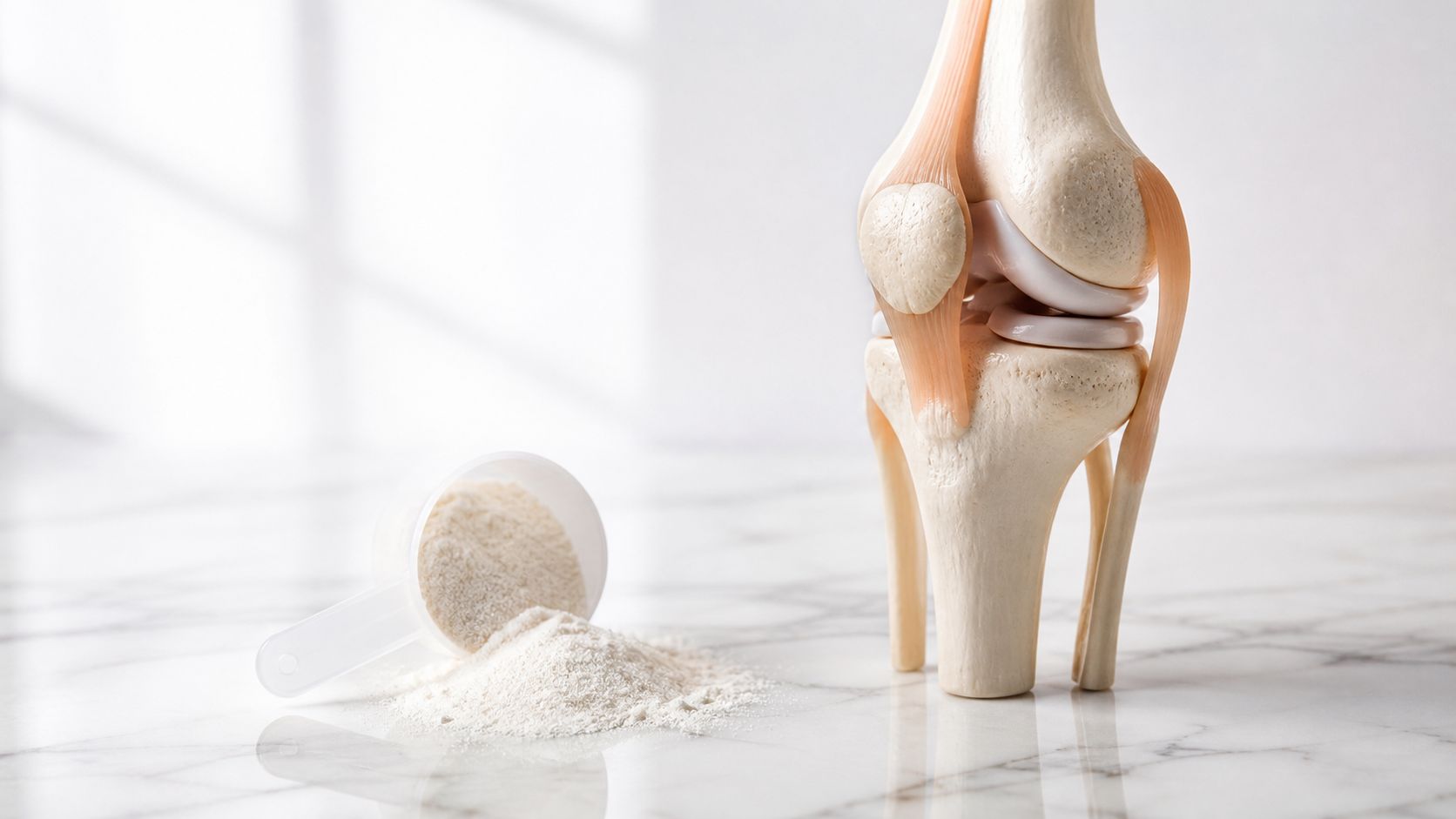
The most popular advice is also the least demanding: take collagen and hope. That approach ignores how tendons, ligaments, and cartilage respond to the forces placed on them.
Collagen peptides provide amino acids, including glycine, proline, and hydroxyproline, that the body can use in protein metabolism. That makes supplementation biologically plausible, but plausibility isn't the same as a guaranteed clinical result. The strongest practical case is for collagen as an adjunct to progressive loading, not as a standalone intervention.
A systematic review of eight randomized controlled trials found that the study protocols paired collagen with resistance or plyometric training lasting 3 to 15 weeks. Three of four studies measuring tendon cross-sectional area reported significantly greater increases with collagen than placebo. Those findings concern a structural measure, though. They don't prove that collagen prevents injury, eliminates pain, or speeds a person's return to sport. The systematic review supports a cautious interpretation.
Structural change is not the same as a better outcome
Tendon thickness, stiffness, and Young's modulus can help researchers understand tissue adaptation. They're not interchangeable with meaningful outcomes such as fewer injuries, better function, or reduced disability. Current evidence is stronger for tendon structure than for muscle strength, muscle size, or overall physical performance.
That distinction matters because a consumer may interpret “supports tendon remodeling” as “repairs my damaged tendon.” Those are different claims. Oral hydrolysed collagen has not been shown in a solid human study to directly increase collagen content in cartilage or tendons, and adequately powered trials haven't demonstrated fewer tendon injuries or faster return to sport.
Practical rule: Treat collagen as nutritional support around a well-designed training or rehabilitation plan, never as the plan itself.
The same principle applies to daily habits. If your Achilles is irritated, supplement decisions sit alongside load management, calf-strength work, footwear, and professional advice. A guide to the best shoes for a sore Achilles can help with footwear considerations, while the practical details of how to take collagen powder can help you use a product consistently.
What Connective Tissue Actually Is and Why It Fails
Connective tissue is the body's structural network. Tendons connect muscle to bone, ligaments connect bone to bone, cartilage cushions joint surfaces, and fascia surrounds and separates muscles. These tissues differ in function, but collagen is central to much of their architecture.
A useful analogy is reinforced concrete. Collagen fibers act like steel rebar, providing tensile strength. The surrounding ground substance acts more like the concrete, holding water and proteoglycans that help tissues manage compression, movement, and friction. Change the fibers, the surrounding matrix, or the way forces move through the structure, and tissue performance can change.
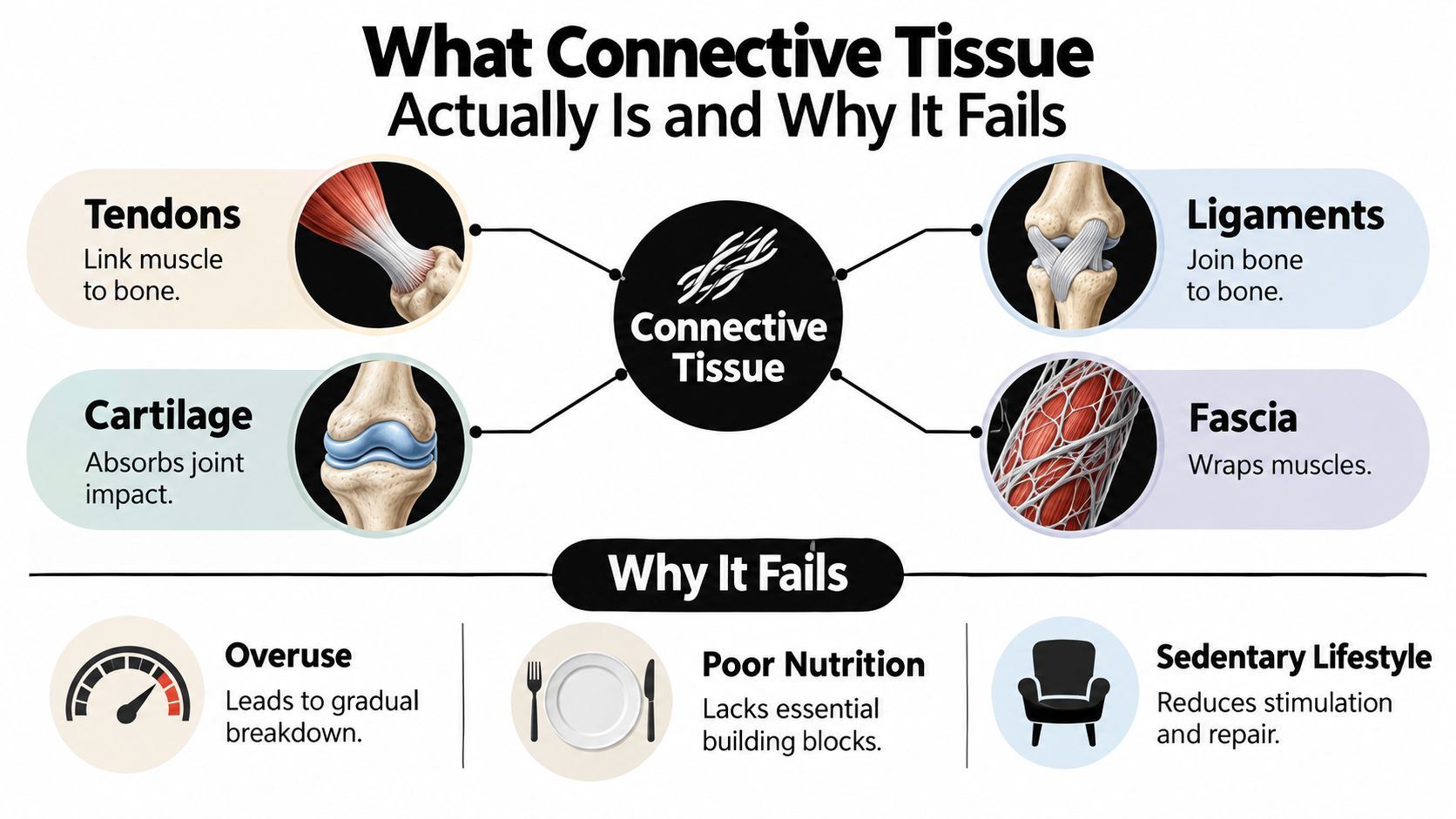
The main tissues have different jobs
Tendons transmit force from contracting muscle to bone. They need to tolerate repeated tension, so sudden increases in running, jumping, lifting, or training volume can exceed their current capacity.
Ligaments help guide and limit movement between bones. A sprain can stretch or tear ligament fibers, and repeated sprains may point to unresolved instability rather than a simple nutrient gap.
Cartilage provides a smooth, resilient surface within joints. It handles compression and helps reduce friction, but discomfort in a joint doesn't automatically identify cartilage as the source. Muscles, tendons, synovial tissues, nerves, and movement patterns may also contribute.
Fascia forms a continuous connective layer around muscles and other structures. Stiffness in one region can alter how a person moves, but broad claims that a supplement can “release” fascia oversimplify a complex mechanical problem.
Why capacity can fall behind demand
Tissue problems commonly emerge when repetitive stress outpaces recovery and adaptation. A runner may increase hills and speed before the calf and Achilles are ready. A lifter may add load faster than the tendon adapts. A desk worker may become deconditioned, then experience stiffness when returning abruptly to activity.
Age, inflammation, poor sleep, inadequate energy intake, and nutritional gaps can also affect the environment in which tissue repairs and remodels. None of these factors means a supplement is useless. It means the supplement has to fit the actual limiting factor.
A collagen product won't compensate for an abrupt training spike. Vitamin C won't correct poor load management. And no joint formula can diagnose whether pain comes from tendinopathy, arthritis, referred pain, instability, or another condition. Good connective tissue support starts by identifying the tissue, the stress placed on it, and the outcome you're trying to improve.
The Supplement Toolkit for Tendon and Ligament Health
Collagen peptides have the clearest connective-tissue rationale in this discussion, but they still need context. The research pattern is more encouraging for selected tendon structure outcomes when collagen accompanies training than for broad claims about joint repair, injury prevention, or athletic performance.
Vitamin C belongs in the conversation for a different reason. It supports collagen synthesis and the development of tissue fiber strength in cartilage, bone, teeth, and subcutaneous tissue. A systematic review of vitamin C after musculoskeletal injury found that human evidence remained limited and didn't consistently reproduce findings from animal research. Adequate intake matters for normal collagen formation, but high-dose supplementation hasn't been established as a treatment for tendinopathy or a guaranteed recovery accelerator. The vitamin C review supports that distinction.
Glucosamine and chondroitin are often grouped with tendon supplements, although their main rationale concerns cartilage and joint symptoms rather than tendon remodeling. Evidence is mixed, and expectations should stay modest. If you're comparing those ingredients specifically, this guide to glucosamine and chondroitin provides a useful starting point without making them universal answers.
MSM and hyaluronic acid are plausible additions for people focused on general joint comfort, but plausible mechanisms don't guarantee meaningful outcomes for every person. Omega-3 fatty acids may support broader inflammatory balance, yet they don't directly substitute for the mechanical stimulus that tendons require. Glycine and proline are collagen building blocks, but consuming individual amino acids isn't automatically equivalent to changing tendon structure.
| Supplement | Proposed mechanism | Evidence strength |
|---|---|---|
| Collagen peptides | Supplies collagen-derived amino acids and may support tendon adaptation alongside loading | Most relevant evidence for selected tendon structure outcomes, but context-dependent |
| Vitamin C | Supports normal collagen formation and cross-linking processes | Biochemically established, clinical recovery evidence limited |
| Glucosamine | May support cartilage-related structures and joint comfort | Mixed for osteoarthritis, not a proven tendon repair strategy |
| Chondroitin | May help cartilage retain water and support joint-related outcomes | Mixed and condition-specific |
| MSM | Proposed support for connective-tissue and joint comfort pathways | Plausible, but not a replacement for loading or assessment |
| Hyaluronic acid | Associated with the fluid environment of synovial joints | Potentially relevant to joint comfort, not tendon rebuilding |
| Omega-3 fatty acids | Supports general nutrition and inflammatory regulation | Useful for broader health goals, not a direct tendon-building agent |
Product quality and formulation also matter. A lower-dose tablet may be convenient but unsuitable for a protocol that studied a larger collagen intake. A combination product may simplify a routine, but it can make it harder to see which ingredient is relevant or whether the total intake fits your diet and medications.
Some people also search for experimental compounds when conventional supplements don't deliver the expected result. Resources that let readers compare Australian BPC-157 research vials should not be confused with evidence for an approved treatment. Research chemicals aren't a shortcut around diagnosis, progressive rehabilitation, or safety evaluation.
Why Movement Is the Missing Piece in Every Protocol
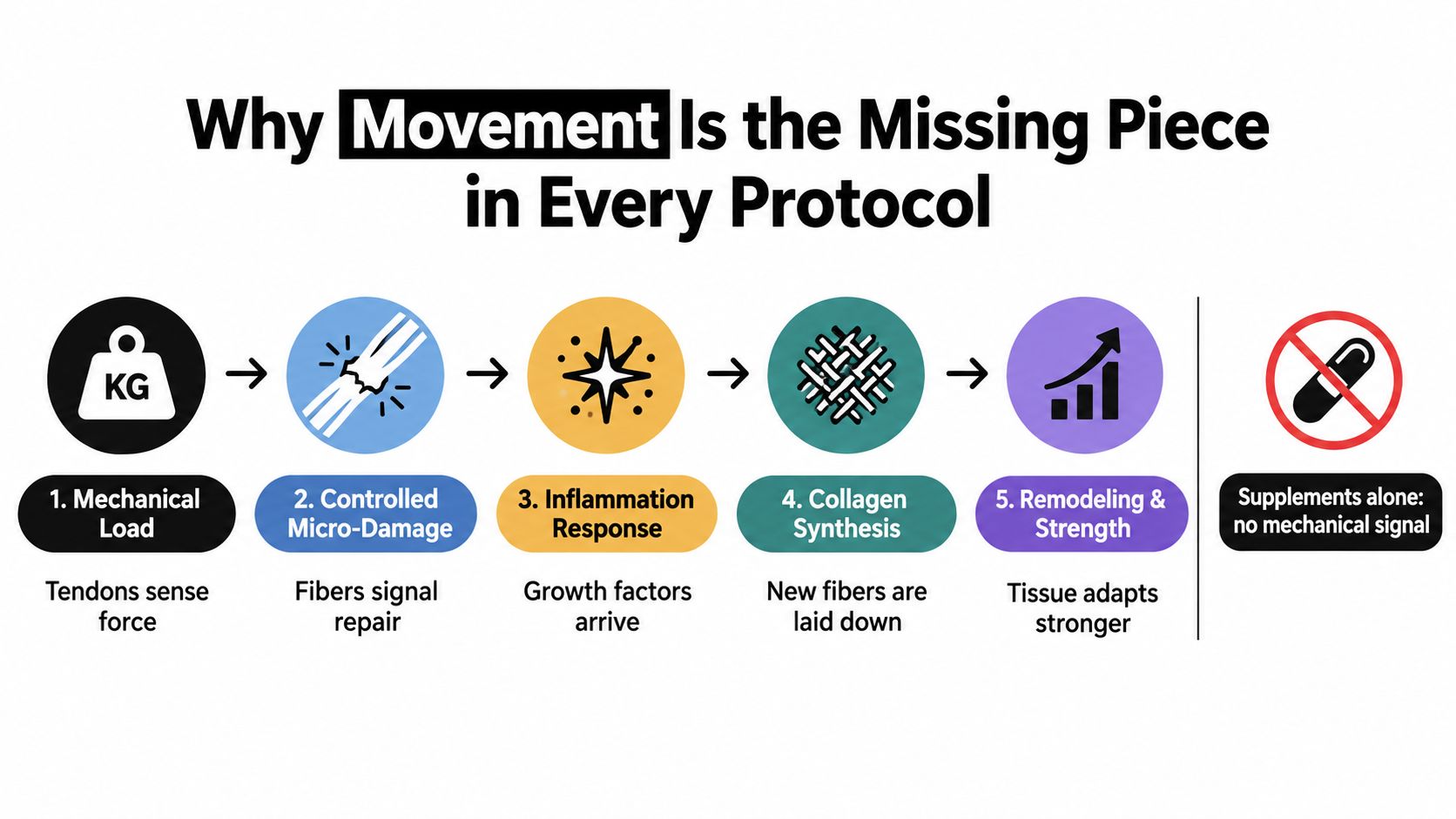
Tendons don't adapt because a powder enters the digestive tract. They adapt when cells sense repeated, manageable force and respond through remodeling. Loading helps organize collagen fibers along the directions of stress, while progressive training gives the tissue a reason to increase its capacity.
That doesn't mean every painful tendon needs more exercise immediately. An irritated tendon may require a temporary reduction in aggravating activity, followed by a staged return to isometric, slow resistance, eccentric, or sport-specific work chosen for the individual. The key is appropriate mechanical stimulus, not maximal effort at any cost.
The evidence pattern is consistent enough to guide practice. Positive tendon findings have appeared in studies combining collagen with resistance or plyometric training lasting 3 to 15 weeks. In the systematic review, between-group findings for tendon stiffness and Young's modulus occurred in studies using approximately 15 to 30 grams of collagen daily, while studies using about 5 grams generally produced only within-group changes. The review of randomized trials describes this pattern.
Dose and timing need honest framing
A practical review protocol used 15 to 30 grams of collagen with at least 50 milligrams of vitamin C, alongside high-intensity resistance exercise at approximately 70% or more of one-repetition maximum. That's an evidence-informed research pattern, not a universal prescription. Training intensity, injury status, age, diet, and medical history all change what is sensible.
Timing deserves the same caution. Approximately one hour before exercise has appeared in studied protocols, but it shouldn't be presented as a guaranteed requirement. Consistency and an appropriate training plan matter more than obsessing over a narrow timing window.
A randomized placebo-controlled study involving 40 healthy men aged approximately 26 years examined specific collagen peptides during 14 weeks of high-load resistance training and measured Achilles tendon properties. The study record is relevant because it shows how collagen research is usually embedded in a loading program, but its small, specific sample shouldn't be generalized automatically to women, older adults, injured people, or sedentary adults.
Training principle: If your connective tissue receives no suitable mechanical signal, collagen has less reason to produce a meaningful adaptation.
For runners, load may mean gradually managed mileage, calf raises, hill exposure, and running drills. For lifters, it may mean controlled repetitions, tolerable loading, and adequate recovery. If back problems change your movement strategy, address that limitation rather than forcing a tendon protocol. Guidance on running with back problems can help frame that decision, but persistent symptoms still deserve individual assessment.
How to Build a Connective Tissue Plan That Fits Your Life
Collagen is not a universal starting point. A useful connective tissue plan begins with your actual demands, symptoms, diet, training history, and recovery capacity. The same routine may suit one person and add little value for another.
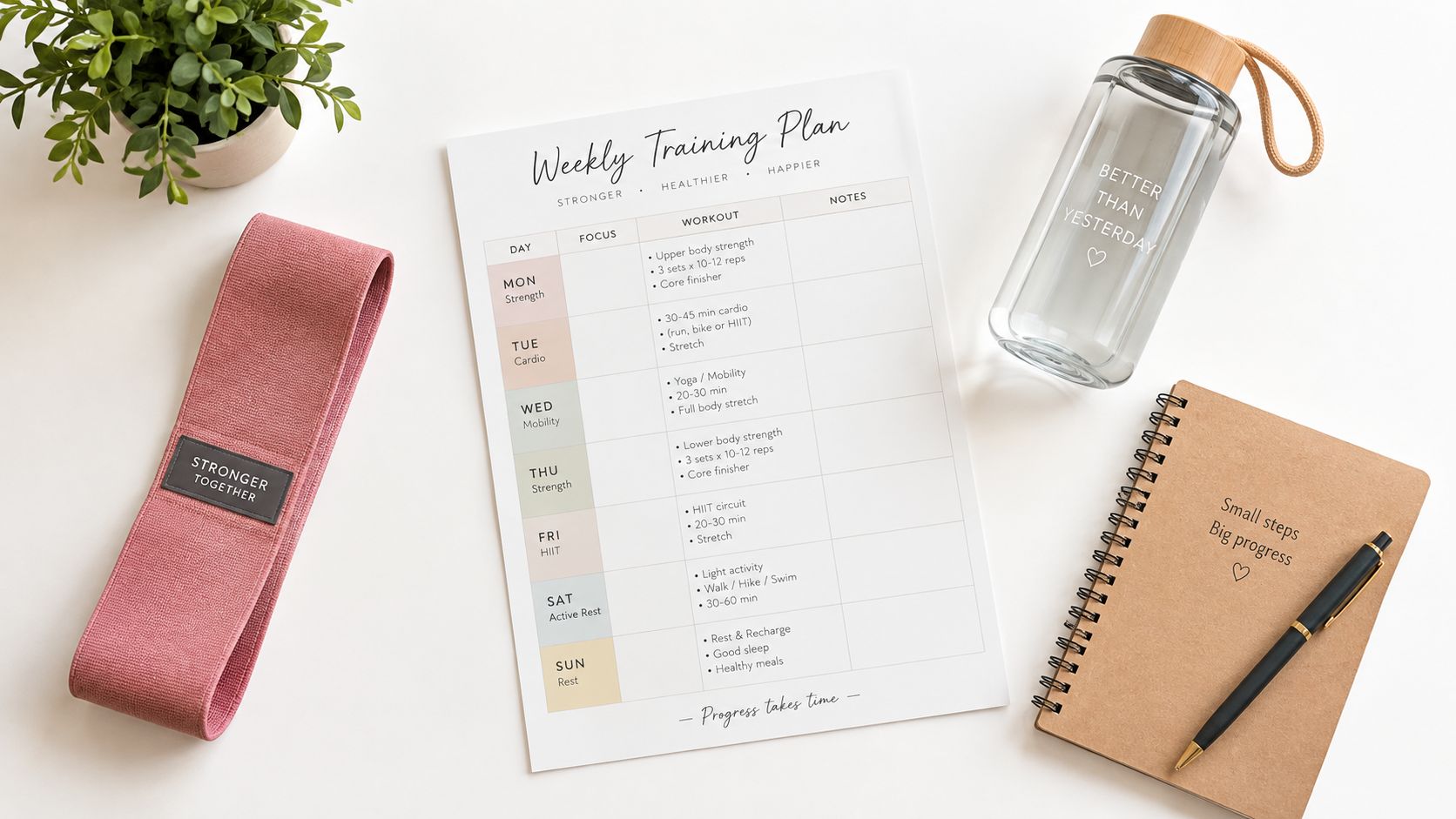
Four common starting points
The strength trainee in their twenties may already be giving connective tissue the mechanical stimulus studied in collagen research. Start with progressive training, manageable increases, sufficient total protein, and attention to recurring pain. Collagen may fit around a workout, but it should not replace complete dietary protein because collagen is incomplete.
The recreational runner approaching forty may need better load distribution rather than more products. Calf and lower-leg strengthening, sensible mileage progression, suitable footwear, and recovery between harder sessions can matter more than adding several joint supplements. If collagen enters the routine, define what you will assess, such as comfort, training tolerance, and function. A change in a biomarker or a short-term sensation does not automatically represent better tissue performance.
A woman over forty concerned about age-related tissue changes should review energy intake, protein, vitamin C-rich foods, resistance training, and sleep before buying a large supplement stack. Age-related changes do not point to one deficiency that a single product can correct. A supplement may address a dietary gap, but it cannot replace strength work or clinical care for new pain.
The desk worker with early stiffness should restore regular movement and observe the response. Short walks, movement breaks, basic resistance exercises, and gradual exposure to avoided tasks can provide more useful feedback than starting collagen immediately. Widespread or worsening stiffness, swelling, or instability calls for more than self-management.
Keep the plan sustainable
Change one variable at a time where possible. This makes tolerance, adherence, and links between training and symptoms easier to judge. Keep hydration and general nutrition steady, and check the label because its serving size may differ from amounts examined in connective-tissue trials.
Recovery rarely depends on one product. Training structure, sleep, food, hydration, and appropriate load management do most of the practical work. Broader recovery guidance for athletes can provide ideas, but no recovery aid should be treated as a promise.
A personalised supplement plan can help narrow choices when the starting point is unclear. VitzAi.com uses a questionnaire covering goals, diet, exercise, sleep, stress, digestion, and fish intake to match users with a curated supplement plan. That guidance may organise options, while sensible training remains necessary for mechanical adaptation. Persistent or concerning symptoms still warrant healthcare input.
When to Seek Professional Help Instead of Self-Treating
Supplement-led self-care is reasonable for general nutrition and routine support. It becomes the wrong tool when symptoms suggest a structural problem, significant instability, or a condition that needs diagnosis.
Seek professional assessment for recurring sprains, repeated dislocations, marked joint instability, persistent or worsening pain, or widespread symptoms affecting several areas. These patterns can occur with hypermobility or hereditary connective-tissue disorders, where abnormalities in extracellular-matrix proteins require healthcare-led evaluation rather than supplement-led experimentation.
NHS guidance links hypermobility with recurrent sprains and dislocations and notes a possible collagen connection. That doesn't mean every flexible person has a disorder, and it doesn't mean collagen supplementation corrects one. It means recurring instability deserves a proper history, examination, and rehabilitation plan.
Choose the right next step
A physiotherapist can assess movement, strength, load tolerance, and rehabilitation progression. A GP or other qualified clinician can investigate persistent symptoms and decide whether further evaluation is needed. For an acute injury, severe pain, sudden loss of function, or a joint that appears displaced, seek prompt medical care rather than testing a supplement.
Weight management may be part of a broader plan for some people, but it isn't a substitute for connective-tissue assessment. For example, Diet Drops Ultra 1 oz is listed as a dietary supplement containing a proprietary Active-8 and African Mango Complex, with label directions to consult a healthcare professional in relevant circumstances. It shouldn't be presented as a treatment for joint disease, tendon injury, hypermobility, or any other medical condition.
Clinical boundary: A supplement can support a plan. It can't identify the tissue involved, grade an injury, or replace rehabilitation.
Delaying care while trying increasingly elaborate stacks can prolong the problem. Use connective tissue support to strengthen the foundations of health, then involve a qualified professional when symptoms, instability, or uncertainty move beyond routine self-management.
VitzAi.com offers a personalised supplement quiz that considers your goals, diet, exercise, sleep, stress, digestion, and fish intake before suggesting a curated plan. Visit VitzAi.com to explore whether a more individual approach can help you simplify supplement decisions alongside sound nutrition and training. This article is for informational purposes only and is not medical advice. Always consult a qualified health professional before starting any new supplement or major lifestyle change