

Fish Oil Liquid
A global review of 187 countries found that 142 had average EPA and DHA intakes below 250 mg per day, the FAO minimum recommendation for healthy populations. The review in Nutrition Research Reviews helps explain why fish oil remains relevant, but it also points to a more practical question. If you choose a bottle of fish oil liquid, how can you tell whether it's fresh, properly stored, and worth taking?
The answer isn't found only in the front-label promise of “omega-3.” You need to check the EPA and DHA concentration, understand the oil's chemical form, inspect the bottle and expiration context, and use your senses carefully. Smell can offer a useful warning, although it can't replace laboratory testing.
Why Liquid Fish Oil Still Matters Globally
USD 2.46 billion was the estimated global fish oil supplement market in 2025, and liquid products represented USD 400.21 million, or 16.27% of that total. Analysts project the overall market could reach USD 3.91 billion by 2032, an implied 6.9% CAGR. The market report places liquid fish oil within an established, expanding category rather than treating it as an outdated format.
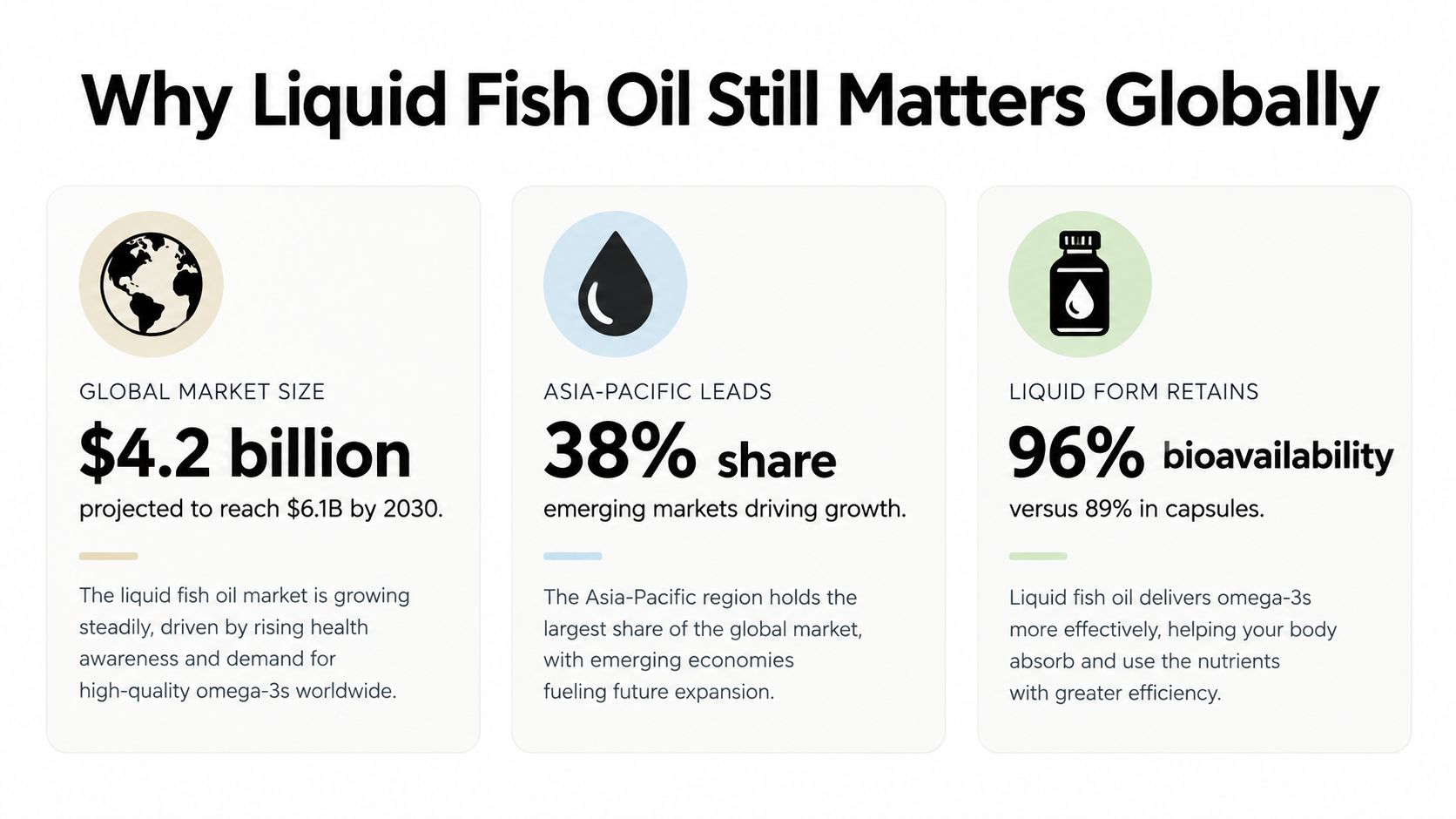
The practical reason is intake. EPA and DHA are long-chain omega-3 fatty acids found in oily fish and fish oil. Many adults do not consistently eat oily fish, so a supplement can help cover a dietary gap. The format matters because it changes how easily someone can measure, inspect, and store the oil.
Dose control: the main reason people pick liquid
Liquid fish oil suits adults who dislike swallowing several softgels, families sharing one product, and anyone whose preferred serving differs from the label's fixed capsule count. A spoon or measuring device allows the amount to be adjusted, while a small volume can contain a concentrated quantity of EPA and DHA. Reviews of liquid concentrates commonly describe about 1 to 3 g of EPA and DHA per teaspoon. The composition review of liquid omega-3 concentrates provides context for why concentration should be checked separately from total oil weight.
The same convenience creates a quality checkpoint. Opening a bottle exposes its contents to oxygen, and heat, light, and repeated handling can speed oxidation. Freshness therefore depends on more than the nutrition panel. Check the smell before taking a new serving. A clean, mild marine aroma may be normal, while a sharp, paint-like, or strongly stale odor is a reason to stop and review the product's storage and expiration details.
Bottle design offers another clue. An opaque container, a tight cap, and refrigeration after opening can limit exposure, although home inspection cannot replace laboratory oxidation testing.
Practical rule: Treat the bottle as a perishable food, not as an indestructible pantry staple.
Understanding the Core Clinical Benefits
EPA and DHA are distinct nutrients, not interchangeable label terms. They become part of cell membranes, where they influence how tissues receive and send signals. EPA is commonly associated with inflammatory signaling and blood fats, while DHA is especially concentrated in the brain and retina. The practical lesson is simple: compare the actual EPA and DHA amounts, not only the bottle's total fish-oil weight.

For cardiovascular goals, the dose and the person's clinical situation both matter. A 2004 American Family Physician review reported that 3 to 4 g of omega-3 fatty acids lowered plasma triglycerides by about 30%, with the minimum effective dose generally above 2 g per day. This clinical review also helps separate general nutritional use from high-dose use under professional supervision.
Brain and inflammation are different conversations
DHA contributes to the physical structure of brain tissue, making adequate intake relevant to the supply of structural omega-3 used by neural cells. EPA is often valued for helping produce signaling molecules involved in the body's inflammatory response. These roles explain the interest in omega-3 for general brain and cardiovascular nutrition. They do not make fish oil a treatment for every diagnosed condition.
Freshness affects whether the expected nutrients remain in a usable product. A bottle can provide the stated EPA and DHA while still being unpleasant or degraded if it has been exposed to oxygen, heat, or light. At home, smell offers an early warning. A mild marine scent can be normal; a sharp paint-like, sour, or strongly stale odor suggests that you should stop using the oil and check its storage and expiration details.
The broader functions of EPA and DHA are summarized in this guide to omega-3 benefits. Fish oil supplies specific nutrients, not a universal health outcome, and results depend on diet, baseline intake, product quality, dose, and individual health status.
For triglyceride management, do not copy a general wellness serving. A clinician may need to review your lipid results, medications, bleeding risk, and the product's precise EPA and DHA content.
Evaluating Concentration and Purity Standards
The first label mistake is confusing total fish oil with active omega-3. A bottle may list 1,000 mg of fish oil, but that figure includes fatty acids that aren't EPA or DHA. The useful comparison is the combined amount of EPA and DHA per measured serving, followed by the serving size and the number of servings in the bottle.
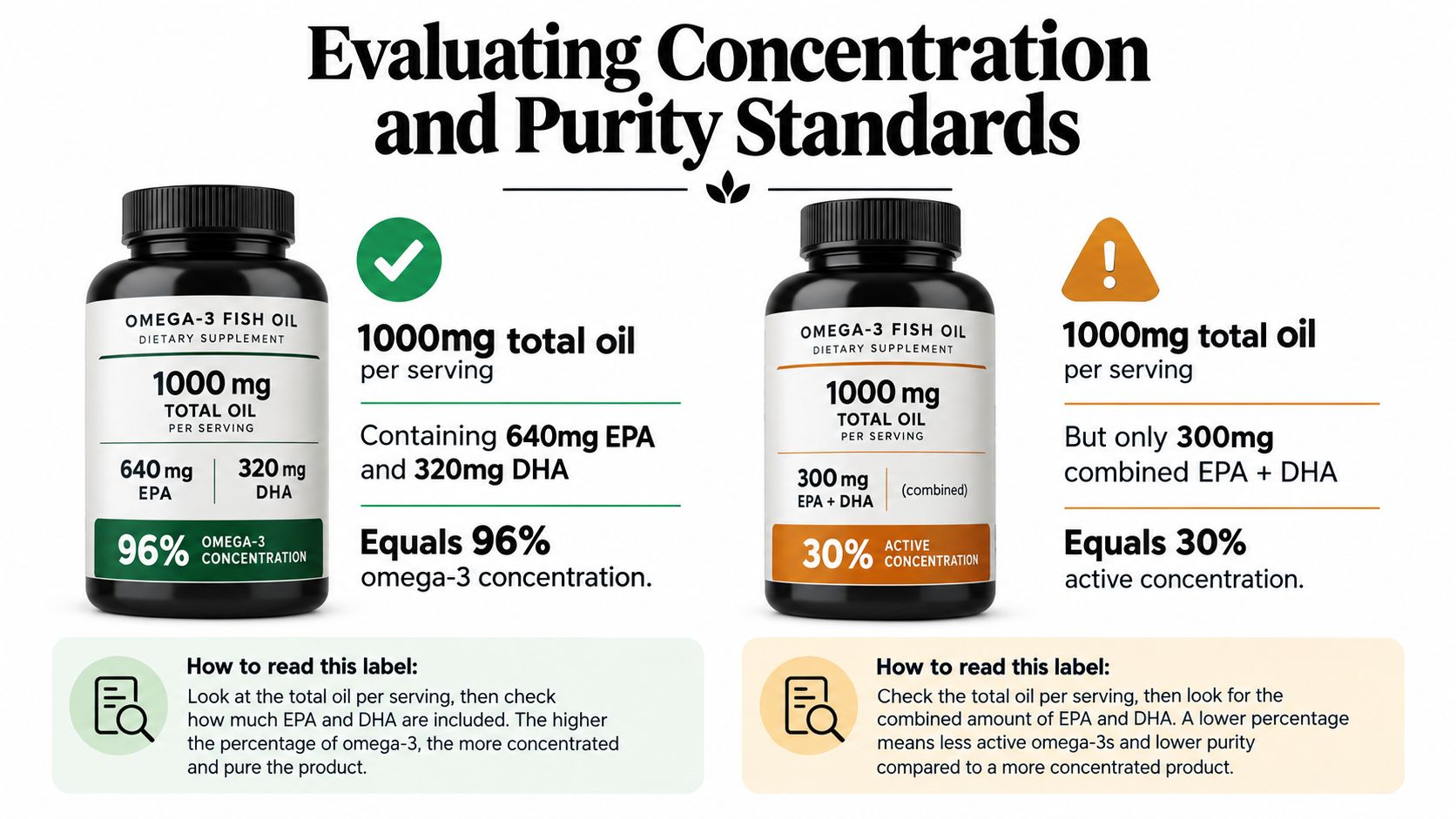
Compare two hypothetical labels. Product A lists 1,000 mg of total oil and separately identifies substantial EPA and DHA amounts. Product B lists the same total oil but much less combined EPA and DHA. The bottles appear similar until you calculate the active concentration.
What to look for on the label
Prioritize these details:
- EPA and DHA separately: A transparent label shows how much of each fatty acid you receive.
- Serving definition: Check whether the serving is a teaspoon, a smaller measured volume, or another quantity.
- Chemical form: rTG and triglyceride forms are generally easier for digestive enzymes to process than ethyl ester forms.
- Testing information: Look for accessible certificates or quality documentation covering contaminants and oxidation.
- Packaging: A dark, tightly sealed container can reduce exposure to light and air.
The form affects absorption. One cited human study reported EPA and DHA bioavailability of 124% for re-esterified triglyceride and 73% for ethyl ester, and a review notes that pancreatic lipase hydrolyzes fish-oil ethyl esters 10 to 50 times more slowly than corresponding triglycerides. The FDA regulatory evidence submission explains why an ethyl ester liquid may be more dependent on a meal containing fat.
Oxidation is part of purity
A high EPA and DHA concentration doesn't guarantee freshness. Industry and pharmacopeial guidance cited in peer-reviewed literature uses recommended maximum limits of peroxide value below 5 meq O2/kg, p-anisidine value below 20, and TOTOX below 26. In one survey, 98% of commercial fish oils met a less stringent peroxide limit of 10 meq O2/kg, while 96% met TOTOX 50. The peer-reviewed oxidation survey shows why a product can meet a looser market threshold while sitting above stricter industry targets.
Consumers buying for pets face the same label problem. A guide on how to choose dog fish oil can be useful when comparing EPA, DHA, freshness, and product suitability for an animal. Don't assume a human supplement or a pet product is appropriate for the other without professional advice.
For a practical explanation of label amounts, see this guide to 1,000 mg fish oil. The number on the front of the bottle is only meaningful when you know how much active EPA and DHA it represents.
Safe Dosing and Usage Guidelines
A sensible starting point is to match the dose to the reason you're taking fish oil. General nutrition and a clinically supervised triglyceride plan aren't the same use case. Read the label in terms of combined EPA and DHA, not just the volume of liquid or total milligrams of oil.
The NIH Office of Dietary Supplements and FDA state that supplements providing no more than 5 g per day of combined EPA and DHA are considered safe when used as recommended. The NIH omega-3 fact sheet provides the relevant safety threshold. That limit isn't a target, and more isn't automatically better.
A practical way to use liquid fish oil
- Start with the label serving. Measure the product accurately rather than estimating from the bottle opening.
- Take it with food. A meal containing fat can support uptake, particularly when the product uses an ethyl ester form.
- Track the actual EPA and DHA. Record the amount per serving so you don't accidentally combine several omega-3 products.
- Increase only for a clear reason. Higher intake for triglycerides should follow guidance from a qualified health professional.
- Reassess tolerance. Fishy reflux, nausea, loose stools, or an unpleasant aftertaste may indicate that the product or dose doesn't suit you.
People taking anticoagulants or antiplatelet medicines, those with bleeding disorders, and anyone preparing for surgery should ask a clinician before using higher-dose fish oil. The same applies during pregnancy, breastfeeding, and when managing a chronic condition.
Pet owners who are comparing oils may also find this resource on choosing a fish oil supplement for your dog helpful for understanding why species, dose, and product formulation matter. Human dosing guidance shouldn't be transferred to pets.
Avoiding Rancidity and Off-Tastes
A fishy taste doesn't always mean a liquid fish oil is rancid. Some fresh oils have a marine flavor, especially when they're unflavored. Rancidity is more concerning when the smell resembles old cooking oil, paint, varnish, stale nuts, or an unusually sharp chemical odor.
The chemistry explains the warning. Marine omega-3 fats are chemically unstable, and oxidation creates primary peroxides followed by secondary compounds, including volatile aldehydes and ketones. Those volatile compounds contribute to fishy or rancid odors. A recent study also found complex interactions between oxidation and heat in fish-oil aroma, so smell is a meaningful quality signal even though it isn't a laboratory measurement.

A useful home freshness check
You can't measure peroxide value in your kitchen, and the literature cautions that peroxide value doesn't correlate reliably with taste-panel results. Fish oil may taste rancid even when its peroxide value is low, so a single lab metric can't give consumers a complete answer. The sensory and oxidation research supports a broader inspection.
Use several clues together:
- Smell before tasting: Open the bottle and smell a small amount in a clean spoon. A harsh, stale, solvent-like, or paint-like odor is a reason to stop.
- Check the opening: Look for a damaged cap, broken seal, leaking bottle, or residue suggesting repeated exposure to air.
- Review the date: An in-date product can still deteriorate after poor storage, but an expired product shouldn't be used.
- Notice the change: If the aroma was mild when opened and has become aggressively unpleasant, don't dismiss that difference.
- Don't let flavoring overrule your senses: Lemon or mint may reduce a marine taste, but it can also make an off-odor harder to recognize.
Don't force yourself to finish a bottle that smells wrong. A product can be technically within one specification while still failing the practical freshness test that matters to the person taking it.
Storage Best Practices to Preserve Potency
Liquid fish oil gives oxygen repeated access to the full oil surface every time you open the bottle. A softgel has a sealed shell around each portion, while a liquid bottle becomes progressively more exposed after opening. That difference makes storage a central part of product quality, not an afterthought.
Heat accelerates chemical reactions, light can promote deterioration, and oxygen drives oxidation. USDA guidance on fish oil handling identifies freezing, vacuum packaging, and antioxidants such as tocopherols or vitamin E as common prevention strategies. It also states that preservatives must be used in packaging to prevent oxidation.
Keep the bottle protected
Use these habits:
- Follow the product label first. Some oils require refrigeration immediately after opening, while others specify different conditions.
- Refrigerate when directed. Cold storage can slow deterioration and may make the oil easier to manage.
- Consider freezing only when appropriate. USDA guidance identifies freezing as a preservation strategy, but the product's own instructions take priority.
- Close the cap immediately. Don't leave the bottle open while preparing food or supplements.
- Store it away from light and heat. A cool, dark cupboard may be suitable before opening if the label permits it.
- Use a clean measuring spoon. Water or food residue can contaminate the bottle and complicate its storage life.
Buy a bottle size you can use consistently rather than choosing the largest container automatically. A smaller bottle that remains fresh may be more useful than a larger bottle that sits open for too long.
Who Should Consider Liquid Fish Oil
Liquid fish oil suits adults who want flexible dosing, need a concentrated EPA and DHA source, or find multiple softgels difficult to swallow. It can also work well for people who prefer mixing a measured amount into a meal or taking a dose that doesn't fit a fixed capsule size.
Capsules may be the better practical choice for people who travel frequently, dislike marine flavors, or want a sealed, pre-measured serving. Liquid isn't automatically better for absorption, and capsules aren't automatically more stable forever. The right choice depends on the oil's form, concentration, packaging, freshness, and whether you'll take it consistently.
People avoiding animal-derived products can consider algae-based omega-3 instead. This guide to vegan omega-3 explains why algae is a different source of EPA and DHA from fish oil. Anyone taking blood-thinning medication, preparing for surgery, pregnant or breastfeeding, or managing triglycerides should discuss supplementation with a qualified health professional.
VitzAi.com offers a personalised supplement quiz that uses information about goals, diet, fish intake, digestion, sleep, stress, exercise, and other lifestyle factors to suggest a curated supplement plan. That type of guidance can help you decide whether omega-3, magnesium, creatine, a multivitamin, or another option fits your routine.
If you're considering fish oil liquid, compare the EPA and DHA amounts, inspect the packaging, and use the storage and smell checks before committing to a bottle. Visit VitzAi.com to complete the personalised supplement quiz and explore options matched to your goals, diet, and lifestyle.
This article is for informational purposes only and is not medical advice. Always consult a qualified health professional before starting any new supplement or major lifestyle change