

How to Increase Energy Naturally and Sustainably
Learning how to boost your energy naturally really starts with a bit of detective work. It's about figuring out why you're feeling so drained in the first place. More often than not, the solution isn't some magic pill, but a thoughtful combination of lifestyle tweaks and plugging any nutritional gaps. The big three? Sleep, stress, and what you’re putting on your plate.
Why You Feel Tired Even After a Full Night's Sleep
Waking up feeling just as shattered as when you went to bed is one of the most frustrating feelings. It’s a common complaint, but before you start mainlining coffee, it's worth digging a little deeper to find out what's really eating up your energy reserves. This kind of persistent fatigue is more than just being a bit sleepy; it's a clear signal from your body that something is out of balance.
The culprits are often hiding in plain sight, woven into our daily routines. Chronic stress is a major one. It keeps your body stuck in 'fight or flight' mode, constantly pumping out cortisol and burning through the resources your cells need to actually produce energy. Then there's nutrition. A diet heavy on processed foods and sugar is a recipe for wild energy spikes and crashes, not to mention inflammation, which puts even more strain on your system.
Identifying Your Personal Energy Leaks
Modern life throws a lot at our natural energy cycles. Something as common as staring at screens all day can lead to digital eye strain, which is a surprisingly powerful drain on your energy and a big disruptor of sleep. It pays to start recognizing the symptoms of digital eye strain and finding relief if you want to protect your energy levels.
Beyond your daily habits, nutrient deficiencies are a massive, often overlooked, piece of the puzzle. Think of key vitamins and minerals as the spark plugs for your cellular engines (your mitochondria). If you're running low on essentials like B vitamins, iron, or magnesium, your body simply can't generate energy efficiently. You can get a better idea of what to look out for by learning the key vitamin deficiency signs.
Understanding how your hormones, gut health, and stress levels all talk to each other is the first real step towards getting your vitality back. It’s not about finding one single fix, but about creating a supportive ecosystem inside your body.
This simple decision tree shows how the most common roads lead to low energy.
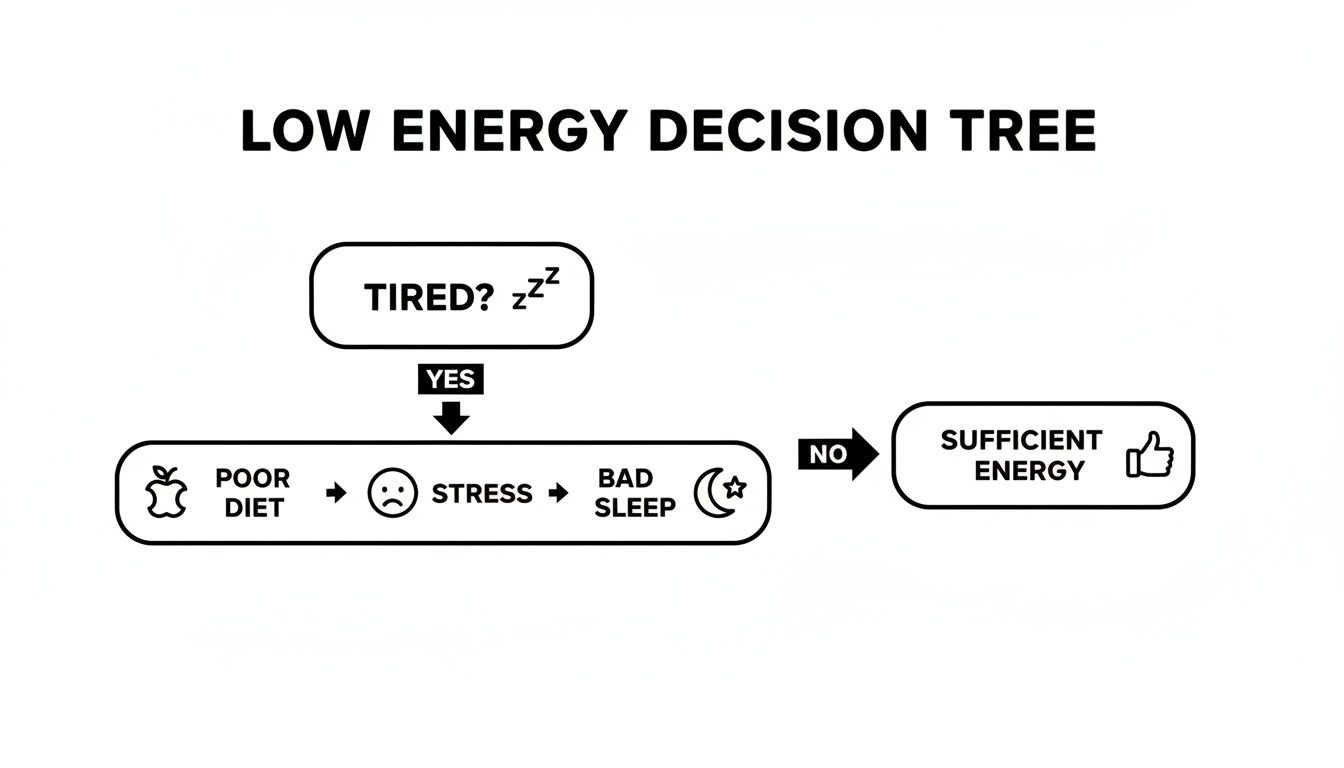
As you can see, things that might seem separate—like a poor diet, constant stress, and not enough quality sleep—are the primary drivers that feed into that feeling of being permanently exhausted.
To genuinely boost your energy, you have to get specific. Think of yourself as an investigator looking into your own daily habits and biological needs. Are you consistently cutting corners on sleep? Is your diet actually fuelling you, or is it holding you back?
A personalised look at where your nutritional gaps might be can offer real clarity. By analysing your specific lifestyle and health goals, you can map out a targeted plan, setting you up with solutions that tackle the root cause of your fatigue, not just the symptoms.
Mastering Sleep for Maximum Energy Renewal
Think of sleep as your body's own built-in renewable energy system. Getting a full charge overnight is about so much more than just clocking eight hours in bed. In reality, it’s the quality of that sleep that dictates how you feel the next day.
Tiny, simple tweaks to your routine and environment can be the difference between a restless night and one that leaves you feeling deeply restored. A lot of common culprits are probably familiar:
- Excessive light in the bedroom disrupts the release of melatonin, your sleep hormone.
- A room that’s too warm or cold will constantly fragment your sleep cycles.
- Background noise from traffic or even humming electronics can pull you out of deep sleep.
- An inconsistent bedtime schedule throws your internal body clock into chaos.
Create a Sleep Sanctuary
The first step is to turn your bedroom into a true sanctuary for rest. Think cool, dark, and quiet. The ideal temperature for sleep is somewhere between 16°C and 19°C.
Block out every bit of light you can with blackout curtains or a comfortable eye mask. You’d be surprised how much even a tiny bit of street light creeping in can affect your sleep quality. To tackle noise, earplugs or a white noise machine can work wonders.
Finally, declutter your space. A tidy, calming environment sends a powerful signal to your brain that it's time to switch off. When your body senses dim light and quiet, it instinctively prepares for those deep, restorative stages of sleep.
Align With Your Circadian Rhythms
Your body runs on an internal 24-hour clock known as your circadian rhythm, and it relies on consistent light signals to stay on track. One of the best things you can do is get some natural sunlight first thing in the morning. This simple act helps to anchor your internal clock for the entire day.
Conversely, you need to manage your light exposure at night. That means avoiding screens for at least an hour before you plan to go to sleep.
The impact of this is huge. A 2024 Sleep Council UK survey found a staggering 35% of adults suffer from chronic poor sleep, which was linked to a 28% drop in their energy and productivity the next day. The good news? Simple, natural tweaks like a consistent bedtime bring those levels right back up. Read the full research on UK sleep stats
This really highlights just how powerful sleep hygiene is for increasing energy naturally. A consistent wind-down routine is your best friend here—it signals to your body that it's time to power down and recharge. Try this:
- Start dimming the lights in your home a couple of hours before bed.
- Switch off all screens and avoid that harsh blue light.
- Spend five minutes doing some gentle stretches or simple breathwork.
- Read a physical book under a soft, warm light to help calm your mind.
Support Sleep with Nutrients
Sometimes, your body needs a bit of nutritional support to get the best rest possible. Magnesium is a real hero when it comes to sleep quality and energy regeneration.
According to the 2021 National Diet and Nutrition Survey, around 15% of UK adults are deficient. This is a big deal for sleep, as a deficiency can slash your deep sleep stages by up to 22%, seriously harming that overnight restoration process.
Magnesium is brilliant for sleep because it helps calm the nervous system and allows you to sink into a deeper, more restorative rest.
Supplementing with magnesium before bed can help you reach those crucial REM stages and wake up feeling properly refreshed. For more detailed advice, check out our guide on supplements for better sleep.
Adaptogens like ashwagandha are also fantastic for managing the stress that so often disrupts our sleep. Keeping cortisol levels low at night is key for improving deep sleep quality and, consequently, your daytime energy.
- Try taking around 300 mg of a high-quality ashwagandha extract in the evening.
- Remember to avoid caffeine after 2 pm, as it can interfere with the calming effects of adaptogens.
- Pair your magnesium with vitamin B6 for even better absorption.
Combining a true sleep sanctuary, circadian alignment, and targeted nutrients creates an incredibly powerful foundation for natural, sustained energy.
Embrace these steps, and you'll soon notice your focus, mood, and vitality soar. When it comes to natural energy, it all starts with sleep. Better sleep really does equal better energy.
Eating for Energy Without the Afternoon Crash
What you eat is the single most powerful tool you have for managing your daily energy. That classic afternoon crash—the moment around 3 p.m. when your brain fogs over and all you want is a nap or a biscuit—is almost always tied to your blood sugar.
Simple carbs from things like white bread, pastries, and sugary drinks send your blood sugar on a wild rollercoaster. First, it spikes, then it plummets, leaving you feeling sluggish, irritable, and craving more sugar. The secret to breaking this cycle and achieving steady, all-day energy is to build a plate that keeps your blood sugar stable.
Build a Better Plate
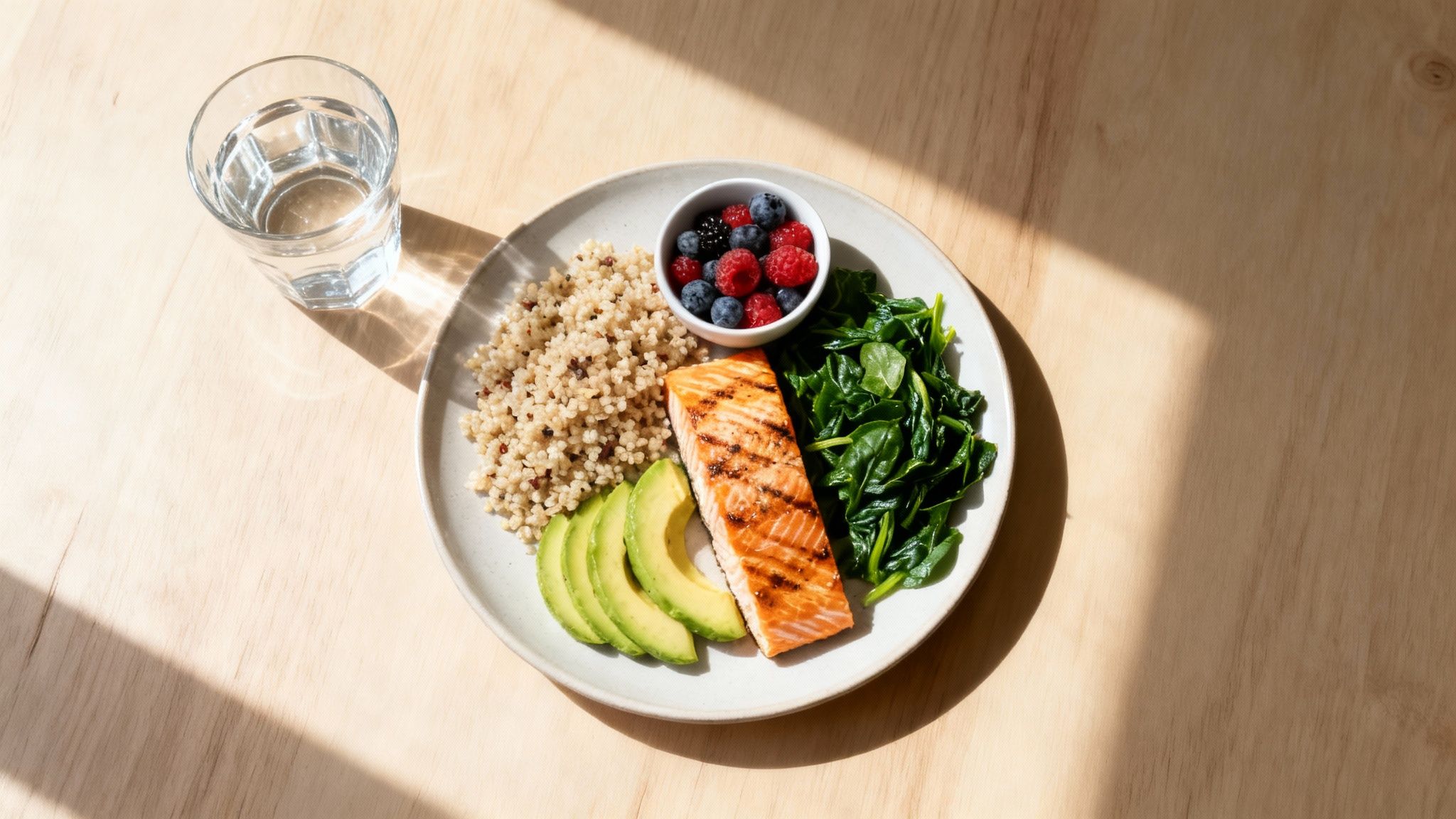
The formula for consistent energy is surprisingly straightforward: combine protein, healthy fats, and fibre-rich carbohydrates at every single meal. This trio works in harmony to slow down digestion, which means glucose (your body's fuel) is released gradually into your bloodstream.
Instead of spikes and dips, you get a reliable, steady supply of fuel that keeps both your body and brain firing on all cylinders. It’s about making your food work smarter for you.
- Lean Protein: Think chicken, fish, eggs, tofu, and legumes. Protein keeps you feeling full and provides the building blocks for neurotransmitters, which are essential for focus and alertness.
- Healthy Fats: Avocado, nuts, seeds, and olive oil are your friends here. They provide dense, long-lasting energy and are vital for brain health and hormone production.
- Complex Carbs: Swap out the white pasta and bread for whole grains, quinoa, sweet potatoes, and heaps of vegetables. Their high fibre content is the key to that slow, controlled release of energy.
To make this easier, here are a few simple swaps you can make today to start feeling the difference.
Energy-Boosting Food Swaps
Making small changes to your daily meals can have a huge impact on your energy levels. Here's a quick guide to replacing common energy-draining foods with nutrient-dense alternatives for sustained vitality.
| Instead of This (Energy Drainer) | Try This (Energy Booster) | Why It Works |
|---|---|---|
| Sugary cereal or toast for breakfast | Scrambled eggs with spinach and avocado | Protein and healthy fats stabilise blood sugar from the start of your day. |
| White pasta with tomato sauce | Wholewheat pasta with pesto and chicken | Complex carbs and protein prevent the post-lunch energy slump. |
| Crisps or a chocolate bar for a snack | Apple slices with a handful of almonds | Fibre, healthy fats, and natural sugars provide a steady energy lift without the crash. |
| Fizzy drinks or sweetened juices | A large glass of water with lemon | Proper hydration is critical for energy production; sugary drinks just cause a spike and crash. |
These aren't drastic changes, but they consistently shift your body from a sugar-burning rollercoaster to a stable, energy-efficient machine.
Timing and Hydration Are Key
When you eat can be just as crucial as what you eat. Kicking off your day with a protein-rich breakfast within an hour of waking can set you up for stable energy all day long. On the flip side, huge, heavy meals force your body to divert massive amounts of energy to digestion, which is why you feel so sleepy after a big lunch.
To keep your energy topped up, smart snacking is your secret weapon. Things like healthy snacks for runners to boost energy aren't just for athletes. A handful of almonds, an apple with peanut butter, or some Greek yoghurt can perfectly bridge the gap between meals and stop you from hitting a wall.
And let's not forget hydration. It's completely non-negotiable for energy. Even being slightly dehydrated can thicken your blood, making your heart work harder to pump oxygen around your body. The result? You feel drained and exhausted.
Supercharge Your Mitochondria
Think of mitochondria as the tiny power plants inside every one of your cells. Their job is to turn the food you eat into usable energy. To do this efficiently, they need the right fuel.
- B-Vitamins: Found in leafy greens, eggs, and lean meats, these are absolute workhorses for energy metabolism.
- Magnesium: Abundant in nuts, seeds, and even dark chocolate, it’s involved in hundreds of processes related to creating energy.
- Iron: This mineral is essential for carrying oxygen in your blood. It's no surprise that low iron is one of the most common reasons for fatigue, particularly for women.
This is where a personalised approach can be a game-changer. For example, you can identify potential gaps in your diet, like iron, which affects 14% of UK women under 40. With that knowledge, you can implement simple but effective strategies, like pairing iron-rich foods with vitamin C sources to boost absorption by up to 67%, giving you a natural, significant energy lift.
Using Movement to Generate More Energy
It sounds like a total paradox, doesn't it? To make more energy, you need to spend some. When you're feeling completely drained, the siren song of the sofa is hard to resist. But getting your body moving, even gently, is one of the most powerful ways to build lasting vitality. This isn’t about forcing yourself through punishing workouts; it’s about using smart, strategic movement to fire up your body's natural energy factories.
Think of regular movement as an internal tune-up. It gets your heart pumping a little faster, which pushes more oxygen-rich blood to every single cell, especially your brain. That flood of oxygen is a huge factor in feeling sharp, alert, and focused. At the same time, it prods your mitochondria—the tiny power plants inside your cells—to multiply and get better at converting fuel into usable energy.
The end result? A genuine, noticeable increase in your baseline energy levels. Plus, exercise triggers the release of endorphins, your body’s own mood-lifters, which directly fight feelings of fatigue and just make you feel better all-round.

Find Your Energising Sweet Spot
The real key here is learning the difference between movement that recharges you and exertion that just leaves you wiped out. Pushing too hard, too often can flood your system with stress hormones like cortisol, making you feel even more tired. The goal is consistent, moderate activity that leaves you feeling invigorated, not exhausted.
This is a game-changer, especially for busy professionals stuck at a desk. Pre-pandemic data from 2019 revealed that UK office workers were sitting for an average of 4.2 hours each day, which was directly linked to a 15% higher rate of chronic tiredness. Learning how to increase energy naturally means breaking up that sedentary time. You can read more about the links between national energy trends and health in these UK statistics.
Finding the right type and amount of movement for your body is a personal journey. The aim isn’t to exhaust yourself, but to stimulate your system just enough to kickstart its energy-producing cycles.
Think in terms of 'exercise snacks'—small, manageable bursts of activity sprinkled throughout your day.
- Morning Kick-start: A brisk 15-minute walk first thing is incredible. It doesn’t just get your steps in; the morning light helps set your internal body clock (your circadian rhythm), sending a clear signal to your brain that it's time to be awake and alert.
- Workday Breaks: Set a timer on your phone to stand up and move every hour. It doesn't have to be complicated. A few simple stretches, a walk up and down the stairs, or even a set of squats by your desk makes a huge difference.
- Lunchtime Refresh: Use half of your lunch break to get outside for a quick walk. That combination of movement and natural light is a brilliant antidote to the classic afternoon slump.
Harness the Power of Your Breath
For a quick-fire energy boost, you don't even need to leave your chair. Focused breathwork is a seriously effective tool for cutting through mental fog and increasing alertness. When that 2 p.m. slump hits, most of us start taking shallow, almost unconscious breaths.
By taking just a few moments for intentional, deep breathing, you can rapidly increase the oxygen supply to your brain. It's a simple practice that can make you feel more awake and focused almost instantly.
Give the 'Bellows Breath' technique a go: Sit up straight and start breathing forcefully in and out through your nose, keeping your mouth closed. The breaths should be short and rapid, powered by your diaphragm. Try this for just 15-20 seconds to feel an immediate lift.
Smart Supplementation for Targeted Energy Support
While a solid foundation of sleep, nutrition, and movement is non-negotiable, sometimes your body just needs a bit more specific support. This is where targeted supplementation comes in. It can bridge the gap by providing the raw materials your cells need to produce energy efficiently.
This isn’t about chasing quick fixes with caffeine or sugar. It’s about intelligently addressing potential deficiencies and optimising your body's natural processes.
Think of it as moving beyond guesswork. For instance, if you’re active, creatine can be a game-changer for both physical power and mental stamina by helping to rapidly replenish your body's primary energy currency, ATP.
Likewise, if stress is your main energy drain, an adaptogen like ashwagandha can help your body better manage cortisol, preventing that all-too-familiar burnout that follows chronic tension. It’s all about matching the right tool to the right problem.
Key Players in Your Energy Toolkit
Think of supplements as a support crew for your body’s main energy-generating systems. Each one plays a distinct role, and combining them thoughtfully can create a powerful, synergistic effect.
Here are a few of the heavy hitters:
- Creatine: Far more than just a muscle-builder, creatine supports rapid energy production in the brain as well as the body. This makes it excellent for improving focus and reducing mental fatigue during demanding tasks.
- Magnesium: This mineral is involved in over 300 biochemical reactions, many of which are absolutely central to creating ATP. Since many people don’t get enough from diet alone, it's a foundational supplement for cellular energy.
- Ashwagandha: As an adaptogen, it helps modulate your stress response. By keeping cortisol levels in check, it stops stress from constantly depleting your energy reserves, making you more resilient to daily pressures.
- Omega-3 Fatty Acids: These are crucial for brain health and reducing inflammation, which is a known energy sapper. A healthy brain with strong cell membranes is simply a more energetic brain.
Building Your Personalised Stack
A high-quality multivitamin can act as a great insurance policy, ensuring you have all your baseline micronutrient needs covered. For more specific benefits, functional mushroom blends containing Cordyceps or Lion's Mane can offer brilliant support for both physical endurance and cognitive clarity. Energy powders, when formulated with effective doses of ingredients like B-vitamins and creatine instead of just caffeine, can also provide a convenient boost.
The most effective supplement strategy is one that is tailored to your individual biology, lifestyle, and goals. What works for a highly active man in his 20s may not be what a busy working mother in her 40s needs.
This is where personalisation becomes so important. Instead of randomly trying different products, you can identify what your body is actually crying out for.
We've put together a table highlighting some top picks for natural energy support, which might help you narrow down the options.
Top Supplements for Natural Energy
| Supplement | Primary Energy Benefit | Ideal For |
|---|---|---|
| Creatine | Supports rapid ATP (energy) regeneration for both physical and mental tasks. | Active individuals, people with mentally demanding jobs, or anyone needing a boost in power and focus. |
| Magnesium | Essential for over 300 enzymatic reactions, including cellular energy production. | Almost everyone, especially those with high stress levels, active lifestyles, or a diet low in leafy greens. |
| Ashwagandha | An adaptogen that helps the body manage stress and regulate cortisol levels, preventing energy depletion. | Individuals experiencing chronic stress, burnout, or 'wired but tired' feelings. |
| Omega-3s | Reduces inflammation (a major energy drain) and supports cognitive function and brain health. | People looking to improve mental clarity, reduce brain fog, and support overall long-term health. |
| Multivitamin | Fills common nutritional gaps in micronutrients like B-vitamins and iron that are critical for energy. | Those with dietary restrictions, high stress, or anyone wanting a comprehensive nutritional baseline. |
| Mushroom Blends | (e.g., Cordyceps) May improve oxygen utilisation and ATP production, supporting physical stamina. | Athletes, fitness enthusiasts, and those looking for a non-stimulant endurance boost. |
This table is a great starting point, but true optimisation comes from a plan designed just for you. Our detailed guide on supplements for energy and focus offers a deeper dive into the science behind these key nutrients.
For a truly individualised recommendation, a personalised quiz can provide a clear roadmap. It can analyse your unique data points to suggest a supplement stack designed to target your personal energy drains, ensuring you invest in what your body truly needs to thrive.
So, How Do You Build a Daily Plan for Lasting Energy?
Knowing the theory is one thing, but putting it all into practice is where the magic really happens. Weaving all these strategies together into a daily rhythm is the final piece of the puzzle. A consistent plan doesn't have to be rigid or complicated; it’s all about creating small, repeatable habits that build on each other and lead to genuine vitality.
The goal here is to create a flow that supports your body’s natural energy cycles, rather than constantly fighting against them. A well-structured day can prevent that all-too-familiar decision fatigue and ensure you’re proactively managing your energy, not just scrambling when you feel a slump coming on.
A Sample Day for Sustained Energy
Think of this as a flexible template, not a strict set of rules. Feel free to adjust the timings and activities to fit your own life, but the core principles hold true. The secret sauce? Consistency.
Morning Routine (7:00 AM - 9:00 AM)
Your morning really does set the tone for the entire day. Before you even think about grabbing your phone, try this simple sequence to kick-start your focus and metabolism.
- Hydrate First: Gulp down a large glass of water as soon as you wake up. Your body is desperate for rehydration after a long night.
- Catch Some Rays: Spend 10-15 minutes outside or by a bright window. This simple act helps to anchor your circadian rhythm and sends a powerful signal to your brain that it’s time to be alert.
- Get Moving: A brisk walk, some light stretching, or a few yoga poses will get your circulation going and wake up your mind far better than a coffee ever could.
- Fuel with Protein: Sit down to a breakfast that includes plenty of protein and healthy fats. Think scrambled eggs with avocado or a Greek yoghurt bowl with nuts. This will keep your blood sugar stable for hours.
Midday Plan (12:00 PM - 3:00 PM)
This is the classic danger zone for the dreaded afternoon slump. A few strategic moves can help you power through without reaching for yet another coffee or a sugary snack.
- A Balanced Lunch: Just like breakfast, focus on a meal with a solid mix of protein, fats, and complex carbs to dodge that post-lunch energy crash.
- Take a Movement Break: Step away from your desk for a quick walk. I'm serious—even just 10 minutes can dramatically improve your alertness and mood.
- Stay on Top of Hydration: Keep a water bottle on your desk and sip throughout the day. It’s one of the easiest ways to maintain optimal cellular function.
An energised life isn't built on grand, one-off gestures. It's the sum of small, consistent daily choices that compound over time to create a powerful foundation of health and vitality.
Evening Wind-Down (8:00 PM onwards)
How you end your day is just as important as how you start it. This routine is designed to prepare your body for the deep, restorative sleep it needs to recharge.
- Dim the Lights: As evening sets in, lower the lighting in your home. This encourages your body to start producing melatonin, the sleep hormone.
- Disconnect from Screens: Put away phones, tablets, and laptops at least an hour before you plan to sleep. The blue light they emit can seriously disrupt your sleep cycle.
- Find Your Calm: Read a book (a real one!), listen to some calming music, or take a warm bath with Epsom salts. A warm bath is a brilliant trick as the subsequent drop in body temperature signals to your body that it’s time for sleep. Epsom salts are also a great source of magnesium, which helps the nervous system unwind.
True, lasting energy comes from a plan that works for your unique biology and lifestyle. For a fully personalised plan that discovers the right supplements and strategies to unlock your full potential, start your journey here: https://vitzai.com
This article is for informational purposes only and is not medical advice. Always consult a qualified health professional before starting any new supplement or major lifestyle change