

How to Prevent Fatigue and Finally Reclaim Your Energy
To truly prevent fatigue, you need a strategy that goes beyond quick fixes like another cup of coffee. The goal is to build a solid foundation for sustained energy, which comes down to mastering four core areas: optimising your sleep, fuelling your body correctly, managing stress before it burns you out, and using targeted supplements to fill any nutritional gaps.
Why Am I Always So Tired?
Feeling constantly drained has become a familiar story for many, especially if you're juggling a demanding career and personal life. You might be eating well and hitting the gym, yet there’s a persistent exhaustion that just won't shift. This isn't just about feeling sleepy; it's often a signal that your body's core systems—from your hormones to your gut health—are out of balance.
Lasting energy isn't found in an energy drink. It's built day by day by focusing on key lifestyle pillars:
- Mastering Sleep: This is about prioritising deep, restorative sleep that allows your mind and body to genuinely recover overnight, which is crucial for cognitive performance.
- Strategic Fuelling: Eating in a way that keeps your blood sugar stable is a game-changer. It provides consistent energy, rather than the rollercoaster of spikes and crashes.
- Building Stress Resilience: Learning to manage chronic stress is non-negotiable. If you don't get a handle on it, it will drain your energy reserves, impact your hormones, and lead to burnout.
- Targeted Supplementation: This is about intelligently filling nutritional gaps that can directly cause fatigue. Even the healthiest diet can sometimes fall short on key nutrients. You can learn more about the common signs of vitamin deficiency in our detailed guide.
Think of this guide as your practical roadmap to understanding what your body needs to feel energised. We're moving away from generic advice and focusing on actionable strategies that create real, lasting vitality.
Understanding the Root Causes
Fatigue rarely stems from just one thing. More often, it’s a mix of factors that create a frustrating cycle. A high-pressure job can wreck your sleep, which then leads you to make poor food choices for a quick energy hit. This, in turn, can elevate stress hormones like cortisol. Before you know it, each problem is feeding the next, making it almost impossible to pinpoint a single cause.
The first step to preventing fatigue is simply recognising what's draining your personal energy battery. To kick things off, the table below gives a quick snapshot of common fatigue triggers and the practical solutions we'll dive into throughout this guide. It's designed to give you an immediate sense of control and a clear path forward.
Common Fatigue Triggers and Solutions at a Glance
This table connects the dots between common reasons you might feel tired and the specific, actionable solutions we'll cover in this guide. Use it to quickly identify potential problem areas in your own routine.
| Fatigue Trigger | Primary Solution Explored | Key Action |
|---|---|---|
| Poor Sleep Quality | Sleep Optimisation | Establish a consistent wind-down routine and improve sleep environment. |
| Blood Sugar Swings | Strategic Nutrition | Prioritise protein and fibre with each meal to stabilise energy levels. |
| Chronic Stress | Stress Resilience | Incorporate daily mindfulness or light exercise to lower cortisol. |
| Nutrient Deficiencies | Targeted Supplementation | Consider testing for key nutrients like Iron, B12, and Vitamin D. |
| Sedentary Lifestyle | Movement & Recovery | Integrate short walks or stretching breaks throughout your workday. |
By understanding these connections, you can start to build a more personalised plan that targets the root causes of your fatigue, not just the symptoms.
Mastering Sleep: The Foundation of Real Energy
Let's get one thing straight: sleep is your most powerful tool for performance, longevity, and recovery. It’s not about hitting a magic number of hours; it’s about the quality of that rest. To truly fend off fatigue, we need to go beyond the basics and build sleep habits that work with a demanding lifestyle, directly boosting your daily energy and cognitive performance.

This isn’t just about feeling a bit more awake. In the UK, workplace fatigue is a massive problem. A staggering 91% of adults reported feeling high or extreme stress over the past year. That kind of pressure takes a direct toll on mental health and energy levels, with younger people aged 18-24 often feeling it the most.
Prioritising your sleep is one of the most effective preventative measures you can take. In fact, UK trials have shown that consistent sleepers report 30% less fatigue.
Create Your Ultimate Sleep Sanctuary
Your bedroom should send a clear signal to your brain: it’s time to power down. To make that happen, you need to get three environmental factors just right. This turns your room into a genuine sleep sanctuary, making it much easier to fall asleep and, just as importantly, stay asleep.
- Keep it Cool: Aim for a room temperature between 16-18°C. A cooler environment helps lower your core body temperature, which is a natural trigger that tells your body it’s time for sleep.
- Embrace the Dark: Blackout curtains or a high-quality eye mask are non-negotiable. Even a tiny bit of light from a phone charger or a streetlamp can disrupt your body's production of melatonin, the hormone that governs sleep.
- Block Out Noise: If you live somewhere noisy, don't just put up with it. A good pair of earplugs or a white noise machine can create a consistent, quiet backdrop that masks those sudden sounds that jolt you awake.
The Power of a Wind-Down Routine
You can't expect your brain to slam the brakes, switching from high-gear work mode to deep sleep in five minutes flat. A consistent wind-down routine is absolutely crucial for signalling that the day is over. The good news? It doesn't need to be some complicated, hour-long ritual. You can build a seriously effective routine in just 30-60 minutes.
Here’s a simple but effective example:
- Declare a "Digital Sunset": Put all screens away at least an hour before you plan to sleep. The blue light from our phones and laptops messes with melatonin production, essentially tricking your brain into thinking it's still daytime.
- Do Something Analogue: Pick up a physical book (not a tablet!), do some gentle stretching, or listen to some calm music. The goal is a relaxing, non-stimulating activity.
- Quiet Your Mind: Spend just a few minutes with a journal or doing some deep breathing exercises. This is a brilliant way to process the day's events and stop your mind from racing the minute your head hits the pillow.
The real magic is in the consistency. When you perform the same sequence of actions every night, you're creating a powerful psychological trigger for sleep. Your brain learns to associate these activities with rest, making it much easier to drift off naturally.
Mastering sleep is the first and most critical step. For a deeper dive into improving your rest, check out this comprehensive guide on how to sleep better at night and start reclaiming your energy.
Stick to a Consistent Sleep-Wake Cycle
One of the simplest yet most effective ways to prevent fatigue is to keep a regular sleep-wake cycle, and yes, that includes weekends. Going to bed and waking up at roughly the same time every day helps regulate your body’s internal clock, also known as your circadian rhythm.
When your circadian rhythm is stable, your body starts to anticipate sleep and wakefulness. This makes it easier to feel sleepy at bedtime and wake up feeling refreshed without an alarm. I know how tempting a long lie-in on a Sunday can be, but it often disrupts your internal clock, leading to that awful "social jetlag" feeling come Monday morning.
If you're curious about how specific nutrients can help your sleep, have a look at our guide on vitamins to support good sleep for more detailed information.
How to Eat for Sustained Energy and Focus
What you eat has a direct, profound impact on your energy, cognitive performance, and even your gut health. To really tackle fatigue, you've got to think about food as fuel for the long haul, not just a quick fix for that 3 p.m. slump. This means stepping away from the sugary snacks and processed foods that give you a brief, buzzy high followed by a spectacular crash.
The real goal here is to stabilise your blood sugar. Picture your energy as a slow-burning log in a fireplace, giving off steady, consistent heat. That's what we're aiming for—not a piece of paper that flares up brightly and turns to ash in seconds. By balancing your macronutrients (that's protein, complex carbs, and healthy fats) at every meal, you're giving your body the steady fuel it needs to keep that fire going all day long.
This isn't about restrictive dieting. It's simply about making smarter choices that support your body's natural energy cycles.
Building Your Anti-Fatigue Plate
Think of every single meal as an opportunity to fight back against fatigue. The secret is to build an 'energy plate' that combines the right foods to keep you feeling sharp and alert for hours. A well-balanced meal should always have these three core components.
- Slow-Release Carbohydrates: These are your body’s main power source. Unlike refined carbs (think white bread and pastries), complex carbs like oats, quinoa, sweet potatoes, and whole grains break down slowly. This provides a steady trickle of glucose to your brain and muscles, preventing those classic mid-afternoon energy dives.
- Lean Protein: Protein is essential for building and repairing tissues, but it also plays a massive role in keeping you alert. Foods like chicken, fish, eggs, lentils, and Greek yoghurt slow down how quickly you absorb carbohydrates, which helps keep your blood sugar stable. They also provide the amino acids your body needs to make neurotransmitters that regulate your focus and mood.
- Healthy Fats: Did you know your brain is nearly 60% fat? It needs a steady supply of high-quality fats to function properly. Things like avocado, nuts, seeds, and oily fish rich in omega-3s are non-negotiable for cognitive performance, memory, and reducing inflammation—a hidden culprit that can make you feel drained.
A great rule of thumb for your plate is to fill half with colourful vegetables, a quarter with lean protein, and the final quarter with complex carbohydrates. Then, just add a source of healthy fats, like a drizzle of olive oil or a sprinkle of seeds.
Smart Snacking and the Importance of Hydration
How you manage the time between meals is just as critical as the meals themselves. Let's be honest, poor snacking habits are a top-tier energy assassin. Grabbing a sugary biscuit or a bag of crisps might give you a momentary lift, but the blood sugar crash that follows will leave you feeling far worse than before.
To maintain your mental edge and avoid slumps, understanding the role of healthy snacks for studying to boost brainpower is a game-changer. The principles are just as relevant for a hectic workday as a late-night study session. Think of your snacks as 'mini-meals', carefully designed to bridge the gap and keep your energy perfectly stable.
A few excellent options include:
- An apple with a handful of almonds
- Greek yoghurt topped with berries
- A hard-boiled egg
- Hummus with carrot and cucumber sticks
Beyond food, hydration might just be the most overlooked factor in the fight against fatigue. Even mild dehydration can thicken your blood, forcing your heart to work harder and leading to headaches, brain fog, and a serious drop in performance. Don't wait until you feel thirsty—by that point, you're already behind. Keep a water bottle with you and sip on it consistently throughout the day to stay ahead of the game.
Using Supplements to Build Your Resilience
Let's be realistic: even with the best intentions, a demanding lifestyle or an intense fitness routine can leave nutritional gaps in what we get from our food alone. This is exactly where smart, targeted supplementation comes in. Think of it not as a replacement for a solid diet, but as a powerful tool to fine-tune your body's energy production and build resilience from the inside out.
When you're constantly pushing your body and mind, your demand for certain nutrients can skyrocket. By pinpointing and filling these specific gaps, you can make a real difference to your baseline energy levels, sharpen your focus, and bounce back more effectively from whatever life throws at you. The trick is to be strategic.
This diagram shows how the big three macronutrients—protein, carbs, and fats—are the fundamental building blocks for your body's energy.
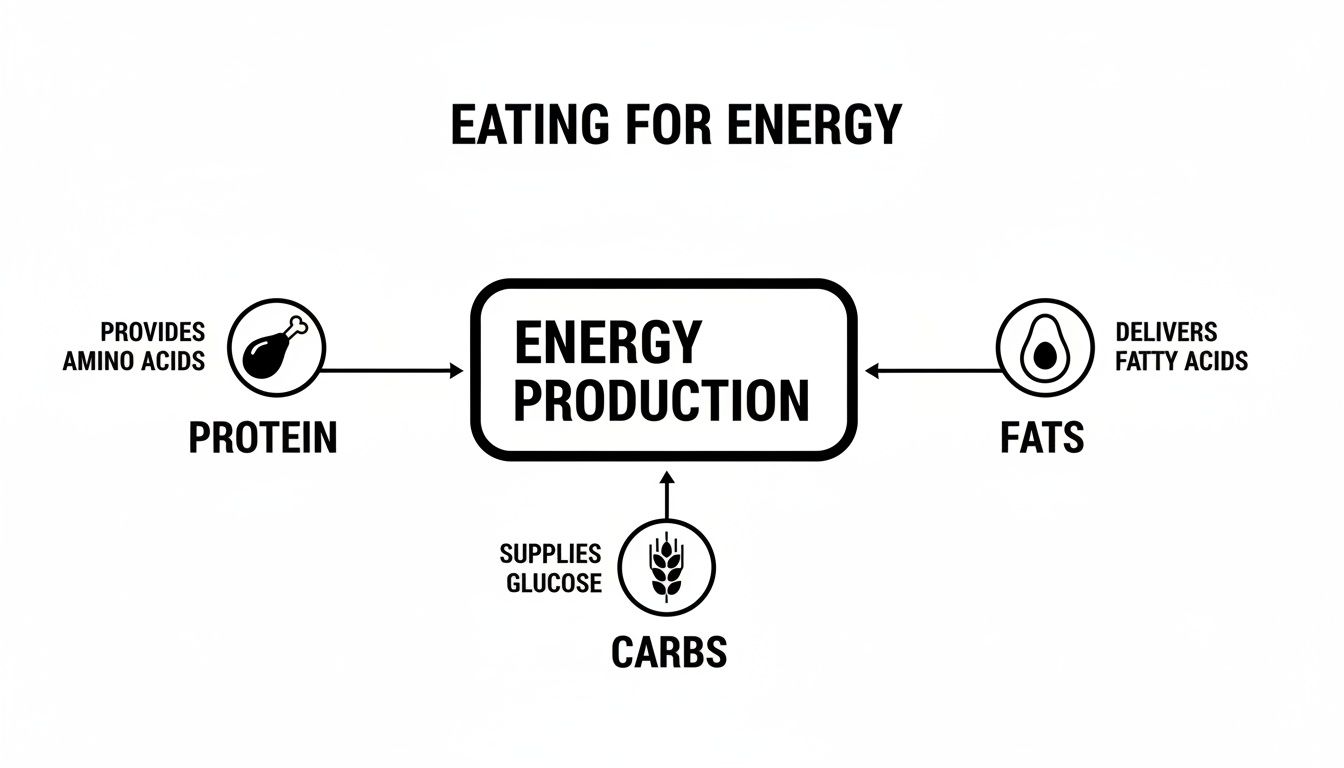
While food is always your primary fuel, the right supplements work by optimising the cellular machinery that converts this fuel into usable energy.
Core Supplements for Energy and Vitality
A good multivitamin is a solid foundation, but some individual supplements are particularly brilliant at tackling fatigue head-on. The key is tailoring your choices to your lifestyle, because what a professional athlete needs is worlds away from what a busy executive requires to stay on top of their game.
Here are a few heavy hitters I often recommend:
- Creatine: Far more than just a muscle-builder, creatine is a powerhouse for both physical and mental energy. It helps your body rapidly regenerate its main energy currency, ATP. For anyone hitting the gym, that means better strength and endurance. For the desk-bound professional, studies suggest it can also boost cognitive function and cut down on mental fatigue during those really demanding tasks.
- Magnesium: This mineral is a true unsung hero, involved in over 300 essential reactions in the body, including energy production. Crucially, it also helps calm the nervous system, making it fantastic for managing stress and improving sleep. If you're a busy professional struggling to switch off at night, a high-quality form like magnesium glycinate can be a game-changer.
- Omega-3 Fatty Acids: These are vital for brain health and taming inflammation, which is often a hidden driver of fatigue. Sourced from fish oil or algae, omega-3s support everything from mood and focus to overall cognitive performance. If you want to dive deeper into giving yourself a mental edge, you can learn all about the best supplements for energy and focus in our detailed guide.
Your Guide to Fatigue-Fighting Supplements
Navigating the world of supplements can feel overwhelming. To make it a bit clearer, I've put together this simple table to help you match the right supplement to your specific needs. It breaks down what each one does best and who might benefit the most.
| Supplement | Primary Anti-Fatigue Action | Best For (Lifestyle Example) |
|---|---|---|
| Creatine | Rapidly regenerates cellular energy (ATP) | The Fitness Enthusiast looking for better workout performance and recovery. |
| Magnesium | Calms the nervous system, supports energy production | The Stressed Professional struggling with sleep and muscle tension. |
| Omega-3s | Reduces inflammation, supports brain function | The Student or Knowledge Worker needing sustained mental clarity and focus. |
| Ashwagandha | Regulates the stress hormone cortisol | Anyone feeling "wired but tired" from chronic stress and pressure. |
| Multivitamin | Fills general nutritional gaps for overall wellness | The Busy Individual who wants a simple, foundational safety net. |
| Mushroom Blends | Support cognitive function and stress resilience | The Creative or Tech Professional seeking enhanced focus and memory recall. |
Remember, this is a starting point. The best approach is always personalised, considering your unique diet, stress levels, and daily demands.
Finding the Right Fit for You
The real magic happens when you personalise your supplement strategy. Let's walk through a couple of common scenarios to see how this works in practice.
For the Fitness Enthusiast:
- The Foundation: Creatine is a non-negotiable for boosting performance and speeding up recovery.
- The Support Crew: Magnesium is perfect for muscle relaxation and replenishing what you lose through sweat. An energy powder with electrolytes is also great for maintaining hydration and stamina.
For the Stressed Professional:
- The Foundation: An adaptogen like Ashwagandha is a brilliant first choice for its proven ability to lower cortisol and promote a feeling of calm control.
- The Support Crew: Magnesium glycinate before bed can dramatically improve sleep quality, while a top-notch multivitamin helps support the energy metabolism that chronic stress depletes.
The effectiveness of any supplement comes down to two things: quality and bioavailability (your body's ability to actually absorb and use it). Always opt for reputable brands that use well-researched forms of nutrients—think chelated minerals or methylated B vitamins—to ensure you're getting real value.
Managing Stress Before It Becomes Burnout
Chronic stress is one of the biggest thieves of your energy. It keeps your body in a constant state of high alert, flooding your system with cortisol and adrenaline. Over time, this "wired but tired" feeling doesn't just drain your reserves; it paves the way for full-blown burnout.
When you're stuck in that cycle, preventing fatigue feels impossible.
This isn't just a hunch; it's a massive issue. A recent Mental Health UK Burnout Report paints a pretty stark picture of working life in the UK. Only 29% of workers feel fulfilled, and a mere 42% feel they can properly switch off after hours.
That inability to disconnect is a huge driver of burnout. It’s no surprise, then, that 21% of employees have taken time off for stress-related mental health issues, costing the economy millions of lost workdays.
The only way out is to get ahead of it. Managing stress proactively is about building resilience before you feel overwhelmed. Here are a few practical places to start.
Build Your Digital Boundaries
In our always-on culture, the line between work and personal life has practically vanished. The constant ping of emails and notifications keeps your nervous system on edge, robbing you of the genuine rest needed to recharge.
Setting firm digital boundaries isn't a luxury; it's a non-negotiable step to protect your energy. This is about reclaiming your downtime with a few simple, but powerful, moves:
- Set a hard stop. Decide on a clear cut-off time for work comms each evening—say, 6 p.m.—and stick to it. Let colleagues know you won't be checking messages after this time.
- Silence the noise. Go through your phone and turn off all non-essential notifications. Every buzz and ping is a tiny interruption that chips away at your focus and peace.
- Schedule 'no-screen' time. Dedicate at least an hour before bed to screen-free activities. Reading a book, listening to music, or just chatting helps lower cortisol and lets your brain wind down for better sleep.
Setting digital boundaries isn't about being less productive. It’s about being more effective during your working hours by ensuring you're properly recharged. Protecting your downtime is one of the most powerful ways to fend off fatigue.
Harness the Power of Mindfulness and Movement
You don't need to book an hour-long yoga class to get the benefits of stress reduction. Short, consistent practices—often called 'micro-habits'—can make a massive difference to your body's stress response.
The goal is simply to interrupt the stress cycle before it spirals out of control. Try weaving these into your day:
- The five-minute mindful break. A couple of times a day, step away from your desk. Find a quiet spot, even if it's just the hallway, and focus on your breath for five minutes. It's a surprisingly effective way to lower your heart rate and calm a racing mind.
- The lunchtime walk. Instead of eating at your desk, get outside for a brisk 15-minute walk. The combination of gentle movement and natural light is a proven mood and energy booster.
These small actions send a powerful signal to your nervous system that it's safe to power down from high alert, helping to regulate those cortisol levels that leave you feeling exhausted.
Adaptogens and Supplements for Stress Support
While lifestyle changes are the foundation, certain supplements can give your body’s stress response system some powerful backup. Adaptogens, in particular, are brilliant at helping your body adapt to and resist physical, chemical, and biological stressors.
- Ashwagandha: This well-researched adaptogen is known for its ability to help modulate cortisol levels. It's especially useful for those who feel constantly on edge and struggle to switch off at night.
- Mushroom Blends: Supplements containing functional mushrooms like Lion's Mane and Reishi can support both cognitive function and a sense of calm. Reishi, for example, is often used to promote relaxation and deeper sleep.
When you pair these supplements with consistent stress-management techniques, you create a much more robust toolkit. You're no longer just coping with stress; you're actively building a more resilient system that's better equipped to protect its precious energy reserves.
Your Personal Anti-Fatigue Action Plan
Knowing what to do is one thing, but actually putting it all into practice is where the real magic happens. This is your chance to turn everything we've talked about into tangible action.
Don't let the amount of information feel overwhelming. The idea isn't to launch a massive, life-altering overhaul overnight. Real, lasting change comes from small, consistent steps. Let's build a simple, sustainable plan that fits neatly into your life, focusing on the core pillars: sleep, nutrition, supplements, and stress management.
Start with Small, Specific Goals
The secret to making new habits stick is to focus on just one or two manageable changes at a time. This creates momentum without leading to burnout—the very thing we’re trying to escape. Trying to fix everything at once is a classic recipe for failure.
Use these prompts to map out your focus for the week ahead. Be realistic!
- My #1 Sleep Goal: What’s one tiny thing you could realistically change? Maybe it's leaving your phone to charge downstairs instead of by your bed, or simply getting up at the same time on Saturday as you do on weekdays.
- One Nutrition Tweak: This could be as simple as adding a source of protein to your breakfast to keep you full, or swapping that 3 pm biscuit for a handful of almonds and a piece of fruit.
- My Stress-Reduction Action: What about scheduling one 10-minute walk during your lunch break, completely phone-free? Or practising five minutes of deep breathing before you open your laptop in the morning?
The difference between knowing and doing is what separates feeling tired from feeling energised. Don't just read this and move on. Pick your first small step right now and commit to it for the next seven days.
It’s no secret that the modern workplace is a huge driver of fatigue. In the UK, a staggering 63% of workers report clear signs of burnout, and 79% are dealing with high stress levels. Interestingly, recent four-day week trials showed that 71% of participants felt less burned out.
While that highlights how much our work environment matters, your own actions are still the most powerful tool you have. For more on this, you can read the full report on UK work statistics. By building your own plan, you’re creating a personal strategy to safeguard your energy and build resilience against the daily grind.
Still Have Questions About Fatigue?
Getting on top of your energy levels is a process, and it's totally normal to have a few questions along the way. Think of this as your go-to guide for those common "what ifs" that pop up as you start making changes.
How Long Until I Actually Feel a Difference?
This is the big one, isn't it? The good news is, you can often feel small shifts surprisingly quickly. Simple tweaks like getting your hydration right or improving your sleep hygiene can give you a noticeable lift in just a week or so.
When you start dialling in your nutrition – say, by getting your blood sugar under control – you might need a couple of weeks for those benefits to really settle in. For the deeper-rooted issues like chronic stress or filling significant nutrient gaps, you're probably looking at 4-6 weeks of consistent effort before you feel a profound change. The key is to be patient and celebrate the small wins.
Can I Really Beat Fatigue with a Demanding Job?
Absolutely, but you have to be clever about it. Just trying to power through is a recipe for burnout. The trick is to fiercely protect your recovery time. This means setting firm boundaries around your work, especially when it comes to screens.
Focus on the actions that give you the most bang for your buck. A 15-minute, screen-free lunch break can work wonders. Prioritising sleep is non-negotiable. And for some, targeted supplements like Ashwagandha can be a game-changer for managing the body's stress response. It's all about working smarter on your wellbeing, not just harder at your desk.
Don’t think of managing your energy as just another task on your to-do list. See it as the very foundation that makes everything else you do possible. It’s an investment in your performance, not an expense.
Are Energy Drinks a Good Fix?
In a word: no. While energy powders can offer a smarter alternative with electrolytes and nootropics for sustained performance, traditional energy drinks are often a different story. They might give you a temporary buzz from a blast of caffeine and sugar, but the inevitable crash will leave you feeling even worse than before.
Worse still, they mess with your natural sleep-wake cycle and can fuel anxiety and poor sleep quality, trapping you in a vicious circle of exhaustion. Instead, reach for something that provides sustainable energy, like a handful of nuts and a piece of fruit, or even just a glass of cold water. Real energy is built over time, not borrowed from a can.
When Should I Chat with My Doctor?
If you’ve been consistently applying these lifestyle changes for a few months and the exhaustion just isn't lifting, it's time to get a professional opinion. This is especially true if your fatigue comes with other symptoms like unexplained weight loss, a persistently low mood, or severe muscle weakness.
Your GP can run some simple tests to check for underlying medical conditions like anaemia, hormonal imbalances, thyroid problems, or sleep apnoea. It's always best to rule these out.
Ready to stop guessing and start building a smarter, data-driven plan to fight fatigue? VitzAi.com uses an AI-powered questionnaire to create a personalised supplement and lifestyle report based on your unique needs. Take our free quiz today and get your personalised recommendations.
This article is for informational purposes only and is not medical advice. Always consult a qualified health professional before starting any new supplement or major lifestyle change