

How to Reduce Cortisol Levels Naturally
If you want to get a handle on your cortisol levels, the first step is understanding what this hormone actually does. The goal isn't to eliminate it, but to shift your body out of a constant state of high alert and into a much-needed mode of rest and recovery. We can do this with some targeted lifestyle changes, smarter nutrition, and proven stress-management techniques.
The Real Impact of High Cortisol on Your Body

Ever feel "wired but tired"? You're not imagining it. Modern life, with its endless notifications, work pressures, and relentless schedules, can leave your body's stress response system permanently switched on. At the centre of this system is cortisol, a hormone produced by your adrenal glands.
Think of cortisol as your body's built-in alarm. In short bursts, it's incredibly useful. When you face a genuine threat—like swerving to avoid another car—a surge of cortisol gives you the razor-sharp focus and jolt of energy you need to react. This is the classic "fight-or-flight" response, and it’s a biological marvel.
The trouble starts when that alarm never gets switched off. The constant, low-grade stressors of daily life—a flooded inbox, financial worries, or even just getting stuck in traffic—can trick your body into keeping cortisol levels chronically high. Your system can't really tell the difference between a real emergency and a looming deadline, so it just keeps the alarm ringing.
When Good Hormones Go Bad
When cortisol stays high for too long, its helpful short-term effects flip and become long-term problems. This is where you start to really feel the knock-on effects on your health and performance.
Chronically elevated cortisol can directly interfere with your body's most essential functions, triggering a whole cascade of unwanted symptoms:
- Disrupted Sleep: High cortisol in the evening is a classic reason you might find yourself staring at the ceiling at 2 AM, only to feel completely drained when you wake up.
- Stubborn Weight Gain: It ramps up cravings for sugary, high-fat foods and tells your body to store fat, especially around your middle.
- Brain Fog and Poor Focus: Elevated cortisol can mess with your memory and executive function, making it tough to concentrate and think clearly.
- Hormonal Imbalances: It can disrupt the delicate balance of other key hormones, affecting everything from your mood and energy levels to your reproductive health.
This isn't just a feeling; it's a massive issue. Recent data shows the UK is in the middle of a stress epidemic, with a staggering 91% of adults reporting high or extreme levels of stress over the past year. You can dive deeper into the insights from The Burnout Report.
Ultimately, unmanaged cortisol just drains your vitality. It can sabotage your progress in the gym, blunt your cognitive edge at work, and make it almost impossible to feel your best. Understanding this connection is the crucial first step toward taking back control. By learning how to lower your cortisol levels naturally, you can start to dismantle this exhausting cycle of stress, paving the way for better energy, sharper focus, and a greater sense of well-being.
Foundational Lifestyle Habits for Cortisol Control
Let's get one thing straight: managing cortisol isn't about finding a single magic pill. It's about building a solid foundation of daily habits that signal safety and balance to your body. Think of these lifestyle shifts as the non-negotiables that directly influence your hormonal health. By getting these core areas right, you can genuinely start to lower cortisol naturally and get your energy back.
This isn't about piling more stress onto your plate with a complicated, rigid routine. It’s about making small, intelligent tweaks to what you're already doing—sleeping, eating, and moving—to work with your body's natural rhythms, not against them.
Master Your Sleep for Hormonal Harmony
Sleep is, without a doubt, the most powerful tool you have for keeping cortisol in check. When you don't get enough high-quality rest, your body registers it as a major stressor, which predictably leads to elevated cortisol the next day. This kicks off a nasty cycle where high cortisol ruins your sleep, and poor sleep jacks up your cortisol.
To break out of this loop, you need to get serious about your sleep environment and routine. A game-changing strategy is to enforce a "digital sunset" at least 60-90 minutes before you plan to hit the pillow. That means all screens—phones, tablets, laptops, and TVs—are off. The blue light from these devices directly suppresses melatonin, the sleep hormone, making it much harder to drift off and stay asleep.
Key Takeaway: Consistent, high-quality sleep isn't a luxury; it's a biological necessity for hormonal balance. Making your sleep routine a priority is one of the most effective things you can do to lower your daily cortisol load.
Instead of scrolling through social media, use this wind-down time for something genuinely calming. Read a physical book, do some light stretching, or just listen to some relaxing music. The goal is to create a clear signal for your mind and body that it's time to shift from a state of alert 'doing' to one of rest and repair.
Build an Anti-Inflammatory, Blood-Sugar-Balancing Plate
What you put on your plate has a direct and almost immediate effect on your cortisol levels. Diets packed with refined sugars and processed foods send your blood sugar on a wild rollercoaster. Your body perceives this volatility as a threat, prompting your adrenal glands to pump out cortisol to help get things back under control.
The antidote is to build an anti-inflammatory plate that keeps your blood sugar stable all day long. This isn't about restrictive dieting; it’s just about making smarter choices.
Components of a Cortisol-Friendly Meal:
- Complex Carbohydrates: Ditch the white bread and sugary cereals. Instead, go for things like quinoa, sweet potatoes, oats, and legumes. They release glucose slowly, preventing the dramatic spikes that trigger a cortisol surge.
- Quality Protein: Including a source of protein like chicken, fish, eggs, or tofu with every meal is key. It helps you feel full and satisfied, and it’s another crucial tool for stabilising blood sugar.
- Healthy Fats: Foods rich in omega-3 fatty acids—think salmon, walnuts, and chia seeds—are fantastic for their anti-inflammatory properties, which can help buffer your body’s stress response. Avocados and olive oil are also brilliant choices.
A simple, practical swap? Instead of a morning pastry (a blood sugar disaster), have a bowl of porridge with berries and a sprinkle of walnuts. This small change provides you with sustained energy without the hormonal chaos. For a more in-depth look, our guide on creating a personalised nutrition plan offers more tailored strategies.
This is especially critical for younger professionals who are often running on fumes. Young workers in the UK are facing exceptionally high stress levels, which takes a serious toll on cognitive function. Chronic cortisol affects the hippocampus—the brain's memory hub—and the prefrontal cortex, which governs decision-making, leading to brain fog and poor focus. You can find more details on how stress impacts the modern workforce in this report about burnout trends.
Move Smarter, Not Harder
Exercise is a phenomenal stress reliever, but the type, timing, and intensity matter hugely when cortisol is the concern. While a gruelling, high-intensity workout might feel productive, overdoing it can actually send cortisol levels soaring, especially if your body is already under a lot of stress.
The trick is to find a healthy balance between challenging your body and giving it a chance to recover. Make sure you’re weaving in restorative activities that actively lower cortisol.
- Morning Walks: A simple 20-30 minute walk outside in the morning sunlight is a powerful way to regulate your circadian rhythm and bring down stress hormones.
- Yoga and Tai Chi: These practices are brilliant because they combine gentle movement with mindful breathing, a proven way to activate the parasympathetic nervous system—your body's "rest and digest" mode.
- Resistance Training: Lifting weights 2-4 times a week is excellent for building stress resilience, but you must give yourself proper recovery days between sessions.
Start thinking of your exercise schedule as a way to manage your energy, not just burn calories. If you had a terrible night's sleep and feel wiped out, a gentle walk or some stretching is a far smarter choice than forcing a high-intensity session that will only spike your cortisol further.
Here’s a sample weekly plan to give you an idea of how this might look in practice.
Your Cortisol-Balancing Weekly Activity Planner
This schedule is just a template, but it shows how you can mix different types of movement and recovery throughout the week to keep cortisol in a healthy range.
| Day | Morning Activity (30-45 mins) | Afternoon Activity (15-20 mins) | Evening Wind-Down (30 mins) |
|---|---|---|---|
| Monday | Brisk Walk in Sunlight (30 mins) | Mindful Stretching at Desk | Reading a book / Journaling |
| Tuesday | Full Body Resistance Training | Short Walk Outside | Gentle Yoga / Deep Breathing |
| Wednesday | Gentle Yoga or Pilates | Bodyweight Squats & Lunges | Listening to Calming Music |
| Thursday | Full Body Resistance Training | Short Walk Outside | Meditation App (e.g., Headspace) |
| Friday | Brisk Walk in Sunlight (30 mins) | Mindful Stretching at Desk | Social Connection (Phone-free) |
| Saturday | Longer Hike or Bike Ride (60 mins) | Active Recovery / Foam Rolling | Relaxing Bath / Epsom Salts |
| Sunday | Rest or very light activity | Gentle Stretching | Plan for the week ahead |
The key takeaway from a schedule like this is the emphasis on balance. Notice how the more intense workouts are paired with lighter days and plenty of restorative activities.
To really nail your wind-down routine and manage daily stressors, exploring effective ways to relax without alcohol can be a game-changer. So many people reach for a drink to unwind, but alcohol can disrupt sleep and hormonal balance, making the problem worse. Finding healthier alternatives is a cornerstone of a stress-resilient lifestyle, and resources like this guide on 10 Proven Ways to Relax Without Alcohol can offer some practical ideas.
By integrating these foundational habits—prioritising sleep, eating for stability, and moving mindfully—you create a powerful buffer against the pressures of modern life, naturally guiding your cortisol levels back into a healthy, productive rhythm.
Using Supplements to Build Stress Resilience
While sorting out your lifestyle is the foundation of getting cortisol under control, smart, targeted supplementation can give you a serious edge. Think of supplements not as a magic bullet, but as powerful tools to help your body become more resilient to the daily grind. They work by supporting your adrenal system, calming your nervous system, and giving your body the raw materials it needs to find its balance.
This isn't about randomly grabbing bottles off the shelf. It’s about understanding what key nutrients and adaptogens actually do, so you can make choices that genuinely move the needle. When your body has the right support, you’ll find you can handle life’s pressures without your cortisol levels constantly red-lining.
Before you even think about supplements, though, it's crucial to get your foundational habits in order. This decision tree is a great visual guide for where to start if you're feeling the burn of chronic stress.
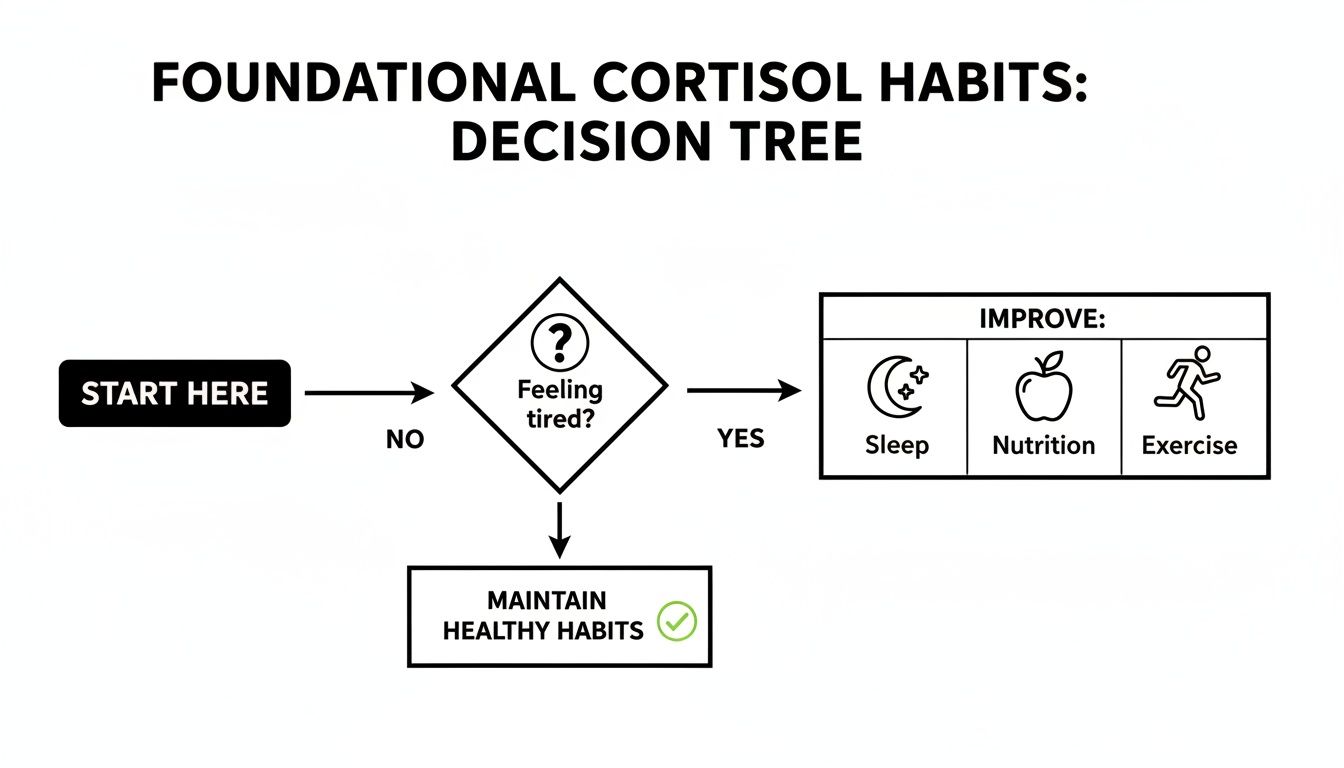
The key takeaway? Supplements should build upon, not replace, core practices like sleep, nutrition, and exercise.
Ashwagandha: The Adaptogenic Ally
Ashwagandha is probably the most famous adaptogen for stress, and for good reason. Adaptogens are a unique class of herbs that help your body adapt to both physical and mental stressors. Ashwagandha is brilliant at this because it directly influences your hypothalamic-pituitary-adrenal (HPA) axis—your body’s central stress response system.
When you're constantly stressed, your HPA axis is basically stuck in the "on" position. Ashwagandha helps to modulate this response, essentially turning down the volume on those frantic stress signals. The result can be a noticeable drop in anxiety and a much more even-keeled mood.
For busy professionals juggling deadlines or athletes pushing their physical limits, this adaptogen can be a game-changer for staving off burnout and staying focused under pressure.
Magnesium: The Ultimate Relaxation Mineral
Magnesium is a powerhouse mineral, involved in over 300 biochemical reactions in the body, many of which are directly tied to stress and relaxation. The problem is, a huge chunk of the population just doesn’t get enough of it from diet alone.
This mineral is crucial for calming the nervous system, acting like a brake on the "excitatory" neurotransmitters that can leave you feeling wired. It also helps regulate cortisol production itself, preventing it from getting excessively high.
Feeling tense, struggling to sleep, or getting muscle cramps are all classic signs of low magnesium. Supplementing with a highly bioavailable form, like magnesium glycinate or threonate, can bring a sense of calm and dramatically improve sleep quality—which is your number one tool for resetting cortisol.
Expert Tip: I often recommend taking magnesium in the evening as part of a wind-down routine. Its calming effects can help prepare your body for the deep, restorative sleep that is absolutely essential for bringing cortisol levels back into balance.
Omega-3 Fatty Acids: Cooling Inflammation
Chronic stress and chronic inflammation often go hand-in-hand, creating a vicious cycle that keeps cortisol elevated. Omega-3 fatty acids, especially the EPA and DHA found in fish oil, are potent anti-inflammatory agents.
By dialling down systemic inflammation, omega-3s help to blunt your body's overall stress response. They’re fantastic for brain health, can improve your mood, and have even been shown to lower cortisol levels in response to stressful tasks.
Ensuring you get enough of these healthy fats is a fundamental step for anyone looking to build long-term stress resilience. If you don't eat fatty fish a few times a week, a high-quality omega-3 supplement can fill this critical gap. For more ideas, check out our deep dive on the best stress relief supplements.
Functional Mushrooms for Calm and Clarity
Certain mushrooms, often called functional or medicinal mushrooms, have been used for centuries to promote wellbeing. When it comes to tackling stress, Reishi is the undisputed star.
Reishi is prized for its deeply calming properties and is often nicknamed the "mushroom of tranquility." It supports the adrenal glands and helps modulate the immune system's response to stress, encouraging a state of balance, or homeostasis.
Adding a mushroom blend that includes Reishi into your routine can be an excellent way to support your nervous system and foster a more relaxed state of mind, especially during those high-pressure periods.
Creatine and Cellular Energy
Creatine is famous in the gym for building muscle and boosting performance, but its role in stress resilience is seriously underrated. Think about it: stress, whether it's mental or physical, is incredibly draining on your body's energy reserves.
Creatine is fundamental to producing ATP (adenosine triphosphate), which is the primary energy currency for every single cell in your body. By making sure your cells have plenty of energy, creatine helps your entire system cope with stressors more effectively.
When your cellular energy is topped up, your body is less likely to perceive challenges as overwhelming threats that demand a massive cortisol surge. This makes it an invaluable tool for anyone in a high-demand role, from athletes to executives.
A Quick Guide to Cortisol-Lowering Supplements
Choosing the right supplement really comes down to your specific symptoms, lifestyle, and goals. This table breaks down the key players to help you figure out what might work best for you.
Key Supplements for Natural Cortisol Management
Here's a quick comparison of some of the most effective, evidence-backed supplements for managing stress and cortisol. Each has a slightly different mechanism, making them suited to different needs.
| Supplement | Primary Action | Best For | Mechanism Insight |
|---|---|---|---|
| Ashwagandha | Modulates the HPA axis (stress response) | Individuals feeling "wired but tired," experiencing chronic anxiety, or burnout. | Helps regulate cortisol signalling, preventing excessive spikes. |
| Magnesium | Calms the nervous system & supports sleep | People with muscle tension, poor sleep quality, or feelings of restlessness. | Acts as a natural brake on excitatory neurotransmitters and regulates cortisol. |
| Omega-3s | Reduces systemic inflammation | Anyone looking for long-term brain health, mood support, and stress resilience. | Lowers inflammation, which in turn helps to buffer the body's stress response. |
| Mushroom Blends | Promotes tranquility and supports adrenal health | Those seeking a gentle, calming effect and overall nervous system support. | Reishi, in particular, helps balance the body's response to stressors. |
| Creatine | Boosts cellular energy (ATP) production | Athletes, high-performers, or anyone under significant physical or mental load. | Improves cellular energy efficiency, making the body more resilient to stress. |
Making an informed choice is everything. The quality of the ingredients, the bioavailability of the formula (how well your body can absorb it), and how a supplement fits into your daily life all matter. A personalised approach, like the one offered by the VitzAI quiz, can cut through the noise and help you pinpoint the specific nutrients that will give you the most bang for your buck based on your unique biology and goals.
Mindfulness and Breathing to Lower Stress Instantly

While building solid long-term habits is the foundation of cortisol control, sometimes you just need to slam the brakes on stress right now. A tough phone call, an unexpected deadline, or a sudden wave of anxiety can send cortisol flooding through your system. In those moments, you need practical, immediate tools to calm your nervous system down.
This is where mindfulness and specific breathing techniques become your secret weapon. These aren't just fluffy concepts for a yoga retreat; they are potent, evidence-backed tools you can use discreetly at your desk, in the car, or anywhere you feel the pressure building.
The goal is to manually flick the switch on your body's parasympathetic nervous system—often called the "rest-and-digest" response. This system is the natural counterbalance to the "fight-or-flight" mode, and learning how to activate it on command is a total game-changer for managing acute stress.
The Power of the Physiological Sigh
When you feel stressed, your first instinct might be to take one big, deep breath. But research has uncovered a far more effective technique for instantly calming your system: the physiological sigh. It’s the same breathing pattern we naturally use when sobbing or drifting into a deep sleep, and it works by rapidly offloading carbon dioxide and relaxing the nervous system.
Here’s how you do it:
- Double Inhale: Take a deep breath in through your nose. Then, without letting any air out, take another short, sharp inhale to completely fill your lungs.
- Long Exhale: Slowly and fully exhale through your mouth, making the exhale noticeably longer than the two inhales combined.
Just one to three rounds of the physiological sigh can have a profound and immediate calming effect. It’s the perfect tool to use right before a big meeting or after a stressful conversation.
Using Box Breathing for Sustained Calm
For a slightly longer, more meditative practice, box breathing is an incredible technique for lowering cortisol and getting your focus back. It’s famously used by Navy SEALs to stay calm under extreme pressure, which tells you everything you need to know about its effectiveness.
The technique is simple and easy to remember. Just visualise a square in your mind and follow this pattern:
- Inhale slowly through your nose for a count of four.
- Hold your breath for a count of four.
- Exhale slowly through your mouth for a count of four.
- Hold your breath at the end of the exhale for a count of four.
Repeating this cycle for just a couple of minutes can significantly dial down feelings of anxiety and bring your heart rate down. It forces you to focus on the rhythm of your breath, pulling your attention away from whatever is causing you stress.
Real-World Application: Picture this: you're about to give a huge presentation and your heart is pounding. Before you walk in, find a quiet corner and practise box breathing for just two minutes. This simple act can shift your body out of a state of panic and into one of calm focus, allowing you to perform at your best.
The Cortisol-Lowering Effects of Nature and Connection
Your surroundings and social interactions also have a direct line to your stress hormones. Being intentional about how you spend your downtime can be just as crucial as practising formal breathing exercises.
Spending even 20 minutes in nature—a quick walk in a local park, or just sitting in your garden—has been shown to significantly lower cortisol levels. The combination of fresh air, natural light, and green space sends a powerful restorative signal to your brain.
Similarly, genuine social connection is a potent stress buffer. In an age of digital isolation, carving out time for a real conversation with a friend or family member is non-negotiable. This doesn't mean firing off a text; it means connecting in a way that makes you feel genuinely seen and supported. Instead of scrolling on your phone during your lunch break, try scheduling a quick walk with a colleague. This simple swap replaces a potentially cortisol-spiking activity with one that actively reduces it.
To learn more, check out our guide on how to reduce stress naturally with more actionable lifestyle tips.
Building Your Daily Cortisol-Control Routine
Knowing the science behind cortisol is one thing, but actually putting that knowledge into practice is where the real magic happens. This is where we pull all the pieces together into a daily plan—a flexible but powerful routine that blends smart lifestyle habits with targeted supplementation to get your stress levels under control.
The idea isn't to pile more rigid rules onto your already packed schedule. It's about creating a simple, repeatable structure that works with your body's natural rhythms to lower cortisol and build resilience. Let's be honest, in today's world, everyone needs a solid game plan for managing stress in an overstimulated world.
Understanding Your Morning Cortisol Peak
First, let's clear up a common misunderstanding about the cortisol awakening response (CAR). Lots of people hear that cortisol peaks in the morning and immediately think it's a bad sign of stress. The reality is, this morning surge is a completely normal—and healthy—part of your body clock.
It's your body's natural "get up and go" signal, helping you feel alert, focused, and ready to take on the day. Recent research has even shown that it's not the act of waking that causes the spike; it's simply the peak of a hormonal rhythm that starts building in the early hours while you're still asleep.
Here’s the key takeaway: A morning cortisol peak is your friend. We don't want to flatten this healthy rhythm. Our goal is to stop cortisol from staying high all day and into the night when it should be tapering off.
With that in mind, we can build a daily routine that supports this natural hormonal curve, setting you up for calm, sustained energy.
A Sample Cortisol-Control Blueprint
Think of this as a flexible template you can tweak to fit your own life. The core principles work whether you're at a desk from 9-to-5 or have a more unpredictable schedule.
Morning (6:30 AM – 9:00 AM)
- Sunlight First, Phone Later (10-15 mins): Before you even think about scrolling, get outside for some morning sun. This simple habit helps lock in your circadian rhythm, reinforcing that healthy cortisol peak and setting you up for better melatonin production at night.
- Hydrate and Nourish: Start with a big glass of water. Follow it up with a breakfast that balances your blood sugar, focusing on protein and healthy fats. Think scrambled eggs with avocado or a protein smoothie with chia seeds.
- Time Your Supplements: This is the perfect window for adaptogens like Ashwagandha or a Mushroom Blend, which can help buffer your stress response as the workday begins. If you use Creatine for performance, taking it now tops up your cellular energy stores for the day ahead.
Mid-Day (12:00 PM – 2:00 PM)
- Mindful Lunch Break: Step away from your screen to eat. It sounds simple, but it makes a huge difference for your digestion and gives your brain a much-needed reset. Eating while answering emails keeps your nervous system in a stressed state.
- Five-Minute Reset: This is your secret weapon against the afternoon slump and rising stress. Try a few rounds of the physiological sigh or some box breathing to instantly calm your nervous system. Even better, take a short walk outside.
Evening (7:00 PM Onwards)
- Digital Sunset: Set a hard stop for screens at least 60-90 minutes before you plan to sleep. The blue light from your phone and laptop can mess with melatonin production and keep cortisol artificially high.
- Wind-Down Ritual: This is your cue to your body that the day is done. Dim the lights, read an actual book, do some light stretching, or have a warm bath. Find what works for you and stick to it.
- Evening Supplements: The evening is a great time for calming nutrients. Magnesium can work wonders for promoting relaxation and prepping your body for deep, restorative sleep. Taking your Omega-3s with your evening meal is another great habit for fighting off inflammation.
This blueprint gives you a clear, actionable guide to building a life with less stress and more energy. You've got this.
Got Questions About Cortisol?
Let's be honest, diving into hormonal health can feel a bit like falling down a rabbit hole. As we wrap up this guide, I want to tackle a few of the questions that come up most often. Think of this as a quick-fire round to clear up any lingering confusion and get you on your way.
How Long Does It Actually Take to Lower Cortisol?
This is the million-dollar question, and the honest answer is: it depends. Your starting point, lifestyle, and how consistent you are all play a massive role.
That said, you can get some wins almost immediately. A simple five-minute breathing exercise can genuinely lower your cortisol in the moment, which is a powerful tool to have.
As for the bigger picture, most people start to feel a real, noticeable shift within two to four weeks of consistently applying the lifestyle changes we've talked about. We're talking clearer thinking, more stable energy throughout the day, and waking up feeling more rested. True hormonal rebalancing is more of a marathon than a sprint, but the good news is you often start feeling the benefits much sooner than you'd think.
What’s the Best Time to Take Cortisol-Lowering Supplements?
Timing your supplements can definitely give you more bang for your buck. Here’s a simple breakdown based on what I’ve seen work best:
- Adaptogens (like Ashwagandha): Taking these in the morning seems to work well for most. It helps build your resilience to whatever the day throws at you, without making you feel drowsy.
- Magnesium: This is a classic evening supplement. Pop it about an hour before you plan to sleep. It has a brilliant calming effect on the nervous system and can really deepen your sleep quality, which is non-negotiable for getting cortisol in check.
- Omega-3s and Multivitamins: It’s generally a good idea to take these with a meal. This helps your body absorb them better and avoids any potential stomach grumbles.
A Quick Word of Caution: This is general advice. Always read the label on your specific product and, if you’re unsure, have a chat with a healthcare professional who can tailor recommendations to your personal needs.
Is My Morning Coffee Making My Cortisol Worse?
Ah, the coffee question. It's a tricky one. Yes, caffeine gives you a temporary cortisol spike. If you’re already running on fumes and feeling frazzled, piling coffee on top of that can absolutely push you further into that anxious, "wired but tired" state and mess with your sleep later.
However, if your stress is generally under control, a cup of coffee in the morning probably isn't going to derail your efforts.
The real key is to listen to your body. How does it actually make you feel? If you're using it as a crutch just to function because you're exhausted, that's a red flag. It’s a sign you need to look at the root cause of your fatigue, not just paper over the cracks with a stimulant. A great rule of thumb for almost everyone is to cut off caffeine after midday. This helps protect your sleep and allows your cortisol to naturally wind down in the evening as it should.
Ready to take the guesswork out of your health routine? The VitzAi.com AI-powered quiz can analyse your unique needs and create a personalised supplement plan to help you manage stress, boost energy, and achieve your wellness goals. Get your free, personalised recommendations today.
This article is for informational purposes only and is not medical advice. Always consult a qualified health professional before starting any new supplement or major lifestyle change