

How to Reduce Stress Naturally Proven Habits for Lasting Calm
To reduce stress naturally, we need to look beyond just "relaxing" and focus on the bedrock of our wellbeing: quality sleep, balanced nutrition, and consistent movement. These aren't just nice-to-haves; they are the pillars that regulate your body’s entire stress response system, creating a genuine, sustainable path to feeling calm.
Understanding How Stress Affects Your Body
We often talk about stress as if it's all in our heads—a purely mental or emotional burden. The reality is that its effects are deeply physical, sending ripples through your entire system.
When you’re staring down a demanding project deadline or juggling the chaos of family life, your body doesn't know the difference between that and a real, physical threat. It just switches on a primal survival mechanism, triggering a cascade of hormones designed to help you handle whatever's coming.
The star player in this process is cortisol. In short bursts, it’s incredibly helpful, sharpening your focus and mobilising a rush of energy. But the problem with modern life is that the stress tap often gets left running, leading to chronically high cortisol levels. This constant state of high alert starts to disrupt nearly every system in your body.
The Cortisol Connection
Think of cortisol as your body's built-in alarm system. When it’s always blaring, anything your body deems "non-essential" for immediate survival gets put on the back burner. This is where you might start noticing physical symptoms you wouldn't necessarily connect to stress:
- Hormonal Imbalance: High cortisol can interfere with reproductive hormones, potentially affecting menstrual cycles in women and testosterone levels in men.
- Weakened Immunity: It can suppress your immune system, which is why you might find yourself catching every cold that goes around when you're under pressure.
- Digestive Upset: Stress diverts blood flow away from your gut. This can lead to all sorts of issues like bloating, discomfort, and an unhappy gut microbiome.
- Cognitive Fog: Ever struggled to remember things or focus when you're completely overwhelmed? That’s cortisol impacting your brain's performance, creating that frustrating "brain fog."
The Gut-Brain Axis and Your Mood
Your gut and brain are in constant conversation through a pathway known as the gut-brain axis. Stress can throw your gut bacteria out of whack, which in turn sends signals back to your brain that can amplify feelings of anxiety and low mood.
For a professional hitting a wall of fatigue after a tough project, this isn't just mental exhaustion; it's a full-body physical response. For a parent struggling with brain fog, it’s a clear sign that the body's resources are being funnelled into managing stress. For a deeper dive into these reactions, understanding the fight or flight response can really illuminate how these physical symptoms take hold.
Recognising that stress is a biological event, not just a state of mind, is the first step to addressing it effectively. It’s about moving from feeling vaguely "stressed out" to pinpointing the root physiological causes.
This understanding is the foundation for building real resilience. Lasting calm isn't about avoiding stress entirely—that's impossible. It's about building a system that can handle it. A combination of targeted lifestyle shifts and smart nutritional support can help regulate your body's response, setting the stage for the practical strategies we'll explore next.
Quick Techniques for Immediate Stress Relief
When stress hits you like a tonne of bricks—right before a big presentation or during a chaotic commute—you need something that works now. Long-term strategies are essential, of course, but having a few tricks up your sleeve for instant relief can stop a stress spiral in its tracks.
These techniques are designed to calm your nervous system in minutes, bringing you back to centre.

The goal here is simple: interrupt your body's "fight-or-flight" response. When you feel that wave of overwhelm, your heart races and your breathing gets shallow. By consciously taking control of your physical state, you send a powerful signal to your brain that the danger has passed.
Harness Your Breath with the 4-7-8 Technique
One of the fastest ways to dial down stress is through your breath. The 4-7-8 method is a game-changer because it directly stimulates the vagus nerve, which kicks your parasympathetic nervous system—your body’s built-in relaxation mode—into gear.
Here’s how to do it, wherever you are:
- Exhale completely through your mouth with a gentle whoosh sound.
- Inhale quietly through your nose for a count of four.
- Hold your breath for a count of seven.
- Exhale completely through your mouth, making that whoosh sound again, for a count of eight.
Just repeat this cycle three or four times. That long exhale is the most crucial part; it actively slows your heart rate and helps lower cortisol levels. Picture yourself at your desk, the pressure mounting before a deadline. Taking just two minutes for this can completely reset your focus and calm your nerves.
Ground Yourself with the 5-4-3-2-1 Method
When stress sends your mind spinning with "what-if" scenarios, grounding techniques are your best friend. They yank you out of those anxious thought loops and plant you firmly back in the present moment. The 5-4-3-2-1 method is brilliant because it uses your senses to reconnect you with your surroundings.
All you have to do is pause and identify:
- 5 things you can see: Look around and really notice the details. The pattern on the carpet, a plant in the corner, the colour of a colleague's shirt.
- 4 things you can feel: Bring your awareness to physical sensations. The texture of your desk, the feeling of your feet flat on the floor, the fabric of your clothes against your skin.
- 3 things you can hear: Tune into the sounds around you. The hum of the air conditioning, distant traffic, the clicking of keyboards.
- 2 things you can smell: Try to pick out distinct scents. Maybe it's the coffee brewing down the hall or the faint smell of hand sanitiser.
- 1 thing you can taste: Focus on the taste in your mouth, or take a sip of water and notice its flavour.
This simple sensory checklist makes it incredibly difficult for your brain to entertain anxious thoughts at the same time. Think of it as a mental reboot when you’re feeling overwhelmed by internal chatter.
To give you a clearer idea of how these quick-fire methods work, here's a simple breakdown.
Rapid Stress-Relief Techniques at a Glance
| Technique | How It Works | Best For |
|---|---|---|
| 4-7-8 Breathing | Activates the parasympathetic nervous system (the "rest and digest" state) by stimulating the vagus nerve, slowing your heart rate. | Moments of high anxiety, feeling panicky, or needing to calm down before a stressful event. |
| 5-4-3-2-1 Grounding | Re-focuses the mind on the present moment through sensory input, interrupting cycles of anxious or racing thoughts. | When you're stuck in your head, worrying about the future, or feeling disconnected from your body. |
These immediate relief methods aren't just about "feeling better"—they are about actively managing your body’s stress chemistry. They provide a powerful first line of defence, allowing you to handle acute stress without letting it derail your day. For more practical strategies to find your calm, you might want to learn how to cope with anxiety for calmer days.
Weaving Resilience into Your Daily Life
While knowing how to put out a stress fire is crucial, the real win is building a life that's fire-resistant in the first place. Lasting calm isn’t about grand, sweeping changes. It’s forged in the small, consistent choices you make every single day. The pillars holding up this fortress of resilience? Movement, nutrition, and sleep.
Think of these habits less as chores and more as proactive investments in your own wellbeing. They don't just help you cope when stress hits; they fortify your entire system, making you less susceptible to its toxic effects. By dialling in these core areas, you can regulate your hormones, stabilise your energy, and build a powerful defence against the grind of modern life.
Move Your Body to Clear Your Mind
Physical activity is hands-down one of the most powerful and accessible tools for managing stress. When you move, your body pumps out endorphins—those brilliant, mood-lifting chemicals that act as natural painkillers and stress-busters. It also helps your body process and flush out excess cortisol and adrenaline, bringing you back to a state of balance much faster.
The best part? You don't need to be training for a marathon to feel the effects. The magic is in consistency. Finding something you genuinely enjoy is the secret to making it stick.
Moving your body isn't a punishment for what you ate. It’s a celebration of what your body can do and a direct line to resetting your mental state.
Even short bursts of movement can make a world of difference. Try "exercise snacking"—taking quick, 5-10 minute breaks for a brisk walk, some stretching, or a few bodyweight exercises throughout your workday. It breaks up long periods of sitting, gets your blood flowing, and gives you an immediate mental refresh.
It’s no secret that physical activity is a proven stress-buster, and the stats back it up. A 2024 report from the Mental Health Foundation found 76% of Brits agree that exercise helps them manage stress, and 84% link it to better sleep. The catch? Stress itself can be the biggest barrier. A staggering 17% of adults say stress is the very reason they don't move more, a figure that leaps to 30% for those aged 18-24. Work is a huge factor, with 776,000 workers in Great Britain suffering from work-related stress, depression, or anxiety in 2023/24, costing us 16.4 million lost workdays. The good news is that even simple changes work. Aim for the recommended 150 minutes of moderate activity a week – a brisk lunchtime walk in a park is perfect, which the Office for National Statistics notes gives you an extra mental health boost.
Fuel a Calmer You with Smart Nutrition
What you put on your plate has a direct and profound impact on your mood and stress levels. A diet heavy on processed foods, sugar, and caffeine can send your blood sugar on a wild rollercoaster, leading to energy crashes, brain fog, and a short fuse. In stark contrast, a nutrient-dense diet gives your brain the raw materials it needs to function at its best and manage stress effectively.
The main goals are to stabilise your blood sugar and load up on key nutrients that support your nervous system. You don't have to be perfect, but focusing on these key players can make a huge difference.
- Magnesium: Often called the "calming mineral," magnesium is a superstar for regulating the body's stress-response system. It helps maintain healthy levels of GABA, a neurotransmitter that tells your brain to chill out. Find it in leafy greens (spinach, kale), nuts, seeds, and even a bit of dark chocolate.
- Omega-3 Fatty Acids: These healthy fats are absolutely vital for brain health and have been shown to help reduce inflammation and anxiety symptoms. Oily fish like salmon and mackerel are fantastic sources, as are walnuts, chia seeds, and flaxseeds.
- B Vitamins: The whole B-vitamin family is essential for turning food into energy and producing key neurotransmitters. If you're running low, you can feel fatigued and your mood can plummet. Whole grains, lean meats, eggs, and legumes are all packed with them. A good multivitamin can also help cover your bases here.
An easy way to start is by simply adding whole foods to every meal. Think a handful of spinach in your smoothie, a small bag of almonds for an afternoon snack, or a serving of salmon with your dinner. A solid nutritional base is your secret weapon, and you can take it a step further by exploring a personalised nutrition plan to meet your specific goals.
Prioritise Sleep to Master Your Cortisol
Sleep isn't a luxury; it’s a non-negotiable biological necessity for managing stress. While you're in deep sleep, your body is busy repairing itself, consolidating memories, and, most importantly, regulating stress hormones like cortisol. Skimping on sleep keeps cortisol levels chronically elevated, leaving you feeling frazzled, anxious, and unable to handle even minor daily pressures.
Improving your sleep hygiene—the habits and environment around your sleep—is one of the most effective things you can do to lower your baseline stress levels. This is about more than just aiming for eight hours.
Here are a few game-changing strategies:
- Stick to a Schedule: Going to bed and waking up at roughly the same time every day, even on weekends, is gold. It regulates your body’s internal clock, or circadian rhythm, making it easier to fall asleep and wake up feeling refreshed.
- Create a "Wind-Down" Routine: For the last hour before bed, kill the screens. The blue light from your phone and laptop messes with the production of melatonin, the hormone that signals sleep. Read a book, take a warm bath, or listen to some calming music instead.
- Optimise Your Sleep Space: Turn your bedroom into a sleep sanctuary. The ideal environment is cool, dark, and quiet. Blackout curtains, an eye mask, or a white noise machine can be incredibly helpful.
- Be Smart About Caffeine and Alcohol: This one’s obvious but often ignored. Avoid caffeine from the afternoon onwards. And while a glass of wine might make you feel sleepy at first, it ultimately disrupts your sleep quality later in the night.
By weaving these daily habits into the fabric of your life, you're not just fighting stress—you're building a foundation of resilience. You’re creating a lifestyle where calm and vitality aren't just possible, they're the new normal.
Using Nature and Movement to Fight Stress
While daily habits like nutrition and sleep build your long-term resilience, sometimes the most powerful tool for cutting through stress is the simplest one: getting outside and moving your body. It’s a powerful, accessible way to reduce stress naturally, offering an immediate mental reset that science continues to prove effective.

There’s a direct, restorative effect that natural environments have on our minds. It lowers cortisol, cuts down on mental fatigue, and sharpens our focus. When you pair the calming effects of nature with the endorphin-boosting power of physical activity, you create a seriously potent combination for combating the pressures of a busy life.
This isn't just some vague, feel-good idea; it’s a real physiological response. Stepping into a green space pulls you out of the high-stimulus digital world of screens and deadlines, giving your prefrontal cortex—the part of your brain responsible for focus and problem-solving—a much-needed chance to rest and recharge.
Make Nature Your Free Therapy
You don't need a weekend trip to the countryside to get the benefits. Small, consistent doses of outdoor time can be just as effective for resetting your nervous system.
For busy professionals, this could be as simple as a brisk, 20-minute walk in a local park during a lunch break. That small act alone can break the cycle of stress, lift your mood, and improve concentration for the rest of the afternoon.
Think of it as a cognitive reset button. Just as you'd restart a sluggish computer, a short burst of time in nature can clear out the mental clutter and restore your performance.
The impact of this "free therapy" is huge. In the UK, the numbers speak for themselves. In 2022, an incredible 19.7 million people gained real health benefits from outdoor recreation, an activity valued at roughly £7 billion in equivalent NHS treatment costs.
Simply spending two hours a week in nature significantly boosts your chances of reporting good health. The worrying part? Since 2020, 1.1 million fewer Brits are taking advantage of this, creating a lost health value of £390 million as pandemic-era habits stick around. You can learn more about how nature benefits public health on the Office for National Statistics website.
Practical Ways to Get Your Green Time
Fitting nature and movement into a packed schedule is all about finding opportunities where you can. The goal is to make it a seamless part of your life, not just another task on your to-do list.
Here are a few actionable ideas:
- Embrace the "Walking Meeting". If you have a one-on-one call that doesn't need a screen, take it on the go. Walking stimulates creative thinking and often makes conversations feel more relaxed and productive.
- Find Your "Third Place" Park. Identify a small park or green space near your home or office. Make it your go-to spot for a 15-minute break to decompress between tasks or at the end of the day.
- Bring Nature Indoors. If getting outside is tricky, bring the outside in. Adding a few low-maintenance plants to your desk or home office has been shown to reduce stress and improve air quality.
- Weekend Exploration. Set aside a small part of your weekend to explore a new local trail, park, or nature reserve. This provides a clear mental break from your weekday routine and helps you fully disconnect.
Movement in nature is a powerful strategy, especially for men under 40, where it acts as a natural way to boost energy and mental clarity, supporting both cognitive performance at work and physical recovery. For women navigating hormonal shifts, it can help regulate cortisol and support a balanced mood. It's a universal tool that addresses multiple wellness goals at once.
Of course, when you're feeling drained, it can be tough to find the motivation to get moving in the first place. This is where understanding how to increase energy naturally can be a game-changer, helping you build the momentum needed to get out the door. The simple act of stepping outside can be the first step towards a calmer, more focused you.
Targeted Supplements for Natural Stress Support
While your daily habits are the bedrock of stress management, sometimes you need a bit more targeted support. Think of supplements not as a magic bullet, but as strategic allies that reinforce your body’s natural defences against stress. They work by supporting the very systems that get worn out during demanding periods, helping to regulate stress hormones like cortisol and foster a sense of calm.
For anyone juggling a demanding career, fitness goals, and a busy personal life, this extra support can make all the difference, helping you maintain balance and perform at your best.
The timeline below highlights a few key players that can help build your resilience over time.
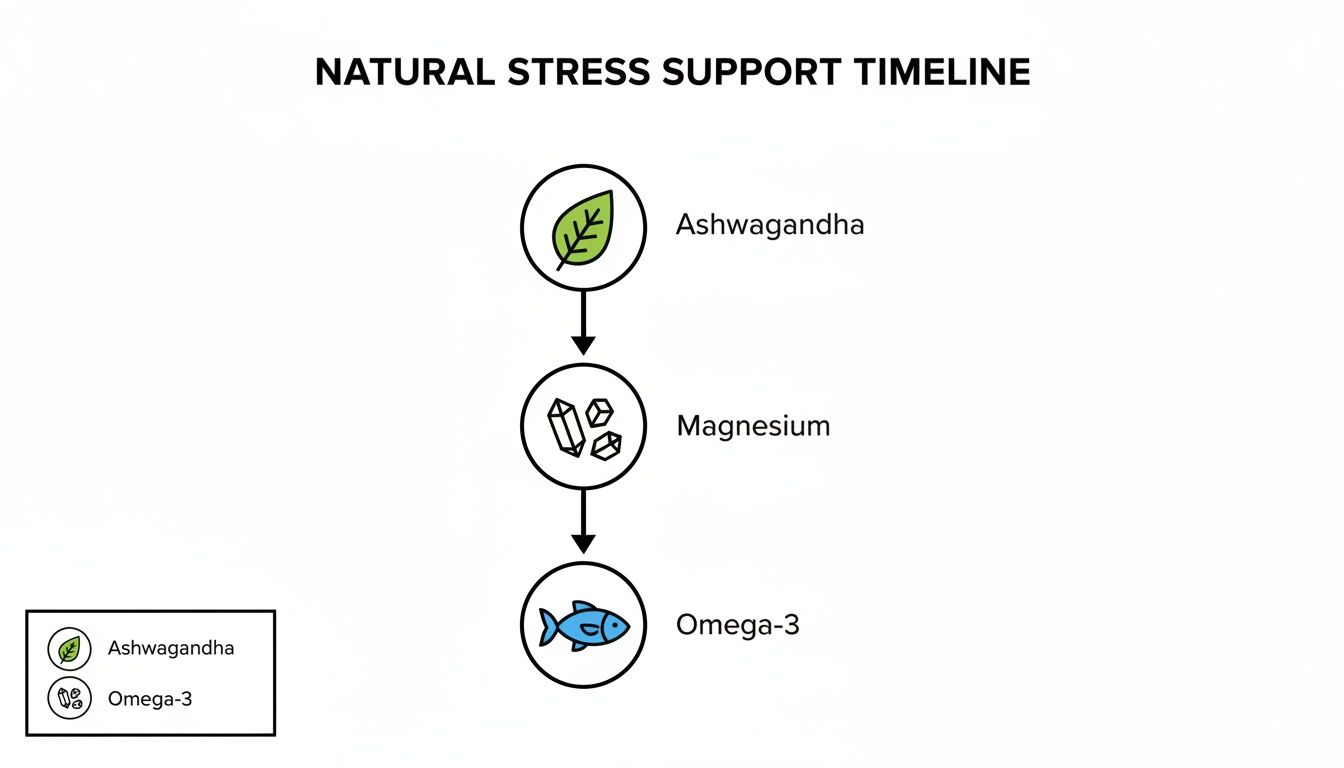
This visual shows how powerhouses like Ashwagandha, Magnesium, and Omega-3 can work in synergy to create a robust framework for managing stress naturally.
Ashwagandha: The Adaptogen for Cortisol Control
Ashwagandha is one of the most well-researched adaptogens out there. If you’re not familiar, adaptogens are a class of herbs that help your body adapt to physical and psychological stress. Its real strength lies in its ability to help regulate cortisol.
When you're chronically stressed, your cortisol levels can get stuck in the "on" position, leaving you feeling wired but exhausted. Ashwagandha gently helps to modulate this response, nudging cortisol back into a healthier rhythm. Studies have shown that regular supplementation can lead to a noticeable drop in perceived stress and anxiety, which for a busy professional, often translates to better focus and a more stable mood throughout the day.
Ashwagandha doesn’t just numb you to stress; it enhances your body's ability to cope. By supporting your adrenal glands, it helps you build a more robust and resilient stress response system over time.
Magnesium: The Essential Calming Mineral
Often called the "relaxation mineral," magnesium is a true workhorse, involved in over 300 biochemical reactions in your body. Many of these are crucial for brain function and mood regulation. It plays a key part in calming the nervous system by supporting healthy levels of GABA, a neurotransmitter that essentially tells your brain it's time to chill out.
The catch? Magnesium deficiency is incredibly common, and stress itself actually depletes your stores, creating a vicious cycle. Getting your levels back up can have a profound impact on your ability to unwind and get properly restful sleep.
You can find magnesium in foods like:
- Leafy greens (spinach, kale)
- Nuts and seeds (almonds, pumpkin seeds)
- Legumes and whole grains
For more targeted stress support, however, a high-quality supplement like magnesium glycinate is often recommended. It’s known for its high bioavailability and is gentle on the stomach, making it particularly good for taking in the evening to promote calm before bed.
Omega-3s for Brain Health and Inflammation
Omega-3 fatty acids, the healthy fats found in oily fish, are essential for a reason: your body can't make them on its own. They are critical building blocks for your brain cell membranes and have powerful anti-inflammatory properties.
This is important because chronic stress is closely linked to increased inflammation throughout the body and brain, which can contribute to everything from low mood to cognitive fog. By helping to dial down that inflammation, omega-3s support better communication between brain cells.
The result is often an improved mood and sharper cognitive function. A high-quality fish oil or algae-based omega-3 supplement is a cornerstone for protecting brain health and building long-term stress resilience. For a deeper dive into how different compounds work together, check out our detailed guide on the best stress relief supplements.
Functional Mushrooms for Calm and Focus
The world of functional mushrooms offers some fantastic, nuanced options for managing stress. Two of the standouts are Reishi and Lion's Mane, each bringing something different to the table.
- Reishi: Often called the "mushroom of immortality," Reishi has deeply calming properties that help soothe the nervous system and support better sleep. It's a perfect choice for winding down at the end of a long day.
- Lion's Mane: This mushroom is celebrated for its nootropic (brain-boosting) effects. It helps promote Nerve Growth Factor (NGF), which is vital for brain health, focus, and mental clarity—all things that take a serious hit when you’re under chronic stress.
A well-formulated mushroom blend can offer a balanced approach, giving you both the calming benefits of Reishi and the cognitive lift of Lion's Mane. It’s a great synergy for maintaining mental performance without feeling overstimulated.
When it comes to choosing supplements, quality is everything. Look for reputable brands that are transparent about their sourcing and testing. Starting with a targeted approach based on what you need most—whether it's cortisol balance, nervous system support, or cognitive clarity—can make a huge difference.
Your 14-Day Plan to Naturally Reduce Stress
Knowing what to do is one thing, but actually doing it consistently is where the magic happens. This simple 14-day plan is designed to help you build momentum without feeling completely overwhelmed. It integrates all the core ideas we've covered into small, manageable daily goals.
Think of this as a practical roadmap to get you started immediately, so you can begin to feel the benefits one day at a time. The goal isn't perfection; it's progress.
Week One: Building Your Foundation
The first week is all about introducing foundational habits. These are small actions designed to calm your nervous system and give your body's natural resilience a much-needed boost.
- Day 1: Practice the 4-7-8 breathing technique for just three minutes. Try it at your desk the next time you feel a wave of pressure hit.
- Day 2: Take a 15-minute walk outside during your lunch break. The real challenge? Leave your phone behind and just focus on your surroundings.
- Day 3: Sneak one magnesium-rich food into your dinner. Think a handful of spinach, some almonds, or a side of black beans.
- Day 4: Use the 5-4-3-2-1 grounding technique once today. It’s perfect for pulling you out of an anxious thought loop while you're waiting in a queue or sitting in traffic.
- Day 5: Carve out a "wind-down" hour before bed. Swap scrolling on your phone for reading a book or listening to some calming music.
- Day 6: Get in 30 minutes of joyful movement. This isn't about a punishing workout—it could be a bike ride, dancing in your kitchen, or a brisk walk in the park.
- Day 7: Reflect on the week. Take a moment to write down one thing you noticed that made you feel calmer or more in control.
This initial week isn't about adding more to your plate. It's about making small, intentional swaps that signal to your body and mind that it's safe to relax.
Week Two: Stacking Your Habits
Now that you have a baseline, we'll start to build on it. This week is about layering in more strategies for nutrition, movement, and mindfulness to create a more robust routine.
- Day 8: Try a "walking meeting" or take a phone call while strolling outside. It's a simple way to combine movement with your workday.
- Day 9: Focus on hydration today. Aim to drink just one extra glass of water and notice how it impacts your energy levels.
- Day 10: Add an omega-3 source to one of your meals. Easy wins include salmon, a handful of walnuts, or a sprinkle of chia seeds.
- Day 11: Schedule a 10-minute "do nothing" break. Seriously. Just sit quietly without any devices and let your mind wander.
- Day 12: Bring a bit of nature indoors. If you don't have house plants, even finding a high-quality nature photo for your computer's desktop can help.
- Day 13: Reach out to a friend or family member just to connect. A quick, genuine chat can be an incredibly powerful mood booster.
- Day 14: Review your progress over the last two weeks. What felt good? What was a challenge? Decide on one or two habits you actually want to carry forward.
This plan is just a starting point. Your journey to managing stress is deeply personal, and the real key is finding what genuinely works for you long-term.
Ready to move beyond a general plan and discover the exact supplements that match your unique biology and goals? The VitzAi.com AI-powered quiz analyses your age, lifestyle, and health needs to create a personalised supplement report in minutes.
Take the free quiz now and get your personalised recommendations.
This article is for informational purposes only and is not medical advice. Always consult a qualified health professional before starting any new supplement or major lifestyle change