

Iron Supplement Vegetarian: Your Essential Guide to Staying Energized
Following a plant-based diet is a fantastic move for your health, but when it comes to iron, you need to be a bit strategic. A good iron supplement for vegetarians can be a game-changer for keeping your energy levels up, mainly because the iron you get from plants isn't as readily available to your body as the iron from meat.
Why Iron Is a Bigger Deal for Vegetarians
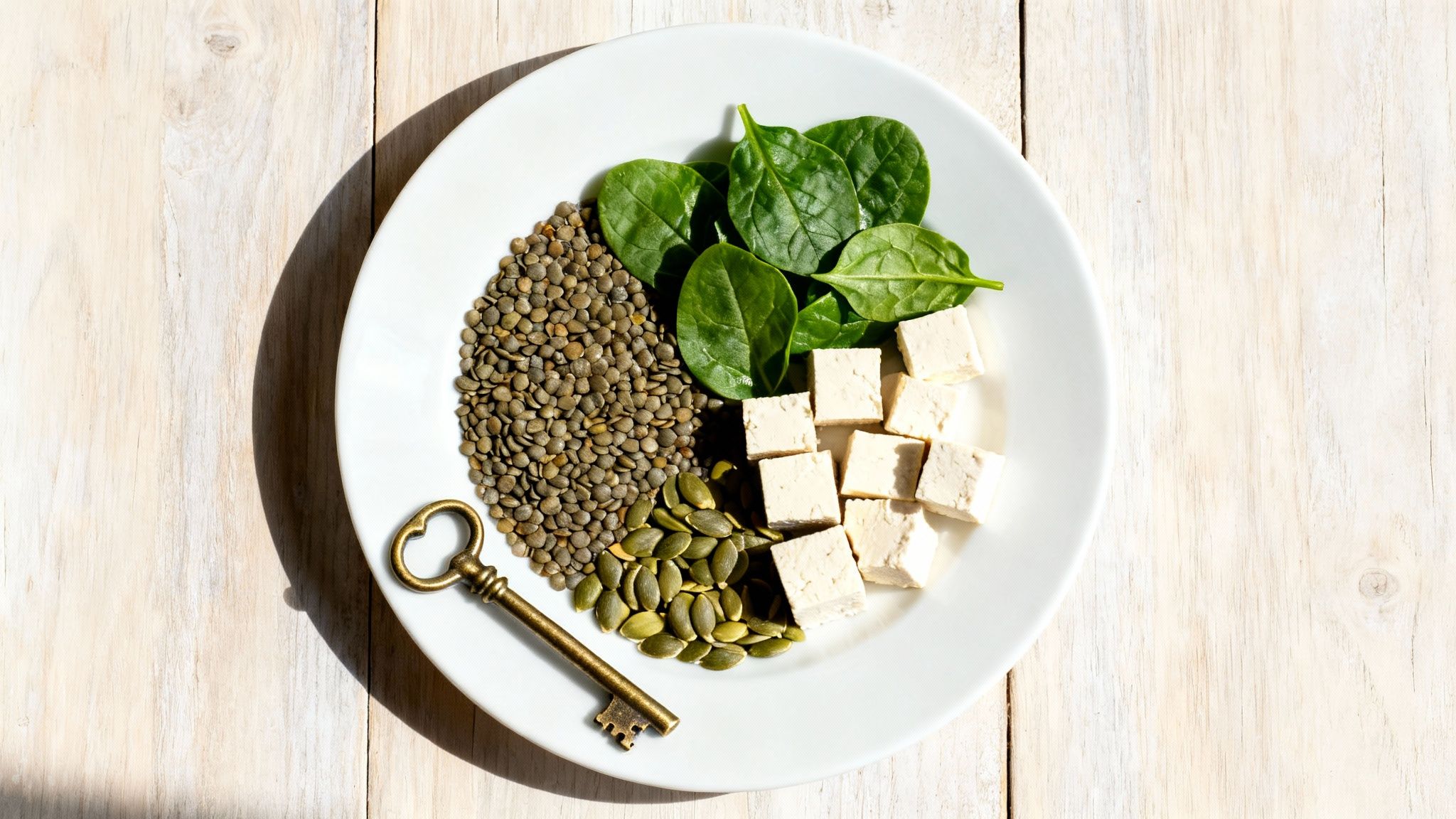
Think of plant-based iron sources as a locked treasure chest. The riches are certainly in there, but you need the right key to access them. That’s because not all iron is created equal, and your body handles the two main types very differently.
The Two Types of Dietary Iron
To really get why iron can be a challenge for non-meat-eaters, it helps to start by understanding what a plant-based diet entails. The whole puzzle boils down to something called bioavailability—a fancy way of saying how easily your body can actually absorb and use a nutrient from your food.
Here’s the breakdown of the two forms of iron:
- Heme Iron: You'll only find this in animal products like red meat, poultry, and fish. It’s like an express pass for your body—it’s highly bioavailable and gets absorbed easily without much fuss.
- Non-Heme Iron: This is the type found in plant foods like lentils, spinach, beans, and tofu. This one is more like a standard ticket; your body needs to put in a bit more work to process and absorb it.
This is exactly why vegetarians have to be more mindful of their iron intake. It’s not that plant foods lack iron—many are absolutely packed with it. The real trick is unlocking that iron so your body can put it to good use. Optimising your nutrition is a bit like teamwork, which you can read more about in our guide to vegan Omega-3 sources.
Why Vegetarians Need More Iron
Since non-heme iron is tougher for our bodies to absorb, health authorities actually recommend a higher daily intake for anyone on a vegetarian diet.
The Institute of Medicine suggests that vegetarians may need to eat up to 1.8 times more iron than meat-eaters just to make sure they’re absorbing enough to meet their needs.
Interestingly, UK studies have found that vegans often eat more total iron than both vegetarians and meat-eaters, clocking in at an average of 21.0 mg per day compared to 15.3 mg for vegetarians and 13.9 mg for meat-eaters. You can read the full research about these findings here. Even with this higher intake, the lower absorption rate means it's essential to stay on top of it.
This higher requirement really just calls for a proactive approach. Once you understand how non-heme iron works, you can start using strategies to boost its absorption and, if you need one, pick a high-quality vegetarian iron supplement to keep your energy and vitality exactly where you want them to be.
Boosting Your Iron Intake Through Smart Food Pairing
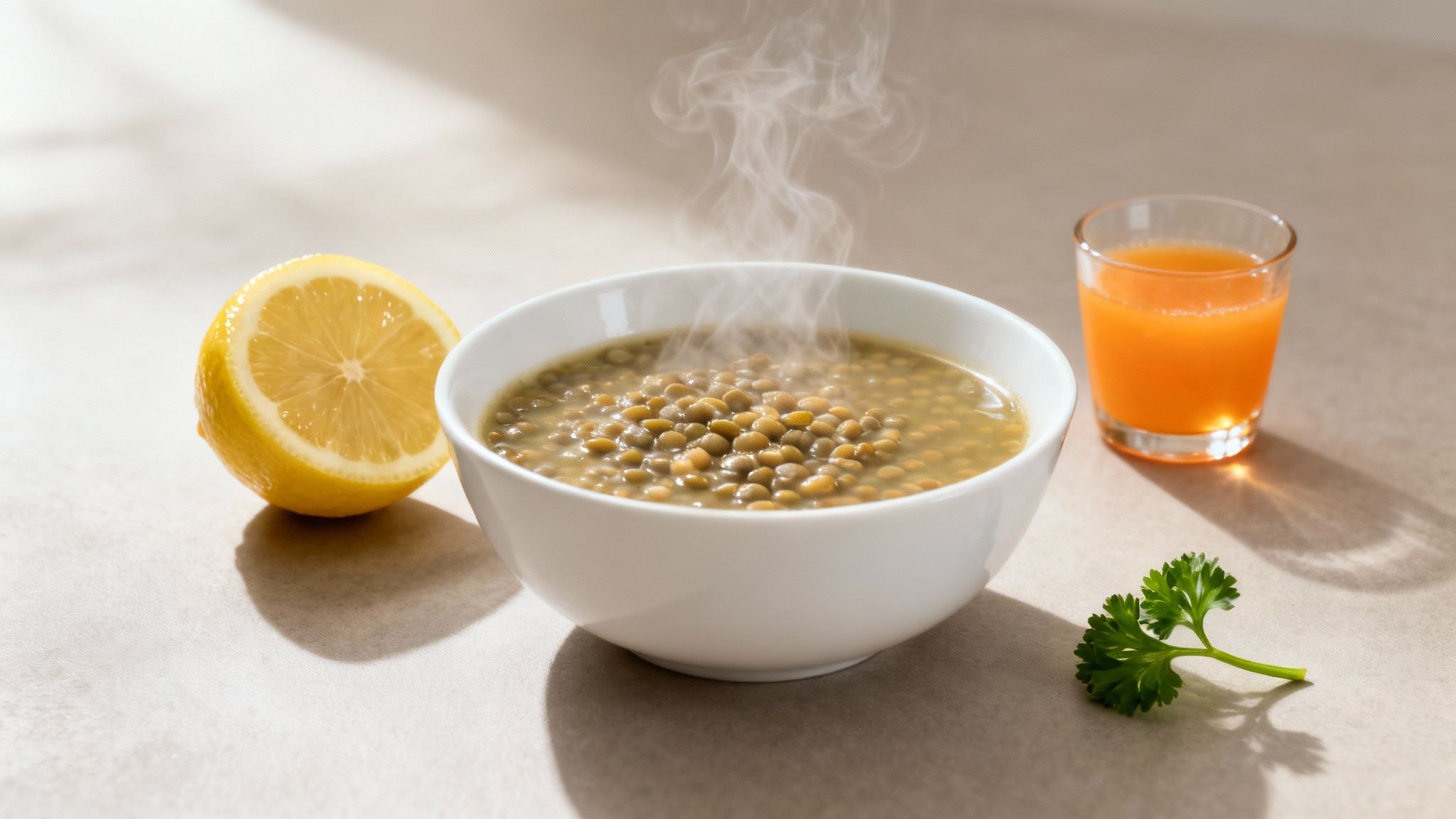
Before you even think about reaching for an iron supplement vegetarian diets sometimes call for, it’s worth taking a good look at what’s on your plate. Your diet is a seriously powerful tool for boosting iron levels, and the secret isn't just what you eat, but how you eat it. This is all about smart food synergy, where simple combinations can dramatically unlock the iron in your plant-based meals.
While plant foods like lentils, tofu, and spinach are packed with non-heme iron, this type of iron needs a bit of a helping hand to be absorbed properly. Think of it like a locked door – you have the key (the iron), but you need something to help turn it. Luckily, the 'something' is usually delicious and easy to find.
The Power of Vitamin C
Vitamin C is, without a doubt, the single most effective way to boost non-heme iron absorption. It’s a game-changer. When you eat them together, vitamin C grabs onto the iron and forms a compound that your body can absorb much more easily. In fact, some research has shown that adding just 100 mg of vitamin C to a meal can crank up iron absorption by a staggering 67%.
Getting that vitamin C boost is far easier than it sounds. Small, simple additions to your meals can make all the difference:
- Squeeze a lemon or lime over your lentil soup, bean chilli, or steamed greens.
- Throw some strawberries or kiwi into your iron-fortified morning porridge.
- Toss bell peppers (especially the red ones) into a tofu stir-fry or a dark leafy green salad.
- Enjoy a small glass of orange juice alongside your breakfast.
By making these simple pairings a habit, you’re actively helping your body get the most out of the iron already in your food.
The key takeaway is simple: every plant-based meal that’s rich in iron should also have a source of vitamin C. This one principle transforms your diet from just being iron-rich on paper to being effectively iron-rich in your body.
Navigating Iron Blockers in Your Diet
Just as some foods can give your iron absorption a leg up, others can get in the way. Learning to identify and manage these "iron blockers" is the other crucial piece of the puzzle. The main culprits are compounds that bind to iron in your gut, stopping your body from absorbing it.
The two most common blockers for vegetarians are:
- Tannins: These are polyphenols found in tea and coffee. They’re notorious for getting in the way of iron absorption, so having your daily cuppa with your meal can seriously reduce how much iron you actually get from it.
- Phytates (Phytic Acid): Found in whole grains, legumes, nuts, and seeds. While these foods are incredibly healthy and often loaded with iron themselves, the phytates they contain can interfere with its absorption.
This doesn't mean you need to ditch these healthy foods. Not at all. It's about being strategic with timing and preparation.
For a quick-reference guide, here's a breakdown of the key players that help or hinder your iron intake.
Maximizing Your Dietary Iron Absorption
| Nutrient/Compound | Effect on Iron Absorption | Food Sources | Practical Tip |
|---|---|---|---|
| Vitamin C | Enhances | Citrus fruits, bell peppers, strawberries, kiwi, broccoli, tomatoes | Squeeze lemon juice over a spinach salad or add bell peppers to your bean chilli. |
| Beta-Carotene | Enhances | Carrots, sweet potatoes, mangoes, apricots, dark leafy greens | Add shredded carrots or sweet potato to a lentil-based dish. |
| Tannins | Inhibits | Black tea, green tea, coffee, red wine | Wait at least an hour after your meal before having your tea or coffee. |
| Phytates | Inhibits | Whole grains, legumes, nuts, seeds | Soak beans and grains overnight before cooking. Sprouting them helps even more. |
| Calcium | Inhibits | Dairy products, fortified plant milks, tofu (set with calcium), supplements | If taking a calcium supplement, take it between meals rather than with your iron-rich food. |
Making these small adjustments can really add up, ensuring the iron on your plate actually makes it into your system where it's needed.
Actionable Tips to Minimise Iron Blockers
You can easily dial down the impact of these compounds with a few simple tweaks to your daily routine.
- Separate Your Tea and Coffee: Try to wait at least one to two hours after an iron-rich meal before you enjoy your tea or coffee. This gives your body a clear window to absorb the iron without any interference.
- Soak and Sprout: Soaking legumes, grains, and nuts before you cook them can significantly reduce their phytic acid content. Sprouting has an even more powerful effect, making the iron much more available to your body.
- Choose Fermented Foods: Sourdough bread, for instance, has lower phytate levels than standard whole-wheat bread because the fermentation process naturally breaks down the phytic acid.
By pairing iron-rich plants with vitamin C boosters and keeping iron blockers at a strategic distance, you can create a diet that naturally maximises your iron uptake. This food-first approach is the absolute foundation for maintaining healthy iron levels on a vegetarian diet.
Recognising the Subtle Signs of Low Iron
It’s incredibly easy to write off feeling constantly shattered as just a normal part of modern life. But that nagging lack of energy could be your body’s quiet way of sending up a flare. Learning to spot the common, often subtle, signs of low iron is the first real step towards fixing a potential deficiency before it spirals into a bigger problem.
These symptoms often creep up on you, making them all too easy to blame on stress or a few bad nights of sleep. When your iron levels drop, however, your body's ability to make haemoglobin—the protein in your red blood cells that ferries oxygen everywhere—is seriously hampered. Think of it as the delivery network for your entire body; with less iron, there are fewer trucks to carry vital oxygen to your tissues and muscles. No wonder everything starts to feel like an uphill battle.
Common Symptoms of Low Iron
The signs can be surprisingly wide-ranging, affecting everything from your energy levels to your appearance. While fatigue is the one everyone knows, it's far from the only clue.
Many people with low iron stores experience:
- Unexplained Fatigue: This isn't just feeling a bit sleepy. It’s a deep, bone-weary exhaustion that a good night's rest just doesn't seem to touch.
- Shortness of Breath: Find yourself getting winded after climbing a single flight of stairs or during a brisk walk? That's your body working overtime to circulate what oxygen-rich blood it has.
- Pale Skin: Haemoglobin is what gives blood its rich red colour, and in turn, gives your skin a healthy glow. Lower levels can lead to paleness, which is often most noticeable on the inside of your lower eyelids.
- Cold Hands and Feet: Poor oxygen circulation means less warmth reaches your extremities. This can leave your hands and feet feeling constantly chilly, even when you're tucked up in a warm room.
- Brittle Nails or Hair Loss: When your body is running low on oxygen, it has to prioritise. Vital organs get first dibs, meaning less is available for things like hair and nail growth. You might notice your nails becoming spoon-shaped or your hair thinning more than usual.
It's crucial to understand that these symptoms aren't random. They are the direct result of your body struggling to transport oxygen efficiently—a process absolutely fundamental to your energy and cellular health.
Why You Should Never Self-Diagnose
While it can be tempting to connect these dots and immediately reach for an iron supplement vegetarian formulas offer, this is where you need to pause. The symptoms of low iron can easily be mistaken for many other health conditions, from thyroid issues to a vitamin B12 deficiency.
What's more, taking high-dose iron supplements when you don’t actually need them can be harmful. Your body has no easy mechanism for getting rid of excess iron, so it can build up and cause a host of its own problems.
This is exactly why getting professional medical advice is non-negotiable. The most responsible next step is to book an appointment with your GP. They can have a proper chat about your symptoms, take your vegetarian diet into account, and order the right blood tests to get a clear, accurate picture of what’s really going on.
A standard test will check your haemoglobin, but a ferritin test is just as important. Ferritin is the protein that stores your iron, so checking its level is like checking the balance in your body’s iron savings account. It's one of the best indicators of your total iron stores and can flag a problem long before it develops into full-blown anaemia.
Having this informed conversation with a professional empowers you to take the right action. It ensures that if you do need a supplement, it’s the right one, at the right dose, for the right reason.
How to Choose the Right Vegetarian Iron Supplement
Walking down the supplement aisle can feel like a bit of an assault on the senses. With so many bottles promising to boost your energy and fix your fatigue, how do you pick the one that’s actually right for you? Choosing an iron supplement vegetarian diets demand doesn't have to be a guessing game. Armed with a little knowledge, you can cut through the noise and find a high-quality product that really works.
The goal here is simple: find a supplement that's effective enough to get your iron levels back on track but gentle enough that it doesn't wreak havoc on your digestive system. It’s all about looking past the flashy marketing on the front and getting to know what’s really inside the bottle.
This little decision tree can help you start thinking about whether your symptoms might be pointing towards low iron. But remember, it's just a starting point—always chat with a healthcare professional before making any decisions.
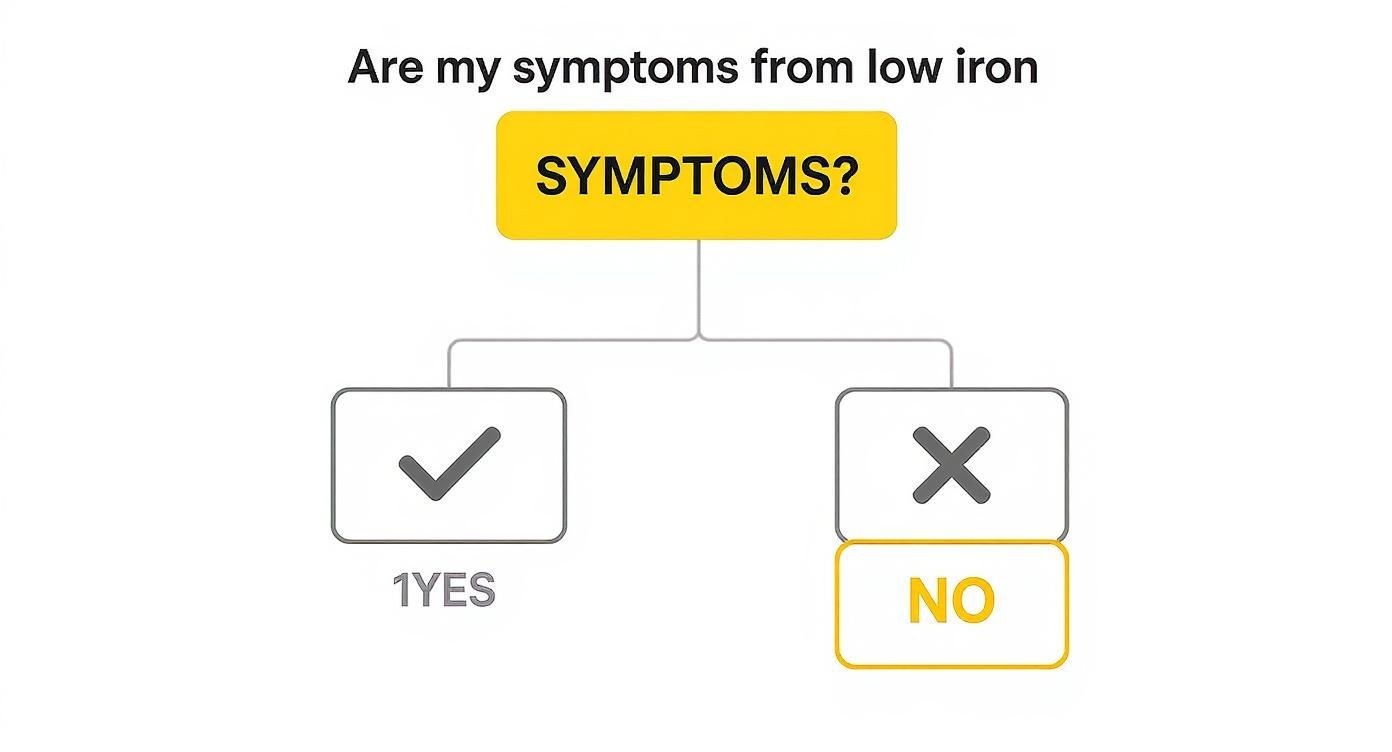
Think of the flowchart as that first nudge to pay attention to your body. A proper diagnosis from a professional is the only way to be sure about a deficiency.
Decoding the Different Forms of Iron
Let's get one thing straight: not all iron supplements are created equal. The specific form of iron in a supplement has a massive impact on how well your body absorbs it and, crucially, how likely it is to cause those dreaded side effects like constipation or an upset stomach.
For vegetarians and vegans, the main players are non-heme iron salts and chelated forms. Here are the most common types you’ll bump into:
- Ferrous Sulphate: This is the old-school, traditional form of iron. It’s widely available and cheap, but while it can be effective, it’s also the biggest culprit when it comes to digestive issues.
- Ferrous Fumarate: Much like ferrous sulphate, this is another common iron salt. It gets the job done but carries a similar risk of gastrointestinal discomfort for some.
- Iron Bisglycinate: Often marketed as 'gentle iron', this form is chelated. That just means the iron is bound to an amino acid (glycine), which cleverly protects it from absorption blockers in your gut. This makes it far easier on the stomach and much more bioavailable. For anyone with a sensitive system, this is usually the way to go.
To make it even clearer, let's break down the common options you'll find on the shelf.
Comparing Common Vegetarian Iron Supplements
This table gives you a quick snapshot of what to expect from the different iron forms available.
| Iron Form | Key Benefit | Potential Side Effects | Best For |
|---|---|---|---|
| Ferrous Sulphate | Inexpensive and widely available | High likelihood of constipation & nausea | People who aren't prone to digestive sensitivity |
| Ferrous Fumarate | Effective at raising iron levels quickly | Can cause stomach cramps and digestive upset | Short-term use under medical supervision |
| Iron Bisglycinate | High bioavailability and very gentle on the stomach | Minimal to no side effects for most people | Sensitive stomachs and long-term supplementation |
Ultimately, understanding these differences helps you choose a supplement that you'll actually stick with, which is the most important part!
How to Read Supplement Labels Like a Pro
Learning to read a supplement label is your superpower in the health aisle. The single most important thing to look for is the amount of elemental iron. This is the actual amount of pure, absorbable iron your body gets from each dose.
A label might boast a big number for "ferrous sulphate," but the elemental iron content will be a much smaller, more specific figure. Always hunt down the elemental iron number to know the true dose you're getting.
Beyond the dosage, here’s what else to keep an eye on:
- Vegan or Vegetarian Certification: Look for official logos from trusted organisations like The Vegan Society. This is your guarantee that everything—from the capsule to the ingredients—is free from animal products.
- Avoid Unwanted Fillers: Take a quick scan of the 'other ingredients' list. Top-tier supplements don't bulk out their products with unnecessary binders, artificial colours, or common allergens. A shorter, cleaner list is almost always a better sign.
- Helpful Co-Factors: Some of the best formulas include Vitamin C, which is a fantastic addition because it massively boosts non-heme iron absorption. You might also spot B vitamins like B12 and folate, which team up with iron to support healthy red blood cell production. Combining iron and B12 supplements can be a particularly smart move for anyone on a plant-based diet.
Making Your Final Choice
Once you’ve got your shortlist, it’s time to think about your personal needs. If you know you have a sensitive stomach, a gentle iron bisglycinate formula is probably your safest bet. If you hate swallowing pills, don't force it—a liquid or spray supplement could be a great alternative.
Don't forget the value of specialist advice. Popping into a dedicated organic health store can be really helpful. The staff are often very knowledgeable and can talk you through different brands in person.
Choosing the right vegetarian iron supplement is an investment in your health. By understanding the different forms, knowing what to look for on a label, and listening to your body, you can make a confident choice that will help you get back to feeling your absolute best.
Taking Your Iron Supplement for Maximum Results
So you've done your homework and picked out a great vegetarian-friendly iron supplement. Fantastic! But the job isn't quite done. The next step is making sure your body can actually use it. Think of this as the user manual for your new supplement; a few simple rules about timing can make a world of difference.
The classic advice is to take your iron on an empty stomach, about an hour before a meal or a couple of hours after. This gives the iron a clear runway for absorption without anything getting in its way.
Of course, some people find that iron, especially forms like ferrous sulphate, can be a bit rough on an empty stomach. If you feel any nausea or discomfort, it's absolutely fine to take your supplement with a small amount of food. The trick is being smart about what you eat with it.
The Power of Smart Pairing
Just like with the iron you get from food, giving your supplement the right partner can seriously boost its effectiveness. Vitamin C is iron’s best friend, helping to convert it into a form your body can absorb much more easily.
Putting this into practice is incredibly simple:
- Take your pill with a small glass of orange juice. It’s the classic, tried-and-tested method for a reason.
- Pair it with a vitamin C-rich snack. A handful of strawberries or a few slices of kiwi will do the trick nicely.
This tiny habit can dramatically increase the amount of iron your body actually gets from each dose, which means you'll start feeling better, sooner.
What to Avoid When Taking Iron
Just as important as what you take with your iron is what you don't. Certain foods and nutrients can act like roadblocks, latching onto the iron and preventing your body from absorbing it.
To get the most from your supplement, timing is everything. Spacing out your iron from known inhibitors by at least two hours allows your body to absorb it without interference.
This is a critical piece of the puzzle for making your iron supplement vegetarian protocol work. The main culprits to keep separate from your iron dose are:
- Calcium: This means dairy products, fortified plant milks, and of course, calcium supplements. Calcium and iron essentially compete for the same absorption pathways in your gut. If you're supplementing with both, try taking one in the morning and the other in the evening. You can learn more about juggling supplements by exploring if you can take vitamin D and iron together.
- Tannins: Found in tea and coffee, tannins are notorious for putting the brakes on iron absorption. Make sure that morning coffee or afternoon tea is at least two hours away from your iron pill.
- High-Fibre Foods: While brilliant for your health, taking your iron with a very high-fibre meal (like a big bowl of bran flakes) can sometimes get in the way of absorption.
Is Every-Other-Day Dosing Better?
Here's an interesting bit of new research. Some studies are now suggesting that, for certain people, taking iron every other day might actually be more effective than daily dosing. The thinking behind this is that an alternate-day schedule might stop the body from producing too much hepcidin, a hormone that can block iron absorption after a large dose.
This approach could be especially useful if you're on a higher therapeutic dose to correct a deficiency. It's a promising strategy that could reduce side effects while boosting overall absorption. As always, it’s best to have a chat with your doctor or healthcare provider before changing your dosing schedule to see if it’s a good fit for you.
Your Questions on Vegetarian Iron, Answered
Deciding to start an iron supplement is a big step towards getting your energy and wellbeing back on track, especially if you're following a plant-based diet. It’s completely normal to have questions before you begin.
Let's clear up some of the most common queries, so you can feel confident you're doing the right thing for your body.
How Long Until My Iron Supplement Starts Working?
Patience is key here. While you might start to feel a bit more energetic within a couple of weeks, that’s just the first sign things are moving in the right direction.
The real goal is to fully replenish your body’s iron stores—specifically your ferritin levels, which are like your body's iron savings account. Getting those back to a healthy range is more of a marathon than a sprint. For most people, it takes at least two to three months of consistent supplementation. Your GP will likely schedule a follow-up blood test around that time to see how you're getting on and decide if your dose needs tweaking.
Is a Vegetarian Multivitamin Enough to Fix Low Iron?
For keeping your levels topped up day-to-day, a good multivitamin might be perfectly fine. But when it comes to fixing a proper deficiency, it’s almost certainly not going to cut it.
The reason is simple: multivitamins contain a low, supportive dose of iron. They’re not designed to deliver the higher, therapeutic amount needed to rebuild seriously low stores. If a blood test has shown you’re low in iron or have anaemia, your doctor will recommend a dedicated, higher-dose iron supplement for vegetarians to get the job done properly.
Think of it like this: a multivitamin is like topping up the oil in your car during a routine check. A dedicated iron supplement is what the mechanic prescribes when the tank is running on empty and needs a full refill.
Are Liquid Iron Supplements a Better Choice?
Liquid iron can be a brilliant option, especially if you hate swallowing pills or find that traditional iron tablets upset your stomach.
They come with a few great benefits:
- Easier on the gut: Liquid formulas are often absorbed more quickly and can be much gentler on the digestive system, meaning less risk of common side effects like constipation.
- Better absorption: Many top brands use well-tolerated forms of iron (like iron bisglycinate) and mix them with natural vitamin C from fruit juices to give your body a helping hand with absorption.
At the end of the day, whether you choose a liquid or a pill comes down to personal preference, how your digestive system reacts, and the specific dose your healthcare provider has suggested.
What Happens If I Take Too Much Iron?
While iron is absolutely vital for health, it's one of those minerals where more is definitely not better. Your body doesn’t have an easy way to get rid of excess iron, so taking too much can lead to a harmful condition called iron overload.
This is exactly why you should never start taking iron supplements without a blood test confirming you need them and a doctor's guidance. Always stick to the prescribed dose and be sure to keep all supplements safely out of the reach of children. Having a professional oversee the process ensures you get all the benefits of fixing a deficiency, without any of the risks.
This article is for informational purposes only and is not medical advice. Always consult a qualified health professional before starting any new supplement or major lifestyle change.