

Methylated B Vitamins Side Effects: What You Need to Know
Methylated B vitamins are generally well tolerated, but side effects can occur, especially with high doses, certain genetic variants, or medication interactions. In controlled L-methylfolate trials, gastrointestinal events occurred in 20.1% of placebo users versus 9.6% and 10.0% in the two L-methylfolate groups.
That can feel confusing if you've just replaced a standard multivitamin with a methylated B-complex and suddenly notice restlessness, nausea, a racing feeling, or disrupted sleep. The label may say “active,” “bioavailable,” or “methylated,” but those terms don't guarantee that a particular dose or formula will suit your nervous system, digestion, genetics, or current medicines.
The practical question isn't whether methylated B vitamins are universally good or bad. It's who reacts, why they react, and how to adjust without overlooking a genuine deficiency or medical problem.
Why Methylated B Vitamins Sometimes Cause Side Effects
A health-conscious adult might make the switch after reading that methylated vitamins are easier for the body to use. The new B-complex seems like a sensible upgrade. Within a few days, though, they notice mild stomach upset after breakfast, feel unusually restless in the afternoon, or lie awake longer than usual.

That experience doesn't automatically mean the supplement is dangerous. It may mean the formula delivers more folate or B12 than the person needs, combines several stimulating ingredients, or doesn't fit their individual tolerance. A person can also blame methylated B vitamins for a symptom caused by caffeine, poor sleep, an antidepressant, a digestive condition, or another supplement started at the same time.
The dose and the person both matter
Methylated forms can feel more noticeable because they provide forms involved directly in folate and B12 metabolism. That doesn't make them naturally unsafe, but it does make dose selection and timing important. Someone who is sensitive to high-potency formulas may notice symptoms sooner than someone taking a lower-dose, balanced product.
Genetic variation can also influence how people process folate. An MTHFR variant may affect folate handling, but a genetic result alone doesn't tell you which supplement, dose, or combination you need. Symptoms should be considered alongside diet, laboratory results, health history, and medication use.
Practical rule: A new symptom after a new supplement is a reason to review the whole formula and the timing, not proof that methylated vitamins are harmful.
Most mild reactions are manageable when the suspected product is paused or adjusted with professional guidance. Persistent symptoms, severe reactions, or symptoms involving breathing, swelling, fainting, or neurological changes need medical attention rather than trial-and-error supplement changes.
What Methylated B Vitamins Are
“Methylated” describes a chemical form of a vitamin that carries a methyl group. The two label names most relevant here are methylfolate, an active form of folate, and methylcobalamin, an active form of vitamin B12.
Standard folic acid and cyanocobalamin require conversion steps before the body can use them, while methylfolate and methylcobalamin are already in coenzyme forms used in folate and B12 metabolism. This difference can make a high dose feel more potent for some people, so dose selection matters more than a product's “active” or “advanced” wording.

How to read the label
Check the specific forms of folate and B12 rather than relying on the words “B-complex.” A formula may contain folic acid, methylfolate, cyanocobalamin, or methylcobalamin. It may also include several B vitamins in high amounts, caffeine, herbs, or other ingredients that affect tolerance.
Methylfolate and methylcobalamin can suit someone seeking an active folate or B12 form, but the label alone cannot establish that supplementation is needed. Diet, relevant blood tests, symptoms, health history, and current medicines provide better guidance than choosing the strongest-sounding formula. Personalised advice can also identify whether a lower dose, a different form, or no supplement is the safer choice.
The science-backed anti-aging supplement resource from Longevity Medical Institute provides broader context for supplement selection beyond one vitamin. It is general information, not a personalised diagnosis or a reason to combine multiple products.
Focus Powder (Sour Candy) illustrates why the full ingredient list matters. It contains methylcobalamin with folic acid, other B vitamins, natural caffeine from green tea, L-theanine, Alpha-GPC, and Asian ginseng. Someone who feels wired after using it should review the complete formula rather than attribute the response to B12 alone.
For clearer terminology, see this guide to methylated B vitamins. Methylated forms may be useful, but higher bioavailability does not remove the need for appropriate dosing and individual guidance.
Common Methylated B Vitamins Side Effects and How to Spot Them
A person may feel tense, nauseated, or unusually alert soon after starting a high-potency methylated B-vitamin product. The first step is to record the product, dose, timing, food, medicines, and other supplements used that day. A symptom that starts soon after the product and improves after stopping it calls for a different response from one that remains unchanged.
Digestive symptoms
Possible gastrointestinal reactions to methylcobalamin include anorexia, diarrhea, nausea, and vomiting, as well as headache and other effects. The methylcobalamin safety reference describes methylcobalamin as generally low risk, while recognising that individual reactions can occur. Sweeteners, acids, caffeine, or other ingredients in a B-complex may also explain digestive discomfort.
Methylfolate may cause digestive complaints such as diarrhea. Taking the supplement with food can improve tolerance for some people. It will not correct an excessive dose or make an unsuitable formula appropriate.
Nervous system sensitivity
Some users report unusual alertness, tension, restlessness, or headache after taking a methylated B-complex. Those symptoms can also reflect caffeine, poor sleep, anxiety, dehydration, or another stimulant. Review the entire formula and the timing of symptoms before assigning the reaction to methylfolate or methylcobalamin alone.
A single-ingredient product can make that assessment easier than a high-potency blend. Reducing the dose, changing the timing, or stopping the product may clarify whether the supplement is contributing, but persistent or severe symptoms warrant medical advice.
Skin, sleep, and mood changes
Rash is an uncommon recognised reaction associated with L-methylfolate use, and rare hypersensitivity has also been reported. Sleep disruption, irritability, or a marked mood change deserves attention, especially when the product contains caffeine or other activating ingredients. Stop and seek prompt advice for facial swelling, breathing difficulty, widespread rash, or other signs of a serious allergic response.
Prescription-dose L-methylfolate has been studied at 7.5 mg and 15 mg per day in major depressive disorder trials. The controlled studies found gastrointestinal and somatic events less often with L-methylfolate than with placebo, while psychological events were also less frequent in one comparison. The review of L-methylfolate adjunctive therapy supports good tolerability in those controlled settings, but prescription findings do not establish that every over-the-counter blend will suit every user.
A mild, short-lived change may indicate intolerance. A worsening symptom, allergic reaction, or major mood change needs professional review.
Methylated B Vitamins vs Standard Synthetic B Vitamins
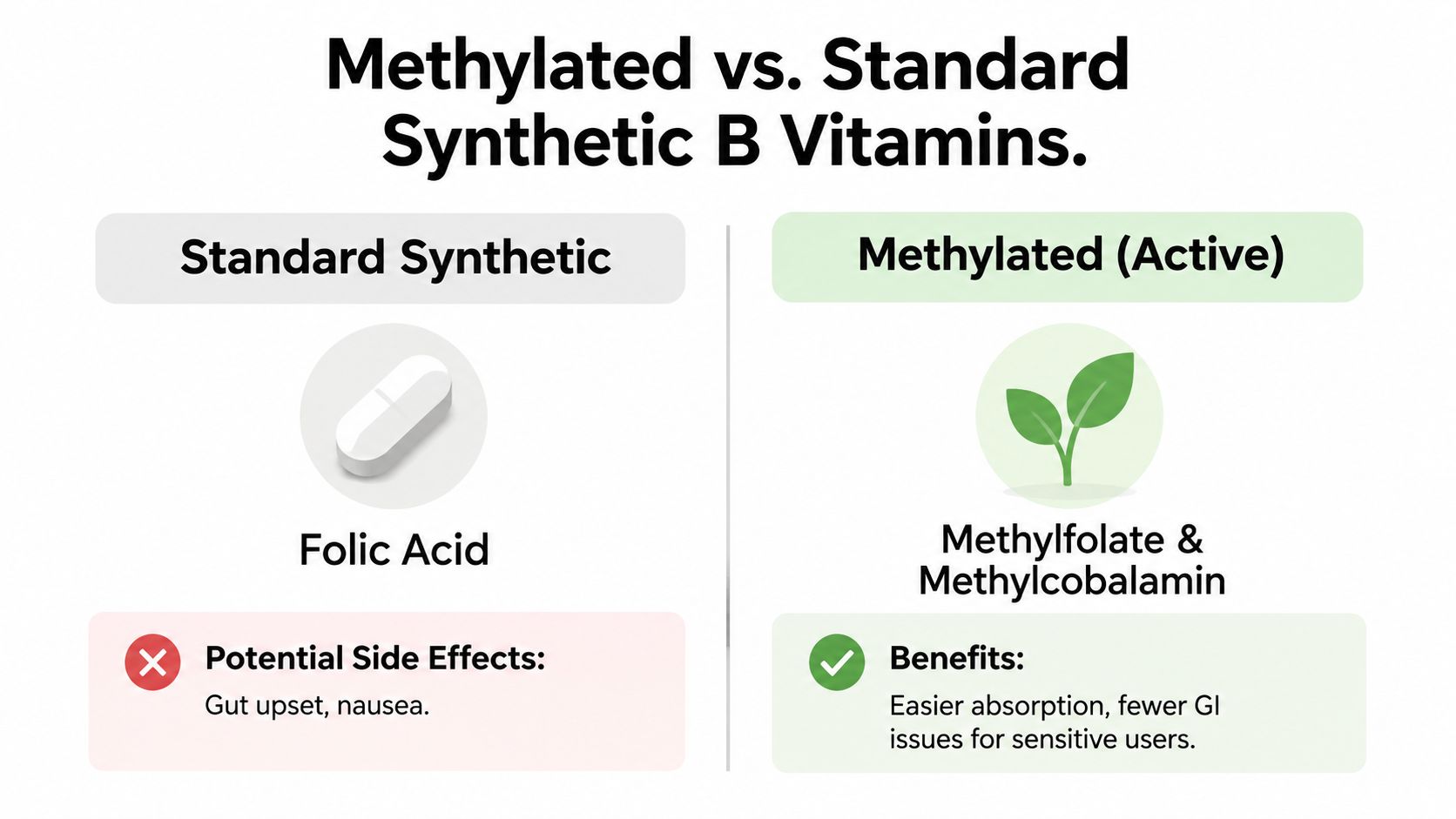
Methylated and standard forms aren't best understood as “safe” versus “unsafe.” They represent different ways of supplying folate or B12, and the better choice depends on the individual's needs, tolerance, diet, and medical context.
Some people may prefer methylated forms because they want methylfolate or methylcobalamin on the label. Others may feel more comfortable with a non-methylated or lower-dose formula because active forms seem too noticeable. A person can also tolerate one form of B12 and not another, or tolerate a single vitamin but react to a large B-complex containing several high-potency ingredients.
A practical comparison
| Consideration | Standard forms | Methylated forms |
|---|---|---|
| Label examples | Folic acid or other conventional forms | Methylfolate and methylcobalamin |
| Possible advantage | May feel less intense for some sensitive users | Provides active forms used in folate and B12 metabolism |
| Possible drawback | May not be the preferred form for every person | Can feel too stimulating or uncomfortable for some users |
| Best decision point | Individual tolerance and clinical context | Individual tolerance, dose, and clinical context |
The label alone can't predict side effects. A lower dose of a methylated form may be easier to tolerate than a high-dose standard formula, while a balanced conventional product may suit someone better than an aggressive “activated” blend.
B12 is especially easy to misinterpret because products may use different forms and doses. This vitamin B12 supplement guide can help readers compare the label before adding another product.
The useful question isn't which category wins. It's which form provides an appropriate amount without creating symptoms that make the routine unsustainable.
Who Is Most Likely to Experience Side Effects
Side effects can affect anyone, but some situations deserve closer attention before starting a methylated B-vitamin product.
People with an MTHFR variant often search for methylfolate because they believe it will solve a processing problem. A variant may influence folate metabolism, but it doesn't establish a deficiency or prove that a high-dose methylated product is needed. Anyone considering genetic testing can discuss MTHFR gene mutation screening with a qualified clinician, then interpret the result alongside symptoms and laboratory findings.
Higher-attention groups
- People using high-potency B-complexes: A product containing several concentrated B vitamins may create more noticeable effects than a single, modest-dose supplement.
- People who are sensitive to stimulating ingredients: Caffeine, green tea extract, or other activating ingredients can look like a reaction to methylated B vitamins.
- People taking prescription medicines: Medication changes the risk calculation. A pharmacist or prescriber should review the full list before supplementation.
- Pregnant people or those who could become pregnant: Folate guidance in this group is specific. The NIH folate fact sheet states that women and teen girls who could become pregnant should obtain 400 mcg per day of folic acid, including those with an MTHFR C677T variant. This recommendation is tied to neural tube defect prevention, not merely to absorption.
- People with possible B12 deficiency: High folate can correct the blood-related signs of deficiency while neurological injury from untreated B12 deficiency continues. That makes unexplained tingling, balance problems, weakness, memory changes, or unusual fatigue a reason to seek evaluation rather than just adding more folate.
A genetic variant isn't a reason to avoid B vitamins, and it isn't a reason to self-prescribe large amounts. It is one piece of information that may support a more careful choice of form and dose.
Medication and Supplement Interactions That Increase Risk
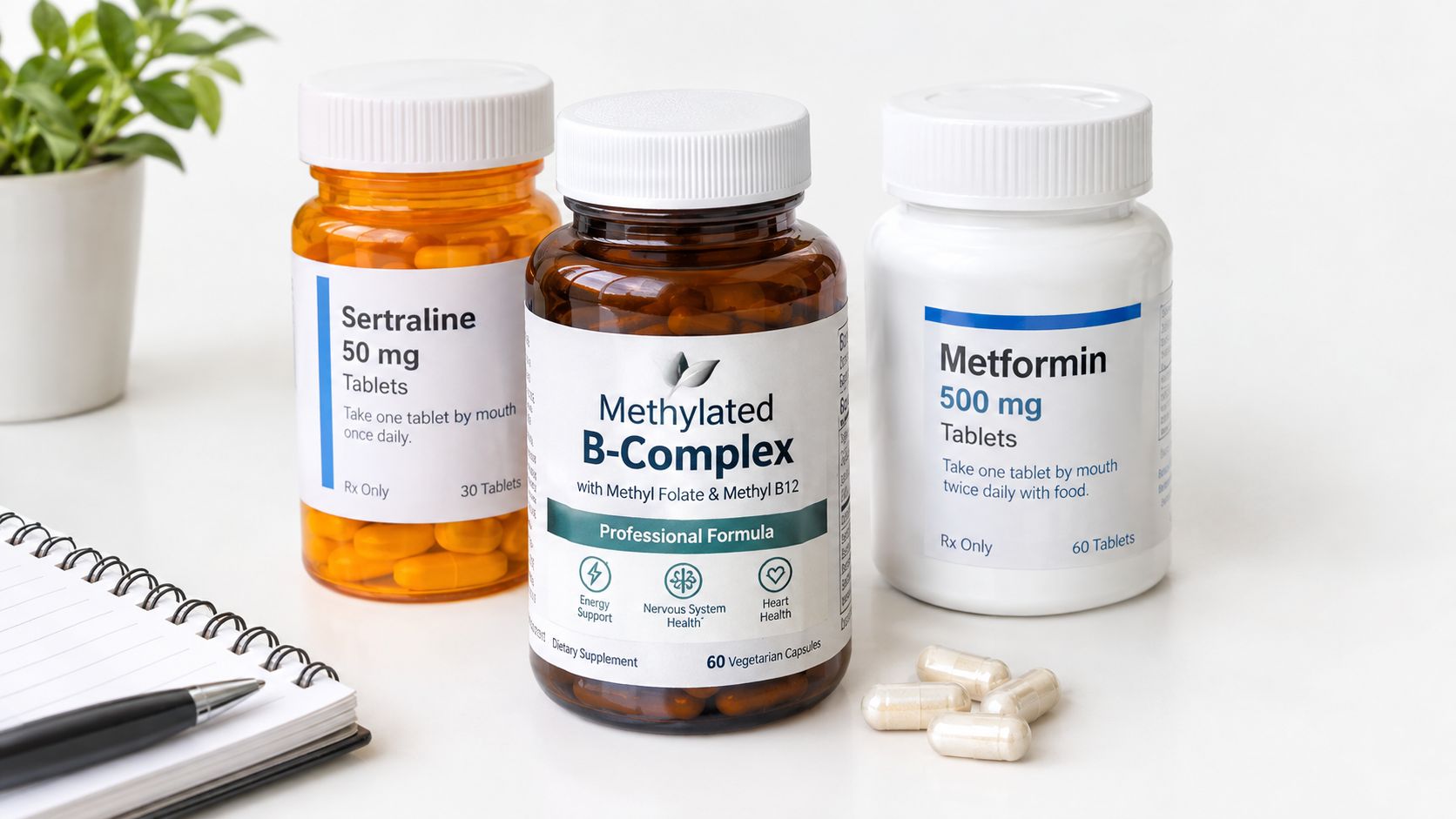
A supplement review should include every prescription, over-the-counter product, energy powder, and fortified food that contributes B vitamins. The issue isn't always a dangerous interaction. Sometimes two products duplicate ingredients, or a medicine and supplement create symptoms that are difficult to distinguish.
People taking antidepressants, seizure medicines, or metformin should ask a prescriber or pharmacist to review a proposed B-vitamin routine. The same applies to anyone combining a B-complex with high-dose zinc, extra B6, a multivitamin, or a cognitive formula. Don't stop a prescribed medicine to test a supplement theory.
Check the complete stack
Write down the product name, serving size, form of folate and B12, time taken, and any symptoms. Include coffee, pre-workout products, and energy powders. This often reveals that the perceived “methylation reaction” started after several activating ingredients were introduced together.
High folic acid intake has been associated with symptoms including diarrhea, nausea, abdominal cramps, bloating, gas, rash, insomnia, irritability, excitability, and mood-related changes. A recent review of these reactions explains that they are associated with high amounts rather than typical doses, as described in the peer-reviewed folic acid review.
Zinc and B6 deserve their own review because people often add them separately to an already full-featured formula. More isn't automatically better, and a symptom that appears after stacking products may disappear when the unnecessary duplicate is removed.
Bring the actual bottles or full ingredient panels to the medication review. Memory is unreliable when several products use similar names.
How to Reduce Side Effects and Use Methylated B Vitamins Safely
A safer methylated B-vitamin routine begins with a clear reason for taking it. Are you correcting a documented deficiency, filling a dietary gap, or hoping a high-potency formula will improve energy? Each purpose calls for a different level of caution, especially if you have reacted to supplements before.
Use a controlled trial
- Change one thing at a time: Starting a methylated B-complex alongside magnesium, an energy powder, and an herbal product makes the cause of any new symptom difficult to identify.
- Choose a modest serving: Follow the product label, then ask a clinician whether the full serving suits your diet, medical history, and current routine. A lower amount may be more practical for someone with high sensitivity.
- Take it earlier: Some formulas feel activating. Taking one late in the day may worsen sleep, so an earlier dose can help establish whether timing contributes. Persistent insomnia needs professional review rather than indefinite self-management.
- Track the response: Record the product, serving, time, food, caffeine, sleep, and symptoms. A repeated pattern is more useful than a single unusual sensation.
- Review alternatives: A non-methylated form, a single nutrient, or no supplement may suit your needs better than a methylated blend.
Use the same measured approach with methylcobalamin. It is generally considered low risk, although reported reactions include anorexia, diarrhea, headache, nausea, and vomiting. These effects are usually mild and infrequent, but individual sensitivity and higher doses can change the balance between potential benefit and discomfort.
Personalised guidance can match the form and dose to your goals, diet, symptoms, and existing routine. It can also identify overlapping ingredients before they create confusion. The guide to which vitamins should not be taken together offers a practical reference when several products are part of the same routine.
The aim is deliberate use, not fear. Choose the simplest suitable product, introduce it carefully, and reassess symptoms that continue instead of repeatedly increasing or changing supplements.
When to Stop and Seek Medical Advice
Stop self-directed experimentation and seek prompt medical advice if you develop facial or throat swelling, trouble breathing, fainting, severe rash, chest symptoms, severe vomiting, or a sudden neurological change. These signs can indicate an allergic reaction or another medical problem and shouldn't be dismissed as a normal adjustment.
Arrange a professional review for persistent diarrhea, repeated headaches, ongoing insomnia, marked agitation, significant mood changes, tingling, weakness, balance problems, or memory changes. Those symptoms may reflect a supplement reaction, a medication issue, an underlying deficiency, or an unrelated condition. A clinician can decide whether testing, a dose change, or a different form is appropriate.
Pregnancy, breastfeeding, diagnosed medical conditions, planned surgery, and regular prescription medicines all justify checking before starting or changing a methylated B-vitamin routine. People with suspected B12 deficiency should be especially careful about taking folate alone because correcting blood abnormalities can allow neurological damage to continue unnoticed.
A personalised supplement service can help organise goals, diet, sleep, stress, exercise, digestion, and current products before making a recommendation. It can't diagnose disease, replace a pharmacist, or override advice from a qualified health professional.
VitzAI.com offers a personalised supplement quiz that uses details such as your goals, diet, energy, sleep, stress, exercise, fish intake, and digestion to suggest a curated plan. Visit VitzAi.com to review your options before adding another high-potency B-vitamin product.
This article is for informational purposes only and is not medical advice. Always consult a qualified health professional before starting any new supplement or major lifestyle change.