

Top Guide: What Vitamins Should Not Be Taken Together and How to Pair Safely
When it comes to getting the most out of your supplements, timing really is everything. Taking certain vitamins and minerals together, like iron and calcium or vitamin C and vitamin B12, can sometimes do more harm than good. They can end up competing for absorption in your body, which ultimately reduces how effective they are. The simple fix? Just space them out by at least two hours to give your body a chance to properly use each one.
Your Quick Guide to Smart Supplement Pairing
So you've invested in your health, picking out what you need—maybe a good multivitamin, some omega-3s, or magnesium. But here’s something you might not know: when you take them can be just as important as what you're taking. If you pop certain vitamins and minerals at the same time, they can get into a bit of a scuffle for absorption, meaning you might not be getting the full benefits you paid for.
Think of it like trying to squeeze two people through a single doorway at once. It’s awkward, inefficient, and one of them is probably getting left behind. It’s a similar story inside your body. Minerals like calcium, iron, and zinc often use the exact same pathways to get absorbed. Take them together, and they're essentially battling for the same spot, and one nutrient usually loses out.
Understanding Common Nutrient Conflicts
This isn't just a tiny issue; it can seriously throw a spanner in the works for your health goals. Let's say you're taking iron to boost your energy levels and calcium for bone health. If you take them at the same time, the calcium can slash iron absorption by as much as 50-60%. Suddenly, your efforts to feel more energetic are being unintentionally sabotaged. Getting your head around these basic interactions is the first step to building a smarter, more effective supplement routine.
This handy infographic breaks down the most common conflicting pairs, explaining why they don't get along and offering simple timing tricks to sort it out.
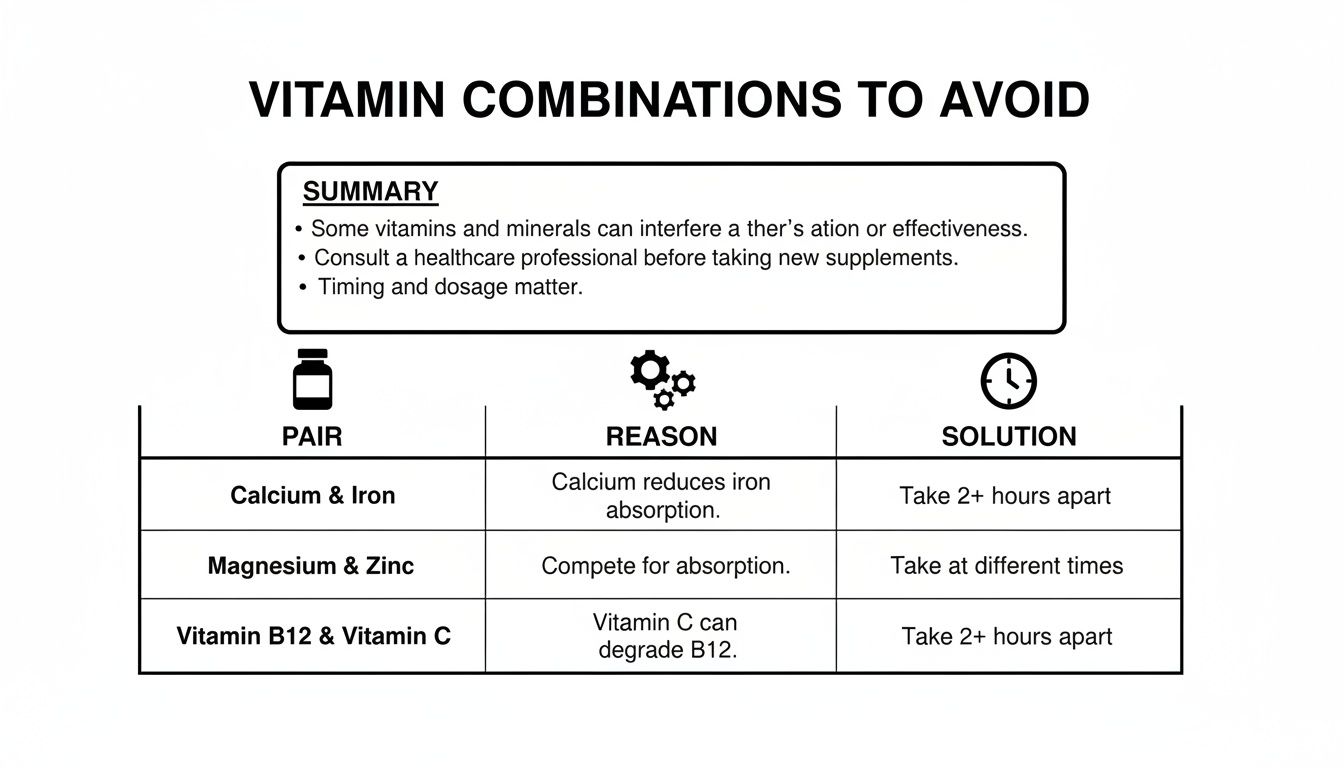
As you can see, most of these negative interactions are surprisingly easy to sidestep. It often just comes down to spacing out your supplements by a few hours or taking them with different meals.
To give you a clear, at-a-glance reference, we've put together a simple table outlining the key pairs to keep separate.
Common Supplement Pairs To Avoid Taking Together
| Conflicting Pair | Reason for Interaction | Solution |
|---|---|---|
| Calcium & Iron | Calcium significantly blocks iron absorption. | Take at least 2-4 hours apart. Iron is best in the morning on an empty stomach; take calcium with lunch or dinner. |
| Iron & Zinc | These minerals compete for the same absorption pathways. | Take zinc with a meal and iron on an empty stomach, separating them by at least 2 hours. |
| Vitamin C & B12 | High doses of Vitamin C can degrade Vitamin B12. | Wait at least 2 hours after taking Vitamin C before you take your B12 supplement. |
| Copper & Zinc | High doses of zinc can interfere with copper absorption over time. | If supplementing both long-term, ensure they are balanced or take them at different times of the day. |
| Vitamin E & K | High doses of Vitamin E may interfere with blood clotting, counteracting Vitamin K. | Take with different meals or consult your doctor if you're on blood thinners. |
This table is a great starting point, but remember that a truly effective supplement plan looks at your entire wellness routine.
Beyond Vitamins: A Holistic Approach
The principles of smart pairing aren't just for vitamins and minerals. To really get things right, you need to think about how everything fits together. For instance, smart supplement pairing is just as relevant when you're finding the best protein powder to support your fitness goals, as some protein sources can affect mineral absorption.
The goal is to create synergy, not conflict. A well-timed supplement schedule ensures every nutrient you take can perform its specific job without interference, leading to better outcomes for your energy, cognitive performance, and long-term health.
By learning which vitamins should not be taken together, you empower yourself to move beyond just taking supplements to strategically using them. This one small adjustment can make a massive difference in how you feel and perform every single day. In the sections that follow, we'll dive a bit deeper into the science behind these interactions.
Why Some Vitamins And Minerals Just Don't Mix
Ever wondered why taking a few different supplements at once might not be the best idea, even if they’re all good for you on their own? It’s a common question, and the answer has less to do with the vitamins themselves and more to do with how our bodies actually absorb them. It all boils down to the incredibly complex, highly organised system working away inside your gut.
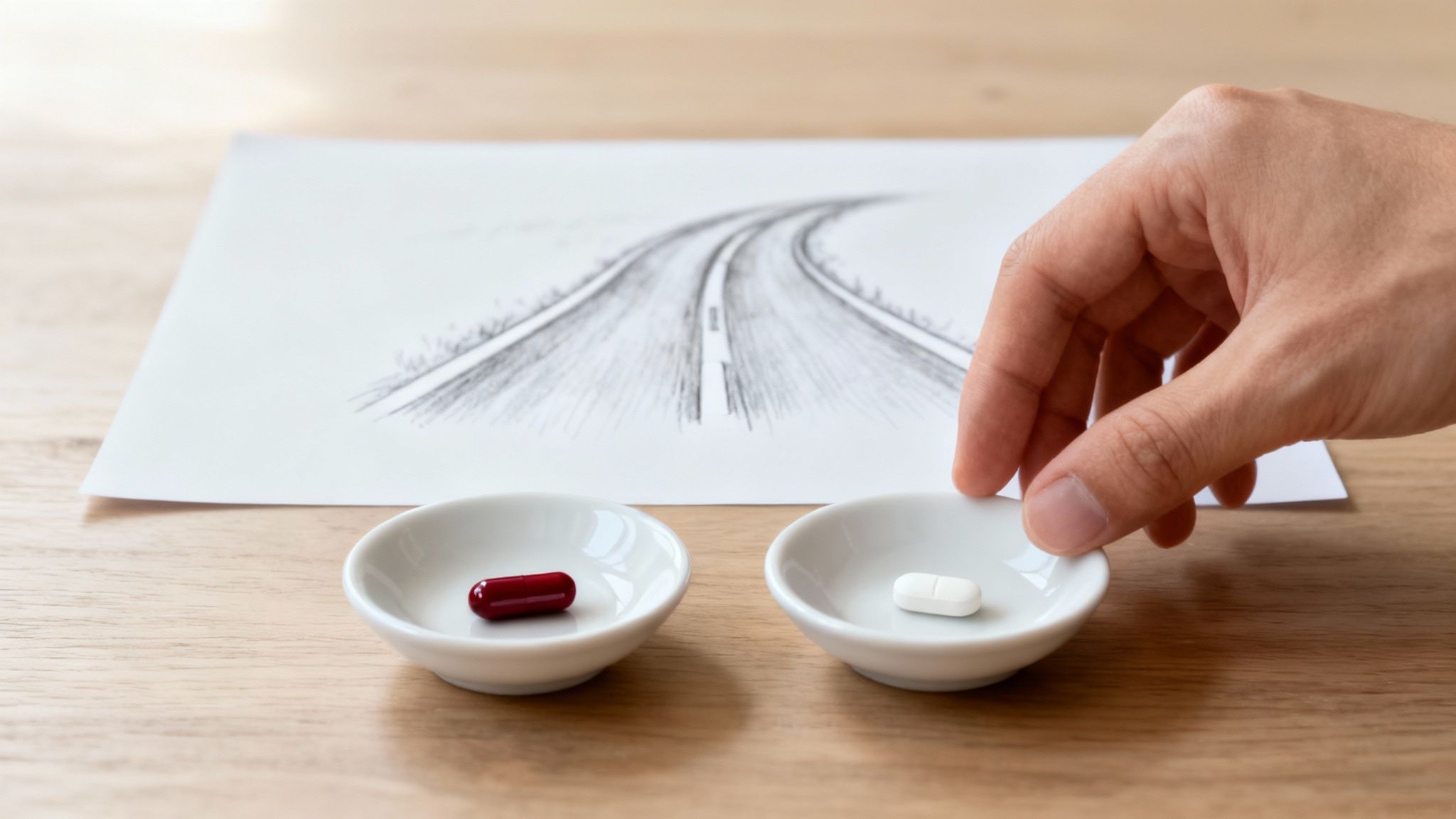
Picture your digestive system as a busy motorway with a limited number of lanes. Each of these lanes is a specific pathway that nutrients use to get into your bloodstream. Now, if too many different nutrients try to merge into the same lane all at once, you get a classic traffic jam. Some might squeeze through, but others are left idling or get rerouted, never making it to their final destination.
This biological gridlock is a major reason why some vitamins and minerals shouldn't be taken together. They end up in a head-to-head battle for the same absorption sites, a process known as competitive absorption.
The Battle For Absorption Pathways
Minerals are the usual suspects in this nutrient rivalry. Certain minerals like calcium, iron, magnesium, and zinc are quite similar chemically. Because of this, they often have to use the exact same protein transporters to travel from your gut into your body. When you take high doses of these minerals at the same time, they’re all fighting for a seat on the same bus.
Inevitably, one mineral will push the others out of the way – usually whichever one is present in the larger amount. The body ends up prioritising the more abundant nutrient, leaving the other one behind to be flushed out without ever being used. This is why knowing which vitamins should not be taken together is so crucial for anyone wanting to get the most out of their supplement routine.
Take calcium, for example. It’s a known bully in the mineral world. It can significantly block the absorption of iron, a mineral that’s absolutely vital for energy and producing red blood cells. So, if you’re taking an iron supplement to beat fatigue but you wash it down with a glass of milk or a calcium pill, you could be accidentally cancelling out most of the benefits.
This is a particularly big deal in the UK, where recent studies show widespread nutrient gaps. For instance, NHS guidelines highlight that calcium can block iron uptake by as much as 50-60% when they're taken together.
Chemical Interactions And Degradation
It's not just about competing for the same pathways. Some vitamins can chemically interfere with each other, too. This is less like a traffic jam and more like one nutrient actively dismantling another before it even gets a chance to be absorbed.
A classic example is the clash between high doses of Vitamin C and Vitamin B12. Vitamin C, a powerful antioxidant, can actually degrade the structure of Vitamin B12 right there in your digestive tract. Take a large dose of Vitamin C at the same time as your B12, and you might not absorb the full amount of this essential B vitamin, which is so important for your nerves and energy levels.
The key takeaway is that your body isn't a simple container where you can just pour in nutrients and expect them all to work. It’s a dynamic, competitive environment where timing and pairing are everything.
Fat-Soluble Versus Water-Soluble Vitamins
Finally, the very nature of vitamins dictates how you should take them. They generally fall into two categories, and mixing them up without thinking can lead to poor absorption.
- Fat-Soluble Vitamins (A, D, E, K): These guys need dietary fat to be absorbed properly. If you take them on an empty stomach, they have nothing to latch onto and will likely pass straight through your system without doing much good.
- Water-Soluble Vitamins (B-Vitamins, Vitamin C): These dissolve in water and are usually best absorbed with a glass of water, often on an empty stomach. Taking them with a heavy, fatty meal can sometimes slow down their absorption.
Understanding these fundamental mechanisms is the first step toward building a smarter, more effective supplement strategy. It’s not just about what you take, but how and when you take it to avoid these common nutrient conflicts.
The Most Common Vitamin Combinations To Avoid
Right, now that we’ve covered the why behind nutrient interactions, let's get into the specifics. Knowing exactly which supplements don't play well together is the secret to building a routine that actually works. We'll break down the most common problematic pairings and give you simple, practical advice to make sure every capsule counts.

High-Dose Zinc And Copper
Think of zinc and copper as two siblings who need their own space. They’re both essential minerals, but they compete for the same absorption pathways in your small intestine. When you take high doses of zinc over a long period, you can accidentally elbow copper out of the way, leading to a deficiency.
This happens because too much zinc triggers your body to produce a protein called metallothionein. This protein is a bit too enthusiastic—it binds tightly to copper and stops your body from absorbing it. A copper deficiency isn't something to take lightly; it can lead to anaemia, a weakened immune system, and even neurological issues. It’s a huge consideration if you’re using zinc for immune support or hormone balance.
- The Problem: High-dose zinc (over 40 mg daily) effectively blocks copper from being absorbed.
- The Solution: If you’re taking zinc long-term, choose a supplement that includes a balanced amount of copper (around 2 mg is a good rule of thumb). Otherwise, just take them at different times of the day, with at least a two-hour gap between them.
Iron And Calcium The Classic Conflict
This is probably the most famous rivalry in the supplement world. As we touched on earlier, calcium is a major bully when it comes to iron absorption. Whether it’s from a glass of milk, a calcium supplement, or fortified cereal, it can seriously slash the amount of iron your body takes in.
It’s a straightforward competition. The calcium ions physically get in the way, preventing iron from passing through the intestinal wall into your bloodstream. Even a moderate amount of calcium (300-600 mg) can cut iron absorption by up to 50%. This is a huge deal for anyone taking iron to combat fatigue or anaemia. You can dive deeper into how minerals like these interact by reading our guide on whether you can take vitamin D and iron together.
- The Problem: Calcium directly gets in the way of iron absorption.
- The Solution: Take your iron supplements at least two hours apart from any calcium-rich meals or supplements. For best results, take iron on an empty stomach with a splash of vitamin C, like a small glass of orange juice, to give it an absorption boost.
Fat-Soluble Vitamins A, D, E, And K
Vitamins A, D, E, and K are the fat-soluble crew. This means your body needs some dietary fat to absorb them properly. While you can generally take them together without issue, problems can arise if you start taking mega-doses of one.
For example, taking very high amounts of vitamin E can interfere with how your body uses vitamin K, which is essential for blood clotting. In the same way, an excess of vitamin A can mess with vitamin D’s work in maintaining strong bones. The moral of the story is that balance is key—avoid massive doses unless a healthcare professional has specifically told you to take them.
Smart supplementation isn’t just about dodging direct conflicts. It’s about creating the right conditions for each nutrient to do its job. For the fat-soluble vitamins, that means taking them with a meal that contains healthy fats like avocado, nuts, or olive oil.
This gives them the ‘taxi’ they need to get from your gut into your system, so you’re not just wasting your money.
Vitamin B12 And High-Dose Vitamin C
Vitamin C is an incredible antioxidant, but in very high doses, it can be a bit of a double-edged sword. If you take a large amount of vitamin C at the exact same time as vitamin B12, it can actually degrade the B12 molecule right there in your digestive tract. This means the B12 becomes less effective before your body even has a chance to absorb it.
This is a real concern because vitamin B12 is vital for nerve health, energy, and creating red blood cells. Over time, poor absorption can have a noticeable impact, especially for vegans, older adults, and anyone else who relies on a B12 supplement.
- The Problem: High doses of vitamin C can break down vitamin B12 in the gut.
- The Solution: It’s an easy fix! Just wait at least two hours after taking vitamin C before you have your B12. This gives the vitamin C plenty of time to move through your system, clearing the way for B12 to be absorbed without any drama.
An At-A-Glance Supplement Timing Guide
Feeling a bit overwhelmed? Don't worry. Here’s a simple schedule to help you visualise how to space things out for maximum benefit.
| Supplement | Best Time to Take | Take With or Without Food? | Key Pairings to Avoid |
|---|---|---|---|
| Iron | Morning | Without food (or with Vitamin C) | Calcium, Zinc, Copper |
| Calcium | Evening | With food | Iron, Zinc |
| Fat-Soluble (A, D, E, K) | With lunch or dinner | With a meal containing fat | Mega-doses of other fat-solubles |
| B-Complex / B12 | Morning | With or without food | High-dose Vitamin C (at same time) |
| Zinc | Evening | With food | Iron, Calcium, Copper |
| Magnesium | Evening (to aid sleep) | With food | High-dose Zinc or Calcium |
This table is just a starting point, but it covers the most common conflicts and helps you build a smarter, more effective routine.
Bonus Conflict Calcium And Zinc
When taken together, zinc absorption can plummet by 50% or more. This is especially important for anyone focused on fitness, as getting this pairing wrong can seriously impact muscle recovery and immunity. Getting your timing right makes all the difference.
How Supplements Can Interact With Prescription Drugs
Moving beyond the world of vitamin-versus-vitamin, we step into a far more serious arena: how supplements can interfere with prescription medications. This is a topic that’s often dangerously overlooked. While a supplement might seem harmless enough, its effect on your body's chemistry can sometimes completely change how a life-saving drug works, leading to some pretty serious, unintended consequences.
The problem is that both supplements and medications are processed by the same systems in your body, mainly the liver and kidneys. When you introduce a new supplement, you can accidentally speed up or slow down how a drug is metabolised. This can either dial down a medication's effectiveness to dangerously low levels or cause it to build up in your system, cranking up the risk of toxicity.
This isn’t a minor detail—it’s a crucial safety consideration for anyone on long-term medication. The common assumption that "natural" equals "safe" can be a very costly one.
Vitamin K and Blood Thinners: A Classic Clash
One of the most well-documented and dangerous interactions is between Vitamin K and anticoagulant medications like Warfarin. Vitamin K plays a vital role in helping your blood to clot. Warfarin, on the other hand, is prescribed specifically to prevent clotting by getting in the way of Vitamin K's action.
Taking a Vitamin K supplement—often found hidden in multivitamins or greens powders—directly counteracts what the medication is trying to do. It’s like flooring the accelerator and slamming on the brakes at the exact same time. This can make the blood thinner far less effective, dramatically increasing the risk of a dangerous blood clot forming.
According to the British Heart Foundation, even a simple multivitamin containing a small amount of vitamin K can destabilise blood tests and elevate clot risks. You can read more about managing vitamins with heart medication to get the full picture.
Other Notable Supplement-Drug Interactions
The list of potential conflicts is long, but a few common examples really highlight the need for caution. Just being aware of these is the first step toward preventing a serious health issue.
- Vitamin E and Anticoagulants: Much like Vitamin K, high doses of Vitamin E can also affect blood clotting. When taken alongside drugs like Warfarin or even aspirin, it can amplify their blood-thinning effects, which significantly increases the risk of uncontrolled bleeding or bruising.
- St. John's Wort and Antidepressants: This popular herbal remedy for mood support can be a recipe for disaster when mixed with prescription antidepressants, particularly SSRIs. It can lead to a dangerous condition called serotonin syndrome, where levels of this neurotransmitter become dangerously high, causing symptoms like confusion, rapid heart rate, and high blood pressure.
- Magnesium and Certain Medications: While beneficial for many, magnesium can interfere with the absorption of some antibiotics and osteoporosis medications (bisphosphonates). It’s crucial to space them out by several hours to make sure both the drug and the supplement can actually work properly.
The bottom line is non-negotiable: if you are taking any prescription medication, you must speak with your GP or a pharmacist before introducing any new supplement to your routine. This includes everything from a daily multivitamin to herbal blends like ashwagandha or mushroom powders.
Your healthcare provider understands the mechanisms of your medication and can give you essential guidance on what's safe to take and what you must avoid. Never assume a supplement is fine just because it's sold over the counter. This single conversation can protect you from potentially life-threatening interactions and ensure your treatment plan stays effective. Making an informed choice is the most important step you can take.
Building Your Personalised Supplement Schedule
Knowing which vitamins shouldn't be taken together is the first step. Turning that knowledge into a practical, daily routine is where the real magic happens. A well-designed supplement schedule ensures you're not just taking nutrients, but actually absorbing them. The goal is to shift your regimen from a random collection of pills into a smart, effective system that works with your body's natural rhythms.
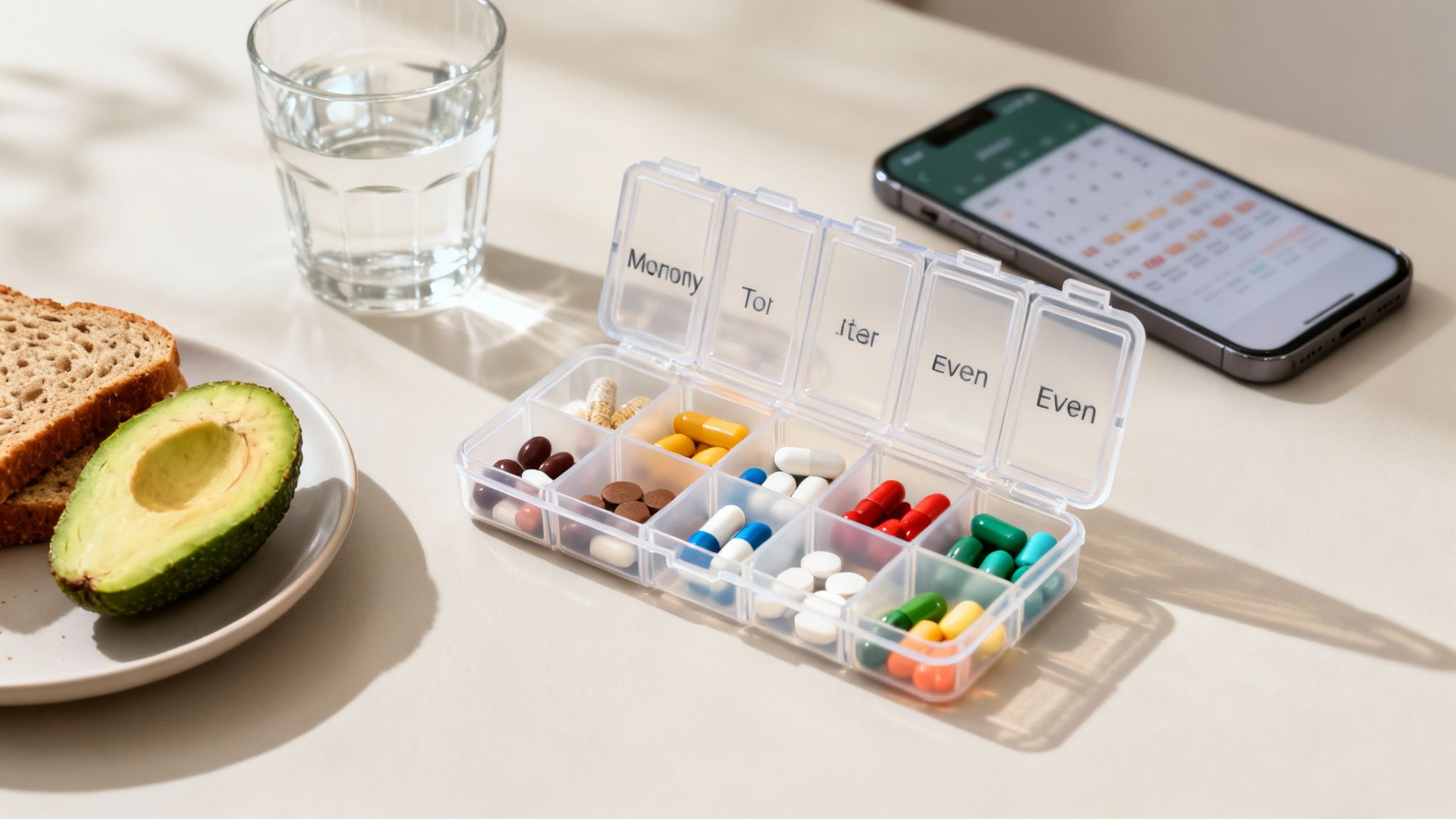
Let's move from theory to action. Building your personalised schedule doesn't have to be complicated. By following a few simple principles, you can easily audit your current routine and make intelligent changes that amplify the effects of every supplement you take.
The core strategies really boil down to two main ideas: pairing nutrients with the right meal (or no meal at all) and creating enough space between competing minerals.
Foundational Timing Strategies
Before we get into specific lifestyles, let's lock in the core rules that apply to almost everyone. Think of these as the building blocks for any effective supplement plan.
-
Embrace Healthy Fats for A, D, E, & K: These fat-soluble vitamins need dietary fat to be absorbed properly. Taking your Vitamin D, E, or a mushroom blend with a low-fat breakfast or on an empty stomach is a real missed opportunity. Always pair them with a meal that includes healthy fats like avocado, nuts, olive oil, or omega-3s.
-
Separate Competing Minerals: This is probably the most critical rule. Minerals like iron, calcium, zinc, and magnesium often compete for the same absorption pathways in your gut. A simple rule of thumb is to create a buffer of at least four hours between them. For instance, take your iron in the morning and save your calcium for the evening.
-
Use Water for B-Vitamins and C: Water-soluble vitamins are the easy ones. They don't need fat and can generally be taken with just a glass of water. Many people find taking their B-complex or multivitamin in the morning helps kickstart their energy metabolism for the day ahead.
Your body is not a static container; it's a dynamic system with peak times for absorption and activity. Aligning your supplement intake with these biological rhythms is the key to unlocking their full potential for performance, recovery, and overall well-being.
Now, let's see how these principles play out in different daily routines.
Sample Schedules For Different Lifestyles
Your ideal schedule will naturally depend on your daily routine, fitness goals, and personal health needs. Here are a couple of examples to help you visualise how to structure your day for maximum impact.
The Busy Professional's Schedule
This routine is all about optimising energy, cognitive performance, and stress management to get you through a demanding workday.
- Morning (with breakfast): Take your multivitamin and omega-3s. The B-vitamins in the multi can support energy production, and pairing the omega-3s with food boosts absorption.
- Mid-Afternoon (snack): Have your ashwagandha or a mushroom blend. Taking adaptogens away from the morning rush can help you manage those inevitable afternoon stress levels.
- Evening (with dinner): Take magnesium. This mineral is brilliant for relaxation and muscle function, making it a perfect supplement to take as you start to wind down.
The Fitness Enthusiast's Plan
This schedule is organised around your workout to support muscle recovery, energy, and joint health.
- Pre-Workout: This is the ideal time for an energy powder and creatine to fuel performance and strength.
- Post-Workout (with a meal): Take zinc and magnesium. Both are crucial for muscle repair and recovery. If you're curious about this specific pairing, you can learn more about taking magnesium and zinc together in our detailed guide.
- Evening Meal: Take your omega-3s and vitamin D. Pairing these with your largest meal of the day ensures there's enough dietary fat to maximise their absorption and support inflammation management overnight.
Of course, these schedules are just templates. The most important thing is to audit your own supplements, identify any potential conflicts, and create a schedule that fits seamlessly into your life. A little bit of planning goes a very long way in making sure your investment in your health pays off.
Frequently Asked Questions About Supplement Timing
Even with the best plan in place, a few questions always seem to pop up when you're trying to get your supplement schedule just right. It can feel a bit complicated figuring out what vitamins shouldn't be taken together, so let's clear up some of the most common queries we hear.
Think of this as your final checklist. Getting the timing sorted is one of the easiest ways to level up your health routine, and a few small adjustments can make a world of difference in how well your body absorbs and uses every nutrient.
Can I Just Take One Multivitamin For Everything?
A high-quality multivitamin is a fantastic foundation for plugging any general gaps in your diet. For most people, it’s a simple and effective way to get a broad spectrum of essential vitamins and minerals without overthinking it. But a multi isn't always the complete answer, especially if you have specific health goals or known deficiencies.
The thing is, multivitamins often pack minerals like calcium, iron, and zinc into a single tablet. As we've already covered, these guys tend to fight for absorption. While good brands formulate their products to minimise this clash, you still might not be getting the full dose of each one.
If you’re looking for targeted support—like taking extra iron for energy or magnesium for better sleep—you'll almost always get better results by taking those supplements separately and at different times.
A multivitamin is a great safety net, but for truly optimised results in areas like fitness, focus, or stress, individual supplements timed correctly often deliver a much bigger impact.
How Long Should I Wait Between Taking Conflicting Supplements?
This is a brilliant question, and thankfully, the answer is pretty straightforward. For most of the minerals that compete with each other, all you need is a clear window of time to stop them from getting in each other's way.
As a general rule, try to wait at least two to four hours between taking conflicting supplements. For example, if you take your iron supplement with breakfast at 8 a.m., it's a good idea to hold off on your calcium until lunchtime. This gives your body plenty of time to absorb the first nutrient without the second one muscling in. For more specific advice on timing certain supplements, like the best time to take protein powder, more detailed guidance can be useful.
Does Food Really Affect Vitamin Absorption?
Yes, absolutely! Whether you take a supplement with a meal or on an empty stomach can make a huge difference to how much your body actually puts to use. It all comes down to whether the vitamin is fat-soluble or water-soluble.
-
Fat-Soluble Vitamins (A, D, E, K): These nutrients need dietary fat to be absorbed properly. Taking your Vitamin D or mushroom blend with just a glass of water is a bit of a waste. You need to pair them with a meal that contains healthy fats—think avocado, nuts, olive oil, or fish—to help shuttle them into your system.
-
Water-Soluble Vitamins (B-Vitamins, Vitamin C): These dissolve in water and are usually best absorbed on an empty stomach. Taking them first thing in the morning with a glass of water can be a great way to kickstart your day.
If you want to dive deeper into building the perfect supplement schedule, check out our detailed guide on the best time of day to take vitamins.
Are Gummy Vitamins A Good Choice?
Gummy vitamins have taken off because, let's face it, they're easy and tasty. For anyone who finds swallowing pills a chore, they can be a great alternative for getting those essential nutrients in. However, they do have a few downsides to keep in mind.
Many gummies contain added sugars, artificial colours, and flavourings to make them so appealing. This can add up over time and might not fit with your overall health goals. They can also be less potent or stable than traditional capsules, which means the nutrient levels could degrade over their shelf life.
While they're definitely better than taking nothing at all, it's always smart to check the label for sugar content and compare the dosage to a standard pill form.
Ready to stop guessing and start building a supplement plan that’s perfectly aligned with your unique biology and goals? The VitzAI quiz uses smart technology to analyse your lifestyle, diet, and health needs, delivering a personalised recommendation in minutes.
Take the free VitzAI quiz today and discover your ideal supplement stack!
This article is for informational purposes only and is not medical advice. Always consult a qualified health professional before starting any new supplement or major lifestyle change.