

Omega 3 Fish Oil vs Cod Liver Oil: Which Is Best for You?
When it comes to omega-3 fish oil vs cod liver oil, the real difference boils down to their nutritional focus. Think of standard omega-3 fish oil as a concentrated source of the fatty acids EPA and DHA, prioritised for heart and brain health. Cod liver oil, on the other hand, offers a decent dose of these same omega-3s but comes with the bonus of naturally occurring vitamins A and D, making it great for immunity and bone health.
Fish Oil vs Cod Liver Oil: A Quick Comparison
Trying to choose between omega-3 fish oil and cod liver oil can feel a bit confusing, but once you understand where they come from and what’s inside, the decision gets a lot simpler. Both are fantastic sources of beneficial omega-3s, but they definitely aren’t interchangeable. The key differences lie in the source of the oil and the extra nutrients it brings to the table.
Omega-3 fish oil is usually extracted from the flesh of oily fish like salmon, mackerel, and sardines. The main goal here is to isolate and concentrate two superstar omega-3s: eicosapentaenoic acid (EPA) and docosahexaenoic acid (DHA). This makes it a powerful, targeted supplement if you're specifically looking to boost your intake of these two fatty acids for benefits tied to cardiovascular function, brain performance, and soothing inflammation.
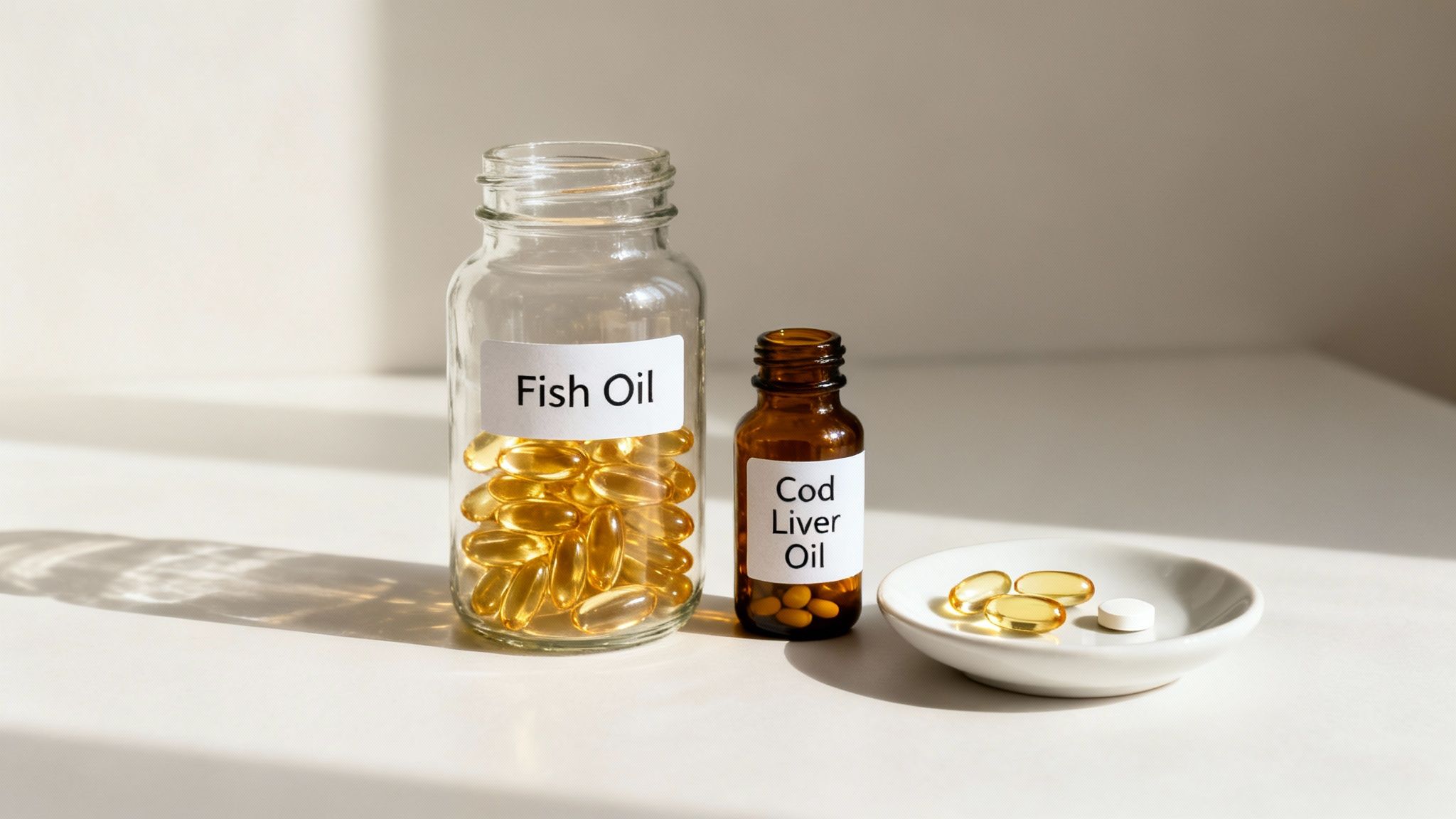
Cod liver oil, as you’ve probably guessed, comes exclusively from the liver of codfish. While it also contains EPA and DHA, its standout feature is its rich, natural supply of fat-soluble vitamins—specifically vitamin A and vitamin D. This turns it into a dual-purpose supplement, delivering omega-3 benefits alongside crucial support for your immune system, vision, and bone density.
The core decision really comes down to your main health goal. If you need a high-potency hit of EPA and DHA, fish oil is your best bet. If you’re after a more balanced supplement that also covers your immune and bone health, cod liver oil is a brilliant contender.
To give you a clear, immediate picture of how they stack up, here’s a quick side-by-side look.
At-a-Glance: Fish Oil vs Cod Liver Oil
This table breaks down the fundamental differences between the two, so you can see exactly what you're getting with each supplement.
| Attribute | Omega-3 Fish Oil | Cod Liver Oil |
|---|---|---|
| Primary Source | Flesh of oily fish (salmon, sardines, mackerel) | Liver of codfish |
| Main Focus | Concentrated EPA & DHA | Moderate EPA & DHA + Vitamins A & D |
| Omega-3 Potency | Often higher and more concentrated | Typically lower than high-strength fish oils |
| Vitamin Content | Negligible amounts of vitamins A & D | Naturally high in vitamins A & D |
| Best For | Targeted heart, brain, and joint support | General wellness, immune and bone health |
This snapshot gives you a great starting point. As we dive deeper throughout this guide, we'll explore how these distinctions translate into specific health benefits and real-world uses, helping you make the right choice for your body.
Why We Need to Talk About Omega-3s in the UK
Before we get into the nitty-gritty of omega-3 fish oil vs cod liver oil, it’s worth taking a step back to see why this conversation matters so much right now, particularly here in the UK. This isn’t just about picking a random supplement off the shelf; for many, it's about tackling a very real, widespread nutritional gap with serious health consequences.
The evidence is piling up: there's a huge disconnect between the amount of omega-3 we should be getting and what actually ends up on our plates. These crucial fatty acids, especially eicosapentaenoic acid (EPA) and docosahexaenoic acid (DHA), are the fundamental building blocks for our cells. Think of them as essential workers for managing inflammation, keeping our hearts healthy, and ensuring our brains fire on all cylinders.
The problem is, the modern British diet often leaves them out.
How Our Diet Lets Us Down
The typical Western diet, which is pretty standard across the UK, is a massive part of the problem. It’s a diet often defined by:
- A heavy reliance on processed foods, which are usually low in omega-3s but high in omega-6 fatty acids, a combination that can easily tilt the body towards an inflammatory state.
- Hardly enough oily fish like salmon, mackerel, and sardines—by far the best natural sources of EPA and DHA.
- A default to convenience meals that rarely make these essential fats a priority.
This all adds up to a large chunk of the population simply not getting enough omega-3s to meet their body's demands. And this isn't a small dietary oversight; it's a public health issue with long-term knock-on effects.
In fact, a global survey that analysed omega-3 blood levels in healthy adults put the UK in the 'very low blood levels' category for EPA and DHA. We’re in the same boat as countries like the United States and Ireland, which points to a national trend of poor intake that is directly linked to a greater risk of chronic illnesses like heart disease and dementia. You can actually see how different countries stack up on the global omega-3 map.
The fact that so many people in the UK have low omega-3 levels changes everything. Suddenly, choosing between fish oil and cod liver oil isn't just a wellness fad—it's a necessary health intervention.
The Bigger Picture: Public Health
This national deficiency has some serious, far-reaching effects. Consistently low omega-3 status is linked to a higher risk of several chronic health conditions that put a huge strain on the NHS and really impact people's quality of life. For example, getting enough EPA and DHA is vital for keeping blood pressure, triglyceride levels, and artery health in check. A nationwide deficit could therefore be contributing to a higher rate of heart-related problems.
It’s a similar story for our brains. DHA is a primary structural component of the brain and the retina in our eyes. When we don't get enough, especially as we get older, it's associated with cognitive decline and poorer neurological health. By missing out on these fats, we might be missing a simple but powerful way to protect our long-term brain function.
All of this context is crucial. When you understand this widespread nutritional gap, the debate between omega-3 fish oil and cod liver oil becomes less about a simple consumer choice and more about taking a proactive step to fill a critical dietary void and safeguard your long-term health.
A Detailed Nutritional Breakdown
To really get to the bottom of the omega 3 fish oil vs cod liver oil debate, we need to look past the labels and see what’s actually inside. While both come from the sea, their nutritional make-up is surprisingly different, suiting them to very different health goals. It’s the specific mix of fatty acids, vitamins, and purity that decides which one is the right fit for you.
The main difference isn’t just what they contain, but in what amounts. This is where a targeted, high-strength fish oil often pulls ahead of the more traditional, all-in-one cod liver oil. Let's break down the three most important areas of comparison.

EPA and DHA: The Omega-3 Powerhouses
Let's be honest, the main reason anyone reaches for a fish-based supplement is for the omega-3s, specifically eicosapentaenoic acid (EPA) and docosahexaenoic acid (DHA). These are the active ingredients doing all the heavy lifting for your health, from supporting your heart to keeping your brain sharp.
High-strength fish oil is engineered for one primary purpose: to deliver a potent, concentrated dose of EPA and DHA. Manufacturers can formulate these supplements to feature specific ratios, like a higher EPA content to target inflammation or more DHA for cognitive support. It’s not uncommon for a single serving of quality fish oil to provide over 1,000mg of combined EPA and DHA.
Cod liver oil, on the other hand, does contain EPA and DHA, but usually in more modest amounts. Because it’s sourced from a specific organ (the cod's liver), its omega-3 concentration isn't the star of the show. You can expect a lower dose compared to a specialised fish oil, making it less than ideal if your goal is a high, therapeutic dose of omega-3s.
The key takeaway is this: Fish oil is for precision. It's designed to deliver a high-impact dose of EPA and DHA. Cod liver oil offers a broader, more general-purpose nutritional boost with less concentrated omega-3 levels.
Vitamins A and D: A Double-Edged Sword
This is where cod liver oil really shines—and also where you need to be careful. As a product of the liver, it’s naturally packed with fat-soluble vitamins, particularly vitamin A and vitamin D. This makes it a fantastic supplement for supporting your immune system, maintaining healthy vision, and promoting strong bones. It’s especially valuable during the UK's long, dark winters when vitamin D from sunlight is scarce.
A single teaspoon of cod liver oil can often provide a huge chunk of your recommended daily intake for both vitamins. However, this benefit comes with a major warning. Because vitamins A and D are fat-soluble, they can build up in your body to toxic levels if you take too much.
This risk is particularly relevant if you:
- Already take a multivitamin containing vitamins A and D.
- Eat a lot of fortified foods or take other supplements.
- Are tempted to take more than the recommended dose to boost your omega-3 intake.
Standard omega-3 fish oils, which come from the flesh of oily fish, contain only tiny amounts of these vitamins. This makes them a much safer bet for anyone wanting to take high doses of omega-3s without worrying about vitamin toxicity.
To give you a clearer picture, here’s how they stack up.
Nutrient Profile Comparison Per Serving
The table below shows typical nutritional values found in standard doses of high-strength fish oil and cod liver oil. Keep in mind that these values can vary between brands.
| Nutrient | High-Strength Fish Oil (Typical) | Cod Liver Oil (Typical) |
|---|---|---|
| Total Omega-3 | 1,000mg - 1,500mg | 800mg - 1,200mg |
| EPA | 500mg - 800mg | 300mg - 500mg |
| DHA | 250mg - 500mg | 350mg - 500mg |
| Vitamin A | Negligible | Up to 4,500 IU (150% RDI) |
| Vitamin D | Negligible | Up to 450 IU (112% RDI) |
As you can see, fish oil is the clear winner for concentrated EPA and DHA, while cod liver oil is a potent source of vitamins A and D but with slightly lower omega-3 levels.
Purity and Processing Concerns
These days, the purity of any marine supplement is a big deal. Our oceans can contain contaminants like heavy metals (mercury), polychlorinated biphenyls (PCBs), and dioxins. The good news is that reputable brands of both fish oil and cod liver oil use advanced purification processes, like molecular distillation, to filter these nasties out.
However, top-quality fish oil often goes through more rigorous processing to concentrate the EPA and DHA. This multi-step refinement not only boosts potency but also ensures an exceptionally pure final product, free from the "fishy burps" often linked to lower-quality oils.
While cod liver oil is also purified, its source—the liver—is the body's primary filter for toxins. This makes strict purification an absolute must. For either supplement, always choose products from trusted brands that provide third-party testing certificates to guarantee purity and safety.
For those seeking plant-based alternatives, it's also worth exploring algae-derived supplements, which offer a clean, direct source of EPA and DHA. You can find out more about these in our guide to vegan omega-3 sources.
Ultimately, the nutritional breakdown reveals two very different supplements. Your choice boils down to whether you need a targeted, high-dose omega-3 source or a broader supplement that combines moderate omega-3 levels with essential vitamins.
Health Benefits: Fish Oil vs Cod Liver Oil
Right, let's get beyond the nutrition label. When you're weighing up omega-3 fish oil vs cod liver oil, what really matters is how each one performs in supporting your body’s most critical systems. Both are fantastic supplements, but their unique makeups mean they’re better suited for different jobs. Getting to grips with these differences is the key to picking the right one for your heart, brain, and joints.
The whole conversation really starts with EPA and DHA, the two most important omega-3s. You can think of them as specialists: EPA is the anti-inflammatory and cardiovascular champ, while DHA is a structural powerhouse, absolutely vital for your brain and eye tissue. This is where high-quality fish oil shines – it lets you target these benefits with real precision.

Cod liver oil, on the other hand, brings a more rounded, multi-system approach to the table with its combination of omega-3s and vitamins A and D. This makes it a really compelling choice if you're after broader wellness support—especially for immunity and bone strength—alongside the core benefits of omega-3.
Your Heart Health
When it comes to looking after your heart, the concentration of EPA (eicosapentaenoic acid) is often the dealbreaker. EPA is heavily involved in managing inflammation, keeping triglyceride levels in a healthy range, and supporting the overall function of your blood vessels.
High-strength omega-3 fish oils are specifically formulated to pack a potent punch of EPA, often far more than you'd find in a standard dose of cod liver oil. So, if your main goal is supporting your heart, a targeted, high-EPA fish oil is almost always the more effective choice. It gives you the exact active ingredient you need without the extra vitamins you might not be looking for.
While cod liver oil certainly contributes to heart health through its omega-3 content, its lower EPA concentration just makes it a less powerful tool for this specific job.
Your Brain and Cognitive Function
For brain health, the spotlight shifts to DHA (docosahexaenoic acid). DHA is a primary building block of the brain and retina; it makes up a huge portion of the fatty acids in your grey matter. It’s absolutely essential for keeping cell membranes fluid and supporting the communication lines between brain cells.
Once again, high-quality fish oil supplements usually deliver a higher, more concentrated dose of DHA than cod liver oil. This makes them the superior option for anyone looking to support cognitive function, memory, and long-term brain health.
And this isn't just theory—the research is extensive. A huge review of UK Biobank data, which pulled together results from over 34 studies, found 44 statistically significant favourable associations between fish oil use and health. The positive effects were seen across cardiovascular, metabolic, and even neurodegenerative health, with biomarker analysis confirming these benefits were directly linked to higher blood levels of omega-3s.
Your Joints and Inflammation
Achy joints are often a sign of chronic inflammation. This is where the anti-inflammatory properties of omega-3s, particularly EPA, can make a real difference. EPA works by interfering with inflammatory pathways in the body, helping to dial down the production of molecules that trigger joint pain and stiffness.
Because high-strength fish oil can be formulated to contain very high levels of EPA, it's the go-to choice for specifically targeting inflammation and supporting joint health. Someone with stiff, creaky joints would likely feel more of a benefit from a supplement delivering 700mg or more of EPA per serving—a dose you're more likely to hit with a concentrated fish oil.
While cod liver oil’s omega-3s do have anti-inflammatory effects, its vitamin D content offers a unique secondary benefit for joint and bone health. Vitamin D is critical for calcium absorption, making cod liver oil a dual-action supplement for both soothing inflammation and strengthening the underlying skeletal structure.
Bone Density and Immune Support
This is where cod liver oil really comes into its own. The naturally occurring vitamins A and D provide benefits that standard fish oil simply can't. Vitamin D is essential for bone density, working hand-in-hand with calcium to keep your skeleton strong and resilient. This is particularly crucial for older adults and women, who face a higher risk of bone-related issues.
Both vitamins A and D are also cornerstones of a robust immune system, helping your body fend off pathogens. For anyone looking to bolster their immunity, especially during the winter months, cod liver oil offers a convenient, all-in-one solution. This dual support for both bones and immunity is a key reason to consider it as part of a long-term wellness strategy. You can find out more by checking out our guide on the best supplements for longevity.
Ultimately, the choice lands squarely on your primary health goal. If you need potent, targeted support for your heart, brain, or joints, a high-quality omega-3 fish oil is the clear winner. But for broader, more generalised support that also covers bone density and immune function, cod liver oil is an excellent and historically trusted option.
Safety and Side Effects: What to Watch Out For
When you’re weighing up omega 3 fish oil vs cod liver oil, safety has to be front and centre. While both supplements can be brilliant, they come with different risk profiles that you really need to get your head around before you start. It’s all about using them responsibly to get the benefits without any nasty surprises.
For the most part, any side effects from either supplement are pretty mild and usually down to digestion. You might get a bit of indigestion, feel a little nauseous, or experience those infamous "fishy burps." Taking your supplement with a meal or choosing a high-quality, enteric-coated capsule can often sort these issues out.
That said, there are some more serious things to consider, especially with cod liver oil because of its high vitamin content.
The Risk of Vitamin A and D Toxicity
This is the big one for cod liver oil: the potential for vitamin A and D toxicity. Because these vitamins are fat-soluble, your body hangs onto any excess. Over time, this can build up to harmful levels.
You need to be particularly careful if you:
- Already take a multivitamin that contains vitamins A and D.
- Eat a lot of foods fortified with these vitamins, like certain cereals or dairy products.
- Are pregnant, as too much vitamin A can be harmful to a developing foetus.
Signs of too much vitamin A can include headaches, dizziness, joint pain, and irritated skin. An overload of vitamin D might lead to a build-up of calcium in your blood (hypercalcaemia), which can cause nausea, weakness, and even kidney problems. Standard omega-3 fish oil doesn't have this risk, making it a much safer bet if you need a high dose of omega-3s.
Always get into the habit of checking the labels on all your supplements. It’s surprisingly easy to double up on fat-soluble vitamins without realising. If you’re not sure about your total intake, have a chat with a healthcare professional.
Blood-Thinning Effects and Medication Interactions
Both omega-3 fish oil and cod liver oil have a mild anticoagulant (blood-thinning) effect. While this is generally a good thing for heart health, it means some people need to be cautious.
If you’re on blood-thinning medication like warfarin, or even just a daily aspirin, you absolutely must speak to your doctor before starting either supplement. Combining them could increase your risk of bleeding or bruising. You’ll also likely be told to stop taking them a couple of weeks before any planned surgery.
Purity and Contaminants
Finally, the quality of your supplement really, really matters. Fish, including cod, can pick up environmental toxins like heavy metals (especially mercury) and polychlorinated biphenyls (PCBs). Since the liver is the body’s filter, this is a particular concern for cod liver oil.
To keep yourself safe, always choose products from reputable brands that can show you proof of third-party testing for purity and potency. This independent check is your guarantee that the supplement is free from nasty contaminants and actually contains the amount of omega-3s and vitamins it says on the label. It’s the only way to make a choice you can feel confident about.
How to Choose the Right Supplement for Your Goals
So, how do you navigate the choice between omega-3 fish oil vs cod liver oil? It really boils down to what you want to achieve with your health. By now, the main distinction should be clear: fish oil is your high-potency omega-3 source, whereas cod liver oil offers a balanced blend of omega-3s with the added bonus of vitamins A and D.
Think of it like choosing the right tool for a specific job. If your main goal is to get a concentrated dose of EPA and DHA to look after your heart, keep your brain sharp, or manage inflammation, then a top-quality omega-3 fish oil is the specialist tool you need.
On the other hand, if you're after a more general wellness boost that supports your immune system and bone health while still providing a decent hit of omega-3s, cod liver oil is a fantastic all-rounder. Let's walk through a few real-world scenarios to make the decision a bit easier.
Tailoring Your Choice to Specific Needs
Different stages of life and different health goals call for different nutritional game plans. The first step is to pinpoint your main priority.
For Targeted Cardiovascular and Brain Support
If your mission is to maintain heart health by keeping triglyceride levels in check or to support your cognitive performance, then your focus should be on getting as much EPA and DHA as possible.
- Choose: Omega-3 Fish Oil
- Why: These supplements are specifically formulated to pack a punch, delivering higher concentrations of EPA and DHA—often over 1,000mg per serving. This kind of dose is far more effective for hitting those specific therapeutic targets. A high-quality fish oil supplement like our Omega-3 EPA 180mg DHA 120mg gives you that targeted dose without any risk of overdoing it on vitamins.
For Immune Resilience and Bone Density
Perhaps you’re looking for something to shore up your immune system, especially during the long UK winter, or you want to maintain strong bones as you get older. In that case, the extra vitamins in cod liver oil are a huge plus.
- Choose: Cod Liver Oil
- Why: Its natural combination of vitamins A and D alongside omega-3s makes it a powerful, multi-faceted supplement for overall wellness. It’s an ideal choice, as long as you aren’t already taking a multivitamin with high levels of these same fat-soluble vitamins.
This simple chart helps to visualise the decision, guiding you from your primary health goal to the supplement that fits best.
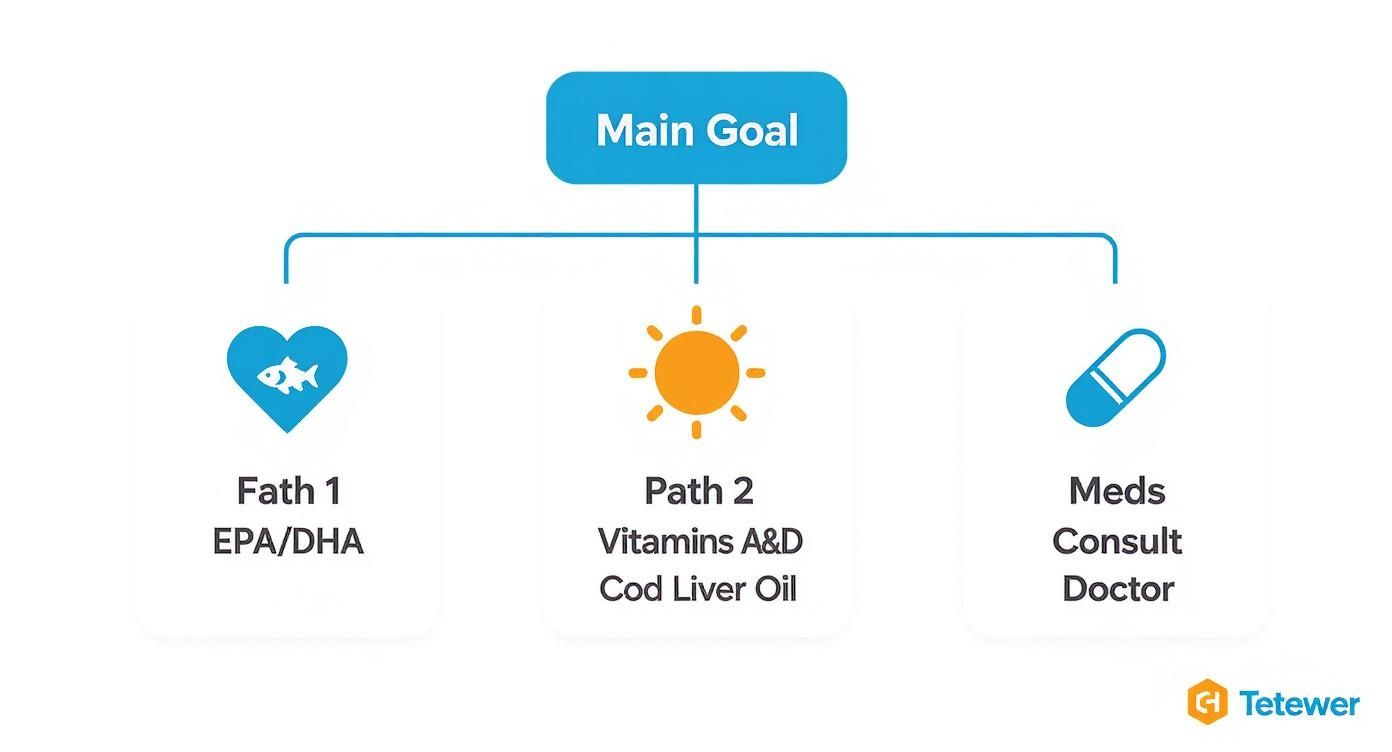
As you can see, if you have targeted EPA/DHA needs, fish oil is the way to go. If vitamins A & D are on your radar, cod liver oil is likely the better fit.
Making the Final Decision
Ultimately, the best supplement is the one that fills your specific nutritional gaps. Research from the UK Biobank drives home the point that diet and supplementation work best together. One analysis found that adults who took fish oil and also ate oily fish twice a week had significantly higher omega-3 blood levels (a mean of 7.34%) compared to those who did neither (4.1%).
Your personal health profile, existing diet, and current supplement routine should guide your final choice. Don’t just follow a trend; select the oil that provides what your body is truly missing.
After thinking about your diet and health goals, if you decide that fish oil is the right move for you, you can explore different fish oil supplements to find one that suits you. Making an informed decision is the key to getting the maximum benefit, safely and effectively.
Got Questions? We've Got Answers
Digging into the details of the omega-3 fish oil vs cod liver oil debate often brings up a few common questions. Let's clear them up.
Can I Take Fish Oil and Cod Liver Oil Together?
Honestly, it's not a good idea. The main issue here is the high concentration of vitamins A and D in cod liver oil. If you start doubling up, you could easily go over the safe daily limit for these fat-soluble vitamins, which can lead to toxicity.
On top of that, you might end up with an excessively high dose of omega-3s, which can increase the risk of side effects like blood thinning. It's much safer—and more effective—to simply pick one supplement that aligns with what you're trying to achieve for your health.
Which Is Better for Reducing Inflammation?
If your main goal is to tackle inflammation, a high-strength omega-3 fish oil is almost always the better choice. These supplements are specifically designed to pack in higher amounts of EPA (eicosapentaenoic acid), which is the particular omega-3 most directly involved in calming inflammatory responses in the body.
Cod liver oil does have anti-inflammatory properties, but its EPA content is usually much lower than what you'd find in a dedicated, high-EPA fish oil product.
How Long Does It Take to See Benefits?
This is the classic "it depends" answer, but it's true! The time it takes to feel a difference varies a lot from person to person. It depends on your starting omega-3 levels, your dosage, and what you're hoping to improve.
Some people report feeling a lift in their mood or less joint stiffness within a few weeks to a couple of months. For longer-term goals like heart or brain health, which build up over time, it might take three to six months of consistent daily use to see real, measurable changes. The most important thing is consistency.
Ready to find out which supplement is the perfect match for you? Take the VitzAI quiz to get a personalised recommendation in minutes, tailored to your age, goals, and lifestyle. Discover your ideal health plan today at https://vitzai.com.
This article is for informational purposes only and is not medical advice. Always consult a qualified health professional before starting any new supplement or major lifestyle change.