

Your Guide to an Online Vitamin Deficiency Test
An online vitamin deficiency test is a clever way to analyse your diet, lifestyle, and symptoms to get a handle on potential nutritional gaps. It helps you move from just guessing about your health to seeing what your body might actually be missing.
The Hidden Reason You Might Feel Off
You eat well, you try to exercise, and you do your best to get enough sleep. So why do you still feel drained, unfocused, or just not quite yourself? The answer often lies in subtle nutritional imbalances that even the healthiest diets can’t always cover.
Busy professionals and fitness enthusiasts, in particular, place huge demands on their bodies. Increased stress, intense workouts, and packed schedules can burn through key nutrients faster than they can be replaced. This creates hidden shortfalls that show up as persistent fatigue, brain fog, or that general feeling of being "off."
Moving Beyond Guesswork
For years, the only real options were to guess which supplement might help or to go through the hassle of clinical testing. An online vitamin deficiency test changes all that by offering an accessible first step. Think of it as a health detective, gathering clues from your daily habits to piece together a picture of your unique nutritional needs. This allows you to start pinpointing potential issues without taking a shot in the dark.
Instead of blindly trying another supplement, an intelligent assessment helps you understand why you feel a certain way. It's the starting point for a targeted approach to wellness that connects your symptoms to their potential root cause.
This is a bigger issue than you might think. In the UK, a striking 48% of the population struggles to meet their daily vitamin and mineral requirements through diet alone. That figure climbs to a massive 61% among 18-24 year olds. Read the full research about UK vitamin requirements.
Recognising the common signs of a vitamin deficiency is a game-changer. A simple, smart assessment is the first move toward optimising your energy, focus, and overall well-being.
Cracking the Code on At-Home Tests
When you start digging into your nutritional status, you'll find there are two main ways to go about it with an online vitamin deficiency test. Each gives you a different window into your health, and figuring out which is right for you is the first step to getting the answers you need.
Think of it like this: an AI-powered questionnaire is like a skilled health detective, while an at-home blood test is the forensic lab. The detective gathers clues by asking sharp questions about your diet, lifestyle, and how you feel day-to-day. The lab, on the other hand, gets its hands on the physical evidence, analysing it directly from your bloodstream.
The Smart AI-Powered Questionnaire
This kind of test is essentially a clever, interactive survey designed to build a picture of what your body might be missing. You'll be asked about everything from your energy levels and sleep quality to your stress, fitness routine, and what's typically on your plate.
Behind the scenes, a sophisticated algorithm crunches your answers, comparing them against a huge database of scientific research. It's looking for patterns that point towards potential nutrient shortfalls. For instance, if you mention feeling tired all the time, struggling with sleep, and catching every cold that goes around, the system might flag a possible need for more Vitamin D and magnesium.
The real wins with this approach are:
- Speed and Simplicity: You get immediate, useful insights without any needles or waiting around for a lab to process your sample.
- The Big Picture: It connects the dots between your daily habits and how you're feeling, offering a much broader perspective on your overall well-being.
- Wallet-Friendly: These assessments are often free or very low-cost, making them a fantastic starting point for anyone curious about their health.
The Pinpoint Accurate At-Home Blood Test
The other route is a physical kit that lets you collect a small blood sample at home, usually just a simple finger prick. You then pop this sample in the post and send it off to a certified lab for analysis.
This method directly measures the levels of specific biomarkers in your blood—things like your exact Vitamin D (25-hydroxyvitamin D) or magnesium levels. It swaps predictive analysis for hard data, giving you a precise snapshot of where your nutrient levels stand at that very moment.
An at-home blood test gives you clinical-grade data. It's the definitive way to know your exact levels, confirming or ruling out a suspected deficiency with a high degree of accuracy.
Both questionnaires and at-home kits are part of a modern, more personal approach to health management. If you're looking to get a foundational understanding of the virtual healthcare world that makes this possible, learning how telehealth works can offer some valuable context. Ultimately, the choice between them boils down to whether you're after immediate, guided insights or precise, clinical measurements.
What a Vitamin Test Can Actually Reveal
So, you get the results from an online vitamin deficiency test. What are you actually looking at? It’s not just a dry list of nutrients and numbers. The real magic is in connecting that data to how you want to feel and perform every single day. Think of it as a personalised roadmap to hitting your health goals.
This map gives you an idea of the two main ways at-home testing works, starting from simple lifestyle questions all the way to in-depth biomarker analysis.
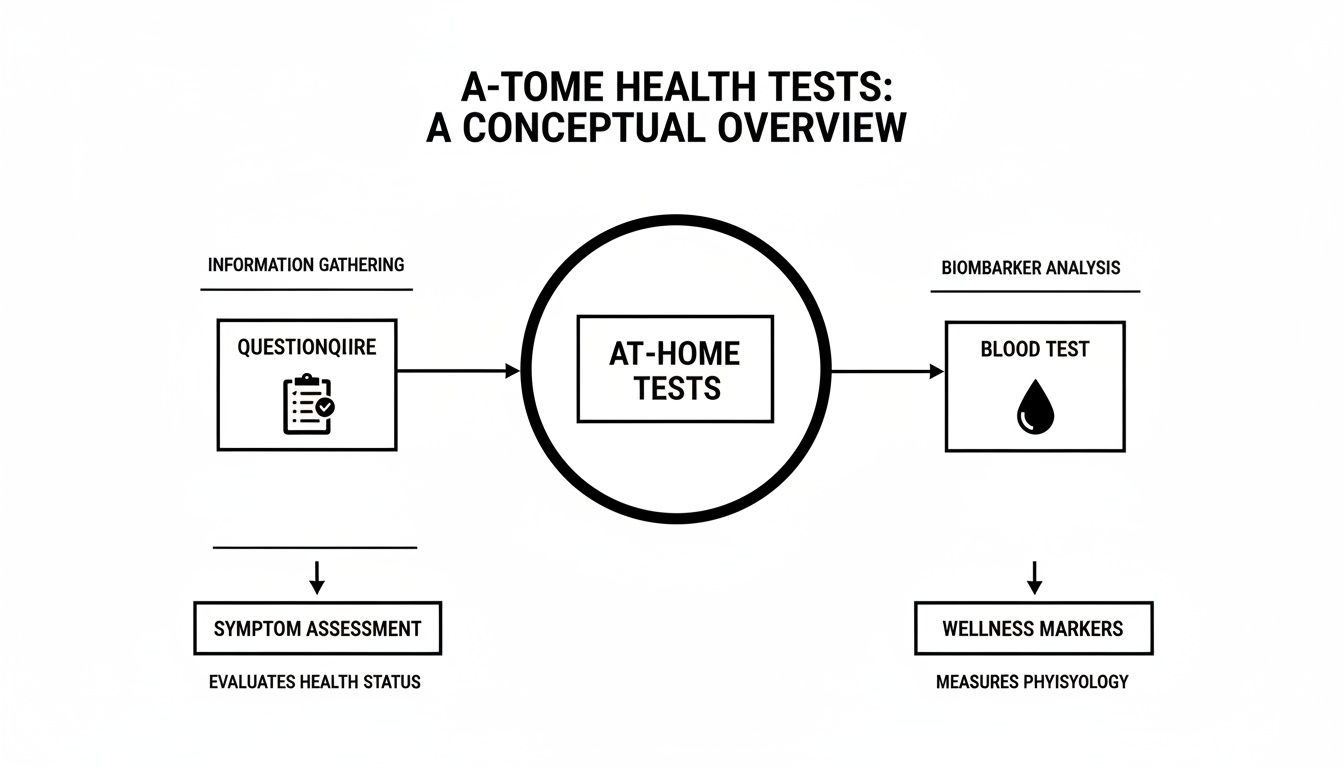
Whether it’s a detailed questionnaire or a blood test, both are powerful tools for spotting potential gaps in your nutrition. They just offer different, but equally valuable, perspectives on your health.
Sustained Energy and Vitality
Feeling constantly drained is one of the most common reasons people start looking into their health, and your micronutrient status is often the missing piece of the puzzle. An assessment can shine a light on the key nutrients that fuel your body.
- B Vitamins: These are basically the spark plugs for your metabolism. They help turn the food you eat into energy your cells can actually use. If your levels are low, you'll feel that deep, persistent fatigue that no amount of sleep seems to fix.
- Iron: This mineral is vital for making haemoglobin, the protein in red blood cells that ferries oxygen around your body. Without enough iron, your muscles and brain are literally starved of oxygen, which is why you feel so sluggish.
When a test flags low levels here, it suddenly makes sense why you’re hitting a wall every afternoon and reaching for yet another coffee. To dig deeper, check out our complete guide on the link between iron and B12 for energy production.
Peak Fitness and Recovery
If you lead an active life, your nutrient levels can be the difference between hitting a new personal best and hitting a wall. An online test can highlight the biomarkers that are absolutely critical for physical performance.
Think of magnesium as your body's own relaxation mineral. It’s involved in over 300 different biochemical reactions, including how your muscles function and your nerves send signals. Low levels can lead to cramps, poor recovery, and even disrupt your sleep—all things that will sabotage your fitness progress.
Creatine is another essential for anyone serious about fitness. While not a vitamin, it's crucial for quick bursts of energy during high-intensity exercise. A test can't measure creatine levels, but understanding your overall nutritional status helps ensure your body has the foundational support to maximise the benefits of supplements like creatine.
Mental Clarity and Focus
That feeling of brain fog and struggling to concentrate isn't just a side effect of a hectic schedule. It can be a direct signal from your brain that it’s missing the key building blocks it needs to function properly. Test results can pinpoint deficiencies that directly impact your cognitive performance.
- Omega-3 Fatty Acids: Critical for brain structure and communication, low levels of omega-3s are often linked to a dip in memory and focus.
- Adaptogens like Ashwagandha: While a test won't measure adaptogen levels, it can reveal stress-related nutrient depletion (like low magnesium or B vitamins). This suggests that incorporating adaptogens like ashwagandha could help your body better manage stress, improving cognitive performance indirectly.
- Mushroom Blends: Functional mushrooms support cognitive health and immunity. Understanding your base nutritional needs helps you get the most out of these powerful natural compounds.
How Accurate Are These Online Tests, Really?
When you’re thinking about trying an online vitamin deficiency test, it’s completely natural to wonder just how reliable they are. The best way to look at them is as powerful, intelligent screening tools, not as a formal medical diagnosis from your GP.
Their real strength lies in flagging up potential issues and guiding you towards smarter, more personalised tweaks to your diet and lifestyle. Think of them as your first proactive step – a way to shine a light on areas that might need a bit more of your attention.
Questionnaires vs Blood Tests: What’s the Difference?
So, as we’ve touched on, you’ve got two main players here: AI-powered questionnaires and at-home blood tests. They both offer a different flavour of accuracy.
An AI assessment is like having an expert connect the dots. It analyses your unique mix of diet, lifestyle habits, and any symptoms you’re experiencing to make a powerful, evidence-based prediction. It’s looking at the bigger picture to identify a probable cause.
On the other hand, an at-home blood test gives you a direct, numbers-based snapshot of what’s happening in your body at that exact moment. It measures precisely how much of a nutrient, like Vitamin D (25-hydroxyvitamin D), is floating around in your system. This is clinical-level precision, confirming or ruling out a deficiency with solid data.
The bottom line? Both are incredibly useful screening tools. A questionnaire flags potential risks based on a whole host of inputs, while a blood test confirms the specific level of a particular biomarker.
Setting the Right Expectations
It's really important to remember that neither of these options is a substitute for a chat with a healthcare professional. An online vitamin deficiency test is there to arm you with information, not to hand you a final diagnosis.
- Guidance, Not Diagnosis: Your results are a starting point. They might reveal that your constant tiredness could be linked to an iron issue, or that your rubbish sleep might have something to do with magnesium. This gives you a clear direction to explore.
- A Tool for Conversation: Armed with these insights, you can have a much more focused and productive conversation with your doctor or a nutritionist. Instead of just saying, "I feel tired all the time," you can go in with, "My assessment suggested a potential B12 issue, could we look into this?"
By seeing these tests for what they are, we can use them effectively. They’re a smart, accessible way to start taking control of your health and feeling your best.
Turning Your Test Results into Action
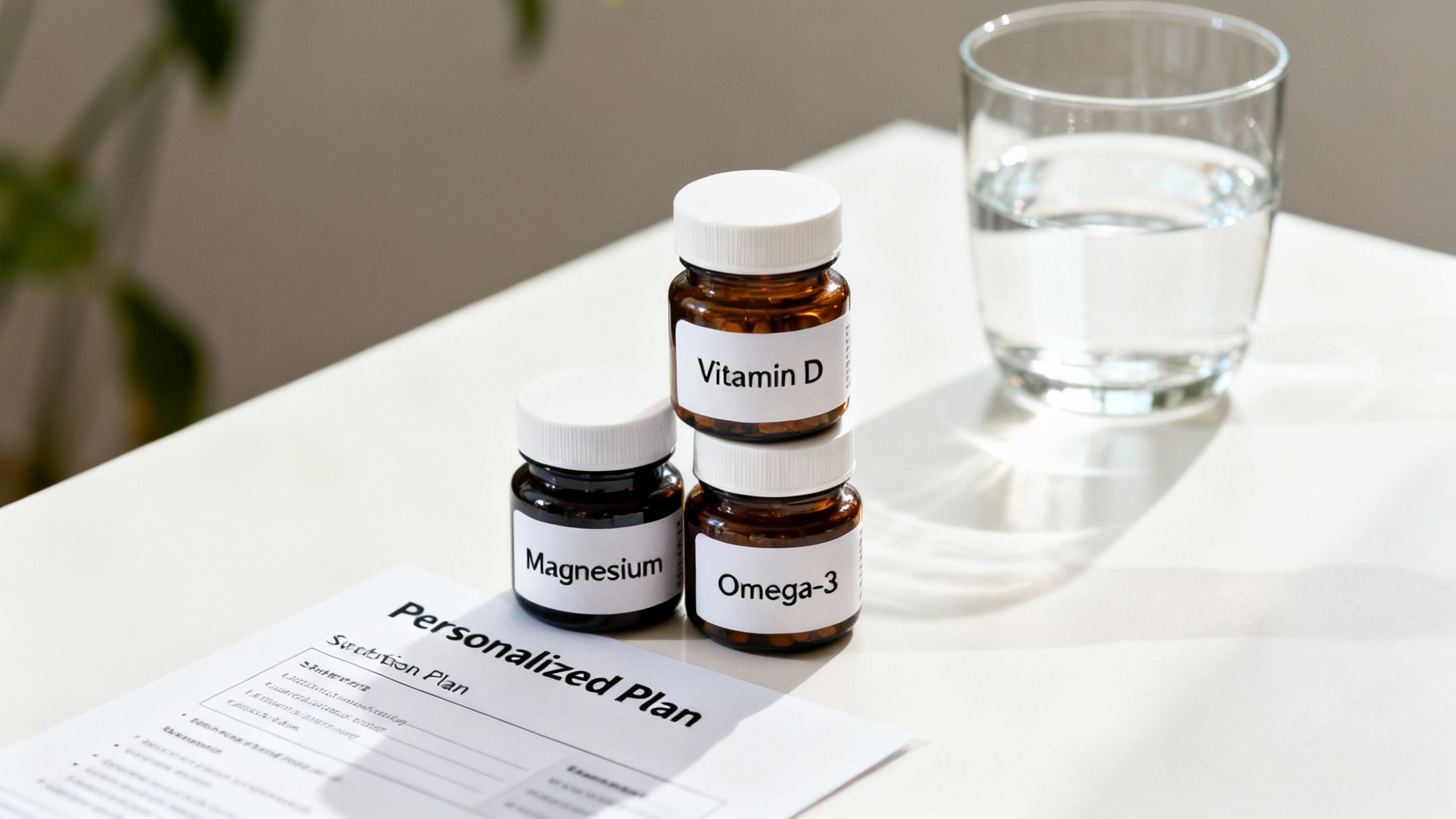
Getting your hands on the insights from an online vitamin test is just the beginning. The real magic happens when you turn that data into daily habits that stick. This is where you close the loop between knowing what your body is crying out for and actually giving it the support it needs to feel its best.
Think of your results as a personalised blueprint for your health. Instead of blindly grabbing a generic multivitamin off the shelf, you can now build a targeted supplement routine that addresses your specific shortfalls. That’s how you start to feel a real, noticeable difference in your energy, focus, and overall well-being.
From Data to a Targeted Supplement Stack
Interpreting your results is less about fixating on the numbers and more about focusing on the outcomes. For instance, if your assessment flags a potential magnesium shortfall, it’s not just about adding any old magnesium pill to your day. It’s about choosing the right form for your goals.
For someone looking to manage stress and get better sleep, a highly absorbable form like magnesium glycinate is often the way to go. It’s gentle on the stomach and effectively crosses the blood-brain barrier. This is the essence of a truly personal approach—picking the precise tool for the job.
A smart wellness plan doesn't just add supplements; it strategically selects the right ones. It considers the form, dosage, and how different nutrients work together to support your unique physiology and lifestyle goals.
A quality multivitamin can serve as an excellent foundation, ensuring you cover your basic needs. Your test results can then help you identify where to add more targeted support. For example, if you're low on Vitamin D, you'd add a separate Vitamin D supplement on top of your multivitamin to reach optimal levels.
Smart Lifestyle Changes to Boost Your Results
Supplements are a fantastic tool, but they deliver the best results when you pair them with supportive daily habits. Your test results can also be a brilliant guide for making small, practical changes that have a big impact on how well your body absorbs and uses key nutrients.
Here are a few examples of how you can translate those insights into action:
-
Enhance Omega-3 Absorption: If your results suggest a need for more Omega-3s to support your brain health, don’t just pop a capsule on its own. Try taking it with a meal containing healthy fats, like some avocado or a drizzle of olive oil. Omega-3s are fat-soluble, so this simple tweak can make a huge difference in how much your body actually gets to use.
-
Support Iron with Vitamin C: For those looking to top up their iron levels, pairing an iron supplement or iron-rich foods (like spinach) with a source of Vitamin C (think bell peppers or a squeeze of lemon) can massively increase its bioavailability. It helps your body make the most of every milligram.
Once you have your results, using personal nutrition coaching strategies can be a powerful way to put your plan into motion and stay on track. You can also get a head start by learning more about what vitamins you should take daily to build a solid foundation. This blend of targeted supplements and smart habits is what turns your test results into real, lasting improvements.
Time to Stop Guessing and Start Knowing
Feeling your best shouldn't be a random shot in the dark. Hopefully, this guide has shown you that an online vitamin deficiency test is a genuinely useful, easy-to-use tool for taking the reins of your own health and moving past generic, one-size-fits-all advice. When you get a clear picture of your unique nutritional blueprint, you can start a wellness journey that’s actually built for your body's needs.
That first step is often the most critical one. A smart health assessment helps you connect the dots between how you're feeling and what your body might be crying out for, giving you a clear path forward.
Taking control of your health really begins with understanding what you personally need. Instead of jumping on the latest wellness trend, a personalised assessment gives you a data-driven starting point for targeted nutrition and results you can actually feel.
This is particularly important when you consider how many of us are in the dark about basic public health advice. For instance, a pretty shocking 49% of Brits don't even know about the government's recommendation to take vitamin D supplements, and 44% never take them at all. This is exactly where an online test can bridge the gap between what the experts say and what we do in our everyday lives. You can read more about these vitamin D findings here.
Ready to trade guesswork for real knowledge? Take the VitzAI intelligent health quiz today. It’s a free, eye-opening way to get your personalised recommendations and finally start your journey to feeling your best.
Frequently Asked Questions
Jumping into at-home health tests can bring up a few queries. Getting the right answers is key to feeling confident about optimising your health, so we’ve put together some of the most common questions people ask about online vitamin deficiency tests.
How Accurate Is an Online Quiz Compared to a Blood Test?
Think of it as the difference between a skilled detective and a forensic lab. An online quiz is the detective, piecing together clues from your lifestyle, diet, and symptoms to build a strong, evidence-based picture of where your nutrient gaps might be. It gives you that bigger-picture, holistic view.
A blood test, on the other hand, is the forensic lab. It gives you a direct, clinical measurement of specific markers in your system at that very moment. A quiz offers intelligent guidance and a fantastic starting point, whereas a blood test provides the hard data. Both are incredibly valuable, just for different stages of your health journey.
How Often Should I Test My Vitamin Levels?
A good rule of thumb is to start with a baseline test to get a clear snapshot of where you stand right now. This initial insight from an online vitamin deficiency test is what helps you create a truly targeted plan.
Once you’ve started making changes—like introducing a new supplement or tweaking your diet—it’s a smart move to re-test after about three to six months. This follow-up lets you see what’s actually working, track your progress, and fine-tune your approach for long-term success.
Can I Fix a Deficiency with Diet Alone?
While a balanced, nutrient-rich diet is the absolute cornerstone of good health, it’s not always enough to correct a significant deficiency by itself. The "food first" principle is always the best way to go, but targeted supplementation is often the most efficient way to get your levels back where they should be.
Think of your diet as the daily maintenance for your body, and supplements as the specialised tool you bring in to fix a specific issue. For example, getting enough Vitamin D from food alone is notoriously tricky, especially for those of us in the UK, making a supplement a practical and often necessary choice for many.
Ready to stop guessing and start knowing what your body truly needs? Take the VitzAI intelligent health quiz today for free, personalised recommendations. Find out more at VitzAi.com.
This article is for informational purposes only and is not medical advice. Always consult a qualified health professional before starting any new supplement or major lifestyle change.