

A Guide to the Best Probiotic Supplements UK
Navigating the world of probiotic supplements in the UK means getting to grips with your own body and what it needs. A good starting point is looking for products with specific, well-researched strains, like Lactobacillus and Bifidobacterium, and making sure the label clearly states the Colony Forming Unit (CFU) count. This tells you about the supplement's potency and whether it's up to the job.
Why Probiotics Are Your Gut's Best Friend

Gut health has become a massive topic in wellness circles, and for good reason. Your gut is home to trillions of microorganisms, a bustling community we call the gut microbiome. This internal ecosystem is so much more than a simple digestive aid; it’s a central hub that influences almost every aspect of your health, from energy levels and stress to hormonal balance.
Think of your microbiome as a complex garden living inside you. Just like a garden needs the right balance of plants to flourish, your gut needs a diverse community of "good" bacteria to function at its best. These tiny allies are busy:
- Unlocking Nutrients: They help break down food, releasing essential vitamins and minerals your body can use. Good gut health is key for getting the most from other supplements like multivitamins and magnesium.
- Supporting Immunity: A huge part of your immune system is in your gut, and a balanced microbiome helps keep it sharp and responsive.
- Influencing Mood: The gut-brain axis is a direct communication line, meaning a happy gut can genuinely contribute to better cognitive performance and a more stable mood.
- Acting as Gatekeepers: They maintain a strong gut lining, which stops harmful stuff from getting into your bloodstream.
The Growing Interest in Probiotics
When this delicate internal garden is thrown off-kilter by things like stress, a poor diet, or antibiotics, it can lead to digestive issues and other health niggles. This is where probiotic supplements come in. They’re like sending in reinforcements, introducing beneficial bacteria to help restore harmony.
The demand for high-quality probiotic supplements in the UK has shot up recently, as more of us are taking a proactive approach to our health and longevity. After the pandemic, there was a huge shift towards preventive wellness. In fact, the British Medical Journal reported that sales of probiotic supplements in UK pharmacies jumped by a massive 37% between 2020 and 2022.
Your gut microbiome is completely unique to you, almost like a fingerprint. A personalised approach to supplements, therefore, is often what gets the best results, because you’re giving your body exactly what it needs.
Finding Your Perfect Match
Trying to pick a probiotic can feel overwhelming. The key is to move past generic advice and focus on what your body is actually telling you. This guide is your roadmap, explaining how these microscopic helpers work, what to look for on a label, and how to choose a supplement that lines up with your personal health goals—whether that's improving sleep, managing stress, or supporting your fitness.
Of course, modern tools can make this journey a lot easier. For instance, an AI-powered quiz can analyse your lifestyle and goals to point you towards a personalised gut health plan, taking the guesswork out of the equation. For a deeper dive into all things gut health, check out our comprehensive guide to gut health supplements.
How to Read a Probiotic Label Like an Expert
Walking down the supplement aisle can feel like trying to read a foreign language. The labels are a jumble of scientific names, acronyms, and big numbers. It’s enough to make you just grab the first one you see.
But understanding that label is the single most important step in finding a product that will actually work for you. Think of it like assembling a specialist team for your gut. You wouldn’t hire a random group of people; you’d want to know exactly who they are and what they’re good at.
Understanding Strains: The Specialists on Your Team
First, look at the probiotic strain. This is more than just a name; it’s a full identity, usually broken down into three parts. Take Lactobacillus acidophilus LA-14, for example.
- Genus: This is the family name, like Lactobacillus or Bifidobacterium.
- Species: This gets a bit more specific, like acidophilus or longum.
- Strain Code: This is the crucial part, the unique identifier like LA-14 or BB536.
That final code is everything. Different strains, even within the same species, can have completely different jobs. It’s the difference between a general labourer and a master electrician. This is why you should always look for specific, clinically researched strains when buying probiotic supplements in the UK.
A probiotic label that just says ‘Lactobacillus acidophilus’ without a specific strain code is a major red flag. It’s like getting a CV with no work history – you have no real idea what it's capable of.
Decoding CFUs: The Size of Your Team
Next, you'll spot a number followed by "CFU," which stands for Colony Forming Units. This tells you how many live, viable bacteria are in each dose. In our analogy, it’s the number of specialists reporting for duty.
It’s easy to fall into the "more is better" trap, but that’s not always the case. A good quality supplement will typically range from 1 billion to 50 billion CFUs, but the right number really depends on the specific strains and your health goals. Some strains get the job done at lower doses, while others need to show up in greater numbers.
Ultimately, sending in a huge, disorganised crowd isn't nearly as effective as deploying a smaller, highly skilled team. The quality and specific abilities of the strains trump sheer numbers every time.
Common Probiotic Strains and Their Primary Functions
To help you get familiar with the key players, we've put together a quick reference guide. This table highlights some of the most common and well-researched probiotic strains you'll find in the UK market and what they're known for.
| Probiotic Strain | Commonly Associated Benefits |
|---|---|
| Lactobacillus acidophilus NCFM® | Often studied for its role in supporting digestive regularity and easing bloating. |
| Bifidobacterium lactis BB-12® | Frequently linked to supporting a healthy immune system and maintaining gut balance. |
| Lactobacillus rhamnosus GG | One of the most researched strains, often used for gut barrier function and diarrhoea. |
| Lactobacillus plantarum 299v | Studied for its potential to help with symptoms of Irritable Bowel Syndrome (IBS). |
This is just a starting point, of course, as research is always uncovering new benefits. But knowing what to look for is the first step toward making a smarter choice for your health.
Learning to read a probiotic label gives you the power to see past the marketing and choose a product based on science. The same principles apply to other products, and this guide on how to read nutrition labels effectively can help you build those skills. And if you come across other confusing terms on supplement packaging, our article on what Nutrient Reference Value means can clear things up.
Finding a Probiotic That Fits Your Daily Routine
Choosing the right probiotic strains and CFU count is a massive step forward, but what good is the perfect formula if you never remember to take it? Let's be honest, the best probiotic supplements UK residents can buy are the ones that actually get taken. If it doesn't slot neatly into your daily life, it's just going to gather dust.
Consistency is everything. For those friendly bacteria to settle in and make a difference, they need to show up regularly. So, take a moment to think about your lifestyle. Are you constantly on the move, or are you more of a homebody with a set morning routine? Your answer will point you to the perfect format.
Shelf-Stable vs Refrigerated Probiotics
One of the first decisions you'll likely face is whether to go for a shelf-stable or a refrigerated probiotic. For years, the refrigerated section of the health shop was the only place to look, built on the idea that live cultures had to be kept cold to survive. While that was true for older products, technology has moved on.
Modern shelf-stable capsules are designed for real life, without sacrificing quality. They use clever freeze-drying techniques that essentially put the bacteria into a dormant state—alive, but sleeping—until they hit the moisture in your gut. This makes them ideal for:
- Busy Professionals: Keep a bottle in your desk drawer or gym bag.
- Frequent Travellers: Throw them in your luggage without a second thought.
- Anyone After an Easy Life: They can sit right next to your other vitamins.
Refrigerated probiotics are still a great option, but they do ask for a bit more of a commitment. If you have a rock-solid routine at home and know they'll stay chilled, they’re a perfectly good choice.
Why a Protective Capsule Matters
Ever wondered how those delicate probiotic bacteria survive the treacherous, acid-filled journey through your stomach? It’s a hostile environment in there, and many don't make it to the intestines where they're needed. This is where the capsule itself becomes incredibly important.
Think of an enteric-coated capsule as a tiny, armoured transport for your probiotics. It’s built to withstand stomach acid, staying sealed as it passes through. The capsule only opens up once it reaches the much friendlier environment of your intestines, releasing its live cargo exactly where it can get to work.
Without this protection, a huge chunk of the live bacteria can be destroyed by stomach acid before they even get a chance to do their job. A well-designed capsule is what ensures the CFU count on the label has a real chance of benefiting your gut.
This technology is a genuine game-changer, making sure you get what you paid for. High-quality formulas, like our Probiotic 40 Billion with Prebiotics capsules, use these kinds of delayed-release capsules to maximise the survival rate of the bacteria.
What About Powders and Drinks?
Capsules aren't your only choice. Probiotic powders and drinks are great alternatives if you hate swallowing pills or want to mix your supplement into a smoothie or yoghurt.
- Powders: Super easy to mix into food or a morning shake. They offer flexible dosing but can sometimes have a noticeable taste or texture.
- Drinks: Things like kombucha or kefir are convenient, but they often come with a load of added sugar. Plus, their probiotic content can be a bit of a lottery compared to a precisely formulated supplement.
At the end of the day, the best format is the one that removes any friction. Pick something that slots effortlessly into your life, and you're far more likely to stick with it long enough to feel the benefits.
Tailoring Probiotics to Your Unique Health Goals
When it comes to gut health, a one-size-fits-all approach just doesn't cut it. Our bodies and microbiomes are constantly shifting as we move through different stages of life. Generic advice can only take you so far; the real magic happens when you get personal, choosing specific probiotic strains that match your unique biology and lifestyle.
Think of it like building a specialist team for a tricky job. The bacterial strains that support a young athlete will be different from those that benefit a woman navigating hormonal changes. This is where a targeted approach turns supplementation into a genuinely powerful health tool. The best strategy is to pinpoint your needs and choose probiotic supplements in the UK that contain strains researched for those exact goals.
Probiotics for Women's Health
Women's bodies experience significant hormonal fluctuations throughout life, from monthly cycles to pregnancy and menopause. These shifts can directly influence the gut and vaginal microbiomes, making targeted probiotic support especially useful for women’s health.
- Lactobacillus rhamnosus GR-1® and Lactobacillus reuteri RC-14®: This dynamic duo is one of the most studied combinations for supporting vaginal health by helping maintain a healthy balance of flora.
- Bifidobacterium lactis HN019™: During pregnancy and the post-partum period, digestive regularity can become a real concern. This strain has been well-researched for its ability to support comfortable digestion.
- Lactobacillus gasseri BNR17™: As women enter perimenopause and menopause, metabolic changes are very common. Some promising research points to this strain helping support metabolic health and body composition.
By selecting strains that address these unique physiological demands, women can proactively look after their gut, vaginal, and hormonal well-being.
This simple flowchart can help you visualise how your lifestyle might nudge you towards one probiotic format over another.
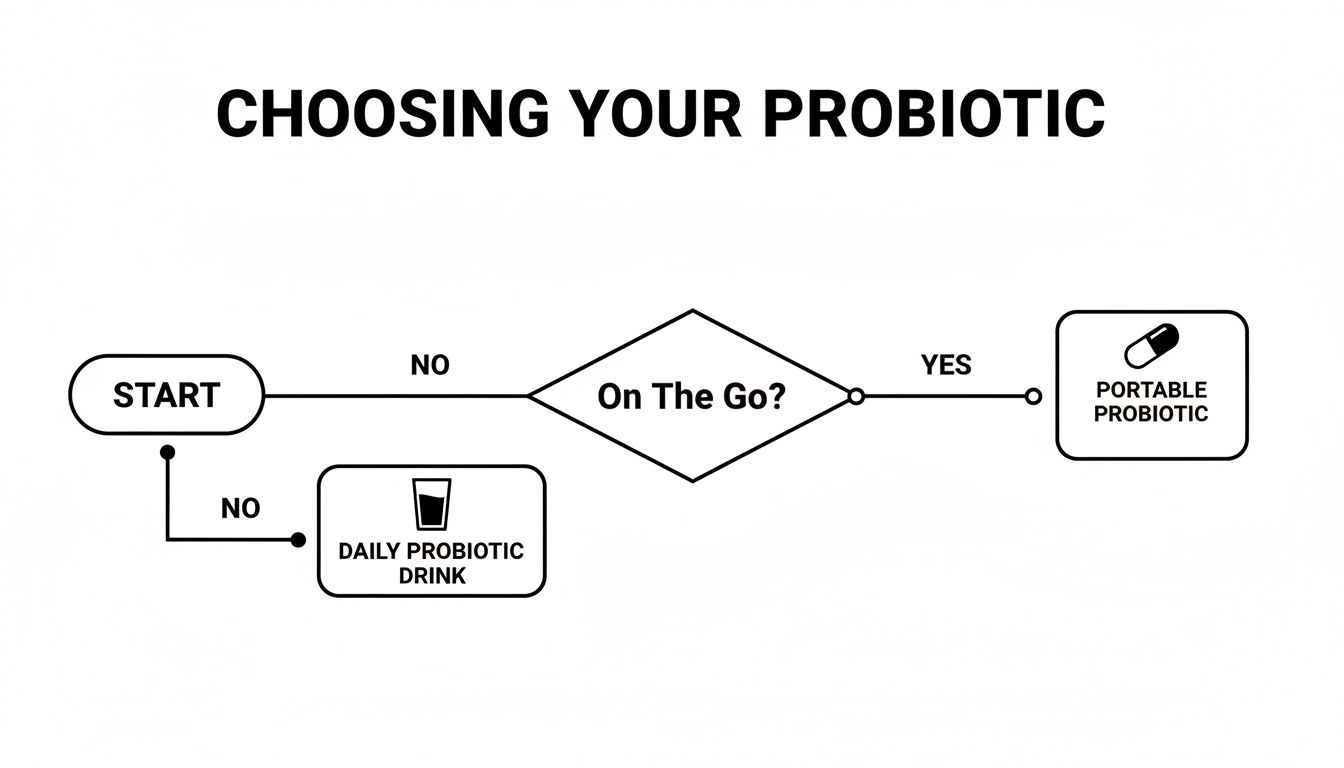
The key takeaway is simple: convenience is king when it comes to consistency. Whether that's a quick capsule for a packed schedule or a drink that’s part of your morning routine at home.
Probiotics for Men's Health
Men also face their own distinct health challenges, particularly as they get older. Concerns often turn to metabolism, heart health, and maintaining energy levels. A smart probiotic choice can play a valuable supporting role in men’s health.
For men over 40, keeping a healthy metabolism becomes a top priority. Certain bacterial strains have been explored for their potential to support metabolic markers and help in managing a healthy weight.
A well-balanced gut microbiome is increasingly being linked to better cardiovascular health and more efficient energy production. It's another piece of the complex puzzle for long-term male wellness.
Targeted strains can help address these specific areas of focus:
- Lactobacillus reuteri NCIMB 30242: This strain has been the focus of studies investigating its effects on cholesterol levels, making it particularly relevant for men prioritising their heart health.
- Bifidobacterium breve B-3: Research suggests this strain may have a role in supporting a healthy body composition and metabolism, which is especially important for men over 40.
- Lactobacillus plantarum HEAL9: General gut comfort is the foundation of good health. This strain is often included to help support digestive balance and overall gut function.
Choosing probiotics that align with these goals allows men to take a proactive stance on their long-term health and vitality.
Probiotics for Athletes and Fitness Enthusiasts
Athletes put their bodies under enormous physical stress. Intense, consistent training can take a toll on the immune system and the digestive tract, making gut health a critical part of fitness, peak performance, and recovery.
The "gut-muscle axis" is a fascinating area of research, suggesting our microbiome can influence muscle health and athletic output. Probiotics can offer support in a few key ways.
-
Bolstering Immunity: Heavy training can temporarily weaken the immune system. Strains like Bifidobacterium lactis Bl-04® have been studied in active people for their ability to support immune resilience.
-
Enhancing Recovery: A healthy gut is vital for absorbing the nutrients needed for muscle repair. Probiotics that promote a strong gut lining ensure you get the maximum benefit from your post-workout protein shake or creatine.
-
Reducing Digestive Discomfort: Many endurance athletes suffer from digestive issues during training. A balanced microbiome can help promote gut comfort, letting you focus on your performance.
By integrating specific, well-researched probiotic supplements UK athletes have access to, they aren't just looking after their digestion—they're supporting their entire performance and recovery ecosystem.
How to Safely Shop for Supplements in the UK
Navigating the world of supplements can feel like a minefield, especially with so many brands competing for your attention. Feeling confident that you’re investing in a safe, high-quality product is essential. This means learning how to spot trustworthy brands and see through the marketing fluff.
The UK supplement market is growing fast, which makes it more important than ever to be a savvy shopper. With online sales of probiotics alone set to keep climbing, the sheer number of choices can be overwhelming. As more of us buy supplements online, understanding the real markers of quality becomes your best tool for making a smart investment in your health.
Understanding UK Regulations and Health Claims
Here in the UK, supplements are classified as food products, not medicines. This is a crucial distinction. It means they don’t go through the same rigorous testing and approval process as pharmaceuticals. While this allows for easier access, it also places more responsibility on you, the consumer, to do your homework.
The regulations are mainly there to stop brands from making wild health claims they can't back up. A company can't legally say their product "cures" a condition. Instead, you'll see more carefully worded, approved phrases like "contributes to the normal function of the immune system."
Be wary of any product that promises miraculous or instant results. Reputable brands stick to what the science actually supports and are transparent about what their products can realistically offer.
A trustworthy brand will focus on explaining the science behind their ingredients rather than making bold, unproven claims. Look for clarity and evidence, not just exciting promises.
Your Checklist for Vetting a Brand
To help you shop safely for probiotic supplements UK consumers can trust, use this practical checklist to evaluate any brand you're considering. A good company will make this information easy to find.
-
Third-Party Testing: This is non-negotiable. It means an independent lab has verified that the product contains what the label says it does and is free from harmful contaminants. Look for certifications like GMP (Good Manufacturing Practice), which ensures the product was made in a clean, controlled environment.
-
Ingredient Transparency: Does the company clearly state the specific probiotic strains and CFU counts? Do they tell you where their ingredients come from? A lack of transparency about sourcing or formulation is a major red flag.
-
Clear Contact Information: A legitimate company will have a physical address, a phone number, and a professional customer service team. If a brand is hard to get in touch with, think twice.
Potential Side Effects and Safety First
While probiotics are generally considered safe for most people, it's good to be aware of what might happen when you first start. When you introduce new bacteria to your gut, some people experience mild, temporary bloating, gas, or digestive changes. This is often just a sign that your microbiome is adjusting and usually settles down within a few days.
It’s always a good idea to start with a lower dose to see how your body reacts. If you have a compromised immune system or a serious health condition, it is vital to speak with your doctor before starting any new supplement. When learning how to shop safely, it's also useful to know where to find a wider selection of supplements available in the UK. By equipping yourself with this knowledge, you can feel empowered and secure in every purchase you make for your health.
Got Questions About Probiotics? We've Got Answers
Stepping into the world of probiotics can feel a bit like learning a new language. To help you get started with confidence, we've broken down some of the most common queries we hear from people looking for probiotic supplements UK wide.
How Long Until I Notice a Difference?
This is probably the question we get asked the most, and the honest answer is: it really varies. Probiotics aren't an overnight fix; they work by gradually helping to rebalance the complex ecosystem in your gut. Some people might notice subtle improvements in things like digestion or bloating within the first week or two.
For others, especially if you're tackling more persistent issues, it could take anywhere from four to twelve weeks of consistent daily use to really feel a significant shift. Patience is your best friend here—think of it as laying the foundations for long-term gut health, not just a quick patch-up job.
What Is the Best Time of Day to Take Probiotics?
Consistency is far more important than the exact time on the clock. The absolute best time to take your probiotic is a time you'll actually remember, day in, day out. Make it an effortless part of your existing routine.
That said, a little bit of timing can help. Some evidence suggests taking your supplement about 20-30 minutes before a meal, or with a light meal that includes a bit of fat, can be a good move. This might help protect the friendly bacteria from harsh stomach acid on their journey to your gut. Taking them first thing in the morning with a glass of water is another popular and effective strategy.
At the end of the day, the most effective probiotic is the one you remember to take. Find a time that slots seamlessly into your schedule—whether it’s with your morning coffee or your evening meal—and make it a habit.
Can I Take Probiotics With My Multivitamin?
Yes, absolutely. You can safely combine your probiotic with a daily multivitamin and other mainstays like omega-3 or magnesium. There are no known negative interactions, and taking them together can be a simple way to streamline your morning.
This approach, often called 'stacking', is a smart way to cover all your nutritional bases. A well-rounded daily stack might look something like this:
- A high-quality probiotic to support your gut, which is the foundation of your health.
- A comprehensive multivitamin to fill in any potential gaps in your diet.
- Targeted supplements tailored to your personal goals, like ashwagandha for stress support, creatine for fitness, or a mushroom blend for cognitive performance.
Integrating a probiotic into your existing supplement routine is a fantastic way to support your overall wellness from multiple angles, starting from the inside out.
Ready to find a probiotic that’s perfectly matched to your health goals? VitzAI uses an intelligent quiz to analyse your unique needs and provide personalised recommendations. Take the guesswork out of supplementation and discover your ideal formula today at https://vitzai.com.
This article is for informational purposes only and is not medical advice. Always consult a qualified health professional before starting any new supplement or major lifestyle change.