

Supplements with Caffeine: The Complete Safety Guide
A supplement serving can look moderate while your total caffeine budget is already close to its daily ceiling. A morning coffee, an afternoon energy powder, and caffeine from medication or fortified foods all count, even when each product is considered separately. For healthy adults, the U.S. Food and Drug Administration and UK Food Standards Agency both identify 400 mg of caffeine per day as an amount generally unlikely to cause adverse effects, but that figure covers the whole day, not one supplement serving (FDA and UK guidance summarized in this review).
That makes the right question more useful than “How many milligrams are in this pre-workout?” Ask instead: How much caffeine will I consume today, when will I take it, and how does my body respond? The answer depends on your coffee habit, exercise time, sleep, anxiety sensitivity, pregnancy status, medicines, and the transparency of the product label.
Why Caffeine Became a Performance Supplement
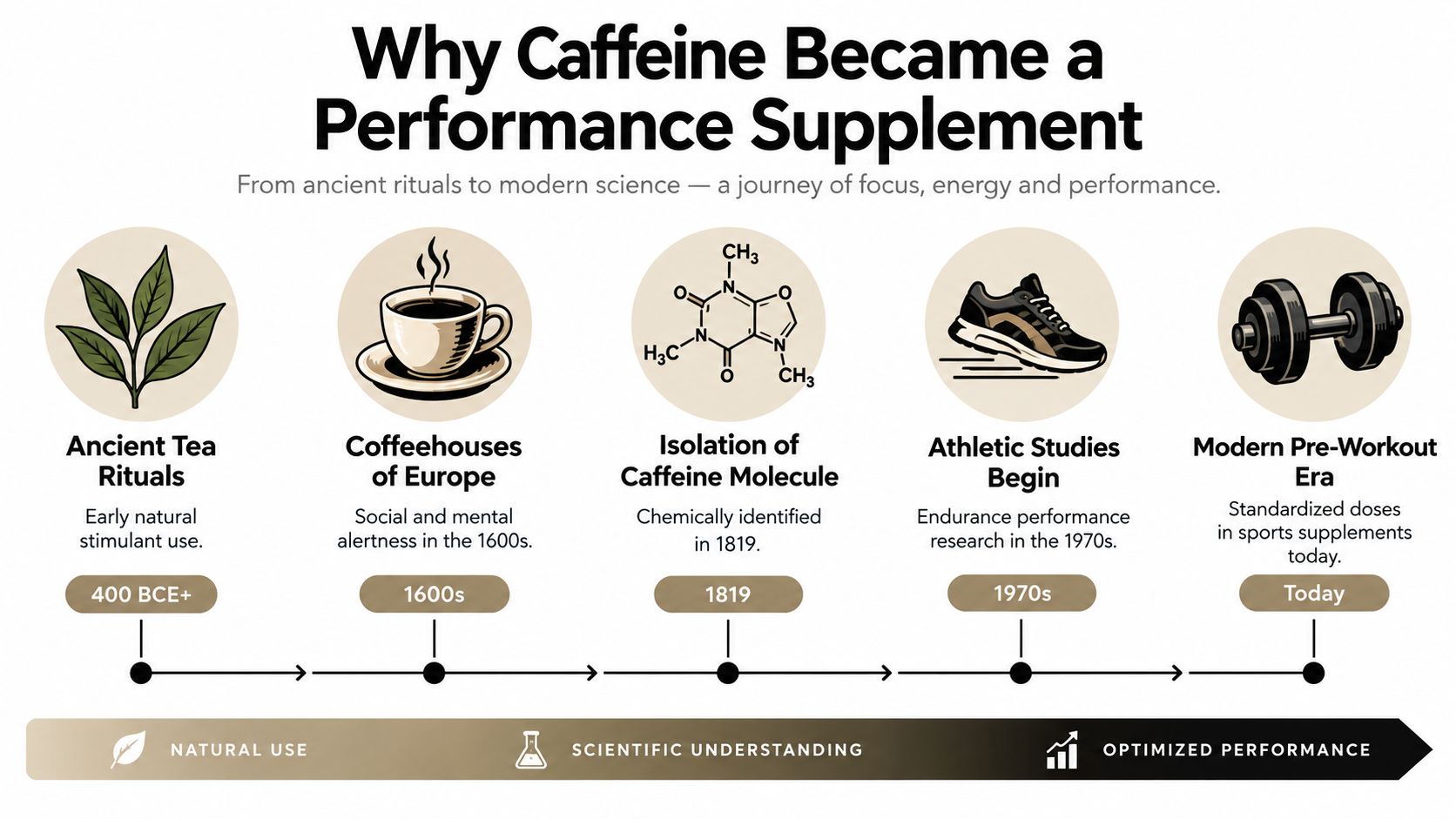
Caffeine became a performance supplement when researchers began measuring it as a dose, not merely consuming it as part of a beverage. Coffee had long been associated with alertness, while exercise studies gave caffeine a more specific identity as an ergogenic aid, a substance that can support physical performance under particular conditions.
A landmark 1978 study led by David Costill at Ball State University examined trained cyclists exercising at approximately 80% of maximal oxygen consumption until exhaustion. After consuming about 5 mg per kilogram of body mass, approximately 330 mg for the participants, the cyclists' average time to exhaustion rose from 75 minutes with placebo to 96 minutes with caffeine. That was an increase of 21 minutes, or roughly 28%, as described in the Gatorade Sports Science Institute review.
From beverage habit to dose calculation
Published research had examined caffeine and exercise as far back as 1907, but late-1970s studies helped establish the foundation for modern sports-nutrition research. Later research commonly evaluated moderate-to-high pre-exercise doses around 3–6 mg/kg, while some reviews reported effects at 5–9 mg/kg, depending on the activity and measured outcome.
That history helps explain why caffeine appears in powders, capsules, gels, drinks, fat burners, and focus formulas. Product format changes how easily you can measure a serving, yet your body responds to the caffeine absorbed. Timing, previous intake, and individual sensitivity also influence the result.
The practical implication is straightforward: caffeine from a supplement joins caffeine from coffee, tea, drinks, and other products in the same daily total.
Practical rule: Dose caffeine deliberately, the way you would any active ingredient, rather than treating it as flavouring.
Coffee may still work as a pre-exercise option when its caffeine content fits your routine. Readers comparing coffee with supplements can review these coffee before workout benefits. Record that caffeine alongside every other source, then consider the timing of the combined intake.
Types of Supplements Containing Caffeine
Caffeine appears in several product categories, and the category often hints at the intended use. It doesn't tell you the actual dose, however. The label remains more important than the front-of-pack promise.
| Supplement Type | Typical Caffeine Range | Primary Use Case |
|---|---|---|
| Pre-workout powder | Varies by formulation | Exercise readiness, alertness, and training support |
| Fat burner | Varies by formulation | Stimulation alongside thermogenic ingredients |
| Energy pill or capsule | Varies by formulation | Convenient, concentrated alertness |
| Nootropic or focus stack | Varies by formulation | Attention and mental energy |
| Energy powder or drink mix | Varies by formulation | Portable energy for work, study, gaming, or exercise |
Pre-workouts and energy powders
Pre-workout products commonly combine caffeine with ingredients such as amino acids, electrolytes, creatine, or other performance-oriented compounds. Their main advantage is convenience, but blends can make it difficult to identify how much caffeine you're taking. A product may list caffeine from more than one source, so check the total per serving rather than counting only an ingredient named “caffeine.”
Energy powders can be easier to adjust than a fixed capsule if the label clearly states the caffeine per scoop. They also create a serving-size risk. If the suggested use allows multiple scoops, calculate the caffeine for the full amount before mixing it.
For a broader comparison of formulation choices, see this guide to best pre-workout supplements. Use it as a starting point, then verify the current product label and account for your other sources.
Pills, fat burners, and focus formulas
Caffeine pills offer a measured serving, which can be useful for people who don't want coffee or a flavoured drink. The trade-off is that a pill provides little sensory feedback. You may take it quickly, forget that you used it, and later add caffeine from another product.
Fat burners deserve extra caution because they may combine caffeine with several stimulating botanicals. “Natural caffeine” still contributes to total caffeine exposure. Ingredients such as guarana can also contribute caffeine and should be included when the label provides that information.
Nootropic stacks may pair caffeine with ingredients such as L-theanine or other cognitive-support compounds. That combination can feel different from coffee, but a smoother subjective experience doesn't remove caffeine's effects on sleep, heart rate, anxiety, or cumulative exposure.
Understanding Caffeine Safety Benchmarks
The 400 mg daily figure is a boundary, not a caffeine target. It applies to healthy adults and covers the day's complete intake, including coffee, tea, cola, energy drinks, chocolate, medicines, and supplements. Caffeine in a pre-workout or powder is only one entry in that total. Federal survey data from 2013–2016 found a mean intake of 195 mg per day among caffeine consumers aged 1–80. Among adults aged 30–80, 14% consumed more than 400 mg per day. Those figures show why a supplement-only calculation can undercount exposure.
Daily limit versus single serving
A daily benchmark measures the caffeine entering your body across the whole day. A single-serving benchmark measures the amount arriving at once. The distinction matters because one large serving can consume much of your daily caffeine budget before other sources are counted.
For healthy adults, the EFSA caffeine guidance identifies total intake up to 400 mg per day, spread across the day, as generally not raising safety concerns. It also identifies a single dose up to 200 mg, or approximately 3 mg/kg, as generally safe for healthy adults. A serving containing 200 mg therefore uses half of the commonly cited daily benchmark before coffee, tea, food, or medicines enter the calculation.
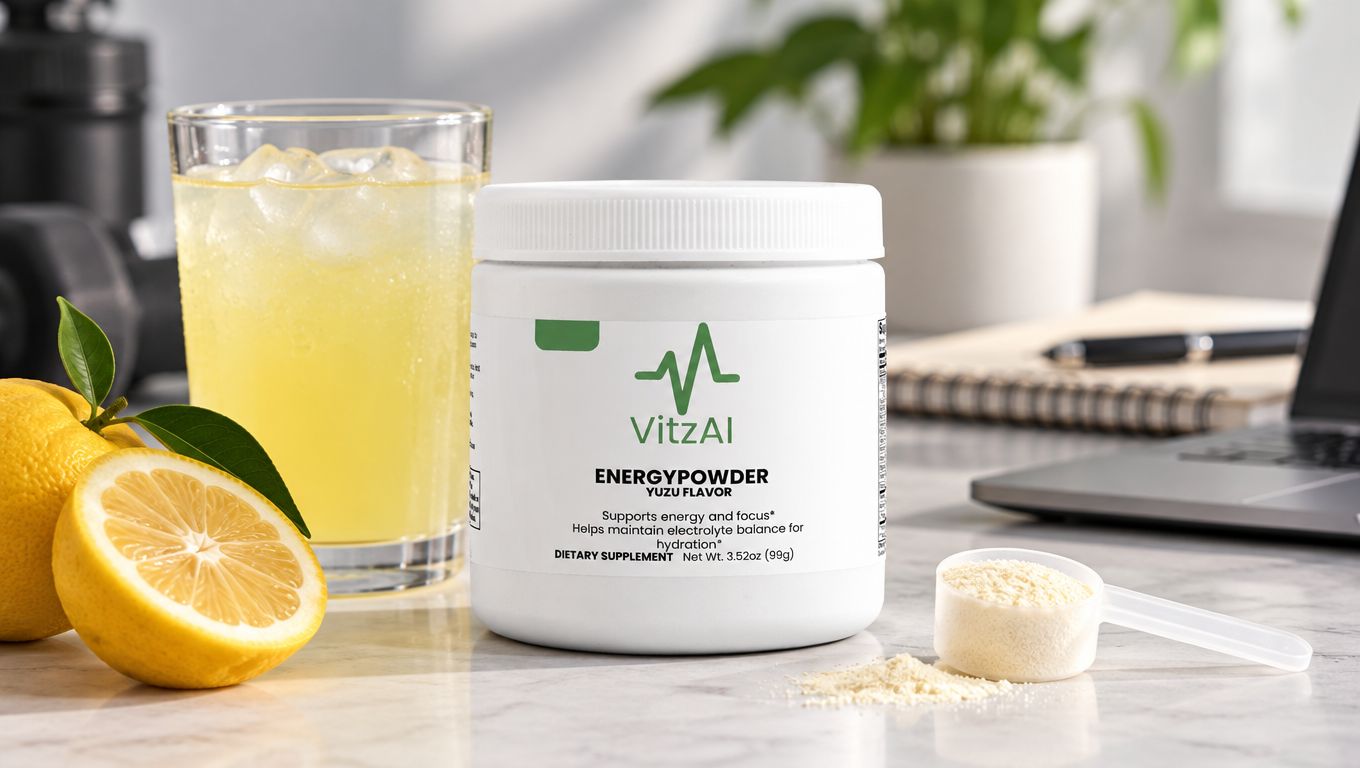
A product such as Energy Powder (Yuzu Flavor) lists natural caffeine from green tea alongside L-theanine, taurine, electrolytes, vitamins, and minerals. Its label recommends mixing one scoop with water and not exceeding five scoops within 24 hours. Check the caffeine amount per scoop, then multiply it by the serving you use. The label's maximum scoop count is not a substitute for adding your other caffeine sources.
Why the benchmark isn't universal
Genetics, liver function, medication use, smoking, pregnancy, and individual sensitivity can affect how caffeine feels and how long it remains active. Nervousness, disrupted sleep, or a racing heartbeat can occur below a general adult benchmark.
Use 400 mg as a ceiling for healthy adults, not a goal to reach. If caffeine affects sleep or anxiety, your practical limit is lower. The right question is not whether a product fits beneath the benchmark by itself, but whether your entire day's caffeine budget does.
Calculating Your Total Daily Caffeine Exposure
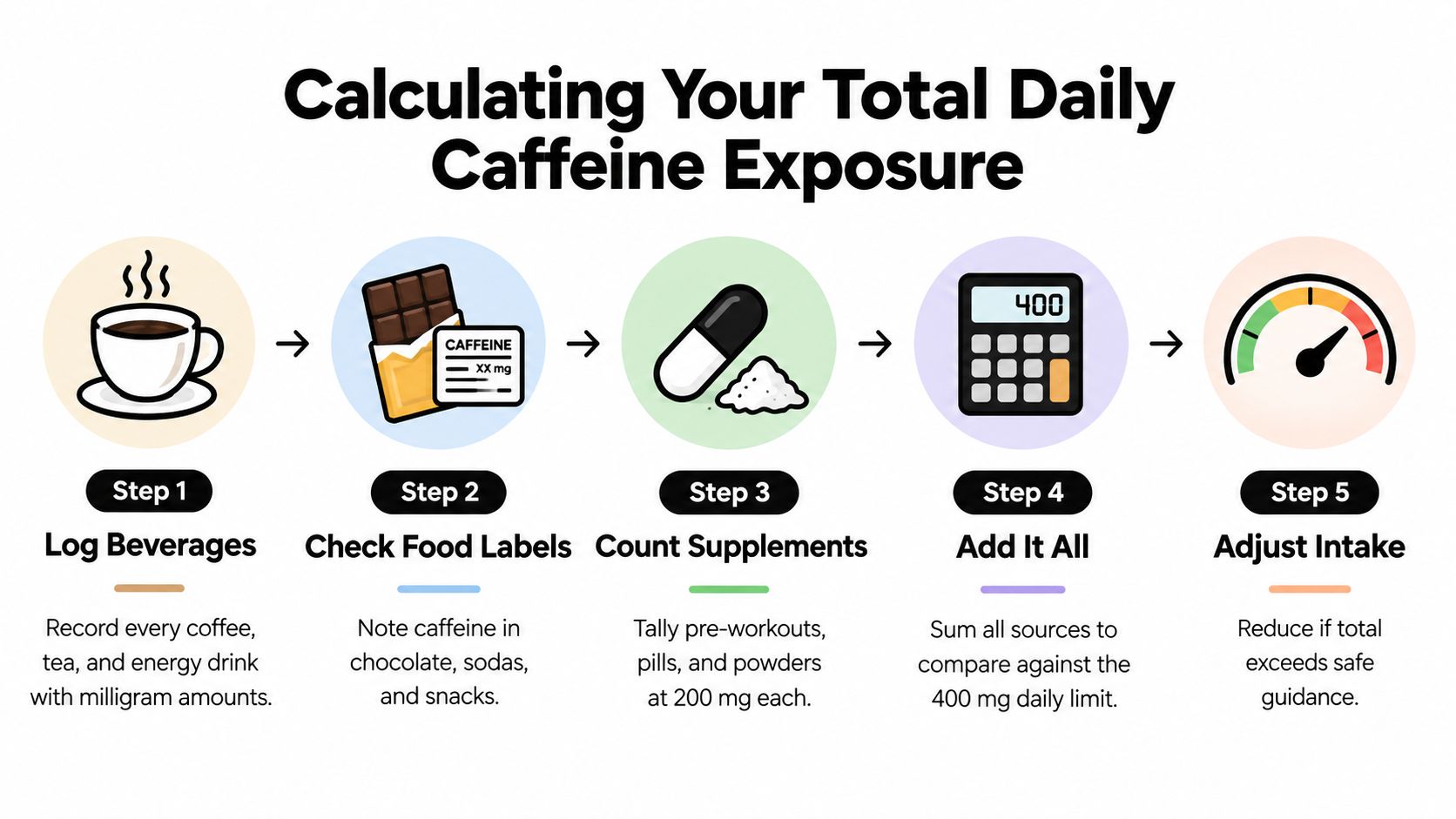
Your caffeine intake is a daily budget, not a collection of separate products. Keep a running total from the moment you choose a supplement. Coffee, tea, energy drinks, chocolate, fortified foods, medicines, pre-workouts, capsules, and powders all draw from the same amount.
Five steps for a reliable running total
- Log beverages first. Record every coffee, tea, cola, and energy drink. Use the label's caffeine amount whenever it is available.
- Check food and medicine labels. Chocolate, fortified foods, and some medicines contribute caffeine. If the amount is not listed, do not assign a precise value without evidence. Record the product and ask a pharmacist or healthcare professional if it could affect your total.
- Count supplements by actual serving. Include the amount you take from pre-workouts, caffeine pills, energy powders, and focus blends. Botanical ingredients such as guarana also belong in the calculation when the label identifies them as caffeine sources.
- Add every source. Compare the running total with the healthy-adult benchmark of 400 mg per day, identified by the U.S. Office of Dietary Supplements. That benchmark applies to the whole day, not just the product being evaluated.
- Adjust timing and amount. Reduce or remove a source if the total is high. If sleep is poor, take caffeine earlier or choose a caffeine-free option, even when the daily total appears acceptable.
Timing determines how much caffeine remains active when you want to sleep. Caffeine reaches peak blood concentrations in roughly 45–60 minutes and has an average half-life of approximately 4–6 hours. A 200 mg pre-workout taken at 4 p.m. can therefore leave roughly 100 mg in circulation around bedtime under average metabolism. Genetics, pregnancy, liver function, medicines, and smoking can change that clearance.
Consider a morning coffee followed by a 200 mg pre-workout at 4 p.m. The combined amount may remain below the daily benchmark, depending on the coffee, yet the late dose can still disrupt sleep. Add an energy drink, caffeinated medicine, or another supplement without checking its label, and several moderate choices can push the day's total above the benchmark.
For a visual explanation of timing and metabolism, watch this caffeine intake and exposure overview.
Sleep check: If you need caffeine to compensate for consistently short sleep, another stimulant may conceal the problem instead of solving it.
The Hidden Dangers of Concentrated Caffeine Forms
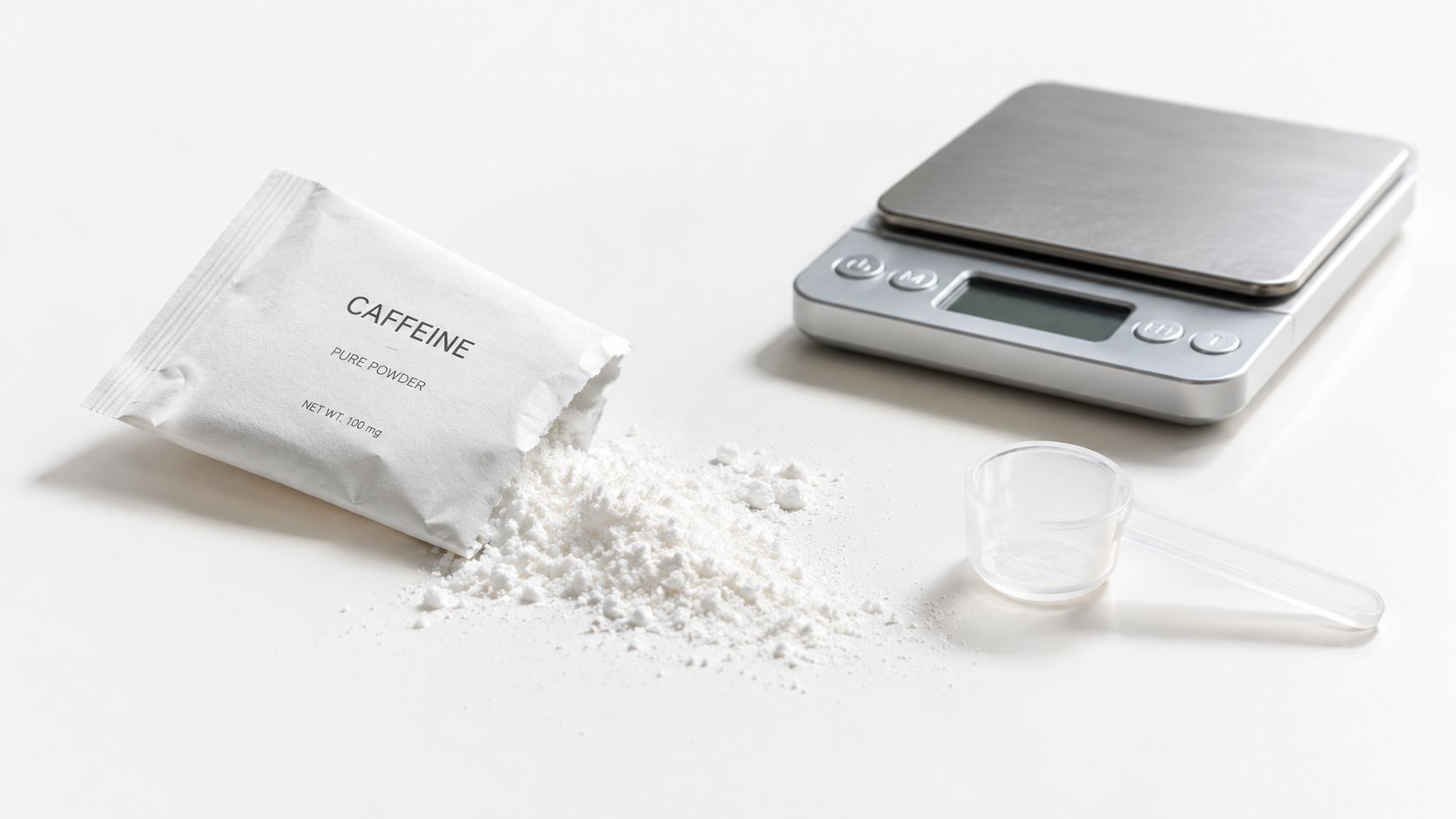
With concentrated caffeine, the hazard is often the measuring tool. Pure powder and highly concentrated liquids can contain far more caffeine than a household spoon can measure reliably. A tablespoon of pure powder may contain about 10 g, a potentially fatal quantity, according to the U.S. Food and Drug Administration warning. A small measuring error can turn an intended serving into a dangerous dose.
Concentration changes the risk
The FDA states that toxic effects, including tachycardia, ventricular arrhythmia, and seizures, have been observed at approximately 1,200 mg of caffeine. It estimates a typical potentially life-threatening dose at roughly 10,000–14,000 mg, while warning that smaller amounts can endanger children and other sensitive individuals (FDA assessment).
These figures are safety warnings, not dosing instructions. They show why bulk caffeine powder is unsuitable for casual self-measurement. The FDA has warned consumers to avoid pure or highly concentrated caffeine sold in bulk after at least two reported deaths, and notes that a tablespoon may contain about 10 g (FDA consumer warning).
What a transparent label should show
A pre-measured capsule or finished beverage usually provides a clearer control point than bulk powder, provided the label is accurate and the serving is used as directed. It does not make every product suitable for every person. It lowers the chance that an imprecise household measure turns a small intended serving into a dangerous one.
Check these label details:
- Caffeine per serving: The amount should be stated clearly, rather than hidden inside a proprietary blend.
- Serving count: Confirm whether the suggested use means one scoop, multiple scoops, or several servings per day.
- Botanical sources: Guarana and other caffeine-containing botanicals count toward your total caffeine budget.
- Additional stimulants: Multi-ingredient formulas may change how alert, anxious, or uncomfortable you feel.
- Use instructions and warnings: Follow the label, and do not treat “natural” as a synonym for mild.
Readers comparing powdered energy products can review this guide to choosing the best energy drink powder, then apply the same label check to every brand. More stimulation doesn't guarantee better performance. Higher intake can worsen sleep disruption, nervousness, shakiness, and other adverse effects without improving exercise results.
Building a Personalised Caffeine Strategy
A useful caffeine plan starts with your whole day, not a supplement label. Treat caffeine like a daily budget: coffee, tea, energy drinks, chocolate, medicines, and supplements all draw from the same account. Record what you use, when you exercise, your bedtime, sleep quality, anxiety response, medicines, and relevant health conditions. Then ask whether a supplement provides a clear benefit or just adds stimulation to an already stimulating routine.
Match the dose to the reason
Timing can matter as much as the daily total. Caffeine before a morning workout has more time to decline before bedtime. An evening dose may fit within a daily limit yet still shorten or disturb sleep. As the EFSA guidance cited earlier notes, even 100 mg may affect sleep in some adults when taken close to bedtime.
Match the serving to your purpose. For exercise alertness, compare it with your usual coffee rather than treating the supplement as a separate allowance. For work-related focus, first consider whether fatigue reflects poor sleep, stress, inadequate food, or dehydration. If stimulation worsens anxiety or leads to late-day tiredness followed by more caffeine, choose a non-caffeinated option. A guide to energy without caffeine outlines alternatives.
Keep a simple timing calculation in mind: caffeine used earlier may fit your sleep better than the same amount used later. Your total caffeine budget includes both doses, even when they come from different products.
Pregnancy and health conditions need separate care
Healthy-adult guidance does not apply to everyone. UK NHS guidance advises pregnant people to consume no more than 200 mg of caffeine per day, including tablets and health or fitness supplements, coffee, tea, cola, energy drinks, chocolate, and guarana (NHS pregnancy guidance). A supplement serving containing 200 mg could use the full recommended daily maximum before food and drinks are counted.
People with medical conditions, heightened sensitivity, or medicines that may affect caffeine clearance should seek individual advice from a qualified healthcare professional. Do the same if caffeine causes palpitations, marked anxiety, tremor, persistent insomnia, or another concerning symptom.
Use this decision rule:
- Keep it: Your total exposure is clear, timing protects sleep, and you tolerate the product.
- Reduce it: Several sources contribute to your intake, you feel jittery, or you use caffeine late in the day.
- Skip it: The label is unclear, the product is highly concentrated, or a healthcare professional advises caution.
Personalisation means choosing the smallest useful intervention at a time that supports your goals. It does not mean pursuing the largest dose you can tolerate.
VitzAi.com combines a personalised supplement quiz with a curated range covering energy, focus, magnesium, creatine, omega-3, sleep, and general nutrition. Visit VitzAi.com to review options alongside your goals, diet, sleep, exercise routine, and current supplement use. Discuss uncertain choices with a qualified health professional.
This article is for informational purposes only and is not medical advice. Always consult a qualified health professional before starting a new supplement or major lifestyle change.