

Vitamins for Energy Over 40: What the Evidence Actually Says
A vitamin pill is rarely the missing switch that turns a tired forty-something into an energetic one. If your diet already supplies enough of a nutrient and your body absorbs it normally, taking more usually won't create extra energy. The more useful question is what is interfering with your energy in the first place: a nutrient deficiency, poor absorption, inadequate sleep, hormonal change, stress, low muscle capacity, or a health problem that deserves assessment.
That distinction matters because correcting a deficiency is different from stimulating energy in an already-replete person. The right supplement can help when iron, B12, vitamin D, magnesium, or another nutrient is low. It won't compensate for persistent sleep disruption or unexplained fatigue. This guide uses that screening-first approach to vitamins for energy over 40, including where creatine, omega-3, multivitamins, ashwagandha, mushroom blends, and energy powders fit, and where marketing gets ahead of evidence.
Why the Vitamin Fix Does Not Work the Way Marketing Suggests
Many product pages suggest a simple fix: feel tired, buy a multivitamin, perhaps add B12 or an energy powder, and wait for the lift. Biology is less cooperative. NIH states that vitamin B12 supplements don't improve energy, athletic performance, or endurance in people who already obtain enough B12. The useful effect mainly applies when deficiency or impaired absorption is present (NIH Office of Dietary Supplements on vitamin B12).
Supplements are not pointless. Their role is narrower than the advertising often implies. Someone with B12 deficiency may need treatment, while someone with adequate B12 may notice no energy benefit from taking more. The same principle applies to iron, vitamin D, and magnesium. A supplement can correct a bottleneck, but it does not act as a universal stimulant.
Practical rule: Ask “what gap am I correcting?” before asking “which supplement gives the biggest boost?”
Start with the symptom, not the shelf
Low energy describes an experience, not its cause. Fatigue after several short nights raises different questions from breathlessness during ordinary activity. Tiredness alongside restless legs, heavy menstrual bleeding, digestive symptoms, numbness, weakness, or mood changes also points toward different possibilities.
Your age adds context. Absorption may become less reliable, dietary habits can shift, and recovery from exercise or stress may take longer. Hormonal transitions, including perimenopause, can affect sleep and perceived energy. Men may notice changes in recovery, muscle capacity, or sleep without a vitamin deficiency being responsible.
A useful screening process follows a sequence:
- Review the pattern. Consider sleep, food intake, stress, exercise, digestion, medicines, and accompanying symptoms.
- Identify plausible risks. A vegan diet, heavy periods, limited sunlight, or long-term digestive problems changes the nutrients worth discussing.
- Test when appropriate. Persistent, unexplained, or function-limiting fatigue deserves clinical assessment.
- Use targeted support. Choose a nutrient or product that matches a documented or plausible need, rather than combining products with overlapping ingredients.
That approach may sound less exciting than buying several bottles. It is more likely to protect your money, your stomach, and your health.
What Actually Changes in Your Body After 40
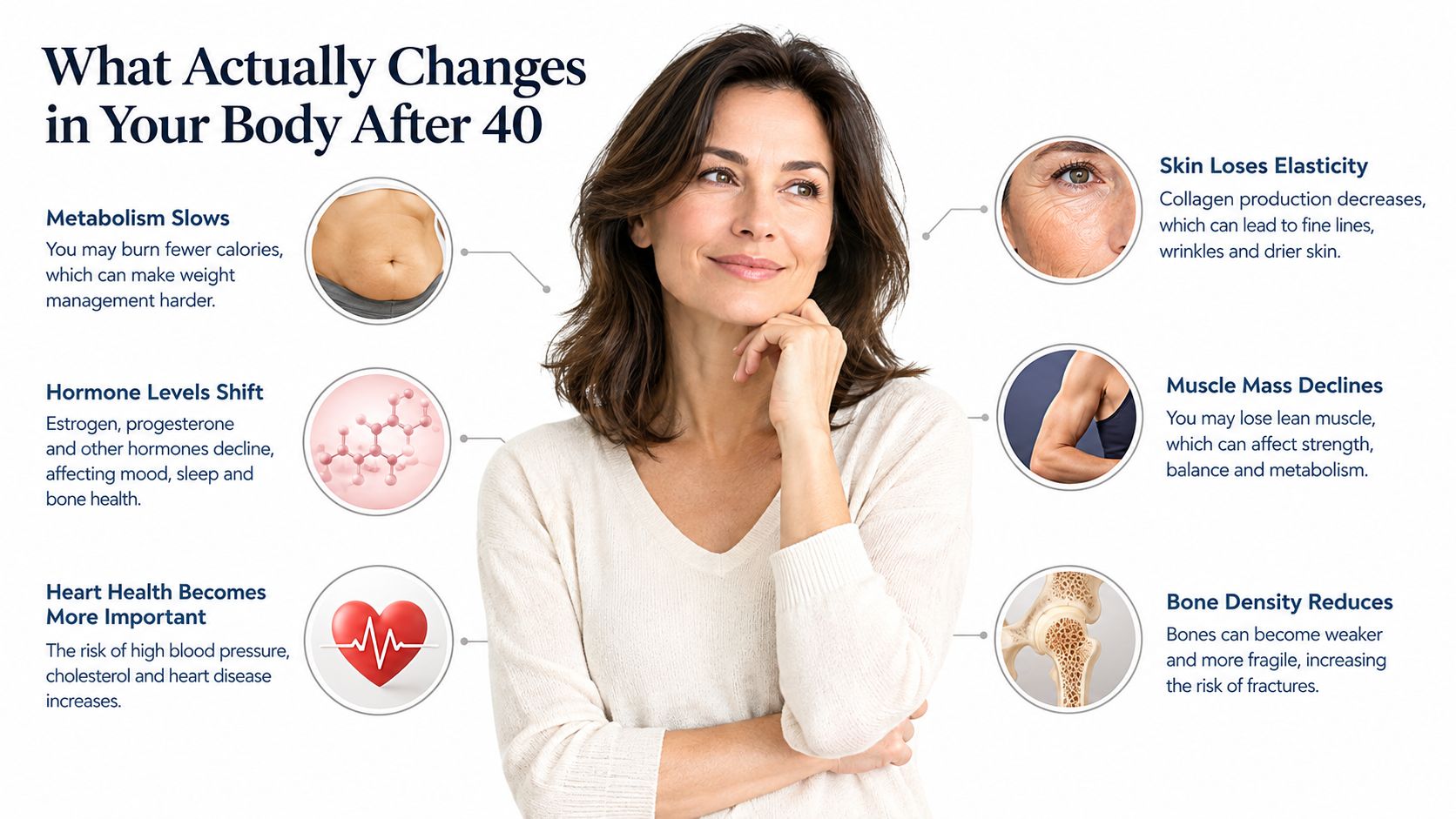
Think of energy as a fuel system with two parts. The fuel tank is your supply of calories, oxygen, fluids, and micronutrients. The engine is your sleep, muscles, mitochondria, hormones, nervous system, and ability to recover. After 40, either part can become less efficient, even when your routine hasn't changed much.
The fuel tank can become less dependable
Your body needs B12, folate, iron, magnesium, vitamin D, and many other nutrients for blood formation, oxygen delivery, nerve function, muscle work, and normal metabolism. A low intake can reduce available fuel. Absorption problems can do the same even when your meals appear nutritious.
B12 is a useful example. Food-bound B12 can become harder to absorb with age, and medicines or digestive conditions may interfere. Vitamin D depends partly on sunlight exposure, season, skin coverage, and skin tone. Iron needs rise in some situations, including heavy menstrual bleeding, while restricted diets can reduce intake of absorbable iron.
The engine also changes
Muscle mass and strength are important parts of everyday energy. Carrying shopping, climbing stairs, or recovering from a workout becomes harder when muscle capacity falls. Resistance training helps preserve that capacity, but recovery may require more attention to sleep, food, and training load than it did in your twenties.
Sleep can change too. Stress, hormonal shifts, pain, alcohol, evening stimulation, and changing schedules can reduce restorative sleep even when you spend enough time in bed. A person may interpret the result as a vitamin problem because the symptom is tiredness, but the cause may sit elsewhere.
Low energy after 40 isn't automatically abnormal ageing, and it isn't automatically a nutrient deficiency. The pattern tells you what to investigate.
Hormonal changes deserve particular attention for women approaching or moving through perimenopause, and for anyone experiencing changes in mood, temperature regulation, sleep, libido, or menstrual patterns. For men, low energy may overlap with sleep disorders, low mood, medication effects, metabolic problems, or changes in muscle and recovery. Supplements shouldn't be used to guess at a hormone diagnosis.
The Key Vitamins and Minerals Worth Thinking About
No nutrient deserves the top spot for everyone. The priority depends on your diet, symptoms, medicines, absorption, sunlight exposure, and blood results.
B12 and folate support red-blood-cell formation and normal nervous-system function. B12 is particularly relevant for people who eat little or no animal food, have digestive conditions, or use medicines that affect absorption. US NHANES data from 2007 to 2018 found 3.6% of adults aged 19 and older had biochemical B12 deficiency below 200 pg/mL, compared with 3.7% among adults aged 60 and older. Using the broader threshold below 300 pg/mL, 12.5% of all adults were identified as insufficient (NIH data on vitamin B12 status).
Vitamin D supports normal body functions and musculoskeletal health. A gap is more plausible when you get little sunlight, cover most of your skin outdoors, have darker skin, spend little time outside, or live through a season with limited sunlight. It isn't a universal energy stimulant.
Iron supports oxygen transport and cellular metabolism. It deserves testing rather than casual supplementation because excess or unnecessary iron can cause harm, and fatigue may have another cause.
Magnesium participates in muscle and nerve function. The NIH lists fatigue and weakness among early signs of magnesium deficiency, with higher risk in some older adults and people with gastrointestinal disease, type 2 diabetes, or alcohol dependence (NIH guidance on magnesium).
| Nutrient | Role in energy | Common food sources | Who may be at risk |
|---|---|---|---|
| B12 | Red-blood-cell formation, nerve function, energy metabolism | Fish, meat, eggs, dairy, fortified foods | Vegans, vegetarians, older adults, people with digestive conditions or absorption-affecting medicines |
| Folate | Cell division and red-blood-cell formation | Leafy greens, beans, fortified foods | People with restricted diets or poor overall intake |
| Vitamin D | Musculoskeletal function and normal body processes | Sunlight, fortified foods, oily fish | People with limited sunlight, darker skin, covered skin, or seasonal exposure |
| Iron | Oxygen transport and mitochondrial metabolism | Meat, beans, lentils, fortified grains | People with heavy menstrual bleeding, restricted diets, digestive disease, or blood loss |
| Magnesium | Muscle, nerve, and metabolic function | Nuts, seeds, beans, whole grains, leafy greens | Some older adults and people with gastrointestinal disease, type 2 diabetes, or alcohol dependence |
| Omega-3 | Supports functions involving the heart, blood vessels, brain, and immune system | Oily fish, some fortified foods, supplements | People who rarely eat fish, although it isn't a direct energy stimulant |
Food records can reveal simple gaps. If turkey sandwiches are a regular part of your meals, a resource on the smart way to log sliced turkey can help you estimate portions more consistently without turning food tracking into guesswork.
Creatine and CoQ10 belong in a separate category. Creatine is more closely tied to short, intense exercise and muscle function than to an instant lift in everyday alertness. CoQ10 is often marketed for energy, but a supplement should still match a specific rationale rather than being added because the label says “cellular energy.” Ashwagandha, mushroom blends, and energy powders may appeal to people managing stress, focus, or training, but product claims vary and they don't replace assessment for persistent fatigue.
Iron, Ferritin and the Energy Symptom You Should Not Ignore
Iron helps move oxygen through the blood and supports mitochondrial metabolism, the process cells use to produce usable energy. Low iron can feel like tiredness, but it may also show up as weakness, reduced exercise tolerance, lightheadedness, poor concentration, or restless legs.
The tricky part is that haemoglobin can remain within range while iron stores are already falling. Ferritin reflects stored iron and often drops earlier. The NIH Office of Dietary Supplements identifies ferritin below 30 mcg/L as suggestive of iron deficiency and below 10 mcg/L as suggestive of iron-deficiency anemia, although inflammation can raise ferritin and make interpretation less straightforward (NIH guidance on iron testing).
What to ask for
A clinician may consider a full blood count, ferritin, and additional iron markers. Transferrin saturation can add context because it compares circulating iron with total iron-binding capacity. The NIH describes ferritin together with transferrin saturation as a clearer way to assess possible deficiency.
Risk is higher when there is heavy menstrual bleeding, a restricted diet, gastrointestinal disease, malabsorption, or unexplained blood loss. New iron deficiency in a man or a postmenopausal woman needs medical evaluation rather than a trial of tablets. The important question isn't only “how can I raise iron?” It is “why is iron low?”
Why self-prescribing often backfires
Iron supplements can cause constipation, nausea, abdominal discomfort, and other gastrointestinal effects. More iron isn't automatically better, and the appropriate dose depends on the result, the cause, tolerance, and the treatment plan. Dietary iron, oral supplements, and intravenous iron aren't interchangeable choices.
Persistent fatigue is a reasonable reason to ask a doctor whether ferritin and related tests are appropriate. It isn't a good reason to start iron without a plausible risk profile or professional guidance. For a focused comparison of the two nutrients, see this guide to iron and B12 supplements, then take the questions to a qualified professional.
Vitamin D, B12 and the Question of Who Really Needs a Test
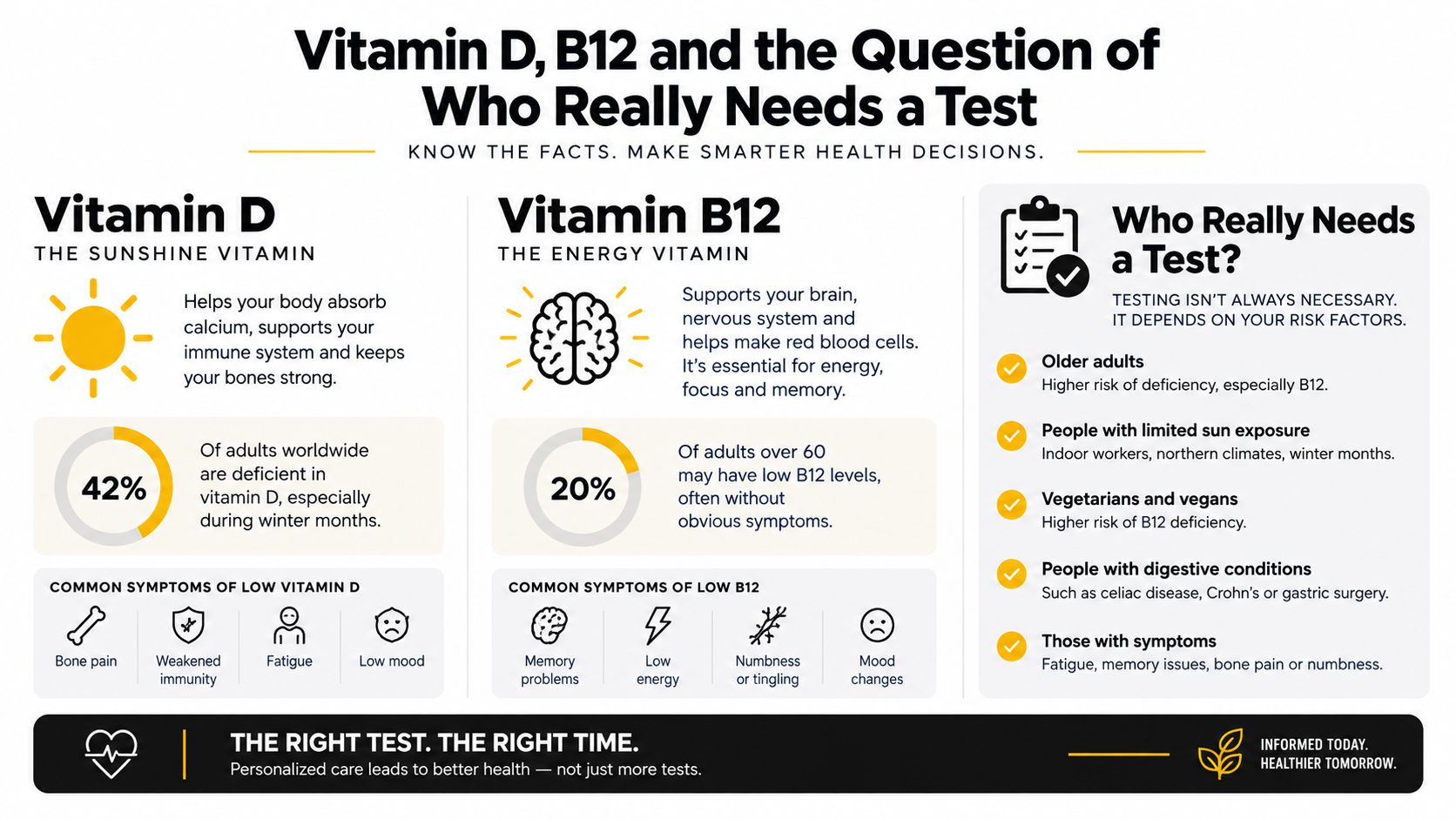
Vitamin D is often treated as a general energy vitamin, but the more accurate view is conditional. Status depends on geography, season, outdoor time, skin tone, clothing, and diet. Someone who spends little time outside has a different risk profile from someone who works outdoors, even if both are the same age.
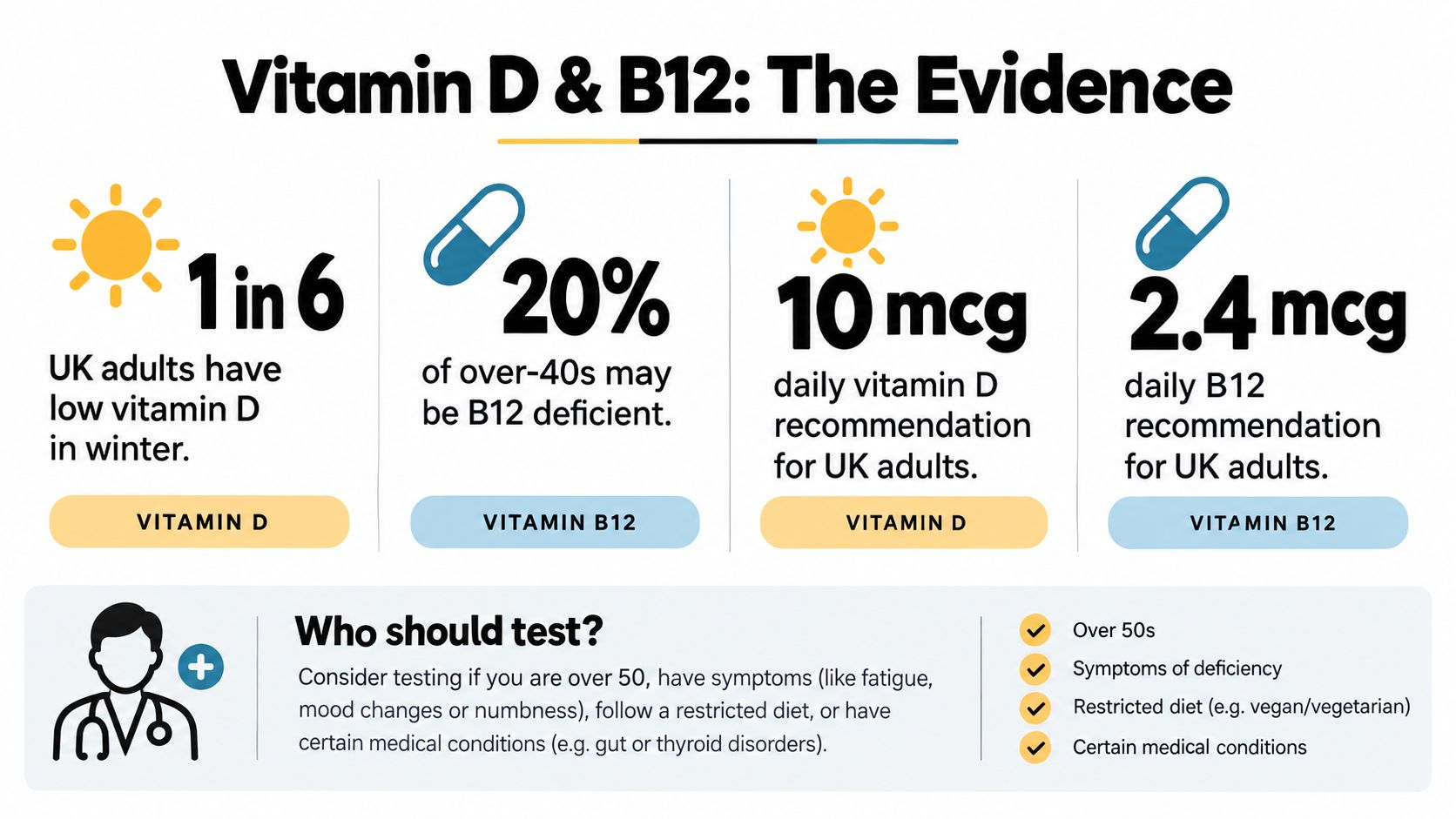
The UK National Diet and Nutrition Survey for 2019 to 2023 found 18% of adults aged 19 to 64 had serum 25-hydroxyvitamin D below 25 nmol/L, the government deficiency threshold in relation to bone health. The figure was 34% among adults in the most deprived income or occupation-based quintile (UK National Diet and Nutrition Survey). Low vitamin D can affect musculoskeletal health and make ordinary activity feel harder, but supplementation doesn't guarantee more energy when status is already adequate.
B12 needs a risk-based conversation
B12 deserves attention when you eat vegan or mostly vegetarian, consume few animal foods, have a digestive condition, or use medicines that may affect absorption. Persistent fatigue alongside weakness, neurological symptoms, palpitations, or anemia moves the question away from general wellness and toward clinical assessment.
A B12 blood test may be useful, but the result needs context. A person can have a risk factor without deficiency, while another person may have symptoms that require investigation beyond B12. Folate and iron can produce overlapping problems, so a clinician may consider more than one explanation.
Ask yourself:
- Do you eat animal foods or fortified foods regularly?
- Have you had digestive surgery or ongoing digestive symptoms?
- Do you take medicines that may affect absorption?
- Is fatigue persistent, worsening, or accompanied by numbness, weakness, breathlessness, or changes in concentration?
- Have you had recent blood tests that include B12, folate, iron markers, or vitamin D?
A general online vitamin deficiency test can help you organise questions, but it can't diagnose a deficiency or replace appropriate blood testing.
Sleep, Stress and Movement Are Not Optional Extras
A busy 47-year-old may finish work late, train in the evening, wake during the night, and rely on coffee the next morning. By Friday, the temptation is to buy B12, magnesium, an energy powder, and perhaps an adaptogen. Those products may not address the main problem if late training and accumulated stress are keeping sleep shallow.
The NHS says most healthy adults need around 7 to 9 hours of sleep per night, although individual needs vary. It also advises avoiding exercise during the four hours before bedtime, with activity preferably scheduled in the morning or early afternoon (NHS sleep guidance).
Make the experiment practical
Move demanding training earlier if evening sessions leave you alert at bedtime. Keep a consistent wake time, eat regular meals, and use a short wind-down routine that doesn't depend on another supplement. If stress is high, a walk, breathing practice, or low-intensity movement may support recovery more effectively than adding another product to the cupboard.
Resistance training remains valuable because muscle helps you handle daily activity and exercise. Creatine can be relevant here, particularly when paired with resistance training. A review of creatine research in older adults describes increased intramuscular phosphocreatine stores, and one trial involving adults over 65 used 5 g of creatine daily alongside resistance training, with improvements in lean mass, strength, and functional tasks compared with training and placebo (review of creatine in older adults). That evidence concerns muscle and exercise function, not a guaranteed cure for everyday tiredness.
Movement doesn't have to mean a gym membership. Dancing can combine social connection, coordination, and activity. If that appeals to you, explore the benefits of ballroom dancing as one enjoyable way to stay active.
For people considering supplements alongside better routines, this guide to supplements for better sleep can help separate sleep support from a general energy product. Magnesium may be relevant when intake is poor or risk factors exist, but persistent fatigue still needs a broader review.
How a Personalised Quiz Helps You Cut Through the Noise
A personalised questionnaire can turn a long supplement list into a shorter set of questions. The VitzAI quiz asks about age, diet, energy, sleep, stress, exercise, fish intake, digestion, and wellness goals, then uses the answers to suggest which products may be relevant, such as a multivitamin, magnesium, omega-3, B-complex, or sleep support.
That kind of guided starting point is different from a diagnosis. It can't confirm anemia, B12 deficiency, thyroid disease, or a hormone problem, and it shouldn't replace a clinician when fatigue persists. It can, however, help you describe your habits and priorities more clearly before deciding whether to buy anything or arrange testing.
The same principle applies to the technology behind online questionnaires. A Presidio Shopify quiz tool illustrates how brands can organise guided product questions without turning every visitor toward the same bundle.
Your Personalised Next Steps and When to See a Professional
Start with a short review of your diet pattern, sunlight exposure, sleep, stress, exercise, digestion, medicines, and symptom pattern. Ask whether your situation makes B12, vitamin D, iron, or magnesium deficiency plausible. If fatigue is persistent, unexplained, or affecting daily function, ask a GP or other qualified professional whether appropriate blood tests are warranted.
A single, good-quality multivitamin may be a reasonable baseline for some people with an inconsistent diet, but it shouldn't become a substitute for investigation. Single-nutrient products make more sense when diet, risk factors, or testing identify a specific gap. Avoid stacking products without checking overlapping ingredients, especially with omega-3. The FDA considers supplements providing no more than 5 g per day of combined EPA and DHA safe when used as recommended (NIH information on omega-3 fatty acids).
Seek professional help for persistent fatigue, neurological symptoms, anemia, breathlessness, unexplained blood loss, or new iron deficiency in a man or postmenopausal woman. The aim is informed self-direction, not self-diagnosis.
This article is for informational purposes only and is not medical advice. Always consult a qualified health professional before starting any new supplement or major lifestyle change
VitzAi.com offers a personalised supplement quiz that uses your diet, goals, sleep, stress, exercise, and digestion to suggest products that may be relevant, including options such as multivitamins, magnesium, creatine, and omega-3. Visit VitzAi.com to organise your supplement choices around your actual needs rather than a generic energy stack.