

When Is It Best to Take Vitamins for Maximum Benefits
So, you’ve lined up your supplements, ready to boost your health. But have you ever stopped to ask, "when is the best time to actually take these?" It’s a common question, and the answer isn't as simple as you might think. The truth is, the best time depends entirely on the type of vitamin.
Taking a fat-soluble vitamin with a meal can massively improve how well your body absorbs it. On the other hand, water-soluble vitamins are often best taken first thing in the morning on an empty stomach. Getting this right can make a huge difference in your energy, cognitive performance, and overall well-being.
Why Your Vitamin Timing Matters
Figuring out the best time to take your supplements can feel a bit like solving a puzzle. You've invested in your health, but are you getting the most out of every single capsule? Believe it or not, timing isn’t just a minor detail—it’s a critical factor that determines whether your body absorbs and actually uses these essential nutrients or simply flushes them away.
Think of it like this: your body is a sophisticated machine with its own internal clock. Just as you wouldn't eat a huge meal right before going for a run, you shouldn't take certain supplements when your body isn't ready to process them. When you align your supplement intake with your body's natural rhythms, the results for your fitness, gut health, and longevity can be night and day.
For most of us, building a routine is the secret to staying consistent. This is especially true in the UK, where studies have shown that a staggering 48% of people don't get enough vitamins and minerals from their diet alone. Dietitian Dr. Carrie Ruxton points out that taking supplements with breakfast is a brilliant way to kickstart nutrient absorption and keep your energy levels steady throughout the day. You can read more about the nation's nutritional habits in this insightful report on UK vitamin requirements.
The Core Principles of Supplement Scheduling
To make things easier, we can group supplements into three main categories, each with its own timing rules. Getting your head around these groups is the first step to building a schedule that truly works for you and supports your health goals, whether that's better sleep, less stress, or improved cognitive performance.
This handy guide gives you a quick visual summary of when to take water-soluble vitamins, fat-soluble vitamins, and minerals.
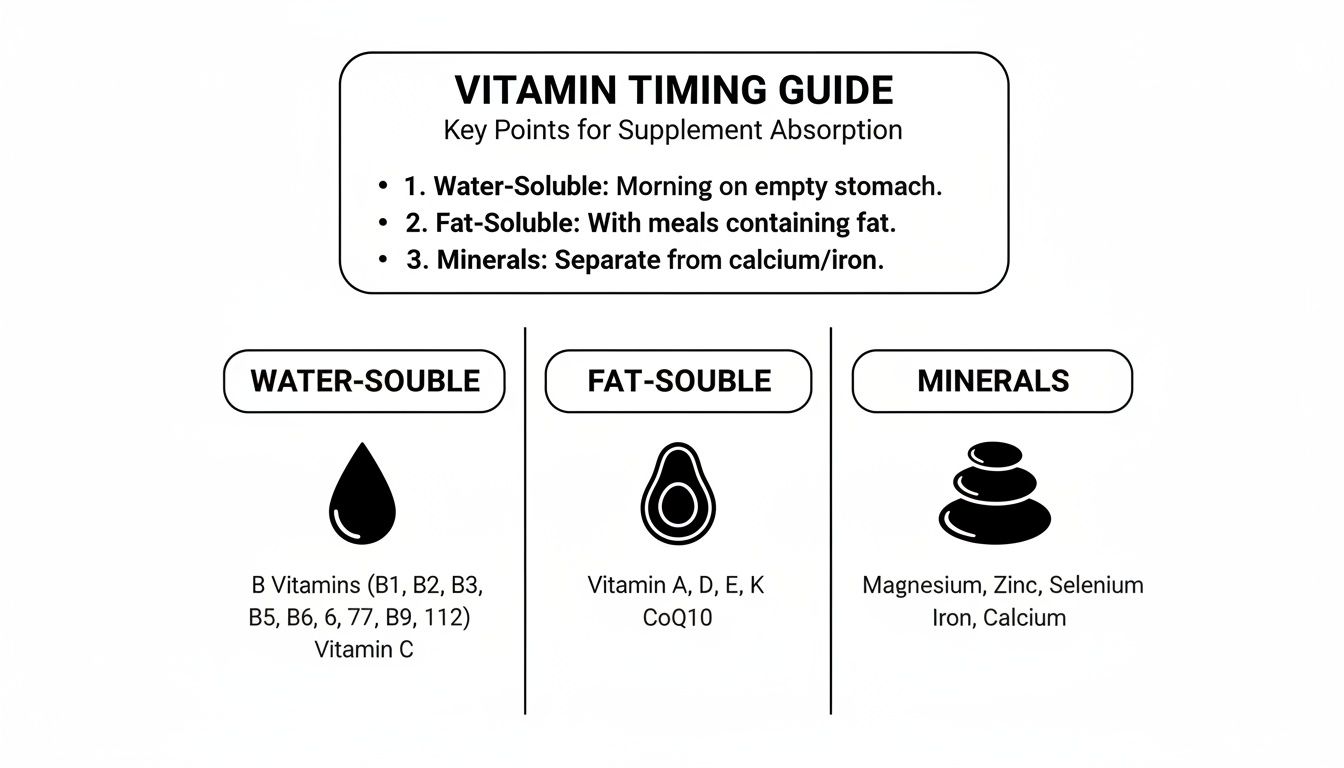
The key takeaway? Fat-soluble vitamins need food to be absorbed properly, while water-soluble vitamins and many minerals offer a bit more flexibility and are often great to take in the morning.
By learning the basic rules for each type of supplement, you can move from randomly taking pills to strategically supporting your body's needs. This simple shift can unlock better energy, improved cognitive performance, and greater long-term health benefits.
Later in this guide, we’ll dive deeper into each of these categories and explore the science behind why these timing recommendations work. We'll also cover specific supplements that are popular for boosting fitness, brainpower, and overall wellness, like creatine, magnesium, ashwagandha, and omega-3s.
Quick Reference Vitamin Timing Chart
To give you an at-a-glance overview, here’s a simple chart summarising the best times to take your supplements. Think of it as your daily cheat sheet for getting the most out of your routine.
| Supplement Type | Examples | Best Time to Take | Why It Matters |
|---|---|---|---|
| Water-Soluble Vitamins | Vitamin C, B-Vitamins (B1, B2, B6, B12, Folic Acid) | Morning, on an empty stomach (30 mins before food) | Your body doesn't store them, so a daily top-up is key. Taking them on an empty stomach helps with quick absorption. |
| Fat-Soluble Vitamins | Vitamins A, D, E, K | With a meal containing healthy fats (e.g., avocado, nuts, olive oil) | These vitamins dissolve in fat, so eating them with a fatty meal is essential for your body to absorb them properly. |
| Minerals | Iron, Calcium, Magnesium, Zinc | Varies by mineral; often with food to avoid stomach upset | Some minerals compete for absorption (like calcium and iron), so spacing them out is important. Food helps reduce potential nausea. |
| Specialty Supplements | Probiotics, Omega-3s, Herbal Supplements (e.g., Ashwagandha) | Depends on the supplement; some with food, some before bed | Timing is specific to the supplement's function. Probiotics often best before food; magnesium is great before bed for relaxation. |
This chart is a great starting point, but remember that individual needs can vary. Always check the label on your specific supplement for any unique instructions.
Understanding Fat-Soluble vs Water-Soluble Vitamins
To really get your supplement timing down to a fine art, you first need to get your head around one core idea: the difference between fat-soluble and water-soluble vitamins. Nailing this is the absolute key to unlocking their full potential.
Think of it like a simple kitchen experiment. Imagine trying to mix oil into a glass of water—it just separates and floats on top. That’s pretty much how fat-soluble vitamins behave in your body. Now, picture stirring a spoonful of salt into that water—it dissolves in seconds. That’s your water-soluble group. This simple difference dictates how and when you should take your vitamins for the best possible results.
The Fat-Soluble Family: A, D, E, and K
The fat-soluble crew includes vitamins A, D, E, and K. Just like the name says, they need a bit of fat to be properly absorbed from your gut into your bloodstream. If you just knock them back with a glass of water on an empty stomach, your body will really struggle to make use of them. It's like trying to send a parcel without the right postage—it just won’t get where it needs to go.
This means you should always take your fat-soluble supplements with a meal that contains some healthy fats. You don't need to go all out with a greasy fry-up; a small amount of the right kind of fat is more than enough to do the trick.
Here are a few easy ways to pair them up:
- With breakfast: Try adding half an avocado or a handful of nuts to your morning routine.
- With lunch: A good drizzle of extra virgin olive oil over your salad works wonders.
- With dinner: A piece of fatty fish like salmon or mackerel is a perfect partner.
Because your body is quite clever and can store any excess fat-soluble vitamins in your liver and fatty tissues, you don’t need to top them up quite as obsessively as their water-soluble cousins. The flip side is that it is possible to build up toxic levels if you go overboard with high doses, so always stick to the recommended amount.
The Water-Soluble Group: B Vitamins and Vitamin C
The water-soluble family is made up of Vitamin C and the entire B-vitamin complex (think B6, B9, and B12). These guys are the polar opposite of their fat-soluble relatives. They dissolve in water effortlessly, which means they’re absorbed into your bloodstream incredibly quickly.
Because your body doesn't store water-soluble vitamins for long, consistency is everything. Any extra you take is usually just flushed out in your urine, which makes a daily top-up essential for keeping your levels where they need to be.
This is exactly why the best time for most water-soluble vitamins is in the morning, either about 30 minutes before you eat or a couple of hours after. Taking them on an empty stomach means they can get straight to work without any food slowing down their absorption.
Many of the B vitamins, in particular, are absolute powerhouses when it comes to converting food into energy. Taking them first thing can give you a noticeable lift in energy and mental sharpness that lasts all day—a simple scheduling tweak that can make a huge difference to how you feel. For a deeper dive, check out our guide on the best time to take Vitamin B-complex.
That said, a small number of people find that B vitamins on a completely empty stomach can make them feel a bit queasy. If that’s you, don’t stress. Just have them with a light breakfast. It'll be enough to buffer your stomach while still letting you reap all the benefits.
How Your Lifestyle Impacts Vitamin Absorption
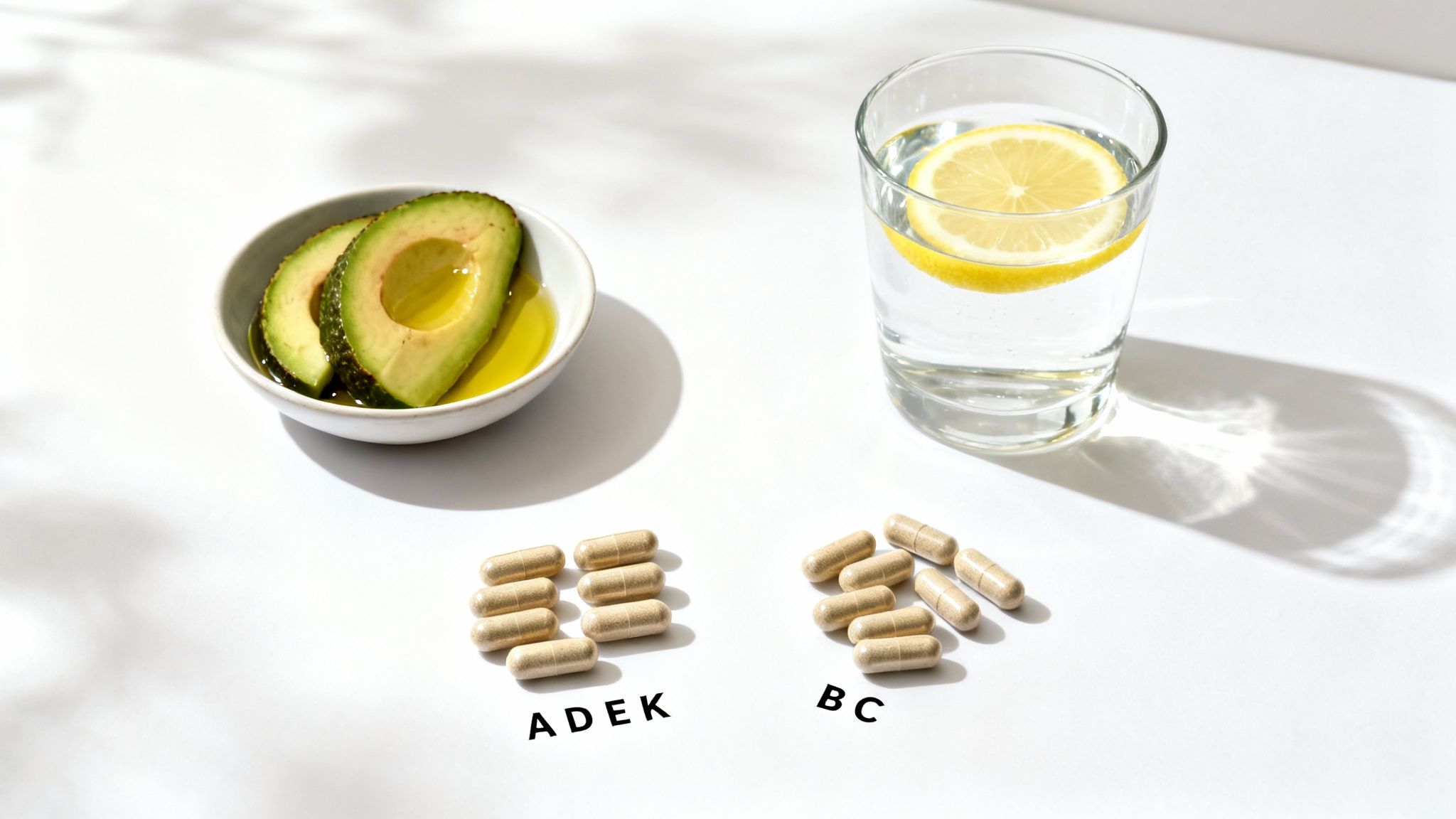
Perfecting your vitamin schedule goes way beyond just knowing about fat- and water-soluble types. Your daily habits are a huge piece of the puzzle, playing a massive role in how well your body can actually use the nutrients you’re taking. It’s not just about what you take, but how it all slots into the rhythm of your real life.
Think of your body as a high-performance engine. Vitamins are the premium fuel, but things like your diet, hydration, and even medications can act like additives—either boosting efficiency or clogging up the works. Getting this balance right is the real secret to unlocking your supplements' full potential. It's why a smart personalized nutrition plan always considers your unique lifestyle, as this directly influences how your body absorbs everything.
Food and Drink Interactions
What you eat and drink around the time you take your supplements can make all the difference. Some combinations are a perfect partnership for absorption, while others can unfortunately get in the way.
Your morning coffee is a classic example. The tannins and caffeine in coffee and tea can bind to minerals like iron and calcium, putting a serious dent in their absorption. To sidestep this, it's a great idea to leave a gap of at least one hour between taking these minerals and enjoying your morning brew.
On the flip side, some pairings work brilliantly together. Vitamin C is famous for dramatically increasing how well we absorb plant-based iron. So, taking your iron supplement with a small glass of orange juice or alongside your Vitamin C capsule can give it a powerful boost.
Medications and Nutrient Absorption
It's incredibly important to recognise that some medications can interfere with how your body absorbs or uses certain vitamins and minerals. This isn't something to guess at; it's a vital conversation to have with your doctor or pharmacist.
Here are a few common examples of these interactions:
- Antacids: Using certain antacids long-term can lower your stomach acid, which is absolutely essential for absorbing Vitamin B12.
- Diuretics: Often prescribed for blood pressure, these can cause your body to flush out key minerals like magnesium, potassium, and zinc more quickly.
- Statins: Some cholesterol-lowering drugs may reduce your levels of Coenzyme Q10 (CoQ10), a crucial compound for energy production in your cells.
This is by no means a complete list, and these interactions can be complex. You should always speak to your doctor or a qualified pharmacist about your specific supplement routine to ensure it’s safe and effective alongside any medications you are taking.
Their guidance is essential for building a safe schedule that supports your health goals without causing any unintended issues.
Exercise Timing and Performance Supplements
If you're focused on fitness, timing your supplements around your workouts can be a game-changer for both performance and recovery. Certain nutrients are simply more effective when taken in the "window" either side of physical activity.
Creatine is a prime example. While you can take it any time of day to build up stores in your muscles, many athletes prefer taking it shortly before or after their training session to really support strength and power output. Likewise, an energy powder with caffeine and B-vitamins is best used pre-workout to maximise its stimulating effects.
Post-workout is all about recovery. This is the ideal time for supplements that help with muscle repair and dial down inflammation. Magnesium, for instance, is brilliant in the evening. It helps relax muscles and supports a deeper, more restorative sleep—which is when your body does most of its repair work. If you're keen to fine-tune your intake, you can learn more about the best time to take magnesium in our detailed guide.
Ultimately, your lifestyle isn't a barrier to getting your supplements right—it's the framework you build your routine around. By understanding these key interactions, you can make small, smart tweaks that ensure you're getting the absolute most from every supplement you take.
Tailoring Supplement Timing to Your Health Goals

Generic advice on when to pop your vitamins is a decent starting point, but let’s be honest—a truly effective routine needs to be built around you. Your health goals, your age, and your gender all play a massive part.
Think about it: your body's needs change over time, so a one-size-fits-all approach just doesn't cut it. This is where getting smart with your timing really pays off. A young man focused on building muscle has completely different nutritional demands than a woman navigating menopause. By tweaking your schedule to match these unique goals, you can make your supplements work so much harder.
For Men and Women Under 40
For men under 40, life is often a juggling act. Demanding careers, intense gym sessions, and a busy social life mean energy and recovery are top priorities.
A great way to start the day is with B-vitamins shortly after waking up. They're absolute powerhouses for converting food into energy, setting the tone for a productive day. If you're really looking to fine-tune your routine, digging into things like the best time of day to take Vitamin B12 for energy and focus can make a noticeable difference.
And for the gym-goers? Taking creatine about 30 minutes before a workout can give your strength and power a real boost. Follow it up with a protein shake afterwards to help replenish your muscles more effectively.
For women under 40, things like hormonal balance, energy, and stress management are often front and centre. The menstrual cycle can really do a number on iron levels, so timing here is crucial. Try taking an iron supplement mid-morning with a source of Vitamin C—like a small glass of orange juice—to enhance absorption and fight off fatigue, especially during your period.
To help cope with the daily pressures that can throw hormones out of whack, an adaptogen like ashwagandha can be a game-changer. Taking it in the afternoon helps regulate cortisol levels, bringing a sense of calm without making you feel drowsy while you're trying to work.
For Men and Women Over 40
As men move past 40, the focus often shifts towards long-term health, looking after the heart, and maintaining that spark. The body's natural production of certain compounds starts to slow down, making smart supplementation even more important.
Coenzyme Q10 (CoQ10) is brilliant for cellular energy and heart function. It's best taken in the morning with a meal that includes some healthy fats to really maximise its absorption. This not only supports your cardiovascular health but also gives you a steady stream of energy throughout the day. Likewise, Omega-3s are vital for keeping inflammation in check and supporting brain health. Taking them with your largest meal—often dinner—improves how well they're absorbed and helps you avoid any fishy aftertaste.
For women over 40, priorities often turn to bone density, managing menopausal symptoms, and keeping hormones balanced. As oestrogen levels decline, it can affect how the body uses calcium, so we need to be clever about it.
Here’s a strategic combo for supporting bone health:
- Calcium: Your body can only absorb about 500 mg at a time, so it's best to split your doses. Try taking one in the morning and another in the evening.
- Vitamin D: This fat-soluble vitamin is absolutely essential for calcium absorption. Taking it with a meal containing fats first thing is ideal.
- Magnesium: Not only does this mineral help with calcium absorption, but it's also fantastic for sleep and relaxation. Taking it an hour or two before bed can help calm the nervous system and support your bones overnight.
Here in the UK, Vitamin D is particularly important, especially with our lack of winter sun. With 49.5% of adults having sub-optimal levels, winter mornings are the perfect time to supplement. Following the NHS advice for a daily 10-microgram dose from October to March is a wise move, and pairing D3 with breakfast fats can boost its absorption by up to 32%.
By tailoring your supplement timing to where you are in life, you shift from just taking vitamins to intelligently supporting your body's unique needs. It’s the most effective way to get the maximum benefit from your investment in your health.
Building Your Perfect Supplement Schedule
Right, let’s get practical. Knowing the 'why' behind supplement timing is one thing, but seeing it laid out in a daily routine is where it all clicks. To help you piece it all together, we’ve created a couple of day-in-the-life schedules that take the guesswork out of the equation.
Think of these as your starting point, not a strict set of rules. Whether you're juggling a demanding career with intense gym sessions or you’re more focused on long-term health and graceful ageing, you can tweak these to fit your life. The real goal is to build a smart, sustainable habit that doesn’t feel like a chore.
Below are two example daily schedules to help you structure your supplement intake based on common health goals. Think of them as a blueprint you can adapt to your own lifestyle and needs.
Sample Daily Supplement Schedules
| Time of Day | Performance-Focused Professional (Under 40) | Longevity & Wellness Enthusiast (Over 40) |
|---|---|---|
| Morning (7-8 AM) | Energy Powder (with B-Vitamins): On an empty stomach to kickstart metabolism and mental focus. Multivitamin & Vitamin D: With a breakfast containing healthy fats (e.g., avocado) to maximise absorption. | Multivitamin & Vitamin D: With a fat-containing breakfast to support bone health and immunity. See our guide on taking Vitamin D and iron together for more on mineral absorption. |
| Afternoon (2 PM) | - | Ashwagandha: Taken mid-afternoon to help manage cortisol levels and buffer against daily stress without causing sleepiness. |
| Pre-Workout (5 PM) | Creatine: About 30 minutes before training to saturate muscles and boost strength and power output during your session. | - |
| Evening (7 PM) | Omega-3: With your evening meal to enhance absorption and help manage post-exercise inflammation for faster recovery. | Omega-3: Paired with dinner to support brain health, cardiovascular function, and keep inflammation in check. Mushroom Blend: (e.g., Reishi) to support your immune system and promote relaxation. |
| Before Bed (10 PM) | Magnesium Glycinate: About an hour before sleep to calm the nervous system, relax muscles, and pave the way for a deeper, more restorative night’s rest. | - |
These schedules are designed to give you a clear, actionable plan. By strategically timing your supplements, you’re giving each one the best possible chance to get to work and deliver the results you're looking for.
Remember, these are flexible frameworks, not rigid rules. The most important thing is to listen to your body, notice how you feel, and adjust accordingly. Consistency will always trump perfection.
Got Questions About Vitamin Timing? We've Got Answers
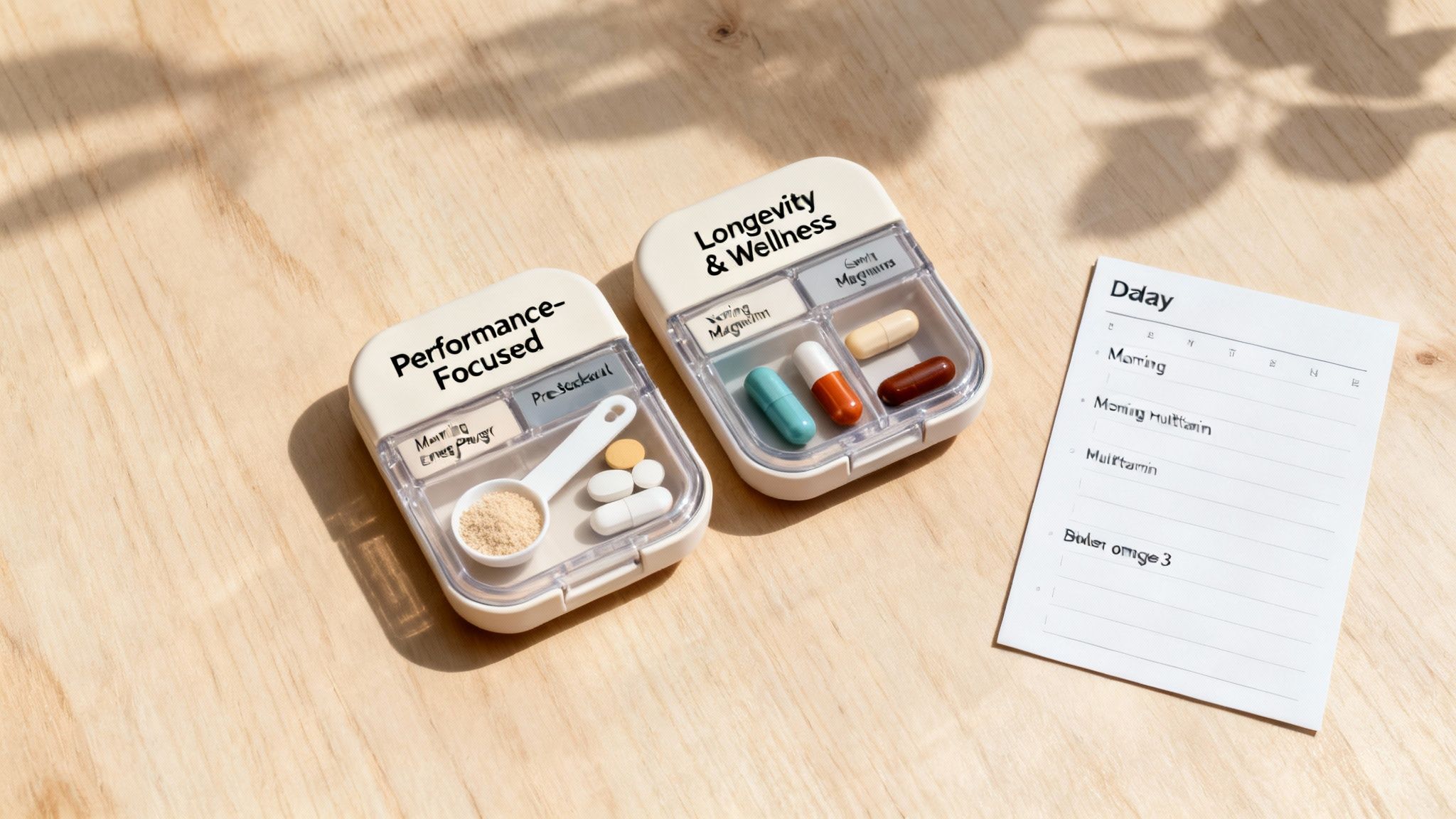
Even with the best plan, practical questions always pop up when you start a new supplement routine. Let's tackle some of the most common ones so you can feel confident you're getting it right.
Think of this as your go-to guide for those nagging little doubts. Each answer will build on the core ideas we've already covered, making sure your supplements work as hard as you do.
Can I Just Take All My Vitamins at Once?
It might seem like the easiest way to get it done, but chucking all your supplements down in one go isn't the best strategy. The simple reason is that some vitamins and minerals actually compete for absorption once they're inside your body.
For instance, high doses of zinc can get in the way of your body absorbing copper, and calcium is notorious for blocking iron uptake. If you take them all together, some nutrients are inevitably going to get pushed to the back of the queue and you'll miss out on the full benefit.
A much smarter approach is to space them out. A great routine is taking your multivitamin and B-complex in the morning with breakfast to kick-start your energy, then saving minerals like magnesium for the evening to help with relaxation and recovery.
This simple tweak ensures each nutrient gets its moment to shine.
What Happens If I Miss a Dose of My Vitamins?
First off, don't panic if you occasionally forget a dose. For most supplements, long-term consistency is far more important than hitting the mark perfectly every single day. The key is to avoid overcompensating.
Just get back on track with your next scheduled dose. You should avoid doubling up, especially with fat-soluble vitamins (A, D, E, and K). Your body stores these in your liver and fatty tissues, so taking too much isn't a good idea. Just resume your normal routine the next day and focus on staying consistent from there.
How Long Should I Wait to Drink Coffee After Taking Supplements?
This is a brilliant question, especially since that morning coffee is a non-negotiable ritual for so many of us. Both coffee and tea contain natural compounds called tannins, and these can bind to certain minerals, which seriously hinders their absorption.
This is particularly true for:
- Iron: Tannins can dramatically reduce how much iron your body takes in.
- Calcium: Its absorption can also be affected.
- Zinc: Another mineral that's sensitive to tannins.
A good rule of thumb is to wait at least one hour between taking these specific minerals and enjoying your brew. This gives your body a clear window to absorb them properly before the tannins arrive on the scene. Water-soluble vitamins like B-complex are generally less affected.
Does Taking Vitamins on an Empty Stomach Really Matter?
Yes, it matters a great deal! As we've covered, fat-soluble vitamins (A, D, E, K) absolutely need to be taken with a meal that contains some fat for your body to absorb them properly. Taking them on an empty stomach means you’ll miss out on most of their benefits. It's like trying to start a car with no petrol.
Water-soluble vitamins (B-complex, Vitamin C) can technically be taken without food. However, some people find that B vitamins can cause a bit of nausea on a completely empty stomach, so having them with a small breakfast is often more comfortable. Iron is another tricky one—it's best absorbed on an empty stomach but can cause irritation, so having it with a small snack is a common and effective compromise.
This article is for informational purposes only and is not medical advice. Always consult a qualified health professional before starting any new supplement or major lifestyle change