

A Guide to Zinc and Magnesium Supplements: For Better Sleep and Recovery
A high-quality zinc and magnesium supplement can be a game-changer for your health. This powerful pairing of essential minerals quietly supports everything from sleep quality and energy levels to how well you recover after a workout. Think of them as the vital, behind-the-scenes crew keeping your body running as it should.
The Power Duo Your Body Is Often Missing

If you picture your body as a complex piece of machinery, zinc and magnesium are two of the most fundamental cogs. They’re involved in hundreds of biochemical reactions that control our most vital functions. You can almost think of them as a 'lock and key' system; one mineral often unlocks a pathway for the other to get its job done.
This dynamic partnership is responsible for:
- Energy Production: They help convert the food you eat into real, usable energy for your cells.
- Muscle Function: Crucial for both muscle contraction and relaxation, which is key for proper recovery.
- Nervous System Regulation: They help calm nerve signals, promoting relaxation and setting the stage for better sleep.
- Hormonal Balance: Both minerals support the production and regulation of key hormones like testosterone.
Here’s the catch: despite how critical they are, many of us simply aren't getting enough of these minerals through diet alone. Modern food processing can strip nutrients from grains, while soil depletion means our fruit and veg may not be as mineral-rich as they were a few decades ago. This creates a subtle nutritional gap that can leave you feeling sluggish and just not quite yourself.
Why Modern Diets Can Fall Short
Even if you’re eating a healthy, balanced diet, hitting optimal levels can be a real challenge. Here in the UK, nutritional surveys have shown that certain groups are particularly likely to fall short. For instance, magnesium deficiencies are surprisingly common in young adults, with nearly 19% of those in their twenties consuming less than the lower recommended limit.
Zinc intake is often closer to the mark, but men still average slightly below the daily recommendation. These small deficits can add up over time, affecting everything from your immune defences to your metabolic health. It’s a key reason why so many people start looking into a zinc and magnesium supplement to bridge that gap. You can dive into the full findings of the UK National Diet and Nutrition Survey to see these dietary patterns for yourself.
A consistent shortfall in these minerals is like trying to run a performance car on low-grade fuel. Your body has all the potential, but it’s missing the essential components to run efficiently.
This is where supplementation becomes a smart, practical solution. If you're dealing with unexplained fatigue, restless nights, or slow workout recovery, it might not be a lack of effort but a lack of essential nutrients. A well-formulated zinc and magnesium supplement offers a direct, reliable way to top up your body's reserves, helping you unlock better energy, deeper sleep, and a greater sense of overall wellbeing.
The Science-Backed Benefits You Can Expect

When you consistently give your body the right tools, you start to see real results. Taking a high-quality zinc and magnesium supplement isn't just about ticking a nutritional box; it's about setting off a chain reaction of positive changes you can actually feel. From deeper, more refreshing sleep to better performance at the gym, this mineral duo works behind the scenes to upgrade how your body operates.
So let’s get into the tangible, science-backed benefits that make this combination a go-to for so many. We'll break down how these essential minerals support your body's core systems, turning complex science into real-world improvements.
Enhancing Sleep Quality
If you spend your nights tossing and turning, magnesium could be the missing piece of your sleep puzzle. This mineral is like a dimmer switch for your nervous system, helping your mind and body unwind at the end of the day. It does this by boosting the function of GABA, a neurotransmitter that dials down nerve activity and promotes a sense of calm.
Think of your brain like a busy city. By evening, you need the traffic to quieten down so you can rest. Magnesium helps amplify those "calm down" signals, making the transition to sleep feel smoother and more natural.
A well-formulated zinc and magnesium supplement can lead to:
- Falling asleep faster: By calming the nervous system, it helps shorten the time it takes to drift off.
- Deeper, more restorative sleep: It supports the deep sleep stages, which are vital for physical repair and cementing memories.
- Waking up feeling refreshed: Better quality sleep means you start your day with a full tank, not feeling groggy and drained.
For anyone looking to really fine-tune their rest, it's worth exploring how different nutrients work in synergy. We cover this in our detailed guide on supplements for better sleep.
Boosting Energy and Reducing Fatigue
It might seem counterintuitive that a supplement known for improving sleep can also boost your energy, but it all comes down to what's happening at a cellular level. Both zinc and magnesium are key players in the production of adenosine triphosphate (ATP), which is essentially the energy currency for your cells. Think of ATP as the tiny batteries powering everything you do, from blinking to lifting heavy weights.
Magnesium, in particular, is needed to make ATP stable and usable. Without enough of it, your body's ability to generate and use energy is handicapped, which can show up as constant fatigue or a general feeling of being run down, even when you think you’re getting plenty of rest.
By ensuring your body has enough of these minerals, you’re supporting the very foundation of your energy production, leading to more sustained energy throughout the day, without the jittery highs and subsequent crashes from caffeine or sugar.
Accelerating Muscle Recovery and Performance
For anyone active, whether you're a weekend walker or a dedicated athlete, recovery is everything. This is where zinc really steps up. It's a critical part of protein synthesis—the process your body uses to repair and rebuild muscle fibres that get damaged during exercise.
Imagine your muscles are like a brick wall that gets tiny cracks after a workout. Zinc acts as one of the master builders, directing the repair crew and helping assemble the amino acids (the "bricks") needed to patch things up. This process makes your muscles stronger and more resilient over time.
A well-timed zinc and magnesium supplement acts like an overnight repair crew for your body. While you sleep, magnesium helps your muscles relax and zinc gets to work rebuilding them, leading to less soreness and faster gains.
Magnesium complements this process perfectly. It helps regulate muscle contractions, prevent cramps, and also plays a part in reducing that post-exercise inflammation. Together, they create the ideal internal environment for quick and effective recovery, helping you get back to training sooner and with more in the tank.
Fortifying Your Immune Defences
Your immune system is your body’s personal security detail, and zinc is one of its most important officers. The mineral is essential for the development and function of immune cells like T-cells, which are responsible for identifying and neutralising invading pathogens like viruses and bacteria.
When your zinc levels are low, your immune response can become sluggish and less effective, leaving you more vulnerable to common colds and other infections. Research has shown that maintaining adequate zinc intake can even help shorten the duration of illnesses, highlighting its direct role in immune resilience.
Magnesium provides backup by helping to regulate inflammation. While some inflammation is a normal and necessary part of the immune response, chronic, low-grade inflammation can weaken your defences over time. Both minerals are key contributors to your body's defence systems and can be part of effective strategies for reducing inflammation naturally.
Supporting Hormonal Balance
Finally, both minerals are crucial for maintaining healthy hormonal balance, which impacts everything from mood and metabolism to reproductive health in both men and women. For men, zinc is particularly well-known for its role in supporting healthy testosterone production. Optimal testosterone levels are linked to muscle mass, energy, cognitive function, and libido.
In women, magnesium can be incredibly helpful for managing symptoms associated with the menstrual cycle, like cramps and mood swings, partly by influencing prostaglandin levels and calming the nervous system. A consistent intake helps ensure your endocrine system has the raw materials it needs to run smoothly, contributing to a greater sense of overall balance and wellbeing.
How to Choose the Right Supplement Form
Stepping into the supplement aisle can feel a bit overwhelming. You're faced with dozens of bottles, all seemingly promising the same thing. But here’s a little insider secret: the real magic isn't just about the dose on the label; it’s about the form those minerals come in. The key to unlocking their benefits is a concept called bioavailability.
Think of bioavailability like this: you can eat a whole orange, peel and all, or you can drink a glass of fresh-squeezed juice. Your body can absorb the nutrients from the juice far more easily and efficiently. It’s the same with supplements. Some forms are like the juice, ready for your body to put to work immediately, while others are like the whole orange—much harder to break down and absorb.
Choosing a supplement with high bioavailability means you're actually getting the good stuff into your system where it can do its job. Go for a low-bioavailability form, and you might as well be flushing your money down the toilet.
Comparing Common Forms of Zinc and Magnesium
Not all supplement forms are created equal. Different forms are absorbed at different rates and can be better suited for specific goals, like sleep, recovery, or immune support. This table breaks down some of the most common types you'll see on the shelf.
| Mineral Form | Bioavailability (Absorption Rate) | Best For |
|---|---|---|
| Magnesium Oxide | Very Low (around 4%) | Primarily as a laxative; not effective for raising magnesium levels. |
| Magnesium Glycinate | High | Sleep, relaxation, stress reduction, and muscle recovery. |
| Magnesium Citrate | Good | Digestive support and general magnesium replenishment. |
| Zinc Oxide | Very Low | Topical use (like sun cream); poorly absorbed internally. |
| Zinc Picolinate | Very High | Immune function, hormone balance, and overall zinc absorption. |
| Zinc Gluconate | Good | General immune support; often found in lozenges. |
Ultimately, opting for chelated forms like Magnesium Glycinate and Zinc Picolinate ensures you're getting the most out of every dose, making your investment in your health really count.
Decoding Magnesium Labels
When you're scanning a magnesium label, you'll come across names like oxide, citrate, and glycinate. These aren't just fancy marketing terms. They tell you which molecule the magnesium is bonded to, and that directly affects how well your body absorbs it and what it does.
Let's look at two of the most common forms you'll encounter:
- Magnesium Oxide: This is a cheap and common form, but its bioavailability is notoriously poor. Studies suggest as little as 4% actually gets absorbed. It's far more likely to have you running to the loo than it is to effectively boost your body's magnesium stores.
- Magnesium Glycinate: Now, this is a different story. This form is "chelated," which means the magnesium is bound to an amino acid (in this case, glycine). This makes it incredibly easy for your body to absorb. Glycine also has a natural calming effect on the brain, making magnesium glycinate the gold standard for improving sleep and easing stress.
While magnesium citrate is another decent, well-absorbed option often used for digestive regularity, magnesium glycinate is typically the top choice for anyone focused on sleep, muscle relaxation, and calming the nervous system.
Finding the Best Zinc Form
The same rules apply to the world of zinc supplements. The form of zinc you choose determines how effectively your body can use it for everything from immune defence and muscle repair to hormonal health.
You’ll generally find two main categories on supplement labels:
- Zinc Salts (like Zinc Oxide or Sulphate): Just like magnesium oxide, zinc oxide is badly absorbed. There's a reason it’s mainly used in topical products like sun cream—it simply isn’t designed for your body to use internally.
- Chelated Zinc (like Zinc Picolinate or Gluconate): These forms are bound to organic molecules, which essentially "pre-packages" the zinc in a way your body instantly recognises and can easily absorb. Zinc picolinate, in particular, is widely regarded as one of the most bioavailable forms you can get.
Choosing a chelated form like zinc picolinate over zinc oxide is like picking a direct flight instead of one with three layovers. You get to your destination—optimal mineral levels—faster and with way less hassle.
Investing in a zinc and magnesium supplement is an investment in your health. By choosing highly bioavailable forms like magnesium glycinate and zinc picolinate, you ensure your body gets the maximum benefit from every single dose. It’s about moving beyond just reading the label to actually understanding it.
Keep in mind that mineral balance is also crucial. Taking high doses of zinc can interfere with your copper absorption, so it’s important to think about choosing a balanced zinc supplement to avoid creating any deficiencies.
Taking Your Supplement for Maximum Impact
Knowing what supplement to choose is only half the battle. To truly unlock its potential, you need to know how and when to take it. A few simple tweaks to your daily routine can make a massive difference in how much you get out of your zinc and magnesium supplement. It’s not just about swallowing a capsule—it's about creating the perfect conditions for your body to absorb and use these powerful minerals.
This is where we get practical. We'll walk you through everything from safe dosage limits to smart timing, so you can feel confident you’re getting the best possible results.
Safe Dosing UK Guidelines
Before you start any new supplement, it’s vital to get the dosing right to avoid any unwanted side effects. The UK’s Department of Health and Social Care has laid out some clear guidelines. For zinc, the daily recommendation is 9.5 mg for men and 7 mg for women (aged 19-64). The safe upper limit from supplements is capped at 25 mg per day unless a doctor tells you otherwise.
For magnesium, men should aim for around 300 mg daily and women 270 mg. To sidestep any digestive issues, it’s best to keep supplemental doses under 400 mg per day. Sticking to these guidelines is the cornerstone of responsible supplementation. You can dive deeper into these recommendations for vitamins and minerals on the NHS website.
This diagram gives you a quick visual on which forms of these minerals your body can actually use most effectively.
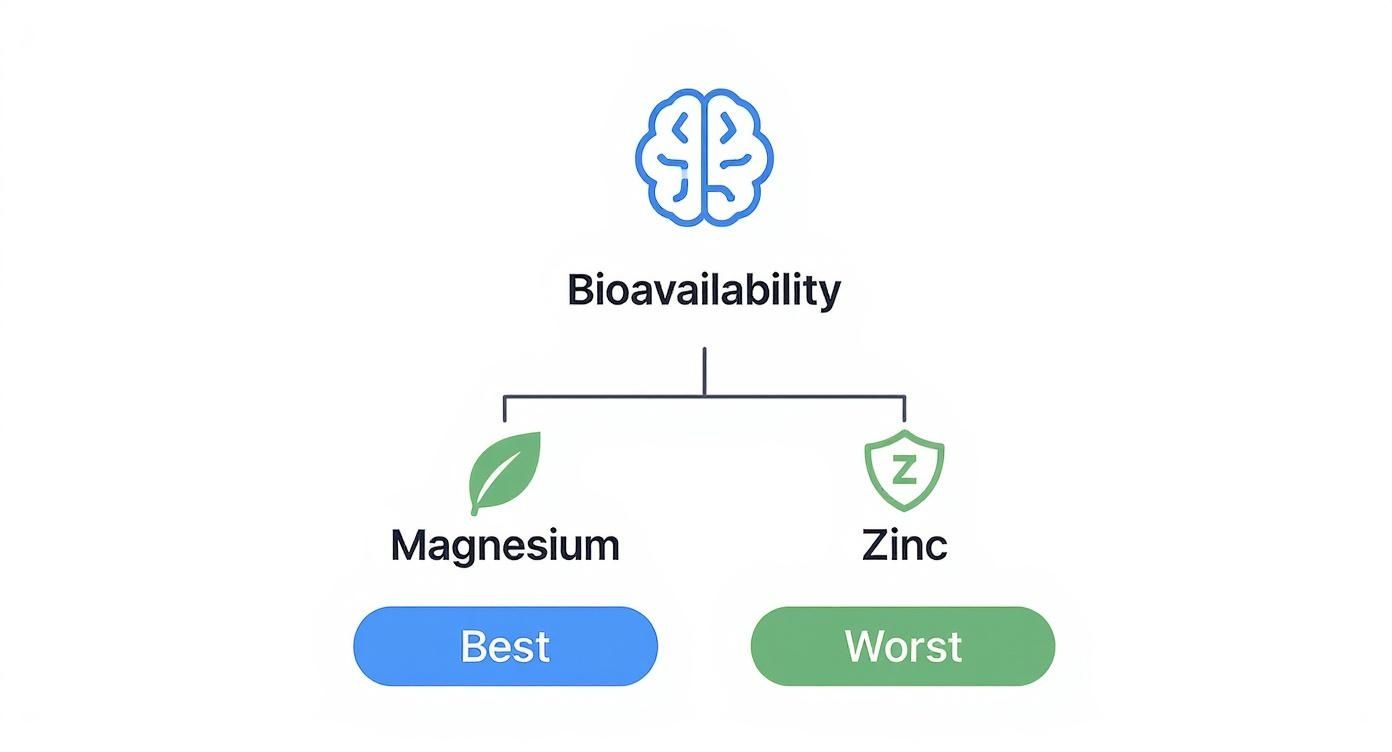
As you can see, the highly bioavailable, chelated forms come out on top, making sure your body isn't just getting these minerals, but absorbing and putting them to work.
The Best Time to Take Your Supplement
Timing can be a total game-changer, especially if better sleep is what you're after. The sweet spot for taking your zinc and magnesium supplement is about 30 to 60 minutes before you head to bed.
Taking it in the evening works in harmony with your body’s natural rhythm. Magnesium helps to switch on the parasympathetic nervous system—your body's "rest and digest" mode—while also supporting the production of GABA, a neurotransmitter that dials down stress and promotes a sense of calm. Zinc is right there alongside it, helping to support deeper, more restorative sleep cycles.
Think of your evening supplement as a clear signal to your body that it’s time to wind down. It’s like turning down the lights and quieting the noise in your brain, setting the stage for a night of quality rest and recovery.
For some people, taking zinc on an empty stomach can lead to a bit of nausea. If that’s you, simply have it with a small, low-calcium snack like a handful of almonds or a few slices of apple.
What to Avoid for Better Absorption
Just as important as when you take your supplement is what you don’t take it with. Some foods and minerals can go head-to-head in your gut, competing for absorption and short-changing you on the benefits.
To get the most out of every dose, try to avoid these:
- Large, Calcium-Rich Meals: Calcium competes directly with both zinc and magnesium. That means you should avoid taking your supplement with a big glass of milk, a bowl of yoghurt, or a calcium-fortified meal.
- High-Fibre Foods: While fibre is fantastic for your health, taking supplements at the same time as a meal packed with whole grains or legumes can slightly reduce how much of the minerals your body absorbs.
- Caffeine: That evening cuppa might be a comforting ritual, but caffeine can interfere with mineral absorption. It’s best to leave at least an hour between your supplement and any caffeinated drinks.
Smart Stacking for Enhanced Effects
Finally, you can amplify the benefits of your zinc and magnesium supplement by pairing it with other nutrients that work well together. This is often called "stacking," and it creates a synergistic effect where the whole is greater than the sum of its parts.
A brilliant partner for magnesium is Vitamin B6. This vitamin acts like an escort, helping to transport magnesium into your cells where it’s needed most. This boosts its bioavailability and impact, especially when it comes to calming the nervous system. You'll find that many high-quality ZMA (Zinc, Magnesium, and Vitamin B6) formulas already include it for this exact reason.
For a more detailed look at how these minerals work together, check out our guide on whether you can take magnesium and zinc together for the best results.
By following these simple rules—dosing safely, timing it right, avoiding absorption blockers, and stacking smartly—you can be sure you’re getting the maximum impact from your supplement, night after night.
Tailoring Your Intake to Your Lifestyle
When it comes to supplements, the idea of a one-size-fits-all solution is a total myth. Your body is unique, and your need for a zinc and magnesium supplement will shift depending on your age, sex, and how active you are. Generic advice often falls flat because it completely ignores the context of your life.
Thinking about your specific lifestyle is the key to unlocking what these minerals can really do for you. Just like a high-performance sports car needs a different kind of fuel than a family runaround, your body's demand for zinc and magnesium changes based on your personal health goals.
Let's break down how to fine-tune your intake for your unique needs.
For Men Supporting Testosterone and Performance
For men, zinc is a true cornerstone mineral for keeping hormones in healthy balance, especially testosterone. It's directly involved in producing this key hormone, which drives everything from muscle mass and energy to your overall sense of vitality.
On top of that, intense exercise can actually drain your zinc levels, so active men have a double incentive to keep an eye on their intake. A high-quality zinc and magnesium supplement helps ensure your body has the raw materials it needs to support both hormonal health and peak physical performance, keeping you at the top of your game.
For Women Supporting Hormonal Cycles
A woman's body operates on a beautifully complex rhythm, and both zinc and magnesium are crucial for supporting this delicate cycle. Magnesium is especially famous for its ability to ease symptoms linked to the menstrual cycle, like cramps and mood swings, by helping to relax smooth muscle tissue and calm the nervous system.
Zinc, on the other hand, contributes to ovulation and helps regulate the entire cycle. Making sure your levels are topped up can lead to a smoother, more balanced month, making a zinc and magnesium supplement a powerful ally for women's health.
Personalising your supplement intake isn't about taking more; it's about taking what's right for you. It's the difference between a generic guess and a targeted strategy that aligns with your body's specific biological demands.
By considering these unique hormonal needs, women can use these minerals to work with their bodies, not against them, promoting a greater sense of wellbeing all month long.
For Athletes and Active Individuals
If you lead an active life, your mineral requirements are in a league of their own. Every single time you sweat, you’re losing essential electrolytes and minerals, including both zinc and magnesium. This loss, combined with the stress of training, puts your body's needs into overdrive.
- Accelerated Recovery: Magnesium is a game-changer for muscle relaxation, helping to fend off cramps and reduce that post-workout soreness. Meanwhile, zinc is a key player in protein synthesis—the very process your body uses to repair and rebuild muscle.
- Replenishing Lost Minerals: A tough workout can deplete your mineral stores fast. A targeted supplement helps you put back what you’ve lost through sweat, ensuring your body has what it needs to perform and recover efficiently.
- Supporting Energy Production: Both minerals are fundamental to how your cells produce energy, helping you sustain your performance during those demanding sessions.
For anyone serious about their fitness, a zinc and magnesium supplement is less of a "nice-to-have" and more of a foundational tool for smashing your recovery and performance goals. To get a deeper understanding of how different nutrients can help you bounce back after a tough session, check out our guide on the best supplements for muscle recovery.
For Older Adults Focusing on Bone and Immune Health
As we get older, our body's priorities naturally shift toward longevity, bone density, and keeping our immune system strong. Magnesium is a key player in bone health, working alongside calcium and Vitamin D to build and maintain a strong skeletal frame.
At the same time, zinc becomes even more important for immune function, as our natural defences can weaken with age. A good zinc intake helps ensure your body's defences stay sharp and resilient. Tailoring your supplement strategy in later life is a smart, proactive step towards healthy ageing, supporting your mobility and vitality for years to come.
Got Questions About Zinc and Magnesium?
Even with all the science sorted, it's totally normal to have a few last-minute questions before you start something new. This is where we’ll tackle the most common queries we get about taking zinc and magnesium supplements. Think of it as a final check-in to make sure you feel completely confident.
Let’s clear up any lingering doubts with some quick, straight-to-the-point answers.
Can't I Just Get Enough From My Food?
The honest answer? It’s tricky. In a perfect world, a diet packed with leafy greens, nuts, seeds, and quality protein would cover all your bases. Foods like spinach, almonds, pumpkin seeds, and oysters are brilliant sources.
But modern life has a habit of getting in the way. For starters, soil depletion means our fruit and veg aren't as mineral-rich as they once were, and food processing often strips out the good stuff. Add a high-stress lifestyle or a regular workout routine to the mix, and your body’s demand for these minerals shoots up, making it even tougher to keep up through diet alone.
A zinc and magnesium supplement simply acts as a reliable nutritional safety net. It bridges the gap between what your diet can provide and what your body really needs to feel its best.
Are There Any Side Effects I Should Watch Out For?
When taken at the right dose, a good zinc and magnesium supplement is generally very safe for most people. The most common hiccup is a bit of digestive upset, which is usually easy to sidestep with a few simple tweaks.
- Zinc: Taking zinc on an empty stomach can sometimes make people feel a bit nauseous. If that’s you, just have it with a small snack. Problem solved.
- Magnesium: High doses of certain forms, like magnesium oxide or citrate, can have a laxative effect. This is exactly why choosing a more bioavailable form like magnesium glycinate is the smart move—it’s much gentler on your stomach.
The key to avoiding side effects is just sensible use. Always stick to the recommended dose on the label and opt for high-quality, chelated forms of the minerals to ensure they’re absorbed gently and effectively.
Of course, if you have any pre-existing health conditions (especially kidney issues) or are on prescription medication, it's always best to have a quick chat with your doctor before starting any new supplement.
How Long Until I Actually Notice a Difference?
Patience is a virtue here. The effects of topping up your mineral levels are usually gradual rather than a big bang. How quickly you feel a difference really depends on where your mineral levels were to begin with and your own unique body chemistry.
That said, many people report a noticeable improvement in their sleep quality within the first week or two. Other benefits, like better energy levels, quicker muscle recovery, and more balanced hormones, can take a little longer to kick in. You'll often start feeling these more distinctly after about four to six weeks of consistent use.
Remember, the goal is to build up your body’s mineral stores over time so they can support you properly. Consistency is far more important than a massive initial dose.
Why Is It Better to Take Zinc and Magnesium Together?
Taking zinc and magnesium together is a classic case of nutritional teamwork. They work in synergy, meaning they produce better results as a team than they would on their own. Their roles in the body are deeply connected, and taking them in a combined zinc and magnesium supplement has some real advantages.
- They Complement Each Other: Both are crucial for calming the nervous system and supporting muscle function. Magnesium helps your muscles physically relax, while zinc plays a part in promoting deeper, more restorative sleep cycles.
- They Keep Each Other in Check: Magnesium actually helps your body regulate its zinc levels, making sure the zinc you take is being used properly. This creates a balanced internal environment where both minerals can do their jobs without getting in each other's way.
- It’s Just Simpler: Let's be honest, taking them in one well-formulated supplement makes life easier. It simplifies your routine, which makes it much more likely you’ll stick with it and see those long-term benefits for your sleep, recovery, and overall health.
This strategic pairing isn't just about taking two minerals; it’s about leveraging their powerful partnership.
This article is for informational purposes only and is not medical advice. Always consult a qualified health professional before starting any new supplement or major lifestyle change.