

Bone and Joint Vitamins: Your Guide to Strong Bones and Flexible Joints
When it comes to keeping your skeleton in top form, certain bone and joint vitamins are absolute non-negotiables. Think of nutrients like Vitamin D, Vitamin K2, Calcium, and Magnesium as the dream team working behind the scenes. They’re the foundation for a strong, resilient framework, making sure you can move through your day with confidence.
Understanding Your Body's Living Framework
It’s tempting to picture your skeleton as a static, unchanging scaffold, a bit like the steel beams in a building. But the truth is far more interesting. Your bones and joints are part of a living, breathing system that’s constantly breaking itself down and rebuilding in a process called remodelling.
Picture your body as a busy, lifelong construction site. One crew, the osteoclasts, are responsible for demolition, clearing away old, worn-out bone tissue. Hot on their heels are the osteoblasts, the skilled builders who lay down a fresh, strong bone matrix to replace it. This cycle never stops, ensuring your skeleton stays robust and can handle the daily grind.
Of course, this ongoing project needs a steady stream of top-quality materials. Without the right nutrients, the construction crew simply can't do its job properly. This is where targeted bone and joint vitamins and minerals become so crucial.
The Demands of Modern Life
Let's face it, our modern lives place stresses on our bodies that our ancestors never had to deal with. Hours hunched over a desk can lead to poor posture and weaken supporting muscles, while high-impact workouts put serious strain on our joints. These contemporary challenges ramp up the demand for the very nutrients needed for repair and maintenance.
Your body's ability to maintain strong bones and healthy joints is directly tied to the nutritional resources it has available. Think of vitamins and minerals as the essential blueprints, tools, and raw materials for your internal construction site.
A generic, one-size-fits-all approach to nutrition often misses the mark because it doesn't account for these specific demands. Your age, sex, activity level, and even hormonal shifts all play a part in which nutrients you need most. For example, the support a woman needs during menopause is vastly different from that of a young male athlete. That’s why figuring out which bone and joint vitamins are key for your unique situation is the first step toward building a truly resilient body from the inside out.
The Core Nutrients for Bone and Joint Health
To keep your body's living framework in top shape, a whole team of specific vitamins and minerals needs to work in perfect harmony. These aren't just names on a nutrition label; they're the essential building blocks and master coordinators for your bone and joint integrity.
Think of it like building a house. You need high-quality materials, but you also need a skilled crew that knows how to put everything together. Let's break down the key players involved in constructing and maintaining your skeletal system.
The Dynamic Duo: Calcium and Vitamin D
Calcium is famously known as the primary building block for bones. Picture it as the bricks used to construct a sturdy wall. In fact, around 99% of your body's calcium is stored right there in your bones and teeth, giving them their strength and structure.
But those bricks are useless if they're just left sitting on the building site.
This is where Vitamin D, the 'gatekeeper', comes in. Vitamin D is absolutely essential for absorbing calcium from your gut into your bloodstream. Without enough of it, your body simply can't get its hands on the calcium you consume, no matter how much you eat. This powerful partnership is foundational to bone density. For those with specific dietary needs, finding reliable dairy-free calcium sources for strong bones is a crucial piece of the puzzle.
The image below shows just how complex your skeleton is—it’s a living system, a constant construction site, and a structure under modern-day stress, all of which rely on these key nutrients.
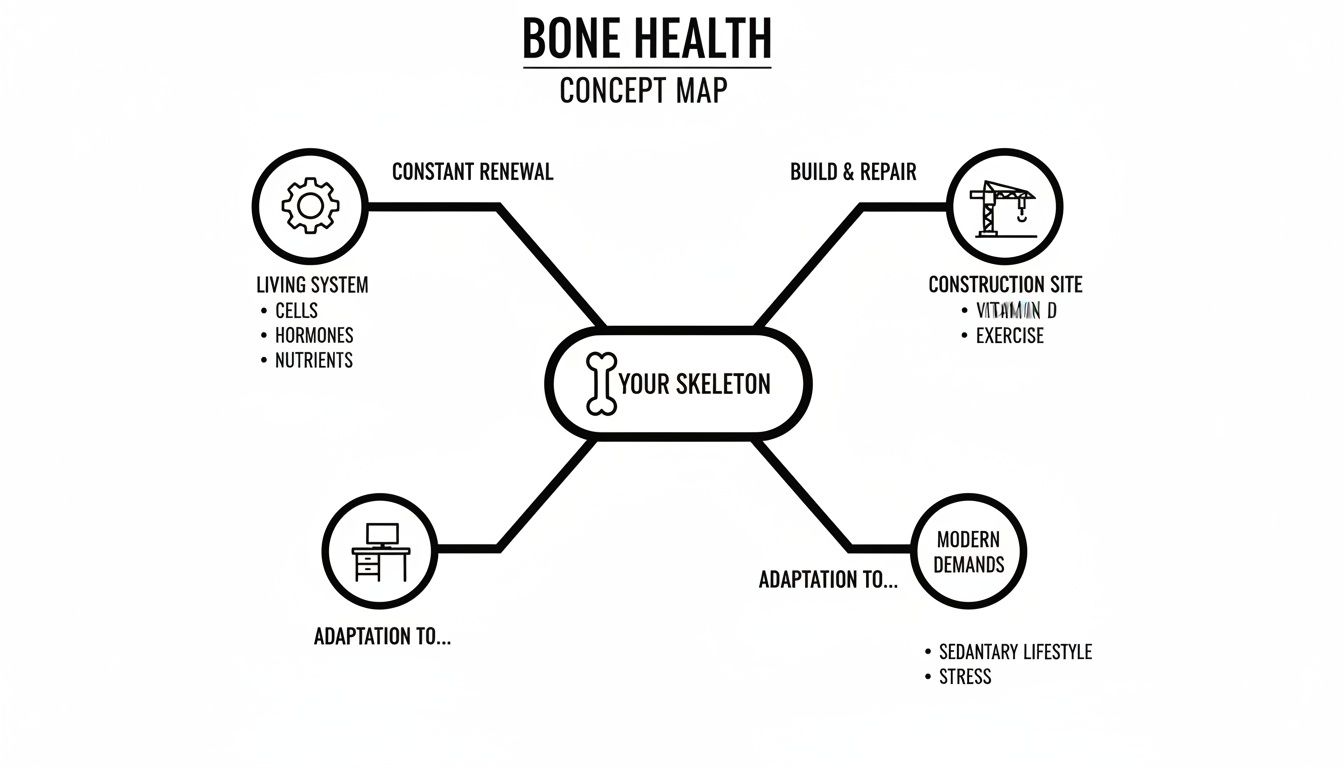
This really drives home that bone health isn’t about single nutrients, but about supporting a dynamic system under constant pressure from our lifestyles.
The Traffic Controller: Vitamin K2
Once Vitamin D has helped calcium get into the bloodstream, another crucial player takes over. Enter Vitamin K2, the 'traffic controller'. Its job is to direct that calcium to where it’s needed most—your bones—and keep it away from places where it can cause harm, like your arteries and soft tissues.
Without enough Vitamin K2, calcium can build up in the wrong places, potentially leading to arterial calcification while your bones are left wanting. This is exactly why the synergy between Vitamin D3 and K2 is so critical; they work together to ensure calcium is not only absorbed but also put to proper use.
Key Insight: Strong bones aren't just about getting enough calcium. It’s about ensuring that calcium is properly absorbed (thanks to Vitamin D) and then correctly deposited into your bone matrix (thanks to Vitamin K2).
The Essential Multi-Tool and Scaffolding
While the D3, K2, and Calcium trio gets a lot of the limelight, two other nutrients are absolutely vital for a complete approach to skeletal health.
-
Magnesium (The Multi-Tool): If calcium provides the bricks, magnesium is the versatile multi-tool that helps the whole construction crew. It's involved in over 300 biochemical reactions, including the crucial job of converting Vitamin D into its active form so it can work its magic. Magnesium also helps stimulate calcitonin, a hormone that pulls calcium from the blood and soft tissues back into the bones.
-
Vitamin C (The Scaffolding Builder): Our joints need more than just strong bones; they need flexible, resilient cartilage to cushion them. Vitamin C is essential for synthesising collagen, the protein that forms the 'scaffolding' or connective tissue of your cartilage, ligaments, and tendons. Without enough Vitamin C, this scaffolding weakens, compromising the stability and health of your joints.
The rising awareness of these nutrient partnerships is reflected in market trends. In the UK, the bone and joint supplements market is expanding, driven partly by a growing health crisis. With three million people in the UK living with osteoporosis—a number expected to hit 4.5 million by 2030—the demand for effective nutritional support has never been greater. This demand contributes to a European market valued at USD 3.4 billion, with the UK holding a significant share.
To help you get a clear overview, here’s a quick summary of the essential players and where you can find them in your diet.
Key Vitamins and Minerals for Bone and Joint Support
| Nutrient | Primary Role | Excellent Food Sources |
|---|---|---|
| Calcium | The main structural component of bones and teeth. | Dairy products, leafy greens (kale, collard greens), fortified plant milks, sardines. |
| Vitamin D | Enhances calcium absorption from the gut. | Fatty fish (salmon, mackerel), fortified foods, egg yolks, sunlight exposure. |
| Vitamin K2 | Directs calcium to the bones and away from arteries. | Fermented foods (natto), cheese, egg yolks, grass-fed butter. |
| Magnesium | Helps activate Vitamin D and supports bone formation. | Nuts (almonds), seeds (pumpkin), leafy greens, dark chocolate, avocados. |
| Vitamin C | Essential for collagen synthesis, building cartilage. | Citrus fruits, bell peppers, strawberries, broccoli, kiwis. |
Getting these nutrients from whole foods is always the best first step, but supplements can play a key role in filling any gaps, especially as our nutritional needs change with age and lifestyle.
Should You Prioritize Food or Supplements?
It’s the big question, isn't it? Can you get everything your bones and joints need from your diet alone? In an ideal world, the answer would be a resounding "yes". We're big believers in a 'food-first' philosophy because whole foods provide a complex mix of vitamins, minerals, fibre, and other plant compounds that all work together in ways we're still just beginning to understand.
But let's be realistic. A food-first approach doesn't always mean a food-only approach is practical, or even enough. Modern life throws up some real roadblocks that can create significant nutritional gaps, even for those of us with the healthiest intentions.

Things like soil depletion mean the fruit and veg we eat today might not pack the same mineral punch they did decades ago. Our lifestyles play a massive part, too. Here in the UK, for instance, getting enough sun exposure – especially in the autumn and winter – makes it incredibly difficult to produce enough Vitamin D naturally. That’s a real problem when it’s a cornerstone nutrient for bone health.
Building Your Foundation with Powerhouse Foods
Before you even think about supplements, your first port of call should always be a diet stacked with bone-supporting nutrients. Think of your plate as the main delivery of raw materials to your body’s internal construction site.
Dialling in on a few key food groups can make a world of difference:
- Oily Fish: Salmon, mackerel, and sardines are brilliant. They’re brimming with anti-inflammatory omega-3s and happen to be one of the best food sources of Vitamin D you can find.
- Dark Leafy Greens: Kale, spinach, and collard greens are true nutritional superstars, giving you fantastic plant-based sources of calcium, magnesium, and Vitamin K.
- Nuts and Seeds: Almonds are rich in magnesium and calcium, while seeds like chia and sesame provide a powerful mineral hit to help support bone density.
By weaving these foods into your meals consistently, you give your body a solid nutritional baseline. This is the foundation that any smart supplement strategy should be built upon.
When Supplements Become a Smart Strategy
So, where do high-quality bone and joint vitamins come into the picture? Think of them as a strategic insurance policy, filling in those unavoidable gaps left by modern diets and lifestyles. They aren’t there to replace good food; they're a targeted tool to make sure you're hitting optimal levels of the specific nutrients your body needs to function at its best.
This is becoming more important as people get serious about their skeletal health. The UK bone and joint health market was valued at USD 891.45 million in 2024 and is expected to climb to USD 1,986.4 million by 2035, driven by worries over conditions like osteoporosis and arthritis. This trend shines a light on a clear public need for reliable nutritional backup, especially when you consider that an estimated 1 in 5 adults in the UK has low Vitamin D levels, which directly hampers their ability to absorb calcium. You can explore the data behind these trends in the UK bone and joint health market for a deeper dive.
The goal of smart supplementation is not to replace a healthy diet, but to enhance it. It's about precision—delivering the exact nutrients your body may be lacking in the most effective forms to support your long-term health.
Why the Form of a Nutrient Matters
Finally, it’s not just about what you take, but the form you take it in. This is where the idea of bioavailability becomes crucial – it simply means how well your body can actually absorb and use a nutrient.
Take magnesium, for example. Magnesium oxide is a common, cheap form you'll see in many supplements, but its bioavailability is pretty poor. Magnesium glycinate, on the other hand, is absorbed much more easily and is gentler on the stomach. The same principle applies right across the board, from methylated B vitamins to specific forms of Vitamin K2. Choosing a high-quality supplement means picking one with bioavailable ingredients, so you can be sure you're actually getting the benefits you're paying for.
Tailoring Your Support for Where You Are in Life
When it comes to nutrition, a one-size-fits-all approach is a recipe for falling short. Why? Because it ignores the single most important variable in the equation: you. Your unique biology, your lifestyle, and where you are in life all dictate what your body really needs to feel its best.
We’ve covered the foundational nutrients, but the specific amounts and which ones to prioritise will shift over time. Let’s move beyond the general advice and get into smarter, more personalised strategies for your bone and joint health.
The nutritional needs of a 25-year-old man hitting the gym are worlds apart from those of a 55-year-old woman navigating menopause. Understanding these differences is the secret to giving your body the right tools at exactly the right time.
For Men: Building and Maintaining Strength
For men, the game plan for skeletal health really splits into two halves: building a rock-solid foundation in your younger years, and then protecting that investment for the long haul.
In their 20s and 30s, most men are at or very near their peak bone mass. The goal here is simple: lock in that density and support the body through whatever you throw at it, from sports to daily life.
- Calcium and Vitamin D: These two are the non-negotiable cornerstones for keeping the bone density you've already built up.
- Magnesium: Absolutely vital for muscle function and recovery. It helps keep cramps at bay and supports the hundreds of reactions that power your workouts.
- Vitamin C: You need this for collagen production. Think of it as the stuff that maintains the integrity of the ligaments and tendons you're putting under stress.
Once men hit their 40s and beyond, the strategy shifts from building to maintenance and protection. The natural, gradual decline in hormones like testosterone can start to impact bone density, and the wear and tear from years of activity can make itself known in the joints. The new priority is to preserve joint health and slow down any age-related bone loss.
For Women: Navigating Hormonal Shifts
A woman's bone health journey is deeply connected to her hormones, especially during the significant shifts around menopause. A smart, targeted nutritional strategy is your best defence for navigating these changes while keeping your skeleton strong.
For women in their 20s and 30s, it's all about building a robust "bone bank." This is your prime time to deposit as much calcium as possible, creating a resilient framework that will serve you for decades. A consistent intake of calcium, Vitamin D, and magnesium is absolutely critical during these years to max out your bone density before it naturally starts to decline.
Crucial Takeaway: For women, the bone density you build before the age of 30 is like a savings account. Your body will draw from this reserve later in life, so a nutrient-rich diet and smart supplementation in your younger years is one of the best investments you can make in your future health.
The transition into perimenopause and menopause is the most critical period for a woman’s bones. The drop in oestrogen—a hormone that protects your bones—causes bone loss to speed up. It's during this phase that the risk of osteoporosis shoots up, making certain bone and joint vitamins more important than ever.
- Increased Calcium and Vitamin D: As oestrogen levels fall, your body’s ability to absorb calcium can take a hit. It’s often necessary to up your intake of both to counteract this effect and guard against a rapid drop in bone density.
- Vitamin K2: This becomes a key player now. Its job is to make sure the calcium you're taking actually gets directed into your bones, not deposited in your arteries where you don't want it.
- Magnesium: This mineral is crucial for activating Vitamin D and supporting the overall bone matrix, making it a must-have in a menopausal support stack.
By understanding these needs specific to your stage of life, you can finally move past generic advice and start building a plan that’s truly personal. This targeted approach ensures your body gets the precise tools it needs to build, maintain, and protect its living framework for years to come.
Essential Nutrients Beyond The Core Vitamins
Getting the core vitamins and minerals right is the bedrock of your skeletal health, but a truly solid strategy doesn't stop there. To build a body that’s both resilient and ready to perform, we need to look at other powerful nutrients that work hand-in-glove with the essentials.
Think of these as the supporting cast. They offer unique benefits, from keeping inflammation in check to boosting your physical endurance, creating a much more complete picture of wellness for your bones and joints.

Omega-3 Fatty Acids: The Joint Soother
If you’ve ever woken up feeling stiff or achy, you’ve met joint inflammation up close. Omega-3 fatty acids, especially the EPA and DHA found in oily fish, act like natural lubrication for your body's hinges.
These healthy fats help manage the body's inflammatory response, which can be a game-changer for easing joint discomfort and improving mobility. They're like the peacemakers that calm down irritation, paving the way for smoother, more comfortable movement every single day.
Creatine: More Than Just A Muscle Builder
Creatine has a stellar reputation in fitness circles for boosting strength and muscle mass, but its benefits don’t end at the gym door. A growing body of evidence suggests it plays a valuable role in supporting your bones, too.
How? By helping you build more muscle, creatine increases the mechanical load on your bones during exercise. This is actually a good thing—that stress is a signal to your body to fortify its defences, strengthening and increasing bone mineral density to keep up. It’s a perfect example of how looking after your muscles directly pays off for your skeleton.
A holistic approach to bone health recognises that your skeleton doesn't exist in a vacuum. Supporting joint comfort, muscle strength, and stress management all contribute to a stronger, more resilient framework.
Adaptogens And Functional Mushrooms: The Stress And Endurance Connection
It might not seem obvious, but your stress levels can have a direct line to your bones. Chronic stress pumps up levels of the hormone cortisol, which, over time, can mess with the bone-rebuilding process and even contribute to bone loss.
This is where clever adaptogens can really make a difference.
- Ashwagandha: This ancient herb has a well-earned reputation for helping the body cope with stress by supporting balanced cortisol levels. By helping to regulate this crucial hormone, ashwagandha indirectly shields your bone remodelling cycle from the damaging effects of chronic stress.
And on the flip side, functional mushrooms can give you the physical oomph needed for the activity that makes bones strong in the first place.
- Cordyceps: A favourite among athletes, cordyceps is celebrated for its ability to support energy and endurance. By helping the body improve how it uses oxygen, it can enable you to exercise more effectively, putting just the right amount of healthy stress on your bones to stimulate growth and density.
When you combine these supportive nutrients with a solid foundation of bone and joint vitamins, you create a powerful synergy. To see how some of the foundational players work together, check out our guide on the benefits of pairing calcium and magnesium. This multi-faceted approach looks after your body from every angle, promoting not just strength but overall vitality and resilience.
So, How Do You Find the Right Formula for You?
Navigating the world of bone and joint vitamins can feel a bit like you’re trying to solve a puzzle without all the pieces. The main thing to remember is that there’s no single magic pill. Real, lasting health comes from smart, personalised nutrition that’s built around your age, sex, and lifestyle. It's about moving past the one-size-fits-all advice and homing in on what your body actually needs.
Instead of just grabbing something off the shelf and hoping for the best, a more targeted approach can make a world of difference. When you’re putting together your own routine, it’s worth knowing how to spot the top-rated joint support supplements that genuinely match up with your health goals. An intelligent, data-driven analysis of your personal factors takes the guesswork out of the equation.
Discover Your Precise Formula
Imagine getting a clear, straightforward plan that tells you exactly which nutrients your body is calling out for to support its structural health. That's where a smarter method comes in.
By looking at your unique needs, an intelligent system can recommend a precise stack of supplements. This ensures you’re giving your body exactly what it requires for peak performance and long-term wellbeing.
This process strips away the confusion, giving you the confidence that you’re arming your body with the right tools for the job. You can dive deeper into building an effective strategy in our complete guide to joint health supplements.
Ready to stop guessing and start supporting your body with the precision it deserves? It’s time to discover the formula designed specifically for your bones and joints.
Got Questions About Bone and Joint Vitamins? We’ve Got Answers.
Stepping into the world of supplements can feel a bit overwhelming, and it’s natural to have a few questions. We hear a lot of the same queries, so let's clear up some of the most common ones about supporting your bones and joints for the long haul.
How Long Until I Start to Feel a Difference?
When it comes to building stronger bones and healthier joints, patience and consistency are your best friends. These nutrients aren't like painkillers, designed for an immediate, overnight fix. Instead, they work by supplying the raw materials your body needs for its slow, steady process of bone remodelling and tissue repair.
Think of it like building a house, brick by brick. You wouldn't expect a finished structure after just one day, but that consistent work over several months is what creates a strong, resilient building. In the same way, you might start noticing subtle improvements in comfort or how well you recover after a few months, but the real, deep-down structural benefits are a long-term game.
Can You Take Too Much of a Certain Vitamin?
Absolutely. More isn't always better, especially with fat-soluble vitamins like D and K. Because your body hangs onto these and stores them, taking excessively high doses can lead to toxicity, which brings its own set of health risks.
This is exactly why following recommended dosages is so critical. Sticking to proven guidelines—or even better, getting advice tailored to you—helps you sidestep potential harm. It ensures you're taking the right amount for your specific needs, rather than just taking a wild guess.
Your nutritional needs are as unique as you are. A truly safe and effective supplement strategy respects the recommended daily intakes and is shaped around your individual health profile, neatly avoiding the risks of overdoing it.
Is a Vegan Diet Good Enough for Bone Health?
A well-planned vegan diet can definitely provide a fantastic foundation for bone health. You've got plant-based powerhouses like leafy greens (think kale and collards), fortified plant milks, tofu, and almonds, which are all excellent sources of calcium and magnesium.
But, a few key nutrients can be trickier to get from plants alone. Vitamin D is a big one, as it’s mainly found in animal products or made when your skin sees the sun. Vitamin K2 is another, found mostly in fermented foods and animal sources. This is where targeted, high-quality, vegan-friendly bone and joint vitamins can be a game-changer, perfectly filling those specific gaps to make sure your diet is fully supporting your skeletal framework.
Ready to stop guessing and start building a smarter, personalised supplement plan? Take the VitzAI quiz today to discover the precise formula your body needs to thrive. Find your stack at https://vitzai.com.
This article is for informational purposes only and is not medical advice. Always consult a qualified health professional before starting any new supplement or major lifestyle change.