

A Guide to the Best Joint Health Supplements for Mobility
Think of joint health supplements as a specialised support crew for your body’s hinges. They deliver essential materials like glucosamine and collagen, which can run low over time due to age or just the general wear and tear of an active life.
Why Your Joints Need Support
Picture your joints as perfectly engineered, well-oiled hinges, designed to let you move smoothly and without a second thought. These hinges are lined with a slick, protective layer called cartilage and kept lubricated by something called synovial fluid. But a lifetime of movement takes its toll.
Physical stress from your workouts, a demanding job, or simply the passing years can gradually wear down that cartilage and thin out the lubrication. When that happens, movement isn't quite so fluid anymore. You might feel stiffness, aches, or find your mobility isn't what it used to be. This is where joint health supplements come into the picture. They don't just paper over the cracks; they get to work on a foundational level to support the entire joint structure.
The Building Blocks of Mobility
Supplements for joint health aim to tackle the root causes of discomfort by supplying the raw materials your body needs for repair and protection. It's a bit like looking after a car: you need the right oil to keep the engine running smoothly and quality parts to replace anything that’s worn out.
In the same way, these supplements provide:
- Cartilage Builders: Ingredients like glucosamine and chondroitin are often called the "bricks and mortar" of cartilage. They help to rebuild and maintain this crucial cushioning tissue.
- Natural Lubricants: Think of components like hyaluronic acid and omega-3 fatty acids as a top-up for the synovial fluid that keeps your joints gliding effortlessly.
- Inflammation Fighters: Natural compounds such as curcumin (from turmeric) and boswellia are fantastic for soothing inflammation, which is a major driver of joint pain and stiffness.
- Structural Reinforcement: Nutrients like collagen, vitamin D, and calcium provide the scaffolding for both cartilage and the surrounding bone, making sure the entire joint unit stays strong and resilient.
This kind of targeted nutritional support is becoming more important than ever. Here in the UK, the demand for bone and joint health supplements is on the rise as more of us look for natural ways to stay active for longer. In fact, this market is valued at USD 0.7 billion in 2025, which is a significant 20.6% of the entire European market. This really shows a proactive shift towards maintaining mobility long-term. You can dig into more data on this growing trend on marketresearchfuture.com.
Once you understand their role, it's clear that joint health supplements are much more than a quick fix. They’re a strategic tool for anyone looking to support their body’s natural repair processes—whether you're a committed athlete, a busy professional, or simply want to move through life with a bit more ease and comfort.
The Science Behind Key Joint Support Ingredients
Dipping your toe into the world of joint health supplements can feel a bit like learning a new language. With a whole host of ingredients, each one promising better mobility and less discomfort, it's easy to feel overwhelmed. The trick is to understand what each one actually does and how it works inside your body's complex joint system.
Think of this as meeting the specialised maintenance crew for your joints—each member has a unique and vital job to do.
Generally, these ingredients fall into two main camps: the builders who repair damaged structures and the peacekeepers who soothe inflammation. Some focus on providing the raw materials to patch up cartilage, while others act like a natural fire brigade, calming the inflammatory processes that cause all that pain and stiffness.
This visual helps to simplify the two primary ways these supplements offer support: lubrication to cut down on friction, and rebuilding to repair worn-out tissue.
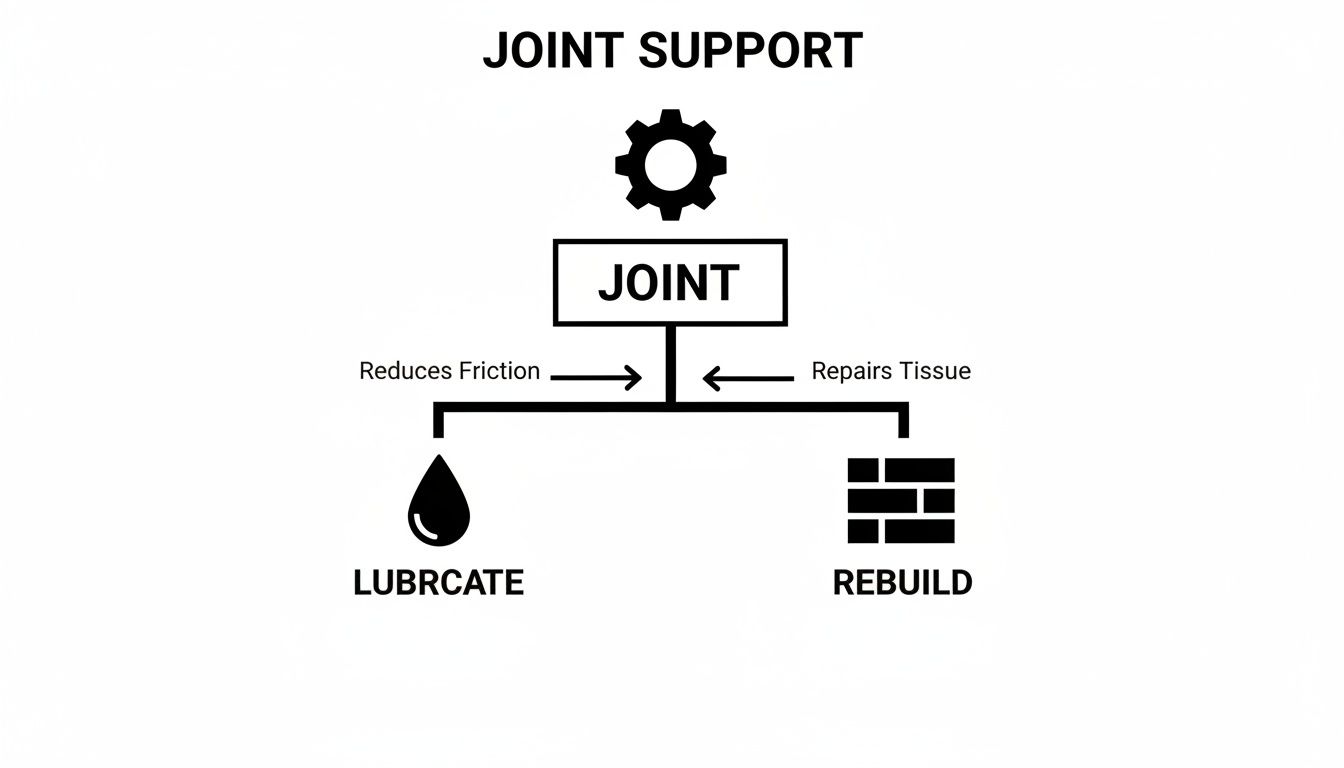
As the diagram shows, a truly comprehensive approach to joint health involves both lubricating what you've already got and providing the building blocks for new, healthy tissue. So, let’s break down the science behind the most effective ingredients that help you strike this crucial balance.
To help you get a quick overview, here's a simple table summarising the key players and their primary roles. We'll dive into the details of each one right after.
Key Joint Supplement Ingredients at a Glance
| Ingredient | Primary Function | Best For |
|---|---|---|
| Glucosamine & Chondroitin | Cartilage Building | General wear and tear, maintaining cushion. |
| Collagen (Type II) | Structural Support | Preserving cartilage integrity, immune response. |
| MSM | Anti-Inflammatory | Pain and stiffness from overuse or arthritis. |
| Omega-3s | Lubrication & Anti-Inflammatory | Chronic stiffness and inflammation. |
| Curcumin & Boswellia | Potent Anti-Inflammatory | Natural pain and inflammation relief. |
| Vitamin D & Calcium | Bone Strength | Supporting the entire joint structure. |
This table is a great starting point, but understanding how these ingredients work together is where the real magic happens. Let's get into the specifics.
The Bricks and Mortar: Glucosamine and Chondroitin
Glucosamine and Chondroitin are probably the most famous names in the joint support game, and for good reason. They are the fundamental components of cartilage—that flexible, rubbery tissue that cushions the ends of your bones.
Imagine your cartilage is a brick wall. Glucosamine acts as the bricks, giving the wall its basic structure. It’s a natural compound your body uses to build tendons, ligaments, and cartilage.
Chondroitin, then, is the mortar holding those bricks firmly in place. It’s brilliant at helping cartilage retain water, which is essential for its shock-absorbing powers and elasticity. Together, they create a resilient barrier that allows your joints to move smoothly and without pain. While our bodies produce them naturally, that production can slow down with age or injury, which is where supplementation can lend a helping hand.
The Structural Scaffolding: Collagen
If glucosamine and chondroitin are the bricks and mortar, then collagen is the structural scaffolding that gives your entire joint its shape, strength, and integrity. It’s the most abundant protein in your body, forming the framework not just for cartilage, but for your bones, skin, and all connective tissues.
Specifically, Type II collagen is the main protein found in your cartilage. When you supplement with it, particularly in its undenatured form (UC-II), it’s thought to work in a really clever way. Instead of just being broken down for raw materials, it interacts with your immune system in the gut, helping to 'teach' it to calm down the inflammatory attack that can wear away joint cartilage over time.
By supporting the very framework of your joints, collagen helps maintain the integrity and resilience of your connective tissues—absolutely crucial for long-term mobility and comfort.
The Inflammation Firefighter: MSM
Methylsulfonylmethane, or MSM, is a sulphur-containing compound with some serious anti-inflammatory clout. Think of it as your body's dedicated inflammation firefighter. When joints get stressed or damaged, an inflammatory cascade kicks off, leading to that all-too-familiar swelling, stiffness, and pain.
MSM gets to work by helping to block the signals that trigger this response. It’s also a powerful antioxidant, protecting your joint tissues from the damage caused by pesky free radicals. This one-two punch makes it especially helpful for anyone experiencing discomfort from overuse or age-related wear and tear.
What’s more, sulphur is a key component needed to form both collagen and glucosamine, so MSM also plays a crucial supporting role in the rebuilding process.
The Natural Lubricant: Omega-3 Fatty Acids
Every well-oiled machine needs proper lubrication, and your joints are no different. Omega-3 fatty acids, especially the EPA and DHA found in fish oil, act as a fantastic natural lubricant. They get incorporated into the cell membranes of your cartilage, helping to reduce friction and improve the smoothness of every movement.
But beyond lubrication, their main claim to fame is their powerful anti-inflammatory effect. They work to resolve inflammation right at the cellular level, effectively calming joint distress from the inside out. This makes them a cornerstone of any joint health plan, especially for those dealing with chronic stiffness.
A particularly potent source of these healthy fats comes from the Green-lipped Mussel. To find out more about what makes it so special, you can read all about the benefits of Green-lipped Mussel supplements in our detailed guide.
The Soothing Botanicals: Curcumin and Boswellia
Mother Nature offers her own powerful solutions for joint discomfort, with Curcumin and Boswellia leading the charge. These two are a formidable team when it comes to soothing angry joints.
-
Curcumin: This is the active compound in turmeric, and it's celebrated for its potent anti-inflammatory effects. It works by blocking specific inflammatory pathways in the body, offering relief that some studies suggest is comparable to conventional pain relievers—often without the side effects. The only catch is its low bioavailability, so always look for formulas that include black pepper extract (piperine) or other enhancers to boost absorption.
-
Boswellia: Also known as Indian frankincense, this herbal extract contains active compounds called boswellic acids. These acids have been shown to inhibit an enzyme that fuels inflammation, which helps to reduce pain and improve mobility, particularly for those with osteoarthritis.
When you put Curcumin and Boswellia together, they create a synergistic effect, tackling inflammation from multiple angles to provide comprehensive, nature-based relief.
The Bone Density Guardians: Vitamin D and Calcium
Finally, you can't have healthy joints without strong bones to support them. That's where Vitamin D and Calcium come in—they're the ultimate bone density guardians. Calcium is the main mineral that builds your bone structure, but your body simply can't absorb it properly without Vitamin D.
Think of Vitamin D as the key that unlocks the door, allowing your body to pull calcium from your diet and deposit it straight into your bones. Strong, dense bones provide a stable foundation for your joints, reducing the risk of fractures and ensuring your entire musculoskeletal system stays robust and resilient for years to come.
Who Actually Needs Joint Health Supplements?
Understanding the science is one thing, but the real question is: are joint supplements right for you? There’s no simple yes or no answer. The need for joint support is deeply personal and depends entirely on your lifestyle, age, and what you’re trying to achieve with your health.
Think of it like car maintenance. A high-performance sports car needs a different kind of care than a reliable family saloon or a classic vintage motor. Your body is no different. Let’s break down a few common profiles to help you see where you might fit.
The Active and Athletic Individual
If you’re someone who loves pushing your limits—whether in the gym, on the trail, or on the pitch—your joints are constantly under pressure. Every run, jump, and heavy lift sends force straight through your knees, hips, and ankles. While that’s brilliant for your muscles and heart, it does speed up the wear and tear on your cartilage.
For active people, joint supplements aren't just about fixing a problem. They're a proactive strategy for:
- Injury Prevention: Giving your body the raw materials for cartilage, like glucosamine and collagen, helps keep your natural cushioning strong and resilient.
- Quicker Recovery: Ingredients like MSM and omega-3s can help manage the natural inflammation that follows a tough session, meaning less stiffness and soreness the next day.
- Long-Term Performance: Looking after your joint structures today helps ensure you can stay active and perform at your best for years, instead of being forced onto the sidelines.
It’s a mindset that younger, performance-focused people are already adopting. In the UK, 18% of 18-34-year-olds regularly use bone and joint supplements, often as part of their fitness routine. You can dig into these consumer trends in the UK dietary supplements market report.
Those Seeking to Age Gracefully
As we get older, our body’s natural ability to produce key joint-supporting compounds starts to slow down. Cartilage thins out, synovial fluid isn’t as plentiful, and a lifetime of movement begins to make itself known. This often leads to those classic signs of ageing joints: morning stiffness, aches after a busy day, and a general feeling that you’re not as mobile as you used to be.
For this group, the goal isn't necessarily peak athletic performance, but maintaining an excellent quality of life. Joint supplements can be a fantastic tool for:
- Easing Stiffness: Anti-inflammatory botanicals like curcumin and boswellia can help soothe the kind of chronic, low-grade inflammation that contributes to daily aches.
- Preserving Mobility: By supporting cartilage and joint lubrication, these supplements help you maintain a smooth range of motion, making everyday things like walking, gardening, or playing with grandkids more comfortable.
- Supporting Bone Density: With age, bone health and joint health become closely linked. Vitamin D and calcium are crucial for keeping bones strong, which provides a stable foundation for your joints.
Individuals with Diagnosed Joint Conditions
For people living with a condition like osteoarthritis, supplements play a different, but equally vital, role. Osteoarthritis involves the progressive breakdown of cartilage, which causes pain, swelling, and reduced function. While supplements are not a cure, they can be a powerful part of a wider management plan.
In this situation, joint supplements work alongside medical treatments, physiotherapy, and diet to help manage symptoms and improve daily comfort. They offer nutritional support that can help slow cartilage degradation and potentially reduce the need for pain medication.
This is a big reason why 19% of 35-54-year-olds use these supplements. As awareness of osteoarthritis grows, many see them as a practical way to complement their doctor’s advice and take an active role in their own health journey.
By figuring out which of these profiles sounds most like you, you can start to see how joint supplements could shift from a vague idea to a specific, actionable part of your personal health strategy.
How to Choose a High-Quality Joint Supplement
Walking into the supplement aisle or browsing online can feel completely overwhelming. With countless bottles all promising better mobility and less pain, how do you possibly separate the genuinely effective products from the slick marketing hype?
Choosing a high-quality joint supplement isn't just about picking out the most popular ingredients. It's about learning what actually makes a formula work. You need to become a savvy consumer, looking beyond the front label to really understand a product's true potential. This means digging into things like bioavailability, demanding proof of purity, and understanding how ingredients work together as a team.

Prioritise Bioavailability for Maximum Impact
You'll see the term bioavailability pop up a lot, and while it sounds technical, the idea is simple. It’s just a measure of how much of a nutrient your body can actually absorb and put to good use. If an ingredient isn't in a bioavailable form, most of it will pass right through your system without you ever reaping the benefits.
Think of it like using a key for a lock. If you've got the wrong key (a low-bioavailability form), it doesn’t matter how many times you try—that lock isn’t opening. But the right key (a highly bioavailable form) unlocks the door to that nutrient’s benefits without any trouble. A classic example is curcumin, the active compound in turmeric; on its own, it’s poorly absorbed, but when paired with an enhancer like piperine (from black pepper), its effectiveness skyrockets. Learning a bit more about turmeric and curcumin supplements really highlights why this is so critical for getting real anti-inflammatory support.
Look for Third-Party Testing Seals
How can you be certain that what’s printed on the label is actually inside the bottle? This is where third-party testing is your best friend. The most reputable brands voluntarily send their products to independent labs to verify their purity, potency, and safety.
These labs are looking for two main things:
- Purity: They make sure the supplement is free from nasty contaminants like heavy metals, microbes, or pesticides.
- Potency: They confirm that the product contains the exact amount of the active ingredients stated on the label—no more, no less.
Keep an eye out for seals from organisations like NSF International, Informed-Sport, or USP (United States Pharmacopeia) on the packaging. These certifications are a mark of quality and transparency, giving you real confidence in what you’re buying.
Understand the Power of Stacking
Many of the very best joint health supplements work as a team. Stacking is simply the practice of combining ingredients that work synergistically—meaning their combined effect is far greater than the sum of their individual actions.
A well-designed formula leverages these partnerships to create a much more comprehensive effect. For example, Vitamin D is absolutely crucial for helping your body absorb Calcium, making them a classic pairing for bone strength. In the same way, combining the cartilage-building power of glucosamine with the anti-inflammatory properties of MSM creates a multi-faceted approach to joint care.
This is where personalised formulas really shine, as they can stack ingredients based on your specific needs, rather than relying on a generic, one-size-fits-all approach.
Choose the Right Delivery Form for You
Finally, give some thought to how you’ll actually be taking the supplement. Let’s be honest, the best formula in the world is useless if you don't take it consistently. Joint supplements come in all sorts of forms, each with its own pros and cons.
- Capsules and Tablets: These are super convenient, easy to take on the go, and offer very precise dosing. The downside is that some people can find them difficult to swallow.
- Powders: Powders are really versatile and can be mixed into water, smoothies, or even yoghurt. They often allow for higher doses and may be absorbed a little faster.
- Liquids and Gels: These are often the easiest to swallow and are absorbed quickly. The trade-off is that they usually need to be refrigerated and can have a shorter shelf life.
Picking the right format for your routine and lifestyle is the final, crucial step in selecting a high-quality joint supplement that you can stick with long enough to see real results.
Lifestyle Habits That Amplify Joint Health
While high-quality joint supplements provide the building blocks for repair and comfort, they don't work in a vacuum. To get the best results, you need to pair them with a supportive lifestyle. Think of it like this: supplements are the specialised repair crew, but your daily habits are the ongoing maintenance that prevents future problems.
A smart approach to joint care goes beyond the supplement bottle and into your kitchen, gym, and even your bedroom. By focusing on these areas, you’ll reduce strain, fight inflammation, and create the perfect environment for your body to heal and thrive.

Fuel Your Joints With an Anti-Inflammatory Diet
What you put on your plate has a direct impact on inflammation levels throughout your body, and that absolutely includes your joints. Adopting an anti-inflammatory diet isn't about restriction; it's about loading up on whole, nutrient-dense foods that naturally calm this response.
Try to build your meals around foods rich in omega-3 fatty acids and antioxidants. Great choices include:
- Oily Fish: Salmon, mackerel, and sardines are packed with joint-friendly EPA and DHA.
- Colourful Fruits and Vegetables: Think berries, leafy greens, and broccoli. They're full of antioxidants that fight cellular stress.
- Nuts and Seeds: Walnuts, flaxseeds, and chia seeds deliver a fantastic dose of plant-based anti-inflammatory fats.
On the flip side, it’s a good idea to limit things that can promote inflammation, like processed snacks, sugary drinks, and refined carbs. Eating well complements your supplement routine, creating an internal environment that supports long-term joint comfort. If you want to dive deeper, you can explore more about the top anti-inflammatory supplements to give your diet an extra boost.
Move Smarter With Low-Impact Exercise
Movement is medicine for your joints, but it has to be the right kind of movement. The goal is to choose activities that strengthen the muscles around your joints without subjecting them to harsh, repetitive impacts. Strong muscles act like a natural brace, absorbing shock and taking the pressure off your precious cartilage.
Fantastic low-impact options include swimming, cycling, yoga, and low-impact exercises like water rowing. These activities don't just build strength; they also improve flexibility, boost blood flow to your joints, and help you maintain a healthy weight—another critical piece of the puzzle.
Every extra pound of body weight puts about four pounds of extra pressure on your knees. Keeping a healthy weight is one of the most powerful things you can do to reduce daily wear and tear.
Prioritise Hydration and Restorative Sleep
Sometimes it's the simplest habits that make the biggest difference. Two of the most overlooked factors in joint health are staying hydrated and getting enough quality sleep. It might sound basic, but it's incredibly important.
Did you know your cartilage is about 80% water? Proper hydration is absolutely essential to keep it plump and capable of absorbing shock.
At the same time, your body does most of its repair work while you sleep. Aiming for seven to nine hours of quality shut-eye each night gives your joints the uninterrupted time they need to recover from the day's activities. This is when your supplements can really get to work effectively.
Your Questions About Joint Supplements, Answered
Thinking about adding joint supplements to your routine? It’s only natural to have a few questions. Whether you're just starting out or want to get more from your current stack, getting straight answers is the first step. Here are some of the most common queries we come across.
How Long Does It Take for Joint Supplements to Work?
Patience is your best friend here. Unlike popping a painkiller for instant relief, joint supplements are playing the long game. They work with your body's natural processes to help repair cartilage and calm down inflammation, and that takes time.
For most ingredients, you can realistically expect to feel a difference in comfort and mobility within four to eight weeks of consistent daily use. Some compounds, like collagen, can take a bit longer to show their full magic, sometimes needing three to six months. The absolute key to success is consistency; the ingredients need time to build up in your system to support those repair cycles.
Can I Take Multiple Joint Supplements at the Same Time?
Yes, you can, and it's often the smartest way to do it. This approach, often called ‘stacking’, is all about synergy—getting different ingredients to work together as a team. For example, glucosamine and chondroitin are a classic duo for rebuilding cartilage structure, while curcumin and omega-3s team up to provide a powerful anti-inflammatory effect.
The whole point of stacking is to tackle joint health from every angle at once—rebuilding, lubricating, and soothing inflammation, all in a coordinated effort.
Just make sure you're using a well-designed product or getting professional advice to avoid overdoing it on any single ingredient. A smart, synergistic blend is the goal, giving you maximum benefit without any unnecessary overlap.
Are There Any Side Effects I Should Be Aware Of?
For the most part, common joint supplements like glucosamine, collagen, and MSM are very well-tolerated and the risk of side effects is low. If they do pop up, they’re usually just mild digestive niggles, like a bit of bloating or nausea.
The more important thing to watch out for is potential interactions with medications. For instance, glucosamine can sometimes affect blood sugar levels, while high doses of omega-3s and curcumin can have a blood-thinning effect. This is precisely why it’s so important to have a chat with your doctor or a qualified health professional before starting any new joint supplements, especially if you have a pre-existing health condition or are on prescription medication.
Finding Your Personal Path to Better Mobility
When it comes to joint health, the best strategy is always the one that’s built for you. It’s easy to get lost in the science behind all the different ingredients, but a one-size-fits-all approach rarely delivers the results we’re hoping for. A personalised plan, on the other hand, takes the guesswork out of the equation.
By looking at your age, your lifestyle, and what you’re trying to achieve, a customised approach makes sure you get a smart, synergistic blend of high-quality ingredients. It’s about getting the right joint health supplements, at the right doses, for your specific needs. That’s how you take a confident step toward better joint function.
Taking Control of Your Joint Health
Personalisation is quickly becoming the new standard in wellness. The UK bone and joint health supplements market is primed for major growth, which mirrors a global trend—the market is expected to hit USD 21.87 billion by 2029. People are no longer settling for generic formulas; they’re rightly demanding tailored stacks to meet their individual needs. You can dig deeper into this trend with this joint health supplement market research.
For the best results, think holistically. Combining supplements with expert guidance can make a world of difference. For instance, pairing your supplement routine with professional in-home physical therapy for seniors can create a powerful support system that significantly improves mobility and independence.
At the end of the day, a personalised plan gives you a clear, actionable roadmap. It’s about making intelligent choices based on your own data, not just industry trends, to achieve lasting comfort and mobility.
This article is for informational purposes only and is not medical advice. Always consult a qualified health professional before starting any new supplement or major lifestyle change.