

Best Time to Take Zinc: Maximise Absorption & Health
When's the best time to take zinc? The short answer is usually one hour before or two hours after a meal. This simple timing trick helps you get the most out of every dose by avoiding any competition with other minerals in your food.
But here’s the thing: zinc can be a bit harsh on an empty stomach for some people, leading to a bit of nausea. If that sounds like you, don't worry. Taking it with a small meal is a perfectly fine workaround to keep any discomfort at bay.
Why Your Zinc Timing Strategy Matters

Figuring out when to take your zinc supplement isn't just a minor detail—it’s a crucial step in making sure your body can actually put this essential mineral to work. Zinc is a real powerhouse, involved in hundreds of bodily processes. We're talking everything from building a resilient immune system and supporting hormone balance to repairing cellular damage after a tough workout.
When you take a supplement, you want to get the full benefit, right? Poor timing can mean that the zinc you take just passes through your system without being properly absorbed, essentially wasting its potential. This is especially important if you're focused on peak performance, recovery, and overall wellbeing. Getting your timing right helps guarantee that zinc can effectively support your health goals.
For a broader look at how to schedule all your supplements, our guide on the best time of day to take vitamins is a great place to start.
Zinc Timing At a Glance
To make things super simple, here's a quick summary of the best times to take zinc, depending on what you're trying to achieve. Think of this as your immediate, actionable plan to get started.
| Scenario | Recommended Timing | Reason |
|---|---|---|
| Maximum Absorption | 1 hour before or 2 hours after meals | This avoids "nutrient competition" from minerals like calcium and iron in your food, allowing zinc to be absorbed without interference. |
| Sensitive Stomach | With a small, low-fibre meal or snack | Taking zinc with food helps prevent the nausea and stomach upset that some people experience when taking it on an empty stomach. |
| Immune Support | Consistently at the same time daily | Maintaining steady zinc levels is key for immune function. A consistent daily routine ensures your body always has what it needs. |
| Workout Recovery | 30-60 minutes post-workout or at bedtime | Zinc aids in muscle repair and growth. Taking it after exercise or before sleep supports the body’s natural recovery processes. |
Ultimately, this table gives you a clear starting point. You can adjust your routine based on how your body responds and what fits best with your daily life.
Why Bother with Zinc Timing and Consistency?
Figuring out the best time to take zinc is about more than just remembering to pop a pill. It’s really about setting the stage for your body to properly absorb and use this powerhouse mineral. When you nail the timing and stick with it, you give yourself the best shot at unlocking its full potential for your immune system, hormone balance, and cell repair.
Think of your digestive system like a busy motorway with only a few lanes open for nutrients to get through. When you take zinc, it needs a clear run. If you take it at the same time as certain other minerals, like calcium or iron, it's like sending it straight into rush-hour traffic. They all compete for the same absorption pathways, and zinc can easily get stuck at the back of the queue.
This is exactly why giving zinc its own dedicated slot is so important. By taking it on an empty stomach (either an hour before or two hours after a meal), you're essentially scheduling a VIP delivery. It gets an open road to reach its destination without any nutrient traffic jams.
The Real Magic is in the Routine
While smart timing helps with short-term absorption, consistency is what truly delivers the long-term benefits. Your body doesn't keep a big stash of zinc on hand, so it counts on a steady, daily supply to keep everything ticking over smoothly.
Making it a daily habit helps maintain stable zinc levels in your bloodstream. That stability is absolutely crucial for the jobs zinc does day in, day out, such as:
- Reliable Immune Support: A well-regulated immune system needs constant access to zinc to stay on top of its game.
- Stable Hormonal Health: Zinc is a key player in producing hormones like testosterone, and consistent levels keep that process running properly.
- Ongoing Cellular Repair: For anyone with an active lifestyle, from athletes to busy parents, daily repair and recovery are non-negotiable for feeling your best.
An on-again, off-again approach is like trying to fill a bucket with a leaky hose—you might get some water in, but you’ll never keep it full. A consistent daily habit ensures your body’s zinc “bucket” stays topped up, ready for whatever life throws at it.
This is especially relevant here in the UK, where it can be tricky to get enough zinc from our diets alone. The National Diet and Nutrition Survey (NDNS) shows that average zinc consumption often just scrapes by, with some groups not even meeting their daily needs. For example, UK men aged 20-59 were found to consume only 96.1% of the Recommended Nutrient Intake (RNI), which highlights why a well-timed, consistent supplement routine can be so beneficial. You can dive deeper into the UK's zinc intake stats over on the Cytoplan blog.
By pairing smart timing with a solid routine, you create a powerful strategy to ensure your body gets the zinc it needs to truly thrive.
Taking Zinc in the Morning Versus at Night
So, when’s the best time to take your zinc supplement? The honest answer is, it really comes down to a simple choice between morning or night. Both options have their perks, and the right one for you will slot neatly into your daily routine and line up with your main health goals.
There's no single "correct" answer here. The best approach is to understand what each timing offers and build a strategy that just works for you.
Taking zinc first thing is a popular choice for a few very practical reasons. It's easy to tack onto your breakfast routine, which makes it much harder to forget. A morning dose also gets your body ready for the day, supporting your immune system and metabolic functions right from the get-go.
That said, if you're a bit sensitive to supplements, taking zinc on an empty stomach might lead to a touch of nausea. If that sounds like you, simply having it with a small, low-fibre breakfast is a smart move.
The Case for Morning Supplementation
For many, a morning routine is all about gearing up for the day ahead. Taking your zinc when you wake up can help:
- Support Your Immune System: It’s like giving your body’s natural defences a head start to handle whatever the day throws at it.
- Boost Your Metabolism: Zinc is a key player in energy metabolism, helping your body turn food into fuel more efficiently for the day.
- Improve Consistency: Let's be honest, the easiest way to remember a supplement is to link it with something you already do every day, like making your morning coffee.
The Power of Night-time Recovery
On the flip side, taking zinc in the evening can be a brilliant tool for recovery and relaxation. This timing taps into your body's natural repair cycles, which kick into high gear while you're asleep. Zinc also has a role in neurotransmitter function, which can help calm the nervous system and prime your mind for a good night's rest.
This is where it teams up beautifully with another essential mineral: magnesium. Zinc and magnesium are a well-known duo, often taken together to improve sleep quality. Many people find this combination helps them sink into a deeper, more restorative sleep, which means better muscle repair and mental recovery overnight. To get the full picture on this powerful pairing, check out our guide on the best time to take magnesium.
The Bottom Line: Go for the morning if you want daytime immune and metabolic support, especially if it helps you remember to take it. Choose the evening if your main goals are better sleep, muscle repair, and overnight recovery.
Ultimately, whether you choose morning or night, the most crucial factor is consistency. Pick a time that fits seamlessly into your life and stick with it. That’s how you’ll maintain stable zinc levels and get the results you’re looking for.
Navigating Food and Supplement Interactions
Taking a zinc supplement is a great first step, but making sure your body can actually use it is a whole different ball game.
Picture your digestive system like a busy nightclub with a very strict bouncer. Certain nutrients have VIP access, but if too many try to rush the door at once, some get turned away. This is exactly what happens with zinc when it's taken alongside other competing minerals. It creates a "nutrient traffic jam," and zinc often gets stuck in the queue.
To get the most from your supplement, you just need to be a little strategic. It's not about creating a complicated routine; it's about making small, smart adjustments to dodge the common roadblocks. Once you understand these interactions, you can ensure your zinc supplement is working as hard for you as possible.
The Key Players in Nutrient Competition
Some minerals use the very same pathways in your body for absorption as zinc does. When you take them at the same time, they're all fighting for the same spot, and frankly, zinc often loses out. This is why a bit of timing can make all the difference.
The main competitors you need to keep an eye on are:
- Iron: This is the big one. Iron and zinc go head-to-head for absorption, and taking them together can seriously slash the amount of zinc your body actually gets.
- Calcium: High doses of calcium can also get in the way. This could be from another supplement or a very dairy-heavy meal, like a large glass of milk or a big bowl of Greek yoghurt.
- Copper: While your body needs both, zinc and copper have to be in balance. In fact, taking high doses of zinc over a long period can sometimes lead to a copper deficiency because they're constantly competing.
The rule of thumb here is simple: create some space. Aim to take your zinc supplement at least two hours apart from any iron or calcium supplements. This clears the runway, giving zinc the priority boarding it needs to get to work.
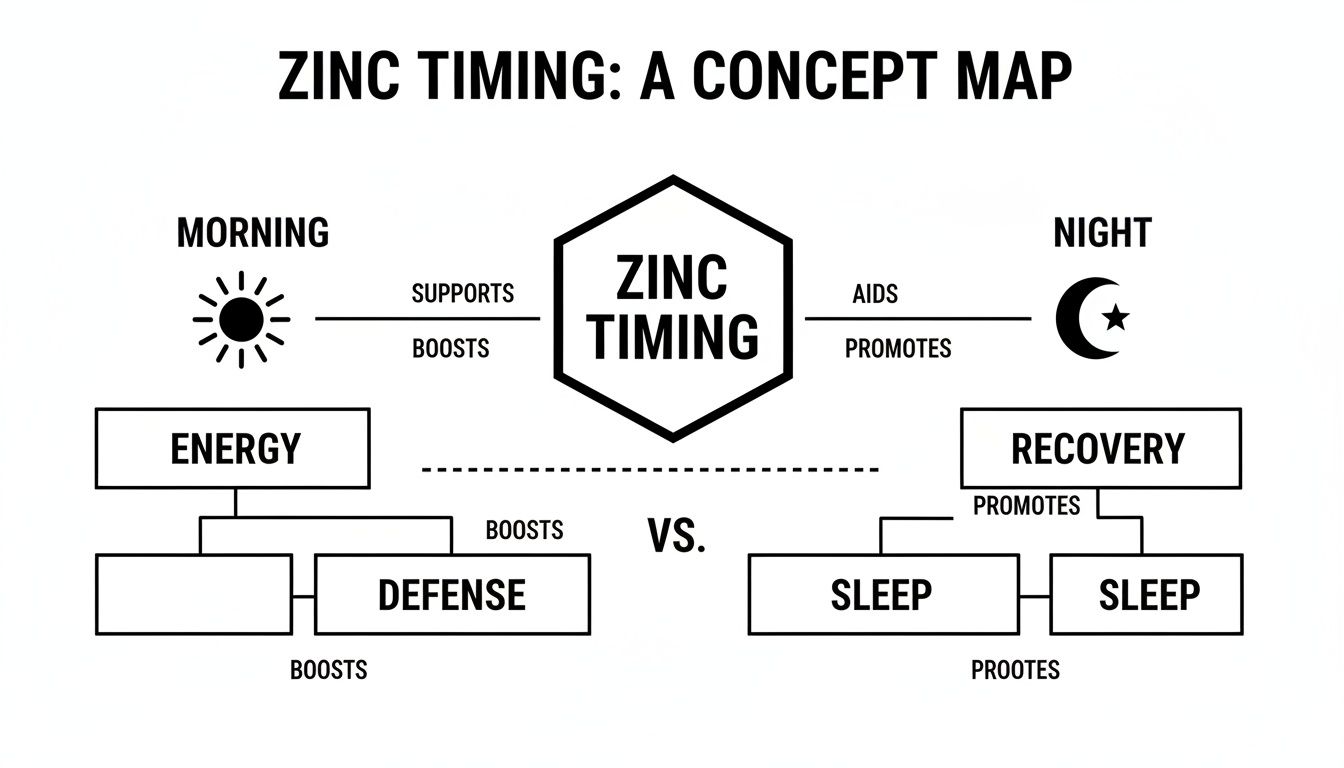
As you can see, choosing when to take zinc can align with your personal goals—whether that's kick-starting your day or winding down for restorative sleep.
Foods That Block Zinc Absorption
It’s not just other supplements you need to think about; certain compounds found in everyday foods can also interfere with zinc absorption. The primary culprit here are phytates, which are antioxidant compounds found in many plant-based foods.
While phytates have their own health benefits, they have a downside: they can bind to zinc in your gut, forming a compound your body can't absorb. This essentially escorts the zinc right out of your system before it can do its job.
You'll find phytates in foods like:
- Whole grains (bread, porridge, cereals)
- Legumes (beans, lentils, chickpeas)
- Nuts and seeds
Now, this absolutely does not mean you should avoid these incredibly healthy foods! It just means you should try not to have a big, phytate-heavy meal at the exact same time as your zinc supplement. For instance, if you take zinc with your morning porridge, you might not be getting the full benefit. It’s all about timing.
Understanding how different nutrients work together is key to getting the most out of your diet and supplements. For example, some people focus on maximising absorption in other areas of their nutrition, like learning the best practices for using Protein Powder in Cooking.
The same logic applies to combining different minerals. Many people ask if they can pair zinc with other supplements to enhance sleep and recovery. We cover this in detail in our guide on whether you can take magnesium and zinc together. A little planning goes a long way.
To help you out, here’s a quick-reference table to keep these interactions straight.
Zinc Interaction Timetable What to Avoid and When
Think of this table as your cheat sheet for maximising zinc absorption. It’s a simple guide on what to separate from your zinc supplement and for how long.
| Nutrient or Substance | Effect on Zinc Absorption | Recommended Timing Separation |
|---|---|---|
| Iron Supplements | Directly competes for absorption, significantly reducing zinc uptake. | Take at least 2 hours apart from zinc. |
| Calcium Supplements | High doses interfere with zinc absorption pathways. | Take at least 2 hours apart from zinc. |
| High-Calcium Foods | Dairy or fortified foods can reduce absorption if consumed together. | Wait 1-2 hours after a high-calcium meal to take zinc. |
| Phytate-Rich Foods | Binds to zinc, preventing its absorption in the gut. | Wait 1-2 hours after a high-phytate meal to take zinc. |
| Copper Supplements | Competes for the same absorption channels as zinc. | Take at least 2 hours apart, especially with high-dose zinc. |
By following these simple timing rules, you ensure that zinc isn't fighting for attention and can get to work effectively in your body. It's a small change that can make a big difference.
How to Tailor Your Zinc Intake to Your Goals
There’s no one-size-fits-all rule for taking zinc. The best approach is a personal one, tailored to your own biology, lifestyle, and what you’re trying to achieve. When you move beyond generic advice, you can build a smart, personalised strategy that actually gets you results.
Whether you're an athlete pushing for peak performance or just looking to support your overall wellbeing, tweaking when and how you take zinc can make a real difference. Your specific goals are what should dictate your schedule.
For Men Supporting Performance and Hormones
For men, zinc is a cornerstone mineral. It’s absolutely vital for maintaining healthy testosterone levels, helping muscles repair, and supporting robust reproductive health. If your zinc levels are low, you might feel the impact in these key areas, which is why smart supplementation can be so important for performance and vitality.
A great strategy is to take your zinc supplement in the evening or shortly after a workout. This timing taps into the body's natural repair cycles, giving your muscles a helping hand with recovery and growth while you sleep. Research from the UK also backs this up, highlighting young men as a key group who could benefit from supplementation. One study revealed that zinc intakes among males aged 20–29 averaged only 96.1% of the Recommended Nutrient Intake. That’s a concerning figure for a group with such high metabolic and fitness demands. You can read more about these UK nutritional findings on Frontiersin.org.
For Women Aiming for Balance and Skin Health
Zinc is a game-changer for women, too. It plays an essential role in regulating hormones, maintaining clear skin, and supporting a healthy immune system. Its anti-inflammatory properties are particularly brilliant for tackling hormonal acne and promoting a radiant complexion.
A consistent daily dose, taken at a time that fits neatly into your schedule, is often the best approach. If you find it makes you feel a bit nauseous, taking it with a small meal or snack can help you stay on track without any discomfort. This steady supply helps maintain hormonal balance and supports the ongoing process of skin cell turnover.
Many people also take zinc to give their body's defences a boost. To round out your routine and achieve all-around wellness, it’s worth exploring other strategies on how to improve your immune system naturally through your diet and lifestyle.
For Vegans and Vegetarians
If you follow a plant-based diet, you face a unique challenge with zinc. Many vegan staples like legumes, whole grains, and nuts contain compounds called phytates. These can bind to zinc in your gut and stop your body from absorbing it properly, putting vegetarians and vegans at a higher risk of deficiency.
To get around this, timing is everything:
- Take zinc between meals: Aim to take your supplement at least two hours away from any high-phytate foods.
- Consider a chelated form: Look for zinc picolinate or citrate, as these forms can offer better bioavailability and help overcome those absorption hurdles.
This strategic approach helps ensure that you can effectively absorb and use this vital mineral, supporting your health without compromise.
Common Questions About Taking Zinc
Even with the best plan, practical questions always pop up when you start a new supplement. Here are some straightforward answers to the queries we hear most often, helping you build a zinc routine you can feel confident about.
Can I Take Zinc Every Day?
Yes, absolutely. For most adults, taking zinc daily is a smart way to maintain steady levels, especially if your diet isn't always hitting the mark. The golden rule is to stick to the recommended dosage on the product label.
Going overboard with high doses for a long time can backfire. It might interfere with how your body absorbs other crucial minerals like copper, leading to side effects you definitely don't want. Always follow the product guidelines or your doctor's advice for safe, long-term use.
What Happens If I Take Zinc on an Empty Stomach?
Taking zinc on an empty stomach is often suggested because, in theory, it gives you the best absorption. Without any food to compete with, the zinc has a clear path into your system.
The catch? For many people, this can lead to an upset stomach or a bit of nausea. If that's you, don't sweat it. Taking your supplement with a small meal or snack is the perfect fix. The tiny dip in absorption is well worth it to avoid discomfort and actually stick with your routine.
Remember, the best zinc routine is one you can follow comfortably. A small meal can be the difference between feeling great and feeling queasy, so listen to your body and adjust as you go.
How Long Does It Take for Zinc Supplements to Work?
This really depends on where you're starting from and what your health goals are. It’s not an overnight fix, so a little patience is key.
If you're correcting a known deficiency, you might start to feel improvements in things like your immune response or how quickly a cut heals within a few weeks. For other goals, like supporting hormone balance, clearing up your skin, or helping with athletic recovery, it can take 8-12 weeks of consistent use to build up your levels and see a noticeable difference.
Does the Form of Zinc Matter for Timing?
While the general timing advice applies to all types of zinc, some forms are known for being a bit gentler on the stomach and easier for your body to absorb.
Chelated forms of zinc, like zinc picolinate, gluconate, and citrate, are typically more bioavailable than something like zinc oxide. Because your body can absorb them more readily, you might find they're easier to tolerate on an empty stomach. But the main rule still stands: if you feel any discomfort, just take it with food, no matter the form.
At VitzAI, we focus on providing high-quality, bioavailable supplements to help you achieve your health goals. Our AI-powered platform can help you build a personalised routine that works for you. Discover your tailored supplement plan today.
This article is for informational purposes only and is not medical advice. Always consult a qualified health professional before starting any new supplement or major lifestyle change.