

Magnesium Glycinate When to Take: Best Timing for Sleep
Most guidance recommends taking magnesium glycinate 30 to 60 minutes before bedtime for sleep support, although it can be taken with or without food and timing is usually less important than taking it consistently each day. Some guidance extends the evening window to 1 to 2 hours before bed, but there isn't one perfect minute that works for everyone.
So why does so much advice stop at “take it at night” when real life is less tidy? Your ideal timing depends on whether you're trying to support sleep, manage daytime stress, fit magnesium around other supplements, or just remember it without fail. The useful answer to magnesium glycinate when to take isn't a rigid rule. It's a practical default, followed by sensible adjustments.
When to Take Magnesium Glycinate for Best Results
If sleep or evening relaxation is your main goal, take magnesium glycinate 30 to 60 minutes before bedtime. That's the most consistent timing pattern in current consumer-health guidance, although some recommendations place it 1 to 2 hours before bed. The exact window matters less than choosing a time you can repeat, as explained in this guidance on the best time to take magnesium.
Think of the bedtime window as an anchor, not a law. Magnesium glycinate isn't an instant sleeping pill, and taking it at 9:30 rather than 9:35 won't determine whether it works. Evening use makes sense when your target is winding down, relaxation, or sleep support. A practical overview for busy professionals is also available in this resource on magnesium glycinate for CEOs, where evening routines are considered alongside demanding schedules.
A simple starting routine
Take your usual serving within the pre-bed window and observe how your body responds. You can take it with or without food, but a small snack or light meal may be more comfortable if supplements tend to make your stomach feel unsettled. You don't need to force a full meal if you tolerate it well without one.
Practical rule: Match the timing to the result you want, then protect consistency. Chasing a supposedly perfect hour usually creates more friction than benefit.
If you feel drowsy after taking magnesium glycinate, move it earlier in the evening or consider morning dosing. If you aren't using it for sleep, breakfast or lunch may be a better anchor. The strongest practical pattern is bedtime dosing for sleep, while the broader principle is goal-matching rather than automatic night-time use.
Why Magnesium Glycinate Is Suited to Evening Use
Magnesium glycinate combines magnesium with glycine, an amino acid associated with relaxation. Its chelated structure is often described as gentler on digestion than some other magnesium salts. That combination helps explain its place in evening routines, especially for people who want magnesium support without choosing a form mainly associated with bowel effects. Blackmores explains the practical differences around magnesium glycinate, tolerability, and sleep routines.
The form still needs context. Magnesium oxide and magnesium sulfate provide magnesium, but some people find them less comfortable. Glycinate pairs magnesium with glycine and is often easier to tolerate. The NIH Office of Dietary Supplements explains how magnesium forms differ in bioavailability, including the generally higher bioavailability of soluble forms such as citrate, lactate, chloride, and aspartate compared with magnesium oxide and magnesium sulfate. For a closer comparison, read our guide to what type of magnesium is best for sleep.

Why the evening association persists
Magnesium contributes to nerve signalling, muscle function, and cellular energy production. Glycine's calming profile can suit people who want a quieter transition into bed, particularly when digestive comfort matters. It can also sit comfortably alongside easy cues for restorative sleep, such as dimming the lights, putting the phone away, or following a regular wind-down sequence.
Magnesium glycinate is not an immediate sedative. Expect steady support from consistent use rather than a dramatic effect after one capsule. For sleep seekers, taking two capsules 30 to 60 minutes before bedtime provides a practical starting window, although the exact minute matters less than repeating a routine you tolerate. A clinical protocol in healthy adults used that timing, with sleep-related benefits considered in the context of repeated use rather than a single dose. See the clinical publication on magnesium and sleep for its protocol.
Morning Versus Evening Dosing Which Fits Your Goals
Morning and evening dosing aren't competing doctrines. They're two ways to place the same supplement into a routine, and the better choice depends on what you want magnesium glycinate to do in your day.
| Goal | Preferred Timing | Why It Works |
|---|---|---|
| Sleep onset and evening relaxation | 30 to 60 minutes before bed | Fits a predictable wind-down routine |
| General magnesium repletion | Morning or lunch | Pairs with an established daytime habit |
| Daytime stress support | Morning or early afternoon | Avoids introducing a new supplement close to bedtime |
| Drowsiness after evening use | Morning or split dosing | Places the dose earlier when that feels more comfortable |
| Recovery after training | Evening | Connects the routine with post-training recovery and rest |
For a sleep-focused adult, evening is the obvious first experiment. Take the supplement during the same part of your wind-down routine, perhaps after brushing your teeth or preparing for bed. The point isn't that night-time magnesium is universally stronger. It's that the timing supports the behaviour and outcome you're already targeting.
Morning dosing can work better for someone who wants magnesium as part of general nutrition or daytime stress management. It may also suit a person who notices that taking it at night makes them feel too relaxed or drowsy. Split dosing is another option when a single serving feels uncomfortable, but any change should follow the product label and professional advice.
The most important variable is repeatability. Sleep and relaxation benefits are generally associated with regular use over days or weeks, not with a single perfectly timed dose. If morning magnesium is the only version you'll remember, it can be more useful than an ideal bedtime plan you abandon after a few nights.
How to Time Your Magnesium Glycinate Dose
Start with an anchor that already exists. For sleep, that anchor is usually 30 to 60 minutes before bed. For daytime use, attach magnesium glycinate to breakfast or lunch. A routine connected to something you already do is easier to maintain than a reminder floating separately in your day.
Build the routine in four steps
- Choose the time first. Pick the same general window each day rather than obsessing over an exact minute. Bedtime works for sleep goals, while breakfast or lunch may work better for daytime support.
- Decide how you'll handle food. Magnesium glycinate can generally be taken with or without food. If you notice nausea, stomach discomfort, or loose stools, try taking it with a small meal or snack. If you tolerate it well on an empty stomach, there's no need to add food just because someone else does.
- Use water and a visible cue. Keep the bottle near the item associated with the routine, such as your bedside book or breakfast supplies. Take it with water and avoid changing several parts of your supplement routine at the same time.
- Adjust based on feedback. If evening dosing feels too sedating, move it earlier or test a morning window. If your stomach objects, add food before changing the entire plan.
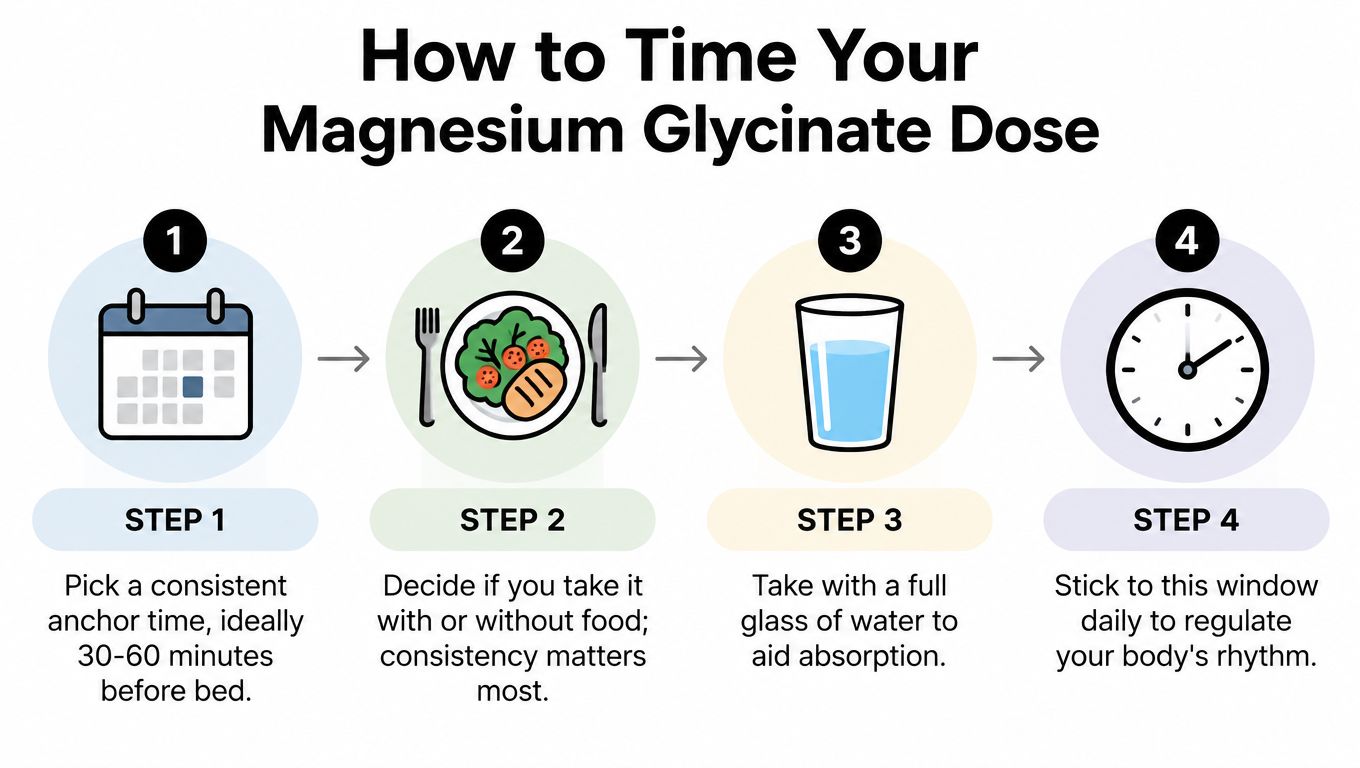
Don't treat food as a requirement for absorption. In practice, the small snack is mainly a tolerability tool. The more useful question is whether the routine feels comfortable enough to repeat.
A full glass of water can make the habit easier, but it won't compensate for an unsuitable dose or a routine you can't sustain. If you take several supplements, write down the timing for each one so minerals and medicines don't accidentally end up together.
Starting Dose and How to Adjust Safely
Dose decisions start with the label, not the size of the magnesium glycinate compound. Products may list the total weight of the glycinate compound and, separately, the amount of elemental magnesium. Those figures can differ substantially, so compare elemental magnesium when assessing how much you're taking.
The U.S. National Academies set the tolerable upper intake level for supplemental magnesium at 350 mg per day for adults. That limit applies to magnesium from supplements and medications, not magnesium naturally present in food. The NHS lists daily magnesium intake guidance of 270 mg for adult women and 300 mg for adult men, while UK guidance commonly uses 400 mg per day from supplements as an upper safety threshold for most adults unless a clinician advises otherwise. See the NHS guidance on magnesium and other minerals for the UK context.
A measured way to begin
Many people start in the 100 to 200 mg elemental magnesium range in the evening, then assess tolerance before considering a change. The goal isn't to take more automatically. It's to find the lowest amount that fits the intended purpose and feels comfortable.
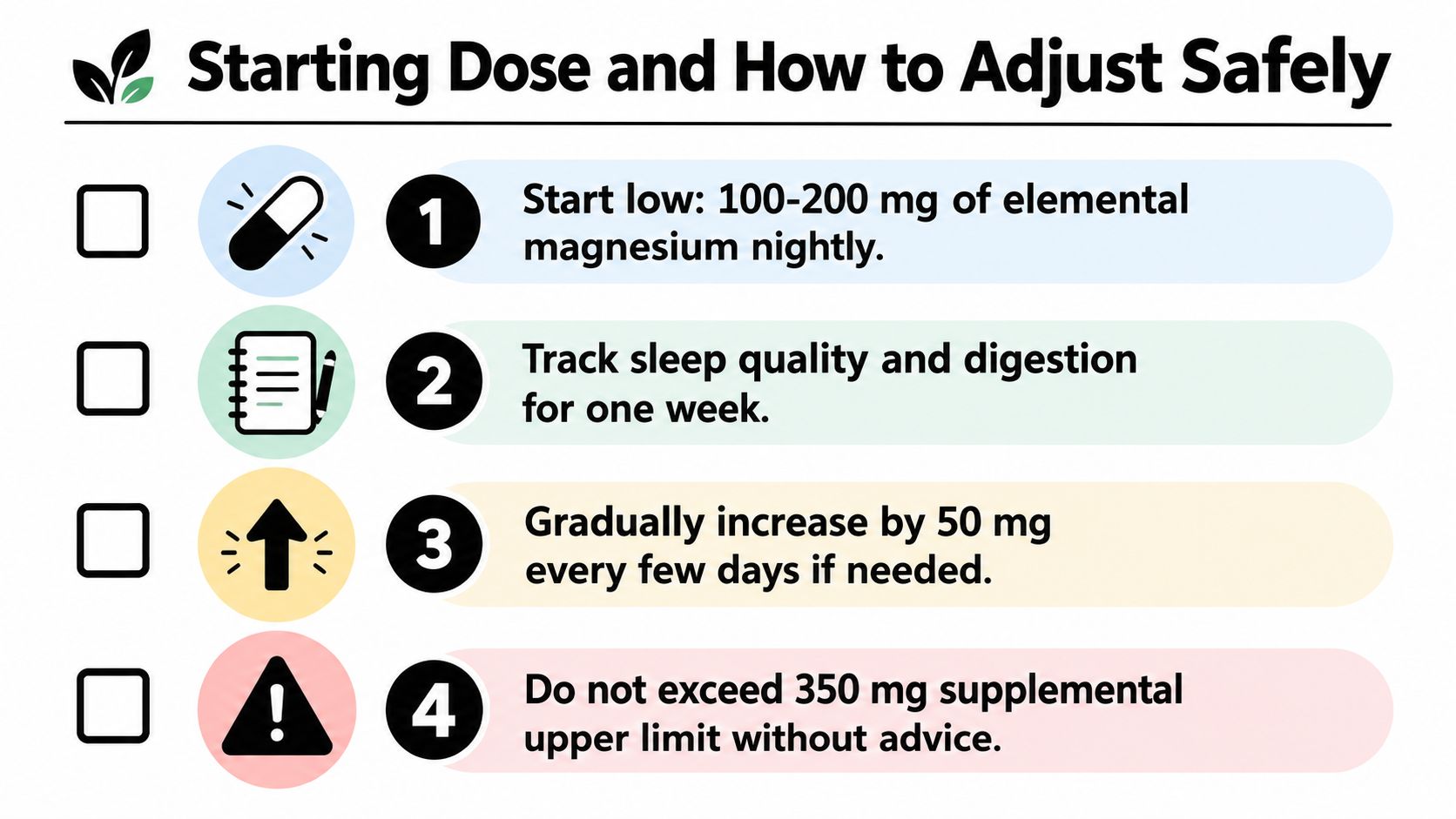
Track a few observations for about a couple of weeks:
- Sleep: Note whether falling asleep, waking during the night, or morning alertness changes.
- Muscle comfort: Record tension, cramps, or post-training discomfort without assuming every change came from magnesium.
- Digestion: Pay attention to nausea, loose stools, or other signs that the amount or timing doesn't suit you.
- Routine quality: Ask whether you remember the dose consistently.
A product such as Magnesium Glycinate lists its ingredients, serving instructions, and safety cautions on the product page. Follow the specific label rather than converting a compound weight into elemental magnesium yourself, and ask a healthcare professional before changing the dose if you're pregnant, nursing, under 18, or managing a medical condition.
Supplements and Medications to Separate from Magnesium
Magnesium can interfere with the absorption of some minerals and medicines when taken at the same time. The practical list includes calcium, iron, zinc, thyroid medicine, and certain antibiotics. These products may need to be separated from magnesium by hours, although the correct interval depends on the specific medicine or supplement.
A straightforward approach is to keep magnesium in its evening window and place competing minerals or medicines elsewhere in the day when that schedule is medically appropriate. Don't move prescription medication just to make a supplement routine neater.
A quick spacing checklist
- Calcium, iron, and zinc: Ask a pharmacist whether your products need separate timing, especially if you take several mineral supplements.
- Thyroid medicine: Follow the prescribing instructions and confirm the spacing needed with a healthcare professional.
- Certain antibiotics: Check the label or ask a pharmacist before taking magnesium near an antibiotic dose.
- Prescription medicines generally: Provide a complete list of supplements and medicines rather than asking about magnesium in isolation.
The concern is usually absorption interference, not that magnesium must be avoided altogether. If you're unsure about combining magnesium and zinc, this guide on taking magnesium and zinc together can help frame the question, but your pharmacist remains the right person to confirm an individual medication schedule.
Timing Tips for Different Goals and Age Groups
A person lying awake at night has a different timing problem from someone building a daytime nutrition routine. For sleep, the practical choice remains an evening dose within the pre-bed window, taken consistently enough to become part of the wind-down process.

Match the routine to the person
Fitness-focused adults may prefer evening magnesium because it fits after training, dinner, and the transition into overnight rest. That doesn't make it a workout supplement in the same way as creatine or an energy powder. It places a tolerable magnesium form near a period when the person already prioritises muscle relaxation and recovery.
Older adults may benefit from a very stable routine because remembering an irregular supplement schedule can be difficult. Morning dosing alongside breakfast may be more reliable than evening dosing for someone who falls asleep early, while bedtime may suit someone whose evening routine is already dependable. Magnesium status and medication use should be discussed with a healthcare professional where relevant.
People managing daytime stress or cognitive demands may prefer morning dosing if evening magnesium feels too calming. Magnesium has broad roles in nerve and muscle function, so there isn't a reason to force every person into a sleep-oriented schedule when their main aim is general support during the day.
Adults with sensitive digestion should prioritise comfort over tradition. A small meal can make the dose easier to tolerate, and a consistent morning or lunch routine may be preferable to taking it late at night on an empty stomach. The right timing is the one that supports the intended goal without creating a new problem.
Finding the Right Supplement Timing for You
The cleanest way to decide is to use three questions:
- What outcome matters most? If it's sleep onset or relaxation, begin in the evening. If it's general magnesium intake or daytime routine support, morning or lunch may be more practical.
- What time can you repeat? Choose a reliable anchor, such as brushing your teeth, eating breakfast, or finishing your evening routine. A consistent habit has more value than a theoretically perfect schedule you keep missing.
- How does your body respond? After roughly two weeks, review sleep quality, daytime alertness, muscle comfort, and digestion. Move the timing earlier, later, or to the morning if the original window doesn't feel right.
Magnesium glycinate isn't a guaranteed sleep solution, and it shouldn't be judged by the effect of one dose. The useful expectation is gradual support that may become clearer through regular use over days and weeks. If your sleep remains poor, your digestion changes, or you have a medical condition or prescription treatment, look beyond timing and ask a qualified professional for individual advice.
The answer to magnesium glycinate when to take is therefore simple but flexible. For sleep, start 30 to 60 minutes before bed. For everything else, choose the time that matches your goal, protects tolerability, and makes daily use realistic.
If you're unsure whether magnesium glycinate fits alongside your goals, diet, sleep, stress, exercise, and existing supplements, VitzAi.com offers a personalised supplement quiz and curated recommendations based on your answers. Visit VitzAi.com to explore a more personalised starting point instead of guessing from a long list of products.
This article is for informational purposes only and is not medical advice. Always consult a qualified health professional before starting any new supplement or major lifestyle change