

Manganese vs Magnesium: A Practical Guide to Essential Minerals
When it comes to manganese vs magnesium, the biggest difference is scale and function. Think of it this way: magnesium is a major-league player your body needs in large amounts for over 300 different jobs, from relaxing your muscles to producing energy. Manganese, on the other hand, is a specialist—a trace mineral needed in tiny amounts for highly specific roles like antioxidant defense and bone formation. They are absolutely not interchangeable.
Understanding These Essential Minerals
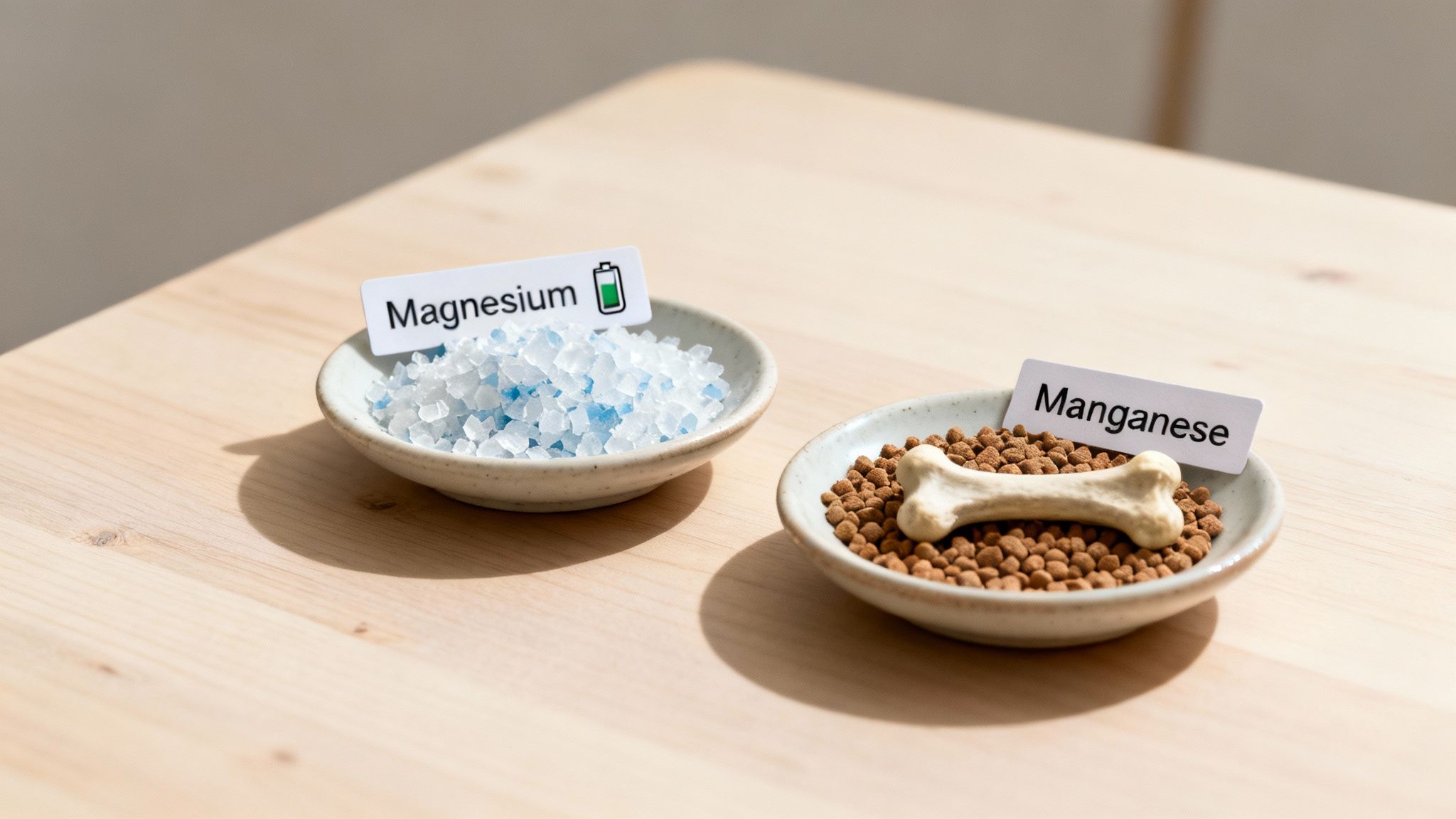
While their names sound confusingly similar, manganese and magnesium are two completely different elements, each with a unique and critical job to do inside your body. Imagine them as distinct specialists on a construction site—you wouldn't ask an electrician to do a welder's job, and you can't substitute one of these minerals for the other.
Magnesium is a macromineral, meaning your body needs hundreds of milligrams of it every single day. It’s a vital cofactor in more than 300 enzymatic reactions, managing everything from nerve signals and heart rhythm to blood sugar control.
In contrast, manganese is a trace mineral. Your body only requires it in very small amounts—typically just a few milligrams daily. Its role is highly specialized, mainly activating enzymes involved in metabolism, protecting cells from damage, and building strong connective tissues like cartilage.
Key Distinctions at a Glance
Getting to grips with their core differences is the first step to optimizing your health. Here’s a quick breakdown of where they diverge:
| Feature | Magnesium (Mg) | Manganese (Mn) |
|---|---|---|
| Mineral Type | Macromineral (large amounts needed) | Trace Mineral (small amounts needed) |
| Primary Role | Energy, muscle, nerve function | Antioxidant defense, bone structure |
| Body’s Needs | High daily requirement (270-300mg) | Low daily requirement (1.8-2.3mg) |
| Deficiency Risk | Common due to diet and stress | Rare in a balanced diet |
A simple way to remember the difference is to link Magnesium with Macro (large) needs for broad jobs like energy and muscle relaxation. Then, connect Manganese with Micro (small) needs for specific tasks like forming cartilage and fighting oxidative stress.
This foundational knowledge makes it clear that the conversation around manganese vs magnesium isn't about choosing one over the other. It’s about appreciating their distinct contributions and making sure you get the right amount of each for peak performance and long-term well-being.
Uncovering the Core Functions of Each Mineral
To really get to the bottom of the manganese vs magnesium debate, we need to look past their similar-sounding names and dig into what they actually do inside our bodies. While both are absolutely essential, their day-to-day jobs are worlds apart. One is like a master operator for hundreds of different systems, while the other is more of a highly specialized technician.
Magnesium is often called the 'master mineral,' and for good reason. It’s a key player in over 300 critical enzymatic reactions, making it a true cornerstone of daily health and performance. Its most famous role is in energy production, where it’s vital for creating adenosine triphosphate (ATP)—the main energy currency for every single cell in your body.
Simply put, without enough magnesium, your cells can't produce the energy you need for everything from a tough workout to just thinking clearly. This is exactly why crushing fatigue is such a classic sign of low magnesium levels.
Magnesium: The Powerhouse Operator
Picture magnesium as the manager of a bustling power plant. It's their job to make sure every process runs smoothly, from generating energy to keeping all the machinery from overheating.
Its main responsibilities include:
- Muscle Relaxation: Magnesium is a natural calcium blocker, which is a fancy way of saying it helps your muscles relax after they contract. This is absolutely crucial for preventing cramps, easing away tension, and helping you recover after exercise.
- Nervous System Regulation: It has a calming effect on the nervous system by supporting GABA, a neurotransmitter that helps you feel relaxed and less stressed. This has a direct knock-on effect on your sleep quality and overall mental wellbeing.
- DNA and RNA Synthesis: On a microscopic level, magnesium is vital for creating and repairing our genetic material. It's a fundamental process for keeping our cells healthy for the long haul.
These broad, system-wide jobs make magnesium a go-to for managing stress, improving sleep, and optimizing physical recovery. If your health goals are all about energy and relaxation, magnesium should be your top priority.
Manganese: The Structural Engineer
Manganese, on the other hand, works on a much smaller and more specialized scale. If magnesium is the power plant manager, then manganese is the structural engineer, responsible for the integrity and defense of the entire facility. It’s a trace mineral, meaning you only need tiny amounts, but its functions are completely indispensable.
Manganese's most celebrated role is as a core component of the antioxidant enzyme manganese superoxide dismutase (SOD). This powerful enzyme is the primary line of defense for our mitochondria—the cellular powerhouses themselves—against damage from oxidative stress.
By shielding the mitochondria, manganese helps ensure our energy production stays efficient and resilient. But its expertise doesn't stop there.
Manganese is the unsung hero of structural integrity. It is essential for activating enzymes that build strong bones, healthy cartilage, and resilient connective tissue, making it vital for joint health and skeletal development.
Its more specialized functions include:
- Bone Formation: It helps build the bone matrix, working alongside other key players like calcium and vitamin D to create strong, dense bones.
- Connective Tissue Health: Manganese is critical for making collagen and forming cartilage, which is why it's so important for keeping joints mobile and supporting repair.
- Metabolism Support: It also has a hand in the metabolism of carbohydrates, amino acids, and cholesterol, helping your body process nutrients effectively.
Ultimately, while magnesium is busy managing the body's energy and relaxation systems, manganese is focused on building, protecting, and maintaining its foundational structures.
A Side-By-Side Comparison of Health Benefits
When you put manganese and magnesium head-to-head, it becomes clear just how different their contributions to your health really are. While both are essential minerals, they diverge significantly in their daily requirements, primary benefits, and the best ways to get them. Understanding these differences is the key to making smart choices for your diet and supplement routine.
To put their distinct roles into perspective, this visual breaks down their primary functions.
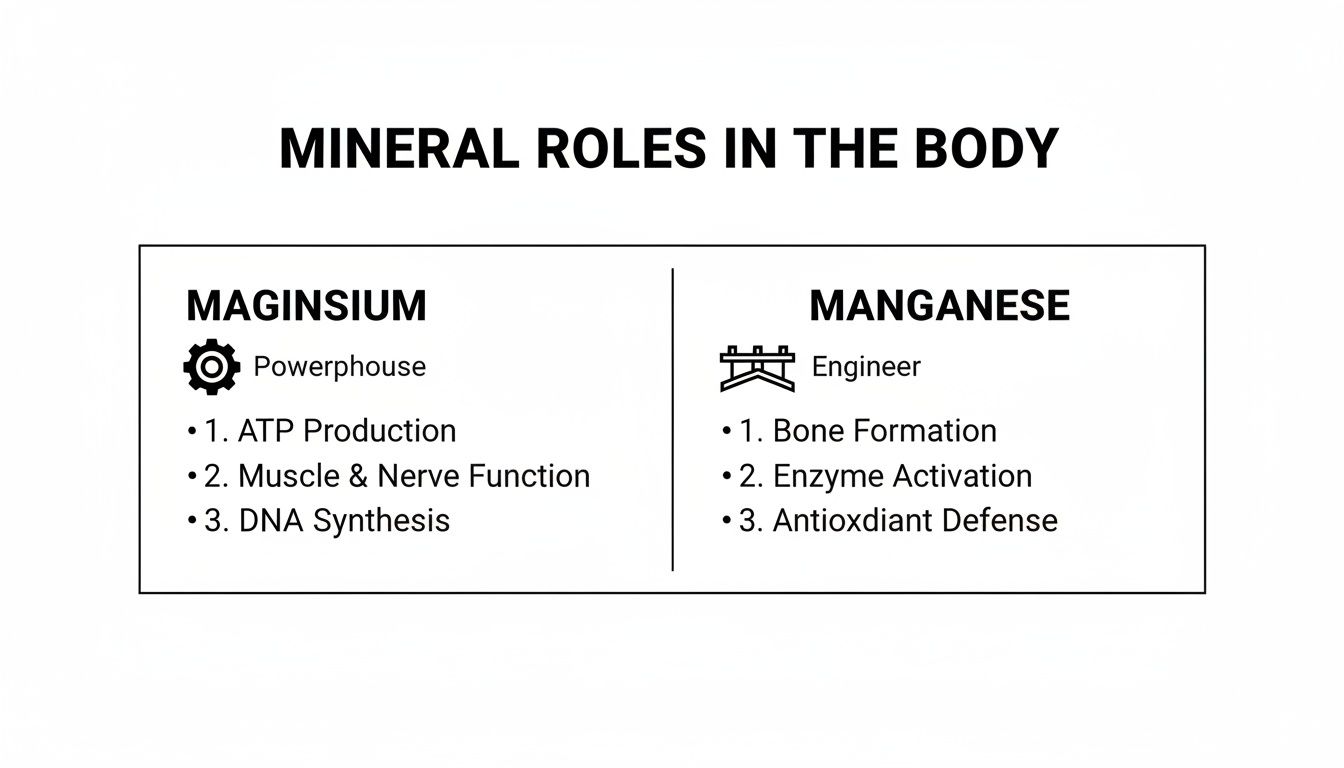
As you can see, magnesium is the body's 'Powerhouse', handling broad energy and relaxation needs. Manganese, on the other hand, acts more like the 'Engineer', focused on structural integrity and protection.
Manganese vs Magnesium At a Glance
For a clearer picture, let's break down their attributes side-by-side. This table gives you a quick reference for the most important distinctions between these two crucial minerals.
| Feature | Magnesium | Manganese |
|---|---|---|
| Mineral Type | Macromineral | Trace Mineral |
| Primary Benefits | Muscle relaxation, energy production, nerve function, sleep support. | Antioxidant defense, bone and connective tissue formation. |
| Deficiency Signs | Muscle cramps, fatigue, anxiety, poor sleep, irritability. | Rare; may include poor bone growth or skin rashes. |
| Best Food Sources | Leafy greens, nuts (almonds), seeds (pumpkin), dark chocolate. | Whole grains (oats, brown rice), nuts (pecans), mussels, tea. |
Their profiles are almost polar opposites. Magnesium is involved in hundreds of processes you can feel daily—like your energy levels and ability to unwind—while manganese works more behind the scenes on long-term structural health.
Understanding Daily Needs and Deficiency Risk
One of the most practical differences between manganese and magnesium is how much you need and how likely you are to fall short. The contrast here is stark and directly impacts any supplementation strategy.
In the UK, the average adult gets around 5.2 milligrams of manganese per day, which comfortably meets the estimated safe range of 2 to 5 milligrams daily.
But magnesium is a different story. The NHS recommends 300mg for men and 270mg for women, yet many people don't hit this target. Widespread dietary shortfalls persist, thanks to processed foods, stress, and caffeine draining our stores. This is precisely why smart supplementation often means prioritizing a bioavailable magnesium for energy and muscle support, while simply monitoring manganese intake from whole foods to avoid getting too much.
The key takeaway is this: magnesium deficiency is common and has noticeable effects on energy and stress, making it a primary target for supplementation. Manganese deficiency is exceptionally rare, and most people get enough from their diet alone.
This explains why you'll often see standalone magnesium supplements, but you'll rarely find manganese sold on its own. It’s typically included in small, safe amounts within a comprehensive multivitamin.
This is also important when you think about how minerals interact with each other. For instance, understanding how a zinc and magnesium supplement can work together provides a more complete picture of your nutritional needs.
Ultimately, while both are vital, their roles, requirements, and deficiency risks place them in completely different categories of nutritional priority. Magnesium often requires a conscious effort to keep levels optimal, whereas manganese intake is usually sorted with a balanced, whole-foods diet.
When Should You Focus on Magnesium?
While both manganese and magnesium are essential, your day-to-day life and health goals will often tell you which one needs more of your attention. And let’s be honest, magnesium deficiency is far more common than manganese deficiency, so there are quite a few situations where consciously boosting your intake can make a huge difference.
Think of magnesium as the body's master relaxer. It has a hand in everything from easing muscle tension to promoting mental calm. If you find yourself wrestling with the physical or mental signs of stress, getting your magnesium levels in check should be right at the top of your list. This is because magnesium is a key player in regulating neurotransmitters, especially gamma-aminobutyric acid (GABA), which helps quiet down an overactive nervous system and gives you that feeling of calm.
For busy professionals juggling deadlines in high-pressure environments, a steady magnesium intake can help manage the body's stress response, leading to better focus and less burnout. The same goes for anyone who struggles to switch off at night; magnesium can be a fantastic ally for achieving deeper, more restorative sleep.
For Athletes and Active People
When it comes to physical performance and recovery, magnesium is simply non-negotiable. Its role in muscle function is two-sided: it’s crucial for ATP production (the energy currency of our cells) to power you through your workouts, but it's just as vital for helping those muscles relax afterwards.
If you’re an athlete or someone who exercises intensely on the regular, you should absolutely prioritize magnesium. Here’s why:
- Keeps Muscle Cramps at Bay: Magnesium acts as a natural calcium blocker, helping to regulate muscle contractions and preventing them from getting over-excited and cramping up.
- Speeds Up Recovery: By easing muscle tension and supporting protein synthesis, magnesium helps your body repair and rebuild muscle tissue more efficiently after a tough session.
- Fires Up Your Energy Metabolism: As a cofactor in hundreds of enzymatic reactions linked to energy production, having enough magnesium ensures your body can turn food into fuel effectively.
If you’re constantly dealing with muscle soreness, twitching, or cramps after your workouts, that could be a clear signal that your magnesium needs aren't being met. Prioritizing this mineral could be a total game-changer for your recovery routine.
Getting Your Magnesium Fix
The best place to start is with food. Load up on magnesium-rich sources like leafy greens, almonds, pumpkin seeds, and avocados. For more targeted support, however, a supplement is often the way to go.
Highly absorbable forms like magnesium glycinate are brilliant for promoting relaxation and better sleep, whereas magnesium citrate can help with digestive regularity. Knowing the finer points of supplementation, including the best time to take magnesium, will help you get the most out of your efforts. By aligning your magnesium strategy with your specific goals, you can effectively tackle everything from stress and poor sleep to athletic recovery.
So, When Does Manganese Matter?
Magnesium tends to steal the limelight with its broad impact on everything from energy to sleep, but manganese plays a more specialized, behind-the-scenes role. It’s a trace mineral, which means your body only needs it in tiny amounts. But don't let that fool you—those small quantities are essential for specific structural and metabolic jobs that keep things running like clockwork.
For most of us, a balanced diet filled with whole foods provides all the manganese we need. Unlike magnesium, where deficiency is a growing concern thanks to modern diets and stress, a manganese shortfall is incredibly rare. Your body is quite clever at managing its manganese stores, taking what it needs from sources like whole grains, nuts, seeds, and leafy greens.
A Laser Focus on Bones and Joints
One of the most important jobs manganese has is in forming our bones and keeping our joints healthy. It acts as a vital sidekick (or cofactor, in scientific terms) for enzymes that build proteoglycans—these are molecules that create the very foundation of our cartilage. You can think of it as a key builder on the construction site of the strong, flexible tissue that cushions your joints.
Without enough manganese, your body's ability to produce and maintain healthy cartilage can be affected. This makes it particularly crucial for:
- Skeletal Development: Working alongside calcium and vitamin D to ensure a strong bone matrix.
- Joint Integrity: Supporting the creation of collagen and the health of connective tissues.
- Repair Processes: Helping the body's natural mechanisms for repairing worn-out cartilage.
Here’s a simple way to see the difference: while magnesium helps the muscles around your joints relax, manganese is busy building the very structure of the joint itself. It’s a classic case of function versus formation.
Metabolic Support and Antioxidant Defense
Beyond its structural duties, manganese is a key player in several metabolic processes. It has a hand in how your body processes carbohydrates and regulates blood sugar, which helps maintain stable energy levels.
Even more impressive is its role as a core component of the powerful antioxidant enzyme manganese superoxide dismutase (MnSOD). This enzyme is one of the primary guardians of our mitochondria—the tiny energy factories inside every cell—protecting them from oxidative damage. This protective function ensures our cellular energy production stays efficient and resilient for the long haul.
The Importance of 'Just Enough'
The key takeaway with manganese is balance. Because you only need a little, it’s surprisingly easy to get too much from supplements, which can be harmful. An excess of manganese can lead to neurotoxicity, with symptoms that can look worryingly similar to Parkinson's disease.
This is exactly why standalone manganese supplements are rarely needed or recommended unless a doctor has diagnosed a specific deficiency. Sticking to food sources is by far the safest and most effective way to meet your needs, ensuring you get all the structural and metabolic perks without the risks of going overboard. The whole manganese vs magnesium conversation really shows that while both are vital, their supplementation strategies couldn't be more different.
A Smart Guide to Supplement Forms and Dosing
Stepping into the world of supplements can feel a bit like navigating a maze, especially when you're weighing up manganese vs magnesium. The real secret isn't just what you take, but how you take it. Getting to grips with the different forms, correct dosages, and how they play with other nutrients is the key to getting the results you want, safely and effectively.

Magnesium supplementation is particularly nuanced because not all forms are created equal. Their effectiveness really boils down to bioavailability—that is, how well your body can actually absorb and use the mineral. Different types are chelated (bound) to other molecules, and it's this partnership that dictates their main benefits.
For instance, if you're targeting specific areas of your health, you'll want to choose a particular form.
- Magnesium Citrate: This one is often the go-to for supporting digestive regularity, thanks to its gentle laxative effect.
- Magnesium Glycinate: Highly bioavailable and famously gentle on the stomach, this form is fantastic for encouraging relaxation, helping to manage stress, and improving sleep quality.
- Magnesium L-Threonate: This form is pretty special as it can uniquely cross the blood-brain barrier, making it the top pick for supporting cognitive function and overall brain health.
Learning more about which forms suit your needs can help you select a high-strength magnesium supplement that's perfectly aligned with your health goals.
A Cautious Approach to Manganese
When we turn to manganese, the conversation shifts entirely. While it's fairly common to be low in magnesium, manganese deficiency is incredibly rare. The truth is, most of us get more than enough from a balanced diet packed with whole grains, nuts, and leafy greens.
Because of this, standalone manganese supplements are rarely needed and should always be approached with caution. Taking too much can lead to neurotoxicity, which is a serious health risk. More often than not, any extra manganese you might need is already included in small, safe amounts within a high-quality multivitamin. The aim here is to maintain balance, not to megadose.
The crucial difference in supplementation strategy is this: Magnesium often requires targeted supplementation with specific forms to correct shortfalls and achieve health goals. Manganese, however, is best managed through diet, with supplementation reserved for carefully formulated multivitamins to prevent overconsumption.
Understanding Mineral Interactions
Finally, it’s really important to know how these minerals interact with each other in your body. High doses of certain minerals can end up competing for absorption in the gut. For example, taking a large amount of iron or calcium at the same time as manganese can reduce how much of the manganese your body actually takes in.
This is exactly why reading labels and sticking to the recommended dosage is so critical. A well-formulated supplement will have already taken these interactions into account, providing balanced amounts that work in harmony. By being a savvy consumer, you can make safe and effective choices that genuinely support your wellbeing and help you avoid the common pitfalls of supplementation.
Your Top Questions Answered
Even after breaking down the details, it's natural to have a few practical questions when weighing up manganese vs magnesium. Getting some straight answers can make all the difference in applying this to your own health routine. Let's tackle some of the most common ones.
Can I Take Manganese and Magnesium Together?
Yes, you absolutely can. In fact, they’re often found together in multivitamins for a reason. At the recommended daily doses, there are no significant negative interactions to worry about.
That said, it’s worth knowing that taking very high doses of any single mineral can sometimes cause it to compete with others for absorption in your gut. For most of us getting minerals from a balanced diet and sensible supplements, this isn’t an issue. The golden rule? Avoid megadosing unless a healthcare professional has specifically told you to.
Which Mineral Is Better for Muscle Recovery?
Hands down, magnesium is the star player for muscle recovery. It’s directly involved in helping muscles relax after exercise, supports the protein synthesis needed for repair, and is brilliant for easing post-workout cramps and soreness that can really slow you down.
While manganese is crucial for the long-term health of the connective tissues and cartilage in your joints, it’s magnesium that delivers the immediate impact on muscle function and energy replenishment. If fitness and recovery are your focus, magnesium is your priority.
Who Should Be Cautious with Manganese Supplements?
There are a few groups who need to be particularly careful with manganese supplements. Anyone with a liver condition might struggle to clear excess manganese from their body, which puts them at a higher risk of it building up to toxic levels.
Similarly, people with iron-deficiency anaemia can sometimes absorb more manganese than usual, potentially creating an imbalance. Because of the risk of neurological side effects from too much, standalone manganese supplements are rarely a good idea without medical supervision. For most people, sticking to food sources is by far the safest bet.
At VitzAi, we focus on providing smart, personalised nutrition to help you meet your goals without the guesswork. Discover your ideal supplement stack with our quick, AI-powered quiz.
Take the free quiz at https://vitzai.com.
This article is for informational purposes only and is not medical advice. Always consult a qualified health professional before starting any new supplement or major lifestyle change.