

A Guide to the Best Multivitamins for Women at Every Age
That standard 'one-size-fits-all' multivitamin on the chemist’s shelf? It's a bit like a single recipe expected to satisfy everyone from a teenager to a grandmother—it just doesn't make sense. A woman's nutritional needs are fundamentally different from a man's, and more than that, they're constantly changing. For a multivitamin to be truly effective, it has to be built to adapt to these unique biological shifts.
Why Generic Multivitamins Don't Work for Women
Think of a generic multivitamin as one of those pre-printed workout sheets you might find at the gym. It gives you the basic exercises, but it completely ignores your personal goals, your current fitness level, and your unique body. You’d hire a personal trainer for a plan tailored to you, right? Your supplement strategy deserves that same level of specific, biological insight.
A woman's life is marked by huge hormonal and physiological shifts that generic formulas simply weren't designed to address. These distinct stages create very different nutritional demands, and that calls for targeted support.
The Ever-Changing Female Body
Your body's nutritional blueprint isn't set in stone; it gets redrawn with each new chapter. Key life events dramatically alter what your body is crying out for in terms of specific vitamins and minerals:
- Menstruation: That monthly cycle can lead to a consistent loss of iron, a mineral that's absolutely vital for energy and red blood cell production. A standard multi probably won't contain enough iron to make up for this loss, which can leave you feeling drained and fatigued.
- Pregnancy and Postpartum: This is a time of huge nutritional demand, creating an urgent need for nutrients like folate (for foetal development) and iodine (for thyroid function). These requirements are far, far greater than those of the average adult.
- Menopause: As oestrogen levels decline, the body’s ability to absorb calcium and vitamin D changes. This makes getting enough of these nutrients even more important for maintaining strong, healthy bones.
A supplement that doesn't account for these life stages is overlooking the very foundation of women's health. It provides a general baseline but misses the crucial details that make a real difference in how you feel day-to-day.
Thankfully, the market is catching on to this need for more precise solutions. In the UK, the vitamin supplements market, where multivitamins are the top category, was valued at £5.8 billion in 2024. This figure is projected to rocket to £12.2 billion by 2035, showing a clear shift towards personalised and preventive health among UK women.
Getting to know your body is the first step towards finding a supplement that actually supports your health goals. By recognising that your needs are unique, you can move beyond the generic shelf and choose a multivitamin for women that is genuinely built for your biology. If you're also considering other supplements, it's worth learning more about how a multivitamin with magnesium can offer additional benefits. This smarter approach ensures your daily supplement is a strategic investment in your health, not just a shot in the dark.
Navigating Your Nutritional Needs Through Every Life Stage
A woman's body isn't static, and neither are her nutritional needs. Think of it this way: the fuel you needed in your twenties is completely different from what you'll need during the steep climb of pregnancy or the winding roads of menopause. A good multivitamin acts as your co-pilot, adapting to the changing terrain of your life.
The key is understanding what your body is asking for at each specific stage. Once you connect the dots between key nutrients and the real-world functions they power, you can stop guessing and start fuelling your body with confidence for the journey ahead.
This visual shows exactly why a generic, one-size-fits-all approach just doesn't cut it. Your nutritional needs branch out from a general baseline into very specific requirements during menstruation, pregnancy, and menopause.
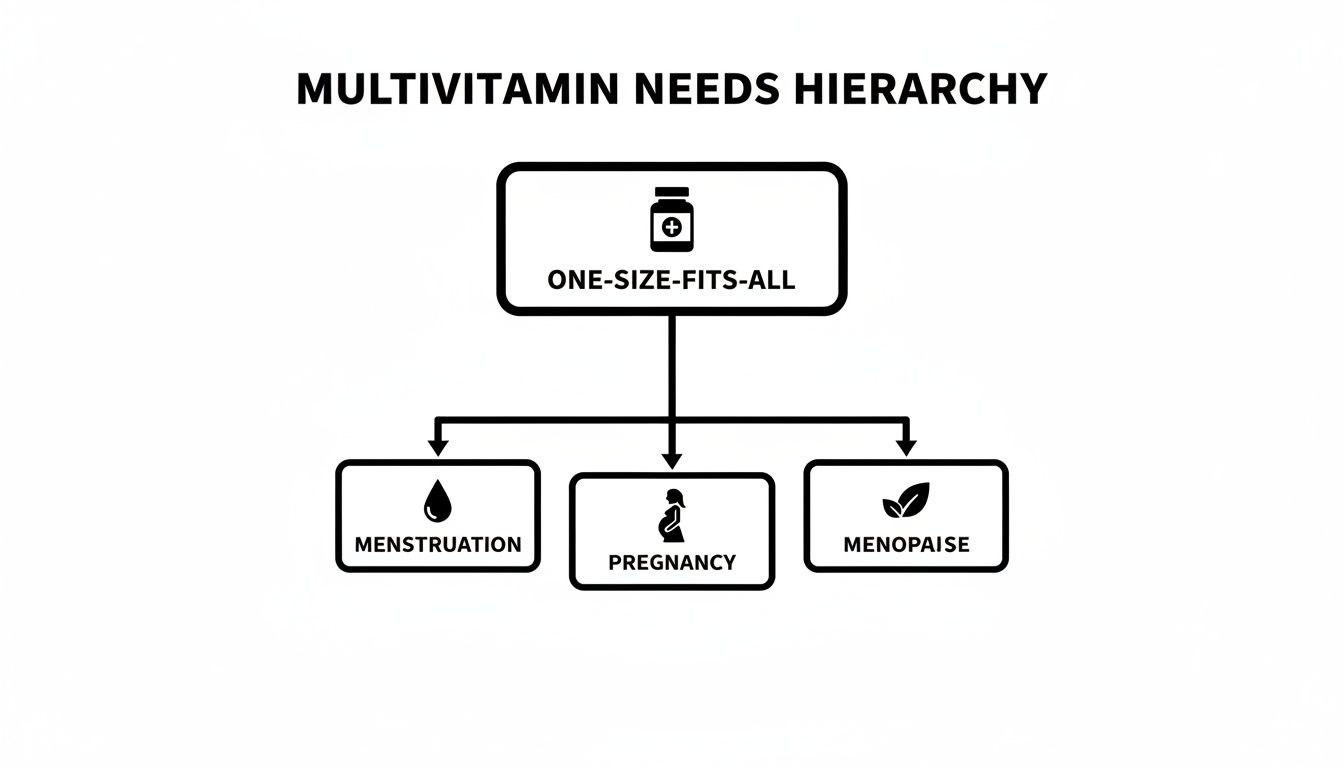
It’s clear that pivotal life events demand targeted support.
The Foundational Years: Your 20s and 30s
In your twenties and thirties, your body is often at its most resilient, but this is also the critical time for laying the groundwork for your future health. The choices you make now have a direct impact on your energy, hormonal balance, and long-term bone density. It's all about building a strong foundation.
Certain nutrients are non-negotiable during this phase. Iron is vital for energy and for replenishing what’s lost during menstruation, helping you fight off that all-too-common fatigue. B vitamins, especially Folate (B9), are crucial for healthy cells and mood support. And think of Calcium and Vitamin D as deposits into your "bone bank"—you'll thank yourself for it later in life.
This proactive mindset is catching on. UK women are increasingly turning to supplements, focusing on multivitamins for skin health, hormonal harmony, and stronger immunity. It's a clear trend towards using natural, clean-label multivitamins as a core part of a preventative health strategy.
The Motherhood Journey: Pregnancy and Postpartum
Pregnancy and the postpartum period are arguably the most nutritionally demanding times in a woman's life. You're not just eating for one; you're literally building another human being from scratch, which requires a serious uptick in specific vitamins and minerals. Your standard multi just won't be enough.
During this stage, a few nutrients take centre stage:
- Folate: Absolutely essential for preventing neural tube defects in a developing baby. Most doctors advise starting supplementation even before you conceive.
- Iron: Your blood volume increases dramatically during pregnancy, so iron demand skyrockets to prevent anaemia and the extreme fatigue that comes with it.
- Omega-3 (DHA): This healthy fat is vital for the development of the baby's brain and eyes.
- Iodine: Crucial for the baby’s brain development and for supporting your own thyroid function.
Postpartum recovery is just as demanding. You need robust nutritional support to replenish your own depleted stores, support lactation, and help manage the emotional rollercoaster of the "baby blues." It’s a good idea to continue with a specialised prenatal or postnatal formula. Taking a wider view is also helpful for overall well-being and is a key part of women's health.
Thriving Through Menopause and Beyond: Your 40s Onwards
As you move into your forties and beyond, your body begins another major transition: perimenopause and menopause. Hormonal shifts, particularly the decline in oestrogen, bring a whole new set of nutritional priorities. The focus shifts from building to maintaining—preserving bone density, supporting heart health, and managing new symptoms as they arise.
Think of this stage as recalibrating your body's support system. The goal is to provide the tools it needs to navigate hormonal changes gracefully and maintain long-term vitality.
Here, the spotlight turns to a different cast of characters. Calcium and Vitamin D become even more critical, as lower oestrogen levels can accelerate bone loss. Magnesium can be a game-changer for the sleep disturbances and mood swings that often come with this transition. Meanwhile, B vitamins, particularly B6 and B12, are important for keeping your energy levels up and your mind sharp. Our guide on women's health vitamins takes a deeper dive into these essentials.
By adjusting your supplement strategy to match these evolving needs, you can empower your body to move through this new chapter with strength and energy.
To help summarise these changing requirements, here’s a quick overview of the key nutrients you’ll want to focus on at each major life stage.
Key Nutrients for Women by Life Stage
| Life Stage | Essential Nutrients | Primary Benefits |
|---|---|---|
| Young Adulthood (20s-30s) | Iron, Folate (B9), Calcium, Vitamin D | Supports energy, combats menstrual losses, builds bone density, prepares for future pregnancy. |
| Pregnancy & Postpartum | Folate, Iron, Omega-3 (DHA), Iodine | Crucial for foetal brain and spinal cord development, supports increased blood volume, aids recovery. |
| Peri/Post-Menopause (40s+) | Calcium, Vitamin D, Magnesium, B Vitamins (B6, B12) | Protects bone density, helps manage symptoms like poor sleep and mood swings, supports energy and cognition. |
This table highlights why a personalised approach is so important—what works in one decade might not be what your body needs in the next.
How Your Body Absorbs Nutrients Matters Most
Have you ever wondered if the vitamins you dutifully swallow each morning are actually doing their job? It’s a great question. The real magic of any supplement isn’t just about what’s on the label; it’s all about bioavailability—how much of a nutrient your body can absorb and put to good use.
Think of it like this: your body has a library full of books, but it can only read one language. Many standard multivitamins use nutrient forms that are written in a foreign language. Your body has to spend precious time and energy translating them before it can understand the information. This extra work means less gets absorbed, and sometimes, it can even upset your stomach.

This is where a high-quality multivitamin for women really shines. The best formulas use superior, "active" forms of nutrients that are already ‘translated’ and ready for your body to use immediately.
Why Active Nutrient Forms Are Superior
Choosing a multi with active nutrients is like getting the book in your native tongue. No translation needed. Your body gets straight to the good part. Two of the most important examples are methylated B vitamins and chelated minerals.
Let’s quickly break down why they make such a huge difference:
- Methylated B Vitamins: Vitamins like Folate (B9) and B12 are absolute powerhouses for energy, mood, and cell health. The problem? A lot of us have a common genetic quirk that makes it tough to convert the standard form (folic acid) into the active form, methylfolate. A supplement with already-methylated B vitamins cleverly sidesteps this genetic hurdle, making sure everyone gets the full benefit.
- Chelated Minerals: Minerals such as iron, magnesium, and zinc can be tricky for the body to absorb on their own. They can also be a bit harsh on the stomach. Chelation is a smart process that binds these minerals to an amino acid. This friendly ‘escort’ helps the mineral travel through the gut wall with ease, boosting absorption and making it much gentler on your digestive system.
When you choose a formula with these advanced forms, you’re investing in efficiency. You’re making sure the nutrients you pay for are actually fuelling your body, not just passing through it. This focus on bioavailability is a true hallmark of a top-tier supplement.
From Bottle to Body A Simple Analogy
Imagine ordering a piece of flat-pack furniture. The cheap option shows up with baffling instructions and half the screws missing. You’ll spend ages wrestling with it, and it will probably end up wobbly. That’s your low-bioavailability vitamin—your body does all the hard work for a shaky result.
Now, picture a premium piece of furniture arriving fully assembled by an expert. You can use it right away, and it’s sturdy, reliable, and does its job perfectly. That’s the equivalent of a high-bioavailability supplement with methylated and chelated nutrients. It’s ready for your body to use instantly, with zero wasted effort.
When you’re choosing multivitamins for women, it’s always worth looking for the ‘fully assembled’ option. Of course, bioavailability is just one piece of the puzzle; timing plays a part, too. You can learn more about the best time of day to take vitamins to really get the most out of your routine.
Ultimately, understanding bioavailability turns you from a passive consumer into an informed one. It helps you look past the marketing hype and get down to the ingredient list, choosing forms that deliver genuine, noticeable results.
How to Choose the Right Multivitamin for You
So, you’re clued up on bioavailability and know what your body needs at this particular stage of your life. Now it's time to put that knowledge to good use.
Choosing the right multivitamin shouldn’t feel like an endless scroll through confusing product reviews and flashy marketing claims. Once you learn how to read a supplement label like a pro, you can confidently pick a formula that’s actually going to work for you and your health goals.
Decoding the Supplement Label
The back of the bottle is where the real story is told. It’s easy to get swayed by clever branding on the front, but the "Supplement Facts" panel is where you'll find the objective truth about what’s inside.
Think of this as your quality-control checklist. When you're sizing up a multivitamin, here are the key things to look for straight away:
-
Check the Nutrient Forms: Look for those highly bioavailable forms we talked about earlier. You want to see ingredients like “methylcobalamin” for B12, “methylfolate” for folate, and chelated minerals like “magnesium glycinate” or “iron bisglycinate.” Seeing these on the label is a great sign you’re looking at a high-quality formula designed for maximum absorption.
-
Examine the Dosages: Compare the amounts listed with your own needs. A woman in her 20s, for example, will want to see a healthy dose of iron, while someone post-menopause might be looking for more robust levels of calcium and vitamin D. The percentages shown are based on a generic Daily Value (%DV), so always use your personal requirements as the real guide.
-
Scan for Fillers and Additives: A good supplement contains what you need and nothing you don’t. Be wary of long lists of artificial colours, flavours, sweeteners (like sucralose or aspartame), and unnecessary binders. When you're weighing up your options, it's worth focusing on natural multivitamins for women that keep the ingredient list clean and effective.
Multivitamin vs. Targeted Support: When to Choose Each
Think of a high-quality multivitamin as your nutritional safety net. It’s designed to fill in the most common dietary gaps and provide a solid foundation for your daily wellness. For many women, this is the perfect starting point and might be all that’s needed to feel your best. If your main goal is simply overall health maintenance, a comprehensive multi is your best bet.
Sometimes, though, you need more focused support. You might want to consider adding targeted, single-nutrient supplements to your routine if you:
- Have a confirmed deficiency (like very low iron or vitamin D levels shown on a blood test).
- Are working towards a specific health goal, such as using ashwagandha for stress or omega-3s for cognitive function.
- Are in a particularly demanding life stage, like pregnancy, which calls for higher doses of certain nutrients than a standard multi can provide.
Think of your multivitamin as the core of your supplement strategy—the essential, everyday foundation. Targeted supplements are the specialists you bring in for specific jobs.
This layered approach helps ensure you're not overdoing it on nutrients you don’t need, while still giving your body the tailored support it requires.
A Clear Path to Your Perfect Match
Making an informed choice is clearly a priority for many, especially younger women. The UK vitamins landscape shows a fascinating generational divide, with an impressive 83% of under-35s using multivitamins compared to 65% of over-55s. This trend is fuelling market growth as younger consumers actively seek out supplements to support performance, beauty, and hormonal balance. You can read more about these market trends on Mintel.com.
This proactive mindset is exactly what should guide your decision. Instead of grabbing any old bottle off the shelf, take a moment to think about your individual situation.
Consider your age, diet, stress levels, and what you really want to achieve. Are you looking for an energy boost? Hormonal support? Or is long-term bone health your main focus?
Answering these questions first will narrow your search significantly, helping you find a multivitamin that feels like it was made just for you. This clarity turns shopping from a chore into a confident step towards optimising your well-being.
Lifestyle Habits That Maximise Your Nutrient Intake
Taking a great multivitamin is a fantastic starting point, but it's only one piece of the puzzle. Think of it like this: your supplement is a star player, but even the best player needs a solid team to win the game. Your daily lifestyle habits—how you eat, manage stress, and move your body—are its teammates. When they all work together, the results are so much more powerful.
Simple, consistent choices create an environment where your body can actually absorb and use the nutrients you’re giving it. These habits are amplifiers, turning a good supplement routine into a great one and setting you up for long-term health wins.

Let's break down the practical lifestyle shifts that ensure you reap all the rewards from the multivitamins for women you've chosen to take.
Nourish Your Gut for Better Absorption
Your gut is the gateway for nutrients to enter your bloodstream. If it isn't happy, even the most expensive multivitamin will struggle to do its job. A diet packed with fibre is one of the best ways to support the trillions of beneficial bacteria that live in your gut, and these tiny microbes are crucial for nutrient uptake.
Think of them as little helpers, breaking down food to unlock vitamins and minerals for your body. To keep them thriving, you need to feed them well with a variety of plant-based foods.
- Soluble Fibre: Found in oats, beans, apples, and carrots, this type of fibre is a favourite food for your good gut bacteria.
- Insoluble Fibre: Found in whole grains and vegetables, this keeps your digestive system moving along smoothly.
A happy gut is an absorbent gut. It’s as simple as that.
By prioritising gut health, you're not just improving digestion; you're fundamentally enhancing your body's ability to use the nutrients you provide. It’s the difference between simply consuming vitamins and truly absorbing them.
Manage Stress to Protect Your Nutrient Stores
Chronic stress isn’t just a mental burden—it’s a physical one that can actively drain your body of essential nutrients. When you’re stressed, your system goes into overdrive, burning through B vitamins, magnesium, and vitamin C at a rapid pace to produce stress hormones like cortisol. This can leave you feeling exhausted and weaken your immune defences.
Learning to manage stress is a non-negotiable part of any wellness strategy. It protects your nutrient stores, ensuring your multivitamin is actually replenishing your body, not just fighting to keep it at baseline.
A few simple practices can make a world of difference:
- Mindful Moments: Just five minutes of deep breathing or meditation can help dial down cortisol levels.
- Gentle Movement: Activities like yoga or a brisk walk are proven stress-busters that also lift your mood.
- Prioritise Sleep: Aim for 7-9 hours of quality sleep each night. This is when your body and mind truly recover and repair.
These habits create a buffer against daily pressures, safeguarding the very nutrients your multivitamin is working so hard to provide.
Move Your Body to Boost Nutrient Use
Regular physical activity does more than just build muscle and keep your heart healthy; it also supercharges your body's ability to use nutrients. Exercise improves blood flow, which means vitamins and minerals get delivered more efficiently to your cells—right where they’re needed most.
What’s more, activities like strength training increase your cells' sensitivity to insulin. This is important because insulin helps manage how your body metabolises carbohydrates and directs nutrients. Think of movement as the delivery service that ensures the precious cargo from your multivitamin reaches its final destination.
Whether it’s a power walk, a gym session, or a dance class, consistent movement makes your entire system more receptive to all the goodness you’re putting in.
Your Path to Personalised Nutrition
So, where do we go from here? If there’s one thing to take away, it’s this: your nutritional needs are as unique as you are. We’ve seen how they shift with each new chapter of life, that the quality of your supplements isn’t just a buzzword, and that a one-size-fits-all approach just doesn’t cut it. The most powerful thing you can do is get to know what your body is asking for.
Armed with that knowledge, you can finally move beyond the guesswork and start making choices that genuinely support your health. This is where your journey to feeling your best really begins.
The best multivitamins for women aren't found on a whim; they're chosen by understanding your own biology. True optimisation starts the moment you align your supplements with your specific life stage and health goals.
Choosing the right nutrients shouldn’t feel like a puzzle you can't solve. Once you identify what you truly need—whether that’s more energy to chase your goals, support for hormonal balance, or a long-term plan for bone health—you have a clear roadmap. This lets you pick a formula that acts as a true partner in your wellness routine, giving your body precisely what it needs to thrive. The goal is to build a solid foundation for vitality that lasts a lifetime.
Frequently Asked Questions
Got questions about multivitamins? You're not alone. The world of supplements can feel a bit confusing, so let's clear up some of the most common queries to help you feel confident about what you’re putting in your body.
Can I Get All My Nutrients from Diet Alone?
Even with the best intentions, it’s tough. A balanced, whole-food diet is absolutely the foundation of good health, but modern life throws a few spanners in the works.
Modern farming has left much of our soil less nutrient-rich than it once was, meaning the food on our plate might not be as packed with vitamins and minerals as we think. Add in things like food processing, high-stress lifestyles, and unique health needs, and it's easy to see how nutritional gaps can appear. Think of a quality multivitamin as your nutritional insurance policy—it’s there to top up your levels and support a healthy diet, not replace it.
What Is the Best Time of Day to Take a Multivitamin?
The best advice is to take your multivitamin with a meal. This is especially important for fat-soluble vitamins like A, D, E, and K, which need fat to be absorbed properly. Taking it with food can also prevent any potential tummy troubles from minerals like iron or zinc.
Lots of people find taking it with breakfast is the easiest way to make it a daily habit. But honestly, the "best" time is whatever time you'll actually remember. Consistency is what really counts.
Are Gummy Multivitamins as Effective as Capsules?
Gummies can be a great alternative if you struggle with swallowing pills, but you have to be a savvy shopper. Many are loaded with added sugars, and they often contain lower doses of key nutrients compared to a traditional capsule or tablet.
It's also worth knowing that some vitamins are less stable in a gummy form, which can impact their potency over time. Always flip the bottle over and read the nutritional panel to make sure you're getting effective doses without a load of unwanted extras.
How Long Until I Feel the Benefits of a Multivitamin?
This really comes down to where you’re starting from. If you’re running on empty with a particular nutrient deficiency, you could start to notice a real difference in your energy, mood, or general sense of wellbeing within just a few weeks.
For those who are already pretty well-nourished, the benefits are more about the long game—prevention and keeping your body running optimally. The real magic happens with consistency. Try to see your multivitamin not as a quick fix, but as a daily deposit into your future health bank account.
Ready to stop guessing and find the supplement stack your body is actually asking for? Take the VitzAI quiz today to get a personalised report based on your unique biology.
Find your personalised stack now at VitzAI.com
This article is for informational purposes only and is not medical advice. Always consult a qualified health professional before starting any new supplement or major lifestyle change.