

The Ultimate Guide to Recommended Supplements for Runners
When you're looking for the best supplements for runners, a few key players consistently deliver: creatine for power, magnesium to keep cramps at bay, omega-3s for joint health, and energy powders for a pre-run boost. These aren't magic bullets, but when combined with a healthy diet, they can enhance your performance, accelerate recovery, and fill any nutritional gaps created by your training.
Fuelling Your Run Beyond the Pavement
Running demands a lot from your body, impacting more than just your cardiovascular system. Every stride creates tiny micro-tears in your muscles and depletes essential nutrients. While a solid, whole-food diet is the non-negotiable foundation of any runner's plan, thinking of supplements as a shortcut misses the point.
Instead, view them as a strategic support system. They are the specialised tools that help repair your body after a tough session, sharpen your mental and physical edge, and ensure you show up to each run feeling stronger than the last. Of course, this all begins in the kitchen, so it pays to master some healthier grocery shopping strategies.
This guide is designed to cut through the marketing hype and focus on what truly works. We'll explore the core nutrients that can help you break through plateaus, bounce back faster between workouts, and build the consistency needed to chase down your goals.
The Modern Runner's Nutritional Needs
Running is no longer a niche sport; it's a cornerstone of modern fitness. Here in the UK, an incredible 22% of the population runs between one and three times a week. That's a huge community of people putting in the miles and pushing their bodies.
This dedication places extra demands on your system. For instance, any long or intense run will deplete electrolytes like sodium and potassium through sweat, which can impact hydration and muscle function. If you want to dive deeper, check out our guide on what electrolytes do and why they're crucial.
For the serious runner, supplements aren't about chasing marginal gains; they are about maintaining health, preventing deficiencies, and ensuring the body has everything it needs to adapt and grow stronger from the stress of training.
To get you started, here’s a quick look at some of the most impactful supplements for runners. This table breaks down what they do and the best time to take them for maximum effect, giving you a solid foundation for a smarter fuelling plan.
Quick Guide to Top Supplements for Runners
| Supplement | Primary Benefit for Runners | Best Time to Take |
|---|---|---|
| Creatine | Boosts short-burst power for hills and sprints; aids ATP regeneration. | Daily, often post-run. |
| Magnesium | Prevents muscle cramps, aids relaxation, and supports sleep quality. | Evening or post-run. |
| Omega-3 | Reduces exercise-induced inflammation and supports joint health. | Daily with a meal. |
| Energy Powders | Provides a pre-run boost in focus, energy, and stamina. | 30-60 minutes before running. |
The Core Supplements Every Runner Needs
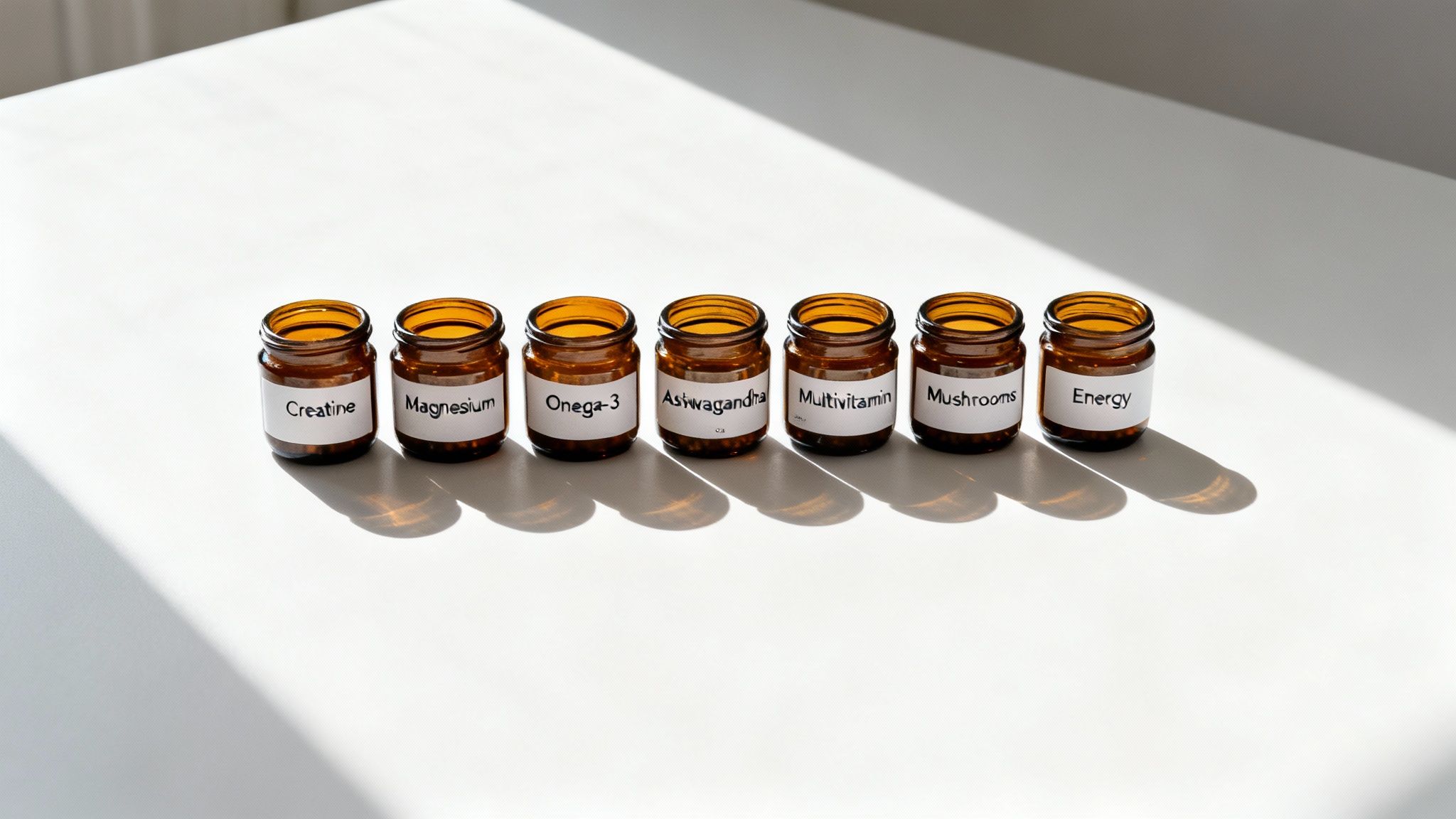
So, what should actually be in your supplement cupboard? Let's focus on seven evidence-backed options that form the foundational pillars of a solid running strategy. These are the supplements that consistently deliver results, addressing the unique demands running places on your body.
Each one has a specific job, from fuelling a final sprint to managing stress and inflammation. Understanding the 'why' behind each supplement is the first step toward building a personalised plan that feels right for you.
Creatine For Power and Endurance
Creatine is often unfairly typecast as a supplement for bodybuilders, but it's a genuine powerhouse for runners. It works by helping your body rapidly regenerate its main energy source, adenosine triphosphate (ATP).
Think of ATP as the high-octane fuel for short, intense bursts of effort—like powering up a steep hill or finding a finishing kick. Creatine helps top up your ATP tank faster, allowing you to sustain high intensity for longer. This isn't just for sprinters; distance runners tap into this system repeatedly throughout a long race.
Magnesium: The Relaxation Mineral
Magnesium is a true workhorse, involved in over 300 enzymatic reactions in the body. For runners, its most critical roles are managing muscle function and promoting relaxation. It helps regulate muscle contractions, which is your best defense against dreaded mid-run cramps.
But its benefits don't stop there. Magnesium is vital for converting food into energy and for promoting deep, restorative sleep. Quality sleep is when your body performs most of its repair work, and adequate magnesium can significantly improve your sleep quality, leading to faster recovery and better overall fitness.
Omega-3 Fatty Acids To Fight Inflammation
Every run creates a small amount of inflammation as your muscles break down and rebuild stronger. This is a normal part of getting fitter, but if inflammation becomes chronic, it can lead to persistent soreness, achy joints, and a sluggish recovery process.
Omega-3 fatty acids, especially EPA and DHA found in fish oil, act as your body's natural anti-inflammatory support. They help manage the stress from training, soothe unhappy joints, and support cardiovascular health. Consistent intake helps keep inflammation in check, allowing you to train more frequently with less downtime.
Think of Omega-3s less as a painkiller and more as a dedicated maintenance team for your joints and muscles. By managing the inflammatory response, they help ensure your body is ready for whatever you throw at it next.
Ashwagandha: The Stress Adaptogen
Running is a positive form of stress, but it's still stress. When you add it to the pressures of work, family, and daily life, your body's main stress hormone, cortisol, can get stuck in the 'on' position. High cortisol can disrupt sleep, hinder recovery, and negatively impact your hormonal balance and performance.
Ashwagandha is a powerful adaptogen—a natural substance that helps your body become more resilient to stress. It works by helping to regulate cortisol levels, promoting a sense of calm and improving your ability to handle both physical and mental strain. For runners, this means better recovery, a more balanced hormonal state, and enhanced consistency.
A Multivitamin: Your Nutritional Safety Net
Even runners with the most dialed-in diets can have nutritional gaps. The physical demands of training also increase your body’s need for certain vitamins and minerals. A high-quality multivitamin acts as your daily safety net, ensuring all your bases are covered.
Think of it as an insurance policy for your health. It supports everything from energy production and immune function to bone health. While it's no substitute for a balanced diet, it fills in the margins to keep you feeling strong. Micronutrient deficiencies can seriously undermine your performance; our guide on the importance of iron and B12 for energy is a helpful resource.
Mushroom Blends For Endurance and Focus
Functional mushrooms are gaining serious attention in the athletic world for good reason. Certain types, like Cordyceps, have been shown to improve the body's oxygen utilization—a game-changer for anyone running long distances. More efficient oxygen use can increase your VO2 max, which translates to better stamina and the ability to hold a faster pace for longer.
Other mushroom blends, featuring nootropics like Lion's Mane, can support cognitive performance, helping you maintain mental focus and clarity during grueling runs.
Energy Powders For a Pre-Run Boost
For those early morning sessions or key race-pace workouts, a clean energy powder can provide the perfect lift. These formulas usually combine ingredients specifically chosen to sharpen focus, boost stamina, and increase power output, and can even support gut health. When considering supplements for gut health, it's useful to know the difference between things like digestive enzymes vs probiotics.
A few key ingredients to look for are:
- Caffeine: A well-researched stimulant that heightens alertness and can reduce the perception of effort, improving performance.
- Beta-Alanine: An amino acid that helps buffer lactic acid in your muscles, pushing back the burning sensation during intense efforts.
- Electrolytes: Essential minerals like sodium and potassium that are crucial for hydration and proper muscle function.
Taken about 30-60 minutes before you head out, these ingredients work synergistically to help you start strong and finish even stronger.
How to Time Your Supplements for Peak Performance
Having the right supplements is one thing, but knowing when to take them unlocks their full potential. Think of your supplement schedule as a high-performance pit crew, ensuring your body has precisely what it needs at every stage of your run.
This isn’t about rigid rules; it’s about strategic fuelling. An energy supplement taken hours before your run won’t help, just as a recovery aid mid-sprint is a waste. By aligning your intake with your body’s needs, you can maximize every benefit—from endurance and power to faster repair and long-term health.
The Pre-Run Boost
The 30 to 60-minute window before you lace up is your prime opportunity to top up energy stores and get your mind in the game. This is the moment for supplements designed for an immediate lift.
Taking something with ingredients like caffeine and beta-alanine now ensures they're fully absorbed and kicking in when you need them most. Caffeine can make a tough effort feel easier, while beta-alanine is brilliant for buffering lactic acid, helping you push back that familiar muscle burn during intense intervals. It's a simple step that sets the stage for a stronger run.
Mid-Run Fuelling
For most daily runs under an hour, water is often sufficient. But once you push past the 90-minute mark—especially in warmer weather—your body starts running low on fuel and the essential minerals lost through sweat.
This is where mid-run fuelling becomes critical. We're not talking about anything complicated, just simple, effective top-ups:
- Electrolyte Drinks or Tabs: These are essential for replacing sodium, potassium, and magnesium. They help you stay hydrated, fend off muscle cramps, and keep your nervous system firing correctly.
- Carbohydrate Gels: On very long runs, these deliver a quick hit of glucose to replenish dwindling glycogen stores. This is your secret weapon against "hitting the wall," helping you maintain your pace to the finish line.
The Post-Run Recovery Window
The first hour after you stop your watch is arguably the most important part of your recovery. It's often called the "golden hour" because your muscles are like a sponge, ready to soak up nutrients for repair. Your mission here is to kickstart the muscle repair process and restock your energy stores as quickly as possible.
Two key players are your best friends during this critical window:
- Protein: A quality protein shake delivers the essential amino acids your body needs to start mending the micro-tears in your muscles, leading to less soreness and more strength.
- Creatine: Taking your daily dose of creatine after a run helps replenish your muscles' immediate energy stores (ATP). This speeds up recovery and prepares you for your next session.
Think of this post-run window as refuelling a racing car. You must provide the engine with the precise materials it needs to repair damage and get back on the track stronger than before.
Daily Foundational Support
Finally, some of the best supplements for runners work their magic through consistent, daily use. These are your foundational supports that build resilience and promote long-term health and longevity. Supplements like Omega-3s and magnesium aren’t about an immediate boost; they're about building a healthier, more robust baseline.
Taking Omega-3 fatty acids with a meal each day helps keep systemic inflammation in check, supporting your joints and overall recovery. Similarly, taking magnesium in the evening can help your muscles relax and significantly improve sleep quality—a vital part of recovery that many runners overlook. If you're looking to dial in your entire vitamin schedule, you can learn more about the best time of day to take various vitamins in our detailed guide.
Building a Supplement Stack for Your Running Goals
When it comes to supplements, a one-size-fits-all approach doesn't work. The physical demands on a marathoner are worlds apart from those of a sprinter, meaning their nutritional needs are completely different. It’s time to move beyond generic products and start building a supplement stack that’s dialed into your unique running style and personal goals.
Choosing the right supplements isn't just about picking individual ingredients; it's about creating a synergistic team that works together. By matching your choices to your specific training, you can build a strategy that provides targeted support where you need it most.
The Endurance Runner Stack
For those logging serious miles, the game is all about sustained energy, joint resilience, and rapid recovery. The goal isn't just to cross the finish line, but to do so feeling strong and ready for the next long run. This requires a stack focused on durability and longevity.
Your core components should include:
- Electrolytes: Non-negotiable for long-distance runners. Sipping on electrolytes during your run prevents cramping, maintains fluid balance, and ensures your muscles and nerves fire properly over many hours.
- Omega-3s: The constant, repetitive impact of running can take a toll on your joints. Omega-3s help manage exercise-induced inflammation, keeping your joints healthy and supporting their long-term function.
- Mushroom Blends (e.g., Cordyceps): This functional mushroom is favored for its ability to improve how efficiently your body uses oxygen. For an endurance athlete, that translates to better stamina and the ability to hold a strong pace for longer.
The Sprinter and HIIT Runner Stack
If your training revolves around explosive, short bursts of effort like sprints or high-intensity interval training (HIIT), your focus shifts dramatically. You need to support raw power, rapid energy generation, and quick recovery for your fast-twitch muscles. This stack is built for pure, explosive performance.
The primary players here are:
- Creatine Monohydrate: The undisputed champion for power-based activities. Creatine supercharges your muscles’ immediate energy system (ATP), letting you generate more force during all-out sprints and bounce back faster between intense efforts.
- Beta-Alanine: During intense work, your muscles produce lactic acid, causing the familiar burn that forces you to slow down. Beta-alanine helps buffer this acid, allowing you to push harder for longer during those crucial high-stakes intervals.
Visualising when to take certain supplements can make a huge difference. This simple map helps illustrate the key timings.
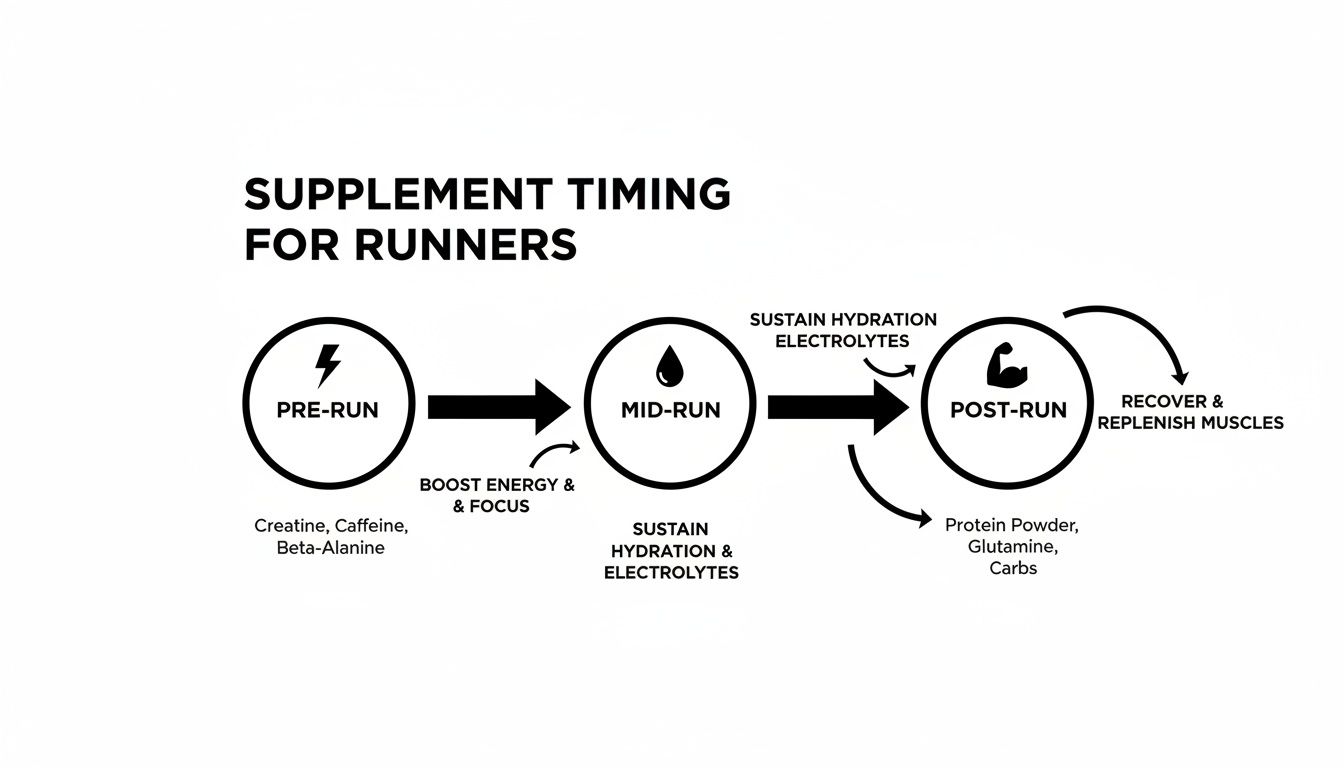
As you can see, the flow clearly separates supplements for energy before a run, hydration during, and repair and recovery after your session.
The Trail Runner Stack
Trail running introduces a different set of challenges: uneven terrain, steep climbs, and the need for laser-sharp mental focus over long distances. Your supplement stack must support not just physical endurance but also adaptability and the cognitive performance needed to navigate tricky trails safely.
Consider adding these to your trail kit:
- Ashwagandha: As an adaptogen, ashwagandha helps your body cope with the physical and mental stress of a grueling trail run. It can help regulate cortisol, keeping you calm and focused when the terrain gets tough.
- Mushroom Blends (e.g., Lion’s Mane): This nootropic mushroom is known for supporting cognitive function. For a trail runner, this means better focus, quicker reaction times, and heightened awareness—all essential for staying safe and performing well.
Building the right stack is about matching the supplement's primary function to your primary demand. An endurance runner needs fuel efficiency, a sprinter needs explosive power, and a trail runner needs resilience and focus.
Tailoring for Men's and Women's Health
Beyond your running style, personal factors like age and gender also play a huge role in your nutritional needs. For instance, women’s health considerations often include higher iron requirements due to the menstrual cycle, while men’s health, particularly over 40, might focus more on supplements that support joint health and hormonal balance.
Research into athletic supplement usage in the UK highlights these differences. An impressive 86% of female athletes and 70% of male athletes use at least one type of medical supplement to support their training. You can discover more about these athletic supplement trends to see how usage patterns differ. Understanding these nuances is key, but a personalised assessment can remove the guesswork.
Sample Supplement Stacks for Different Runners
To give you a clearer picture, here are a few sample stacks. Think of these as starting points to build upon based on your own body and goals.
| Runner Profile | Primary Goal | Core Supplements | Optional Add-ons |
|---|---|---|---|
| Endurance Runner | Sustained energy, joint support, faster recovery | Electrolytes, Omega-3s, Cordyceps | Iron (especially for women), Collagen for joint health |
| Sprinter / HIIT Runner | Explosive power, muscular endurance, quick recovery | Creatine Monohydrate, Beta-Alanine | Caffeine for pre-workout boost, Tart Cherry for muscle soreness |
| Trail Runner | Endurance, mental focus, stress management | Electrolytes, Ashwagandha, Lion's Mane | Collagen for joint resilience, BCAAs to reduce muscle breakdown |
| Female Runner (General) | Energy, bone density, hormone balance | Iron, Vitamin D, Calcium, Omega-3s | Ashwagandha for stress, Magnesium for sleep |
| Male Runner (Over 40) | Joint health, hormone support, muscle maintenance | Omega-3s, Glucosamine, Vitamin D | Zinc for testosterone support, CoQ10 for energy |
Remember, the best approach is always a personalised one. Use these examples as a guide, listen to your body, and don't be afraid to experiment to find what truly helps you perform at your best.
Choosing High-Quality Supplements You Can Trust
The supplement world can feel overwhelming. With countless brands claiming to have the best products, it’s easy to get lost. But here’s the secret: not all supplements are created equal, and a little bit of knowledge goes a long way.
This isn’t about finding a single "magic" brand. It's about learning to spot the markers of quality and transparency that separate the good from the junk. With a simple mental checklist, you can cut through the hype and find products that will actually support your running.
Prioritise High Bioavailability
Here’s a crucial concept: bioavailability. It’s a simple term for how well your body can absorb and use a nutrient. Just because a supplement contains an ingredient doesn't mean your body can access it effectively.
Take magnesium, a runner's ally for muscle recovery. Cheaper supplements often use magnesium oxide, which the body struggles to absorb. In contrast, magnesium glycinate is "chelated," meaning it's bound to an amino acid, making it far easier for your body to utilize. Always look for these more bioavailable forms.
Demand Effective Dosages
Some brands use "window dressing," including a long list of impressive ingredients in tiny, ineffective amounts just to make the label look good. A high-quality supplement contains ingredients at a dose that has been proven effective in scientific studies.
Before buying, do a quick search for the recommended dose of a key ingredient like creatine or beta-alanine. Compare that to the "serving size" on the product label. If the numbers are far apart, you’re not getting a dose that will deliver real benefits.
A supplement's true value lies in providing a clinically effective dose of a highly bioavailable ingredient. Anything less is a compromise on your performance, recovery, and health.
Look For Third-Party Testing
The supplement industry isn't as tightly regulated as pharmaceuticals, making independent verification essential. Third-party testing ensures that what’s on the label is actually in the bottle and that it's free from contaminants.
Look for certifications from reputable organizations on the packaging. For athletes, a seal like Informed-Sport is the gold standard. This indicates that every batch has been tested for banned substances, giving you peace of mind that it’s safe for competition.
Avoid Unnecessary Fillers
Finally, read the "other ingredients" list. The best supplements keep this list short. Be wary of products loaded with unnecessary fillers, binders, artificial colors, and sweeteners.
These additives offer zero health benefits and can sometimes cause digestive issues. You're paying for pure, potent ingredients to support your body, not a long list of synthetic compounds. A clean label is almost always the sign of a better product.
Got Questions About Runner Supplements? We've Got Answers.
When you're diving into the world of supplements, a few questions always pop up. Let's tackle some of the most common ones so you can build your strategy with confidence.
Do I Really Need Supplements If I Eat a Healthy Diet?
This is a great question, and the answer is: most likely. While a balanced diet is the absolute foundation of good performance, the intense physical stress of running puts your body's nutrient needs into overdrive.
Think of it this way: your diet is your daily fuel, but intense training is like a long road trip that burns through fuel and fluids much faster than usual. Supplements step in to fill the specific gaps that high mileage creates—the extra magnesium needed to fend off muscle cramps, or the omega-3s to keep joint inflammation in check. Even the best diet can struggle to meet these heightened demands.
Can I Take All These Supplements Together?
For the most part, the supplements commonly used by runners work well together. The real secret isn’t if you can take them together, but when you should take them for the biggest impact. It’s less about swallowing a handful of pills at once and more about smart scheduling that syncs with your body and your training.
A well-thought-out supplement plan is all about synergy. You’d take an energy-booster like caffeine before a run to maximise its effect on performance. On the other hand, a recovery aid like magnesium is best taken in the evening, where it can support muscle relaxation and the deep, restorative sleep your body needs.
How Long Until I See Results From Supplements?
Patience is key. The timeline depends on what the supplement is designed to do. You’ll feel the effects of pre-run formulas, like those with caffeine, almost immediately—usually within 30-60 minutes.
But for foundational supplements, you need to play the long game. Nutrients like creatine, omega-3s, and functional mushrooms are builders. They require several weeks of consistent, daily use to accumulate in your system and start making a real difference. Only then will you begin to notice tangible improvements in power, endurance, or how quickly you bounce back. Consistency is everything for reaping those long-term rewards.
Ready to stop guessing and start personalising? The AI-powered tools at VitzAI can analyse your unique running style, goals, and lifestyle to create a supplement plan that’s built just for you. Discover your personalised stack today!
This article is for informational purposes only and is not medical advice. Always consult a qualified health professional before starting any new supplement or major lifestyle change.