

Vitamin C with Zinc Benefits, Evidence and Safe Use
You're tired, your throat feels scratchy, and there's a packet of vitamin C with zinc in the kitchen cabinet. The obvious question is, will taking it now prevent a cold, or is it more useful after symptoms begin?
The answer is less dramatic than many supplement labels suggest, but it's more practical. Vitamin C and zinc support normal body functions, including immune activity, yet neither nutrient guarantees that you'll avoid infection. The clearest potential benefit appears to involve shortening the duration of a cold, particularly with zinc used early, rather than reliably preventing one.
This distinction matters if you're already taking a multivitamin, building a wider supplement routine, or deciding whether a daily immune product makes sense. A sensible approach starts with your goal. Are you trying to correct a dietary shortfall, support general nutrition, or respond to the first signs of a cold?
For broader context on nutrients commonly discussed for immune health, you can also explore this guide to immune-supporting vitamins. The sections below will separate basic biology from clinical evidence, then cover timing, label reading, dose limits, side effects, and medication spacing.
Introduction to Vitamin C with Zinc and Why People Pair Them
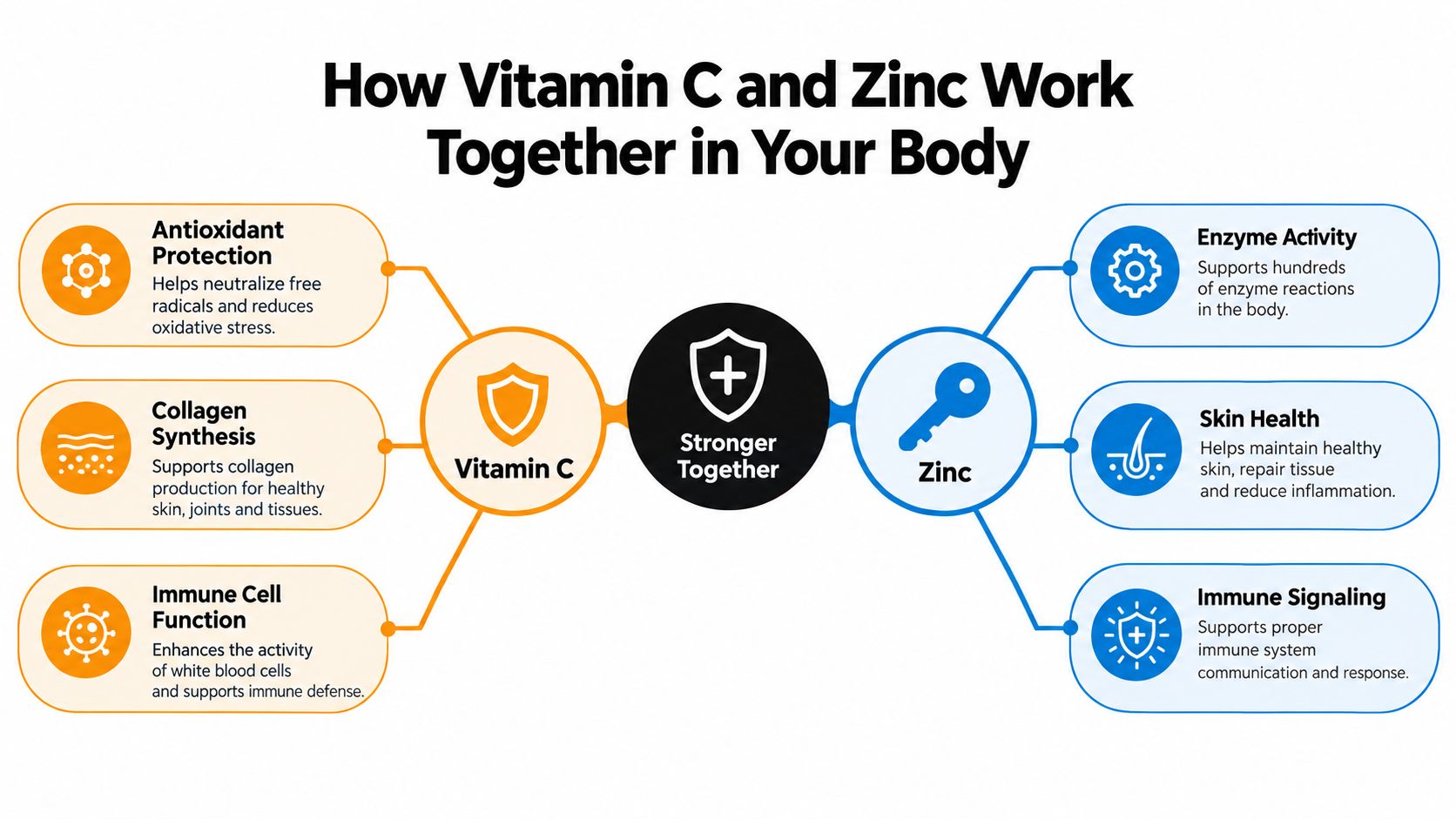
Vitamin C and zinc often appear together because they contribute to different parts of normal immune function. Vitamin C is a water-soluble vitamin involved in antioxidant protection, collagen production, and immune cell activity. Zinc is a mineral involved in enzyme activity, skin health, and immune signalling.
That sounds like a coordinated team, but pairing them doesn't automatically create a powerful cold shield. A combined product may be convenient, especially when someone wants one tablet, lozenge, or sachet instead of several separate supplements. Convenience, however, isn't the same as proven synergy.
The question behind the supplement
Suppose an otherwise healthy adult takes vitamin C with zinc every morning throughout the colder months. That routine may help fill a dietary gap, but the available evidence doesn't show a dependable reduction in cold incidence for the general population from regular vitamin C use. Zinc also has little preventive effect in the evidence reviewed for common colds.
A different situation arises when symptoms have just started. Zinc has a stronger signal for shortening an active cold than for stopping infection before it begins. Vitamin C may also modestly reduce symptom duration, although its effect is not a guarantee and may vary between people.
Practical expectation: Think of vitamin C with zinc as nutritional support, not an insurance policy against every cough, sore throat, or virus.
Why busy adults need a timing-based answer
People often reach for supplements when their schedule can't accommodate being ill. A parent may take a product before a school event, a professional may keep lozenges in a desk drawer before travel, and someone training hard may use supplements as part of a broader recovery routine.
Those situations call for different decisions. Daily use may be reasonable for someone whose diet is limited or whose clinician has identified a nutritional concern. Short-term use at the first sign of symptoms may better match the evidence around zinc and cold duration. Neither strategy replaces sleep, adequate food, hydration, or medical care when symptoms are severe or unusual.
Before choosing a product, identify what you want it to do. General nutrition, prevention, and short-term symptom support aren't interchangeable goals, and the label shouldn't encourage expectations that the evidence can't support.
How Vitamin C and Zinc Work Together in Your Body
Your body uses vitamin C and zinc continuously, not only when you feel ill. Vitamin C dissolves in water and contributes to antioxidant protection, collagen synthesis, and normal immune cell function. Collagen helps form connective tissue, so vitamin C also supports structures such as skin and blood vessels.
Zinc works differently. It supports enzyme activity, contributes to skin health, and helps regulate immune signalling. It isn't an “immune booster” that switches defenses on. Instead, it helps the body carry out many ordinary cellular processes that immune defenses depend on.
A simple teamwork analogy
Think of the immune system as a maintenance and response crew. Vitamin C is part of the protective supplies and repair materials, while zinc is part of the toolkit used for cellular instructions and enzyme-driven work. Supplying both can make nutritional sense when either one is lacking, but giving the crew more tools than it can use doesn't necessarily improve the outcome.
The analogy also explains why a combined supplement isn't automatically superior to food. Citrus fruit, berries, peppers, broccoli, and other foods can contribute vitamin C. Meat, seafood, dairy foods, beans, nuts, and seeds can contribute zinc. A varied eating pattern may provide both nutrients while also supplying protein, fibre, and other compounds that a tablet doesn't contain.
Absorption and everyday nutrition
The amount listed on a supplement label isn't the same as the amount your body will use. Absorption depends on the nutrient form, the rest of your diet, individual health factors, and whether other supplements or medicines affect uptake.
Vitamin C is not stored in the body in the same way as fat-soluble vitamins, so regular dietary intake matters. Zinc is also needed in small amounts, and more isn't automatically better. A combined product fits most sensibly into a routine after you check what you already receive from meals, fortified foods, and products such as a multivitamin.
The useful question isn't whether the combination sounds powerful. It's whether it supplies something your diet and existing routine don't already provide.
What the Evidence Says About Immune Support and Colds
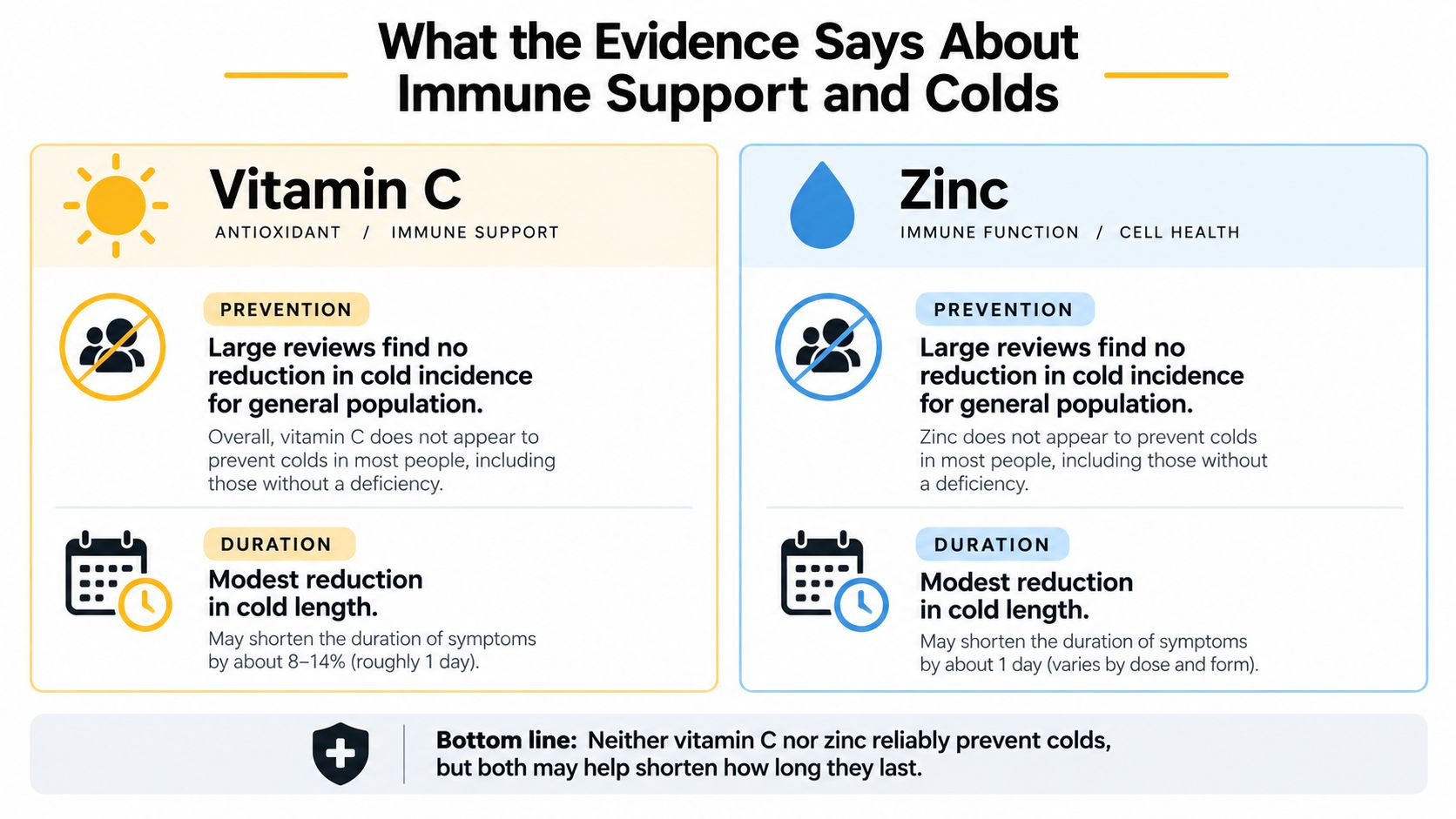
Evidence becomes clearer when you separate prevention from treatment. Preventing a cold means reducing the chance of becoming infected. Shortening a cold means reducing how long symptoms last after illness begins. Vitamin C and zinc don't show the same pattern across those outcomes.
Vitamin C and prevention
Vitamin C has been studied for the common cold for decades. A major Cochrane review covering 29 trial comparisons and 11,306 participants found that regular intake of at least 0.2 g per day didn't reduce cold incidence in the general population, although it modestly shortened symptom duration (Cochrane review of vitamin C for the common cold).
The review concluded that routine supplementation isn't justified as a general cold-prevention strategy. It did identify a potentially different context, periods of heavy physical stress such as marathon running, skiing, or military training, where vitamin C may be more useful.
A separate meta-analysis found that vitamin C produced a smaller measurable effect on acute respiratory infections, with a pooled risk ratio of 0.96, with a 95% confidence interval of 0.93 to 0.99, and reported about a 9% reduction in common-cold symptom duration, with a 95% confidence interval from −16% to −3% (BMJ Global Health meta-analysis). These findings support modest expectations, not a promise of avoiding illness.
Zinc and active illness
Zinc has a different evidence pattern. A Cochrane review of 34 studies involving 8,526 participants found low-certainty evidence that zinc may shorten common-cold duration by about 2 days, with an estimated mean difference of −2.37 days compared with placebo. The review found little or no effect on preventing colds and noted side effects such as nausea and unpleasant taste (Cochrane review of zinc for the common cold).
A 2024 Cochrane review reached a similar practical conclusion. Zinc may make little or no difference to the risk of developing a cold, but treatment may reduce symptom duration by about 2 days, based on 8 studies with 972 people (2024 Cochrane review on zinc prevention and treatment).
In adults, oral zinc's strongest evidence is for duration rather than prevention. The BMJ Global Health review reported a pooled percentage difference of −47%, with a 95% confidence interval from −73% to −21%, for acute respiratory illness duration, while finding no overall reduction in acute respiratory infection risk.
For readers comparing approaches, this guide to supplements for frequent colds can provide additional context. The central message remains simple: immune support claims often sound broader than the evidence. The more realistic question is whether a nutrient might modestly change the course of an illness, not whether it can block every infection.
Daily Use Versus Use at First Symptoms
The choice between daily use and symptom-onset use depends on what you're trying to achieve. A daily product is mainly a nutrition decision. Taking zinc or vitamin C only when a scratchy throat appears is a short-term illness-management decision, and the evidence fits zinc more closely in that setting.
Daily vitamin C hasn't reliably reduced cold incidence in the general population, as the earlier Cochrane evidence shows. Daily zinc also has minimal preventive impact in the reviewed evidence. That doesn't mean daily supplementation is never appropriate. Someone with a restricted diet, a known deficiency, or a clinician-recommended plan may have a separate reason to take either nutrient.
A practical comparison
| Approach | Best For | Evidence Signal | Practical Note |
|---|---|---|---|
| Daily use | Adults addressing a dietary gap or following professional guidance | Limited support for preventing colds in the general population | Review food intake and existing supplements before adding another product |
| Symptom-onset use | Adults who want short-term support when cold symptoms begin | Zinc has a stronger signal for shortening active illness than preventing infection | Follow the label, monitor tolerance, and avoid exceeding the zinc upper limit |
| Neither as a default | People already meeting needs through diet and supplements | No clear reason to expect a dramatic extra benefit | More products can increase duplication and side-effect risk |
The timing decision isn't about finding a perfect schedule. It's about matching the supplement to a realistic outcome. If your goal is preventing every cold, neither routine vitamin C with zinc nor occasional use can promise that result. If your goal is modestly shortening symptoms, early zinc use is more consistent with the available evidence than taking it indefinitely as a preventive shield.
When daily use may add little
Daily use may add little when your diet is varied, your multivitamin already contains both nutrients, and you have no identified nutritional concern. It may also complicate your routine if you combine a multivitamin, fortified drink, standalone zinc, and a cold remedy without checking the totals.
Short-term use isn't automatically risk-free either. Zinc can cause nausea or an unpleasant taste, and high intake from several products can push the total beyond a sensible level. The best routine is usually the simplest one that fits your goal and stays within established safety limits.
How to Take Vitamin C with Zinc Safely and Effectively
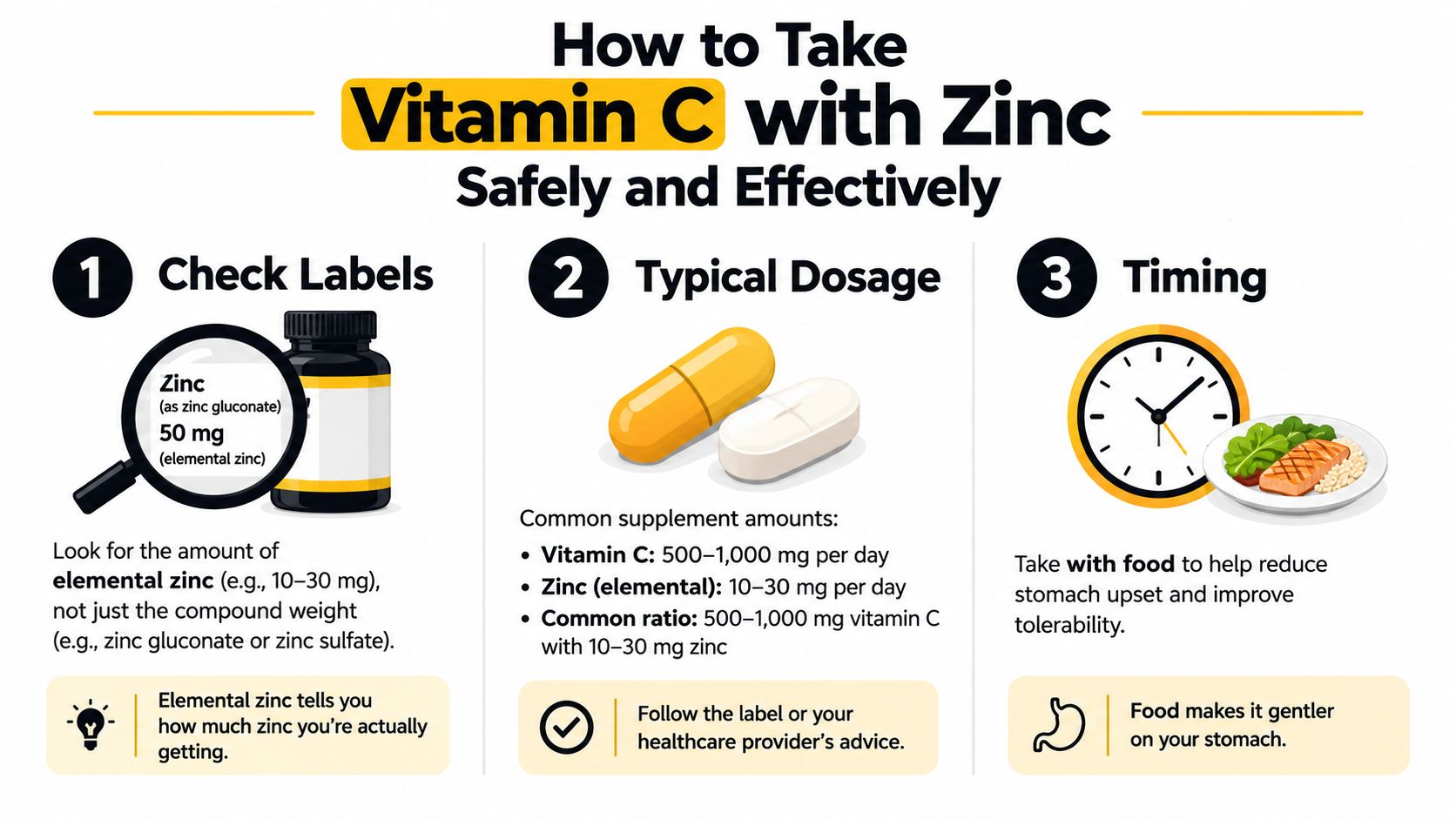
Start with the label, not the front-of-pack promise. The key figure for zinc is the elemental zinc amount, which tells you how much zinc the product supplies. A zinc compound may weigh more than the elemental mineral it contains, so compound weight alone can make a product appear less or more concentrated than it really is.
Use reference points, not guesswork
The NIH Office of Dietary Supplements lists adult recommended vitamin C intakes of 90 mg per day for men and 75 mg per day for women. Across life stages, the adult range extends up to 120 mg per day (NIH vitamin C fact sheet).
The adult tolerable upper intake level is 2,000 mg per day for vitamin C and 40 mg per day for zinc, according to the NIH Office of Dietary Supplements (NIH vitamins and minerals fact sheets). The upper limit isn't a target. It's a boundary intended to help reduce the risk of adverse effects.
Use this checklist when reviewing a product:
- Check elemental zinc: Add the elemental zinc from the combination product, multivitamin, lozenges, fortified products, and other supplements.
- Compare vitamin C totals: The amount in the product may sit well above daily recommended intake, so consider whether that extra amount serves your actual goal.
- Take zinc with food if needed: Food can help reduce nausea, even though product directions may differ.
- Track tolerance: Stop and seek advice if you develop persistent nausea, abdominal discomfort, diarrhoea, or other concerning symptoms.
- Avoid automatic stacking: A second immune formula can duplicate zinc without making the routine more effective.
For more practical guidance on timing, see this guide to the best time to take zinc. If you split doses, keep a clear record of the daily total rather than judging each product separately.
A useful rule is to keep total daily zinc from supplements and other sources below 40 mg per day unless a qualified health professional is supervising use. Vitamin C above its upper limit can cause diarrhoea, nausea, and stomach cramps, so a larger serving isn't automatically a better serving.
Potential Side Effects Interactions and Who Should Be Cautious
Vitamin C with zinc is often treated as universally gentle. It isn't. Side effects become more likely when people use high-dose products, combine several formulas, take zinc without food, or continue a high intake for a long period.

Zinc can cause nausea and an unpleasant taste. Acute zinc intake above the adult upper limit can also cause vomiting, abdominal cramps, diarrhoea, and headaches. Chronic intake above the upper limit can interfere with copper status and increase adverse-effect risk, which is why long-term high-dose use deserves professional oversight.
Vitamin C can also upset the digestive system. In people predisposed to kidney stones, supplemental vitamin C at doses as low as 250 mg per day has been linked to urine acidification and kidney stone risk (clinical review of vitamin C and zinc safety).
Medicines require a closer look
Zinc can reduce the effectiveness or absorption of antibiotics such as quinolones and tetracyclines when taken too close together. Follow the spacing instructions from your prescriber or pharmacist rather than improvising, because the correct interval can depend on the medicine.
Vitamin C may interact with several medicines, including some chemotherapy drugs and statins. People with a history of kidney stones, those taking prescription medicines, and anyone considering prolonged high-dose use should ask a qualified health professional before starting a product.
Safety check: Review every source of zinc and vitamin C, including multivitamins, cold remedies, fortified drinks, and standalone products.
This guide to what vitamins should not be taken together may help you identify duplication and timing questions within a wider supplement routine.
The following video offers another visual explanation of common considerations:
If symptoms are severe, persistent, or different from a usual cold, supplements aren't a substitute for medical assessment. The same applies if you're pregnant, breastfeeding, managing a chronic condition, or taking treatment that may interact with either nutrient.
Making Vitamin C with Zinc Part of Your Personalised Routine
A sensible supplement routine starts with your diet and existing products. Check whether your multivitamin already includes vitamin C and zinc, then add the amounts together before choosing a separate combination product. This simple review can prevent unnecessary duplication.
Next, match the product to your goal. If you're addressing general nutrition, focus on whether your diet supplies the nutrients and whether a professional has identified a need. If you're responding to cold symptoms, consider the evidence around short-term duration support, especially for zinc, while keeping expectations modest.
VitzAi.com offers a personalised supplement quiz that uses details such as goals, diet, sleep, stress, exercise, fish intake, digestion, and existing routines to suggest relevant supplement options. You can use that type of personalised review to identify overlaps, remove products you already take, and keep total zinc below the adult upper limit.
Track what you take and how you feel. A short record of product names, elemental zinc amounts, timing, and side effects can make a pharmacist or clinician's advice much more useful.
This article is for informational purposes only and is not medical advice. Always consult a qualified health professional before starting any new supplement or major lifestyle change
If you're unsure whether vitamin C with zinc belongs in your routine, visit VitzAi.com and use the personalised supplement quiz to review your goals, diet, lifestyle, and current products. You'll receive a curated starting point that can help you compare options and avoid unnecessary overlap.